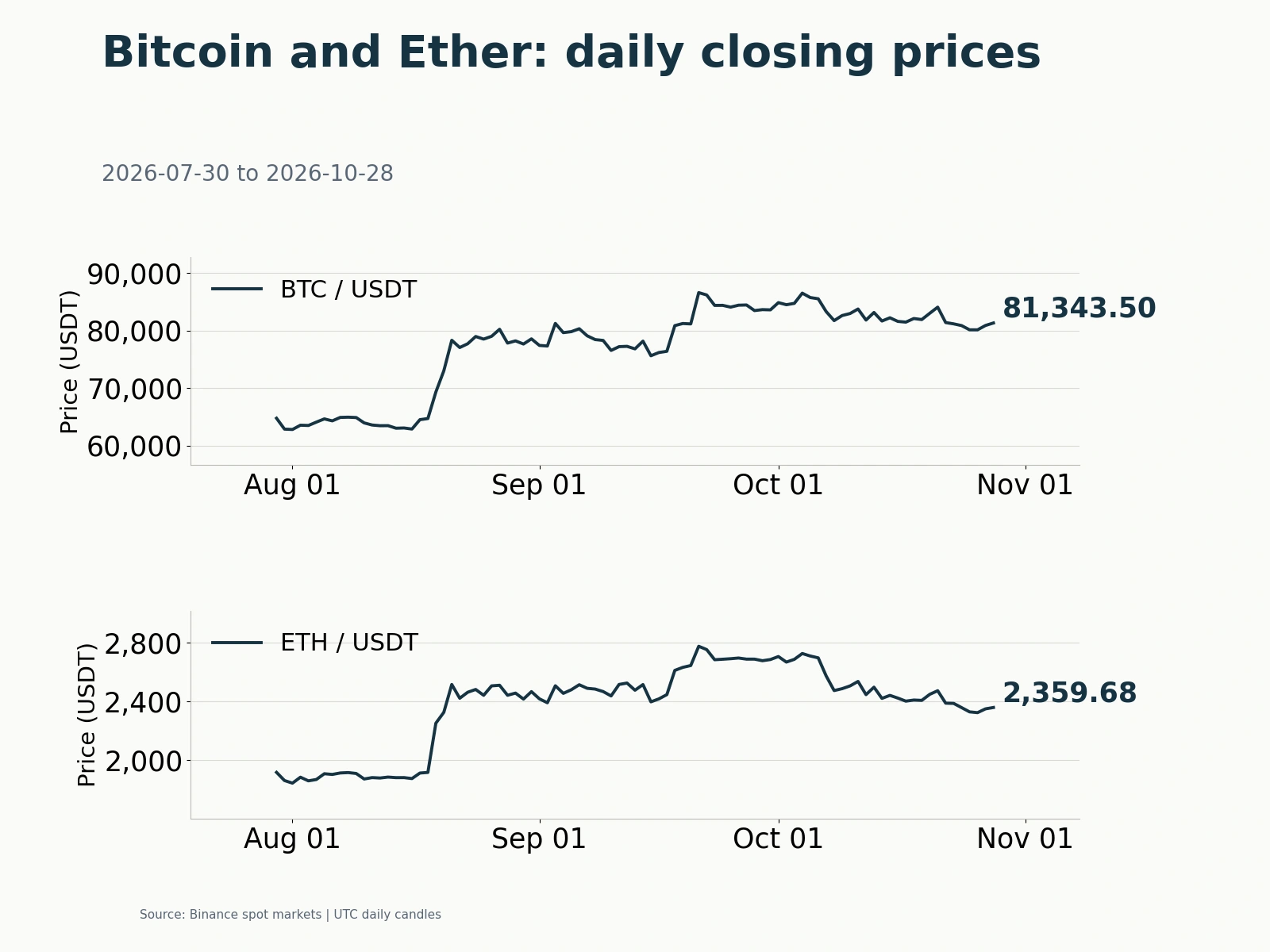
As the weekend began, crypto remained constrained by insufficient spot allocation buying. By the morning of October 18 Beijing time, the latest US trading session, October 16, had seen simultaneous net outflows from spot Bitcoin and Ethereum ETFs, while dollar stablecoin circulation had also fallen over the preceding week. With no new US ETF trading sessions over the weekend, market funding developments were mainly visible in round-the-clock derivatives. On October 17 UTC, Bitcoin perpetual funding remained moderately positive and declined during the day; Ethereum funding switched between positive and negative; and options implied volatility edged higher. Overall, new capital from outside crypto venues was weak, while trading within them had yet to display the high financing costs associated with enthusiastic rally-chasing, and risk pricing became more cautious.
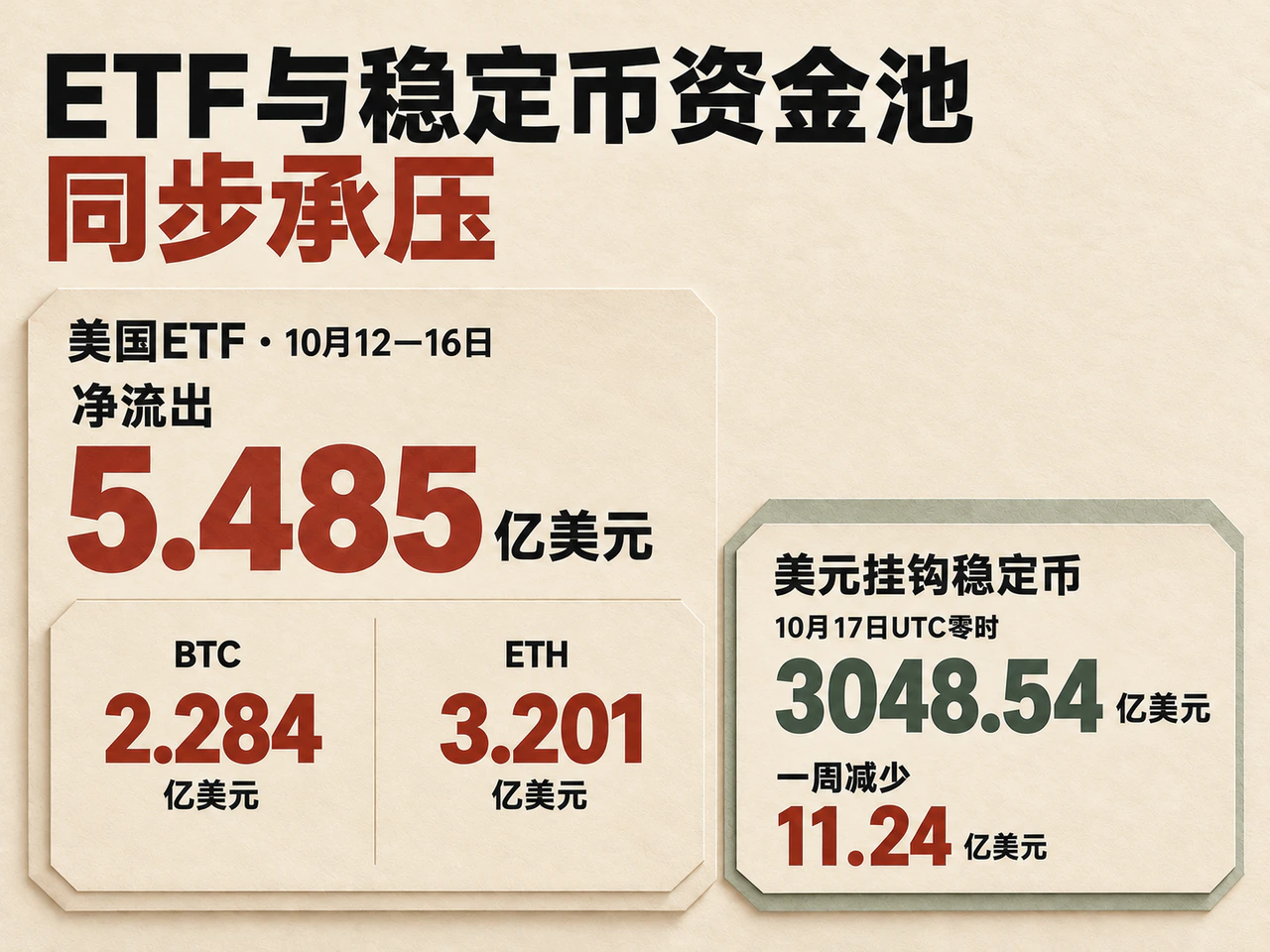
Weekly Spot ETF Net Outflows Reach $548.5 Million; Stablecoin Market Value Falls $1.124 Billion
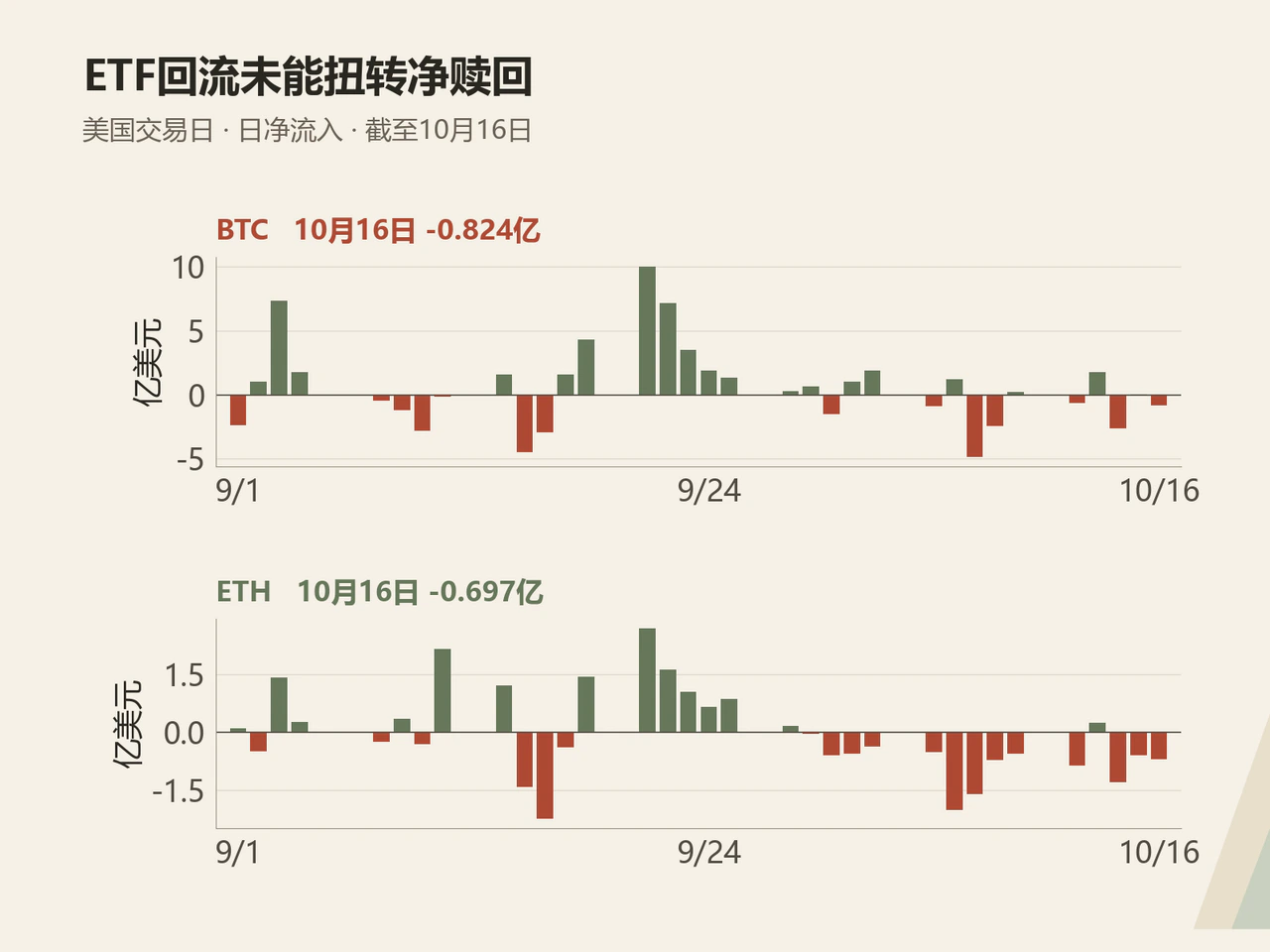
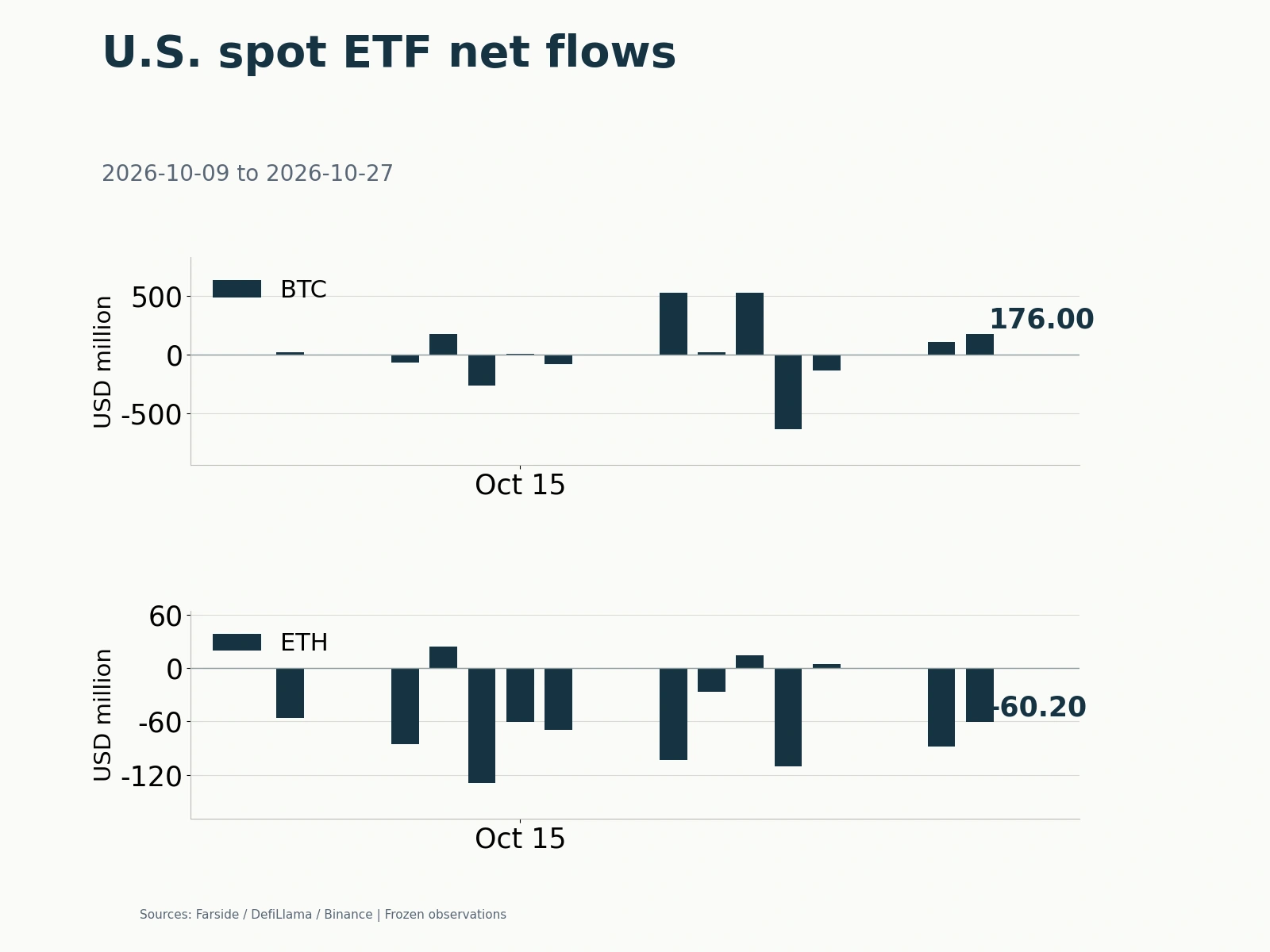
According to Farside, US spot Bitcoin ETFs recorded net outflows of $82.4 million on October 16 and spot Ethereum ETFs $69.7 million, a combined $152.1 million. All redemptions that day were concentrated in leading products: IBIT lost $71.8 million and FBTC $10.6 million among Bitcoin ETFs, while all Ethereum ETF outflows came from ETHA.
Across the five US sessions of October 12–16, Bitcoin ETFs lost a cumulative net $228.4 million and Ethereum ETFs $320.1 million, for a combined $548.5 million. Although Bitcoin ETFs attracted $175.7 million on October 13 and $5.1 million on October 15, a large $261.4 million outflow on October 14 and a renewed negative reading on October 16 left the week in net redemption. Ethereum ETFs recorded net inflows only on October 13, with net outflows on the other four sessions.
From the start of October through October 16, cumulative net outflows were $614.7 million for Bitcoin ETFs and $955.1 million for Ethereum ETFs. Because the two categories differ in asset size, absolute outflows do not directly equal redemption rates. But the persistence of flows shows that Ethereum ETFs have struggled more to sustain net subscriptions, with institutional-channel buying recovering more slowly. Because spot ETF creations and redemptions involve adjustments to fund shares and underlying assets and directly affect institutional allocation demand, persistent multi-day outflows matter more for spot-demand pressure than a brief one-day return of funds.
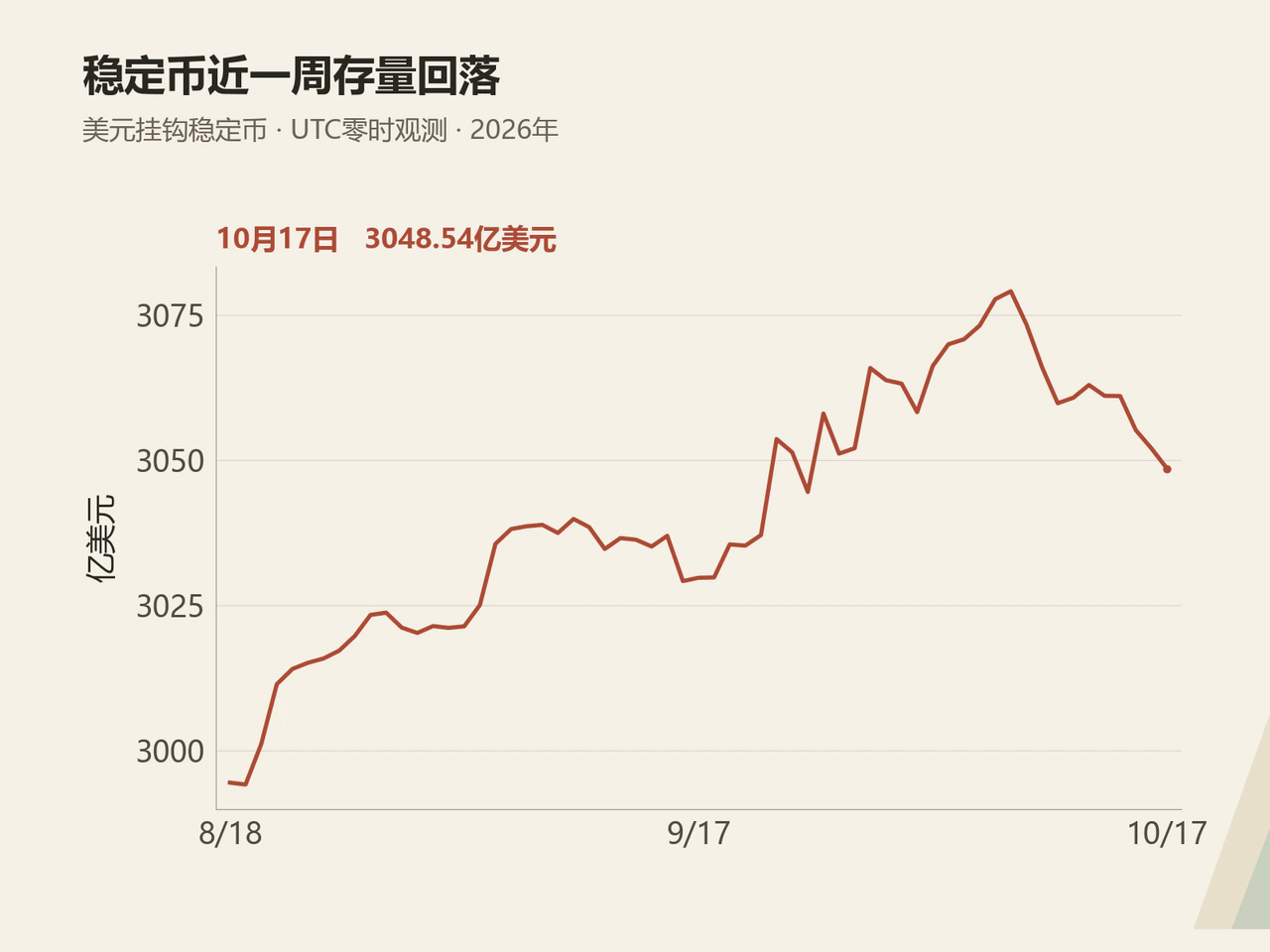
The on-chain dollar pool contracted as well. DefiLlama data showed dollar-pegged stablecoin circulating market capitalization at $304.854 billion at 00:00 UTC on October 17, down $347 million from the previous day and $1.124 billion, approximately 0.37%, from October 10. It remained above September 17's $302.975 billion, so the past month's net expansion had not been fully reversed, but the latest week's stock had begun shrinking.
Stablecoins serve on-chain settlement, collateral and payment functions, and a decline in supply means a smaller dollar funding pool within the market. Persistent ETF net redemptions alongside shrinking stablecoin supply suggest that neither traditional institutional allocation channels nor the on-chain pool is adding capital, leaving spot rebounds more dependent on the turnover of existing funds. Marginal changes in these distinct channels need to be tracked separately. A simultaneous recovery in stablecoin supply and sustained ETF net subscriptions would provide fuller confirmation of a spot-buying recovery.
BTC Funding Eases and ETH Switches Signs as Options Implied Volatility Edges Up Within Its Range
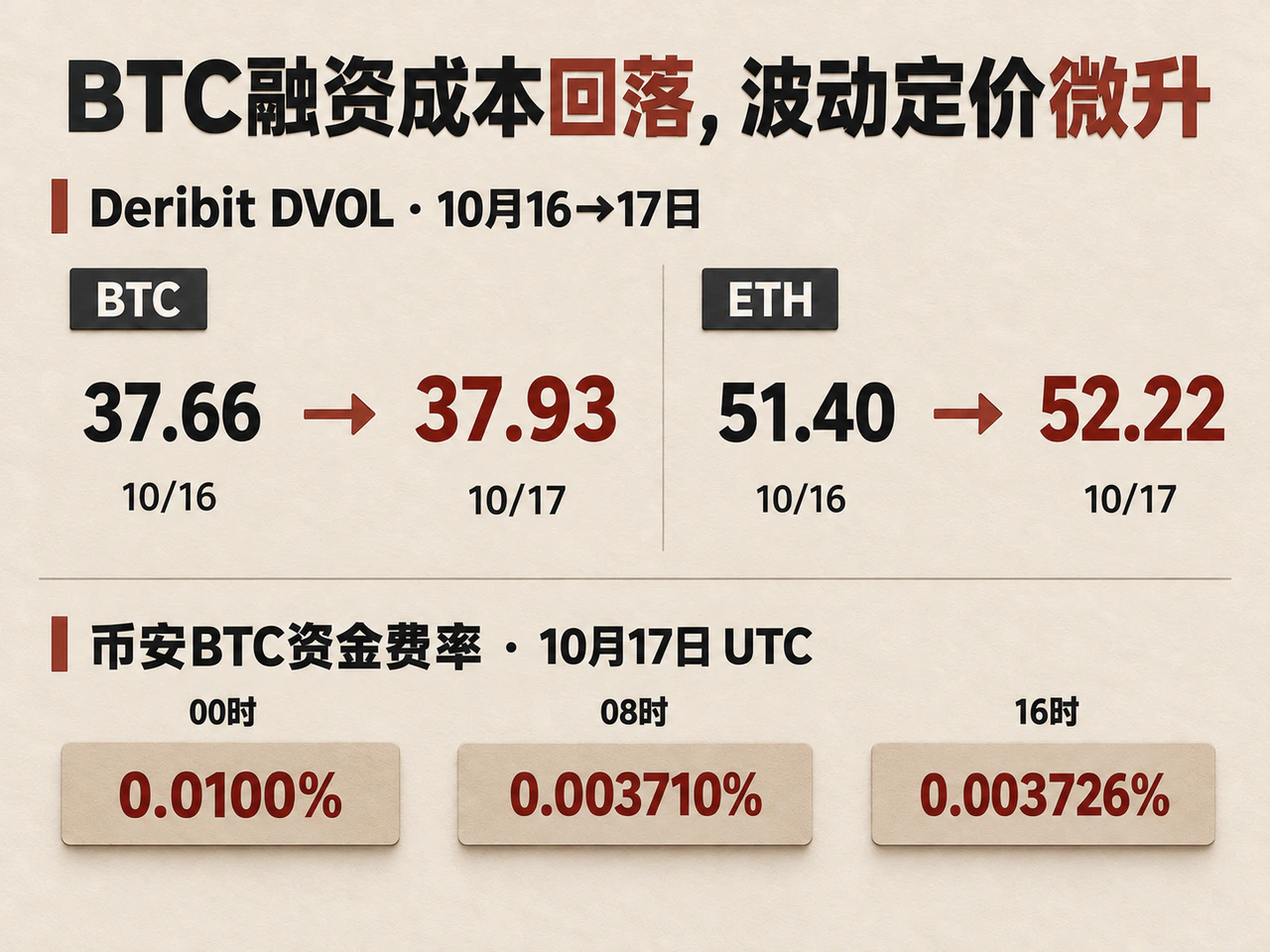
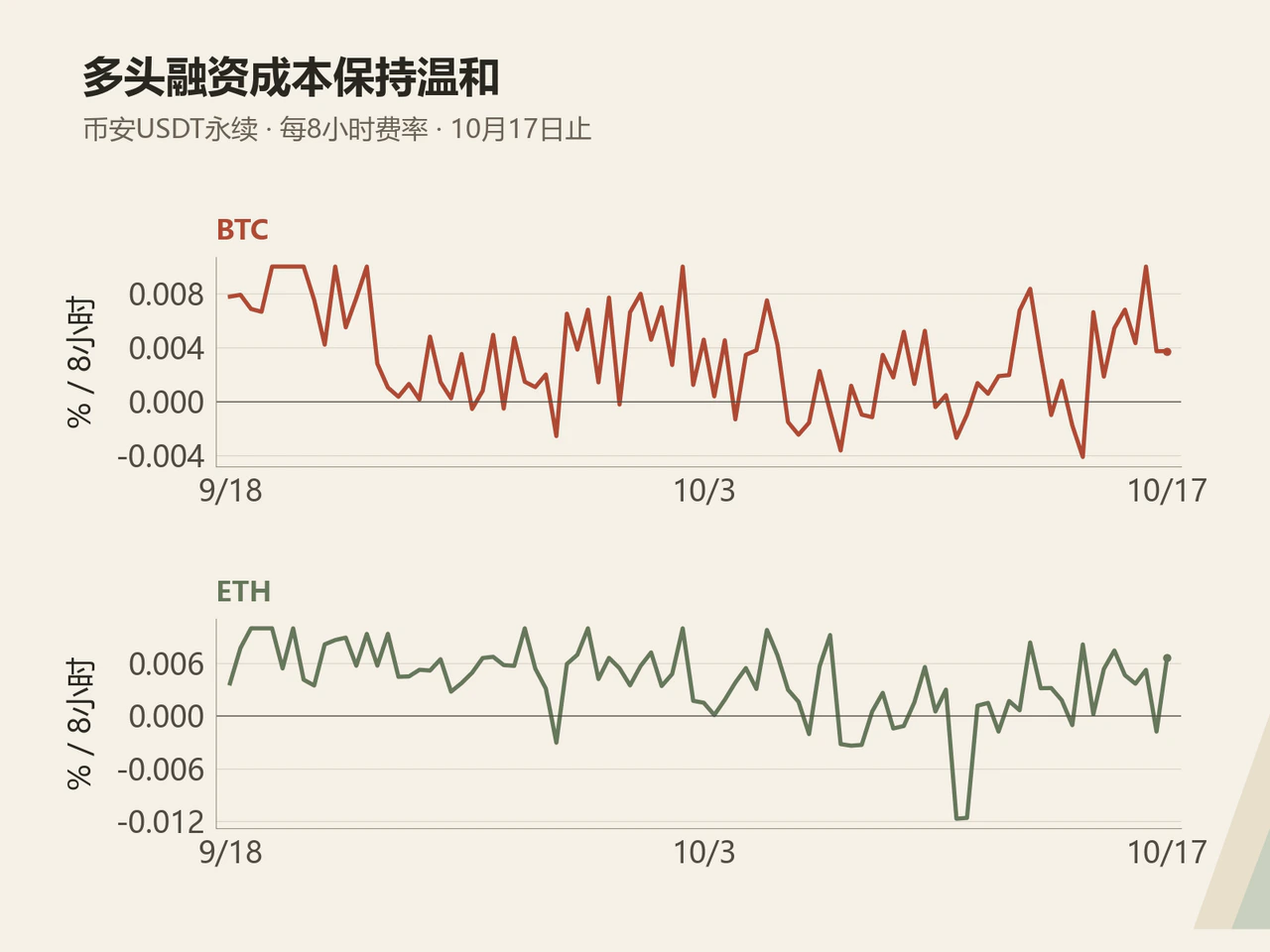
Financing costs for derivatives longs also remained moderate. On October 17 UTC, Binance BTCUSDT perpetuals recorded three eight-hour funding rates of 0.0100%, 0.003710% and 0.003726%, in that order, with the final two settlements markedly below the first. Positive rates mean longs pay shorts, and the decline shows that Bitcoin long-position carrying costs eased during the day.
Binance ETHUSDT perpetual funding rates over the same period were 0.005251%, -0.001797% and 0.006616%. Funding briefly turned negative before returning positive at the final settlement at a level above the first, indicating a continuing short-term contest over which side pays. Funding rates reflect only perpetuals' funding pricing relative to spot and cannot by themselves measure total leverage. Still, the day's settlements show that rally-chasing capital was not persistently driving financing costs higher.
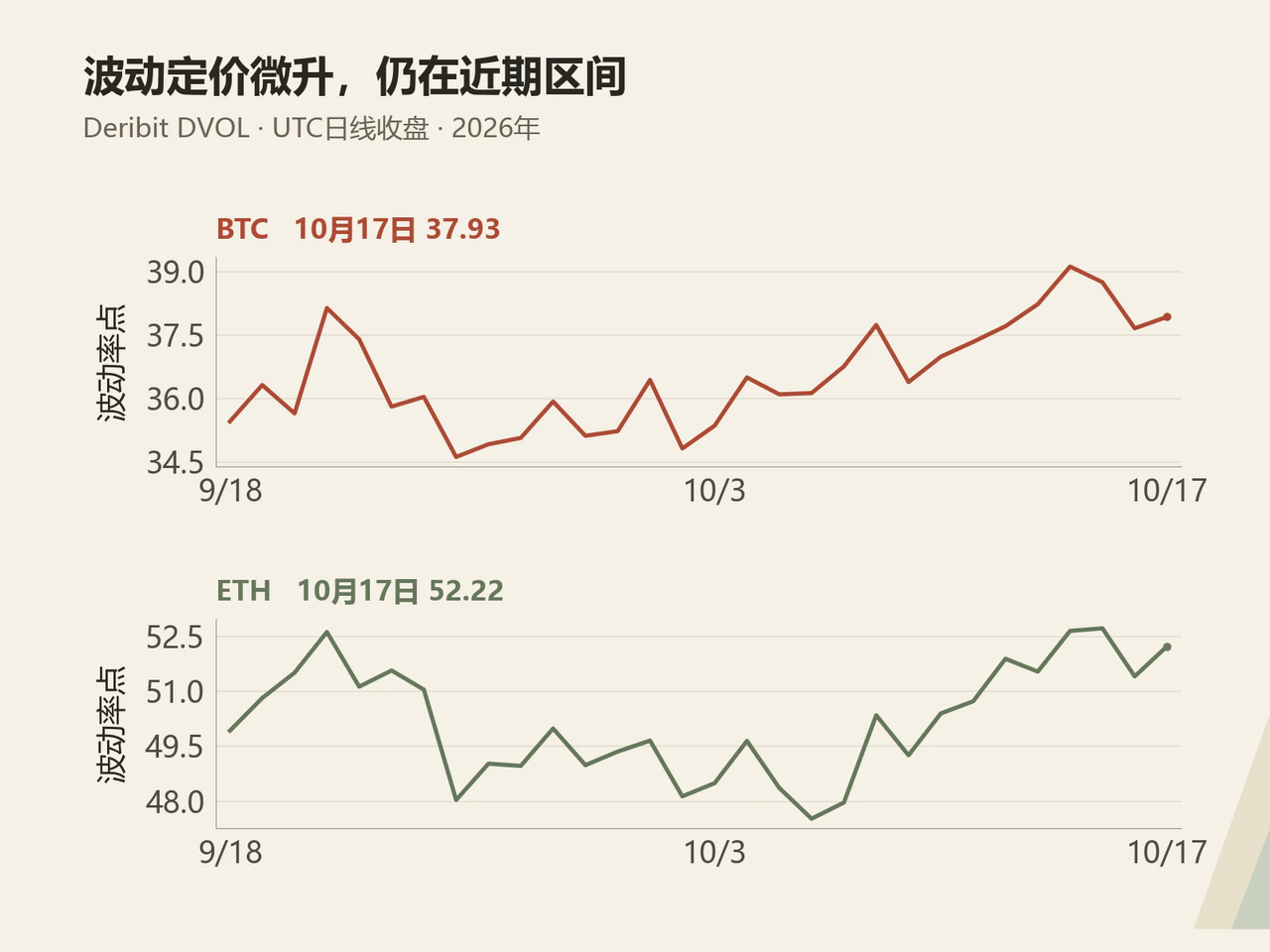
Options pricing of short-term volatility warmed slightly. On October 17 UTC, Deribit's Bitcoin implied volatility index (DVOL) closed at 37.93, up 0.27 points from 37.66 the previous day. Ethereum DVOL rose from 51.40 to 52.22, a larger gain of 0.82 points. Higher implied volatility indicates that the market was paying more option premium for future price uncertainty.
Within the past month's range, current Bitcoin and Ethereum DVOL readings were above September 18's 35.46 and 49.92, but below October 14's 39.12 and 52.64. The weekend recovery in options hedging pricing therefore remained within the earlier range. The central tension is continued capital loss through spot allocation channels alongside moderate financing costs for derivatives longs and range-bound volatility pricing. A durable price recovery still requires renewed spot capital to provide buying support, rather than relying solely on short-term derivatives positioning.
Click Read Original for full details.