By the morning of October 18 Beijing time, pressure on Middle Eastern sea lanes and regional defenses continued to mount. UK Maritime Trade Operations reported on October 17 that two tankers had been attacked off Saudi Arabia on October 16, while Iran's Revolutionary Guards claimed tankers had struck mines and caught fire in the Strait of Hormuz. Meanwhile, the US and Iran continued exchanging negotiating terms through regional intermediaries, and Egypt's parliament was due to consider authorization for defensive assistance to Saudi Arabia on October 18. Diplomatic mediation and regional defensive deployments were advancing in parallel.
Two Tankers Attacked off Saudi Arabia; Iran Says Two Ships Struck Mines and Caught Fire in the Strait
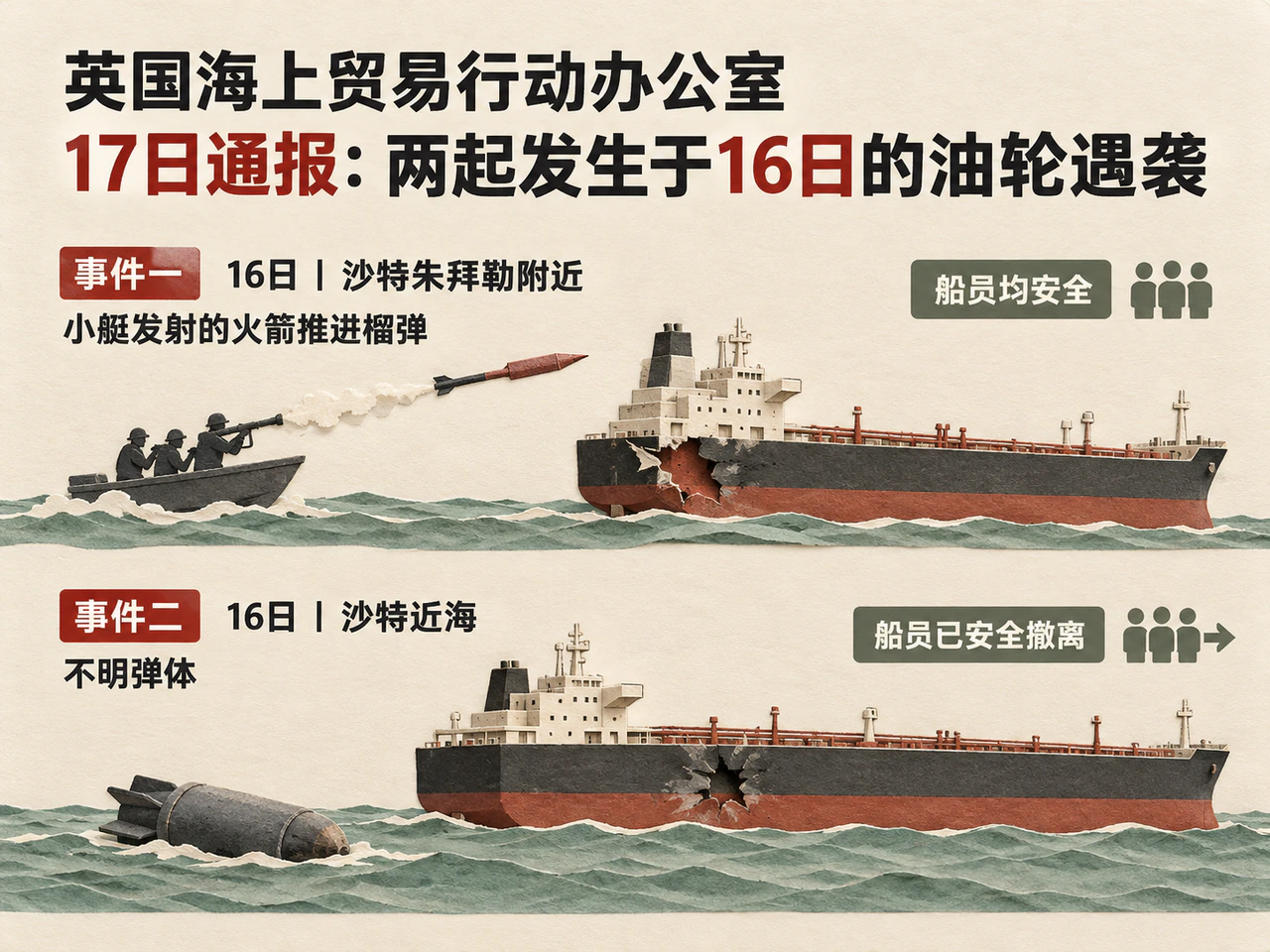
On October 17, UK Maritime Trade Operations reported two attacks on merchant ships off Saudi Arabia that had occurred on October 16. A tanker near Jubail was hit by a rocket-propelled grenade fired from a small boat, damaging its port stern; all crew were safe. Another tanker off the Saudi coast was struck by an unidentified projectile; its crew evacuated safely, and no environmental impact had been reported at the time of the notice. The methods show that shipping threats include both unidentified projectiles and close-range attacks from small boats.
In the Strait of Hormuz, Iran's Revolutionary Guards initially claimed on October 17 that a supertanker carrying more than 2 million barrels of crude had exploded and caught fire after striking a mine, without giving an exact location. Reuters subsequently cited Iranian state media as expanding the claim to two tankers that had struck mines and caught fire, with the second disabled. Iran said the ships had switched off their tracking equipment and attempted to use routes without its authorization. Neither the ships' distress nor the alleged mine strikes had been independently verified.
The contest over passage rights continued. US Central Command claimed that the US and its regional partners controlled the Strait of Hormuz, while Iran continued to demand that vessels follow its rules. In practice, safe passage depends on the specific stretch of water and actual escort capability. The additional small-boat attack reports mean escort forces must confront more dispersed threats. Even while some ships continue transiting, owners face real risks of hull damage, crew evacuation and interrupted voyages.
US and Iran Exchange Terms through Intermediaries; Tehran Reiterates Security Guarantees and Seven-Day Reopening Proposal
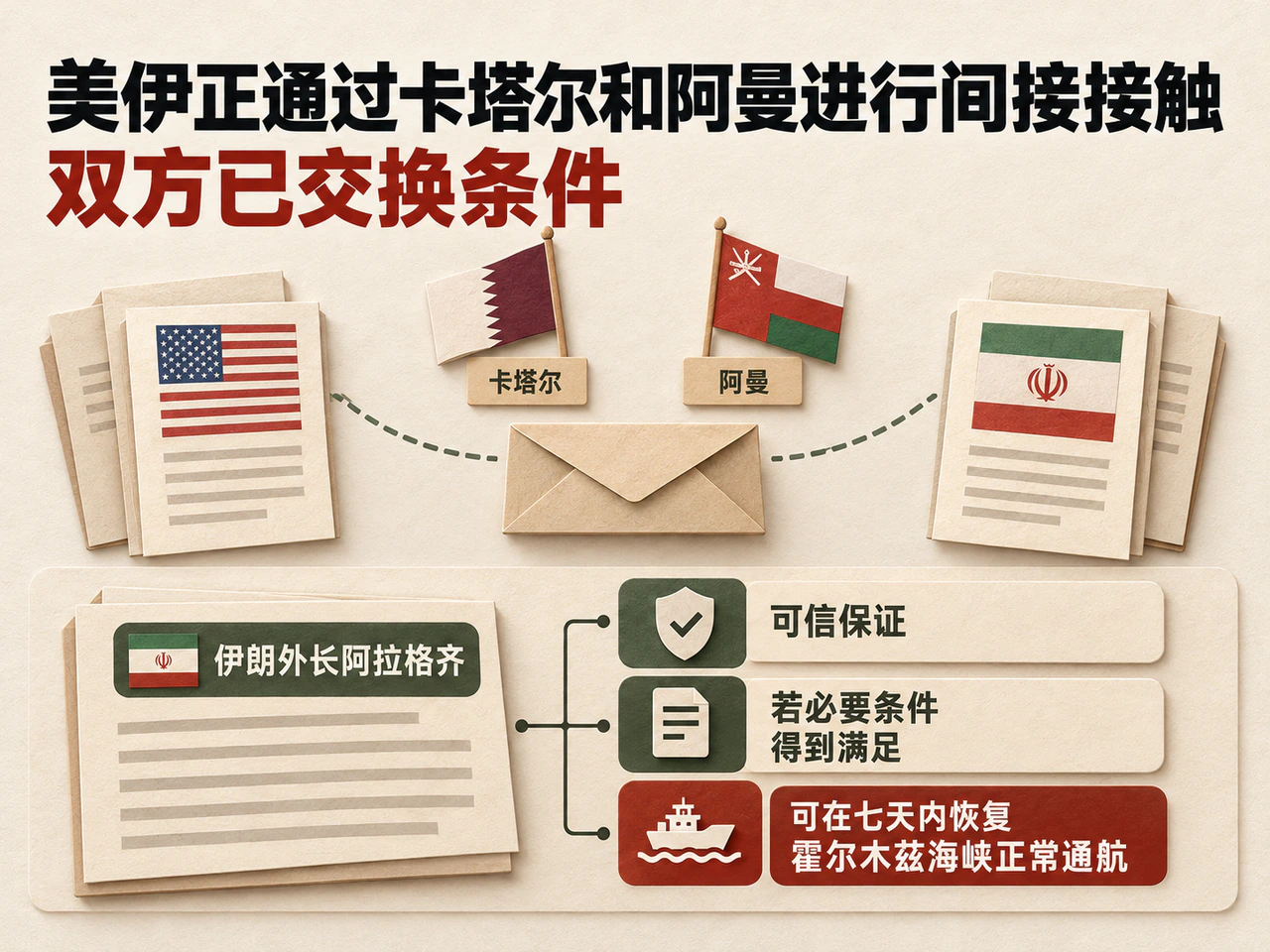
At the Organization of Islamic Cooperation foreign ministers' meeting in Baghdad on October 17, Iranian Foreign Minister Araghchi said Iran was willing to engage in dialogue, but a resumption of talks required credible guarantees against renewed military attacks during negotiations. He also reiterated a proposal previously conveyed through Qatar: normal navigation in the Strait of Hormuz could resume within seven days if necessary conditions were met, maintaining Iran's position of exchanging security arrangements for restored passage.
Rezazadeh, a member of the Iranian parliament's National Security and Foreign Policy Commission, said the same day that the US and Iran were in indirect contact through Qatar and Oman and had exchanged terms, with Tehran awaiting Washington's response. Available disclosures indicate that communication remained at the stage of conveying conditions; no formal negotiating schedule or agreement terms had been settled.
During the meeting, Araghchi also met foreign ministers from Turkey and other countries. According to the Iranian government, he discussed Yemen, the Persian Gulf and the Strait of Hormuz with Turkish Foreign Minister Fidan and emphasized diplomatic efforts to ease tensions.
Saudi Drone Interceptions Followed by Another Air Alert; Egypt's Parliament to Consider Defensive Aid Authorization on October 18
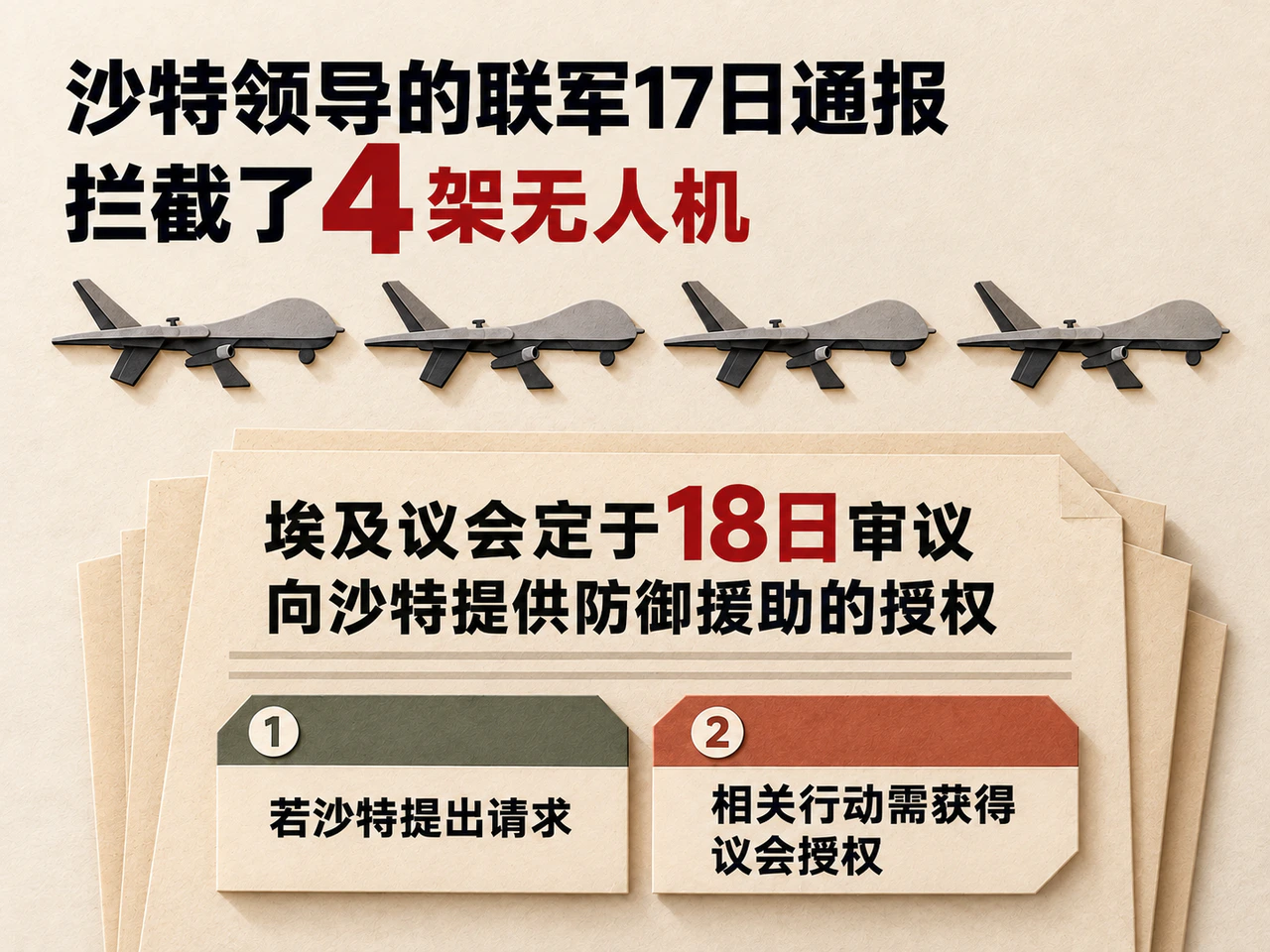
On the regional spillover front, Saudi Arabia continued to face air-defense pressure. The Saudi-led coalition said on October 17 that it had intercepted four drones over Riyadh, the Eastern Province and southern areas. In the early hours of October 18 local time, Riyadh residents again received mobile air-threat alerts, which were lifted minutes later. Addressing Saudi security, Egyptian President Sisi said on October 17 that Egypt was ready to take steps to provide defensive assistance if requested by Saudi Arabia, but action required parliamentary authorization. Egypt's parliament subsequently announced a plenary session for October 18 to discuss that authorization. Whether aid would materialize, and in what form, still depended on a subsequent request and parliamentary vote.
On Yemen, Araghchi advocated a political process to resolve the conflict in Baghdad and offered to assist dialogue. But al-Zuba, foreign minister of Yemen's internationally recognized government, publicly criticized the proposal, accusing Iran of providing weapons, funds and training to the Houthis and demanding an end to its involvement. The clear disagreement over the proposed mediator's role made it harder to translate battlefield pressure into political arrangements.
Airstrikes in Yemen continued alongside localized humanitarian action. Houthi media said Saudi strikes killed nine people and wounded 16 in Taiz, and killed three children and wounded 17 in Dhamar. The same day, the International Committee of the Red Cross confirmed that the authorities in Sanaa unilaterally released 159 people detained in connection with the Yemen conflict. The organization provided medical checks, family contact and help returning home.
A new diplomatic date also emerged on Lebanon. Lebanon's presidency announced on October 17 that a military delegation would attend trilateral talks in Tampa, Florida, on October 20, seeking an end to Israeli attacks on Lebanon. Strait navigation, US–Iran contacts and Lebanese security arrangements each had their own channels of engagement. Any substantive near-term easing still depended on those contacts producing a halt to attacks and executable security arrangements.
Key Developments
The times below are the Beijing times of the relevant reports or statements. Events that occurred earlier but were newly reported that day are identified in the entries.
| Key Developments |
|---|
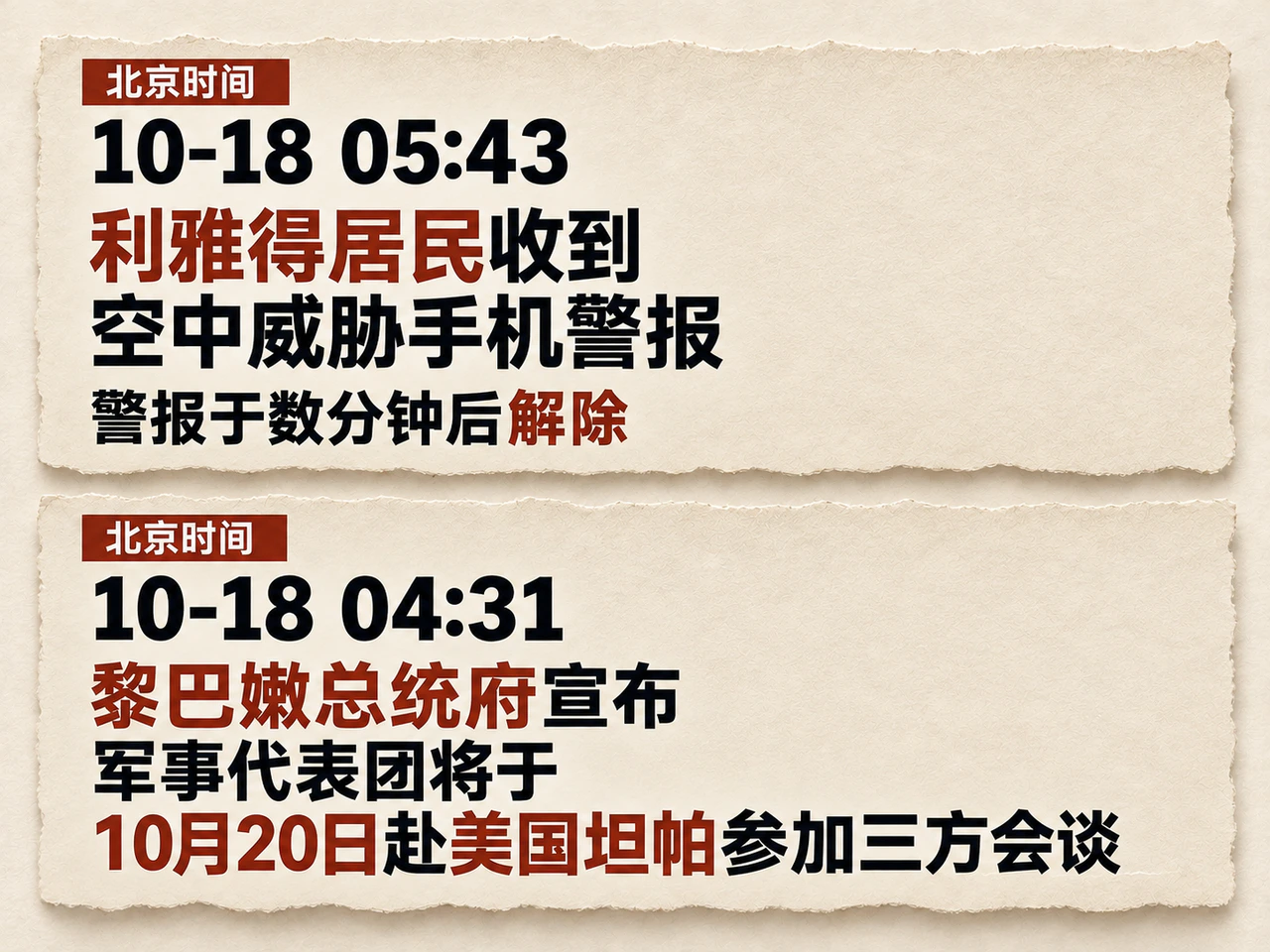
| 10-18 05:43AFP reported that Riyadh residents received mobile air-threat alerts, which were lifted minutes later. |
| 10-18 04:31Lebanon's presidency announced that a military delegation would travel to Tampa, US, for trilateral talks on October 20, seeking an end to Israeli attacks on Lebanon. |
| 10-18 02:46Yemeni Foreign Minister al-Zuba criticized Iran's proposed mediation, accused Iran of supplying weapons and funds to the Houthis, and demanded an end to its involvement. |
| 10-18 01:57Iranian Foreign Minister Araghchi met his Turkish counterpart and other foreign ministers in Baghdad. Iran's government said talks covered Yemen, the Persian Gulf, Hormuz and efforts to ease tensions. |
| 10-17 23:41Houthi media said Saudi airstrikes killed nine people and wounded 16 in Taiz, and killed three children and wounded 17 in Dhamar. |
| 10-17 23:02The Saudi-led coalition said it intercepted four drones over Riyadh, the Eastern Province and southern areas. |
| 10-17 22:37Egyptian President Sisi said Egypt was ready to take steps to provide defensive assistance if Saudi Arabia requested it, subject to parliamentary authorization. |
| 10-17 22:12The Houthis announced the release of 159 detainees; the International Committee of the Red Cross confirmed and assisted the unilateral release. |
| 10-17 21:49Araghchi advocated a political process to resolve Yemen's conflict in Baghdad and reiterated willingness to assist dialogue. |
| 10-17 17:31Iran's Revolutionary Guards claimed that a supertanker carrying more than 2 million barrels of crude struck a mine and caught fire in Hormuz, without disclosing an exact location. |
| 10-17 16:47UK Maritime Trade Operations reported that a tanker was hit near Jubail on October 16 by a rocket-propelled grenade fired from a small boat, damaging its port stern. Crew were safe. |
| 10-17 15:01UK Maritime Trade Operations reported that another tanker was hit by an unidentified projectile off Saudi Arabia on October 16. Its crew evacuated safely. |
| 10-17Iranian lawmaker Rezazadeh said the US and Iran exchanged negotiating terms through Qatar and Oman, and Tehran was awaiting Washington's response. |
| 10-17Araghchi said resuming talks required credible security guarantees and reiterated the proposal previously conveyed through Qatar to restore navigation in the strait within seven days. |
| 10-17Egypt's parliament announced a plenary session on October 18 to discuss authorization for defensive assistance at Saudi Arabia's request. |
| 10-17Reuters cited Iranian state media as saying the Revolutionary Guards subsequently expanded their claim of mine strikes and fires to two tankers. The report had not been independently verified. |