During the week of October 12–18, with developments recorded through the morning of October 19 Beijing time, talks on navigation through the Strait of Hormuz proceeded alongside regional military pressure. Diplomatically, the United States and Iran continued contacts through intermediaries, but substantive differences remained over the order of the agenda. Iran linked restored shipping to lifting the port blockade, easing oil sanctions and regional ceasefires. The United States demanded that Iran's nuclear program be addressed from the start of negotiations and signaled possible attacks on related nuclear facilities.
Meanwhile, maritime attacks and regional fighting spread further. The container ship GFS Pride sank after being attacked, and Iranian officials disclosed plans to extend attacks into the Gulf of Oman and other waters beyond the strait. Escalating exchanges between Saudi Arabia and the Houthis affected Saudi Aramco facilities and Riyadh's international airport, prompting Egypt to begin seeking parliamentary authorization to help defend Saudi Arabia. Shipowners' risks now extend beyond whether the strait is nominally open to the full transport chain, including escorts, ship-to-ship transfers and offshore waiting. Wider regional fighting also makes a comprehensive ceasefire and shipping arrangement harder to achieve.
Iran Reiterates Its Six-Day Reopening Plan as Washington and Tehran Remain Divided Over Nuclear Restrictions and Blockade Relief
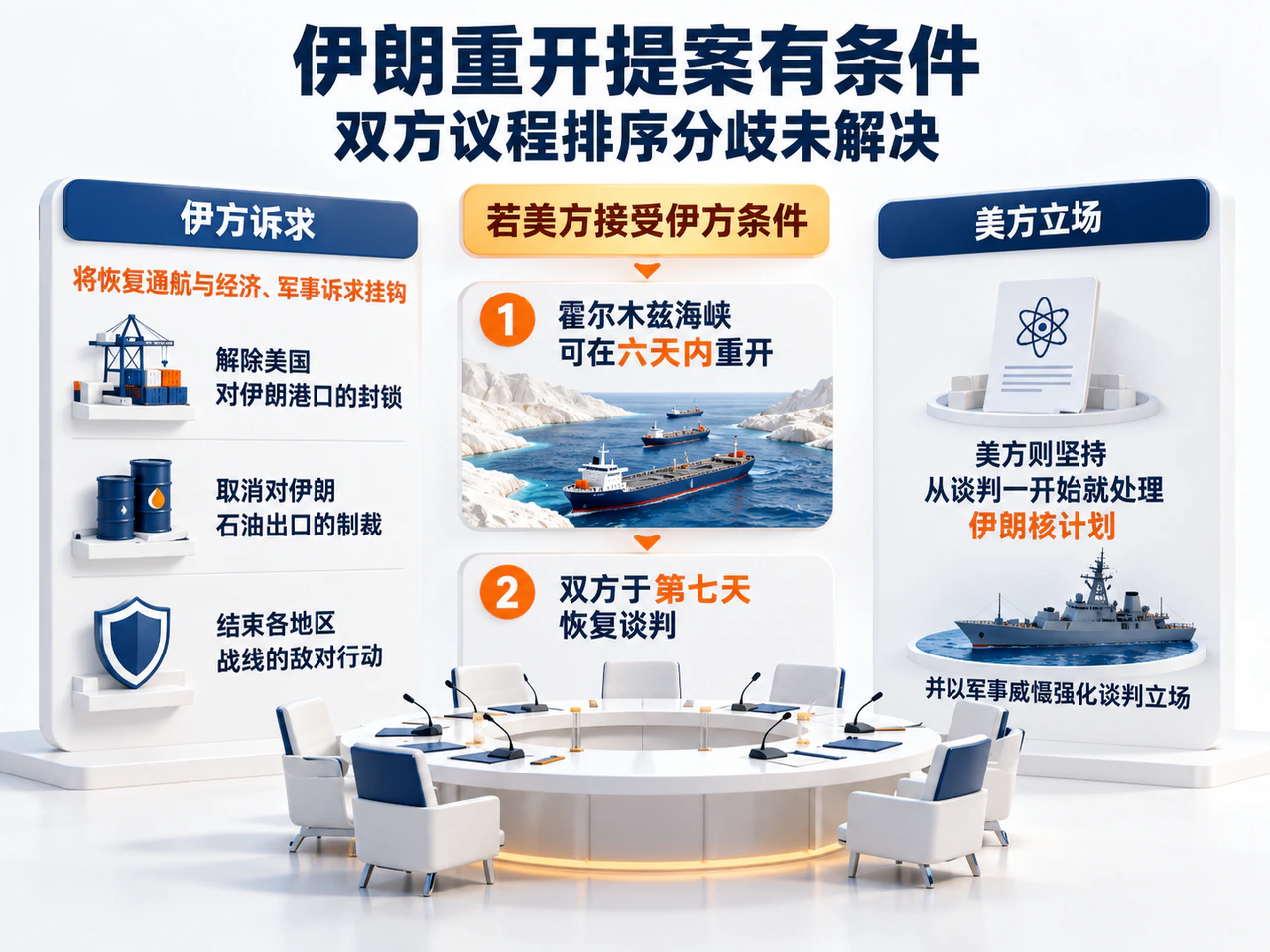
Indirect US–Iran communication on reopening the strait continued throughout the week but remained blocked by agenda sequencing and terms of exchange. Early in the week, Iranian Foreign Ministry spokesman Baghaei said Tehran was still reviewing the US response to its reopening proposal and would reply through intermediaries once that review was complete. On October 18, at an Organization of Islamic Cooperation meeting in Baghdad, Foreign Minister Araghchi reiterated that the proposal remained valid: if Washington accepted Iran's conditions, the Strait of Hormuz could reopen within six days and talks could resume on day seven.
Reuters reported that Iran's conditions tied restored navigation to economic and military demands, including lifting the US blockade of Iranian ports, ending sanctions on Iranian oil exports and ending hostilities across regional fronts. Sanctions and the blockade have directly pressured Iran's foreign-currency resources. On October 13, the government spokesman said limited foreign exchange would be prioritized for essential imports and some lower-priority activities suspended. Restoring shipping is therefore both a negotiating issue and Tehran's central bargaining chip for securing external unblocking and sanctions relief.
Washington insisted that Iran's nuclear program be addressed from the outset and reinforced its negotiating position with military deterrence. In an interview report published on October 16, Trump said the United States might need to strike the Pickaxe Mountain facility associated with Iran's nuclear program, without explicitly saying he had approved the use of the relevant large conventional bombs. He ruled out using nuclear weapons against Iran and said he did not believe ground troops would be necessary.
With a comprehensive agreement stalled, arrangements for limited routes continued. In an interview released during the week, Baghaei said Iran and Oman had reached an understanding on a temporary safe shipping route between the two countries, with some implementation details still being addressed. This bilateral arrangement could preserve a limited corridor for essential transport, but its scope cannot substitute for a full reopening of the strait. Without a compromise between Washington's nuclear-restrictions-first position and Tehran's blockade-relief-first demand, navigation is unlikely to be resolved independently of the nuclear issue and regional fighting.
GFS Pride Sinks After an Attack as Iran Plans to Extend Ship Strikes into the Gulf of Oman

From midweek, maritime attacks caused greater disruption to actual transport. Early on October 13 Beijing time, Iran's Revolutionary Guards claimed to have attacked three large tankers over the previous two days; the claim had not been independently confirmed. Media accounts of UK Maritime Trade Operations (UKMTO) notifications said a tanker and a container ship were struck by projectiles of unknown origin in Hormuz on October 13, with the notification issued early October 14 Beijing time. On October 16, UKMTO further confirmed that the Singapore-registered container ship GFS Pride caught fire after being hit and ultimately sank, adding to actual merchant-vessel losses.
The geographic reach and tactics of attacks were also changing. On October 14, Reuters cited two senior Iranian officials as saying Iran was adjusting the method and tempo of ship attacks and planning to extend operations into the Gulf of Oman and other waters beyond the strait, seeking to prevent oil prices from falling and pressure Washington. A US military official said Iran had begun using observers aboard small boats to identify targets after losing some radar capability.
These tactical changes directly threatened alternative transport chains. Although US escorts and ship-to-ship transfers help move some oil through the strait, the process still depends heavily on coordination among small vessels, transfer points and ships waiting offshore. The spread of attacks beyond the strait forces shipowners to accept greater risks in route selection, offshore waiting times and insurance costs. The availability of a single navigable segment is insufficient to bring commercial shipping capacity back in full.
Saudi–Houthi Exchanges Affect Aramco and Riyadh Airport as Egypt Considers Defense Authorization
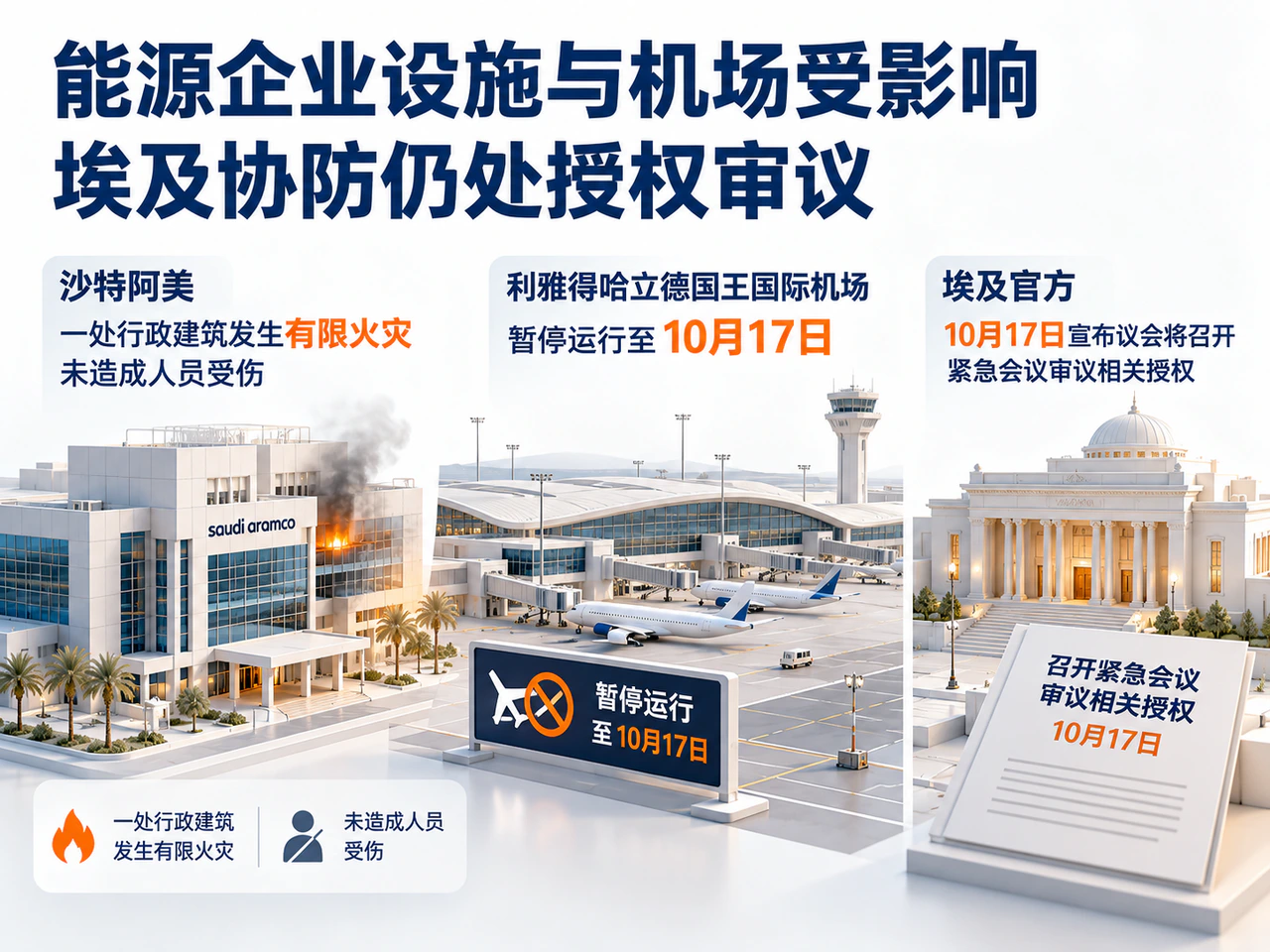
Another major escalation occurred on the Saudi–Yemeni front. On October 13, in a notification issued early October 14 Beijing time, the Saudi-led coalition confirmed strikes on oil facilities in Sanaa and western Yemen, saying the targets supported Houthi military operations. Saudi energy authorities subsequently reported a limited fire in an Aramco administrative building in the Eastern Province, with no injuries. Saudi civil defense said debris from an intercepted missile fell into a Riyadh residential area, injuring 4 people and damaging 15 homes.
The conflict directly disrupted civilian aviation and business operations. A US State Department advisory that week said Riyadh's King Khalid International Airport had suspended operations until October 17 and required US government personnel in Saudi Arabia to obtain special permission to use airports. Delta Air Lines also postponed the launch of its Atlanta–Riyadh route to March 2027 because of the security situation. Attacks on energy facilities and disruption to aviation show the spillover costs reaching business travel, cross-border logistics and day-to-day corporate operations.
Diplomatic and regional defense maneuvering intensified accordingly. On October 15, Saudi diplomat Krimly accused Iran of encouraging an escalation in Houthi attacks but said the two countries retained direct communication channels. Egypt's foreign minister called his Iranian counterpart on October 13, demanding an immediate halt to Houthi attacks on Saudi Arabia and urging a political settlement. By the weekend, President Sisi said Egypt was prepared to take necessary defensive measures if Saudi Arabia requested them. Egyptian authorities announced on October 17 that parliament would hold an emergency meeting to consider authorization. Regional involvement in Saudi security was shifting from diplomatic support toward concrete discussion of defense powers.
Yemen's humanitarian crisis was also worsening. The World Health Organization disclosed that 8,034 suspected cholera cases and 27 deaths had been reported in Yemen that year to date. Continued fighting, displacement and disrupted medical services were jointly increasing pressure on the public-health system.
Key Developments
| Key Developments (Beijing time) |
|---|
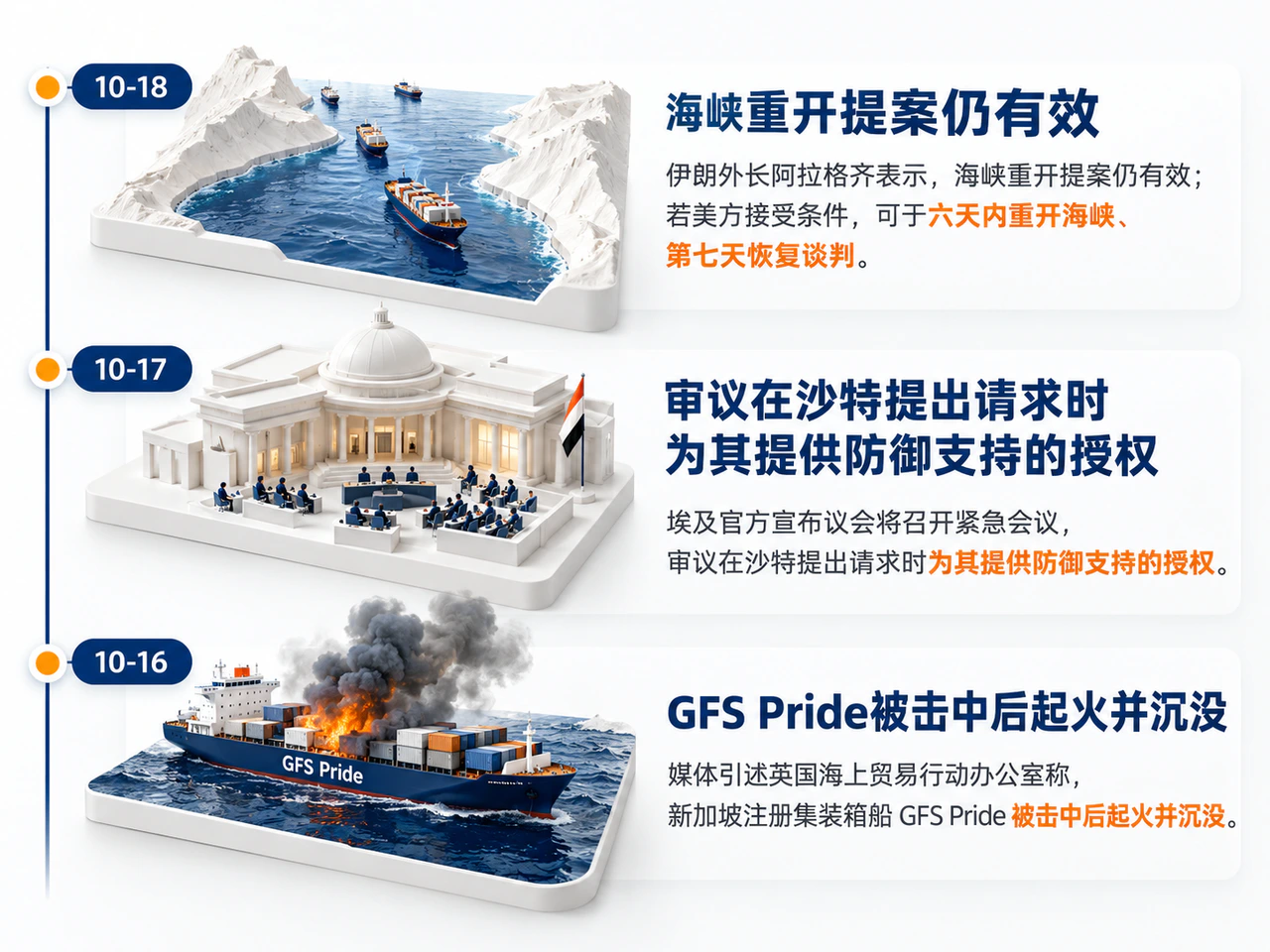
| 10-18 Foreign Minister Araghchi said Iran's strait-reopening proposal remained valid: if Washington accepted its conditions, Hormuz could reopen within six days and talks could resume on day seven. |
| 10-17 Egyptian authorities announced that parliament would hold an emergency meeting to consider authorization for defensive support to Saudi Arabia if requested. |
| 10-16 Media reported Trump's statement that the United States might strike the nuclear-related Pickaxe Mountain facility. He ruled out nuclear weapons and said he did not believe ground troops would be needed. |
| 10-16 Media cited UKMTO as saying the Singapore-registered GFS Pride caught fire after being struck and sank. |
| 10-15 Saudi diplomat Krimly accused Iran of encouraging escalating Houthi attacks, while saying Saudi Arabia and Iran retained direct communication. |
| 10-14 Reuters cited two senior Iranian officials as saying Iran was changing the method and tempo of ship attacks and planning to extend operations into the Gulf of Oman and other waters beyond the strait. |
| 10-14 08:53 Saudi civil defense said intercepted-missile debris fell in a Riyadh residential district, injuring 4 people and damaging 15 homes. |
| 10-14 06:16 Saudi energy authorities reported a limited fire at an Aramco administrative building in the Eastern Province, with no injuries. |
| 10-14 05:15 A US State Department security advisory said Riyadh's King Khalid International Airport had suspended operations until October 17, and US government personnel needed special permission to use Saudi airports. |
| 10-14 04:59 The Saudi-led coalition confirmed strikes on oil facilities in Sanaa and western Yemen, saying they supported Houthi military operations. |
| 10-14 03:56 UKMTO reported that a tanker and a container ship had been struck by projectiles of unknown origin in the Strait of Hormuz. |
| 10-14 01:37 The WHO reported 8,034 suspected cholera cases and 27 deaths in Yemen that year to date, with conflict and displacement increasing public-health pressure. |
| 10-13 18:59 Iranian Foreign Ministry spokesman Baghaei said Iran and Oman had reached an understanding on a temporary safe shipping route between them, with some implementation details still being addressed. |
| 10-13 18:34 Egypt's foreign minister demanded an immediate halt to Houthi attacks on Saudi Arabia in a call with Iran's foreign minister and urged a political resolution. |
| 10-13 17:33 Iran's government spokesman said limited foreign exchange would be prioritized for essential imports, with some lower-priority activities suspended. |
| 10-13 05:19 Delta said the security situation had delayed the launch of its Atlanta–Riyadh route, now planned for March 2027. |
| 10-13 00:43 Iran's Revolutionary Guards claimed to have attacked three large tankers in the preceding two days; the claim had not been independently confirmed. |
| 10-12 Iran's Foreign Ministry said it was still reviewing Washington's response to the strait-reopening proposal and would reply through intermediaries afterward. Indirect exchanges continued. |


