International oil prices rose sharply in the week of October 12–18. Although Middle Eastern production and exports recovered, most incremental crude remained in transit at sea and had yet to rebuild onshore inventories. Alongside diesel shortages and expensive freight, upward pressure was spreading from prompt physical markets into deferred contracts.
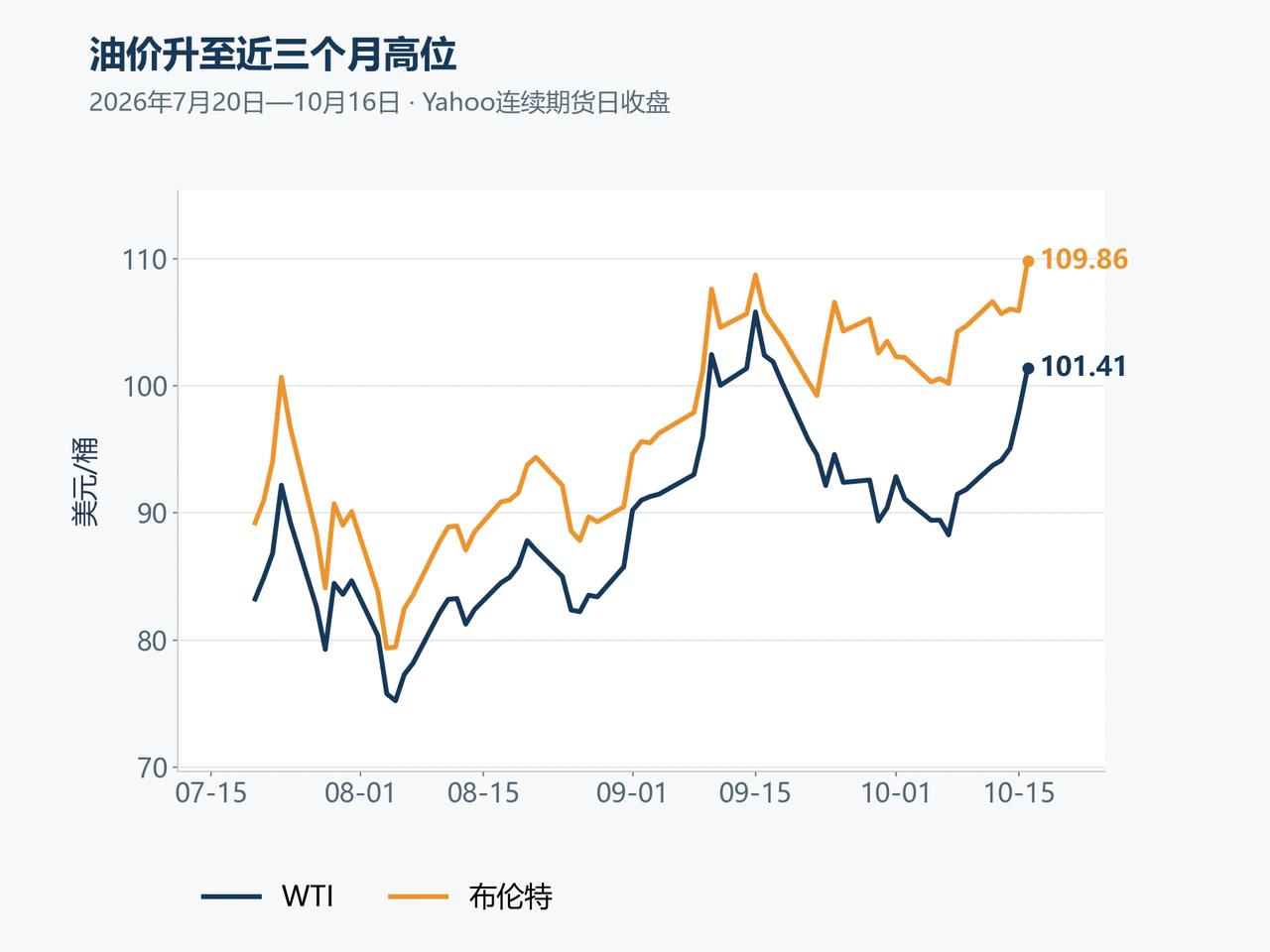
Over the five trading days of October 12–16, Yahoo's vendor daily closes for continuous futures showed WTI rising from the previous Friday's $91.85 a barrel to $101.41, a weekly gain of 10.41%. Brent rose from $104.72 to $109.86, up 4.91%. WTI advanced each day, while Brent fluctuated midweek before surging on Friday. As of the morning of October 19 Beijing time, trading focused on the ability to deliver crude production, maritime throughput and diesel refining. Both the immediate physical deficit and the longer-term repair cycle were being reassessed.
Gulf exports recover to 13.9 million barrels a day, but global onshore stocks still plunge 113 million barrels
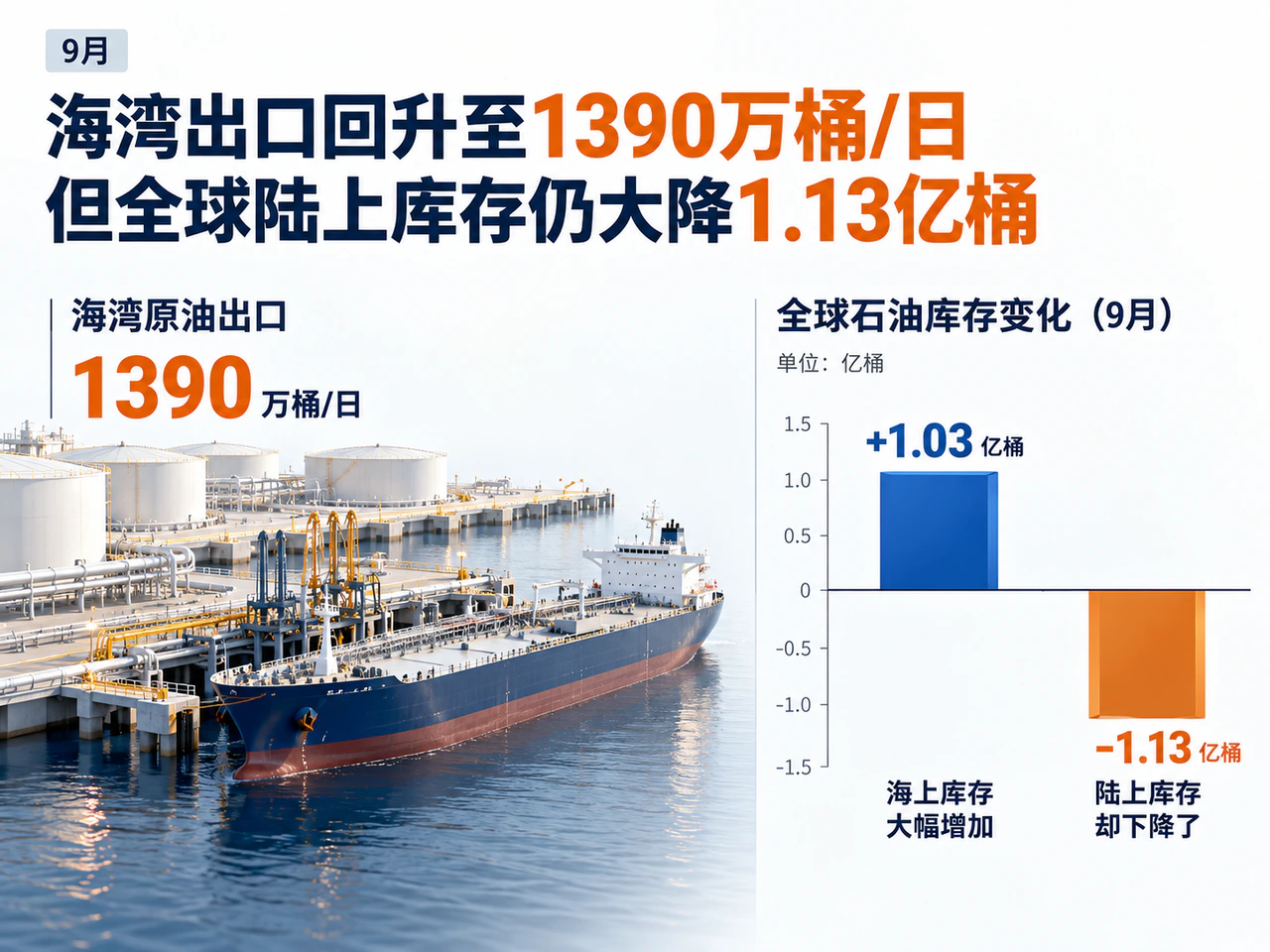
The International Energy Agency's October 14 monthly report showed global oil supply rising by 2.5 million barrels a day in September to 102.3 million barrels a day, with Gulf producers supplying most of the increase. Gulf crude exports rose by 4.4 million barrels a day to 13.9 million, recovering to more than three-quarters of their prewar level. Ship-to-ship transfers in the Gulf of Oman and bypass pipelines supported the recovery, while oil flows through Hormuz also rose to 10.9 million barrels a day.
More loading at the source did not simultaneously ease inventory pressure in consuming markets. Global observed oil stocks still fell by a net 10 million barrels in September: offshore inventories increased by 103 million barrels, but onshore stocks fell by 113 million. Regional security risks and high freight rates raised supply-chain turnover costs, leaving large volumes in transit. The export rebound had not yet become an onshore buffer readily available to refiners.
On production policy, seven OPEC+ countries decided on October 4 to maintain November production at the levels required for September. Further supply recovery depended more on existing capacity and transport being realized than on higher paper quotas. The IEA estimated that Saudi September output had recovered significantly from August; the material recovery in production also imposed some constraint on further oil-price gains.
U.S. commercial crude draws 8.6 million barrels in a week; distillates sit 12% below their five-year average

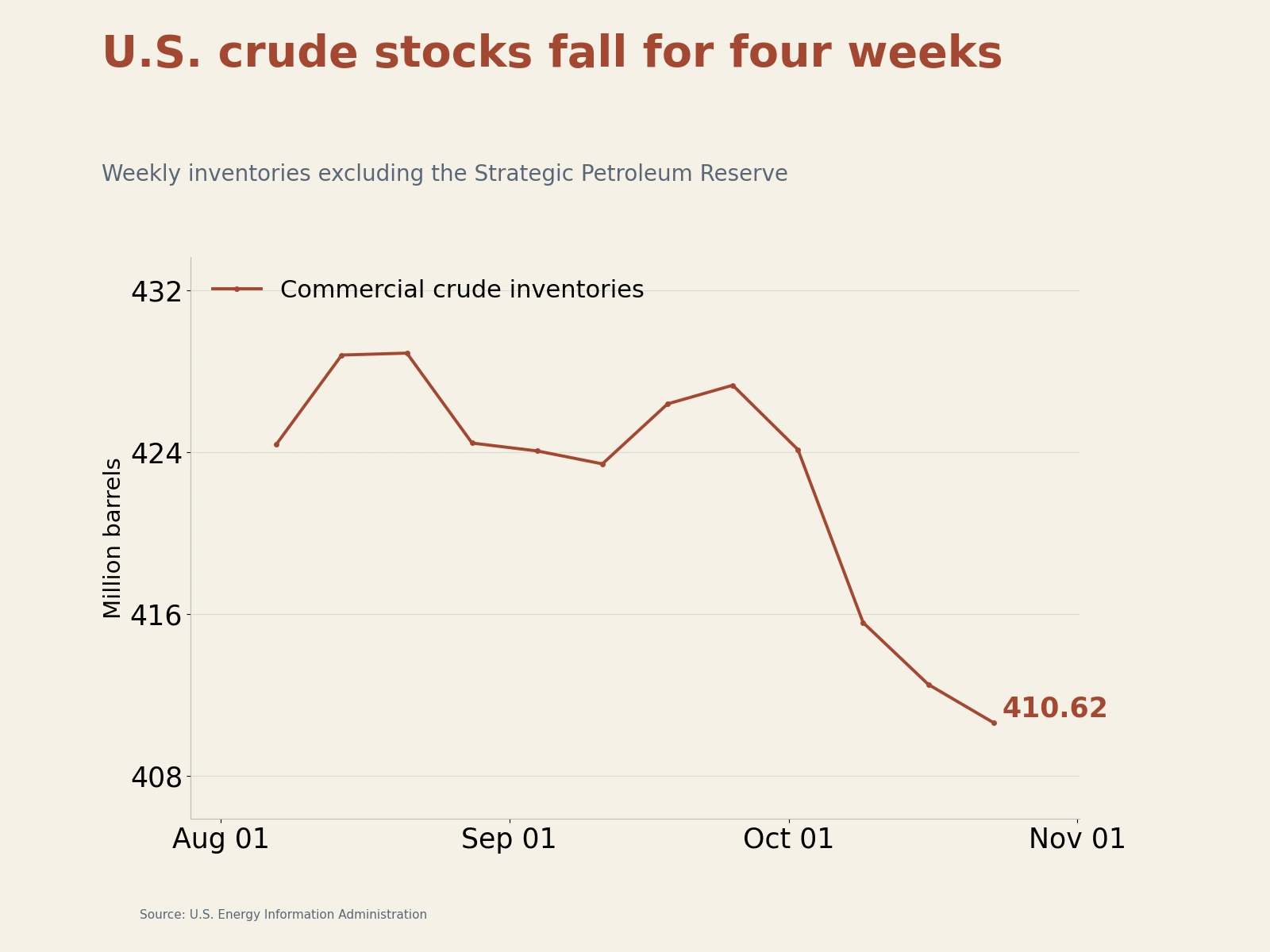
U.S. inventory data reinforced expectations of prompt physical tightness. Public accounts of the EIA's weekly data showed commercial crude stocks falling by 8.6 million barrels to 415.6 million in the week ended October 9, about 3% below the seasonal five-year average. Distillate inventories, including diesel, fell by 2.5 million barrels and were about 12% below their seasonal five-year average.
U.S. crude imports fell by 791,000 barrels a day during the same period, while refinery crude runs also declined. Lower imports directly deepened commercial crude draws, consistent with WTI's much larger weekly gain than Brent's. Low diesel stocks also made refiners and product traders more sensitive to further supply fluctuations.
The market repeatedly weighed policy-driven replenishment against geopolitical risk. Reuters reported on October 13 that hopes for additional supply from U.S.–Russia diesel arrangements competed with concerns about Saudi–Yemen conflict and shipping risks; Brent fell that day while WTI edged higher. By the weekend, the market was still assessing the volume of Russian diesel actually deliverable. Qatar News Agency also reported that the IEA had agreed to release more than 20 million barrels of fuel reserves, while the U.S. Energy Department was seeking proposals for exchanges of up to 17 million barrels from the Strategic Petroleum Reserve (SPR). These measures offered potential buffers, but their actual relief depended on physical delivery speed.
High oil prices had begun restraining consumption. The IEA expected global oil demand to fall by 2.6 million barrels a day that year. Nevertheless, because supply-chain damage was reducing effective supply faster than demand was falling, it still expected the global deficit to persist through year-end. That explains why oil strengthened despite weak consumption.
December 2027 Brent reaches $86 and European diesel for the same month tops $1,000 as deferred contracts price a longer repair cycle

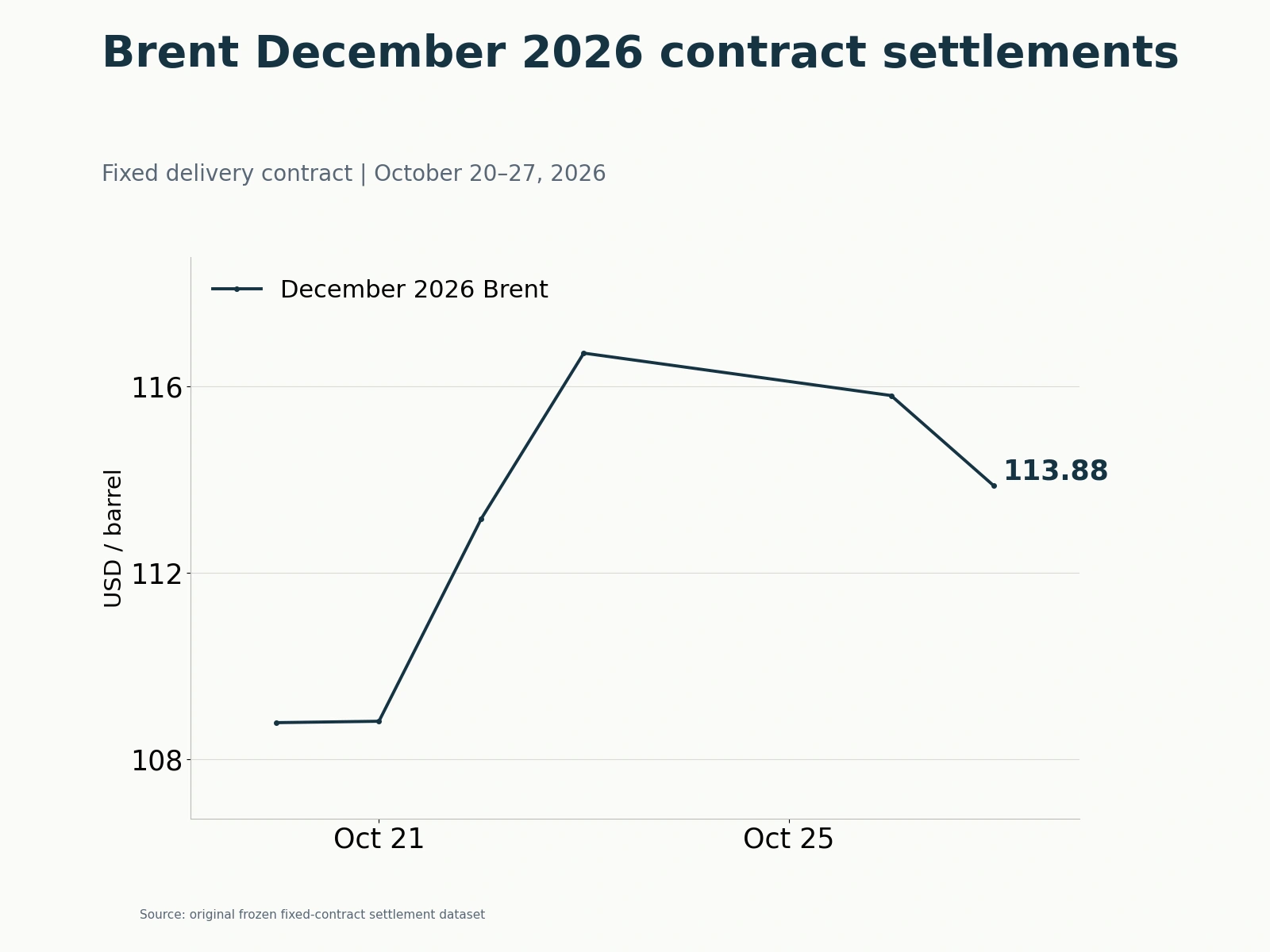
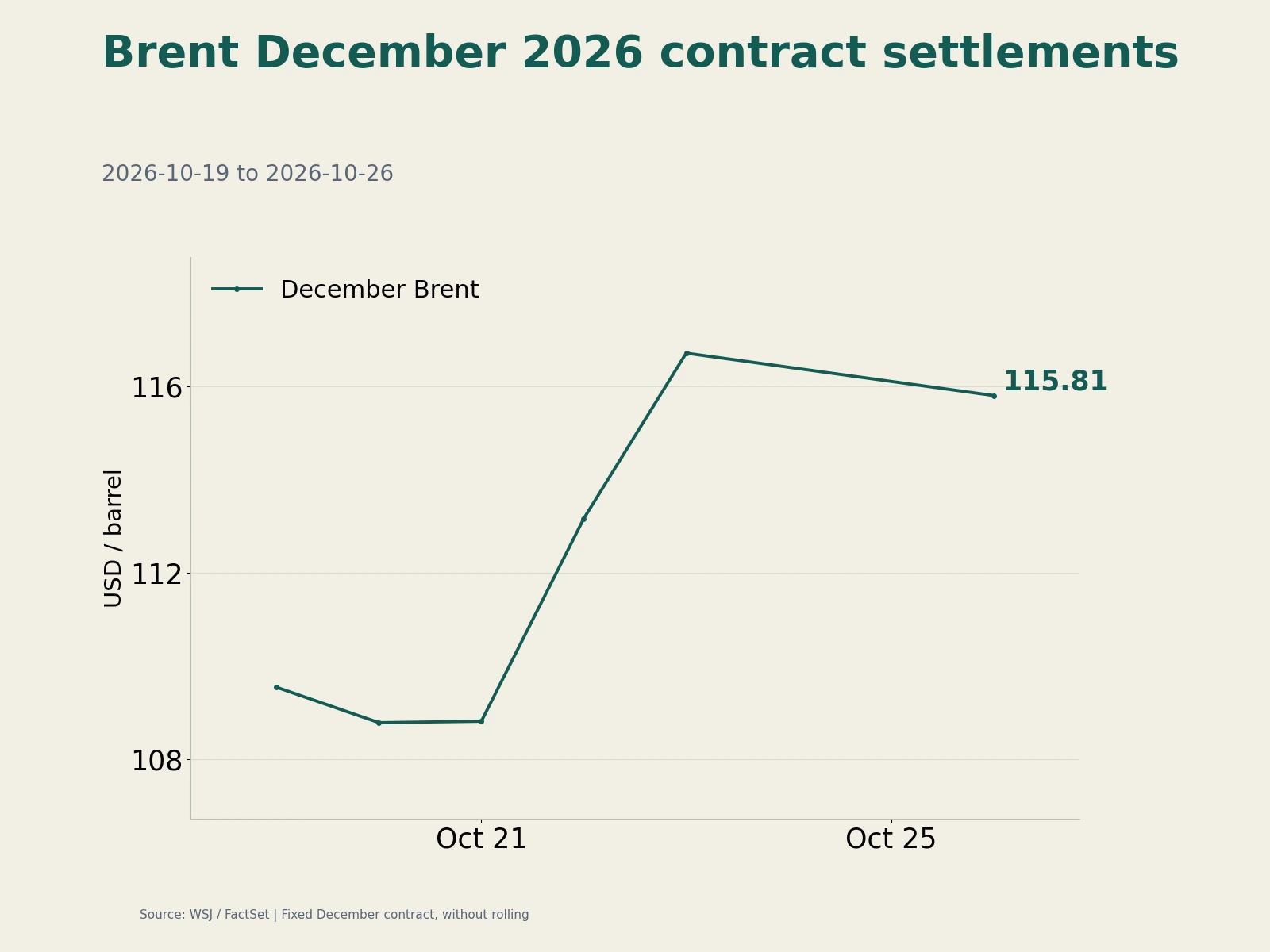
Concern about the time needed to replenish inventories and repair supply chains had spread from prompt to forward markets. Reuters' October 15 analysis said December 2027 Brent had risen more than 13% since early September to about $86 a barrel; December 2026 Brent had gained about 12% over the same period. Although forward prices remained below current prompt levels, repricing longer-dated deliveries reflected expectations of a more prolonged supply-chain recovery.
The diesel forward curve sent an even stronger tightness signal. The same Reuters report said December 2027 European diesel futures had surpassed $1,000 a tonne for the first time that week. The IEA also noted deeper prompt diesel premiums and a longer inventory-rebuilding period. Even if seaborne crude flows gradually recover, mismatches among refining capacity, product exports and winter demand could persist.
The dollar index fell about 0.36% the previous week, providing some support for dollar-priced oil, but the central tension remained physical supply. Four developments warrant attention: whether actual Hormuz flows recover steadily; whether global and U.S. onshore inventories stop falling; whether reserve releases and Russian diesel actually arrive; and whether deferred oil prices and prompt diesel premiums retreat. Upward price pressure will ease materially only when transport recovery delivers sustained onshore stock rebuilding. If additional crude continues to remain at sea, recovering supply and high prices could coexist for longer.