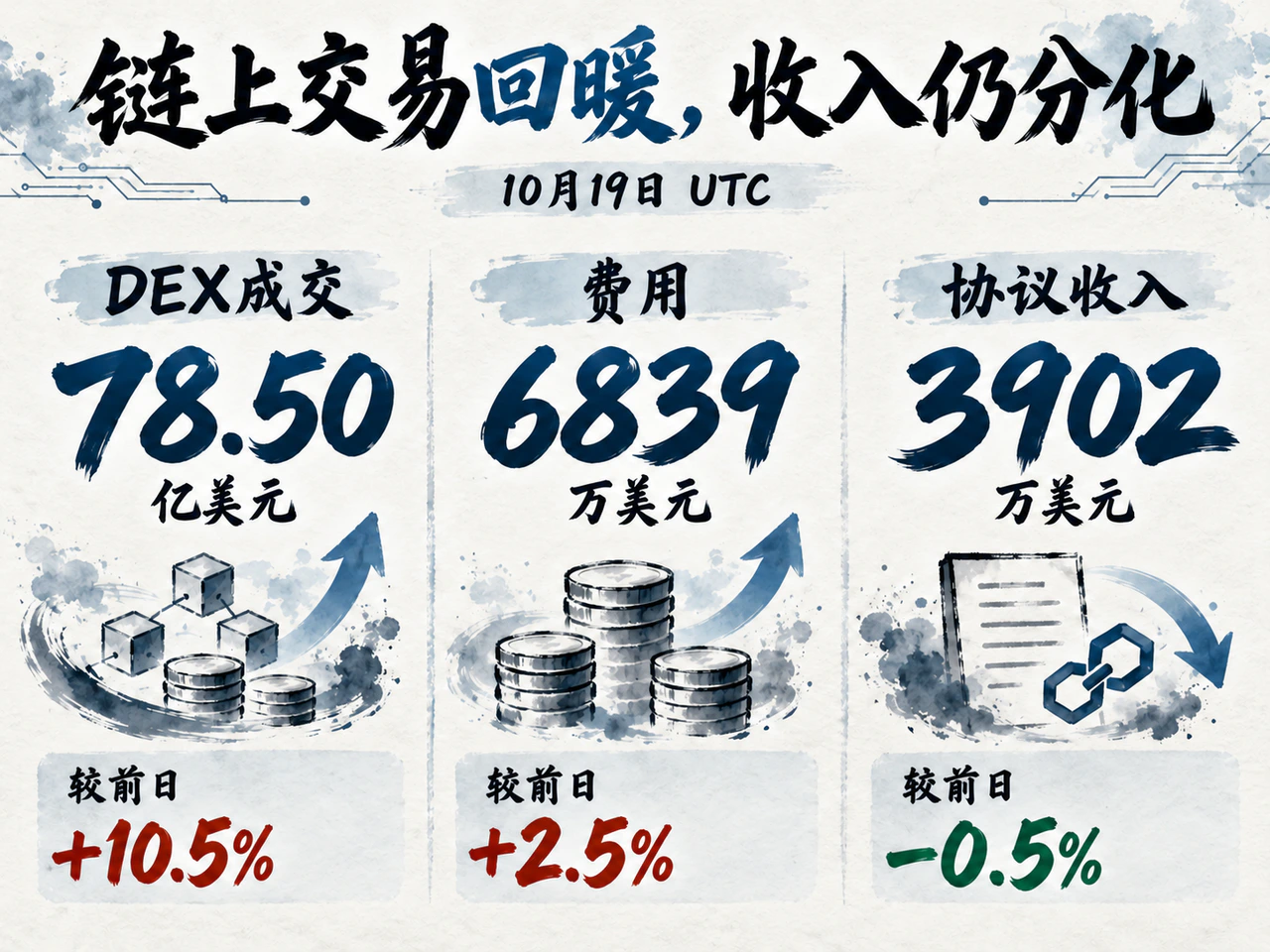
On-chain spot trading recovered on Monday, but protocol revenue did not rise alongside it. According to DefiLlama's daily data, decentralized-exchange (DEX) spot volume reached $7.850 billion on October 19 UTC, up 10.5% from the previous day but still below the preceding 30-day daily average of $9.139 billion. As trading demand recovered moderately, businesses that retain capital, including lending, stablecoin yield products and real-world asset (RWA) tokenization, brought the allocation of losses after an incident and the cost of compensation into sharper focus.
Major Blockchains Recover from Low Trading Levels as Total Protocol Revenue Slips 0.5% to $39.02 Million
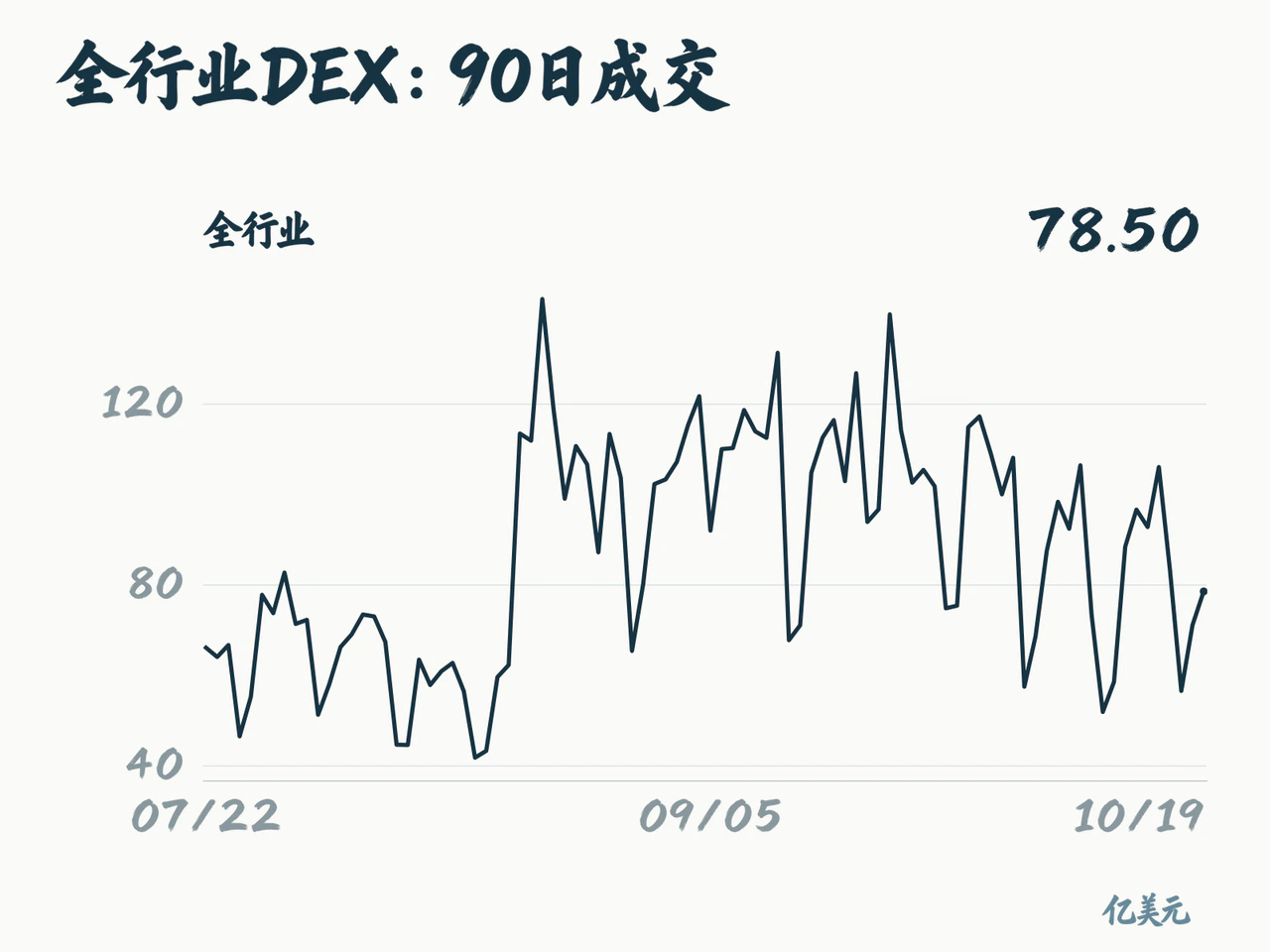
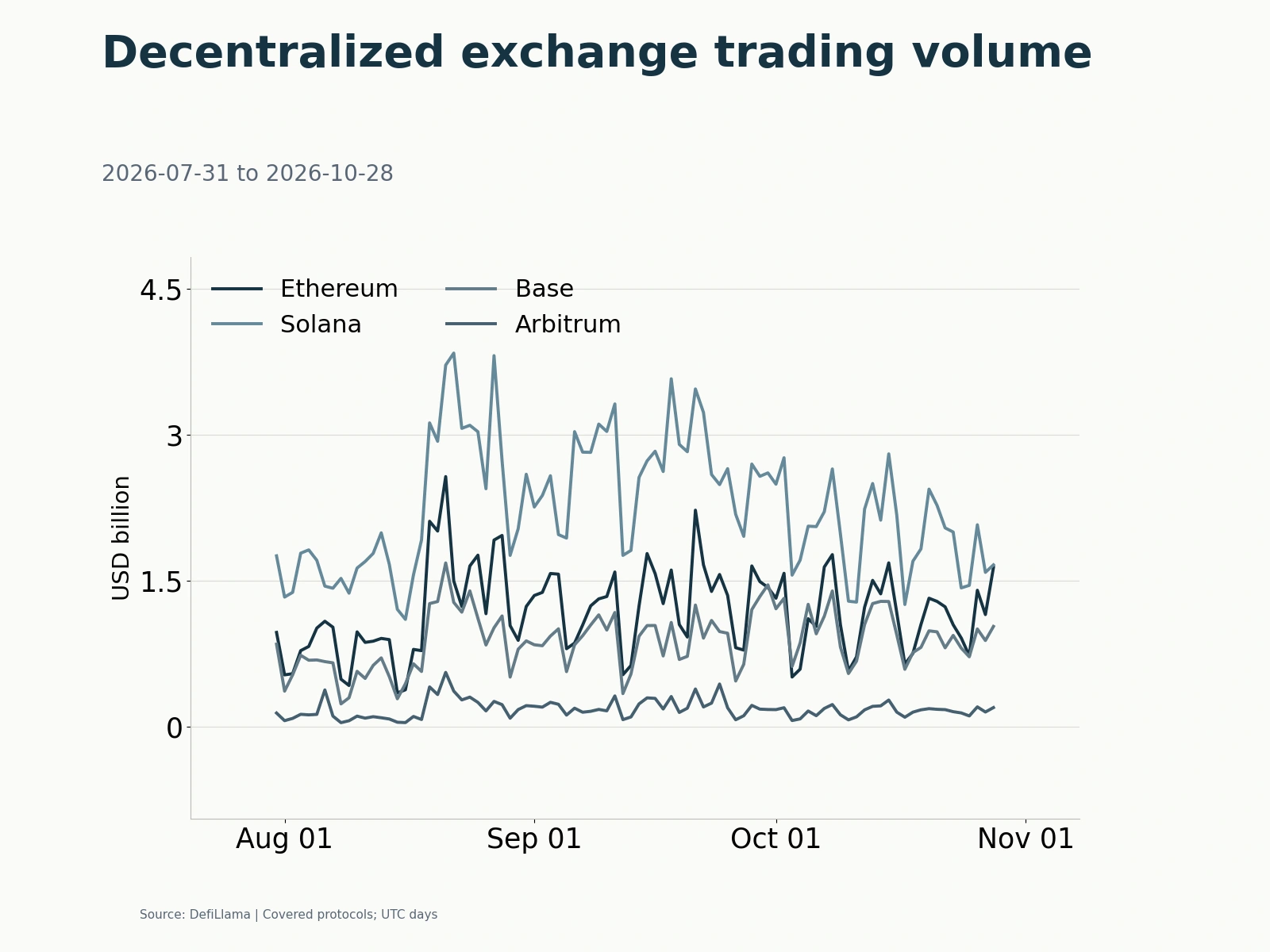
By network, Ethereum DEX volume was $1.067 billion that day, up 42.3% from the previous day, while Solana volume rose 11.7% to $1.896 billion. Both remained below their respective 30-day daily averages, suggesting the increase primarily represented a recovery from recent lows. Layer-2 networks and other blockchains diverged: Base recorded $865 million and Arbitrum $180 million, increases of 14.0% and 23.1%, respectively, while BNB Chain fell 12.5% to $834 million. Mixed performance across major networks showed that trading activity had yet to expand broadly.
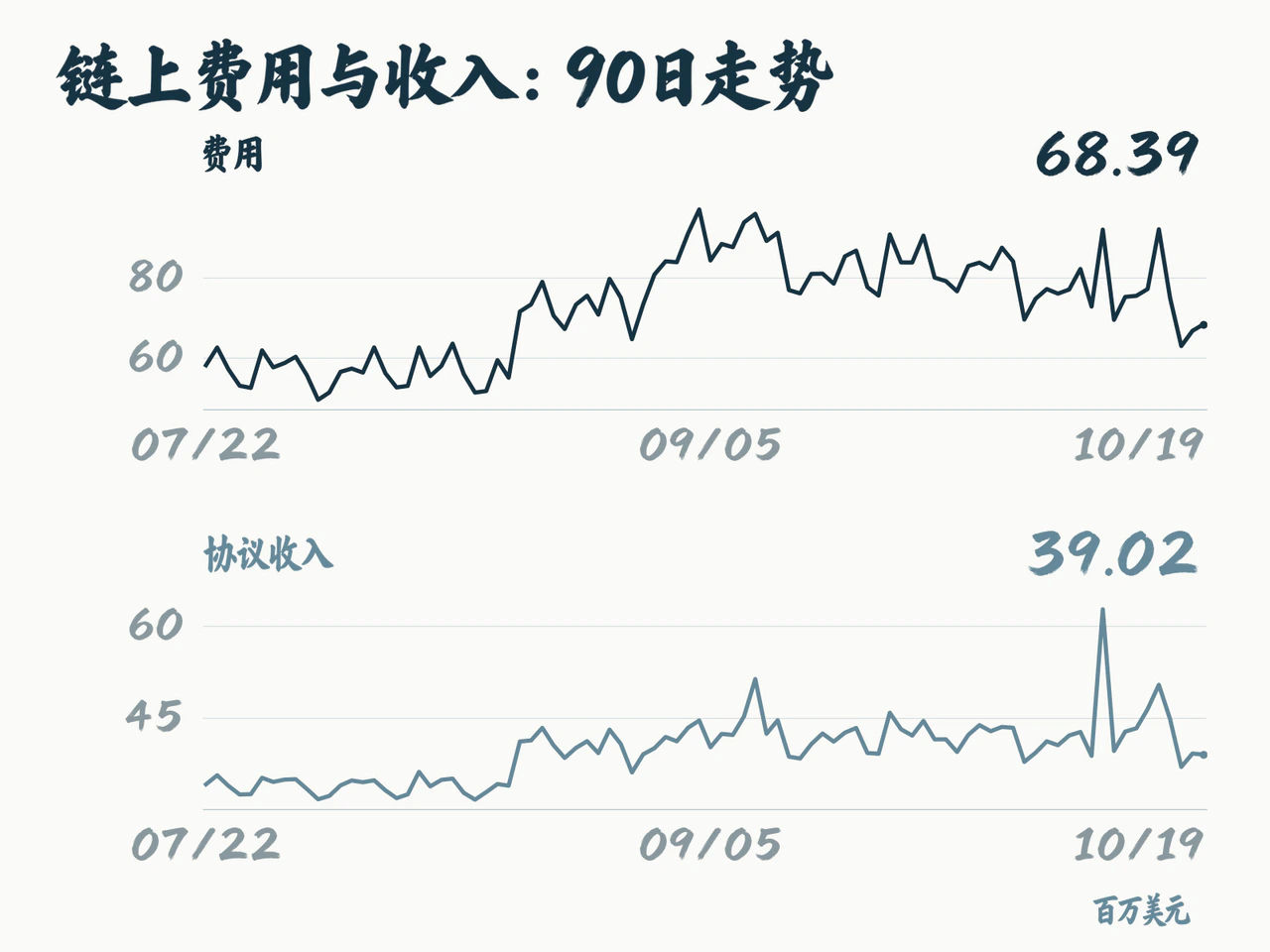
The volume rebound did not translate proportionately into protocol revenue. Projects included in DefiLlama's fee statistics collected a combined $68.39 million that day, up 2.5% from the previous day, while projects in its revenue statistics recorded approximately $39.02 million, down 0.5%. Under this methodology, fees cover the full costs users pay for services such as trading and lending; revenue records the retained portion attributable to protocols or other entities under each project's rules. Their divergence shows that greater trading volume can expand total fee collections, but realized protocol revenue remains constrained by fee structures, business mix and value-distribution mechanisms.
Beyond spot trading, lending and RWA businesses continue extending the operating scope of on-chain finance. RWA.xyz's listings as of October 17 show that on-chain assets include not only tokenized equities but also credit and actively managed products, such as Galaxy-related lending products and USDC active-strategy vaults registered on October 14. As product types multiply, capital enters different creditor relationships, strategy exposures and redemption arrangements, creating more differentiated underlying risks. In these businesses, stablecoins are merely the funding medium. Borrowers' ability to repay, the efficiency of collateral disposal and smart-contract security determine whether returns can be realized.
Competition among on-chain protocols is consequently extending from trading volume alone to the capacity to bear risk. Low transaction costs help attract activity, but retaining capital over the long term also requires clear rules for allocating losses. Research on on-chain asset recovery disclosed on October 19 and recently launched paid-protection products illustrate different aspects of this trend.
Less Than 1% of Funds Stolen in the First Eight Months Returned as Kraken and RWA Vaults Add Firelight Protection
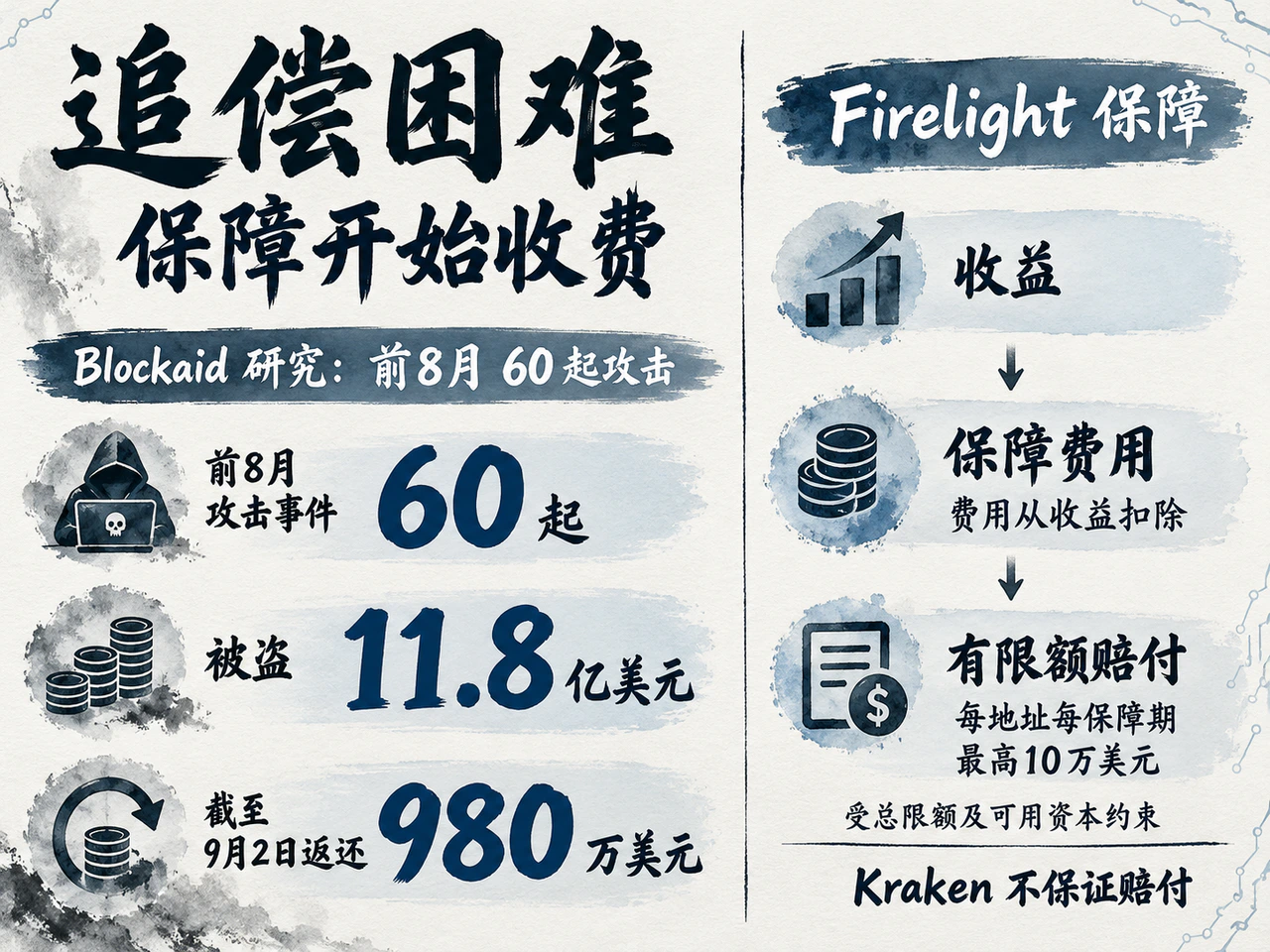
Inefficient recovery after incidents highlights a key security problem for on-chain capital. Unchained reported on October 19 that Blockaid's study of 60 major on-chain attacks from January through August 2026 identified $1.18 billion in stolen funds. As of September 2, only $9.8 million had actually been returned to victims; a further $81.4 million had been frozen but not yet returned. A substantial gap remained between freezing funds and victims actually recovering their losses.
Response speed is the central recovery bottleneck. For the 59 incidents with timing records, Blockaid calculated a median of just 17 minutes before attackers began moving funds, with transfers occurring within one hour in approximately 68% of cases. The report also found that 99.1% of funds frozen or returned had been intercepted using control powers held by protocols, governance bodies or validators. Monitoring, authorization and execution mechanisms therefore need to be in place before an attack occurs. Attempting to coordinate participants only afterward can easily miss the response window.
Against this backdrop, advance risk protection is developing into a paid on-chain service. On October 15, Firelight announced protection for the Protected Strategies USDC vault in Kraken DeFi Earn. Independent strategy manager Sentora integrated the arrangement, and related reporting on October 19 provided further details of how returns are distributed. Firelight also protects Sentora's protected RWA vault, extending coverage across several types of on-chain yield strategies.
According to Kraken, protection costs are deducted directly from vault returns, and annualized yields displayed to depositors are net of those costs. Eligible losses are assessed up to a maximum of $100,000 per deposit address per coverage period, subject also to the vault's aggregate coverage cap and available capital. Firelight provides the protection; Kraken does not guarantee compensation, and market risks such as falling asset prices are outside the agreed coverage. Through this mechanism, the vault uses part of its strategy returns to purchase protection against a specified range of risks.
As the risk bearer, Firelight supports multiple covered vaults through a shared capital pool, using recurring premiums to compensate for potential claims. Once a covered event is confirmed, capital staked in the pool may be slashed. The model's durability depends on subsequent renewal rates, actual claims experience and the size of the pool. Protection fees alone do not yet establish that the business model is mature. Nevertheless, substantive integration through an exchange distribution channel and RWA vaults shows that specific products now exist in which on-chain users pay for risk management.
Overall, recovering trading activity can lift near-term market engagement, while risk-pricing mechanisms influence how willing investors are to leave capital in place and for how long. Assessing the operating quality of on-chain financial businesses therefore requires monitoring not only trading volume and protocol fees, but also protection renewals, actual claims execution and the capital pool's ability to recover after losses. These measures will determine whether new charges for risk protection can become sustainable protocol revenue.
Click Read Original for the full details.