As of the morning of October 20, Beijing time, diplomatic mediation and military pressure surrounding Iran were advancing in parallel. Russian Foreign Minister Sergei Lavrov traveled to Tehran for talks, with Pakistan's military chief Munir expected to follow on Tuesday. Meanwhile, a public call between Netanyahu and Trump signaled continued pressure on Iran. A devastating strike on a Yemeni military camp and air-defense alerts inside Saudi Arabia showed that conflict along the Red Sea and Gulf flanks was still escalating.
Lavrov Visits Iran and Pakistan's Military Chief Is Expected, but Sequencing of Blockade Relief and Shipping Remains an Obstacle
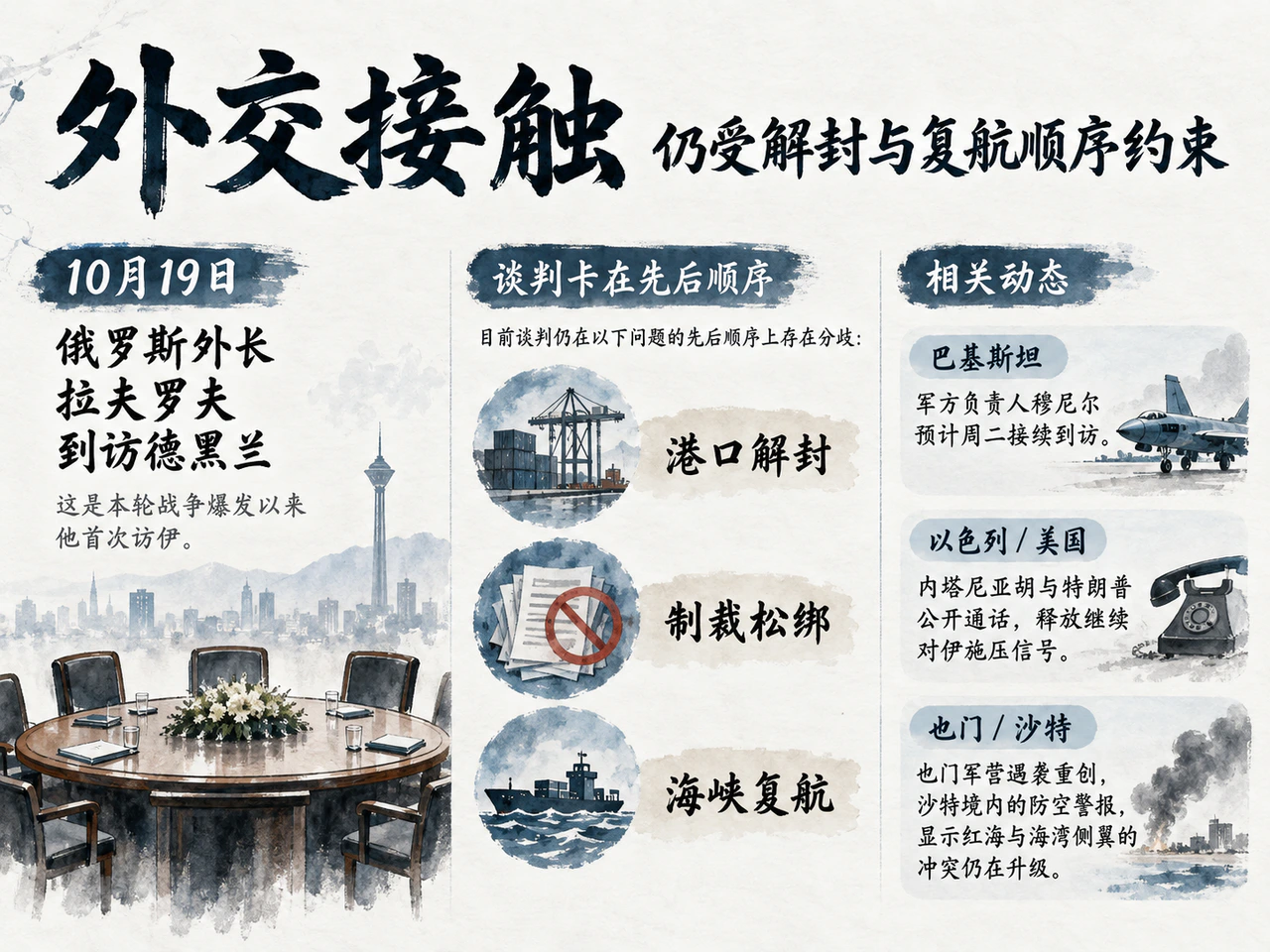
Lavrov arrived in Tehran on October 19 for his first visit to Iran since the outbreak of this war. In talks with Iranian Foreign Minister Araghchi, he condemned US and Israeli military action and said Russia was committed to preventing a resumption of large-scale war. Iranian President Pezeshkian said the same day that he was willing to ease tensions through dialogue. Rezaei, secretary of Iran's Supreme National Security Council, proposed deeper cooperation with Russia and progress on economic projects such as transport corridors. Separately, Iran's acting oil minister Bovard met Qatar's minister of state for energy affairs, al-Kaabi, in Doha on the 19th to discuss bilateral energy cooperation.
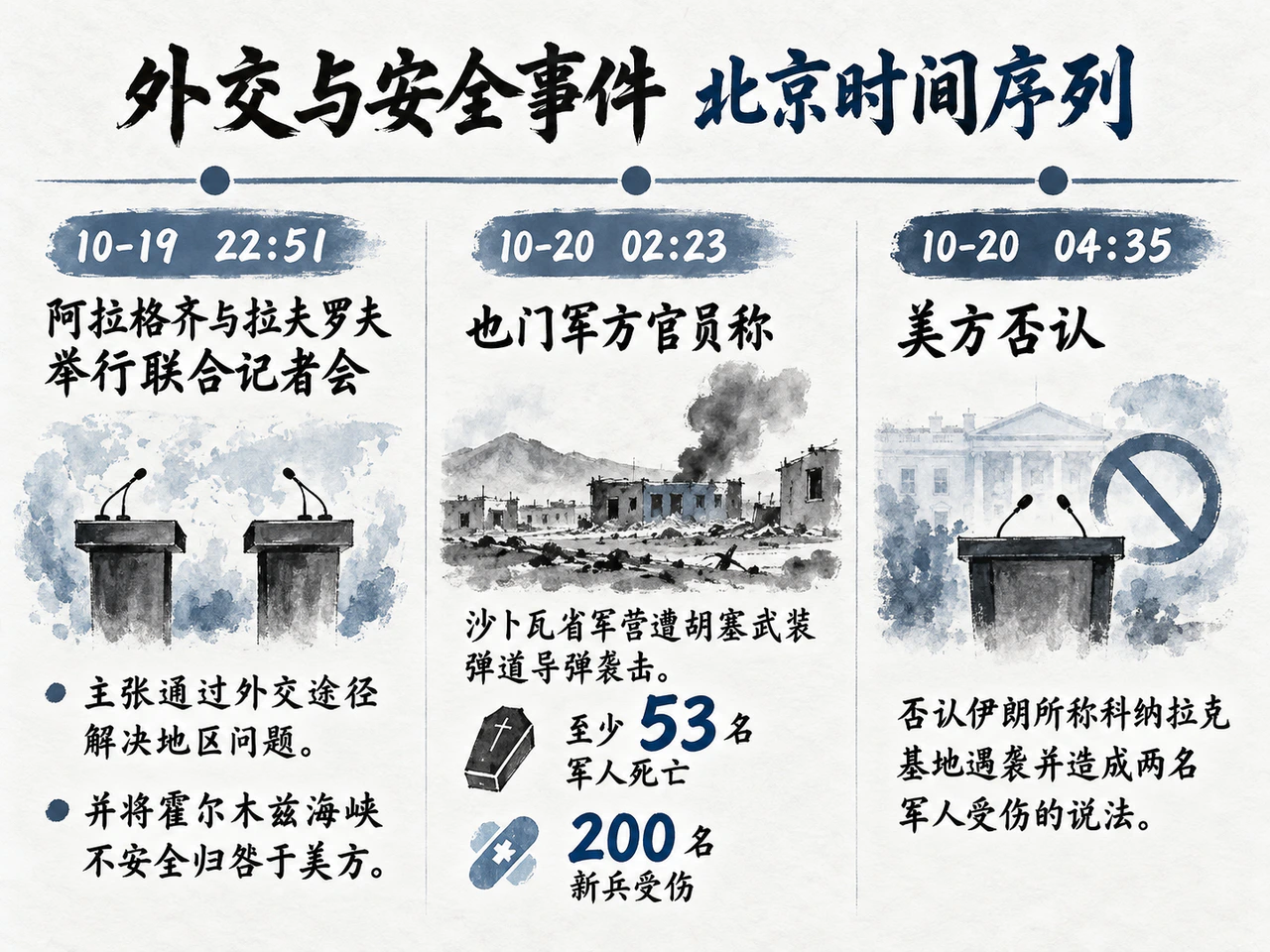
Regional mediation channels were also active. On the 19th, Reuters cited Pakistani officials and Iranian media as saying that Pakistan's military chief Munir was expected to visit Tehran on the 20th. Multiple contacts had nevertheless failed to bridge the central US–Iran disagreement. At a joint press conference, Araghchi advocated a diplomatic solution but blamed insecurity in the Strait of Hormuz and the wider region on US and Israeli military action and the US blockade of Iranian ports. Negotiations remained stuck over the sequence of lifting the port blockade, easing sanctions and reopening the strait. Iran's previously proposed seven-day plan required Washington to meet Iranian conditions first, with strait traffic resuming on day six and negotiations beginning on day seven. Trump had rejected that proposal.
Military pressure from the United States and Israel continued alongside diplomacy. On the 19th, Netanyahu released a video of a call with Trump, saying the two still had tasks to complete together on Iran. Iran's navy claimed that two light US munitions struck its Konarak base on the southeastern coast that morning, injuring two service members. The United States subsequently denied the account.
Houthi Missile Strike on Camp Kills 53 as Saudi Arabia Issues Air Alerts and Postpones Riyadh Summit
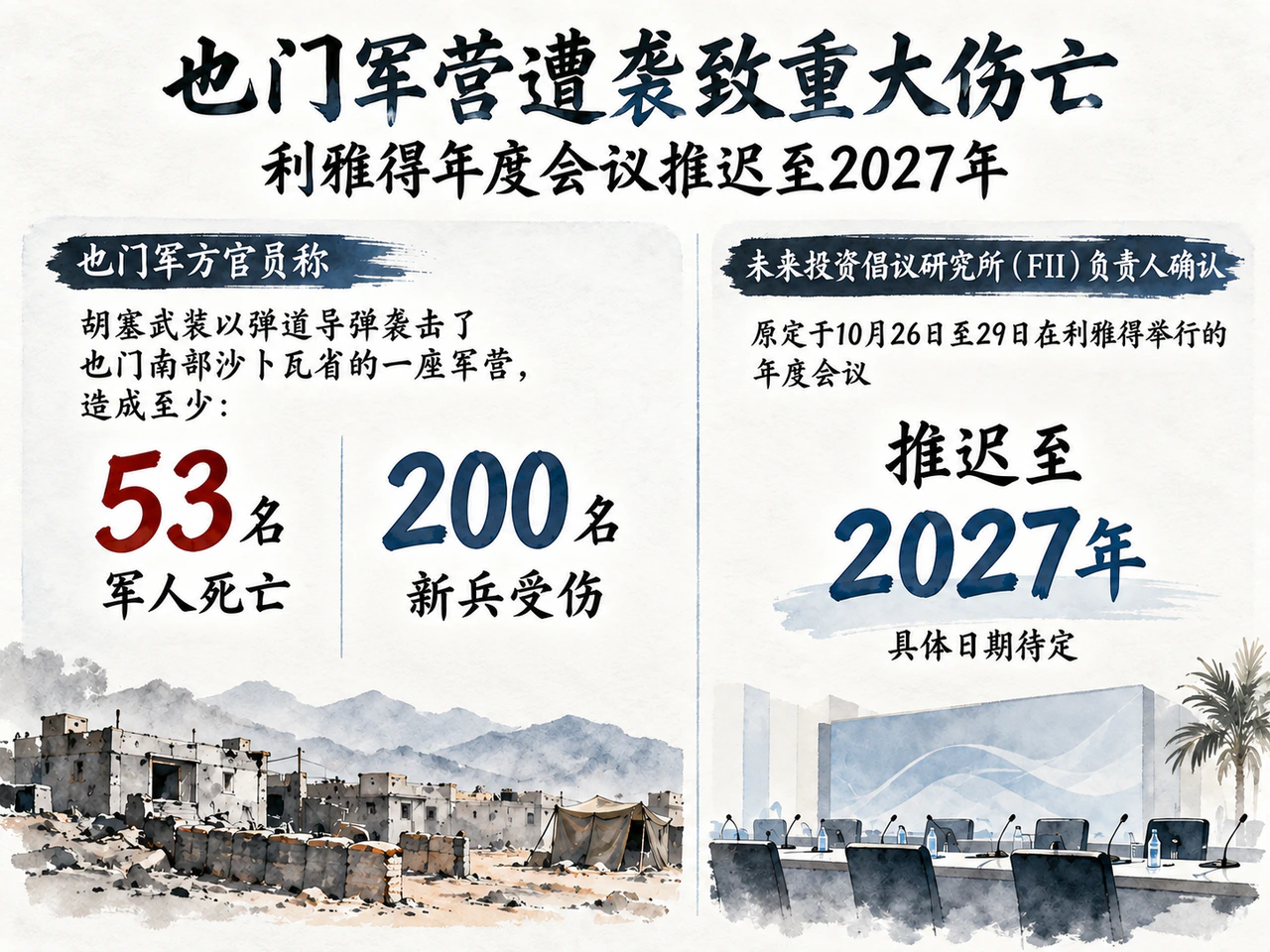
Armed conflict on the Yemeni and Saudi fronts intensified markedly over the past day. Yemeni military officials said Houthi ballistic missiles struck a military camp in the southern province of Shabwa, killing at least 53 service members and wounding 200 recruits. Local authorities confirmed the attack and called for faster deployment of air-defense and early-warning systems. As casualty estimates continued rising, hospitals in Shabwa came under pressure, and some severely wounded patients were transferred to Hadramout and Aden.
Attacks directed at Saudi Arabia also intensified. Houthi spokesman Saree claimed on the 19th that the group had conducted six operations against Saudi Arabia over the preceding 48 hours, targeting King Khalid International Airport in Riyadh, Saudi Aramco facilities in Yanbu, the Shaybah oilfield and several military installations in retaliation for Saudi strikes on Houthi-controlled areas. Saudi civil defense issued air-threat alerts for Riyadh and Al-Kharj that day, lifting them later. The United States also issued a security advisory to its citizens in the Middle East, saying Houthi attacks on Saudi civilian airports and other facilities had caused casualties and travel disruption.
A major Saudi international business event was also postponed. The head of the Future Investment Initiative Institute (FII) confirmed that its annual conference, originally scheduled for October 26–29 in Riyadh, had been delayed until 2027, with dates to be determined. Organizers said the postponement was intended to ensure the scale and quality of the tenth-anniversary conference. Against the strained regional security backdrop, Egypt's parliament also deferred debate on authorizing military support for Saudi Arabia until October 26.
Key Developments
| Key Developments (Beijing time) |
|---|
| 10-20 04:35The United States denied Iran's claim that an attack on Konarak base had injured two service members. |
| 10-20 04:26Lavrov met senior Iranian officials in Tehran and condemned US and Israeli military action; Iran proposed stronger cooperation with Russia. |
| 10-20 03:34Reuters, citing Pakistani officials and Iranian media, reported that Pakistan's military chief Munir was expected to visit Tehran on Tuesday. |
| 10-20 03:20Netanyahu released a video of his call with Trump, saying the two still had tasks to complete together on Iran. |
| 10-20 02:39The Houthis claimed six operations in Saudi Arabia over the previous 48 hours, targeting Riyadh's airport, military installations and Saudi Aramco oil facilities. |
| 10-20 02:23Yemeni military officials said a Houthi ballistic-missile strike on a Shabwa military camp killed at least 53 service members and injured 200 recruits. |
| 10-20 01:48Iran's navy claimed that two light US munitions struck Konarak base that morning, injuring two service members. |
| 10-20 01:41Saudi civil defense issued air-threat warnings for Riyadh and Al-Kharj and subsequently lifted them. |
| 10-20 01:05The FII Institute's head confirmed that the annual Riyadh conference scheduled for October 26–29 had been postponed until 2027. |
| 10-20 00:30Egypt's parliament postponed debate on authorizing military support for Saudi Arabia until October 26. |
| 10-19 22:51Araghchi and Lavrov held a joint press conference advocating diplomatic solutions to regional issues; Araghchi blamed the United States for insecurity in the Strait of Hormuz. |
| 10-19 22:08Iran's acting oil minister Bovard discussed bilateral energy cooperation with Qatar's minister of state for energy affairs, al-Kaabi, in Doha. |
| 10-19 17:59The United States issued a security advisory for its citizens in the Middle East, saying Houthi attacks on Saudi civilian airports and other facilities had caused casualties and disrupted travel. |