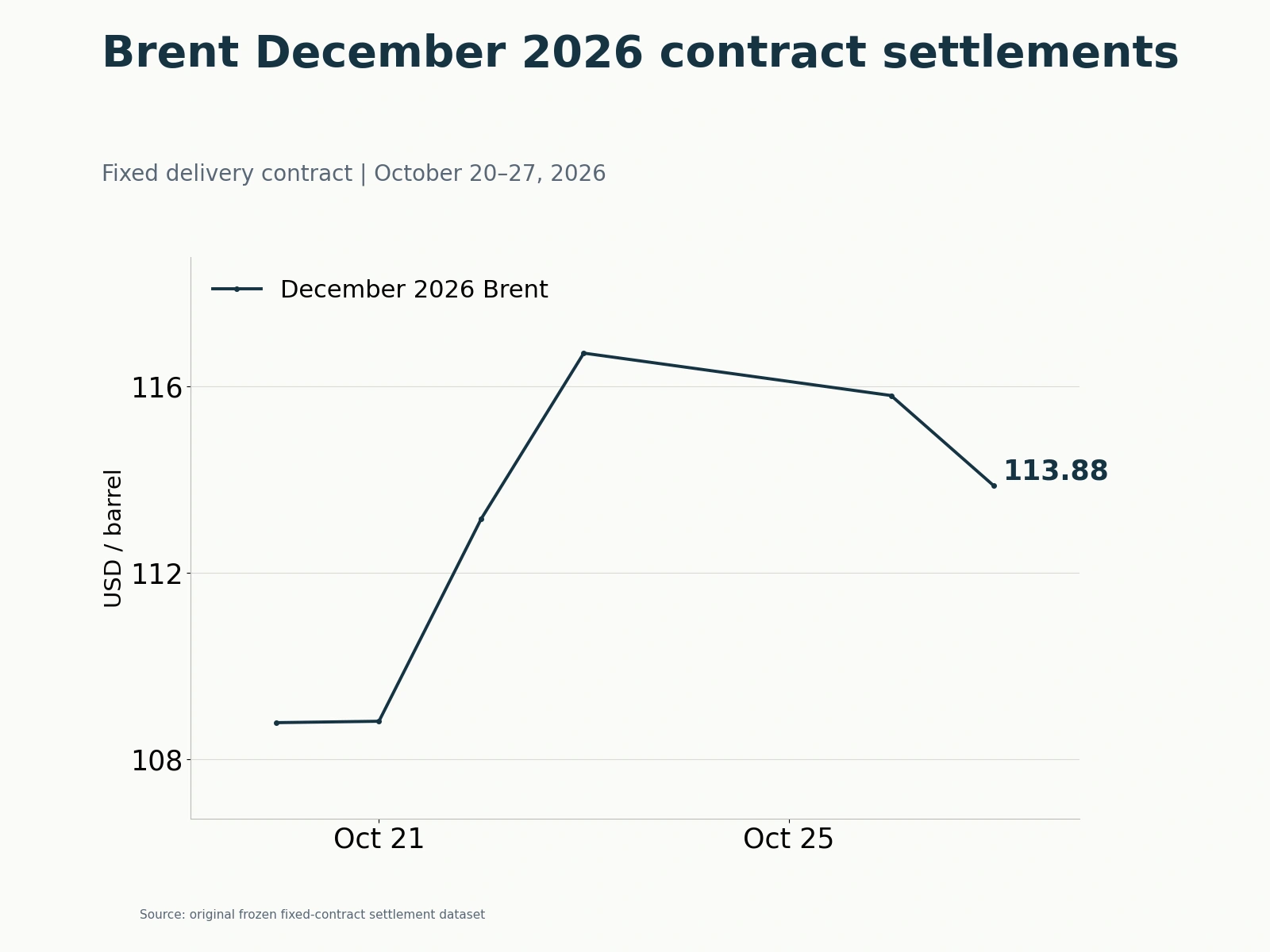
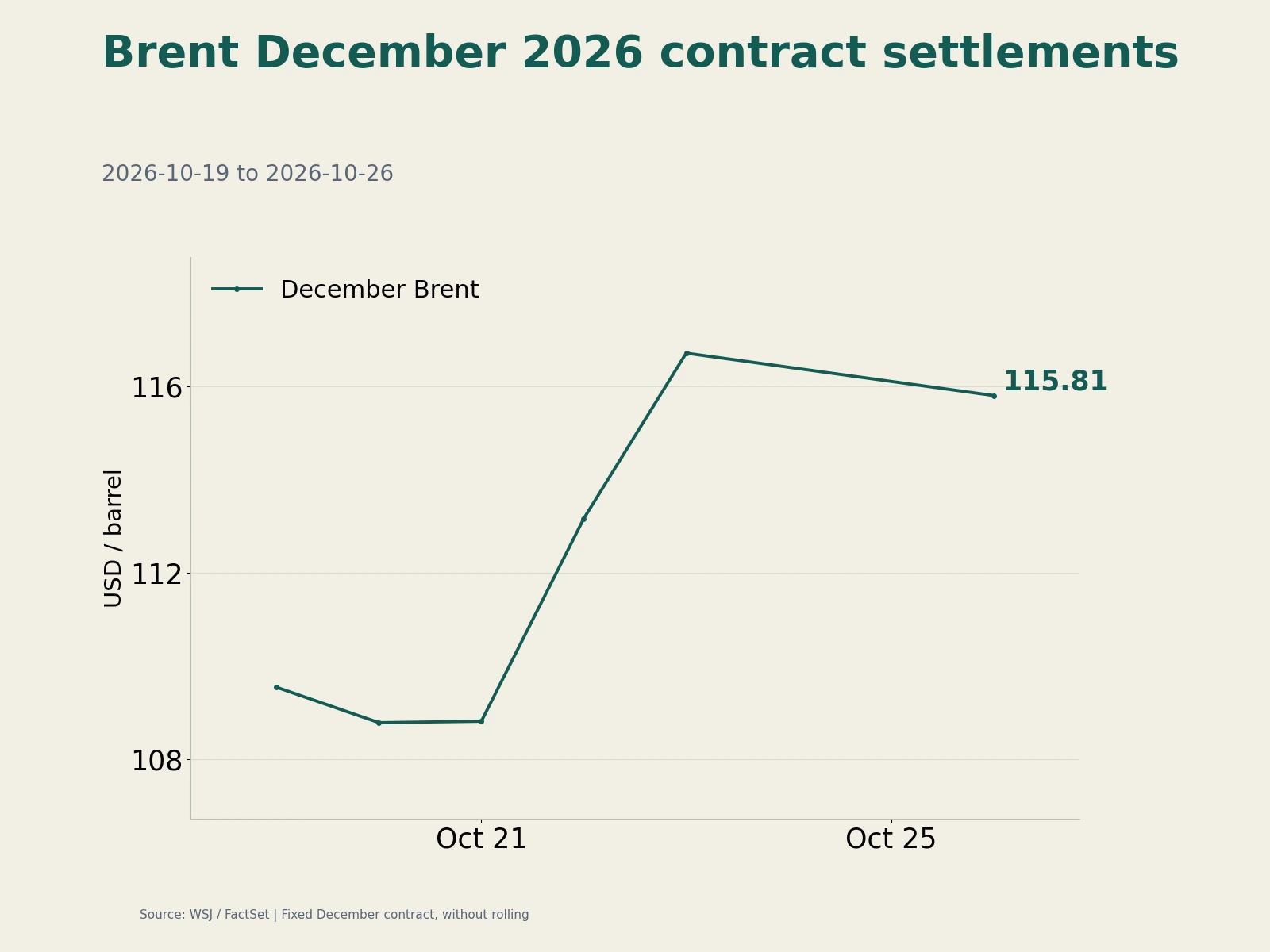
On October 20, international oil prices closed slightly lower after sharp intraday swings. December Brent crude futures settled at $108.79 a barrel and December WTI at $97.82, both down about 0.7% from the previous day. Repeated rumors of US–Iran talks, the expiry of the front-month WTI contract and the unwinding of crowded long positions greatly widened the trading range. As of the morning of October 21, Beijing time, oil pricing remained caught between two forces: expectations of diplomatic easing could quickly compress the geopolitical risk premium, but high shipping costs, constrained refined-product transport and tight onshore inventories continued to restrict physical deliveries. These physical constraints would determine whether the retreat in oil prices could last.
Negotiation rumors and November WTI expiry amplify swings; December Brent trades $10.97 above WTI

The sharp intraday moves first reflected the interaction of diplomatic headlines and positioning. According to Bloomberg, an unconfirmed report of US–Iran talks on October 20 sent Brent plunging from a five-month high. Claims that the two sides were close to a deal were subsequently described as false, and prices recovered part of their losses. Kpler's estimates of trend-following funds showed that these strategies' long positions in both Brent and WTI had reached their model ceilings. With longs heavily crowded and liquidity thinning during the contract roll, headline-driven profit-taking and stop-loss liquidation substantially amplified intraday volatility.
Expiry and the contract roll further exaggerated the apparent change in WTI prices. Dow Jones Newswires reported that the November WTI contract, which expired on October 20, traded as high as $110.48 intraday before settling at $101.79, down 1.8% from the previous day. The most active December contract closed at $97.82. Because November commanded a $3.97 premium over December—a backwardated structure—the switch in the main contract, combined with the day's decline, produced an apparent change of around 5% in continuous WTI quotations across the roll. It did not mean that a single delivery-month contract had actually fallen 5% in one day.
On a like-for-like delivery-month basis, December Brent commanded a $10.97 premium over December WTI. This wide spread indicates that disrupted shipping, divergent regional inventories and constrained export conditions together left the international seaborne crude market tighter than the US inland delivery market.
Gulf crude flows recover to around 80% of prewar levels, but high freight rates and slow product transport still constrain supply

Loadings and exports of Middle Eastern supplies are recovering, but the chain carrying them to consuming regions is still not fully functioning. US Energy Secretary Wright said Gulf oil flows had returned to around 80% of their prewar level, while refined-product transport remained constrained. The International Energy Agency's monthly report, released on October 14, corroborated this structural difference: crude exports from Gulf producers recovered to 13.9 million barrels a day in September, more than three-quarters of their prewar level, while the recovery in Middle Eastern refined-product and liquefied petroleum gas (LPG) exports was markedly slower. Lagging refinery operations and product-shipping capacity mean that recovering crude exports coexist with tight supplies of finished fuels.
Shipping bottlenecks restrict deliverable volumes and directly raise landed costs. In its October 20 report, ING noted that tanker rates were at record highs. If sanctioned tankers were allowed back into the mainstream shipping market, additional capacity could ease freight pressure, although the scale and timing of its release remained uncertain. Separately, seven OPEC+ countries decided on October 4 to maintain in November the production quotas required for September; their next meeting was scheduled for November 1. Beyond the stated quotas, the market was increasingly focused on whether damaged facilities, pipelines and vessel capacity could move already-produced crude smoothly to refineries.
A 4.93 million-barrel weekly US crude draw and a 113 million-barrel September fall in global onshore stocks highlight the gap in arrivals
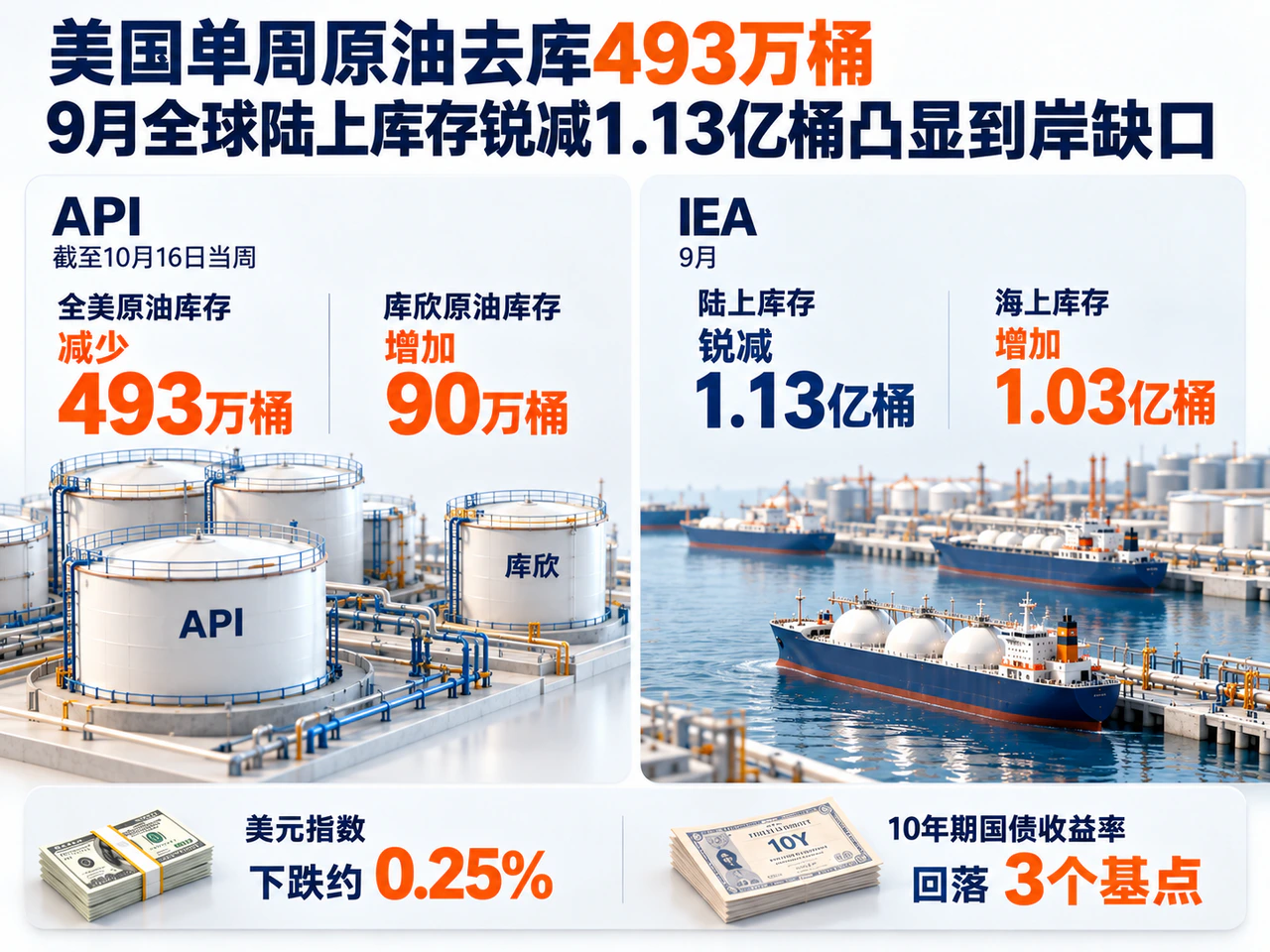
Inventory data also showed aggregate depletion alongside structural divergence. American Petroleum Institute (API) estimates released on October 20 showed US crude inventories falling 4.93 million barrels in the week ended October 16, following an 11.12 million-barrel draw the previous week. Crude stocks at Cushing, the WTI delivery point, rose 900,000 barrels, after an increase of 1.823 million barrels a week earlier. Nationwide commercial crude draws alongside a build at Cushing suggest that overall US supply and demand remained tight even as local inventory conditions at the inland delivery hub eased.
Globally, longer transit times exacerbated immediate tightness in consuming regions. IEA data showed that observable global oil inventories fell by a net 10 million barrels in September: onshore stocks plunged 113 million barrels while oil on water increased 103 million barrels. Large volumes of crude had therefore left export ports but remained at sea, unable to replenish onshore inventory buffers in consuming markets immediately. Over the medium to long term, expensive fuel and a weakening economic outlook were curbing consumption. The IEA expected global oil demand to fall by 2.6 million barrels a day year on year in 2026, but still projected a global supply shortfall through the end of the year.
The macro-financial backdrop presented no substantial headwind to oil that day. At the October 20 close, the dollar index was down around 0.25% from the previous day and the US 10-year Treasury yield had fallen 3 basis points, providing some support for dollar-denominated crude. The main intraday drivers nevertheless remained diplomatic rumors, shipping risks and adjustments to expiring positions.
Whether the retreat from oil's highs becomes a sustained downtrend will depend on four physical-market and trading indicators corroborating diplomatic progress: first, the pace of crude, Cushing and distillate inventory draws in the forthcoming weekly US Energy Information Administration (EIA) data; second, whether Gulf loadings and actual arrivals continue to recover; third, whether record tanker rates fall materially, reducing costs for importing refineries; and fourth, whether WTI's nearby calendar spread and the same-month Brent premium narrow after the roll is complete.