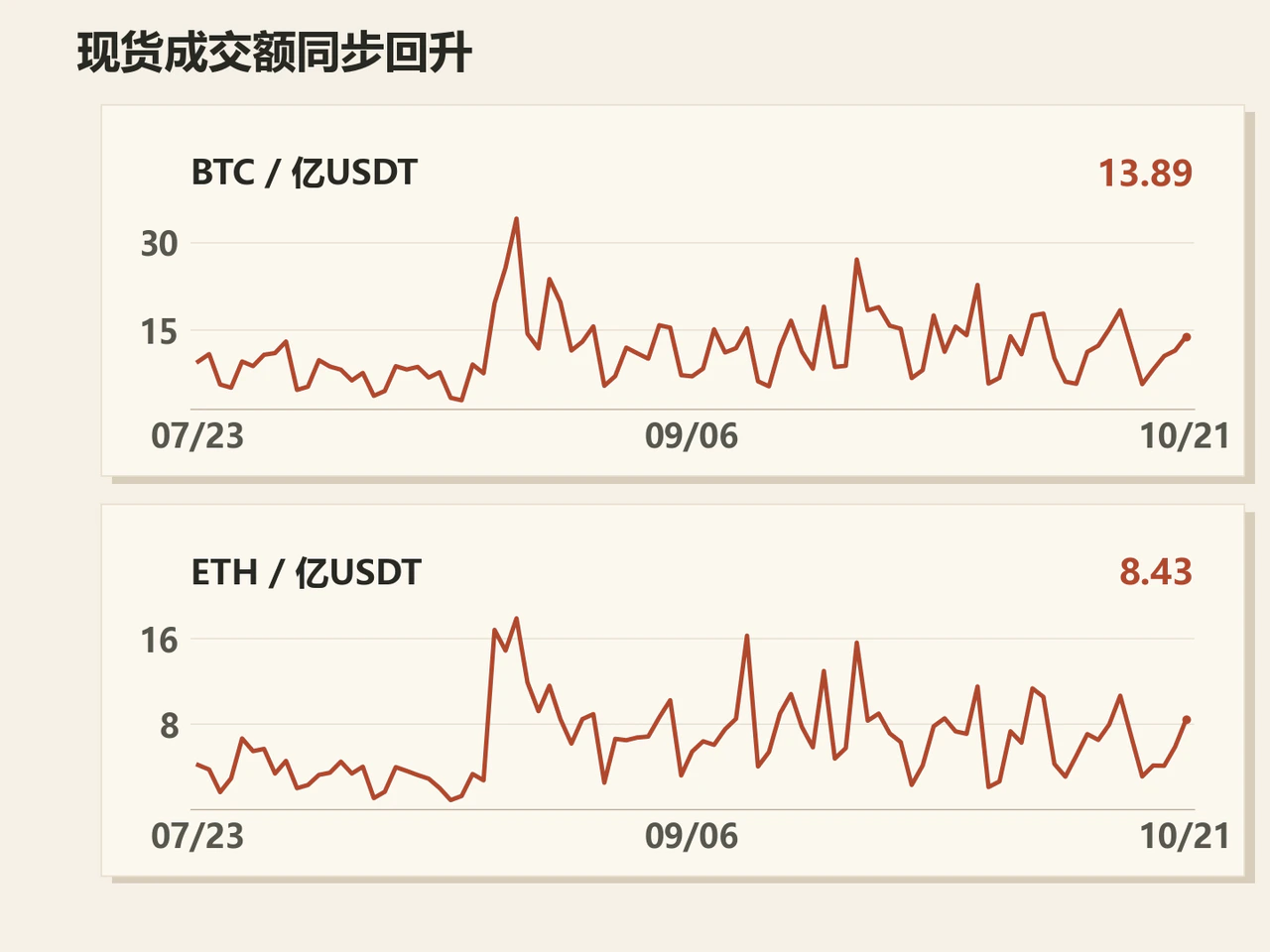
As of 8 a.m. Beijing time on October 22, the crypto market extended its rebound, with Bitcoin back above 84,000 USDT. A recovery in technology stocks helped major tokens rise broadly and spot trading pick up. Capital remained concentrated in Bitcoin, however, while Ethereum and most other highly liquid tokens lagged both on the day and over the past month.
Eight of ten major tokens rose, but Ethereum still lagged Bitcoin despite higher turnover
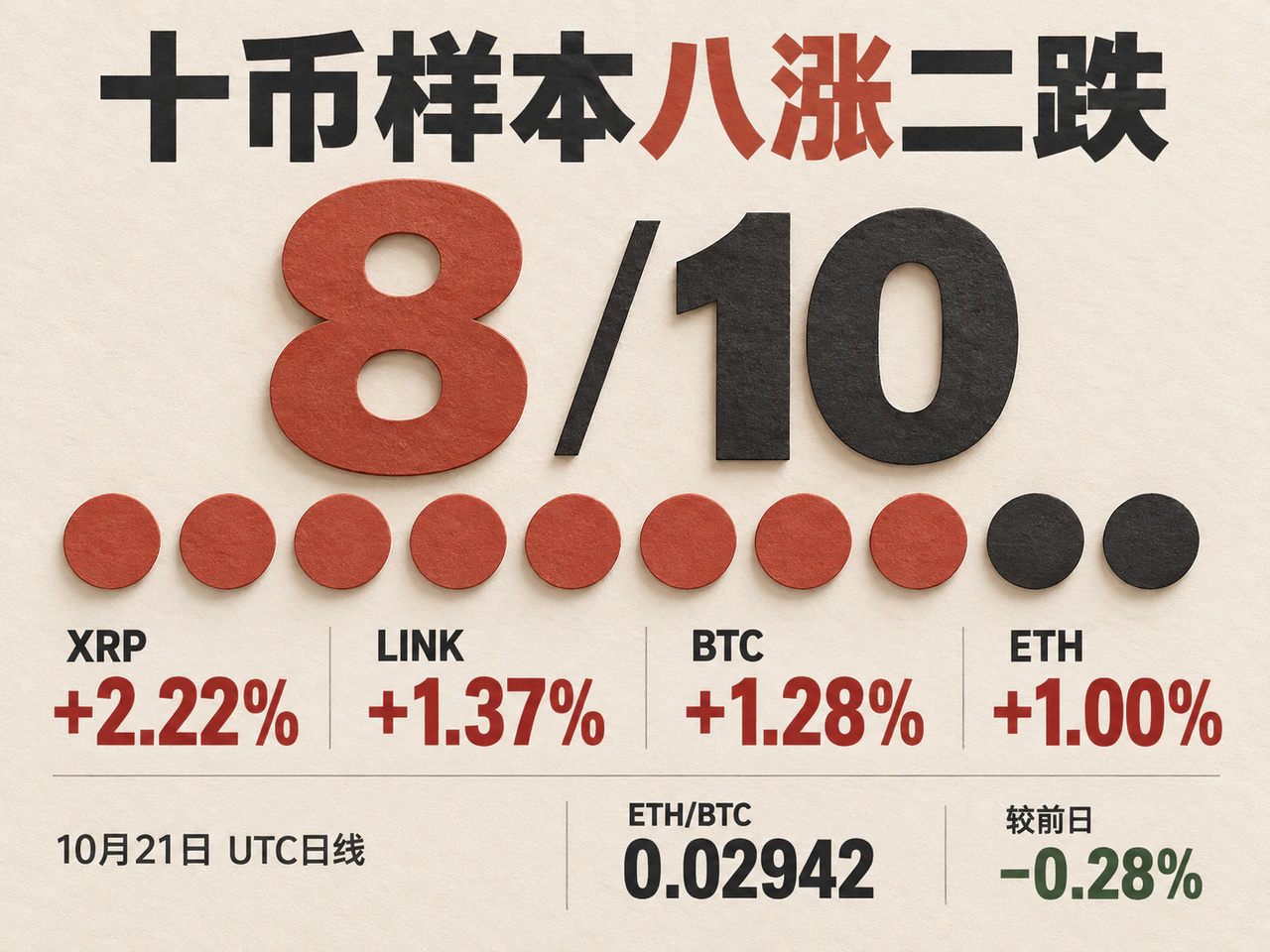
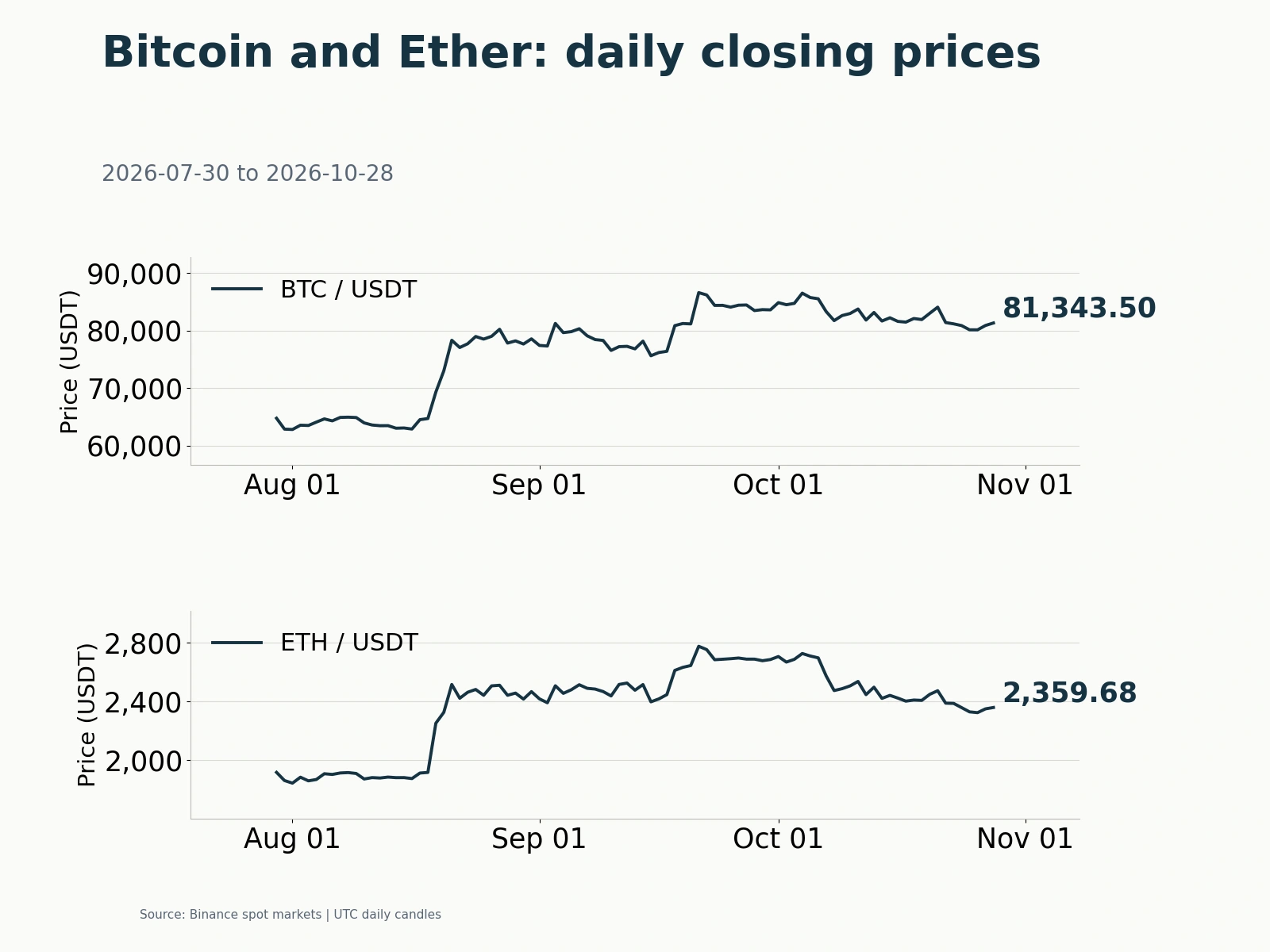
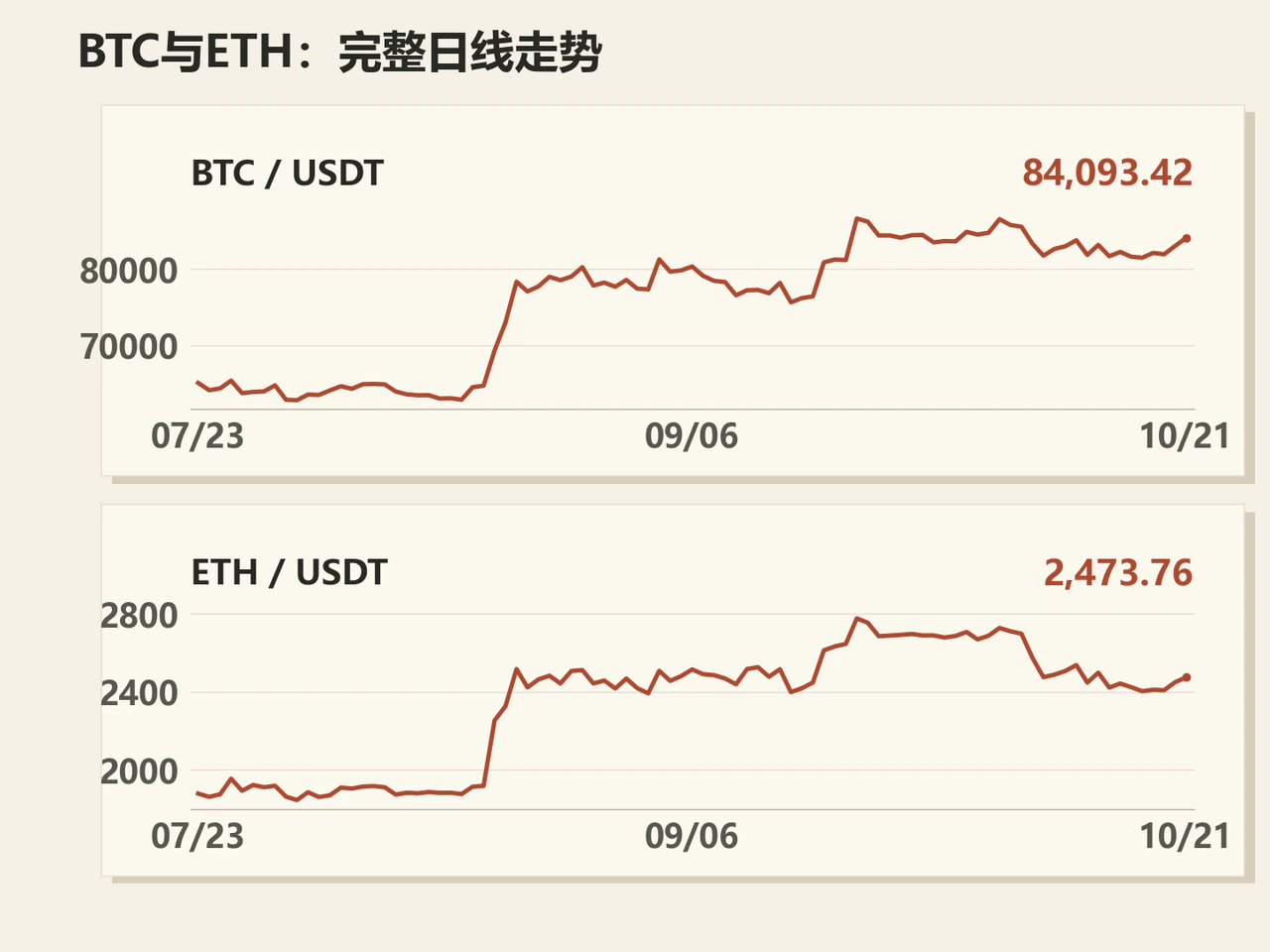
On Binance's UTC daily spot candles, covering October 21 trading that ended at 8 a.m. Beijing time on October 22, Bitcoin closed at 84,093.42 USDT, up 1.28% from the previous trading day, after trading between 82,635.32 and 84,898.00 USDT. Ethereum closed at 2,473.76 USDT, up 1.00%, with an intraday range of 2,436.87 to 2,526.62 USDT. Both assets retained gains for the day but closed below their intraday highs, with Ethereum giving back more of its advance.
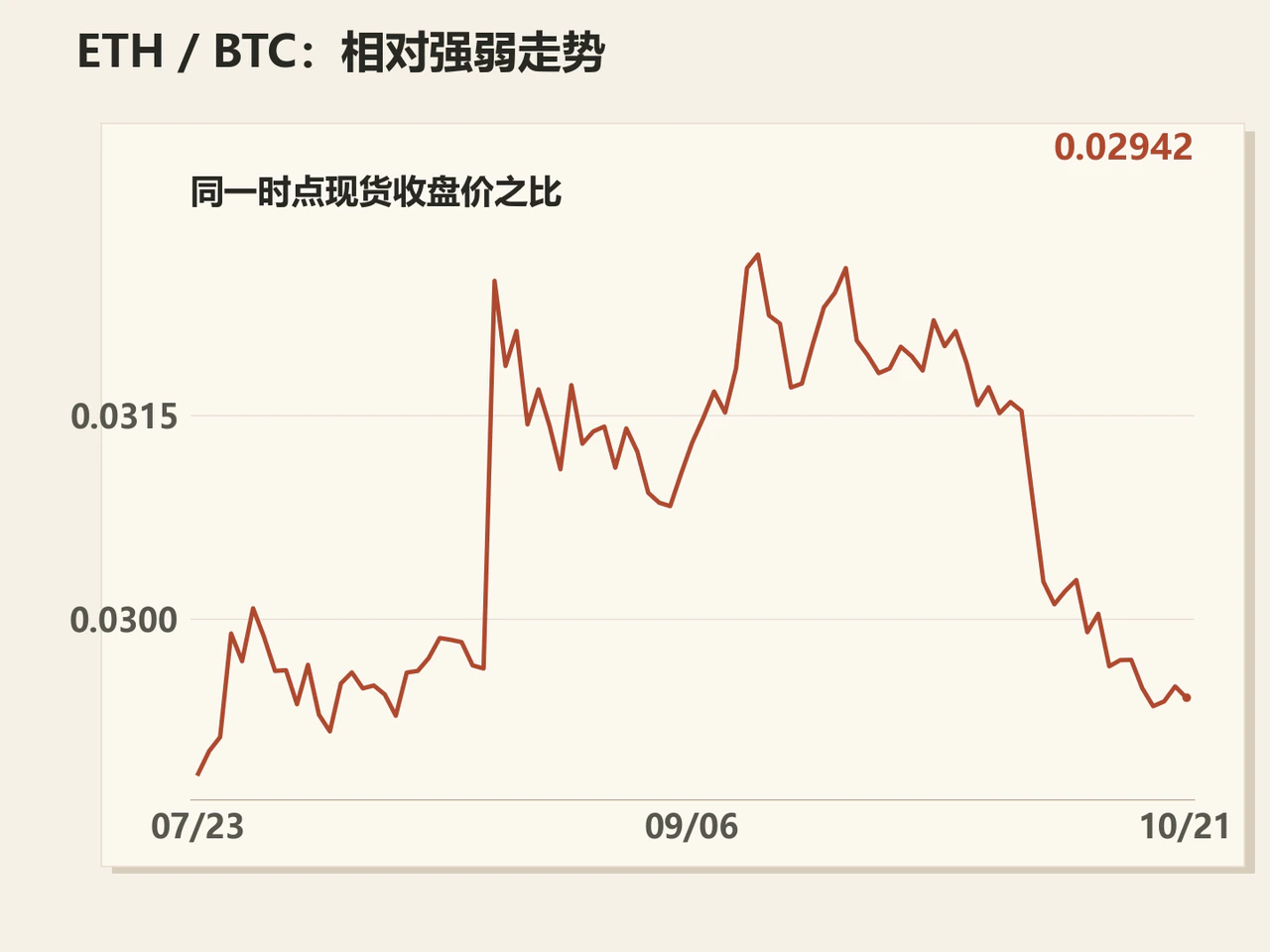
Spot turnover increased markedly from the previous day. Binance BTC/USDT spot turnover was 1.389 billion USDT, up 21.1%, while ETH/USDT turnover was 843 million USDT, up 43.2%. Although Ethereum's turnover growth rate was more than twice Bitcoin's, its price gain was smaller. Dividing their USDT closing prices at the same point in time gives an ETH/BTC ratio of approximately 0.02942, down 0.28% from the previous day. The recovery in trading activity had therefore not reversed Ethereum's relative weakness.
Eight of the fixed ten-token sample—Bitcoin, Ethereum, BNB, SOL, XRP, DOGE, ADA, LINK, AVAX and SUI—rose on the day. Only XRP (+2.22%) and LINK (+1.37%) outperformed Bitcoin. BNB (+0.62%), ADA (+0.54%), SOL (+0.40%) and DOGE (+0.12%) posted modest gains, while AVAX and SUI fell 0.99% and 0.10%, respectively. Major tokens generally recovered, but the strength of that recovery varied considerably. SOL and DOGE had yet to show much responsiveness to the rebound.
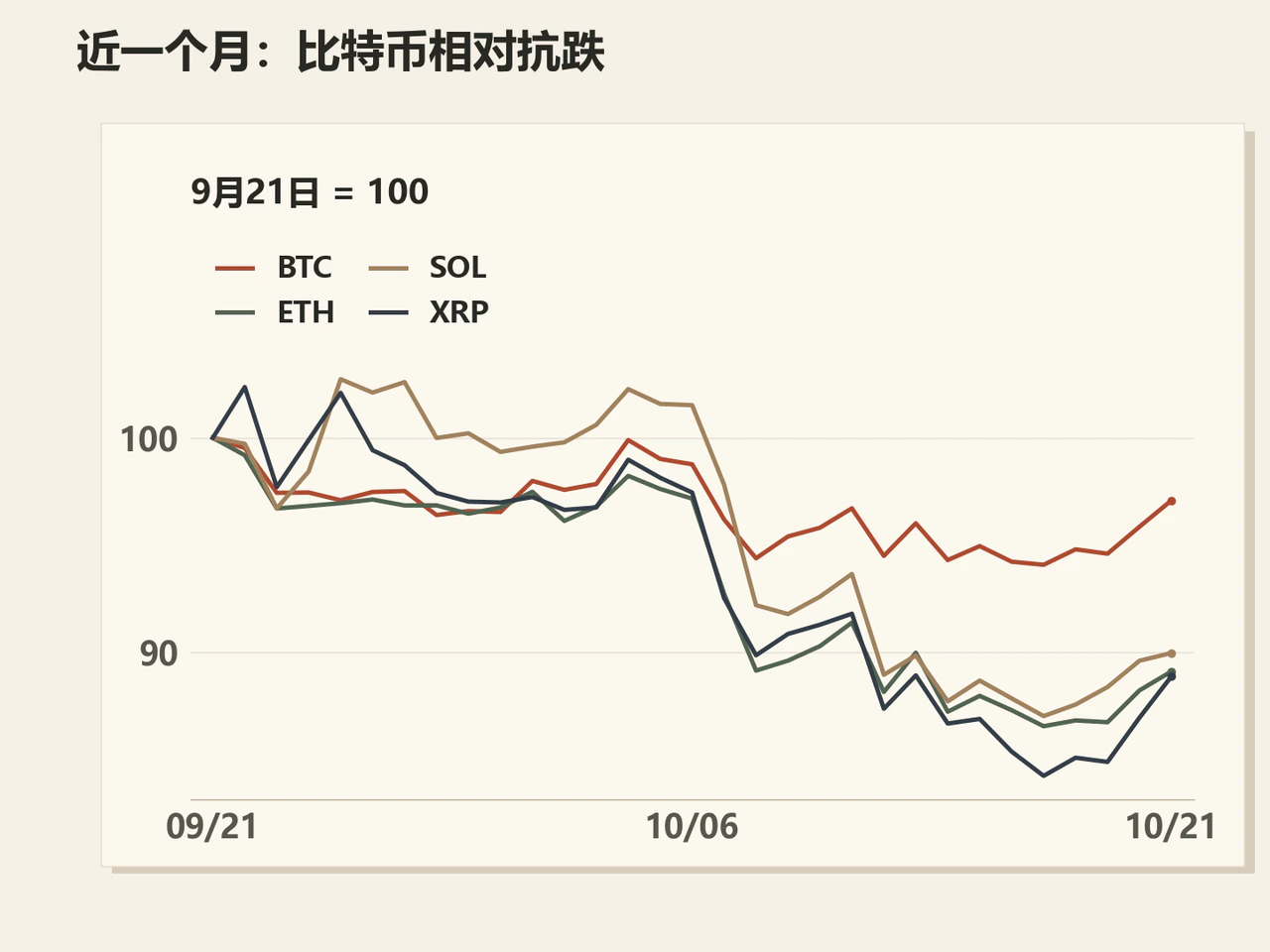
Over 30 days, the divergence between major tokens and Bitcoin was more pronounced. Bitcoin had fallen a cumulative 2.92%, while Ethereum (-10.89%), SOL (-10.03%), XRP (-11.12%) and DOGE (-17.92%) all recorded double-digit declines. XRP's leadership on the day largely reflected a rebound from oversold levels; Ethereum and SOL were also still working through the previous month's losses. Overall, the rebound improved market breadth, but Bitcoin's resilience alongside a further decline in ETH/BTC suggested that capital still favored the core large-cap asset. The market had yet to enter a phase in which funds spread out and major tokens consistently outperformed.
Technology stocks support risk appetite, while upgrades drive selective gains
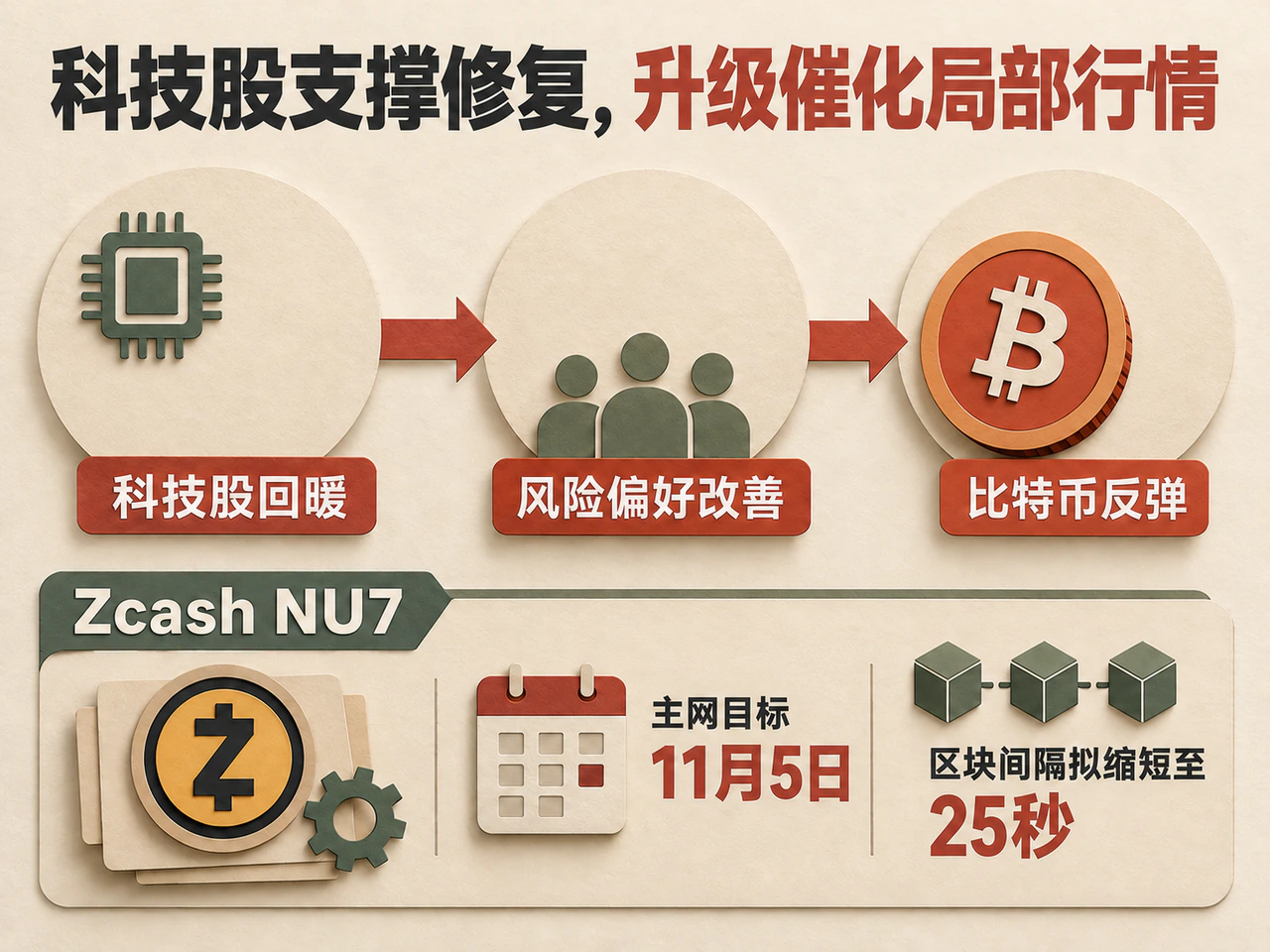
External markets provided the main support for the rebound. CoinDesk reported that better earnings from U.S. technology companies helped lift South Korea's Kospi by 3.29% during Asian trading, with Bitcoin rising alongside it. Citing K33 research, The Block said Bitcoin's correlation with the Nasdaq had strengthened again after weakening in August and September, and their returns had been similar over the past two weeks.
This cross-market connection operates through portfolio risk budgets. When technology stocks rise and earnings concerns ease, investors are more willing to restore exposure to highly volatile assets. When energy prices and interest rates rise again, risk assets come under pressure together. CoinDesk's intraday reporting that day showed that renewed concern over the Middle East pushed up oil prices and short-dated U.S. Treasury yields, pressuring both the Nasdaq and Bitcoin to surrender part of their gains.
Institutional traders differed sharply on what would come next. In commentary that day, Wintermute OTC trader Jasper De Maere described the move as an equity-led recovery and focused on whether Bitcoin could push toward approximately $87,000. LMAX strategist Joel Kruger, by contrast, saw digital assets as still consolidating after the strong August–September rally, with pullbacks potentially continuing to attract dip buyers. Both acknowledged the recovery; their disagreement concerned whether incremental demand was strong enough.
Events within the crypto industry mainly affected individual tokens. Zcash's NU7 upgrade returned to the market's attention. The developer community listed November 5 as the target mainnet date, with key changes including a reduction in the block interval to 25 seconds to improve payments. CoinDesk said the clear upgrade timetable helped ZEC strengthen that day. In the near term, however, a technical upgrade primarily prompts a repricing of expectations. Whether it creates lasting demand depends on integration by wallets, exchanges and applications, as well as actual payment usage. Solana's closely watched Alpenglow upgrade likewise failed to translate into a price advantage during the period: SOL rose just 0.40% on the day. Until actual usage and capital allocations follow, a single technology narrative still has limited power to lift prices.
The current pattern was therefore one of technology stocks underpinning a broad crypto recovery, upgrades catalyzing selective gains and Bitcoin retaining its relative advantage. With the Federal Reserve's October 28 interest-rate decision approaching, rate expectations would continue to shape demand for risk assets. The key questions were whether Bitcoin could hold the rebound and whether Ethereum and other major tokens could narrow their performance gap with Bitcoin while sustaining higher turnover.
Click Read Original for more details.