On October 21, spot trading volume on decentralized exchanges (DEXs) eased to $8.843 billion after the previous day's increase, returning to its normal range for the past month. Several developments in blockchain infrastructure and financial applications also took effect that day. Solana activated Votor, the first phase of its Alpenglow consensus upgrade, aiming to reduce transaction finality to 150 milliseconds. CoolWallet integrated a Gauntlet stablecoin lending strategy into its wallet, while Obligate's trade-finance asset oTFY expanded into Ethereum's Morpho markets as collateral.
Daily DEX Volume Edges Down to $8.843 Billion as Wallet Yield Products and Trade-Asset Collateral Expand

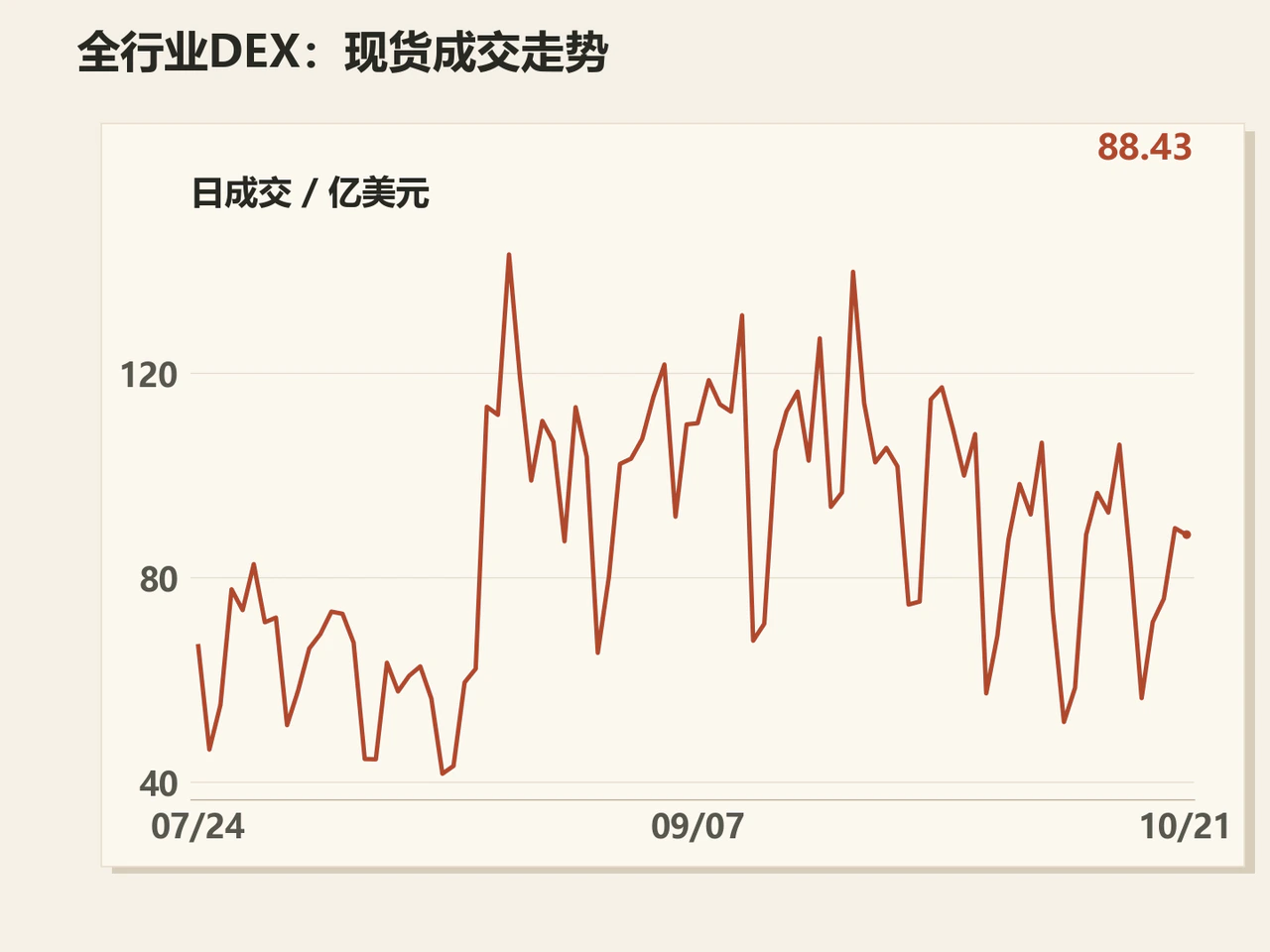
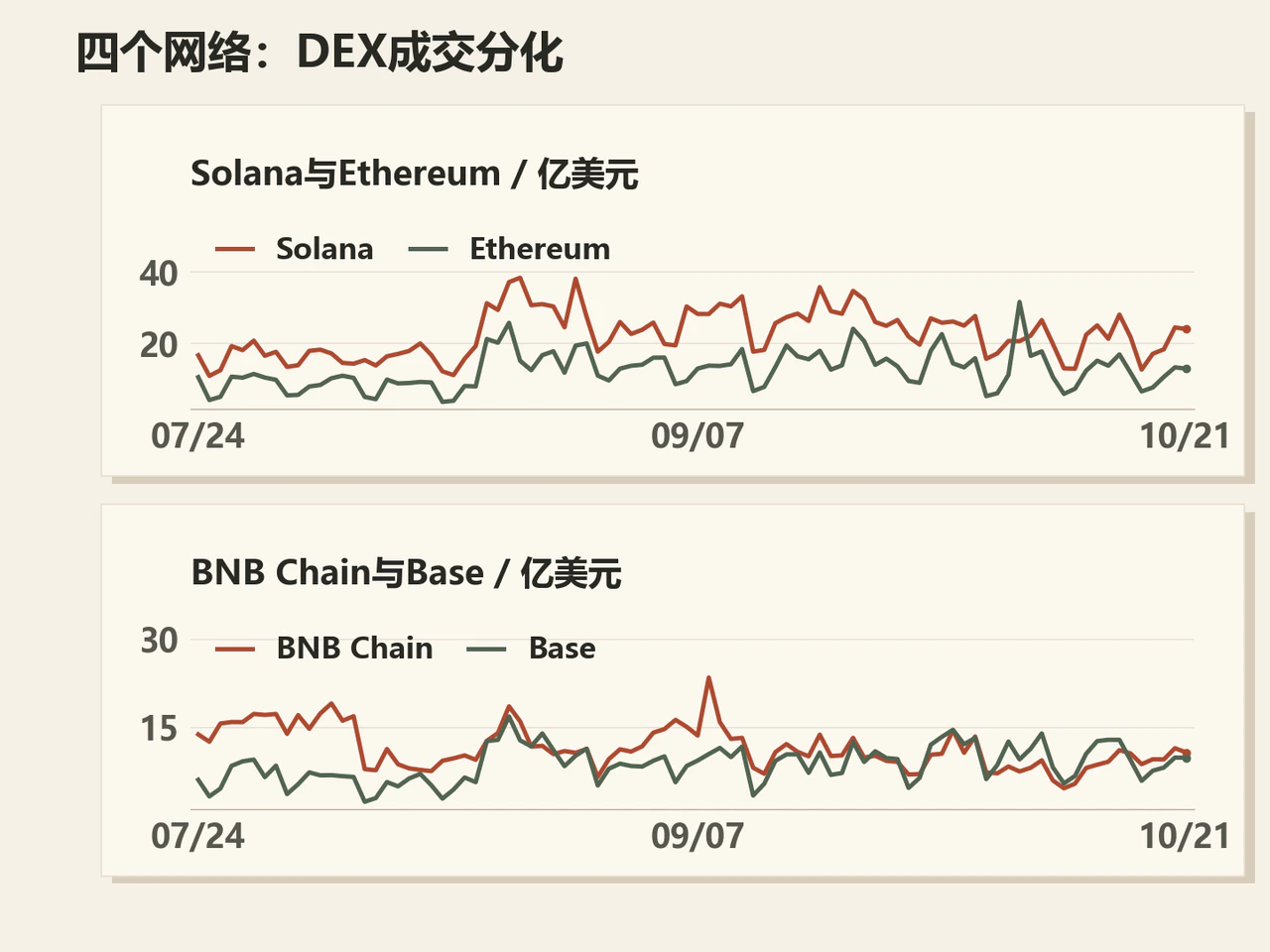
According to DefiLlama's daily UTC data, total decentralized spot-exchange volume was $8.843 billion on October 21, down 1.41% from the previous day and 2.36% below the preceding 30-day average. Overall activity remained around its normal level for the past month.
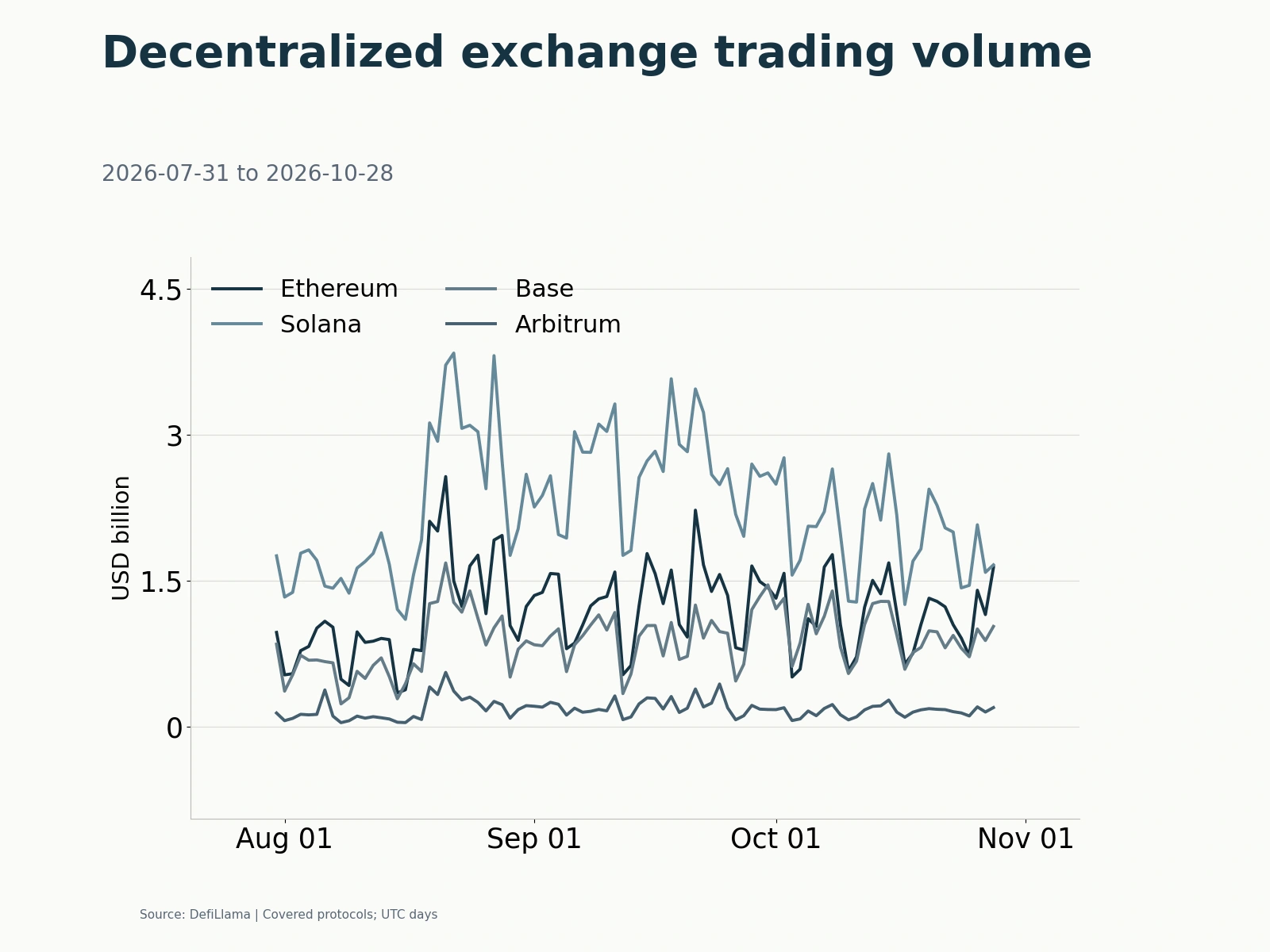
Across networks, trading on most major blockchains and layer-2 networks eased with the broader market, but activity differed significantly. Solana and BNB Chain retreated from relatively elevated levels, recording daily volume of $2.394 billion, down 1.81%, and $1.070 billion, down 6.21%, respectively. They nevertheless remained 6.46% and 16.83% above their respective preceding 30-day averages. Ethereum recorded $1.281 billion, down 2.73%, while Base recorded $980 million, essentially unchanged; both were slightly below their own 30-day averages. Arbitrum volume fell 5.04% to $173 million. Of these six networks, only Tron rose against the trend, gaining 6.39% to $66.74 million.
Beyond trading, access to stablecoin lending is extending further into everyday wallets. On October 21, Gauntlet announced that CoolWallet had added its USD Alpha strategy to the application's Earn menu, allowing USDC deposits on Ethereum mainnet, Base, Arbitrum and Optimism. The strategy allocates funds to overcollateralized lending markets on those networks. Users can view their positions and request redemptions directly from their existing wallet. Embedding lending strategies in wallet interfaces shortens the path between savings and on-chain interest rates, helping protocols broaden their sources of retail funding.
Real-world assets (RWAs) are also gaining more uses as on-chain collateral. Oracle provider RedStone disclosed that day that Obligate's trade-finance product oTFY had expanded from Solana to Ethereum and entered Morpho lending markets as collateral. Holders can thus borrow stablecoins while retaining exposure to the underlying assets. RedStone supplies the market's price data, and RockawayX manages its risk parameters. Because oTFY's underlying assets provide liquidity weekly while on-chain lending and liquidation operate continuously, managing the maturity mismatch through collateral haircuts and liquidity arrangements becomes a key risk-control issue when these assets enter lending markets.
Solana Activates Votor, Alpenglow's First Phase, Targeting 150-Millisecond Finality and Changing Vote Charges
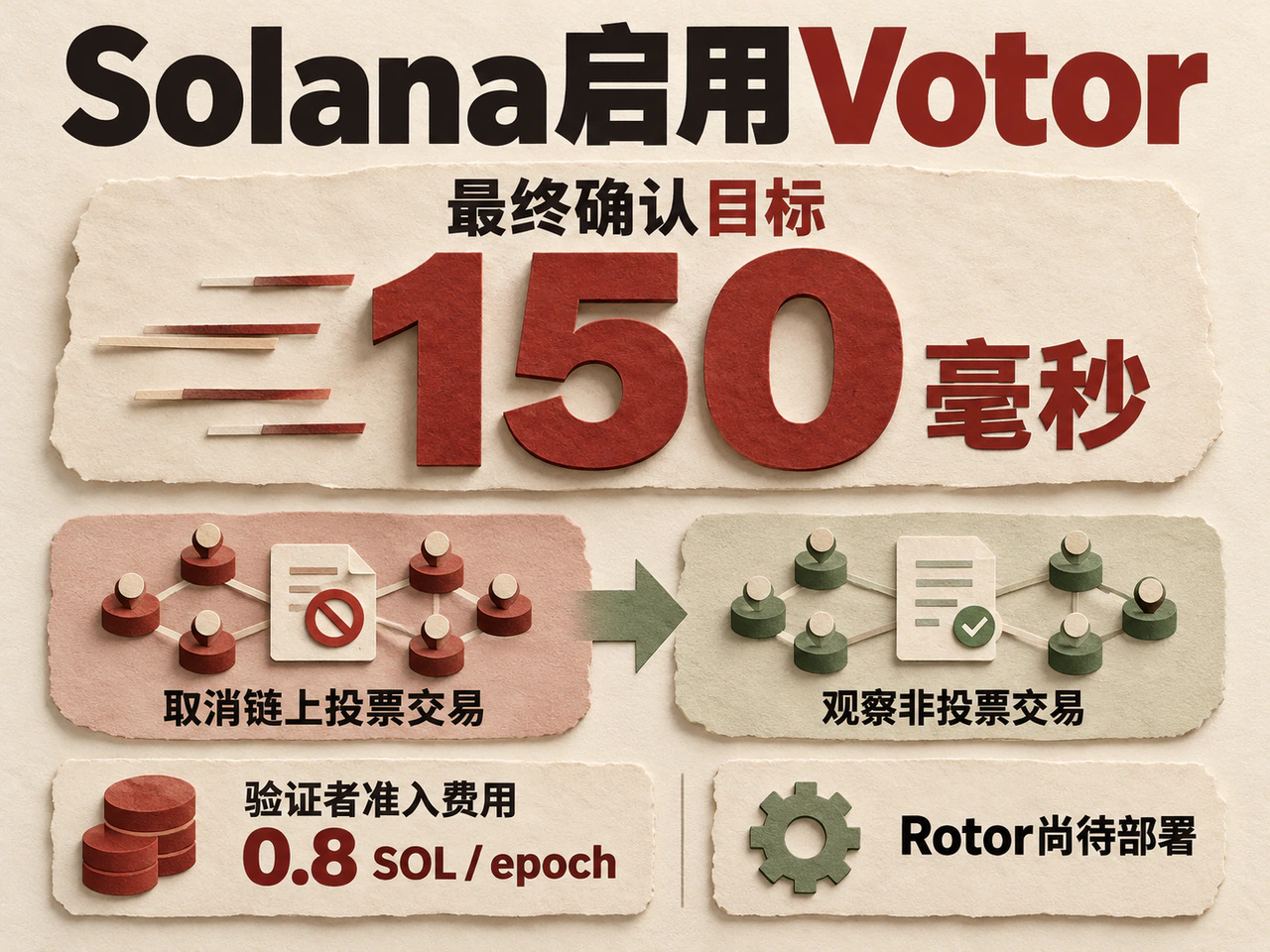
At the infrastructure level, Solana launched Votor, the first phase of its Alpenglow consensus upgrade, that day. The Solana Foundation confirmed that Votor was activated in epoch 1064, replacing the previous TowerBFT mechanism. Validators exchange votes directly and aggregate them into certificates, with the aim of achieving transaction finality in roughly 150 milliseconds. Rotor, the second-phase component responsible for block propagation, still awaits a separate deployment.
According to the foundation, the upgrade retains the existing transaction-execution mechanism and user-fee rules. Its main improvement is a shorter wait for settlement. Faster finality can help payment applications confirm irreversible receipt sooner and shorten the interval before trading services can take subsequent actions. The actual end-user experience still depends on whether wallets, trading interfaces and applications adapt accordingly.
The upgrade also changes the definition of Solana's on-chain transaction statistics and validators' cost structure. Under the old mechanism, validator votes were recorded as on-chain transactions and charged individually. The new mechanism removes on-chain vote transactions and instead charges validators a fixed admission fee of 0.8 SOL per epoch. This creates a break in the total-transaction series, making non-vote transactions the appropriate measure of actual network load.
Excluding vote transactions, user transaction throughput remained within its normal range before and after the upgrade. Solana Compass data show approximately 2,150 non-vote transactions per second in the 13:00 UTC hour when the switchover occurred, and around 2,500 per second in the following hour. These were broadly comparable with 1,990 and 2,640 per second in the corresponding hours of the previous day. Alongside Solana's daily DEX volume remaining above its 30-day average, this suggests existing trading demand continued smoothly through the upgrade. With validator costs becoming a fixed admission fee, future assessments of Solana's operating performance will need to examine user fees, validator earnings and application revenue separately. Whether subsecond settlement translates into sustained application retention and demand for paid services remains to be seen.
Click Read Original for the full details.