By the morning of October 24, Beijing time, military deterrence and diplomatic efforts over Iran were intensifying in parallel. Iranian security officials identified undersea communications cables in the Gulf as potential targets for retaliation, extending the conflict's economic transmission channels from oil transport to telecommunications, cross-border finance and cloud services. At the same time, foreign ministers from eight European and regional countries met in Istanbul and urged against another round of military strikes on Iran.
Iran adds Gulf undersea cables to its retaliation targets, threatening regional digital infrastructure and shipping
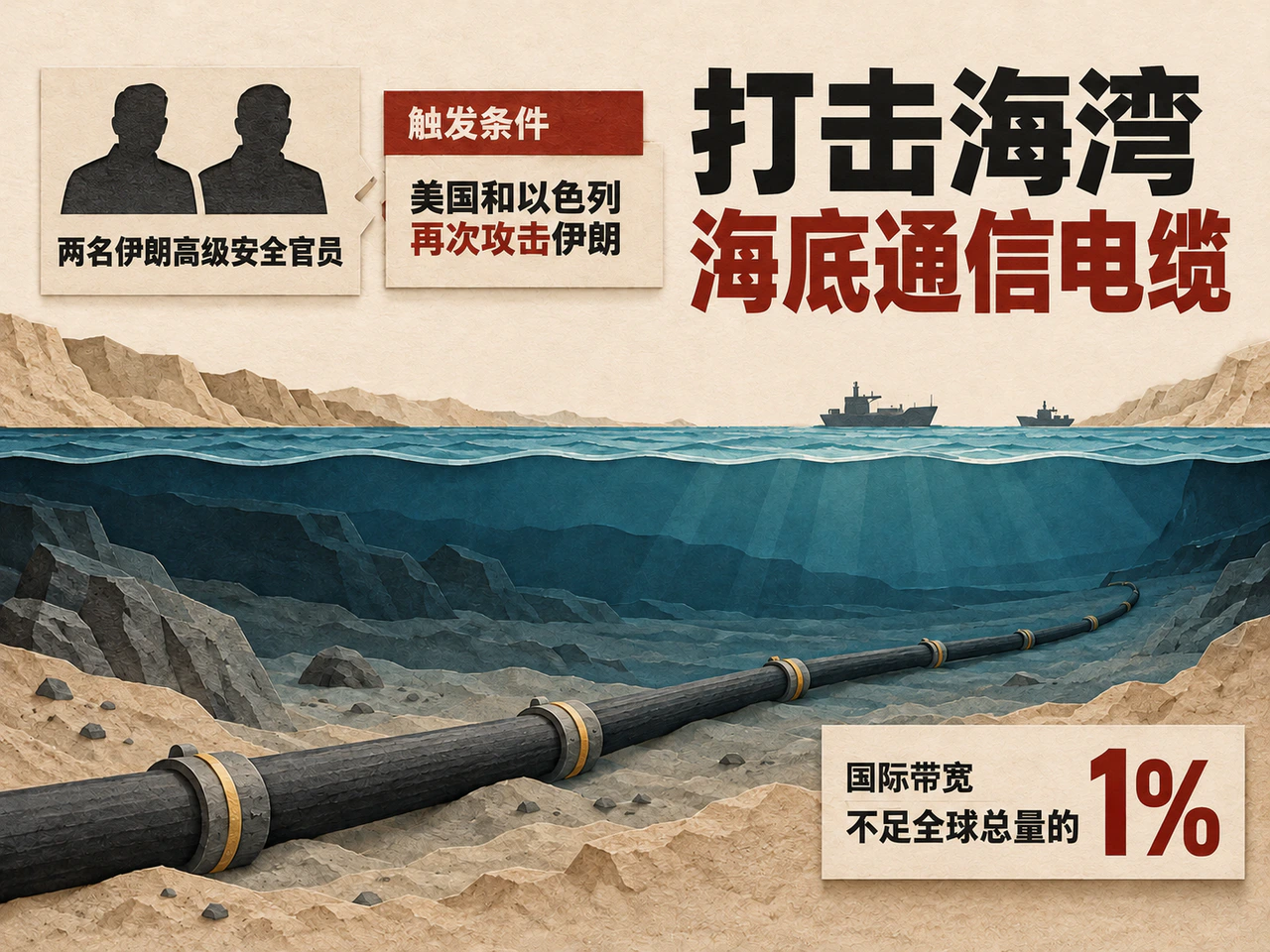
According to an October 23 Reuters report, two senior Iranian security officials said Iran had drawn up plans to strike undersea communications cables in the Gulf if the United States and Israel attacked Iran again. One official said Iran would also seek to obstruct repairs to damaged lines in order to prolong communications outages.
The threat targets infrastructure central to the Gulf states' economic transformation. Local data centers and artificial intelligence projects depend heavily on stable international network connections. Damage to undersea lines would require businesses to reroute communications and could delay cross-border settlement, e-commerce and cloud computing services. If fighting prevented repair vessels from entering the affected waters, outages would last longer still. Telecommunications research firm TeleGeography noted that international bandwidth passing through the Strait of Hormuz accounts for less than 1% of the global total. The extent of spillovers would depend on alternative routes and their spare capacity, but the impact on local Gulf business would be substantially greater than the global average. Middle East Institute scholar Alex Vatanka argued that Tehran intended to encourage Gulf governments and U.S. companies to put pressure on Washington.
Shipping security in the Strait of Hormuz also remained under severe strain. Live reporting on October 23 cited Iran's Revolutionary Guards as saying that two tankers had struck mines south of the strait; the vessels were not named. At the White House that day, U.S. President Donald Trump insisted that oil was still moving through the waterway. Without clear security guarantees, the risk of attacks in these waters continued to influence shipowners' route choices and insurance costs.
Eight foreign ministers oppose further strikes on Iran; Britain, France and Germany offer nuclear talks

On October 23, the foreign ministers of Turkey, Saudi Arabia, Pakistan, Egypt, Britain, France and Germany held their first collective meeting in this configuration in Istanbul, joined by Italy's foreign minister. Discussions covered the Iran war, navigational safety in the Strait of Hormuz and developments in Yemen, including Houthi attacks on Saudi Arabia. The meeting brought regional countries' desire to prevent the war from spreading, and their practical need to protect domestic infrastructure, directly together with Europe's concern over stable energy supplies.
The participants broadly favored diplomatic de-escalation. Turkish Foreign Minister Hakan Fidan said after the meeting that the countries believed another attack on Iran would expand the regional war and that diplomacy and dialogue were the way to end it. French Foreign Minister Jean-Noël Barrot warned that further escalation would push up energy prices. Italian Foreign Minister Antonio Tajani stressed restoring freedom of navigation through de-escalation and dialogue. German Foreign Minister Johann Wadephul explicitly said that Britain, France and Germany were willing to negotiate with Iran to rule out its acquisition of nuclear weapons.
The latest statements from Washington and Tehran showed that military pressure and diplomacy on several fronts were continuing simultaneously. Trump said on October 23 that the United States could end the war quickly, while publicly weighing whether to bring it to a rapid end or let the conflict gradually subside. Iran's foreign minister announced that the Iranian president planned to visit Russia the following week. Until mediation produces concrete navigation arrangements, nuclear negotiations and enforceable security commitments, these statements are insufficient to change the risk expectations of shipowners and regional businesses.
| Key developments — Beijing time |
|---|
| 10-24 03:42Iran's Revolutionary Guards claimed that two tankers had struck mines south of the Strait of Hormuz, without naming the ships or providing specific details of the incidents. |
| 10-24 02:14Iran's foreign minister said the Iranian president planned to visit Russia the following week for talks with Vladimir Putin. |
| 10-24 01:56After the Istanbul meeting, Turkish Foreign Minister Hakan Fidan said the participating countries opposed another military strike on Iran. German Foreign Minister Johann Wadephul said Britain, France and Germany were willing to negotiate to prevent Iran from acquiring nuclear weapons. |
| 10-24 01:03Two senior Iranian security officials told Reuters that Iran was prepared to strike Gulf undersea communications cables and seek to obstruct repairs if the United States and Israel attacked Iran again. |
| 10-24 00:29The foreign ministers of Britain, France, Germany, Italy, Turkey, Saudi Arabia, Pakistan and Egypt met in Istanbul to discuss Hormuz navigational safety and regional developments. Italy stressed de-escalation through dialogue to restore shipping. |
| 10-23 23:53Trump said the United States could quickly end the war against Iran and was weighing a rapid conclusion against allowing the conflict to gradually subside. He also claimed oil was still being shipped through the Strait of Hormuz. |
| 10-23 23:11The Israeli military said a shooting in Hebron killed two soldiers and wounded three. Qatar's Al Jazeera reported that two Palestinians died in the exchange of fire. Israel announced tighter restrictions in the West Bank. |