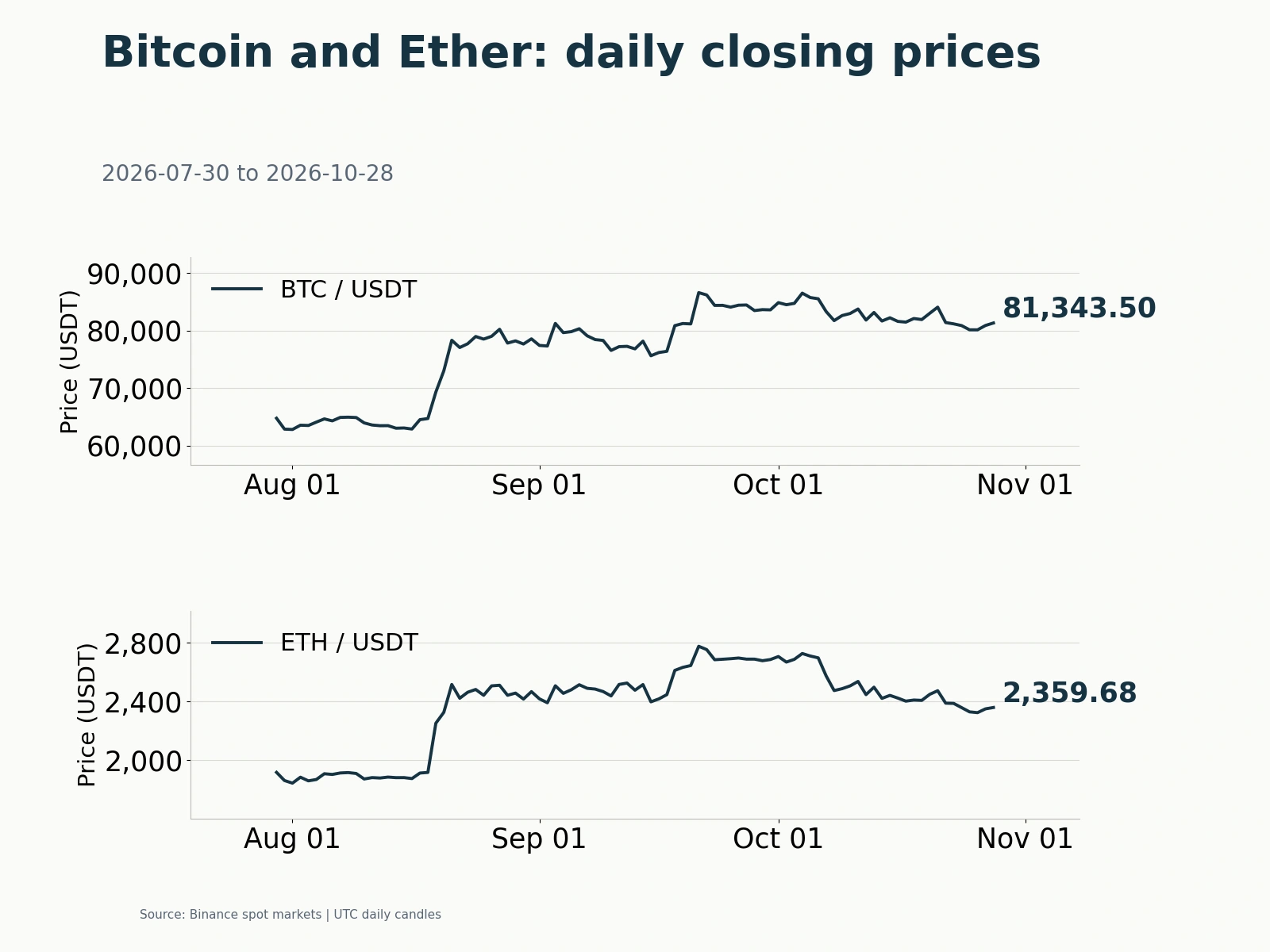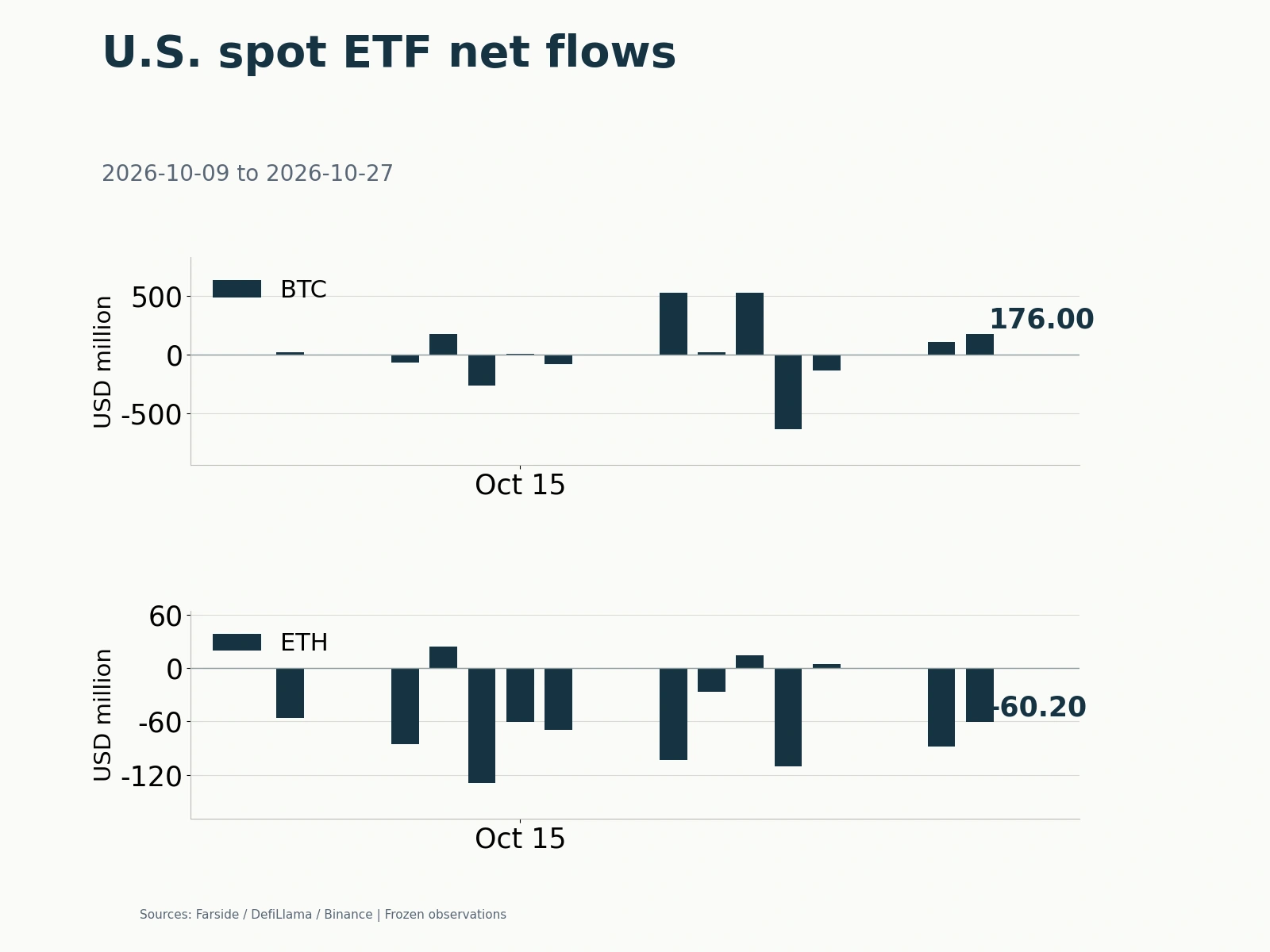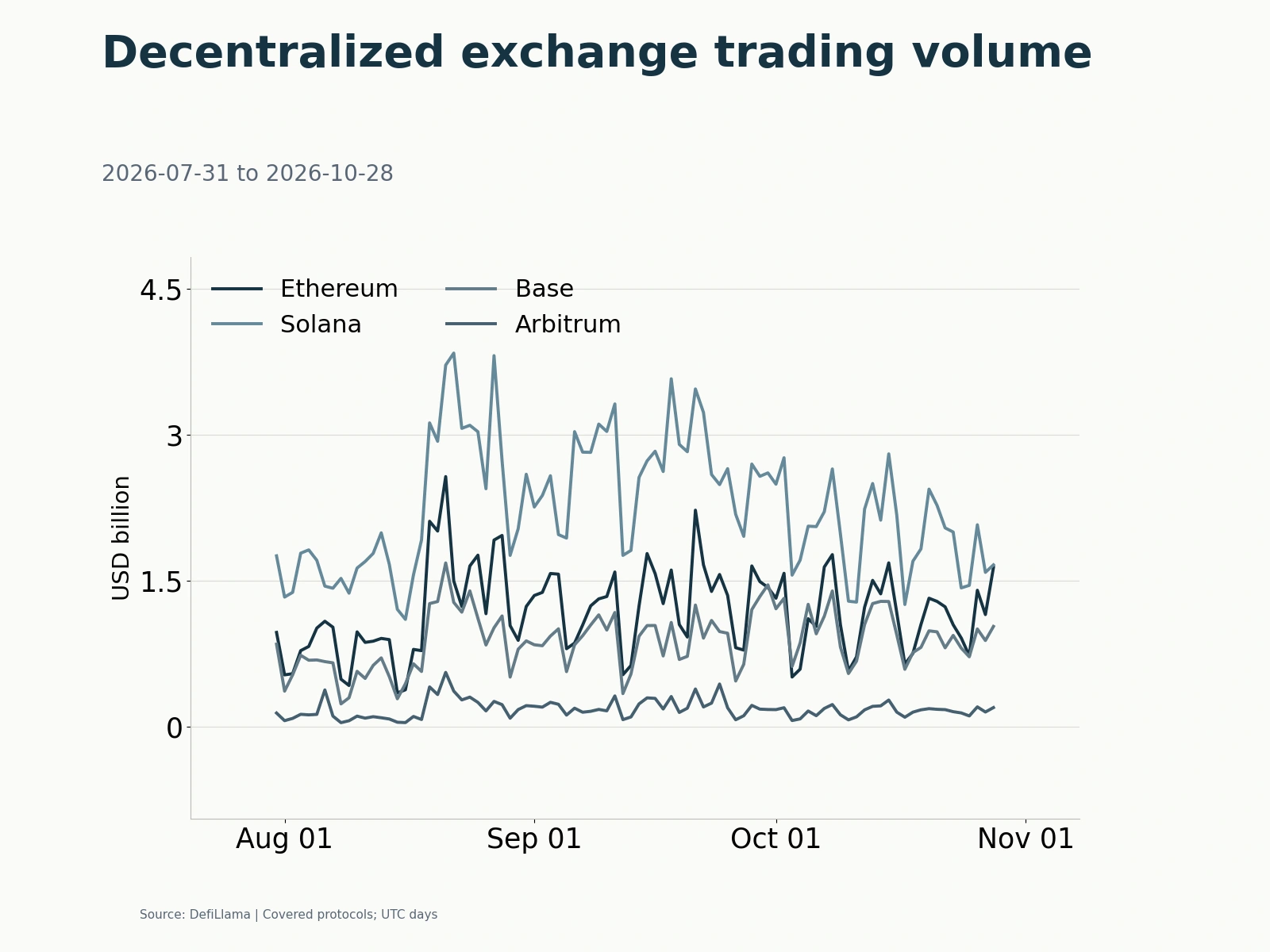
Rising Middle East security risks triggered concentrated selling in crypto during Saturday’s session. Bitcoin briefly fell below 80,000 USDT before recovering most of its losses. Ether also rebounded from its intraday low, but still underperformed Bitcoin for the day, extending the divergence seen over the preceding month.
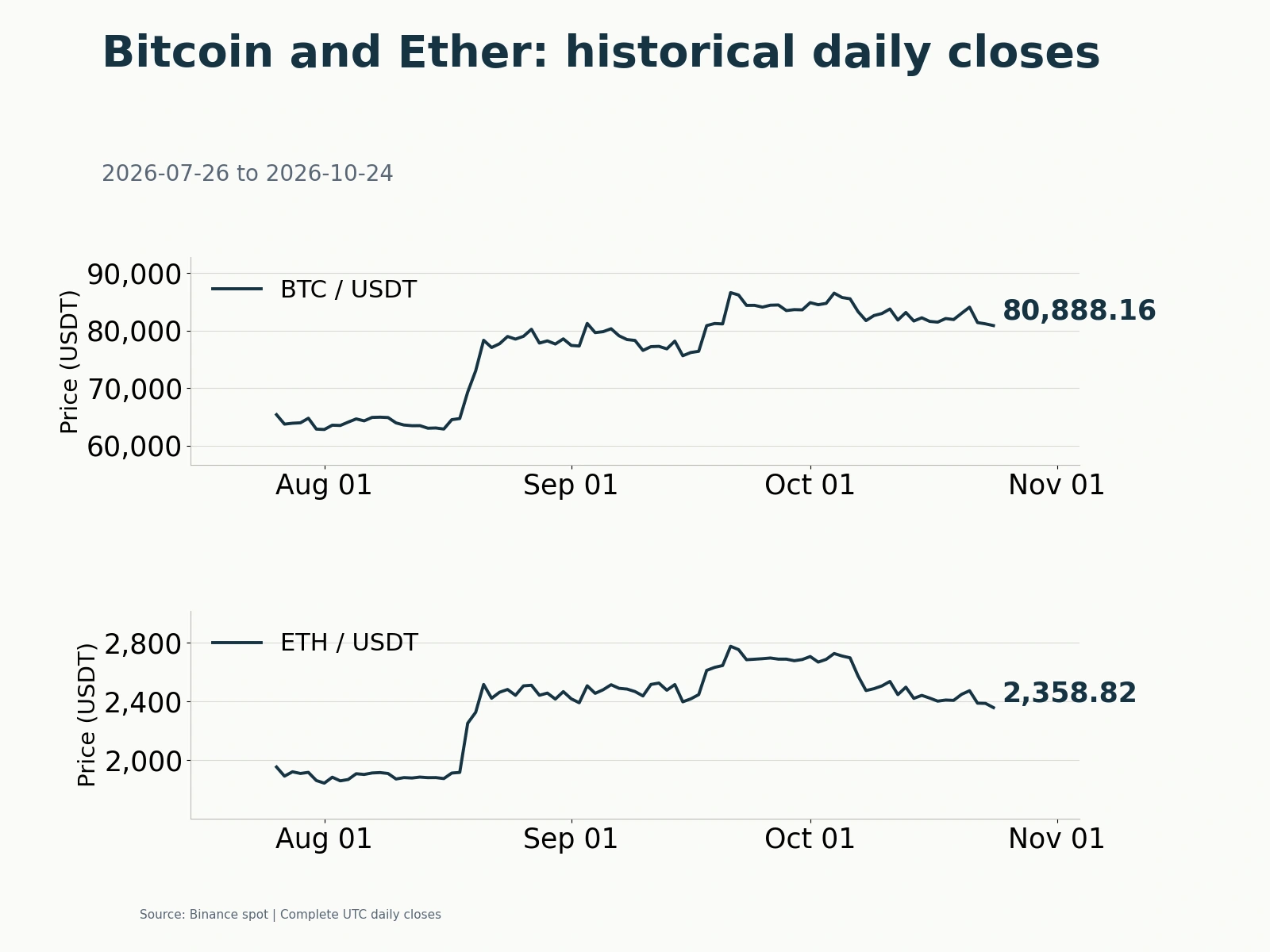
Binance spot USDT prices for the October 24 UTC daily candle, covering 08:00 Beijing time on October 24 to 08:00 on October 25, showed Bitcoin closing at 80,888.16 USDT, down 0.37% from the preceding day. Ether closed at 2,358.82 USDT, down 1.21%. Their intraday lows were 79,220.74 and 2,282.46 USDT, respectively, and their closes were 2.10% and 3.35% above those lows. Buying at lower levels softened the sharp decline but did not reverse Ether’s weakness relative to Bitcoin.
Middle East staffing reductions trigger long liquidations; Bitcoin recovers most losses on lighter volume

The immediate shock to Saturday trading came from the Middle East. CoinDesk, citing The Wall Street Journal on October 24, reported that the United States was evacuating personnel from some diplomatic missions and military bases because of concerns about Iranian attacks. A report republished by AOL that day clarified differences across locations: Washington had already required nonemergency government employees and families to leave Saudi Arabia and announced staffing reductions on Friday at its embassies in Jordan, Lebanon, Qatar and the UAE, but had not issued the same departure order for those four embassies.
Because crypto trades around the clock, investors often reduce exposure first when geopolitical risks broaden while the extent of escalation remains unclear. At CoinDesk’s publication time, Bitcoin was quoted near US$79,700 and major tokens were broadly under pressure. Comparison with the daily close showed that the market absorbed much of the initial selling after the intraday plunge.
Highly leveraged derivatives positions amplified the move. At 14:34 UTC on October 24, CryptoPotato cited rolling CoinGlass figures showing approximately US$670 million of liquidations across the market over the preceding 24 hours. Around US$232 million occurred in the latest one-hour window, including roughly US$220 million in long liquidations. As falling spot prices hit margin constraints, forced long closures intensified short-term selling. The subsequent stabilization and recovery showed that the liquidation-driven surge in selling did not persist through the daily close.
Traders differed on the selloff and opportunities near the lows. Ted Pillows attributed the selling to thin weekend liquidity, focusing on weak market absorption. Michaël van de Poppe argued that deepening fear was bringing a contrarian buying opportunity closer, emphasizing a possible reversal after sentiment reached an extreme. These two trading approaches both featured in the turnover around the intraday low, but the quality of the recovery still required confirmation from subsequent prices and volume.
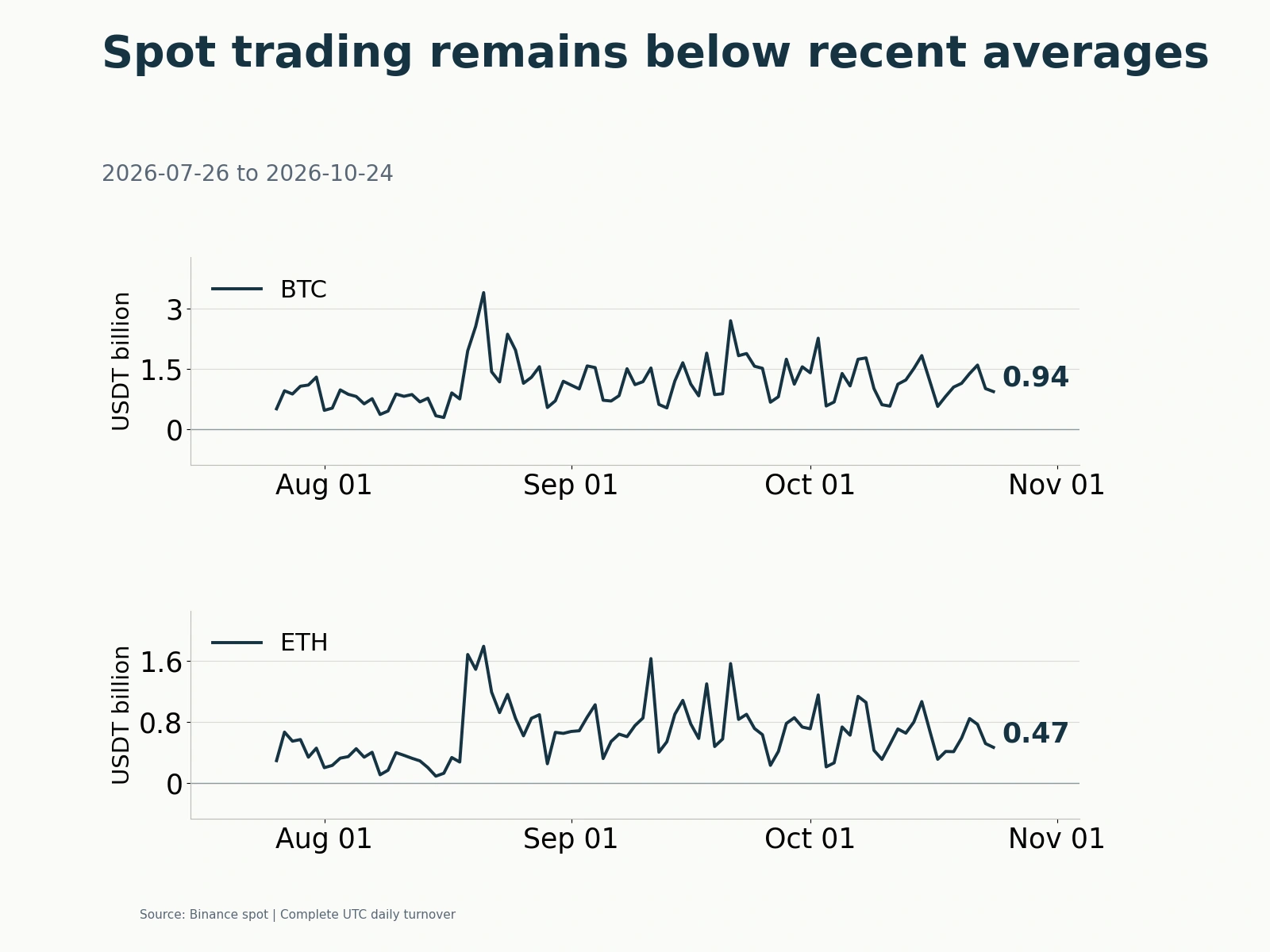
Turnover did not yet show stronger spot participation in the rebound. Binance Bitcoin spot turnover was 942 million USDT and Ether turnover 467 million. Both were below the previous day’s 1.017 billion and 517 million USDT and well below their respective preceding 20-trading-day averages of 1.171 billion and 641 million. Thin trading alongside a deep intraday fall illustrated how concentrated sell orders could move prices more easily when weekend liquidity was weak. The lower-volume recovery also indicated continued caution among spot buyers.
Ether trails Bitcoin for both the day and month as major-token performance remains divided
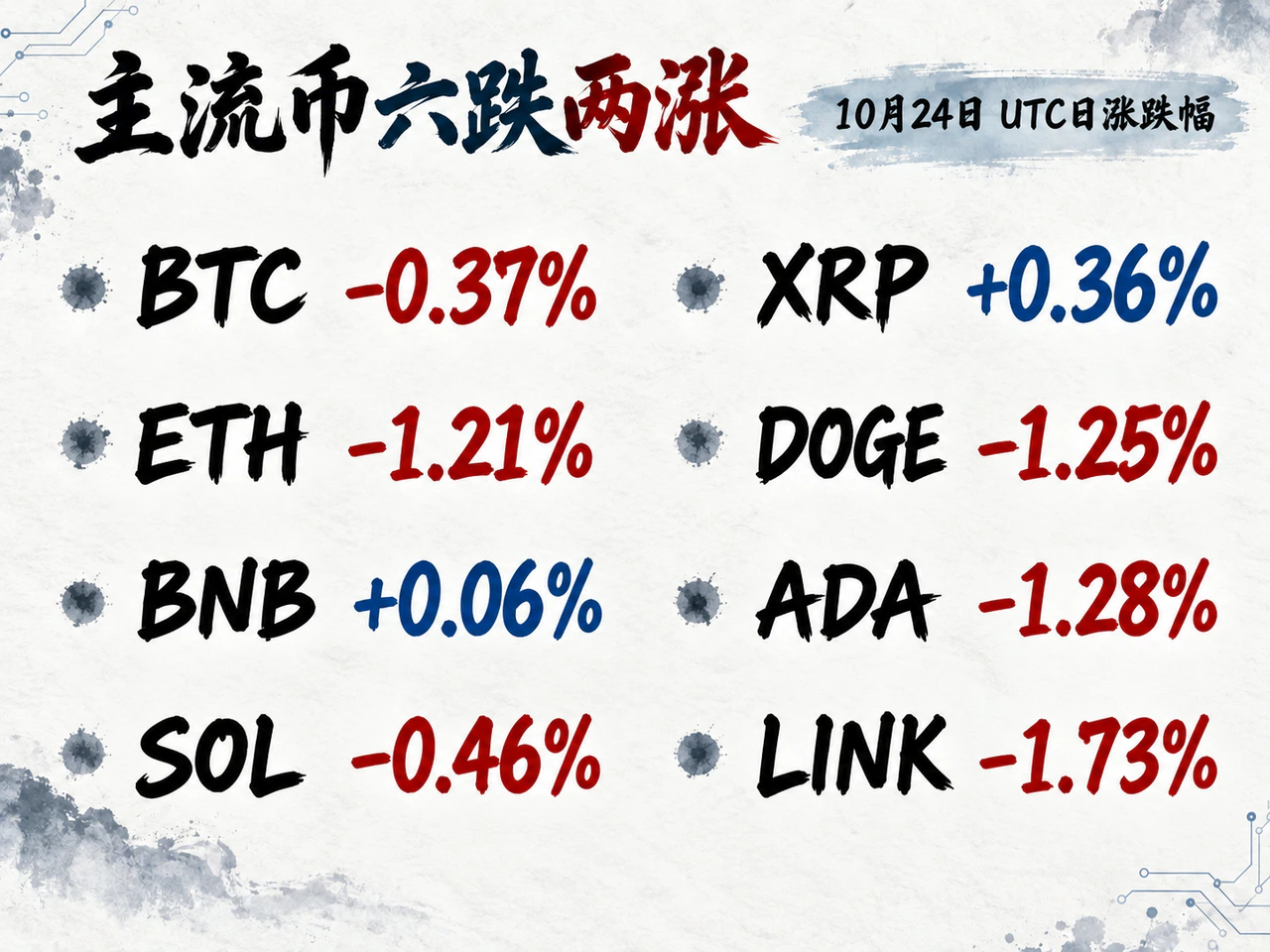
Among the fixed eight-pair Binance spot sample of Bitcoin, Ether, BNB, SOL, XRP, DOGE, ADA and LINK, six fell and two rose. BNB gained 0.06% and XRP rose 0.36%. All the others closed lower: Bitcoin −0.37%, Ether −1.21%, SOL −0.46%, DOGE −1.25%, ADA −1.28% and LINK −1.73%. Only a few assets recovered all their losses after the broad intraday selloff; most major tokens continued to face notable selling pressure.
Ether’s relative weakness was particularly clear. Based on same-time USDT closes, ETH/BTC fell to 0.02916, down 0.84% for the day. Ether rebounded more from its low than Bitcoin did, 3.35% versus 2.10%, but its deeper intraday decline still left it with the larger daily loss.
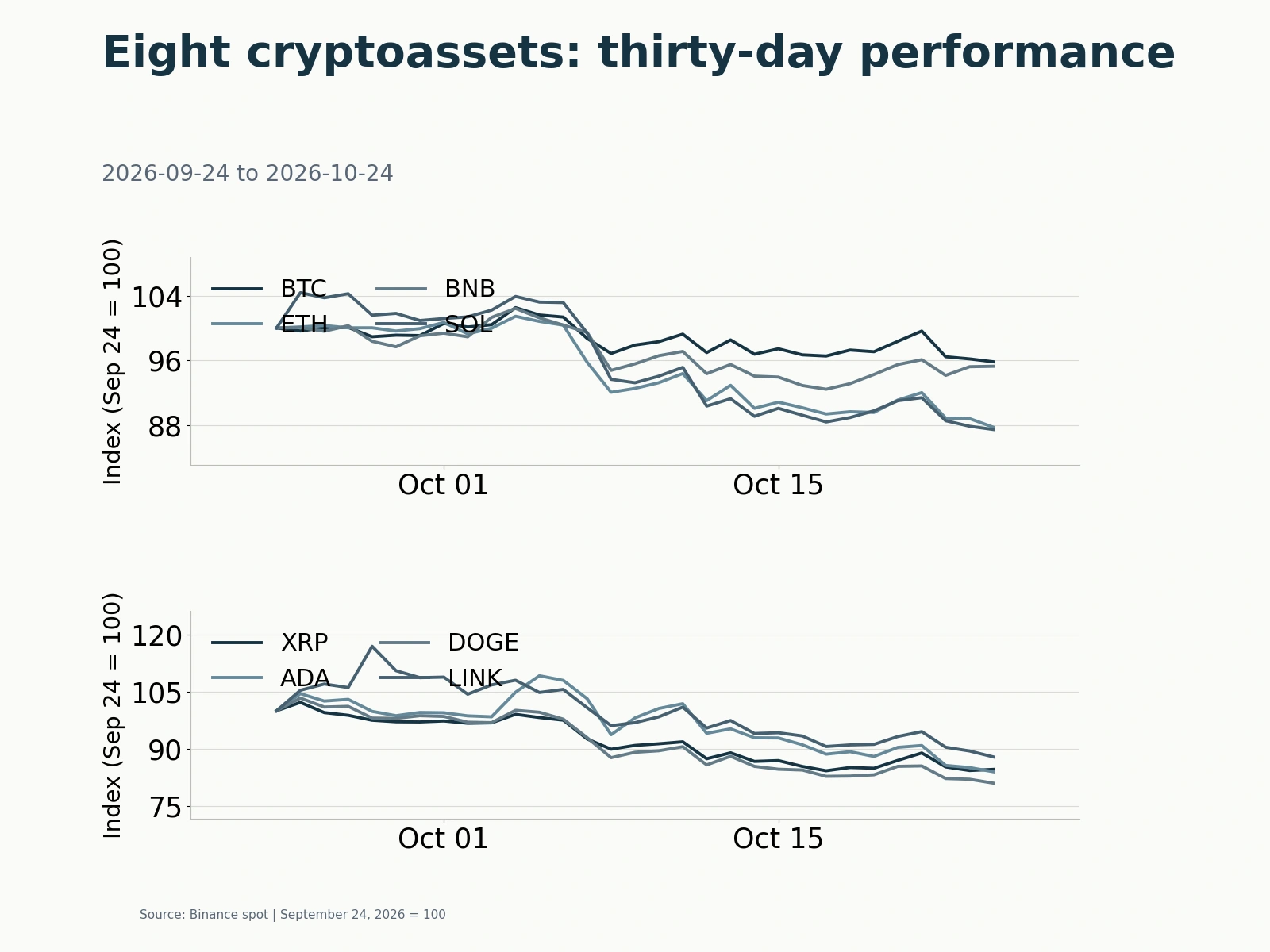
The divergence was clearer over 30 days. From September 24 through October 24, Bitcoin fell 4.17% and BNB lost 4.72%, making both relatively resilient. Ether declined 12.25%, contributing to an 8.43% drop in ETH/BTC. SOL, XRP and DOGE fell 12.53%, 15.32% and 18.93%, respectively. Saturday’s performance extended the preceding month’s divergence and showed that risk appetite for higher-beta tokens had yet to recover in parallel.
In an October 23 report, AMINA Bank said scrutiny of technology investment returns, higher energy prices and monetary-policy uncertainty were jointly weighing on risk assets. Within crypto, weak spot trading and increased derivatives participation made positioning more sensitive to external shocks. Saturday’s sequence illustrated that vulnerability: geopolitical news triggered defensive selling, derivatives liquidations amplified intraday losses, and buying at lower levels then lifted prices without changing the existing pattern of relative strength across tokens.
The key tests of the recovery would be whether Bitcoin could hold its recovered range, whether spot turnover increased moderately alongside a rebound, and whether ETH/BTC stabilized. Steady Bitcoin prices alongside continued underperformance by most major tokens would leave defensive positioning in control. A substantive recovery in willingness to take risk would require both stronger spot volume and improving relative exchange rates across major tokens.
Read the original article for full details.