By the morning of October 25 Beijing time, the U.S.–Iran impasse over the maritime blockade and passage through the Strait of Hormuz remained unresolved. Iran reiterated its willingness to restore shipping if the United States lifted the blockade of its ports. U.S. President Donald Trump kept open both military action and a negotiated deal. With no agreement on implementation, Yemen’s Houthis claimed attacks on Saudi Arabia’s East–West Pipeline, Aramco facilities at Yanbu and several airports, and fired missiles at the southern Yemeni port of Aden. Conflict pressure spread further toward Red Sea crude export routes and southern Yemen.
Iran reiterates blockade relief for shipping access as Washington assesses strike options and reduces overseas staffing
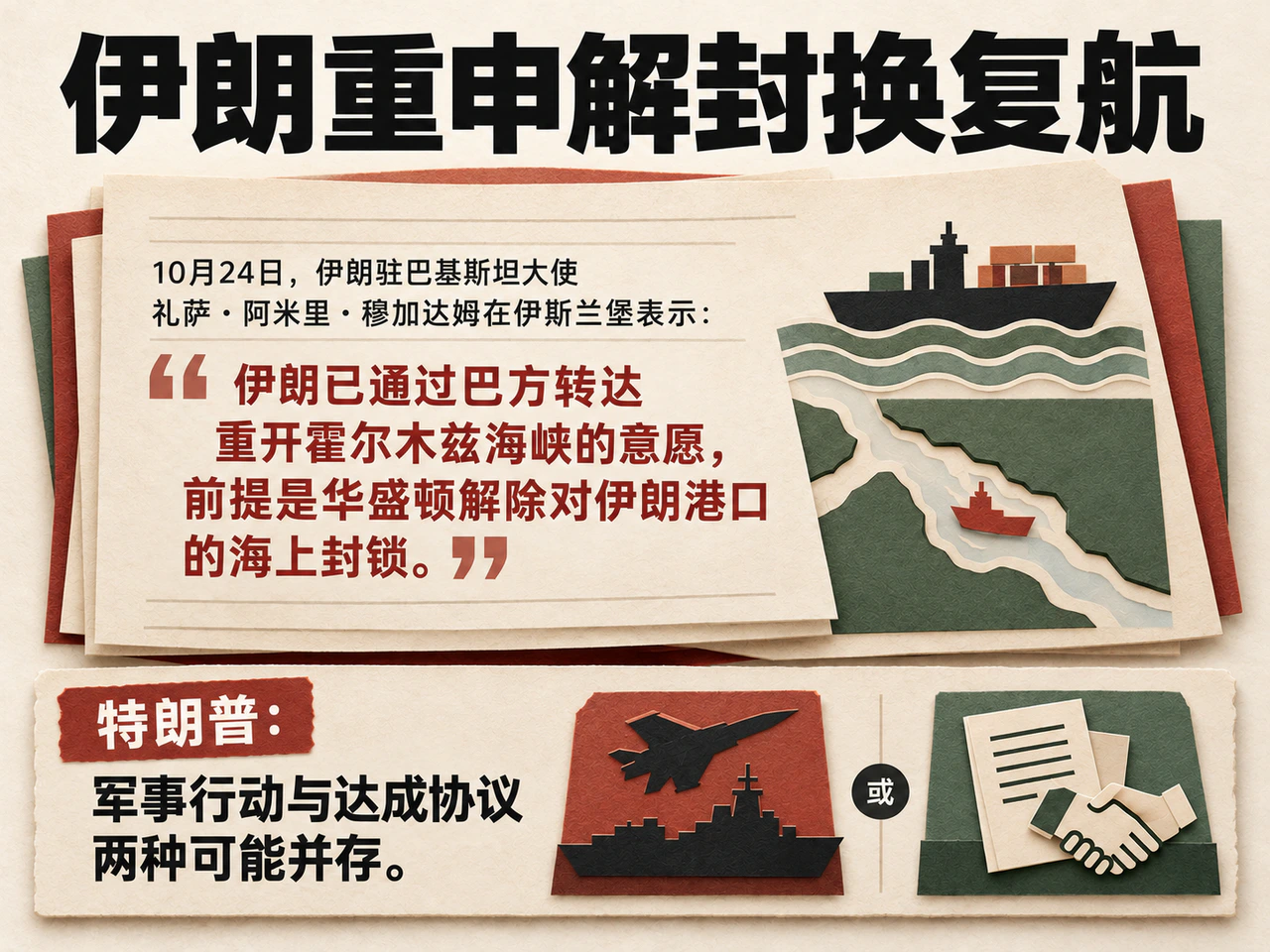
On October 24 in Islamabad, Iran’s ambassador to Pakistan, Reza Amiri Moghadam, said Tehran had conveyed through Pakistan its willingness to reopen Hormuz, provided Washington lifted the naval blockade of Iranian ports. He accused the United States of obstructing implementation by insisting on the blockade. Iran, he said, remained willing to negotiate under a temporary June arrangement mediated with Pakistani and Qatari involvement, which had linked restored navigation and blockade relief to subsequent nuclear talks.
Iranian President Masoud Pezeshkian said the same day that efforts to complete an agreement should continue. He acknowledged that war and the impasse had left many people struggling to obtain even daily food. Domestic economic and livelihood pressures were prompting negotiating signals, but the two sides had still not announced a mutually accepted arrangement for coordinating blockade relief and restored passage.
Military confrontation continued alongside diplomatic overtures. On October 24, Iranian armed forces chief of staff Ali Abdollahi warned that U.S. warships would not be allowed into the Persian Gulf or near Iranian territorial waters. Asked when action against Iran might occur, Trump gave no timing and said both military action and a deal remained possible.
NBC, citing current and former U.S. officials familiar with the matter, reported that military options recently presented to Trump included striking tunnels or entrances at Iranian nuclear facilities and targets on Kharg and Qeshm islands. There was no report that these options had been approved for execution. The United States was also reducing staff further at diplomatic missions in Lebanon, the UAE, Qatar and Jordan. A U.S. official confirmed the authenticity of an intelligence memorandum warning that lethal plots against American personnel were at an advanced stage, without disclosing specific targets or whether attacks were imminent.
Houthis target Saudi pipelines and airports, putting the Red Sea alternative under pressure
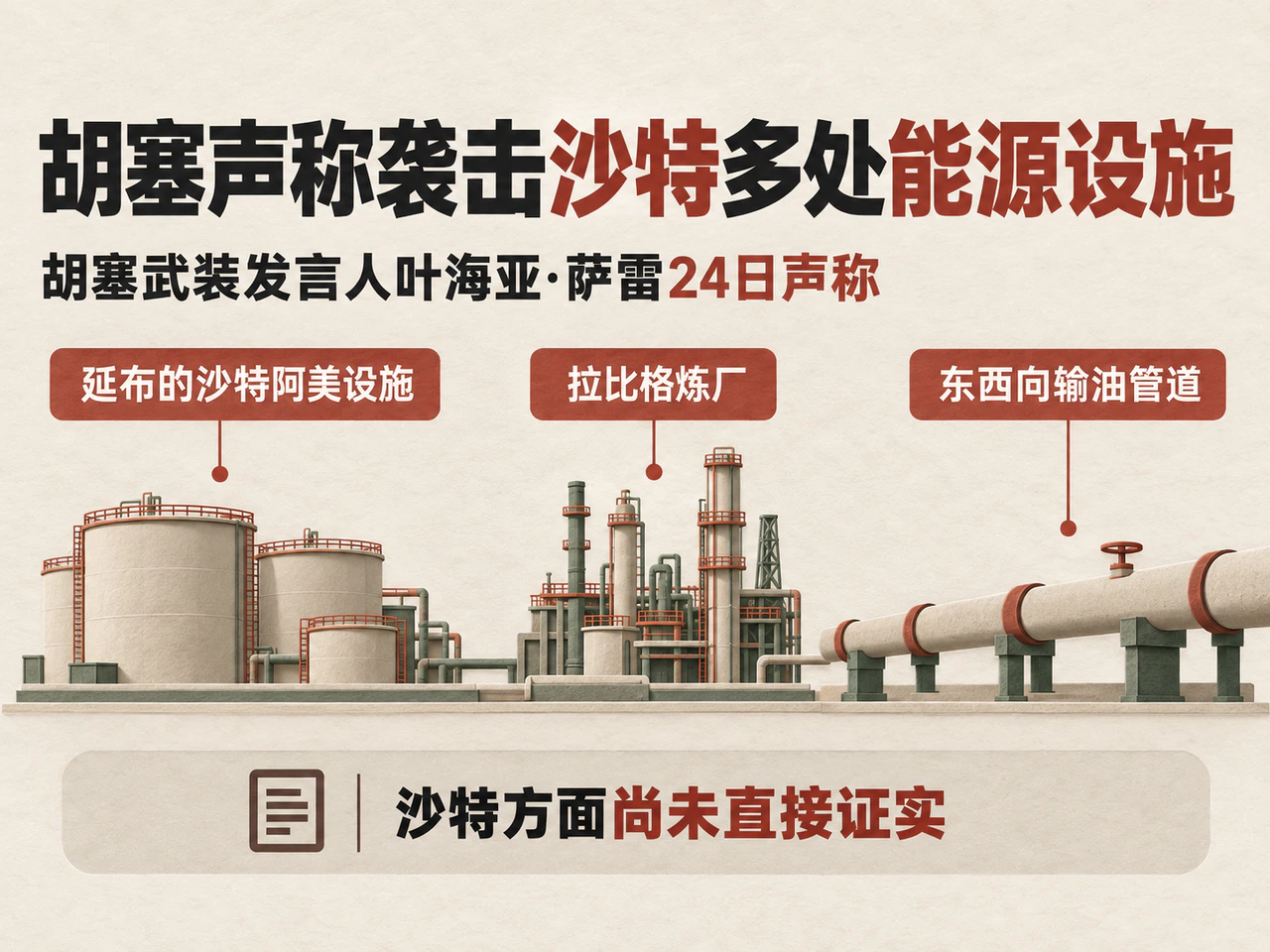
Houthi spokesperson Yahya Saree claimed on October 24 that the group had attacked Saudi Aramco facilities in Yanbu, the Rabigh refinery, crude pumping stations and the East–West Pipeline, as well as Riyadh’s King Khalid Airport, Dammam’s King Fahd Airport, Najran Airport and Khamis Mushait air base. The U.S. embassy in Saudi Arabia had also issued updated travel advice on October 24, warning that regional operations by the Iran-backed Houthis endangered aviation and parts of the kingdom.
The Saudi-led coalition said it intercepted two ballistic missiles aimed at Yanbu and Taif. Saudi civil defense reported falling interception debris in the Mecca and Medina regions, including locations in Jeddah, Taif and Rabigh. Saudi authorities had not directly confirmed whether the oil facilities named in Houthi claims had been hit.
The East–West Pipeline connects Saudi Arabia’s eastern oilfields with Yanbu’s Red Sea export terminal and is a key route for crude exports that bypasses Hormuz. The Houthis’ inclusion of that pipeline, associated refineries and pumping stations among their targets meant that the alternative export path outside the strait also faced security threats.
Missiles strike Aden port facilities as Yemen airstrike casualties rise and up to 300 West Bank families leave their homes
Fighting inside Yemen extended southward. The internationally recognized government’s Interior Ministry said the Houthis fired three ballistic missiles at coast guard facilities in Aden, the government’s seat and a major port. Two hit the headquarters and one struck a building in the Tawahi district. The Houthis said the targets were Saudi-backed military concentrations and a naval base. The attack further reduced the buffer between the Yemeni government’s rear areas and the front lines.
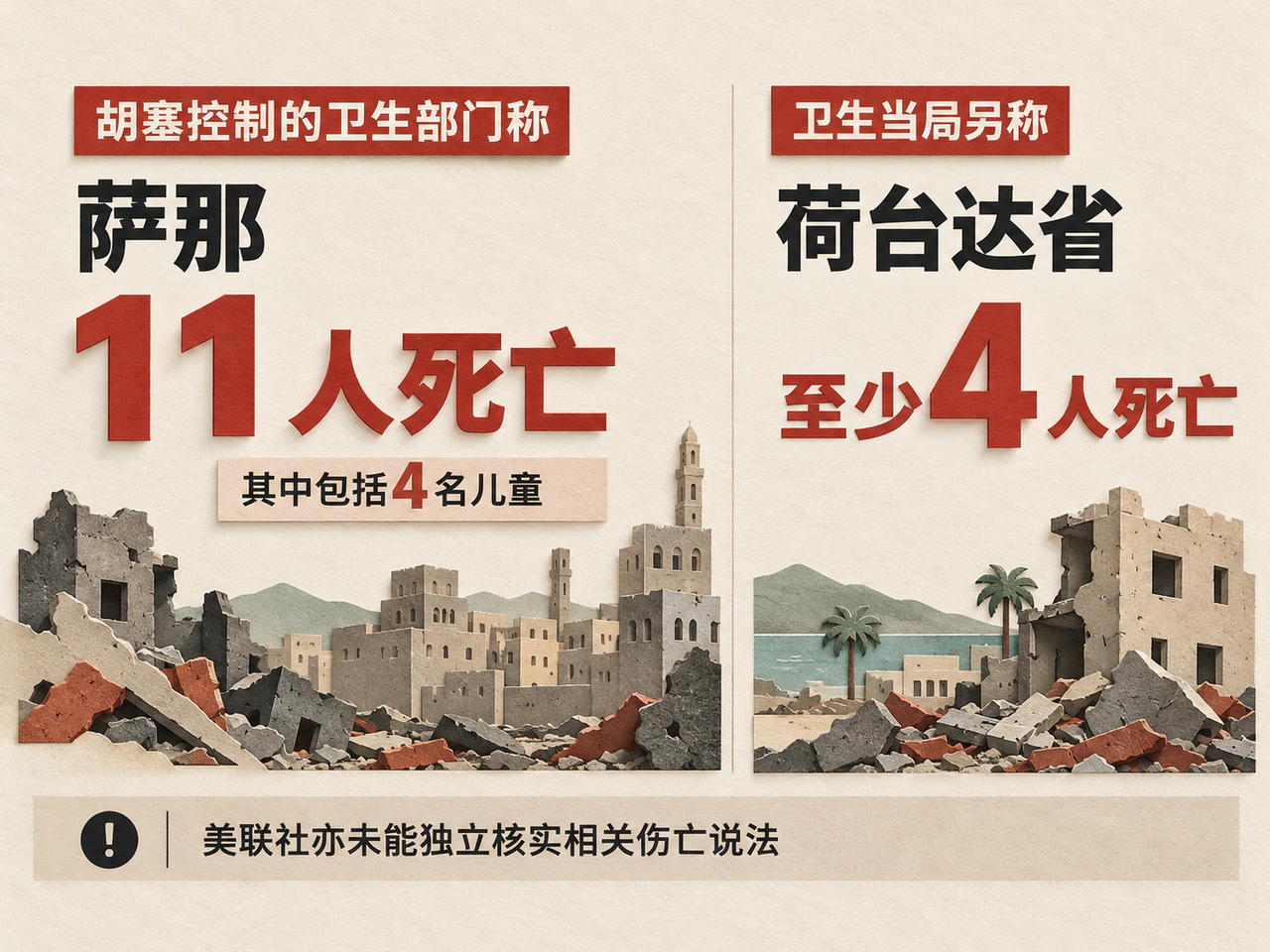
Airstrike casualties in northern Yemen were also increasing. In an update on the evening of October 24, the Associated Press reported that the Houthi-controlled health ministry said strikes on Sana’a had killed 11 people, including four children. Health authorities separately said an attack on homes in Hodeidah province killed at least four. The Houthis blamed Saudi Arabia, which did not respond. The AP could not independently verify the casualty claims.
In the West Bank, Israeli search and demolition operations forced residents to leave. Hebron municipal figures showed that up to 300 families had left Deir Bahah and two neighboring communities. With U.S.–Iran talks yet to produce meaningful de-escalation, Gulf shipping, Saudi energy infrastructure and civilian livelihoods across surrounding areas continued to bear the cost of the conflict’s spillover.
Key developments
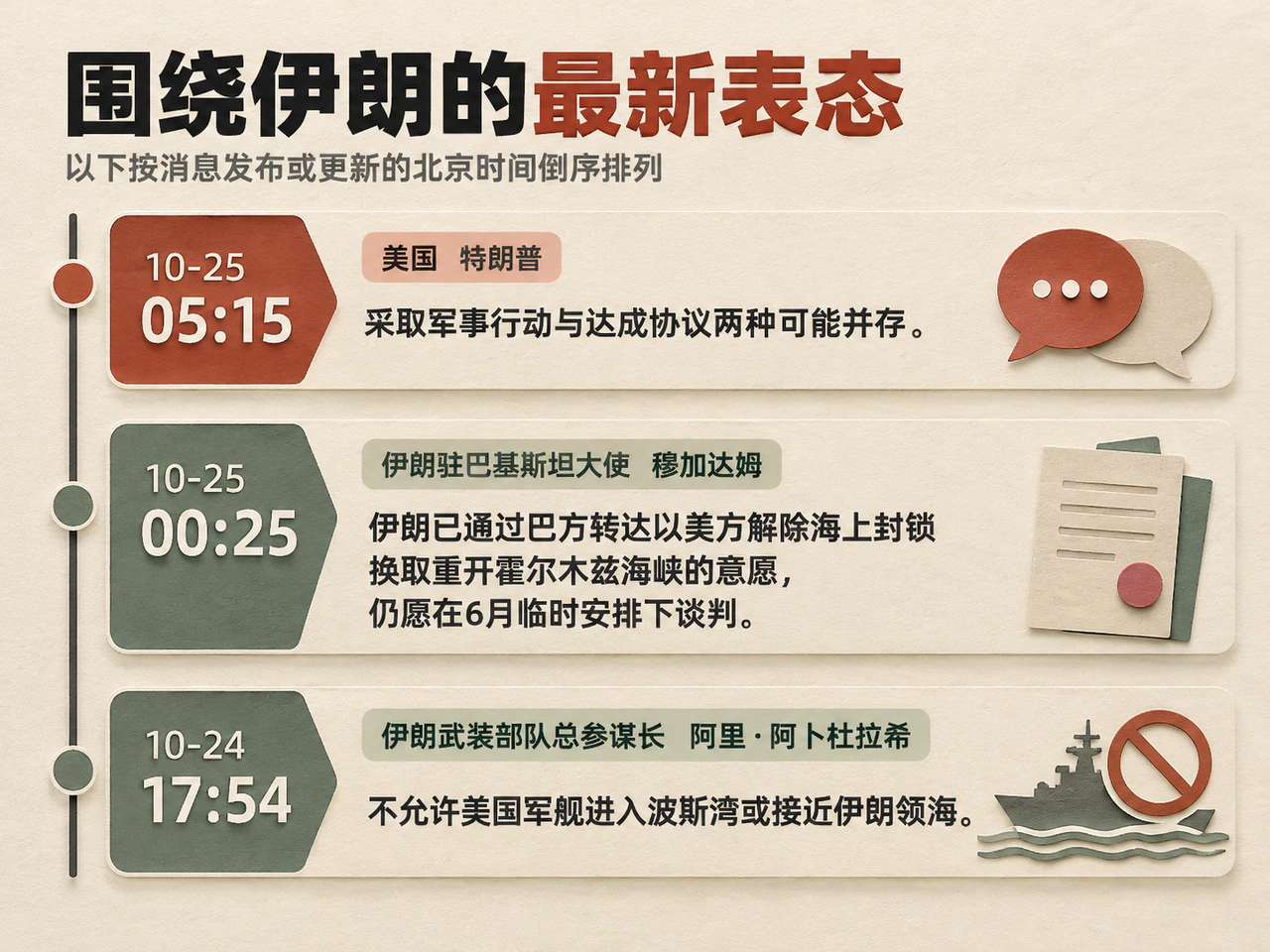
The following entries are ordered by publication or update time, newest first, in Beijing time.
| Key developments |
|---|
| 10-25 05:15The Associated Press reported that Trump gave no timing when asked about possible action against Iran and said both military action and a deal remained possible. |
| 10-25 05:15The Houthi-controlled health ministry said airstrikes on Sana’a killed 11 people, including four children. Health authorities separately said an attack on homes in Hodeidah province killed at least four. The Houthis blamed Saudi Arabia, which did not respond; the AP could not independently verify the claims. |
| 10-25 05:15Hebron municipal figures showed that up to 300 families left Deir Bahah and two neighboring communities during Israeli search and demolition operations. |
| 10-25 01:58The internationally recognized Yemeni government’s Interior Ministry said three Houthi ballistic missiles struck Aden coast guard facilities, with two hitting the headquarters and one a building in Tawahi. |
| 10-25 01:58Houthi spokesperson Saree claimed attacks on Aramco facilities at Yanbu, the Rabigh refinery, crude pumping stations and the East–West Pipeline. Saudi authorities had not directly confirmed whether those targets were hit. |
| 10-25 01:58The Houthis claimed attacks on Riyadh’s King Khalid Airport, Dammam’s King Fahd Airport, Najran Airport and Khamis Mushait air base. |
| 10-25 01:58The Saudi-led coalition said it intercepted two ballistic missiles aimed at Yanbu and Taif. Saudi civil defense reported falling interception debris in the Mecca and Medina regions. |
| 10-25 00:25Iran’s ambassador to Pakistan, Moghadam, said Iran had conveyed through Pakistan its willingness to reopen Hormuz in exchange for lifting the maritime blockade and remained willing to negotiate under the June temporary arrangement. |
| 10-25 00:25Iranian President Pezeshkian said efforts to complete an agreement should continue, acknowledging that war and the impasse left many people struggling to obtain daily food. |
| 10-24 19:49NBC reported further U.S. diplomatic staff reductions in Lebanon, the UAE, Qatar and Jordan. A U.S. official confirmed an intelligence memorandum warning that lethal plots against American personnel were at an advanced stage. |
| 10-24 19:49NBC, citing knowledgeable current and former U.S. officials, said strike options presented to Trump included tunnels or entrances at Iranian nuclear facilities and targets on Kharg and Qeshm islands. |
| 10-24 17:54Iranian armed forces chief of staff Ali Abdollahi said U.S. warships would not be allowed into the Persian Gulf or near Iranian territorial waters. |
| 10-24 14:09The U.S. embassy in Saudi Arabia issued updated travel advice, warning that regional operations by the Iran-backed Houthis posed risks to aviation and parts of Saudi Arabia. |