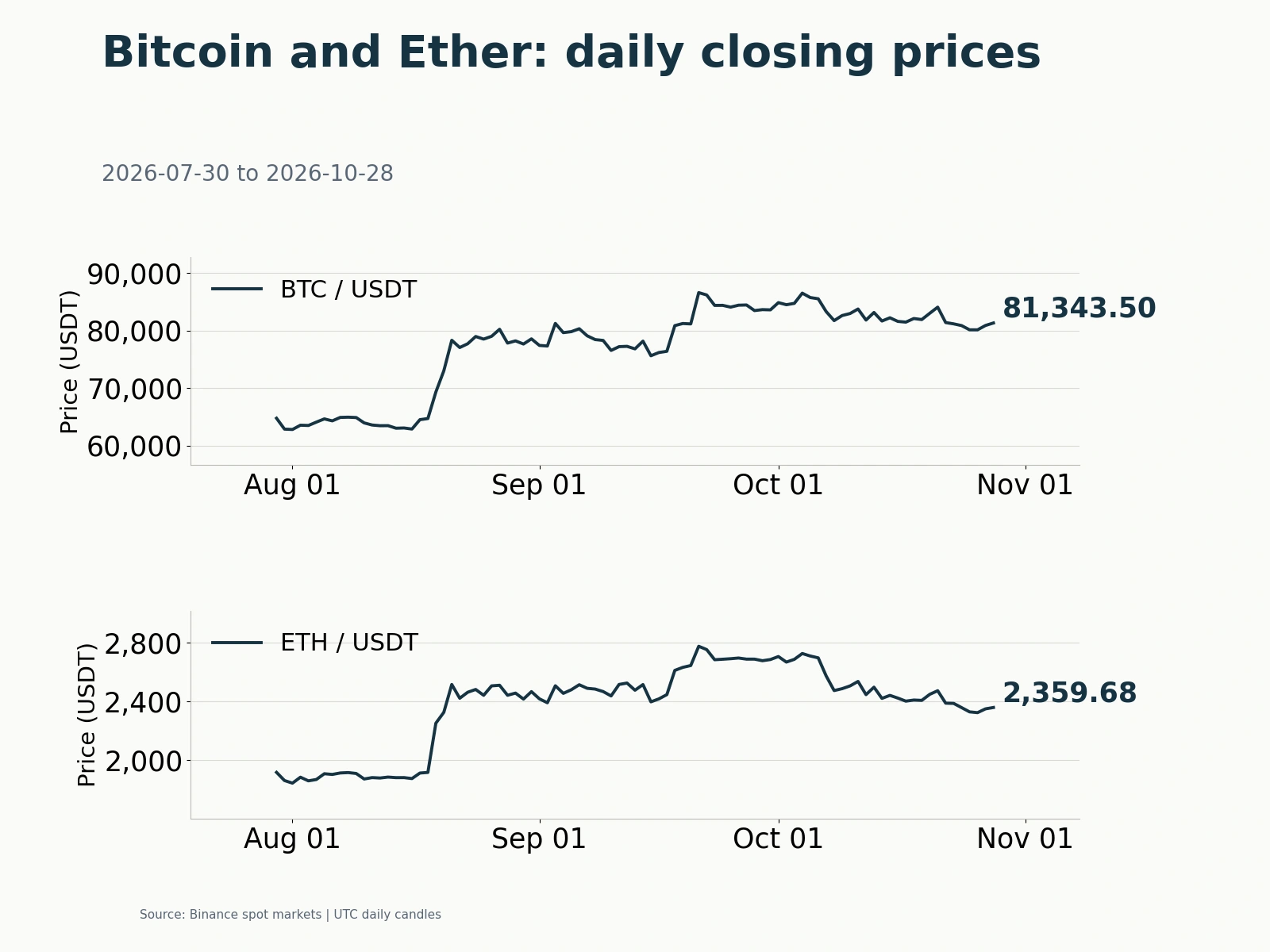
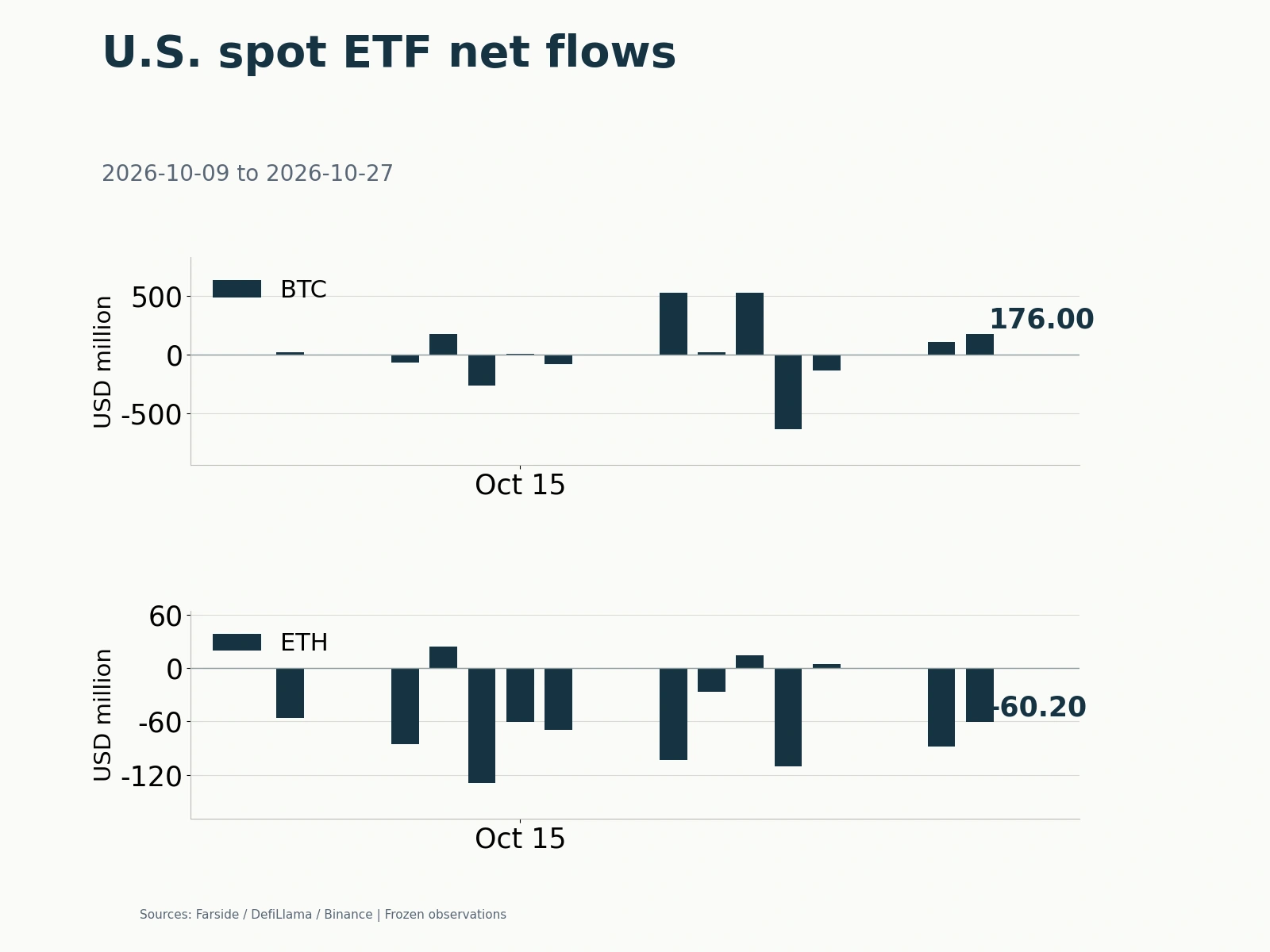
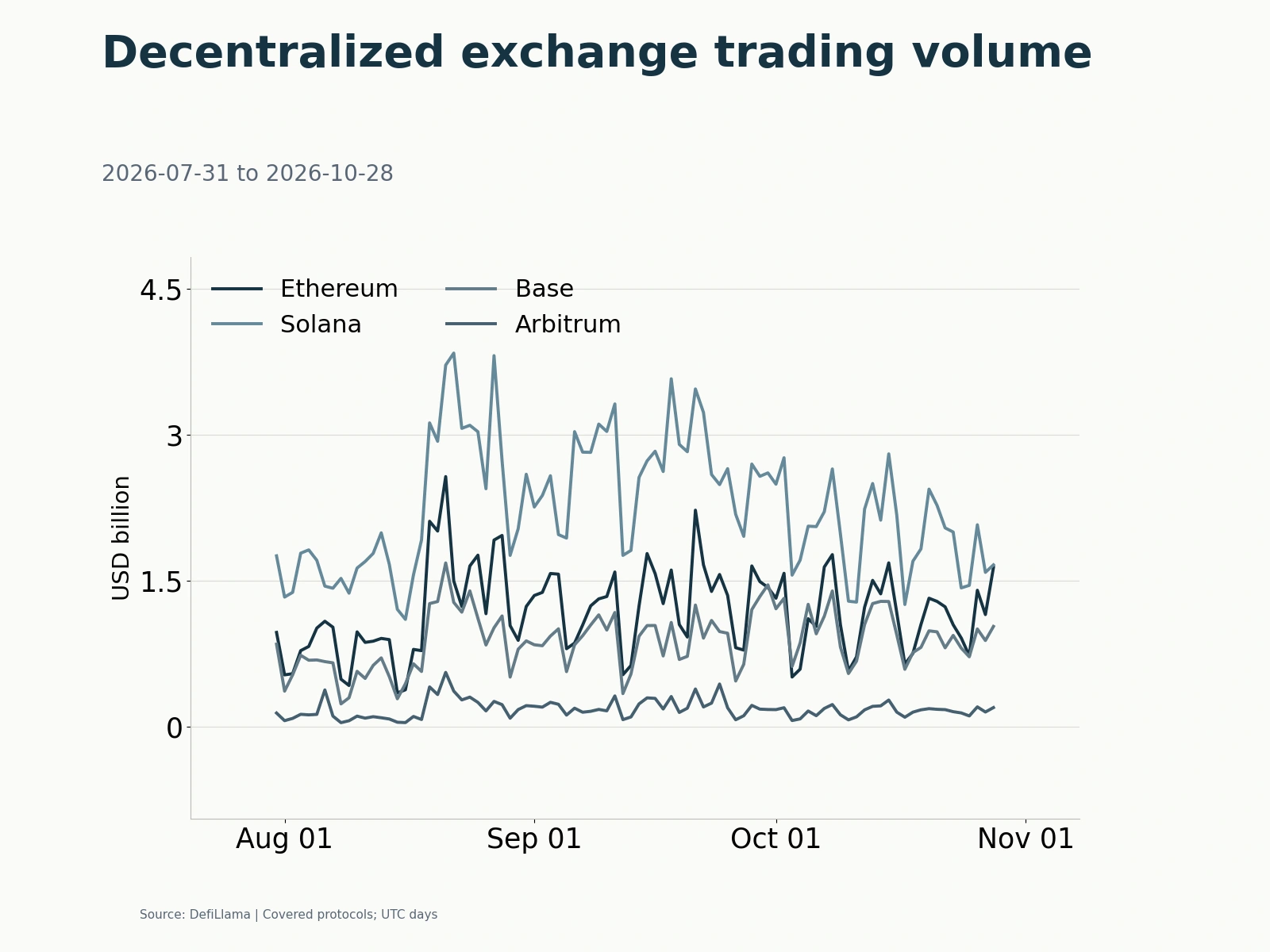
During October 19–25, implementation of digital asset regulation and institutional business progressed unevenly. The U.S. Office of the Comptroller of the Currency issued its final payment stablecoin rule, HSBC integrated a Hong Kong dollar stablecoin with retail payment app PayMe, and J.P. Morgan extended dollar deposit tokens to Ethereum. On the asset side, however, stock-tokenization platforms received formal objections from more listed companies. Issuance, custody, payments and settlement routes for funding were taking shape, while trading tokenized securities still depended on issuer rights and market-access arrangements.
OCC finalizes stablecoin rules; HSBC brings a Hong Kong dollar token to PayMe
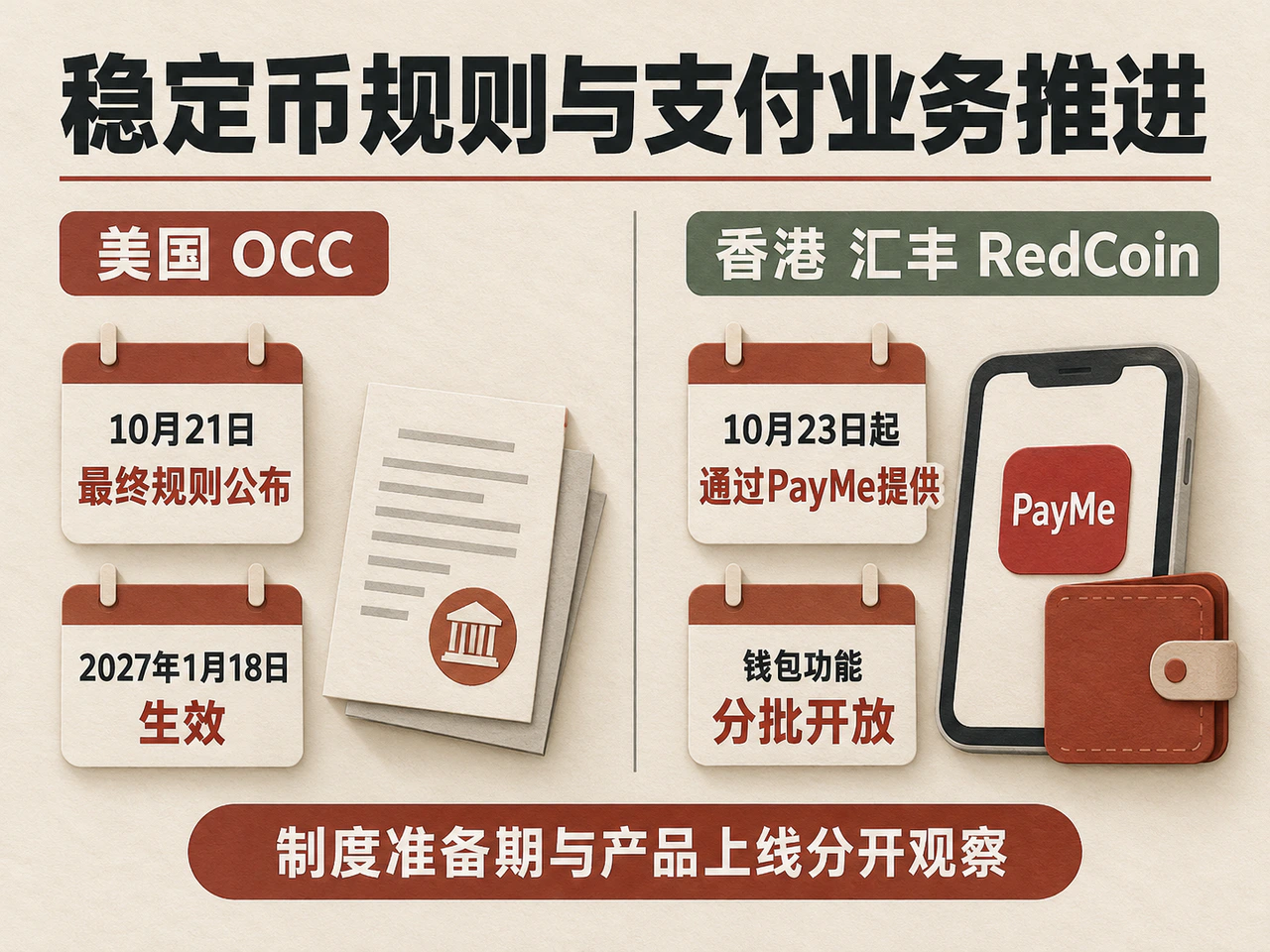
On October 21, the OCC published its final rule implementing the GENIUS Act, effective January 18, 2027. Covering payment stablecoin issuance and related activities within its supervisory remit, the rule set requirements for reserve assets, redemption, risk management, audit reporting, custody, applications and registration, and capital and operational safeguards. Anti-money-laundering, Bank Secrecy Act and sanctions requirements would be developed separately in coordination with the Treasury.
The final rule gave issuers a clear basis for system development and compliance investment. During the preparation period before implementation, institutions needed to translate the requirements into liquidity management, customer redemption services and routine reporting. Subsequent anti-money-laundering and sanctions provisions would directly affect cross-border issuance and customer due diligence.
Hong Kong had already begun moving into retail payments. HSBC announced the Hong Kong dollar stablecoin RedCoin, ticker RCHKD, on October 23, providing services from that day through its PayMe wallet, with HSBC Digital Asset Custody handling underlying safekeeping. The announcement said wallet activation would become available in stages over the following days to more than 3.3 million PayMe users, enabling transfers to friends and relatives and payments to over 100,000 merchants through PayMe.
Using its existing customer and merchant networks, HSBC combined issuance, custody and payment access within one system, lowering the barrier to opening a wallet in a familiar app. The more than 3.3 million figure nevertheless represented PayMe’s existing reachable user base; actual wallet openings and daily payment volume would develop as the product rolled out. HSBC also planned to bring the stablecoin wallet into Hong Kong mobile banking within the year and support RedCoin subscriptions to tokenized investment products, including a planned Hong Kong dollar money-market fund share class. Payments had launched first, while investment uses remained in preparation. If successfully connected, stablecoin balances could move directly between consumer payments and investment settlement, extending competition into on-chain asset supply and customer service.
J.P. Morgan expands deposit tokens to Ethereum; 22 companies object to OKXICE stock tokenization
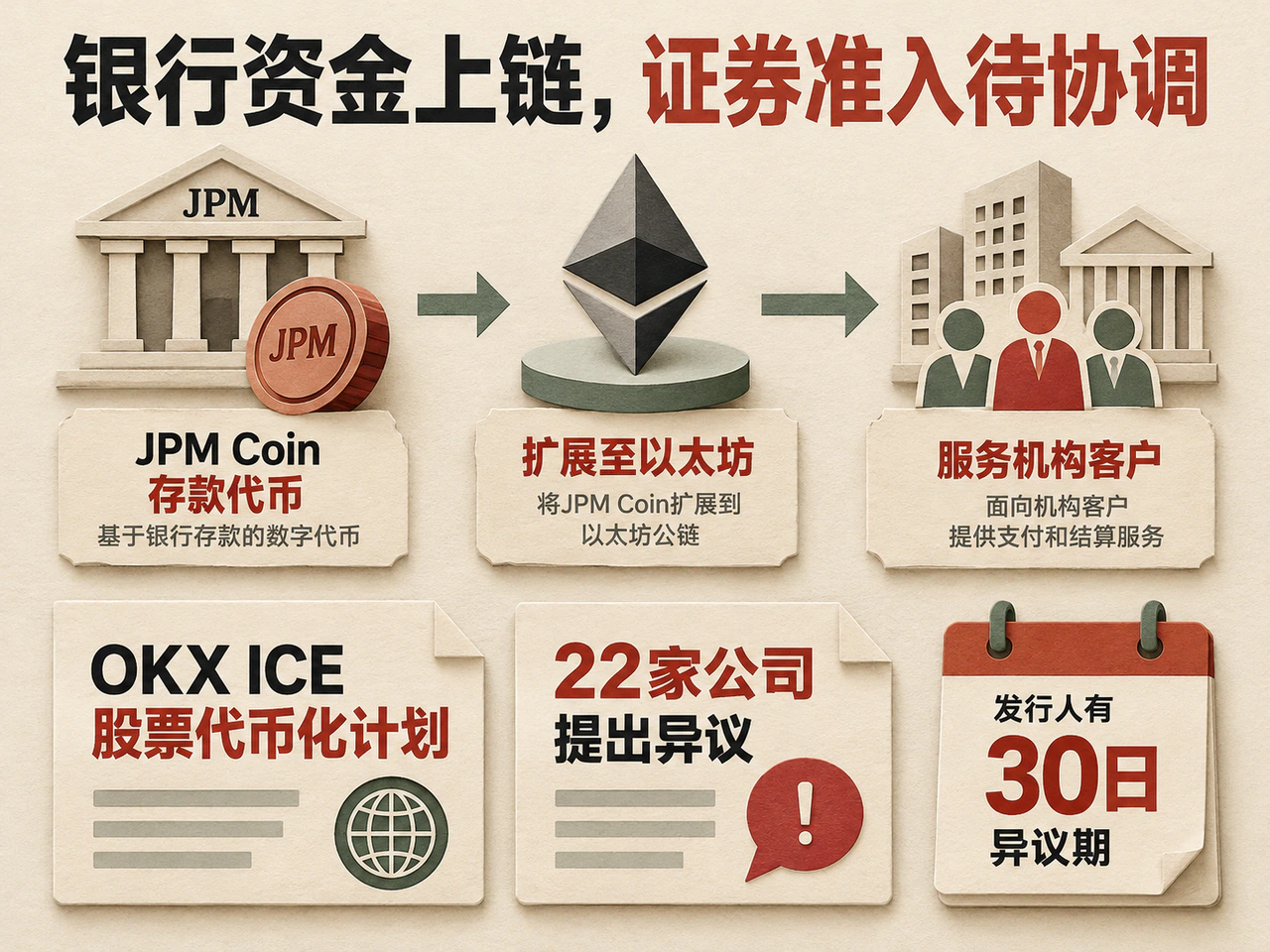
Institutional funds followed a different route on-chain from retail stablecoins. The Block reported that on October 19 J.P. Morgan announced the extension of its dollar deposit token JPM Coin to Ethereum for institutional clients, supporting peer-to-peer transfers within the Base and Ethereum ecosystem. JPMD represents existing J.P. Morgan bank deposits, with institutional eligibility and the underlying bank-deposit relationship forming the basis of the service.
Putting deposit tokens on public blockchains can connect bank funds more directly with on-chain liquidity and tokenized assets and reduce the steps between settlement systems. Retail stablecoins and institutional deposit tokens therefore form parallel routes: one uses payment networks to expand everyday spending, while the other improves institutional fund transfers and asset settlement. Their customer scope, legal relationships and risk-management requirements differ.
Asset tokenization revealed more specific coordination costs than the progress on funding. CoinDesk reported on October 24 that the stock-tokenization plan at OKXICE, the joint platform of OKX and Intercontinental Exchange, had received objections from 22 listed companies, including Microsoft, Alphabet, Goldman Sachs and the latest additions, Cisco and Wells Fargo. The relevant framework requires platforms to notify issuers in advance and provide a 30-day objection period.
The objections mainly concerned the trading arrangements proposed by that platform. Some objecting companies were not in the initial list, so 22 objections did not mean the original plan would directly lose 22 stock names. The response nevertheless showed that issuer willingness would directly affect the range of tradable assets and consequently constrain investor choice and the organization of secondary-market liquidity.
The week’s developments showed digital asset infrastructure moving into specific business connections. Retail payments were beginning to operate through bank customer networks, and institutional settlement funds were connecting to major public blockchains. Securities products still needed issuer rights, tradable scope and settlement arrangements to be implemented individually. The next stage would depend increasingly on actual wallet activity, the launch of investment functions and expansion in approved tradable assets.
Follow the original-article link for further details.