On October 26, developments in U.S. and Hong Kong stablecoins and stock tokenization pointed toward implementation and the connections needed to support it. The U.S. Office of the Comptroller of the Currency (OCC) publicly encouraged community banks to issue payment stablecoins. Hong Kong’s two initial licensed stablecoin issuers pursued product testing through retail payment applications and institutional distribution networks, respectively. The same day, the issuer-led tokenization coalition launched by Bullish and Equiniti added quantitative trading, share-registration and on-chain infrastructure companies. As institutional frameworks gradually take shape, competition is focusing on reaching end customers, ensuring fiat redemption and reliably connecting on-chain interests with investors’ legal rights.
OCC urges community banks to prepare; Hong Kong licensees explore retail and institutional channels
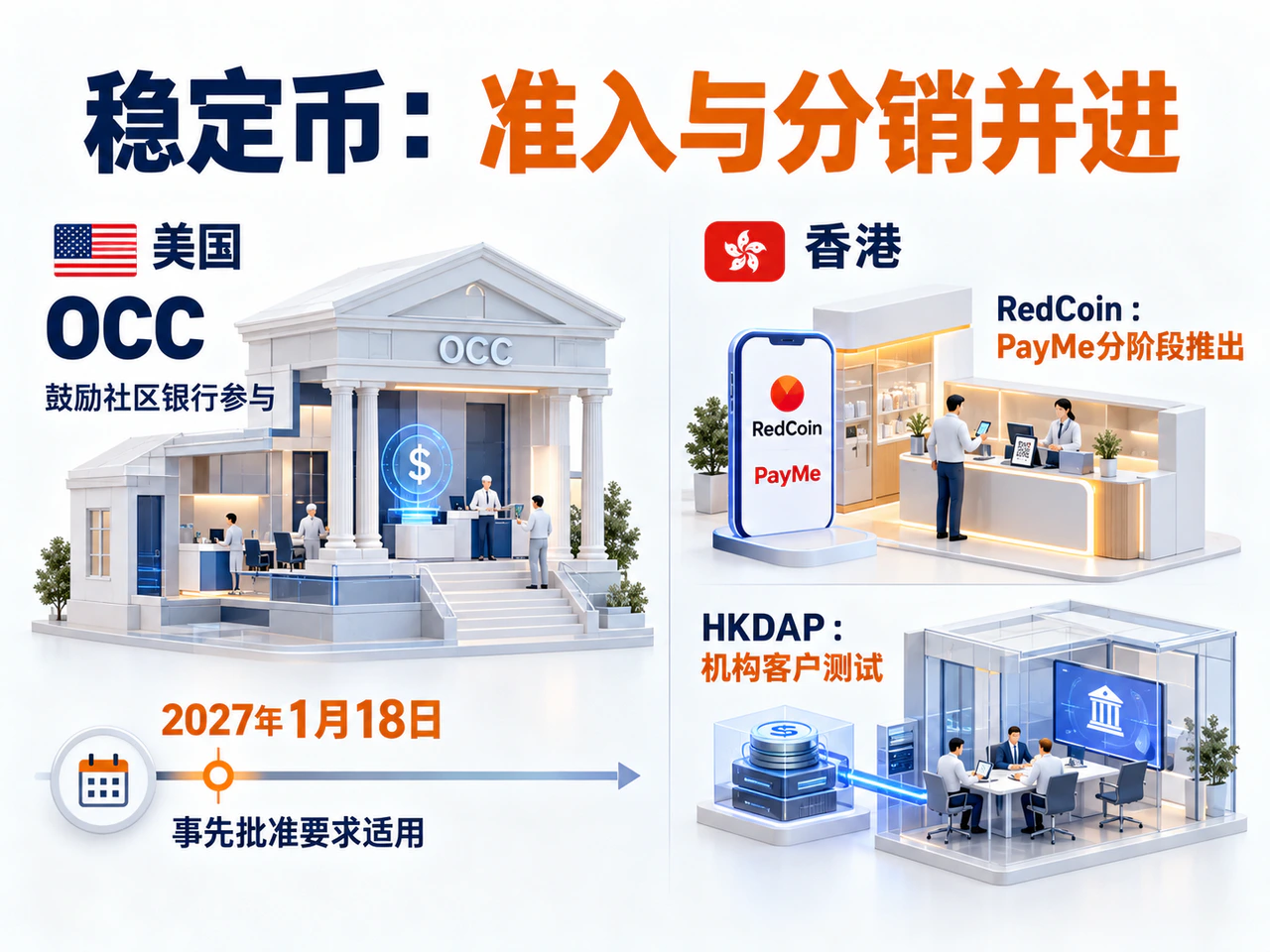
CoinDesk reported on October 26 that the OCC encouraged community banks to apply, directly or through subsidiaries, to become permitted payment stablecoin issuers. Small and midsize banks already have local customer and merchant relationships and provide core account services. Stablecoins could extend their existing payments business on-chain. For regulators, broadening the issuer base could also help prevent the new payments market from being dominated solely by large banks and crypto companies.
The access timetable and transitional arrangements had been specified in the OCC’s October 21 announcement. Prior-approval requirements for U.S. payment stablecoins would apply from January 18, 2027. Existing issuers that had filed substantially complete applications with the OCC and were still awaiting decisions could seek relevant waivers to continue operating during review. Such waivers would be assessed case by case, with regulators primarily seeking to reduce business disruption arising from the prior-approval requirement. New entrants would generally need approval before commencing business.
The framework provided a transition route for existing issuers and shifted preparation toward application quality. Required materials covered reserve assets, issuance and redemption, capital and liquidity, third-party management, and anti-money-laundering arrangements. The announcement also stated that formal acceptance awaited U.S. Office of Management and Budget approval of the application form’s information collection. The OCC’s October 26 encouragement was therefore intended to prompt early preparation, rather than indicate that the application window had already opened.
Hong Kong’s stablecoin market had moved into actual testing of licensed products. The Hong Kong Monetary Authority’s register showed that both Anchorpoint’s and HSBC’s issuer licenses had been effective since April 10, but their approaches to customers differed markedly. October 26 reporting indicated that HSBC had begun a phased RedCoin rollout through PayMe on October 23. Anchorpoint’s official transparency page still listed HKDAP as Beta Access, available only to selected authorized distributors and their institutional and corporate clients.
Using an existing payment application can reduce barriers for retail users, while an institutional distribution network can first connect issuance, transfers and redemption within controlled settings. An application’s existing user base does not automatically become active stablecoin holders, however, and controlled institutional transactions during testing do not directly measure retail demand. The effectiveness of both routes would still depend on actual payment uses, the range of participating merchants, compatibility with external wallets and convenient redemption at par.
Issuer-led tokenization coalition adds trading, share-registration and distribution capabilities
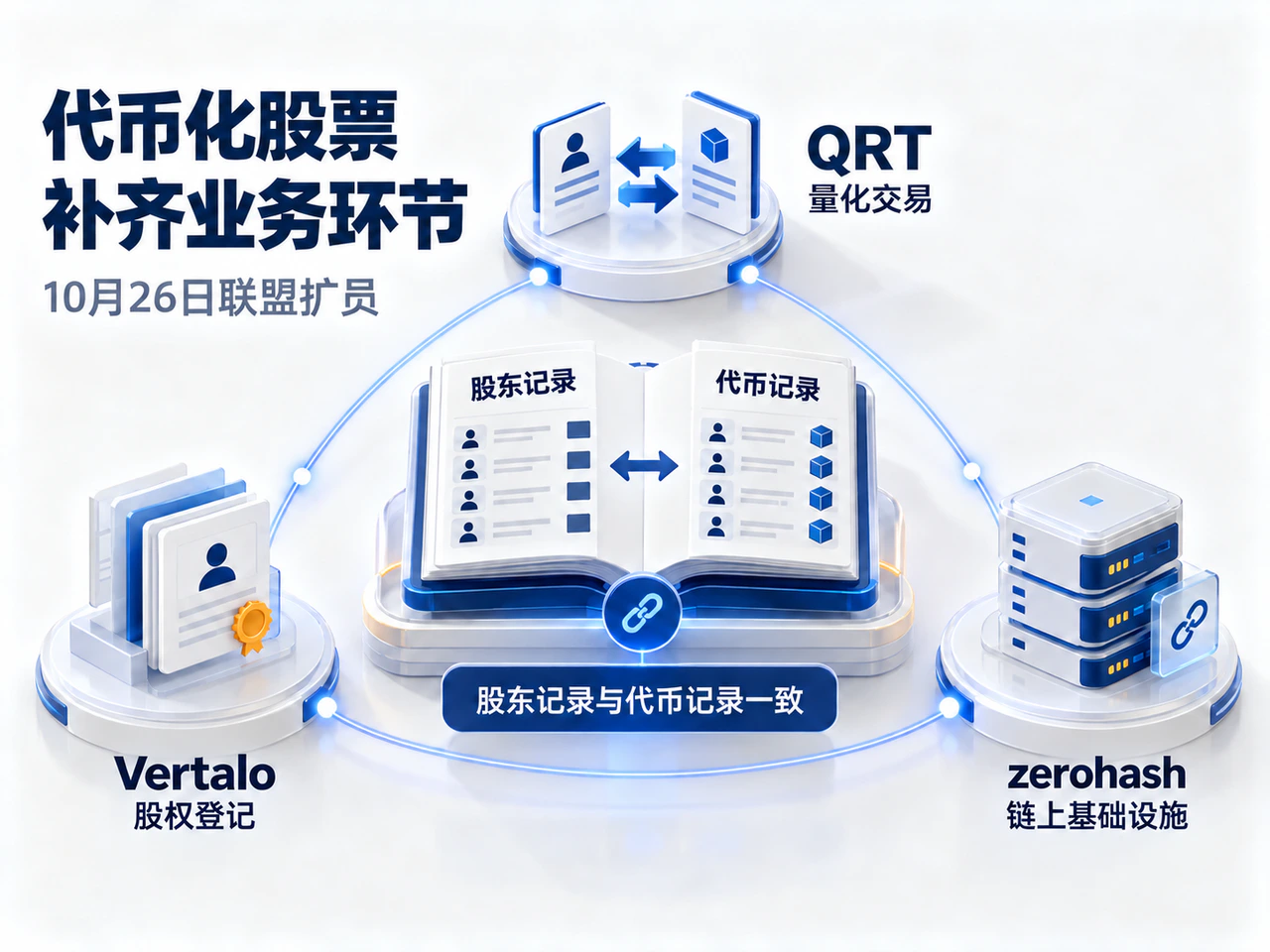
The same day, Bullish and Equiniti announced that Qube Research & Technologies (QRT), Vertalo and zerohash had joined the issuer-led tokenization coalition established on September 24. The coalition advocated direct issuer participation in stock tokenization to preserve existing relationships between companies and shareholders. The three new members added quantitative trading, share-registration and on-chain infrastructure capabilities, respectively.
These capabilities address different stages of tokenized-stock operations. Trading firms handle market quotations and trading activity; share registrars must connect on-chain holdings with shareholder registers carrying dividend and voting rights; infrastructure providers connect assets to financial institutions’ existing product systems and customer channels. Beyond enabling on-chain transfers, effective coordination across all three stages is needed for investors to receive the full services associated with their shareholder status.
On implementation, Vertalo emphasized in the announcement that issuers’ shareholder records must remain consistent with token records, while zerohash planned to adapt its on-chain services to the coalition’s standards. Because the parties remained at the stage of building plans and aligning standards, expanded membership did not itself mean a unified operating trading market had been established. Members planned further infrastructure discussions with issuers and capital-markets participants on October 27. Executable standards and specific product launches would be the next developments to watch.
Stablecoin developments in the two jurisdictions and the stock-tokenization coalition shared an operating logic. Stablecoins must connect on-chain balances smoothly with everyday payments and bank redemption. Stock tokenization must connect on-chain ownership records accurately with shareholder rights and corporate actions. Banks, registrars and infrastructure providers were gradually putting those underlying links in place. Business scale would ultimately depend on services being usable, costs being reasonable and customers choosing to use them repeatedly.
Follow the original-article link for further details.