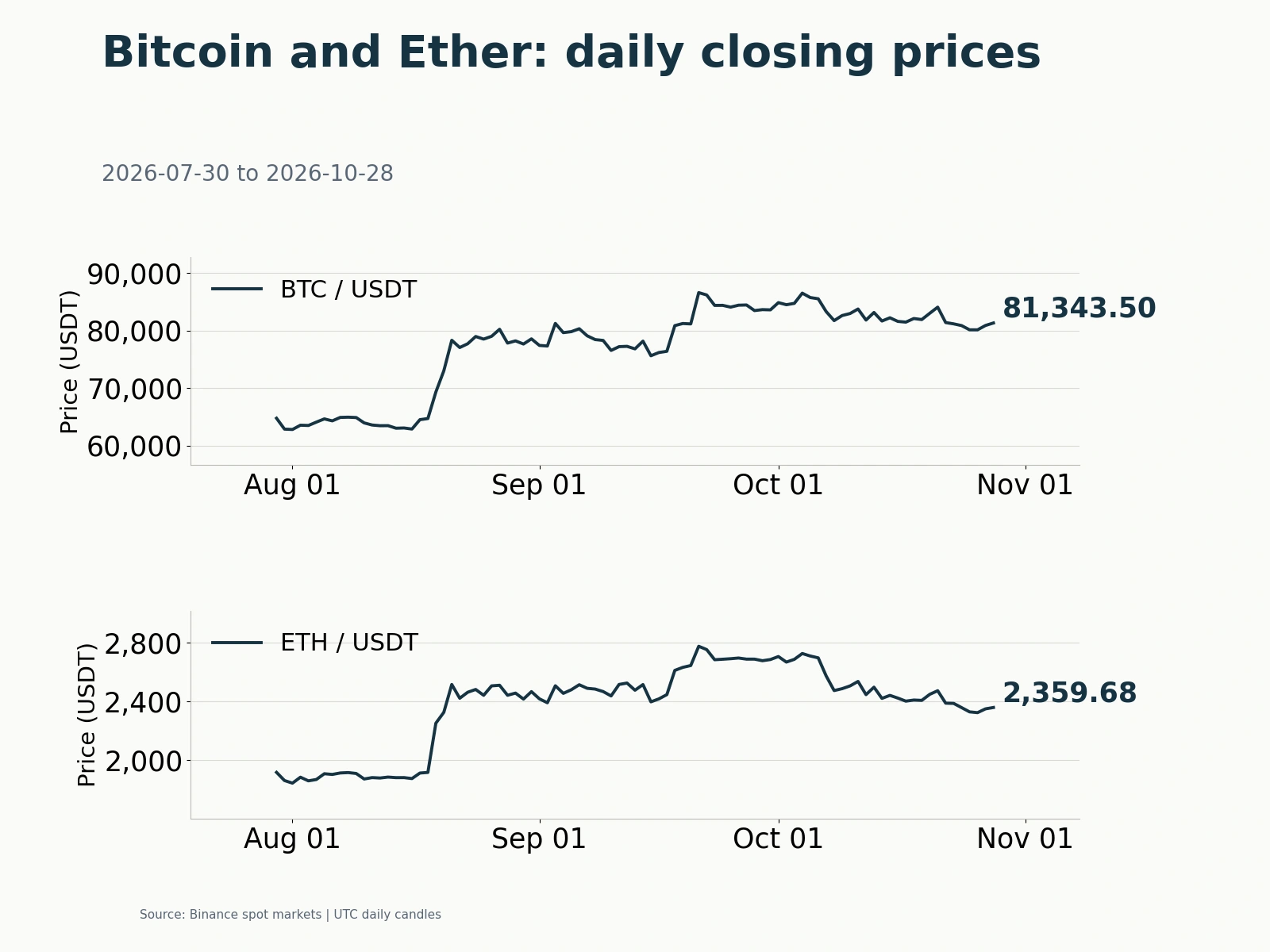
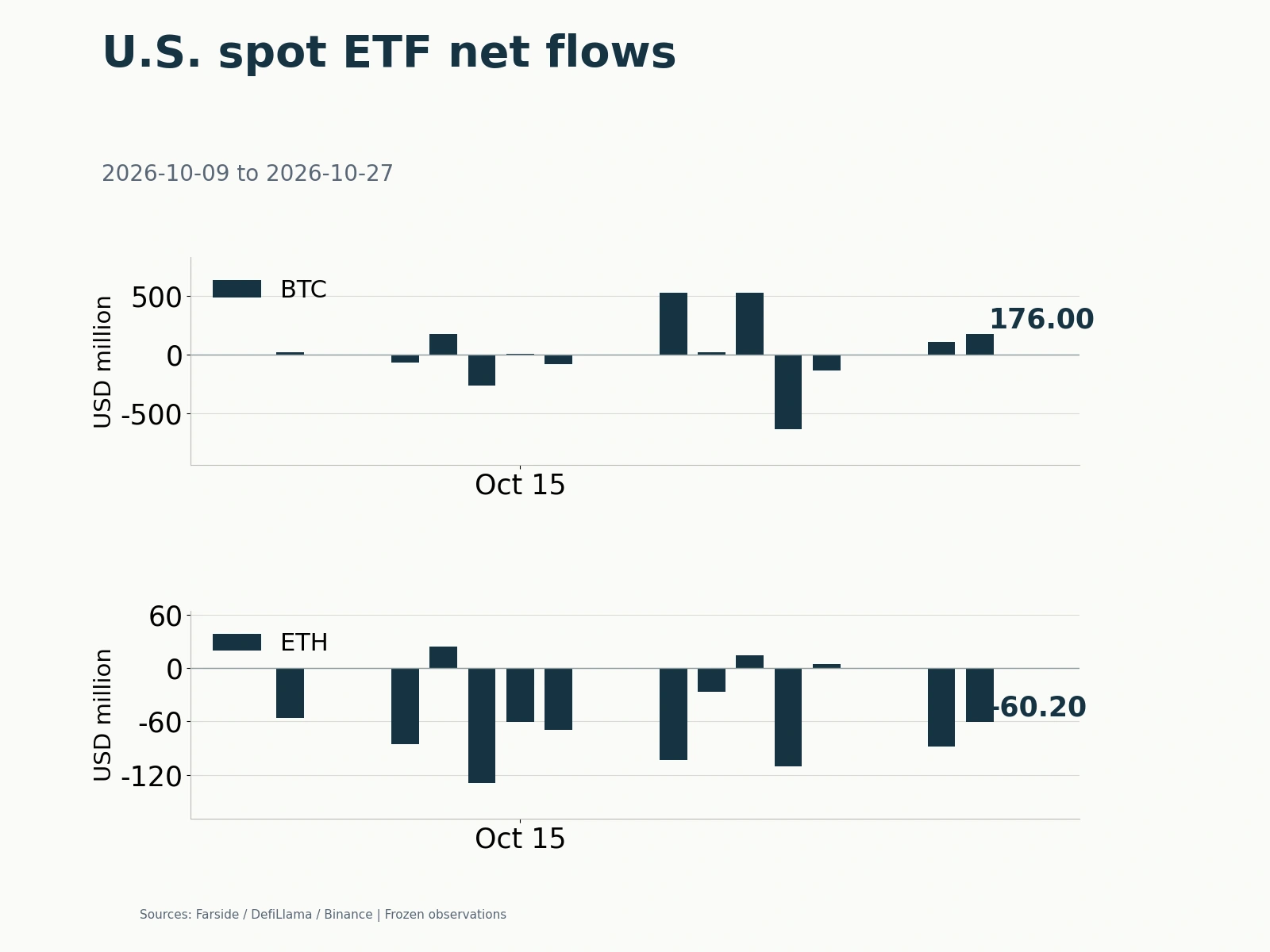
On October 27, 2026, Crypto Briefing reported that tokenized credit assets on Solana had reached US$1.2 billion as of October 24, with US$595 million—nearly half the total—held in lending protocols. As on-chain trading cools, real-world assets are providing a new source of assets for lending. The scope for growth will depend on whether issuance generates actual demand for financing and whether collateral can be readily converted into cash.
DEX volume falls 9.52%, while lending fees keep growing
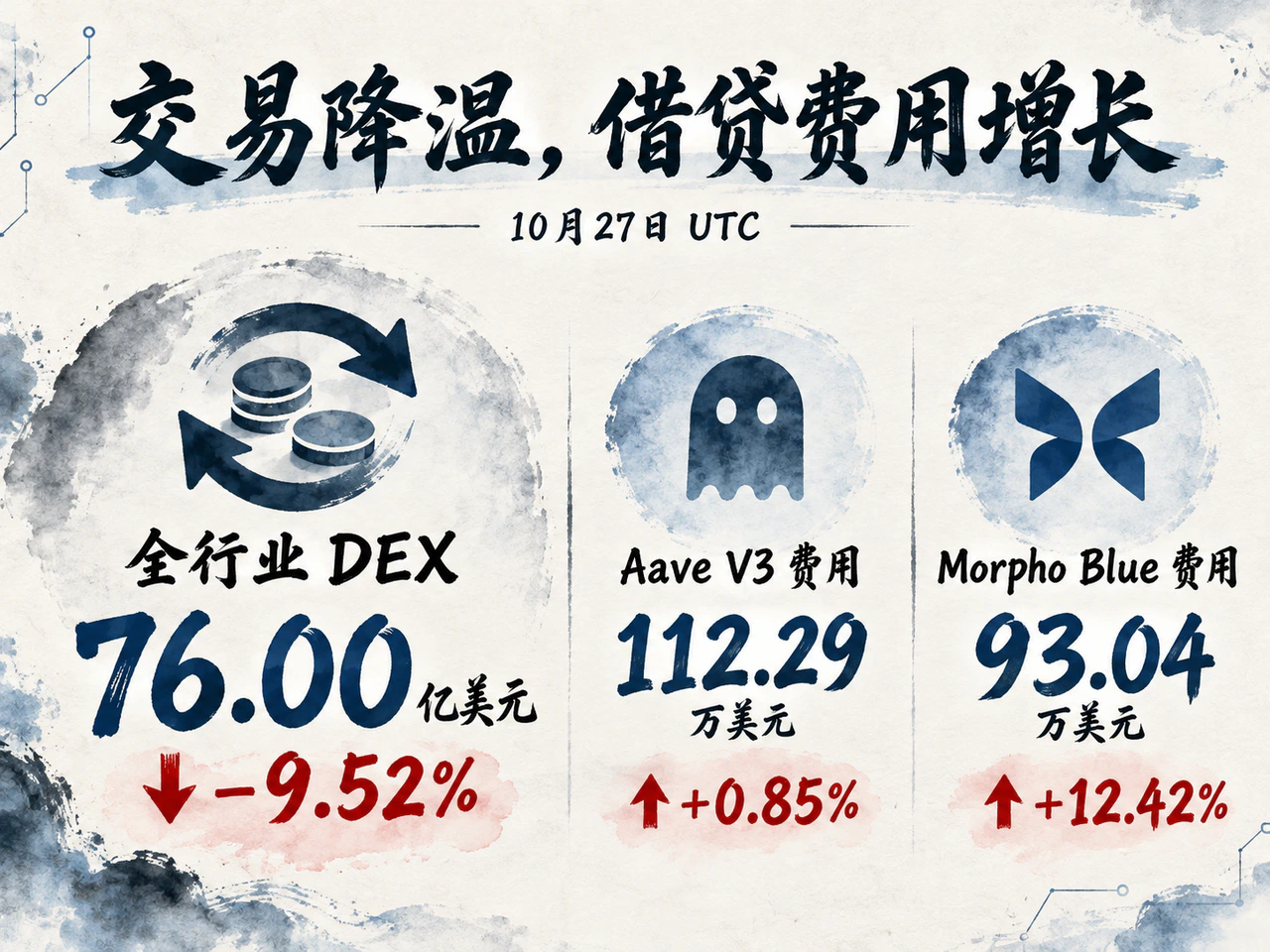
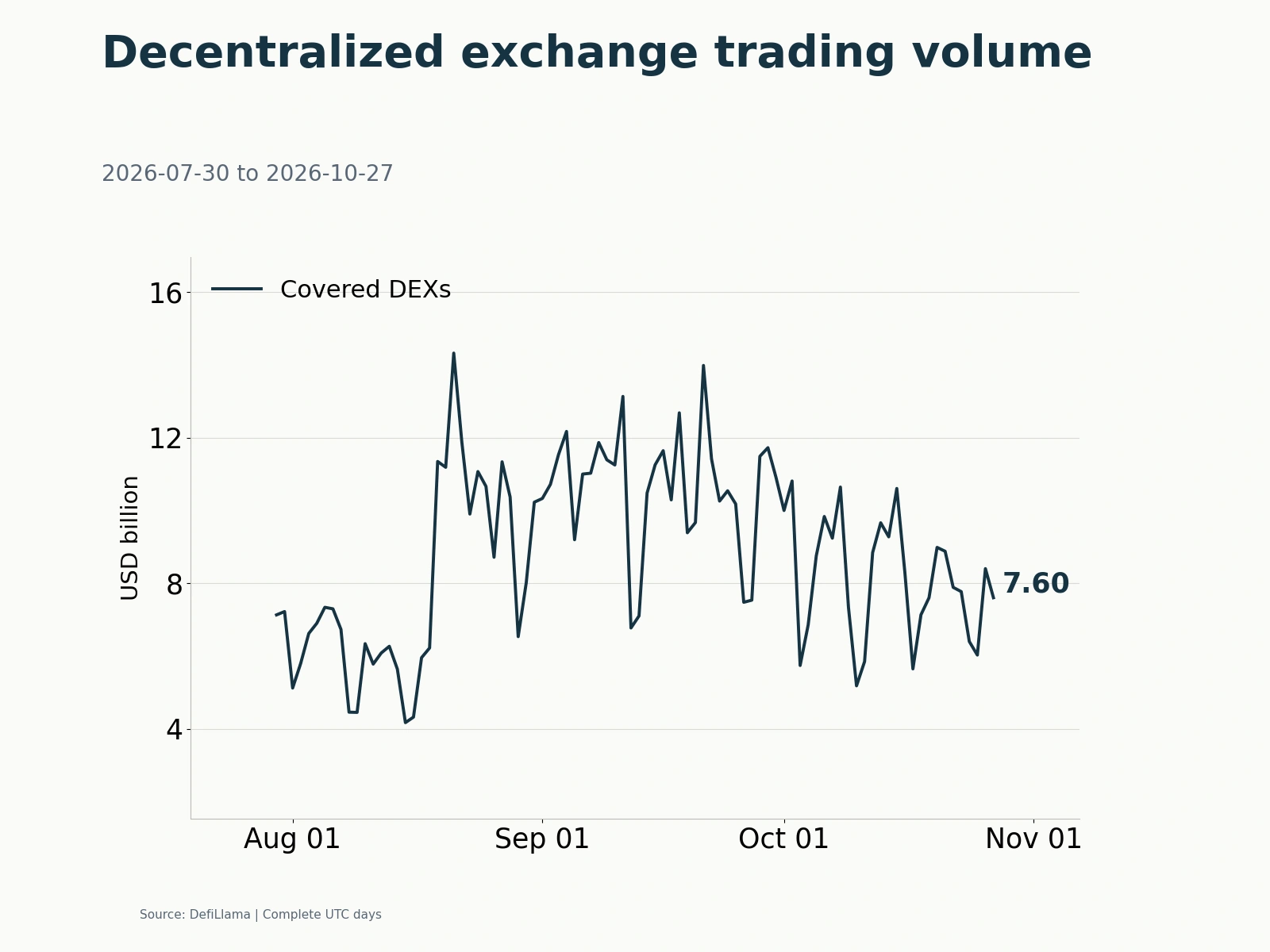
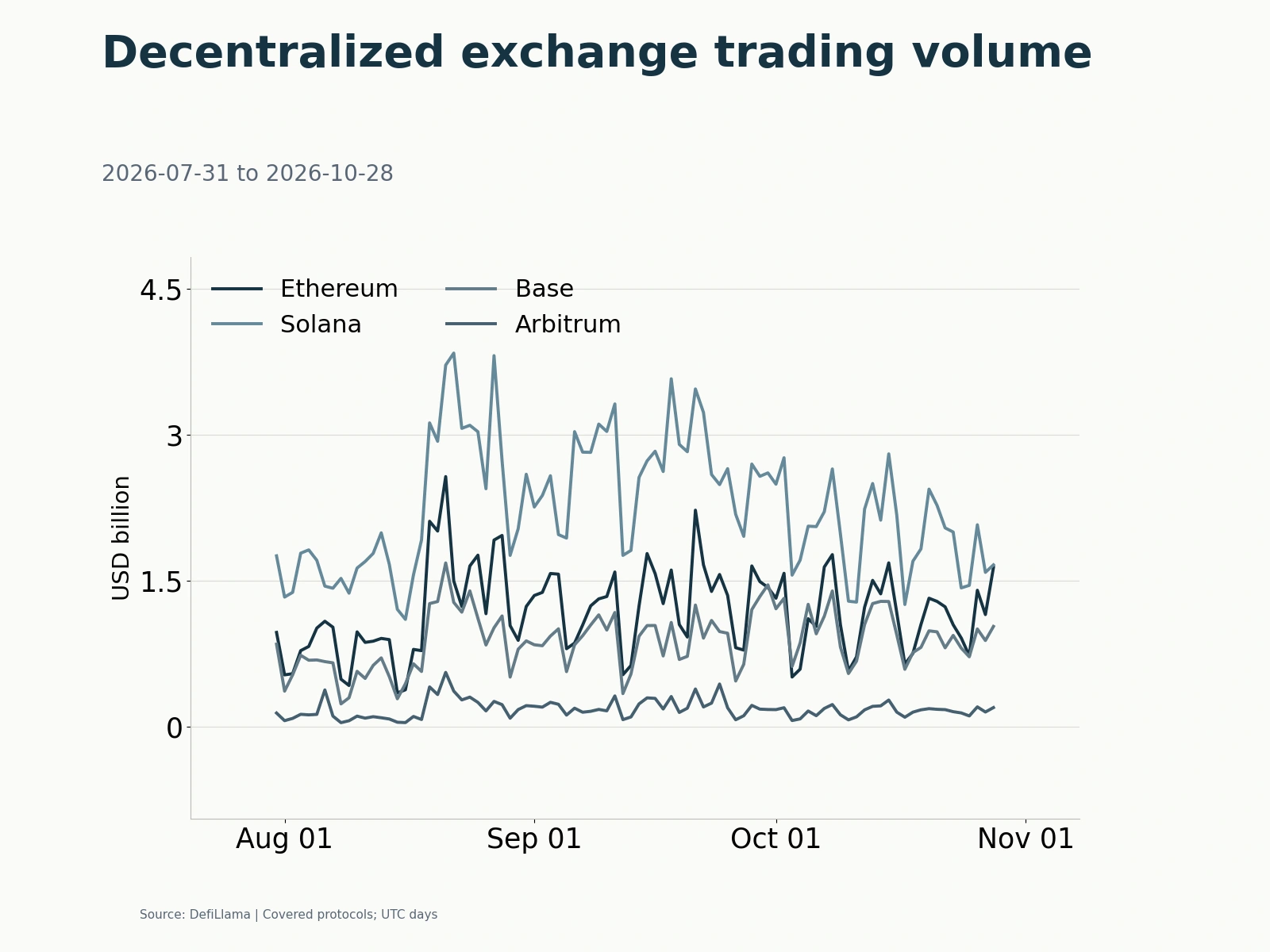
DefiLlama’s complete UTC-day data show that decentralized exchanges (DEXs) within its coverage recorded US$7.600 billion in volume on October 27, down 9.52% from the preceding day. That was below the trailing 30-day daily average of US$8.444 billion and the 90-day average of US$8.810 billion as of that date. Trading fell across several networks, although the size of the decline varied.
Solana recorded US$1.890 billion in volume, down 8.75%; Ethereum recorded US$1.144 billion, down 18.24%. Among layer-2 networks, Base volume was US$919 million, down 8.26%, and Arbitrum volume was US$147 million, down 26.86%. BNB Chain held at US$954 million, edging up 0.08%.
The lower daily volumes also occupied different positions relative to their history. Base remained above its 90-day daily average of US$878 million, while Solana was below its corresponding US$2.258 billion average. Base trading had declined from the previous day but remained slightly above its longer-term average; Solana activity was below its average daily level over the preceding three months.
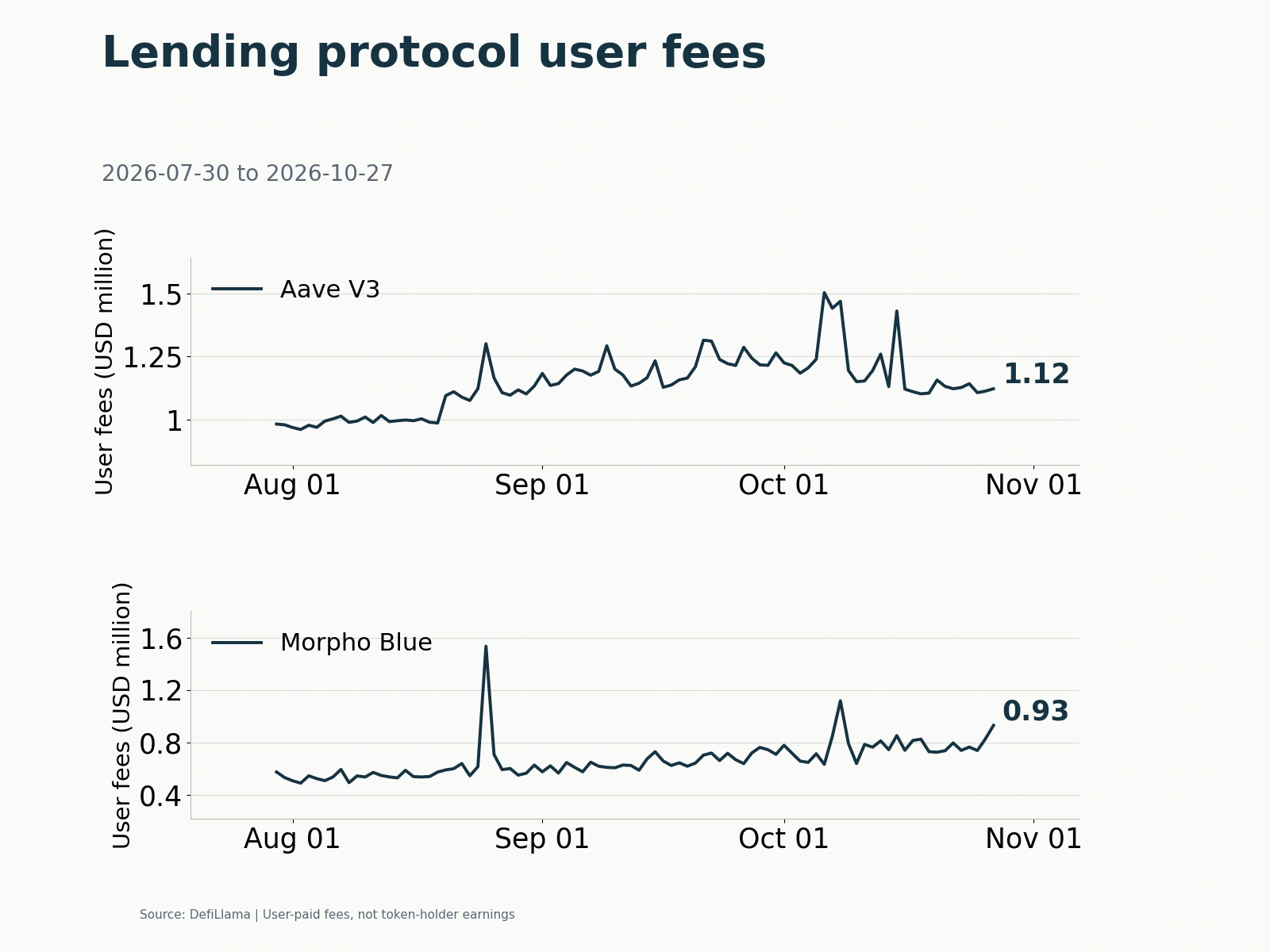
Lending fees were relatively resilient. On the same day, Aave V3 generated US$1.1229 million in fees, up 0.85% from the preceding day, while Morpho Blue generated US$930,400, up 12.42%. These fees mainly represent interest and other financing costs paid by users; they do not accrue entirely to the protocols or their token holders. Fee growth at these two protocols indicates that, in these two examples, outstanding lending activity continued to generate recurring fee income even as trading cooled.
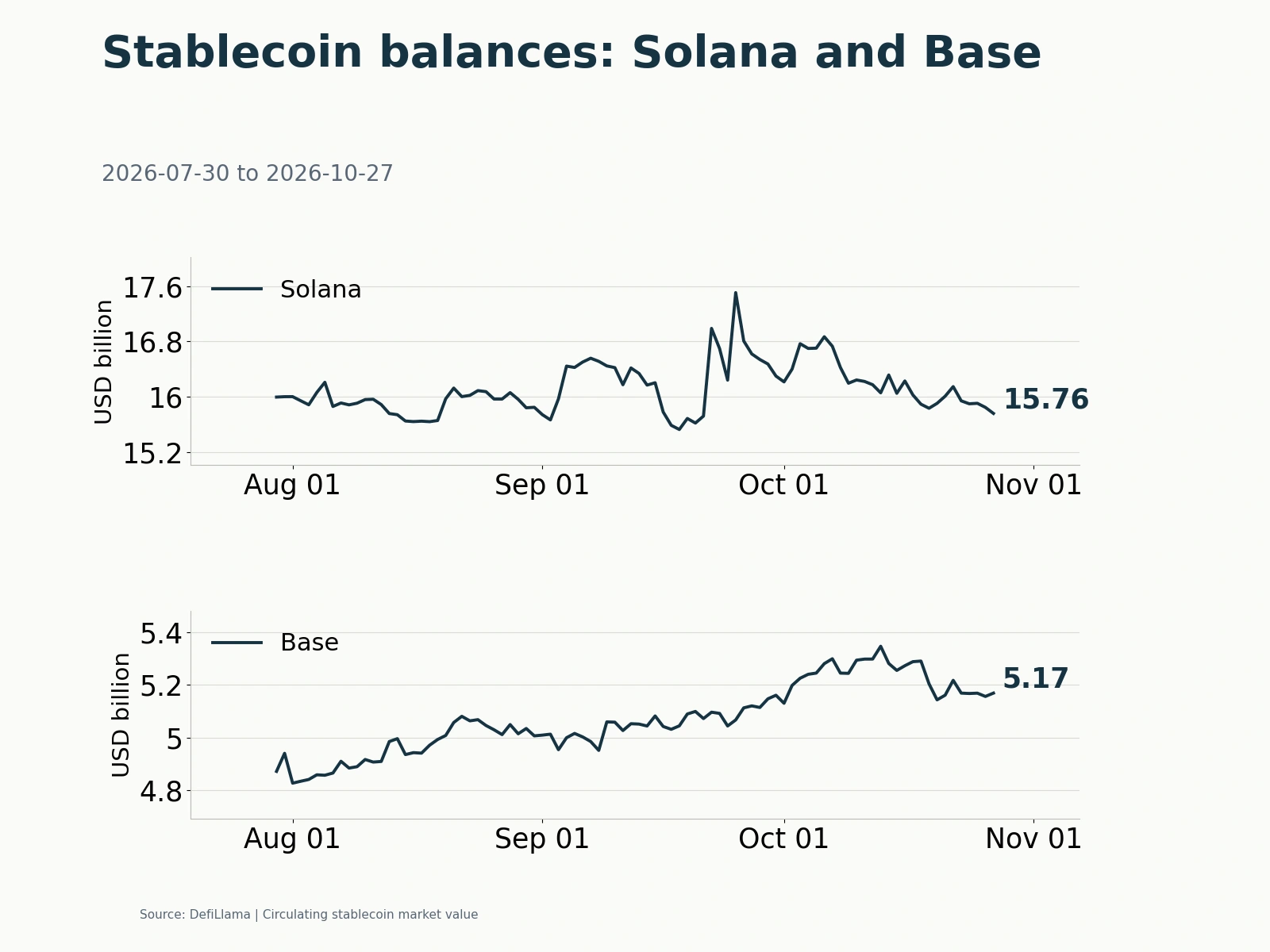
Stablecoin balances also diverged. On October 27, the circulating market value of stablecoins on Solana was approximately US$15.763 billion, down 0.55% from the preceding day and below US$16.621 billion 30 days earlier. Base held approximately US$5.169 billion, up 0.25% on the day and slightly above US$5.120 billion 30 days earlier. Stablecoin balances are affected by issuance and redemption, cross-chain transfers and deviations from the peg, among other factors. Viewed alongside trading, Base had a relatively stable stock of funds despite a daily decline in turnover; Solana saw both trading and stablecoin balances fall.
Nearly half of credit assets enter protocols; actual financing still depends on utilization
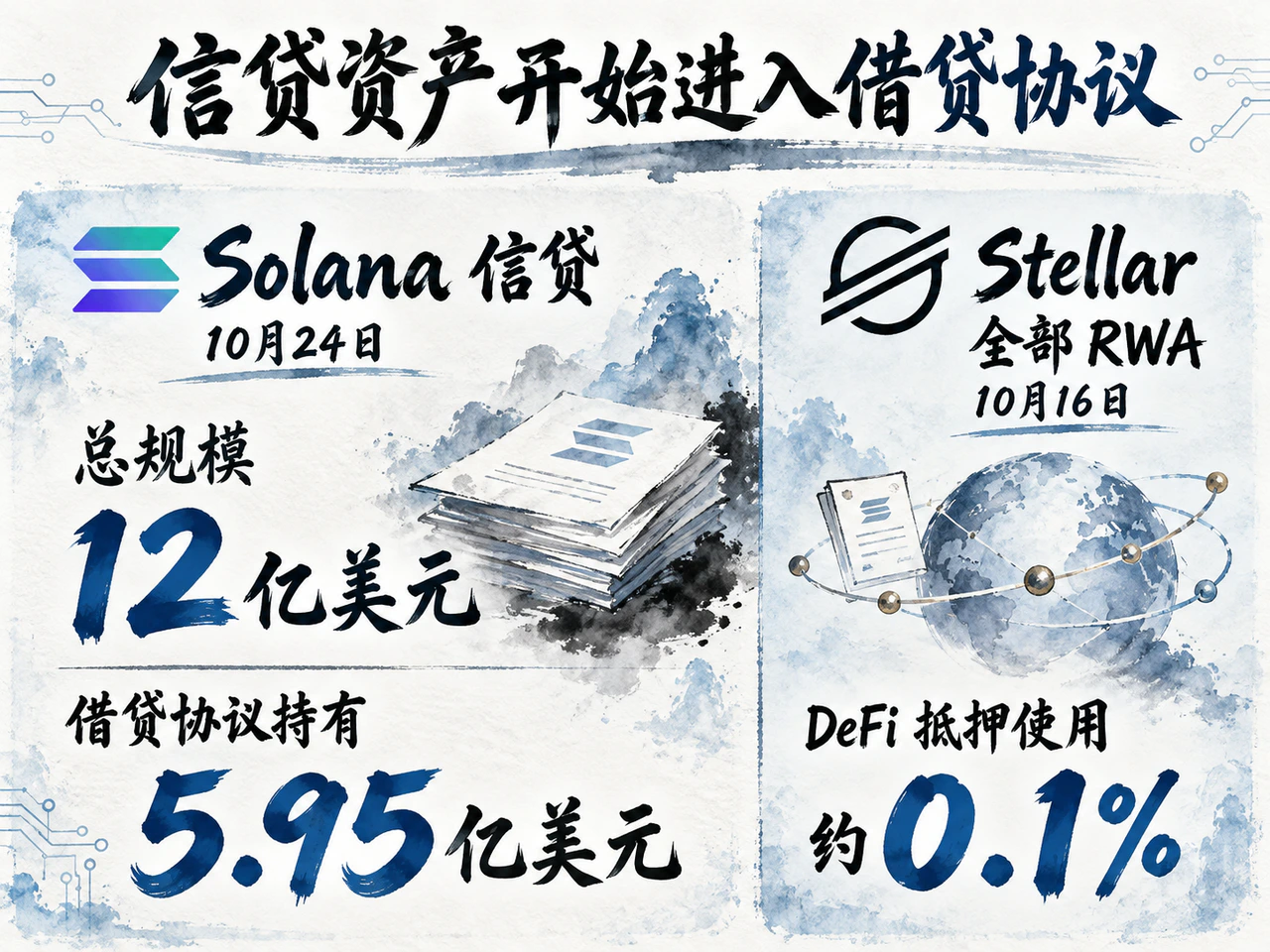
Solana’s tokenized credit example shows that real-world assets have begun to connect with on-chain lending. The reported US$595 million, approximately half of the US$1.2 billion credit-asset total, measures the assets held by lending protocols. How much funding ultimately reaches borrowers also depends on collateralization ratios, borrowing utilization and the structure of individual products.
These are distinct stages when assessing real-world asset (RWA) activity. Issuance measures progress in asset registration, custody and distribution. The amount pledged as collateral measures the extent of integration with lending applications. Actual borrowing and recurring interest payments come closer to measuring financing demand. Moving assets from issuance into collateral and financing can bring continuing service income to on-chain finance beyond a one-time subscription.
Stellar illustrates the gap between asset issuance and use. RedStone’s October research, using October 16 data, estimated that the network had US$3.56 billion in distributed RWAs, but only about 0.1% was used as DeFi collateral, and approximately 83% of the asset value had no on-chain trading market. The research identified whitelisting, holder approvals and redemption conditions as significant constraints on bringing large institutional assets into open lending markets.
The Stellar figures cover all RWAs, while the Solana figures above concern tokenized credit. The former measures collateral use, and the latter measures protocol holdings, so their definitions differ. In each case, the depth of use after assets move on-chain remains constrained by product structures and trading conditions.
The ability to turn collateral into cash promptly determines lending capacity

For a lending protocol, collateral value depends on both the underlying asset and who can take it over in a default. Even a fund with relatively stable net asset value may restrict redemptions to specified investors. The fund may process applications only on business days, while an on-chain loan can trigger liquidation over a weekend. If liquidators cannot receive the asset, redeem it promptly or find a buyer, collateral that appears sufficient on paper may be difficult to convert quickly into cash for repayment.
Scaling RWA lending requires eligible buyers, sufficient market depth and funding arrangements that bridge redemption cycles. Issuers supply the assets; market makers and liquidators provide exit routes; lending protocols set collateralization ratios and size limits accordingly. The convenience of around-the-clock on-chain payments and settlement can support larger financing volumes only when it connects with arrangements for asset transfer, redemption and liquidation.
On-chain activity on October 27 displayed this divergence: trading volume declined, fees at some lending protocols continued to grow, and real-world assets gradually entered lending applications. As issuance expands, the more useful measures to track are how much actual borrowing collateral supports, how much selling liquidation markets can absorb, and how fees are ultimately distributed. These operating measures will determine whether new assets translate into sustained on-chain demand.
Follow the original-article link for further details.