On October 29, 2026, Galaxy announced that it had submitted an application for a national trust bank to the U.S. Office of the Comptroller of the Currency (OCC), seeking to bring digital asset custody, trading, staking and fiduciary investment advisory services under a unified federal regulatory framework. On the same day, Hong Kong payments company PhotonPay announced the completion of a $40 million Series C financing round, with proceeds intended to connect stablecoin wallets, local clearing and global card-issuing networks. The two developments concern regulatory status and payment networks, respectively: integrating digital assets into everyday business operations increasingly depends on licenses, settlement eligibility and fiat payment systems.
Stablecoin issuers are also seeking rules better suited to on-chain settlement. On October 28, Circle disclosed comments it had submitted to the U.S. Securities and Exchange Commission (SEC), seeking recognition of compliant payment stablecoins as cash under proposed crypto asset capital-raising rules, as well as a reduction to zero in the capital haircut applied to broker-dealers' holdings of those assets. These requests await regulatory decisions. If adopted, they would affect the conditions under which funds enter securities offerings and corporate payment processes.
Galaxy Seeks Unified Federal Oversight as PhotonPay Extends Local Payment Networks

Galaxy's application remains subject to OCC approval. According to the company's announcement, the proposed Galaxy National Bank would be headquartered in New York. If approved, it would be federally regulated as a national trust institution and serve customers across the United States under the same framework. The company currently holds more than 50 licenses across the United States, Europe and Asia. Its businesses include an SEC-registered broker-dealer and a swap dealer registered with the U.S. Commodity Futures Trading Commission (CFTC). The New York State Department of Financial Services also recently granted one of its subsidiaries a BitLicense and a money transmitter license.
The existing licenses across multiple jurisdictions enable Galaxy to conduct its businesses, while a unified federal trust framework could reduce regulatory friction for institutional clients moving among custody, trading and fiduciary services. Clients would still need to assess which entity provides each service, how assets are held and how their rights are implemented. The trust bank remains at the application stage and should not be regarded as already operating. The announcement also made no commitment to undertake the deposit-taking and lending activities of an ordinary commercial bank.
Cross-border business payments offer another route. PhotonPay's financing round was led by Blockchain Capital, with SBI Group participating as a new investor alongside existing shareholders. The company disclosed that, as of August 2026, its annualized transaction volume had reached $65 billion, it held 34 payment and financial licenses or regulatory authorizations, and it served more than 200,000 business customers.
PhotonPay will direct the new funding toward multi-asset wallets, global card issuance, local clearing infrastructure in key markets and execution capabilities for intelligent agents. The commercial rationale is that stablecoins can accelerate cross-border fund transfers, while supplier receipts, local clearing and business card payments still require connections to banking, foreign exchange and card networks. The disclosed $65 billion represents annualized transaction volume across the company's entire business. It measures the scale of the existing payment network rather than the size of its stablecoin business. The future share attributable to stablecoins will depend on actual business adoption.
Galaxy is seeking a unified regulatory status, while PhotonPay is deepening its connections to local payment systems. They are building different capabilities, but both address how institutional funds can move safely and smoothly into digital asset processes. Licenses and network coverage can lower barriers to access; whether they translate into business results still depends on customer usage and revenue contribution.
Circle Seeks Cash Recognition and a Zero Haircut; Broker-Dealer Capital Treatment Awaits an SEC Decision
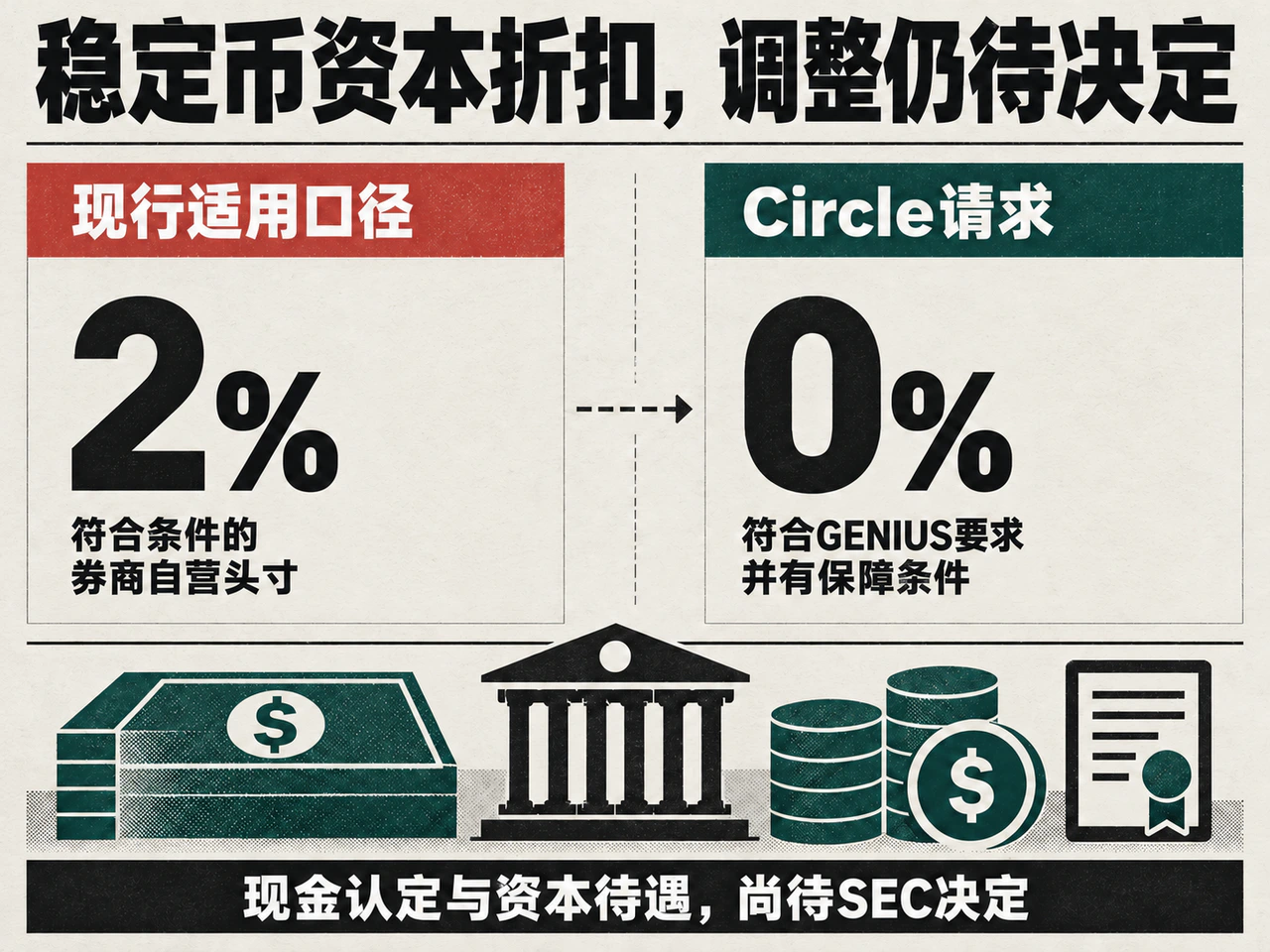
In its comment letter submitted on October 20 and publicly discussed on October 28, Circle supported the SEC's proposed Regulation Crypto Assets framework while calling for alignment with the GENIUS Act. The company wants payment stablecoins compliant with that act to be usable for payments and settlement in the relevant offerings, to be recognized as cash under specific provisions of the proposed rules, and to be valued at their corresponding U.S. dollar amounts.
Two sets of questions are involved. One concerns which payment instruments may be accepted in capital raising and how offering limits are calculated. The other concerns the capital, accounting and customer reserve arrangements applicable when broker-dealers hold proprietary stablecoin positions or use stablecoins for customer settlement. Clarifying the first set does not automatically resolve every rule in the second.
FAQs issued by the SEC's Division of Trading and Markets in February 2026 allow a 2% haircut on qualifying proprietary payment stablecoin positions when calculating broker-dealer net capital. In other words, 2% of the market value must be deducted, rather than the full value counting toward regulatory net capital. Circle wants the haircut on GENIUS-compliant payment stablecoins to be reduced to zero, subject to objective safeguards, together with coordinated accounting and customer reserve treatment.
If the request is approved, compliant stablecoin positions of the same size would entail a smaller deduction from broker-dealer net capital, helping reduce the capital cost of maintaining inventories for on-chain settlement. The issuer's proposal is not an SEC rule already in effect, however, and a zero haircut would not change the stablecoin's own redemption arrangements or issuer risk.
From Galaxy's bank application to Circle's rule proposals, institutional adoption is moving into specific regulatory mechanisms: how custody and trading services are supervised, how payment instruments are valued, and how much capital settlement inventories consume. PhotonPay's financing highlights another practical constraint: after an on-chain transfer, funds must still reach local payment networks that businesses can use. The developments to watch next are the actual outcomes of license applications, regulatory decisions on stablecoin capital treatment, and actual usage generated by the new infrastructure.
Click “Read Original” for full details.