On October 29, 2026, on-chain spot trading volume increased sharply. Decentralized exchanges (DEXs) covered by DefiLlama recorded approximately $11.690 billion in volume that day, up 42.8% from the previous day. On the same day, Polygon extended its stablecoin payment services to Solana, while Chainlink launched a real-world asset (RWA) pricing service that covers weekends. Alongside the rise in trading, infrastructure for payments and collateralized financing is expanding. Analysis of the on-chain economy is broadening from capital flows to services, fees and the allocation of risk.
Ethereum contributes the largest increase in volume; the industry remains below its August peak
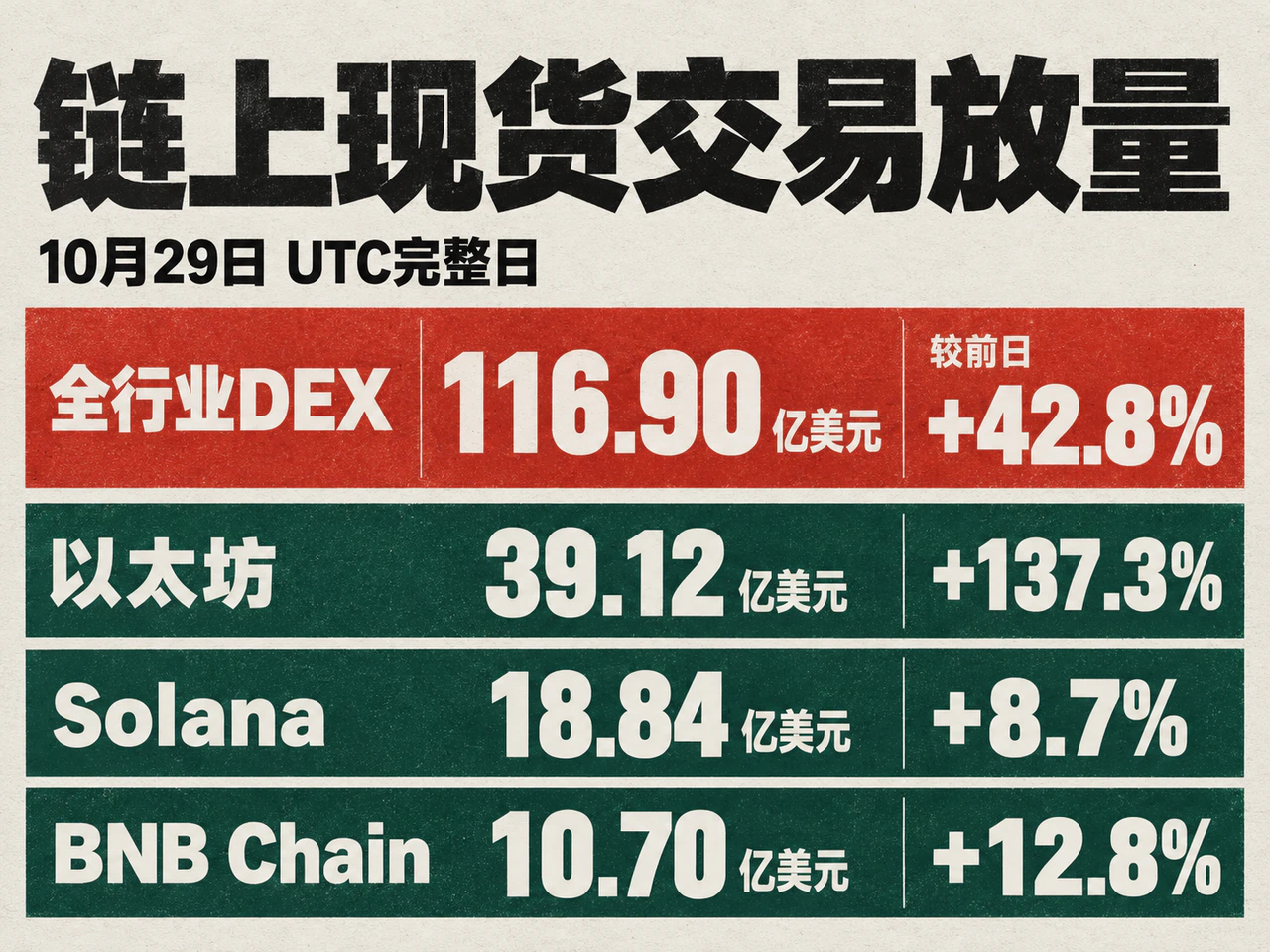


Based on complete UTC calendar days, Ethereum DEX volume rose from $1.649 billion to $3.912 billion, an increase of 137.3%; Solana recorded $1.884 billion, up 8.7%; and BNB Chain recorded $1.070 billion, up 12.8%. Scaling networks also saw higher volume: Base recorded $1.299 billion, up 21.1%; Arbitrum recorded $303 million, up 49.7%; and Optimism recorded $24 million, up 30.0%. Volume increased across all six networks sampled, with Ethereum contributing the largest absolute increase.
Industry-wide volume that day was 42.2% above the preceding 30-day average of $8.221 billion, but remained below the $14.322 billion recorded on August 21, the peak within the 90-day sample. The one-day surge reflects a concentrated release of trading demand. Whether it translates into recurring operating revenue still depends on the persistence of volume, fee rates and how fees are distributed among liquidity providers, applications and networks.
Security incident highlights freezing powers, making asset status an operating variable
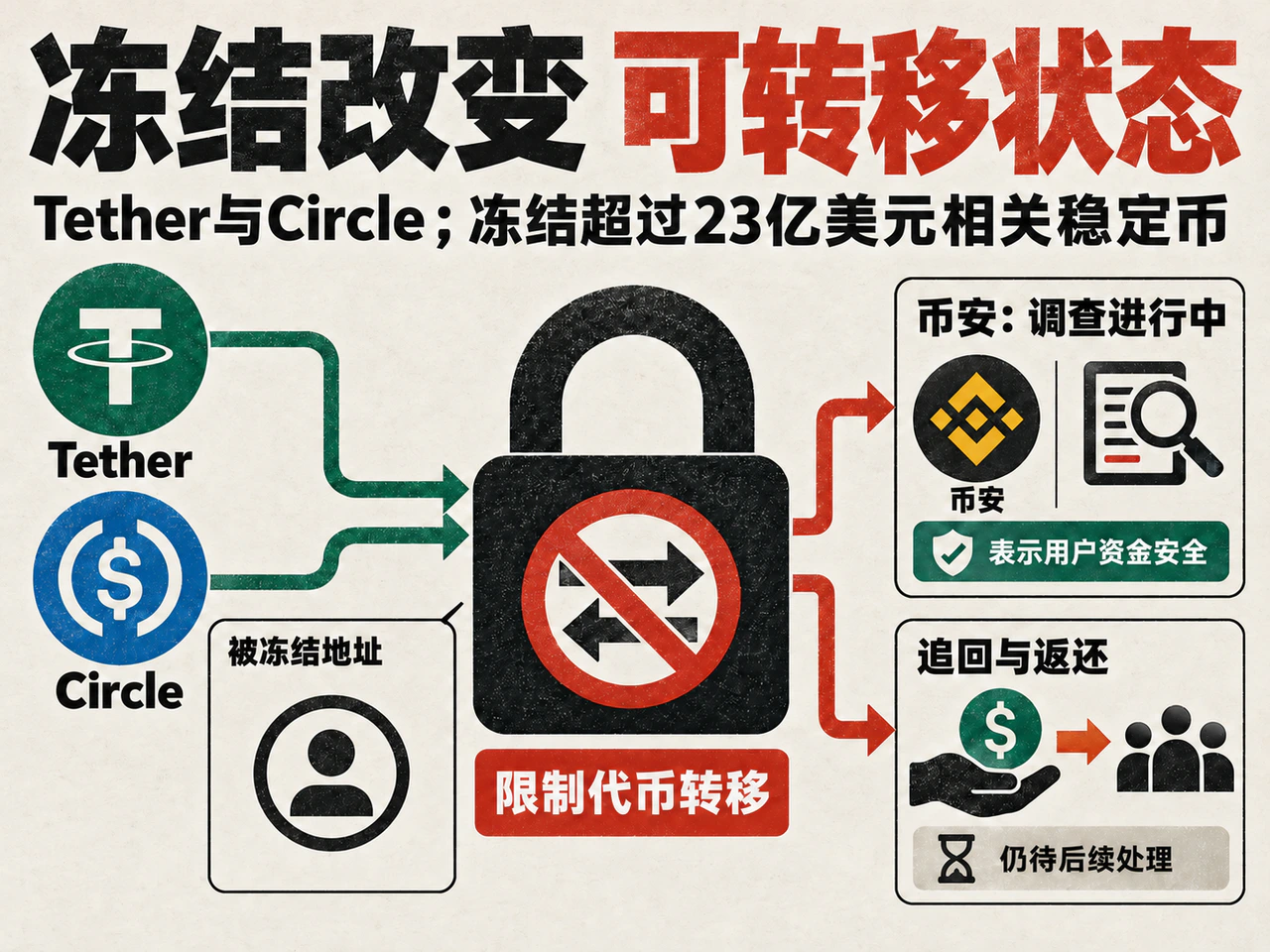
Bloomingbit, citing on-chain analysis, reported that Tether and Circle had frozen more than $2.3 billion in stablecoins linked to the incident; Binance was still investigating the security issue and said user funds were safe. Issuers' freezing powers can prevent the affected tokens from being transferred further, while recovery and return require subsequent action. For payment companies and lending protocols, the addresses holding assets, their transferability and counterparty exposure therefore become operating variables that require continuous monitoring.
Transaction fees roughly halve year on year, while protocol revenue trends diverge

The structure of revenue offers a longer-term perspective. A report released by 1kx on October 29 covers more than 2,600 protocols and 100 publicly listed companies, with data through the third quarter. It finds that blockchain transaction fees have roughly halved year on year, while transaction counts are projected to grow 18% for the full year. In the third quarter, Ethereum and Solana's combined share of ecosystem fees fell below 50% for the first time within the report's coverage. Its definition of ecosystem fees includes charges collected by both networks and on-chain applications. This means competition for fees extends beyond base networks to application operations and customer channels.
Lower fees can reduce users' costs while constraining the base layer's ability to charge. The same report shows that fees paid by lending-market users fell 46% year on year in the third quarter, while Morpho's fees were still slightly higher at approximately $62 million for the quarter. Industry demand, user fees and individual protocols' revenue do not move in lockstep. When assessing a particular business, asset sourcing, risk management and distribution capabilities explain more than transaction counts alone.
Polygon connects payments to Solana; Chainlink fills the pricing gap when markets are closed
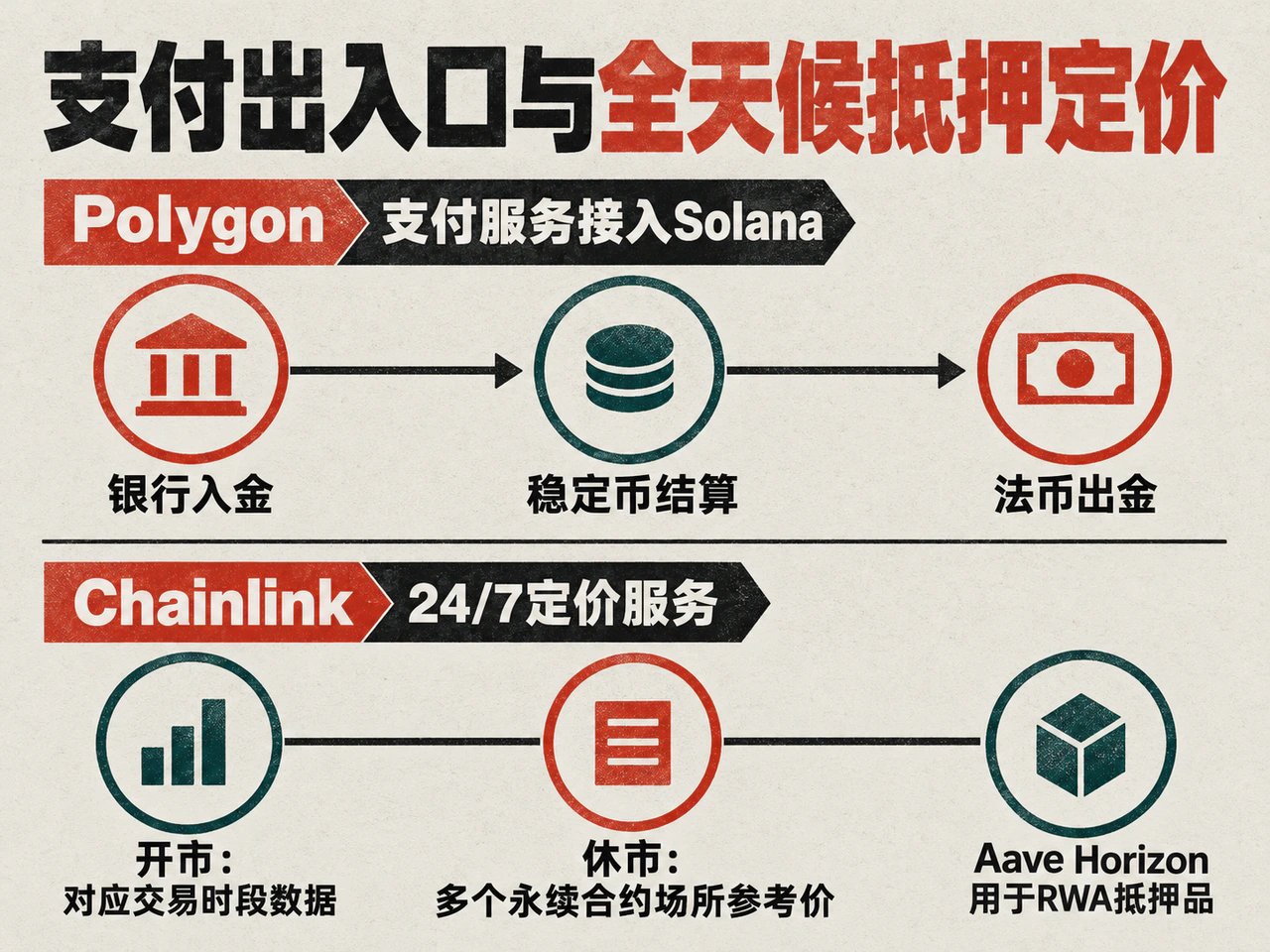
Polygon's integration with Solana shows that payment services are operating across networks. Through Open Money Stack, businesses can access bank funding, stablecoin accounts, cross-chain routing and fiat withdrawals. The service supports assets including USDC, USDT and PYUSD, and connects Solana, TRON and EVM networks. Customers can continue settling on Solana, with Polygon providing the surrounding account services and funding channels.
Competition consequently extends across the entire payment process. Merchants care about whether suppliers receive funds in their bank accounts on time; a network transfer is just one step. Integrating funding, conversion, custody or embedded wallets, and withdrawals could reduce the cost of connecting to service providers individually. Providers' revenue, in turn, depends on actual customer transactions, charges and retention. Public blockchains provide settlement capabilities, while payment platforms hold the customer relationships; both can expand together.
The logic is similar for RWAs: after issuance, assets also need to be tradable, support financing and have their collateral risks managed. Chainlink launched its 24/7 pricing service on October 29, with Aave as its launch partner. The service is being used for tokenized real-world asset collateral on the Horizon platform, initially covering high-volume U.S. equities. When traditional markets are open, it uses data from the corresponding trading session; when they are closed, it constructs reference prices from quotes across multiple perpetual futures venues.
This distinction directly affects lending operations. Continuously updating collateral valuations over weekends helps protocols adjust risk parameters. However, derivatives-based reference prices may still differ from the prices of the underlying equities when trading resumes. Borrowing limits, liquidation mechanisms and executable liquidity need to be in place together for round-the-clock quotes to translate into dependable financing capacity.
An asset-tokenization briefing published by The Block that day showed that tokenized private credit on Solana stood at approximately $1.44 billion on October 26, with these assets already entering lending markets such as Kamino. Ethereum's share of tokenized U.S. Treasuries had fallen to around 35%, while its outstanding balance remained near $5 billion; the decline in share primarily reflected expansion on other networks. The choice of network for an asset increasingly depends on the stablecoins, financing and distribution channels available there.
Higher trading volume generates immediate fees, while payment on- and off-ramps and uses for collateral influence whether demand persists. The next developments to track are whether cross-chain payments can attract repeat customers, whether real-world assets can generate sustained borrowing, and whether incremental revenue ultimately accrues to applications, networks or service providers.
Click “Read original” for more details.