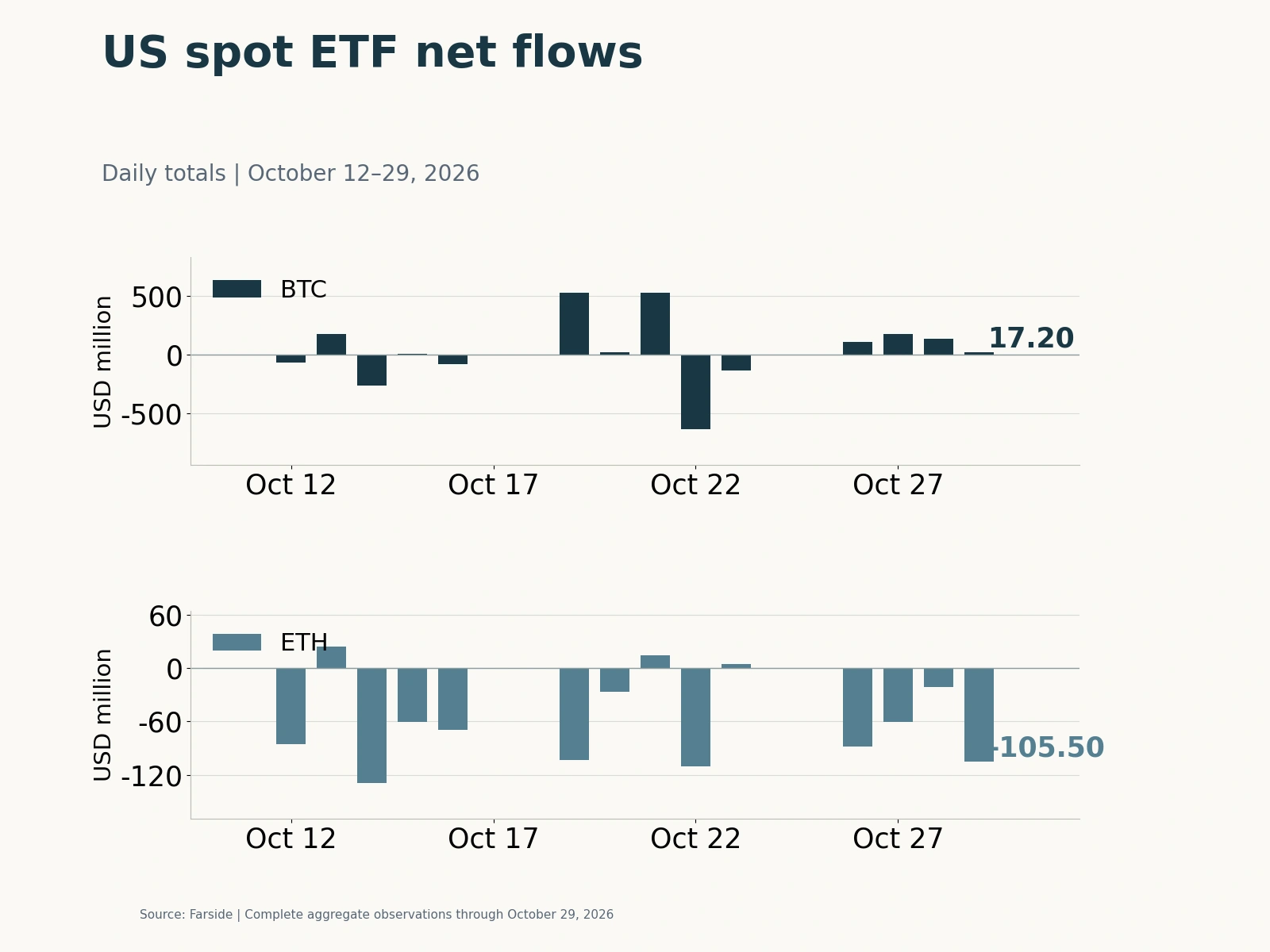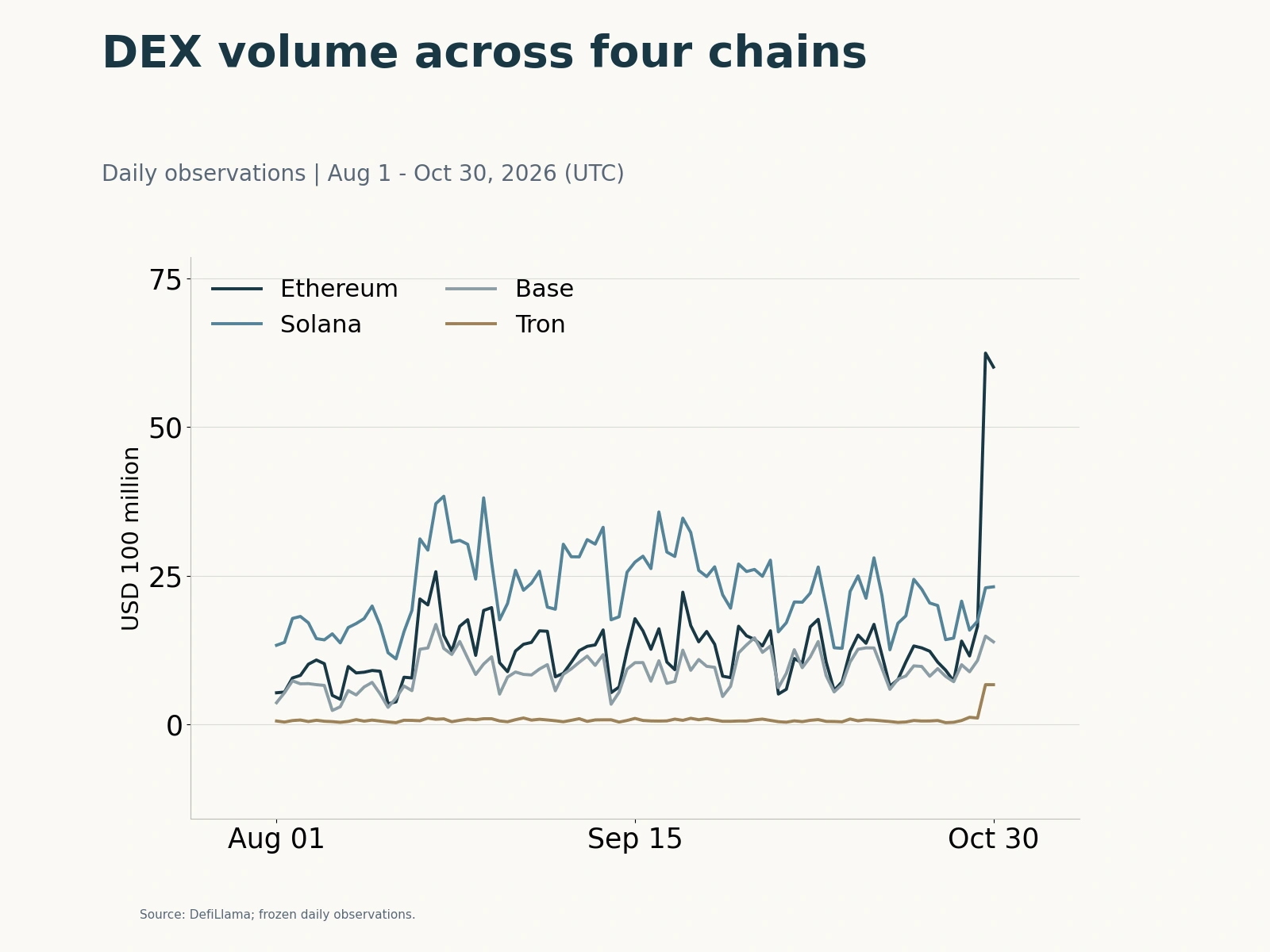
On October 30, 2026, Binance said in its second security-incident update that it would use the Secure Asset Fund for Users and its own corporate funds to absorb the impact of approximately $6.3 billion in stolen assets, and that it had already allocated more than $6.34 billion of corporate funds. After the previous day's sharp sell-off, crypto markets diverged at the close of the full trading day: Bitcoin and Ether ended slightly lower, while BNB, SOL and other tokens recovered. The compensation arrangements address who will bear the losses; whether the assets can be replenished and withdrawals restored will determine whether that promise becomes assets users can actually access.
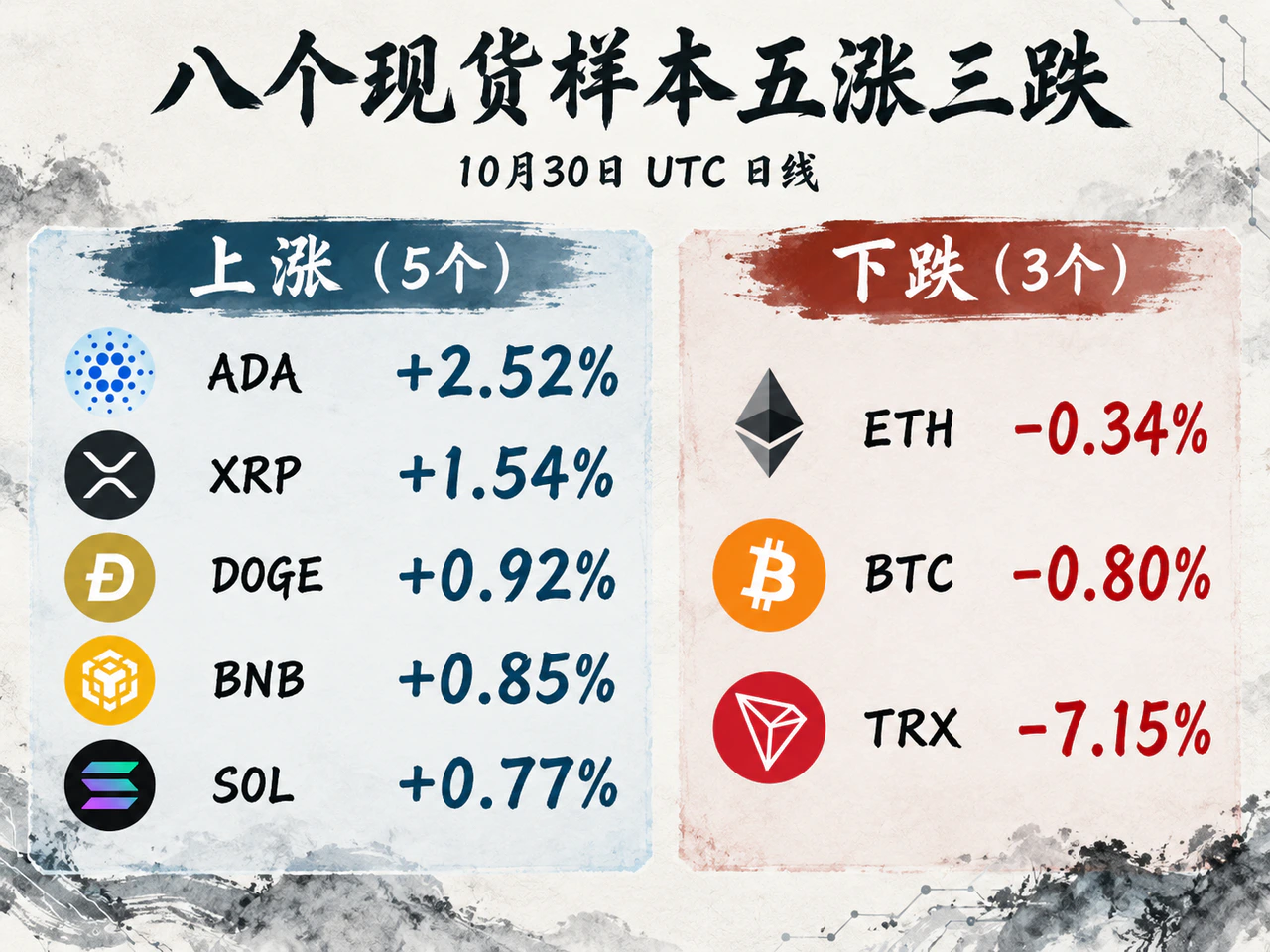
Bitcoin closes down 0.80%; five of eight liquid spot assets rise
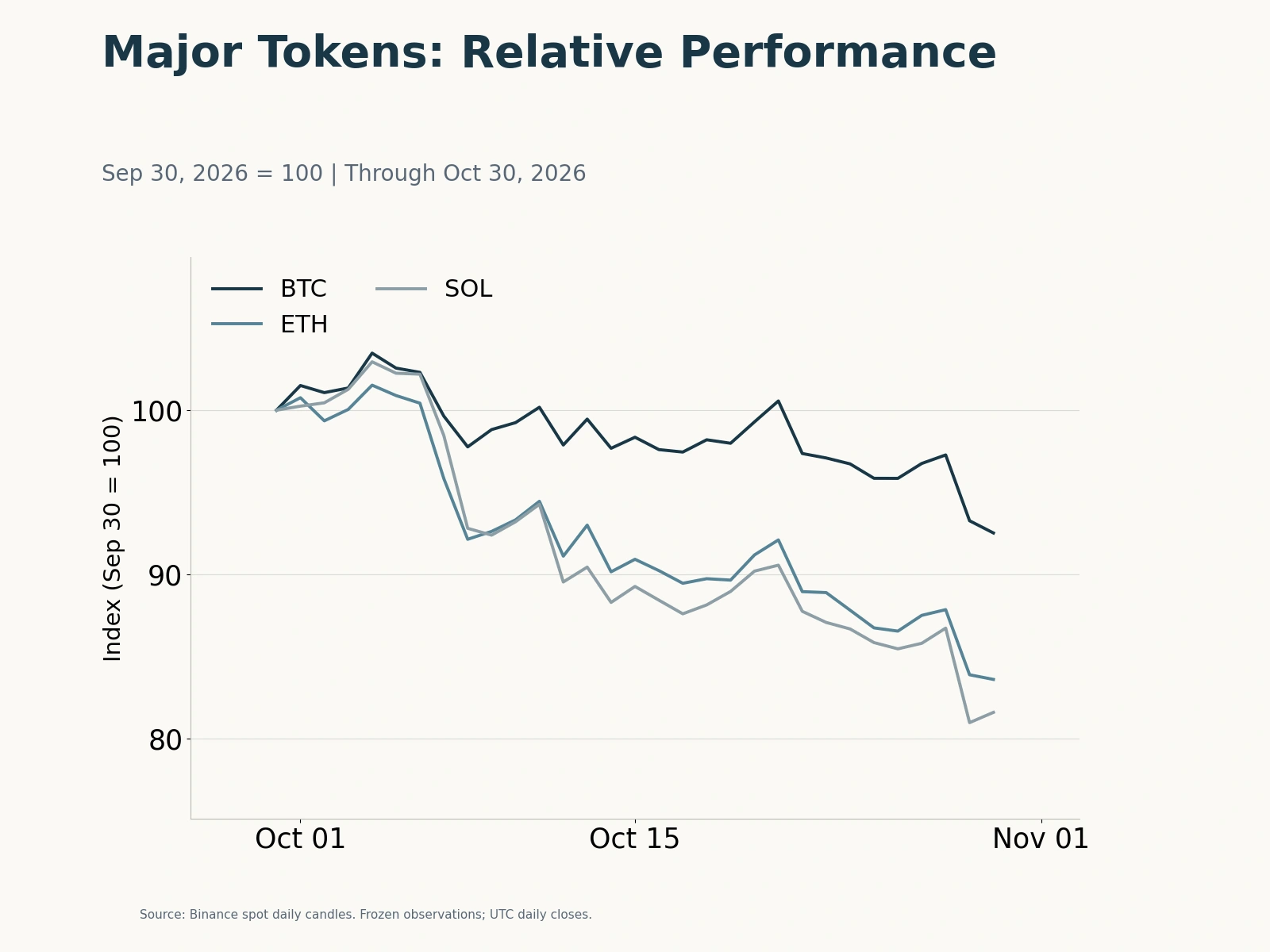
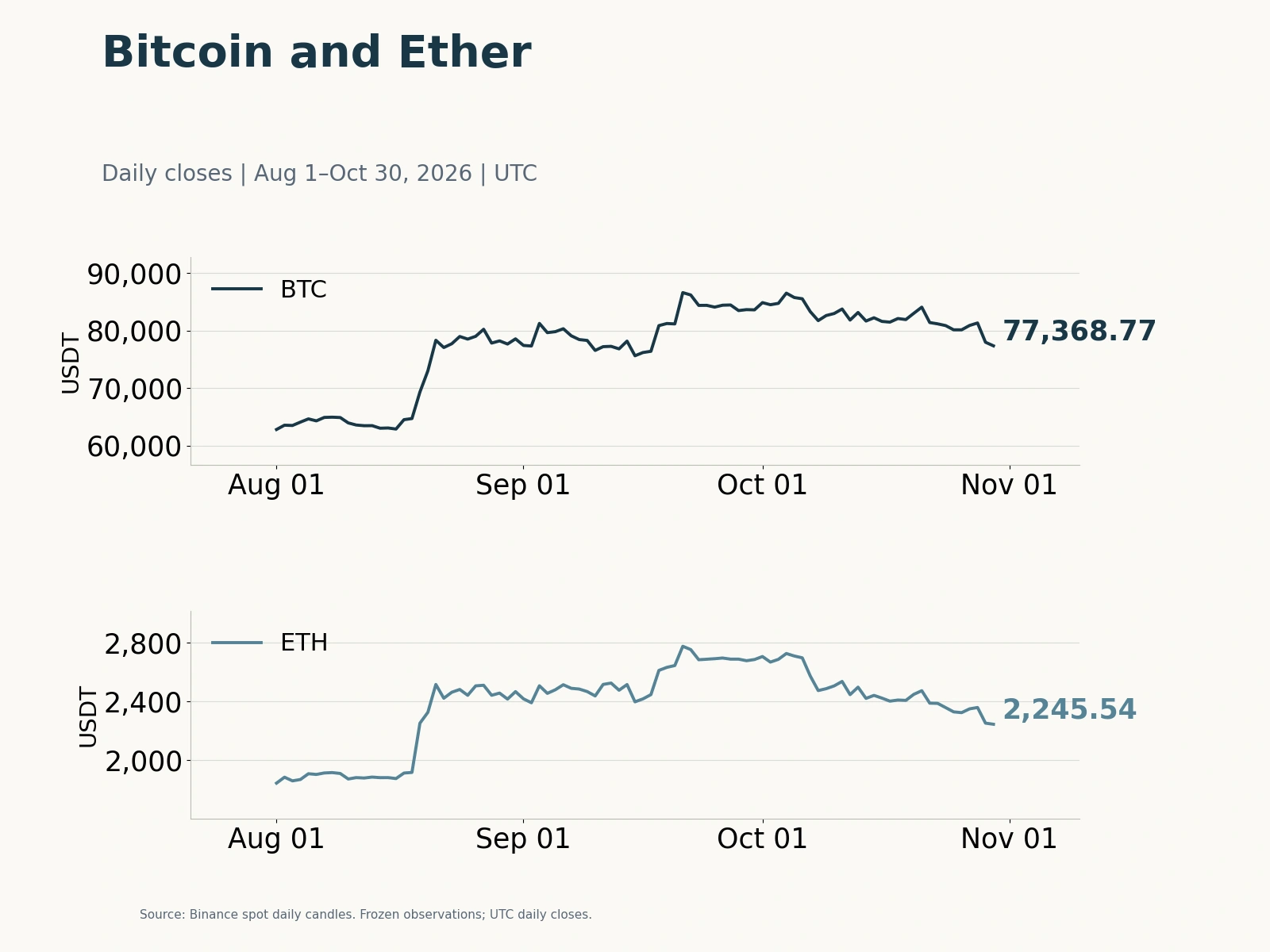
Using Binance spot prices quoted in USDT and the full UTC daily candle for October 30, Bitcoin closed at 77,368.77 USDT, down 0.80% from the previous close; Ether closed at 2,245.54 USDT, down 0.34%. That trading day ran from 8 a.m. on October 30 to 8 a.m. on October 31, Beijing time. The two assets had fallen 4.12% and 4.52%, respectively, in the preceding session, so the initial plunge following the security incident was already reflected in the previous closing prices.
Intraday volatility remained substantial. Bitcoin touched a low of 76,325.98 USDT before recovering part of its decline; Ether fell as low as 2,174.08 USDT and closed approximately 3.29% above that level. Both still finished below their previous closes, but buying had emerged at the intraday lows.
Of the fixed sample of eight highly liquid spot assets, five rose and three fell. BNB closed at 704.42 USDT, up 0.85%; SOL, XRP, DOGE and ADA gained 0.77%, 1.54%, 0.92% and 2.52%, respectively. TRX fell 7.15%, markedly underperforming the other assets. The sample did not broadly follow Bitcoin lower, but performance varied considerably across tokens.
The closing ETH/BTC ratio rose from 0.02889 to 0.02902, with Ether slightly outperforming Bitcoin on the day. Over the longer period since the end of September, Bitcoin, Ether and SOL were down a cumulative 7.48%, 16.40% and 18.41%, respectively. One day's recovery has yet to change the weak price structure of the past month.
Trading turnover also diverged. Full-day Binance BTC/USDT turnover was approximately 1.883 billion USDT, down 1.19% from the previous day; ETH/USDT turnover was approximately 1.033 billion USDT, up 8.86%. BNB and SOL turnover fell 40.10% and 19.88%, respectively. Some tokens recovered in price without a broad accompanying expansion in trading activity. These figures are more consistent with different assets being repriced after a sharp sell-off.
Binance allocates more than $6.34 billion; withdrawals remain suspended
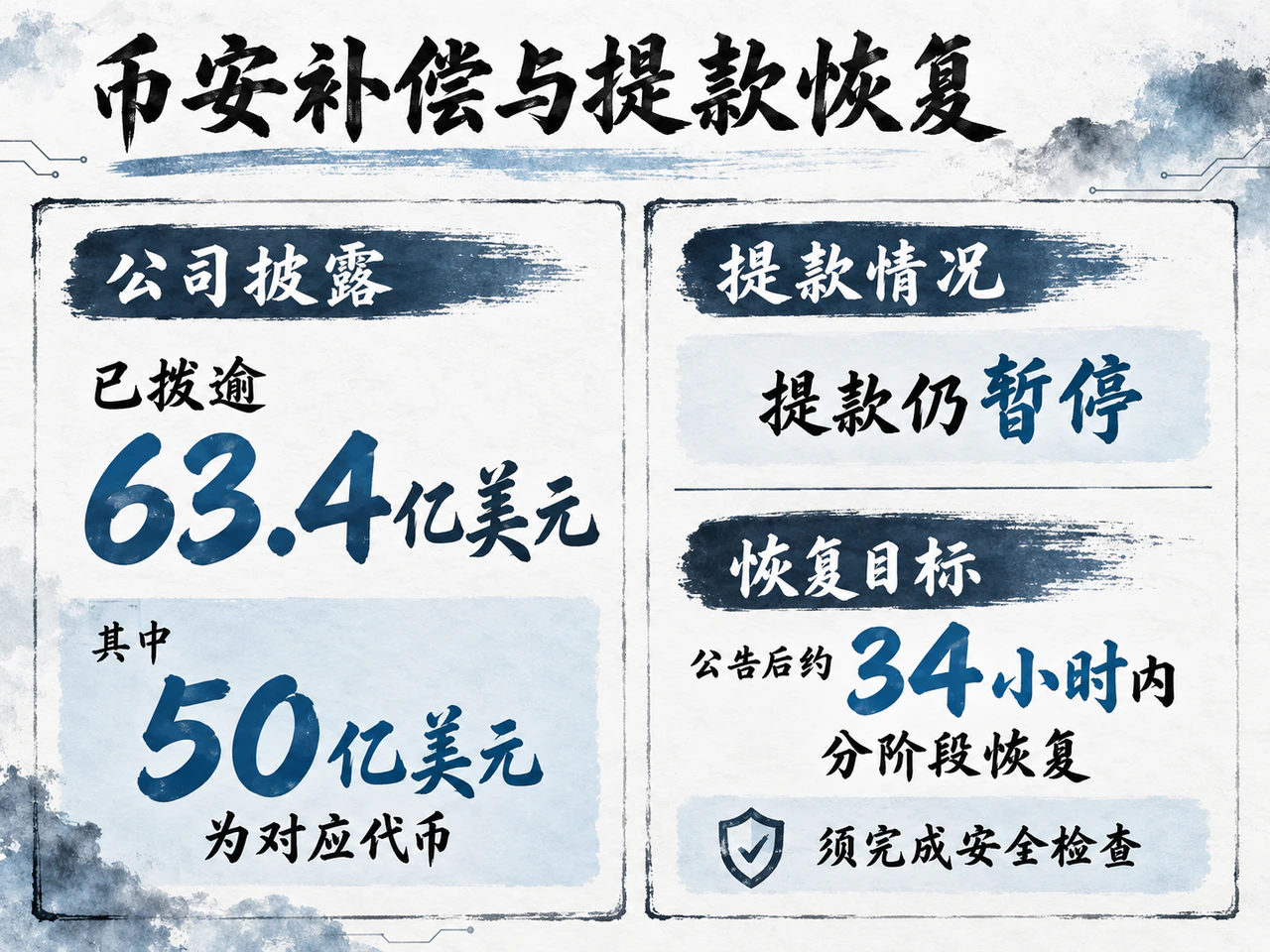
Binance disclosed that the hot-wallet incident occurred at around 20:05 UTC on October 29. By its second update, issued at 19:58 on October 30, the exchange said that $5 billion of the allocated funds was held in the tokens corresponding to the stolen assets, covering approximately 80% of the affected amount. It was buying the remaining relevant tokens through market and over-the-counter channels, while approximately $3 billion of assets linked to the incident had been frozen on-chain.
The response to the incident thus creates two opposing trading forces. The disposal of affected assets and traders' efforts to reduce risk exposure may generate selling pressure; purchases by the exchange to replenish the corresponding tokens may add demand. The actual impact depends on which assets are purchased, the pace of buying, and the balance between exchange and over-the-counter transactions. The company's statement identifies a potential source of buying, but the price rebound should not be attributed entirely to compensation-related purchases.
On-chain material indicates that the shock also spread through asset and financing channels. A risk note posted on the Aave governance forum early on October 30 said the attacker had exchanged some governance tokens for ETH and had borrowed WETH against USDT collateral. The protocol subsequently froze new deposits and borrowing, while existing withdrawals, repayments and liquidations remained available. Different tokens therefore face different direct selling pressures and financing constraints; cross-token price moves cannot be explained by overall sentiment alone.
Replenishing funds and restoring withdrawals are also distinct issues. The former addresses who bears the losses; the latter determines whether users can actually transfer their assets and affects the movement of funds across platforms. Binance's latest statement said deposits and unaffected services continued to operate, while withdrawals remained suspended. It aimed to begin a phased restoration within approximately 34 hours of the announcement, subject to completing security checks, and planned to provide updated proof-of-reserves results by November 2. These are company plans, rather than outcomes already delivered.
The broader market backdrop was also restrictive that day. FOREX.com strategist Michael Boutros cited weakness in technology stocks, hawkish interest-rate expectations and the Binance incident as sources of pressure on crypto assets. Even if the exchange's compensation reduces risk at a single platform, volatility in interest rates and technology stocks may still prompt investors across asset classes to reduce risk exposure. The resolution of the platform incident and the recovery of risk assets more broadly need to be assessed separately.
Closing above the intraday lows is meaningful, but it does not eliminate platform risk. The more useful indicators in the next phase are whether withdrawals resume in stages as planned, whether the corresponding assets are replenished, and whether recoveries in major tokens are supported by sustained trading activity. The compensation pledge clarifies who will bear the losses; delivery of the security response will provide a more direct test of the recovery in users' asset liquidity and market confidence.
Click through to the original article for full details.