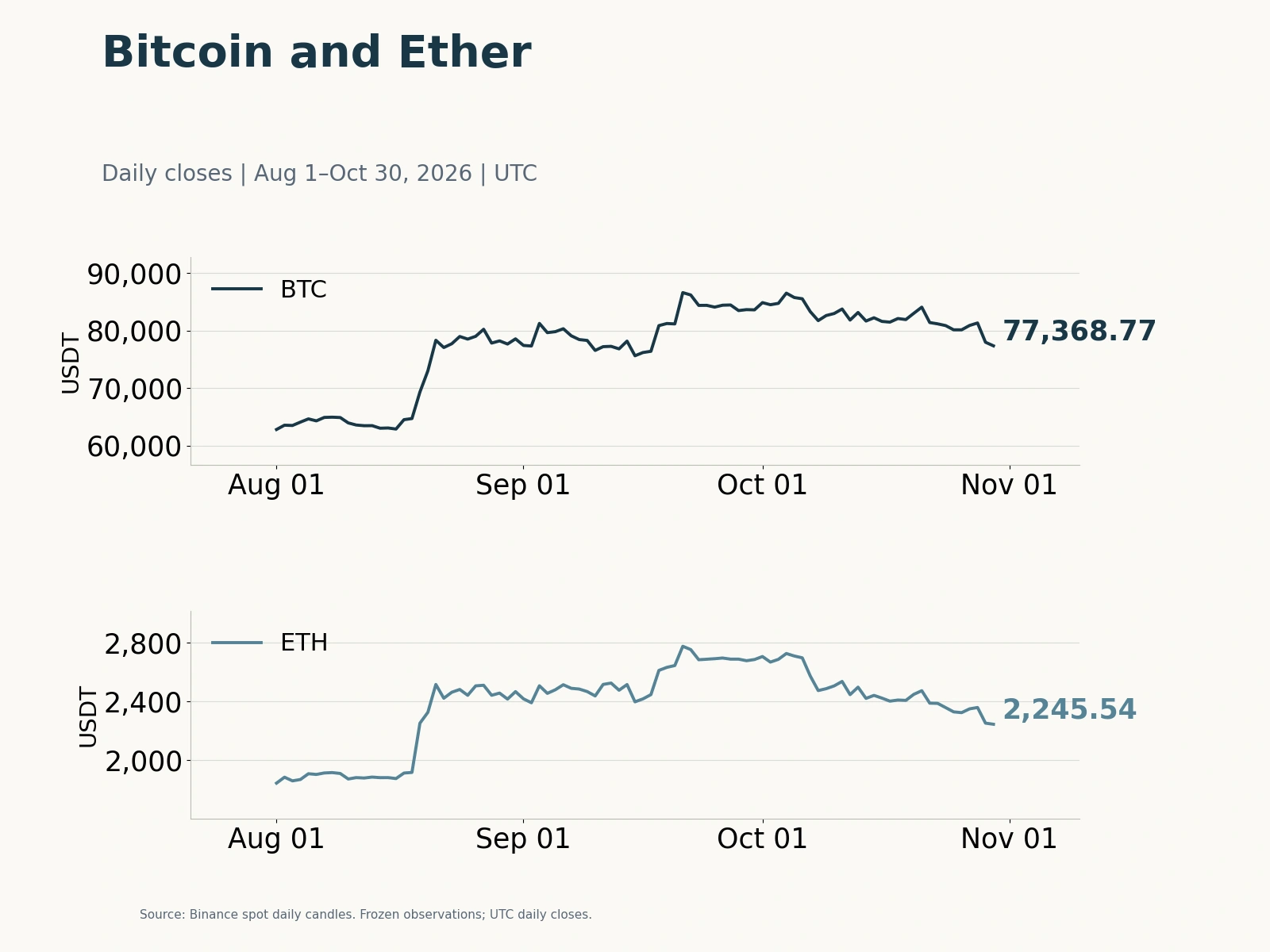
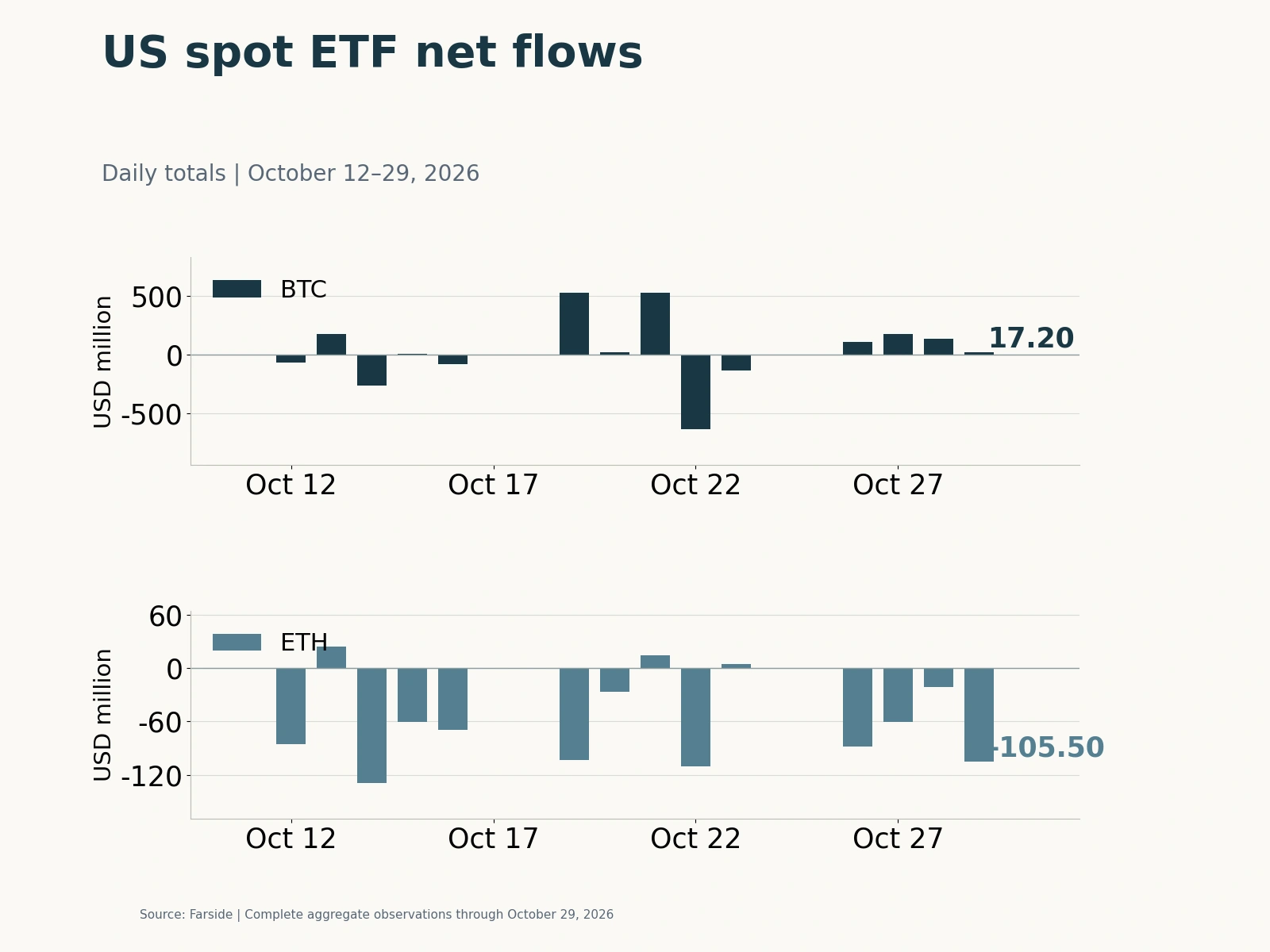
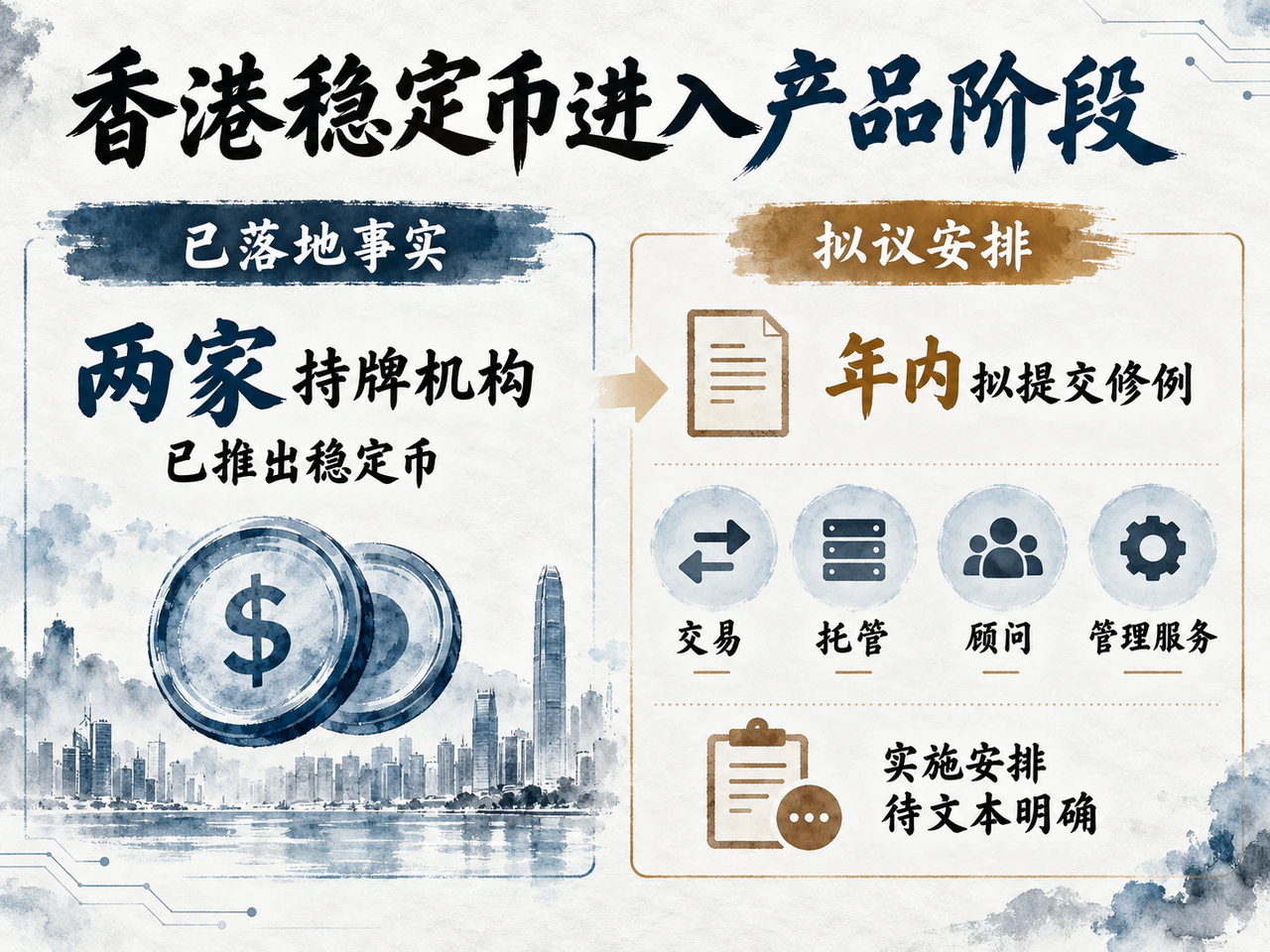
On October 30, 2026, Aave risk service provider LlamaRisk reported progress following the freeze of markets across multiple chains: two batches of risk-parameter changes had been implemented, temporarily reducing the interest-rate slope at high utilization for selected reserves, cutting unused borrowing capacity, and setting out a phased reopening of markets.
The on-chain shock from the Binance hot-wallet incident spread from asset selling to the circulation of funds in lending pools. Decentralized trading remained active, while lending markets needed to reorganize inflows, outflows and collateral eligibility.
Trading turnover remains elevated as TVL falls across major networks
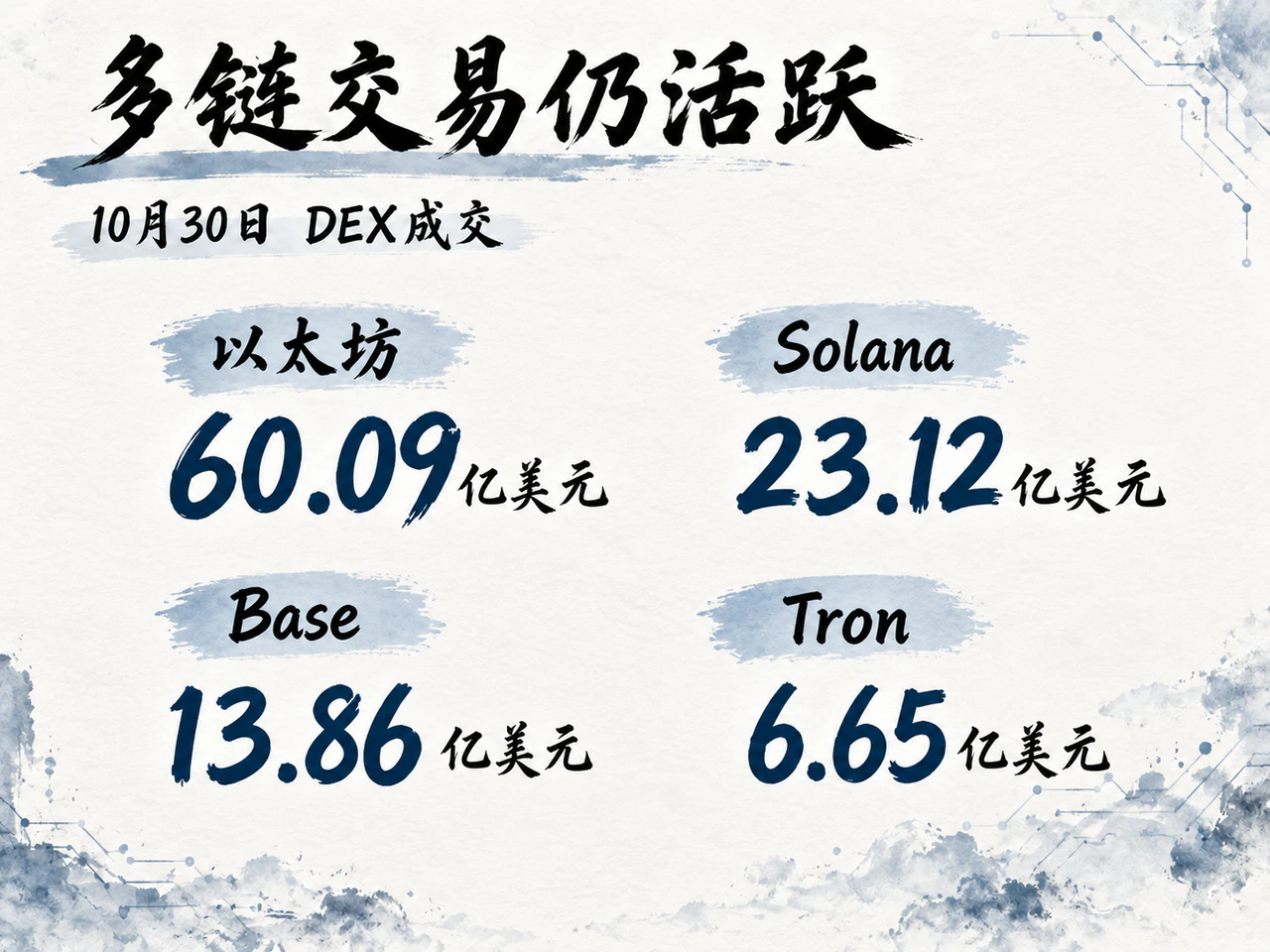
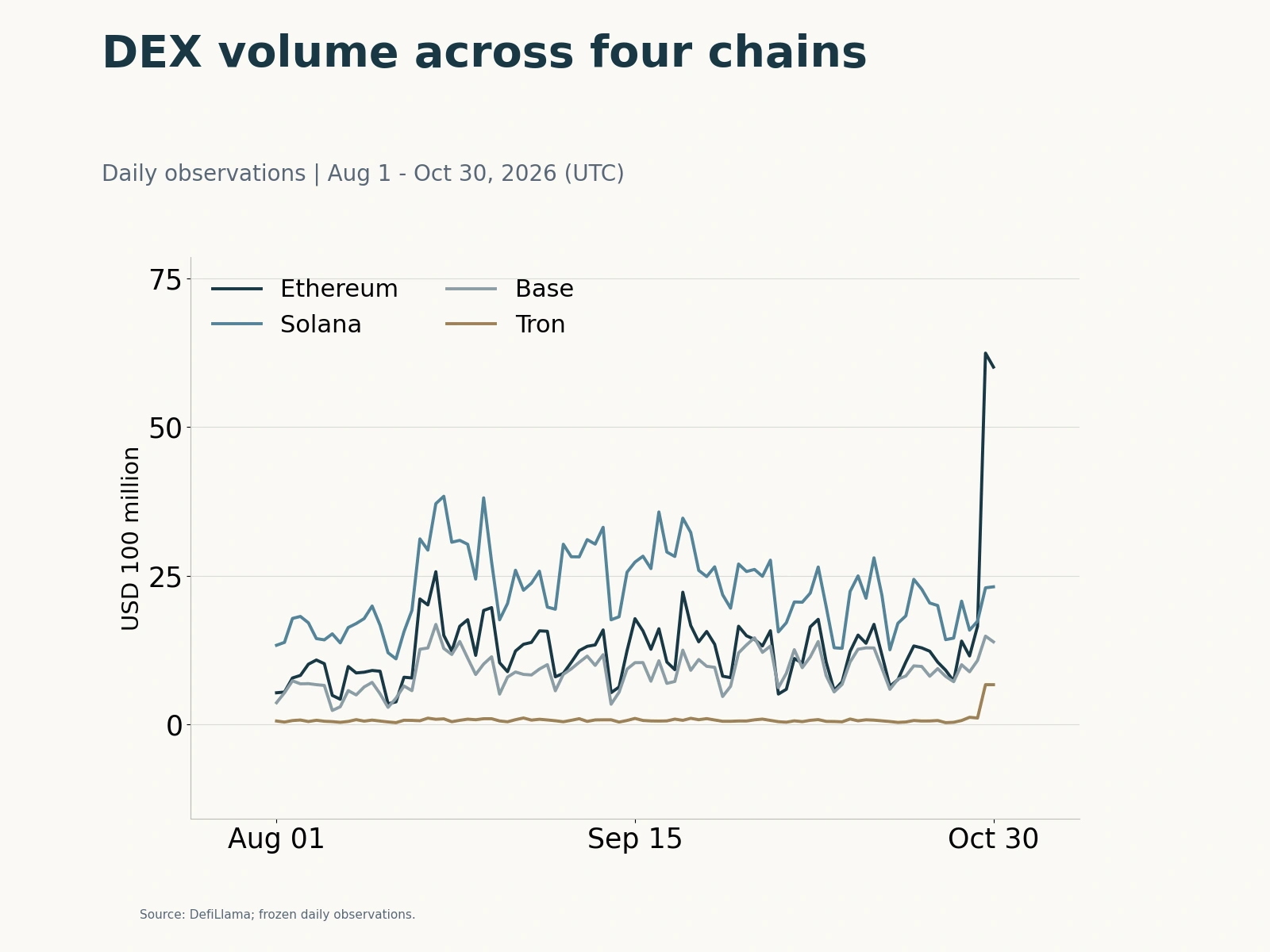
According to DefiLlama's UTC daily series, decentralized exchange volume on Ethereum was approximately $6.009 billion on October 30, below the previous day's $6.244 billion but still substantially above the $1.649 billion recorded on October 28. Solana volume was approximately $2.312 billion, slightly above the previous day's $2.295 billion; Base fell from $1.483 billion to $1.386 billion; and Tron remained at around $665 million for a second consecutive day. Elevated trading spanned multiple blockchains and layer-2 networks, although their day-to-day changes differed.
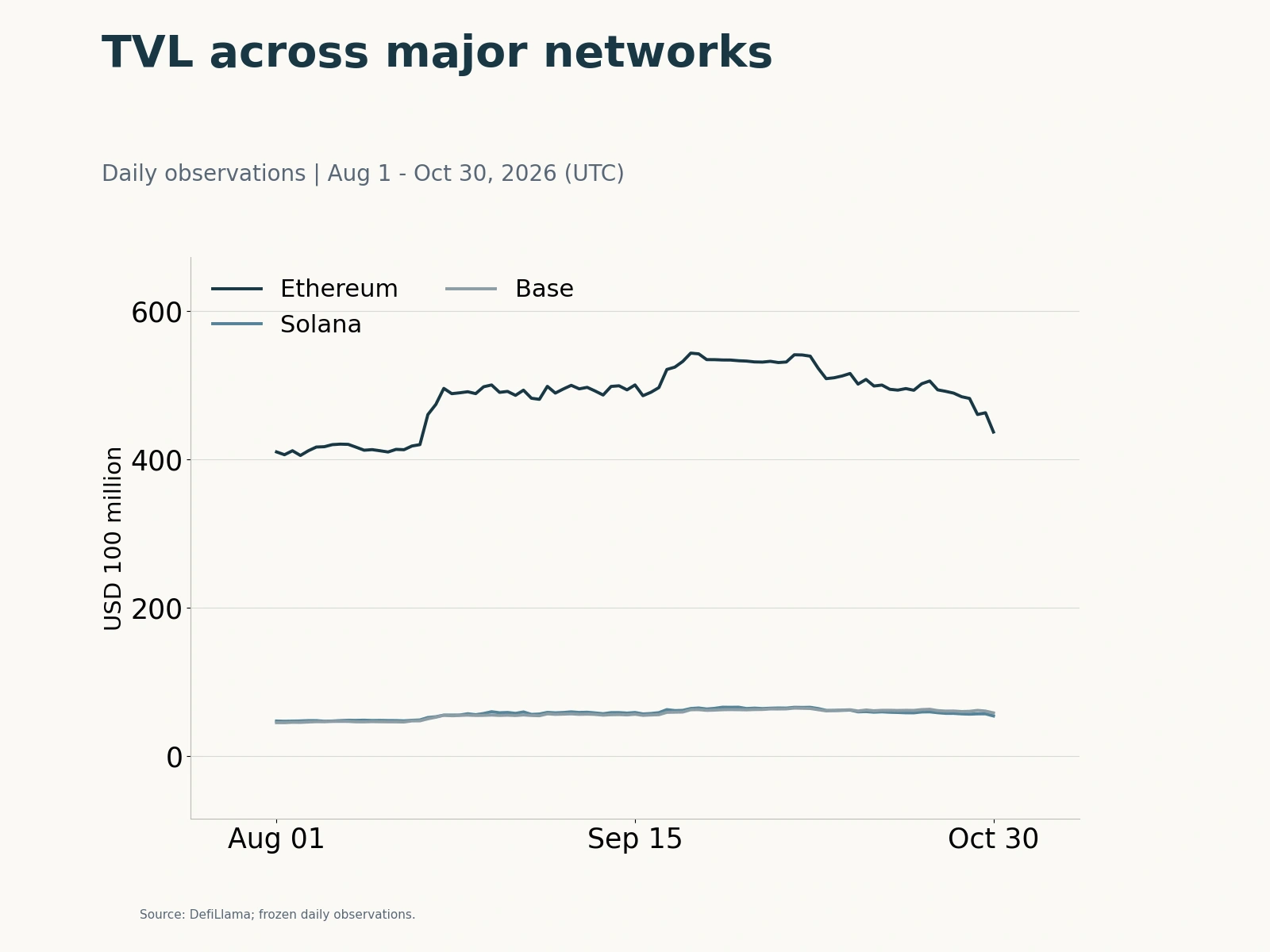
Over the same period, DeFi total value locked fell across three major networks. Ethereum declined from $46.308 billion to $43.707 billion, Solana from $5.695 billion to $5.410 billion, and Base from $6.067 billion to $5.821 billion, decreases of approximately 5.6%, 5.0% and 4.0%, respectively. TVL reflects both asset prices and deposits and withdrawals, so it should not be treated directly as net capital outflows. Read alongside trading data, the more accurate description is that turnover remained elevated while existing liquidity pools came under pressure.
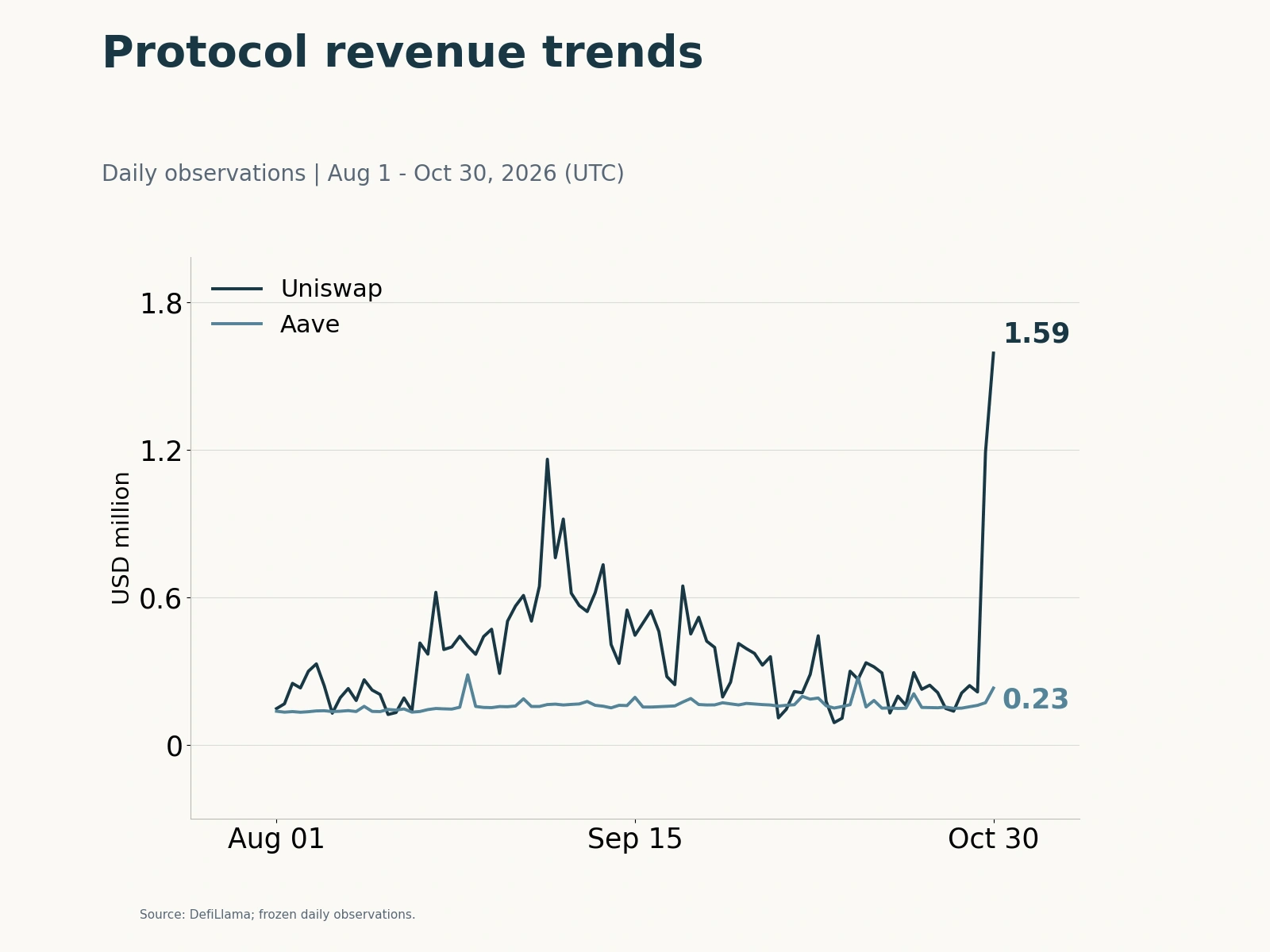
Protocol revenue showed another side of the picture. DefiLlama recorded approximately $1.5944 million in daily protocol revenue for Uniswap, up from $1.1910 million the day before; Aave generated approximately $230,500, also above the previous day's $171,000. Concentrated portfolio repositioning can lift trading-related revenue, while lending-protocol revenue changes with utilization, interest rates and liquidations. A short-term rise in revenue does not mean users' financing conditions are improving at the same time.
Stablecoin conversions and real-world-asset lending were affected differently. LlamaRisk initially disclosed that approximately 4.6 million GHO had been converted into USDT through the stability module after the incident, while GHO's quoted price edged down from approximately $0.998 to around $0.997. Horizon, the real-world-asset lending market, was excluded from the freeze because collateral admission is permissioned, but its RLUSD pool still faced withdrawal pressure. The same shock produced different outcomes as it passed through trading, stablecoin conversions and lending pools.
The freeze blocks new deposits as high utilization raises borrowing costs
Aave's challenge was that risk originated outside the protocol but could enter it through general-purpose collateralized lending. LlamaRisk said the address involved deposited approximately 60 million USDT into Aave V3's Ethereum market on the evening of October 29 UTC and borrowed 19,762 WETH. Its initial disclosure stated that the position remained overcollateralized. The risk team was more concerned that additional assets linked to the incident could enter other reserves and rapidly be converted into borrowed assets that could be transferred away.
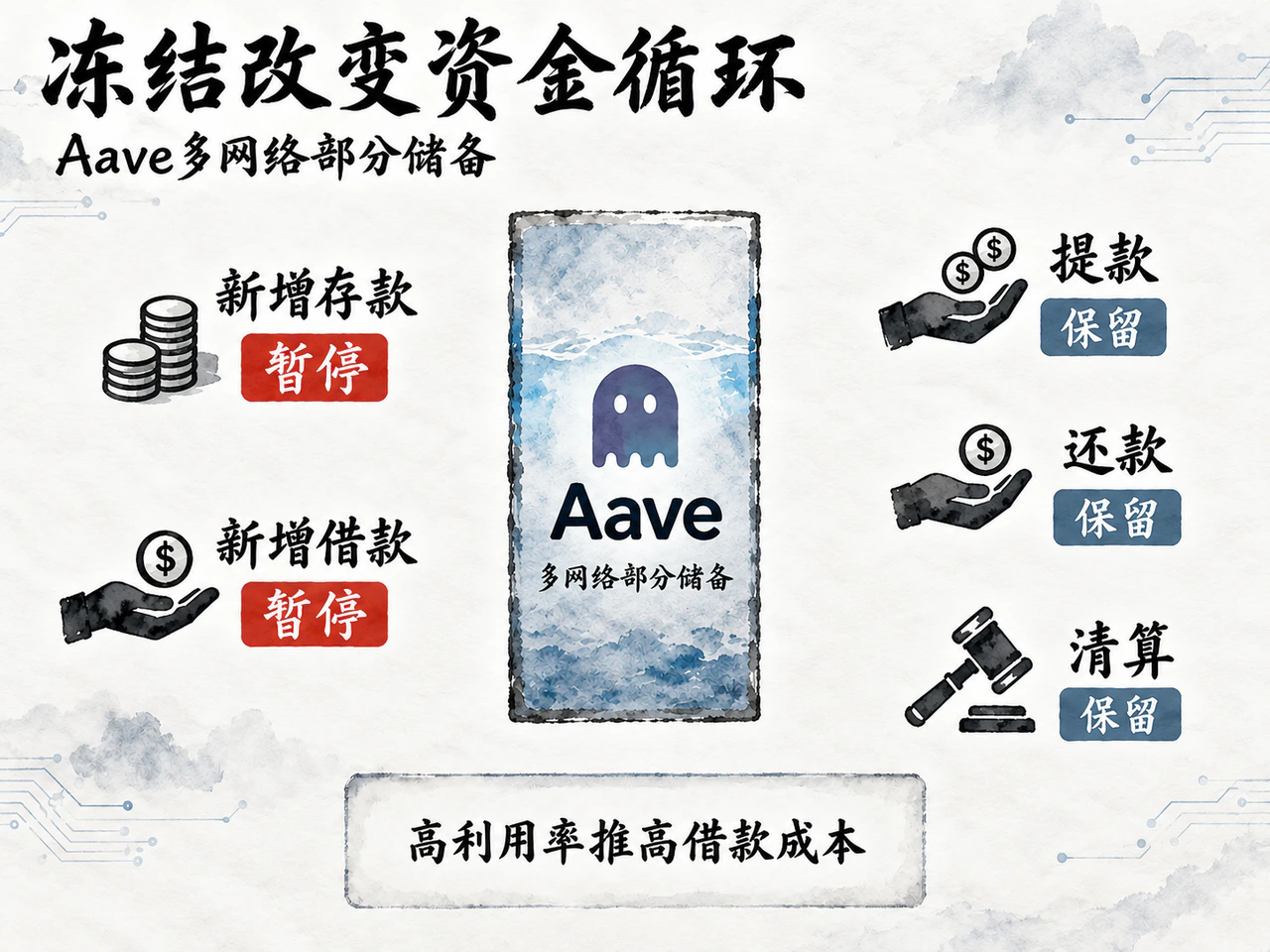
Aave subsequently froze selected reserves across several networks, suspending new deposits and borrowing while keeping repayments, withdrawals and liquidations available. This arrangement carried a clear cost: depositors could leave, but new funds could not enter. Outstanding borrowing therefore rose relative to pool liquidity, and once utilization reached high levels, the interest-rate curve drove borrowing costs up more rapidly.
LlamaRisk's snapshot at 00:26 UTC on October 30 showed USDC utilization at 97.8% in the main Ethereum V3 market, with an annual borrowing rate of 10.8%. Base USDC utilization was 95.3%, with an annual borrowing rate of 10.1%; even RLUSD in the unfrozen Horizon market reached 94.1% utilization, with an annual borrowing rate of 15.2%. These figures show that funding pressure extended beyond frozen markets. Horizon further illustrates that restricting the admission of collateral linked to the incident cannot eliminate liquidity pressure caused by depositor withdrawals.
Under normal conditions, higher interest rates attract new deposits and help rebalance a pool. During a freeze, that adjustment mechanism is temporarily closed, so high rates mainly translate into a greater interest burden for existing borrowers.
In its update at 13:49 UTC on October 30, LlamaRisk said two batches of risk-parameter adjustments had been implemented. First, the interest-rate slope at high utilization was reduced for selected reserves to moderate the pace of increases in borrowing costs. Second, unused capacity in major borrowing channels was cut, covering approximately $3.7 billion in V3 and $130 million in V4 unused borrowing capacity. The latter measure aims to prevent a single entity from rapidly drawing on a large amount of capacity after markets reopen.
Restoring fund operations separately from new collateralized borrowing
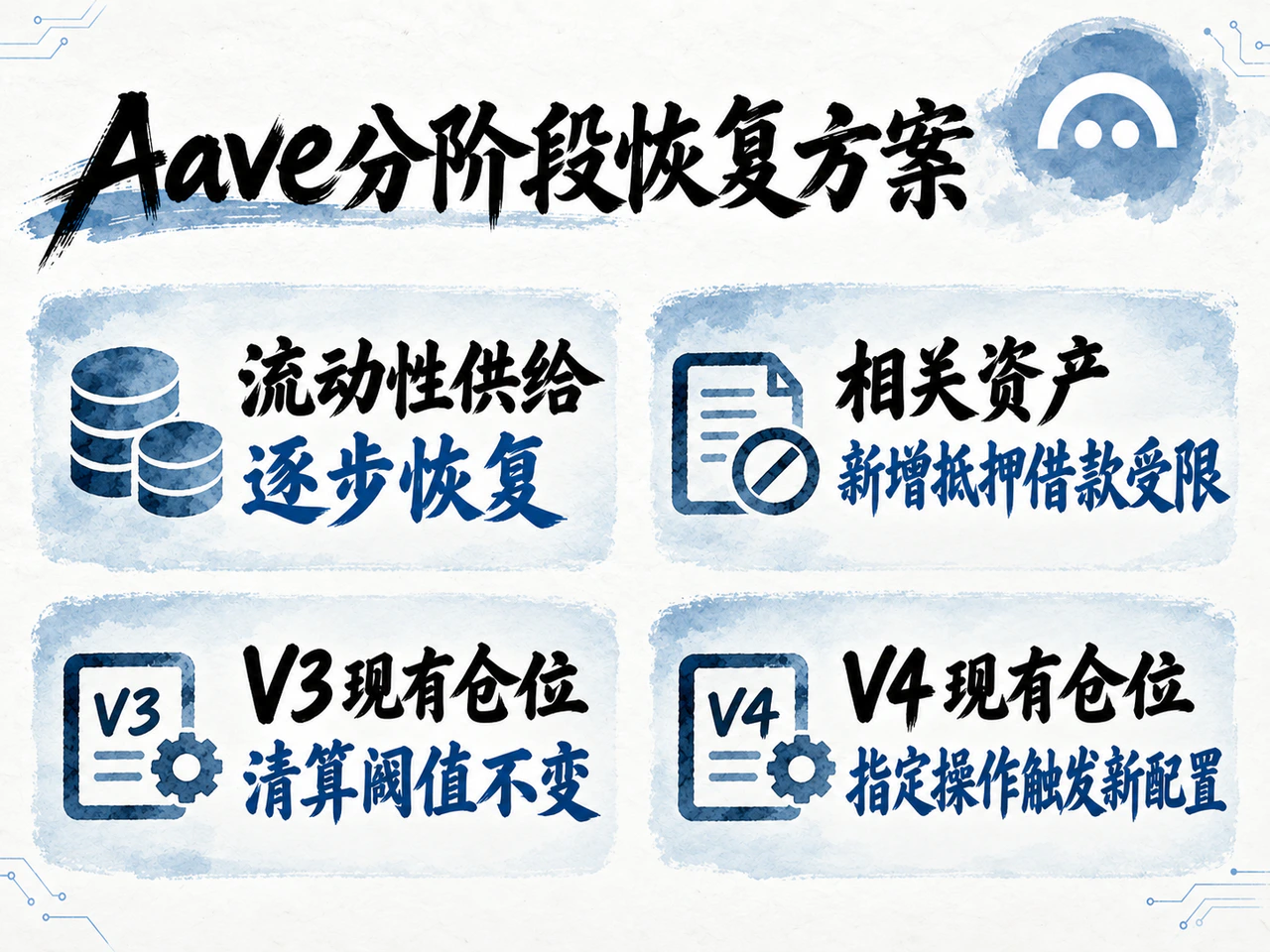
The recovery plan does not reopen all functions at once. Under the published phased arrangements, markets will gradually resume fund operations while retaining restrictions on new collateralized borrowing against USDT, USDC, USDT0 and certain other assets linked to the incident. These assets can still enter markets as liquidity supply, but temporarily cannot create new collateralized borrowing capacity.
Existing positions are treated separately as well. Liquidation thresholds for existing V3 positions remain unchanged, preventing the new borrowing restrictions alone from altering position health. Existing V4 positions switch to the new collateral configuration when specified actions are triggered.
This arrangement divides the resumption of operations into two tasks: restoring two-way fund flows as quickly as possible, and preventing high-risk assets from being used to rapidly borrow other assets. The quality of the recovery should now be judged by whether pool utilization falls, whether new deposits and repayments ease interest-rate pressure, whether withdrawal demand can be met smoothly, and whether restrictions on new collateralized borrowing remain in place.
Trading volume and protocol revenue measure the intensity of activity, but cannot replace scrutiny of lending liquidity. Restoring two-way flows into and out of pools is an important condition for lending services to return to normal.
Click Read Original for further details.