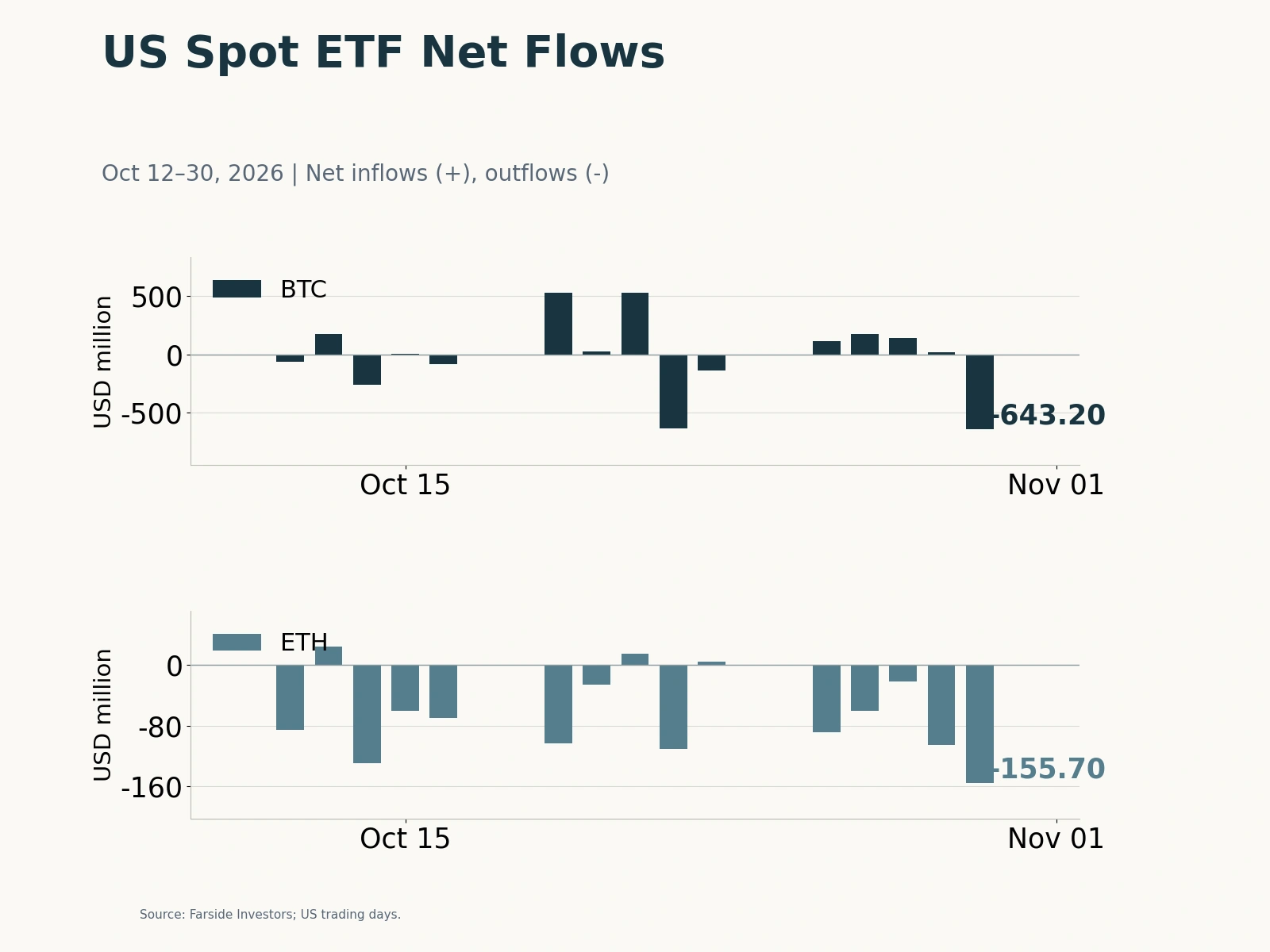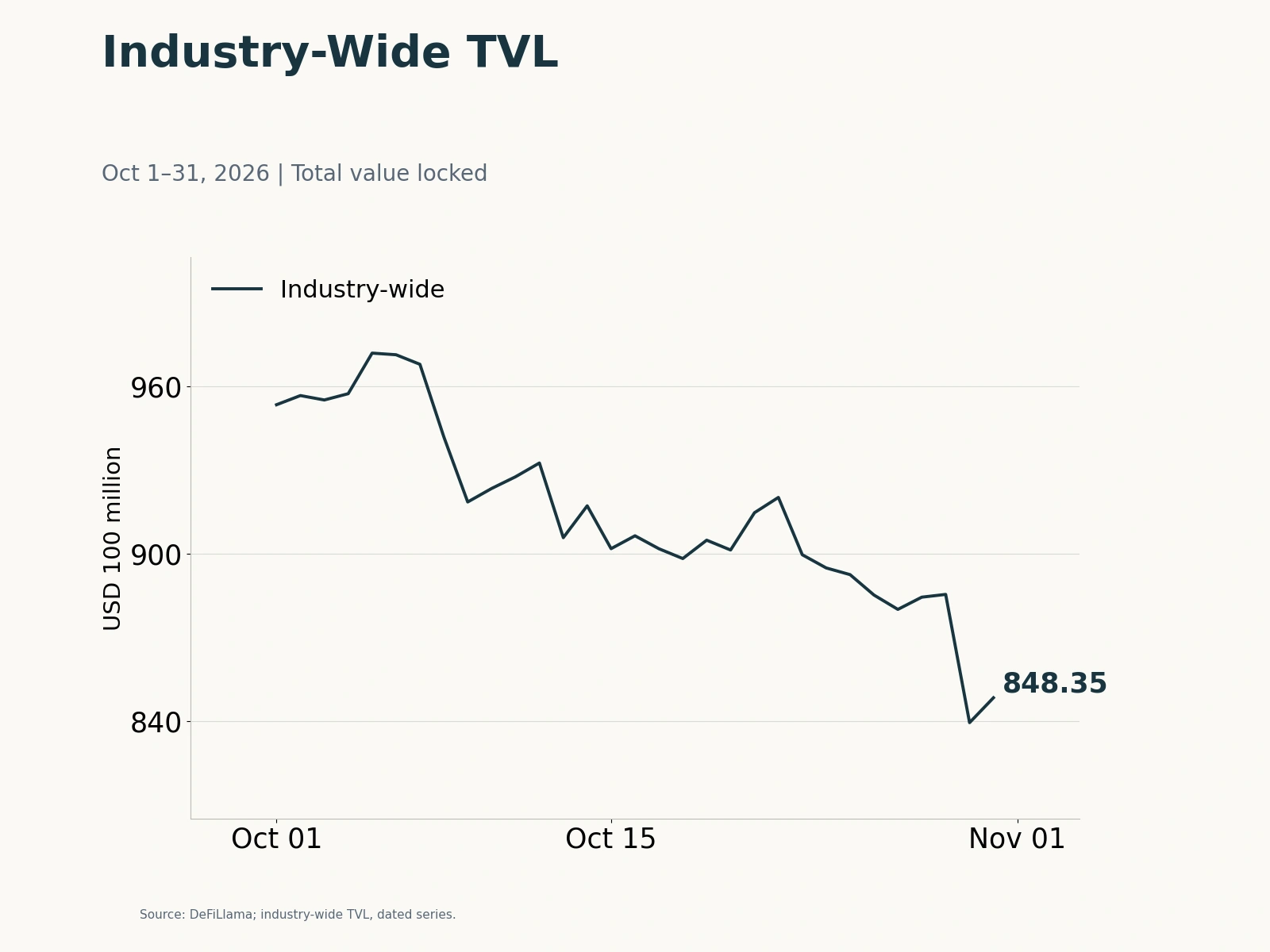
On October 31, 2026, Binance said it had used company funds to repurchase tokens and replenish 90% of the assets stolen in the attack, and still planned to resume withdrawals on Sunday. Replenishment has moved from a promise into execution, but customers' ability to transfer assets out smoothly remains to be tested. Bitcoin and Ether closed slightly higher that day, while most coins in the sample still declined. The price recovery has yet to broaden into a general rebound.
Bitcoin and Ether edge higher, but six of ten sampled coins fall
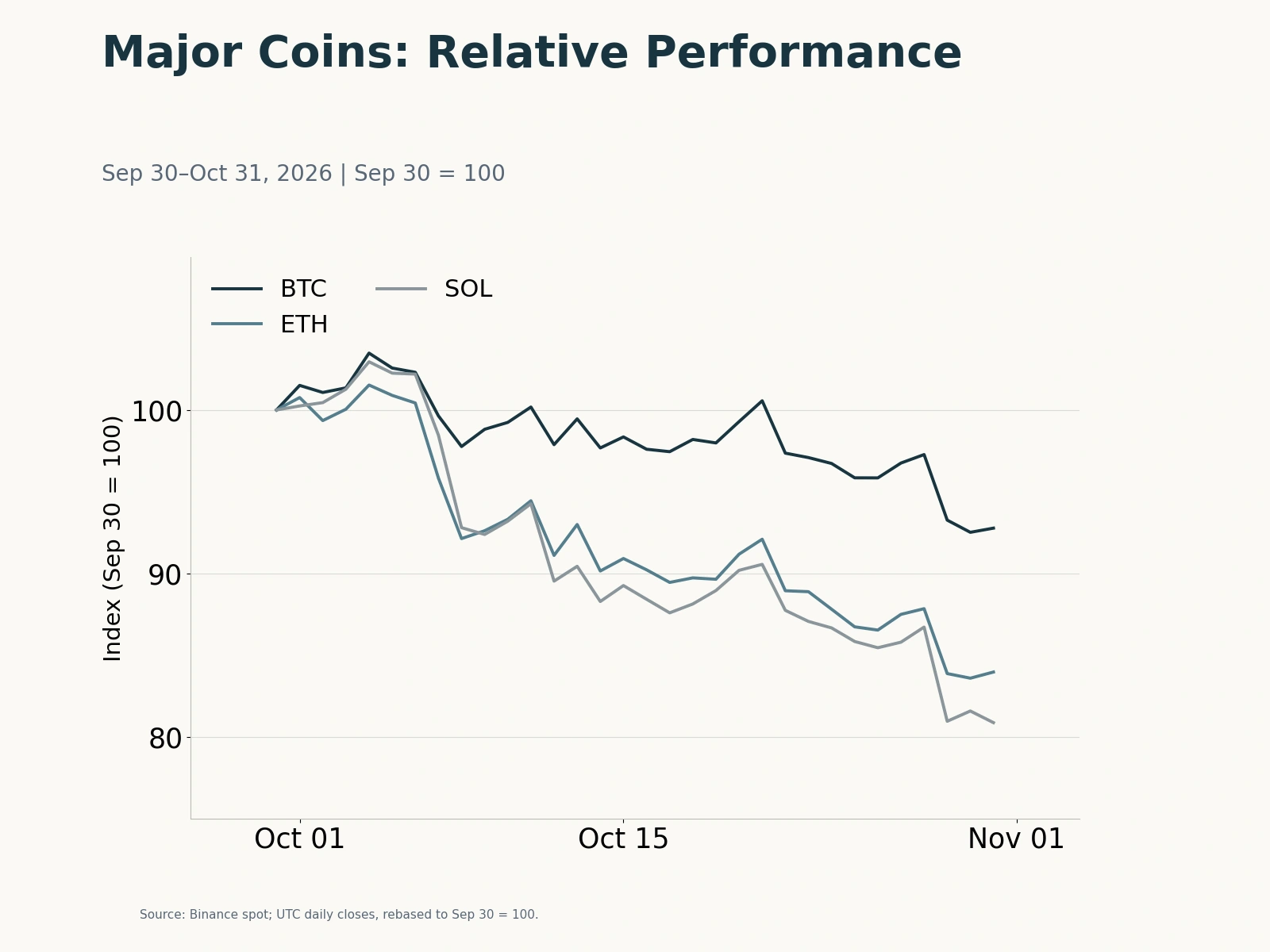
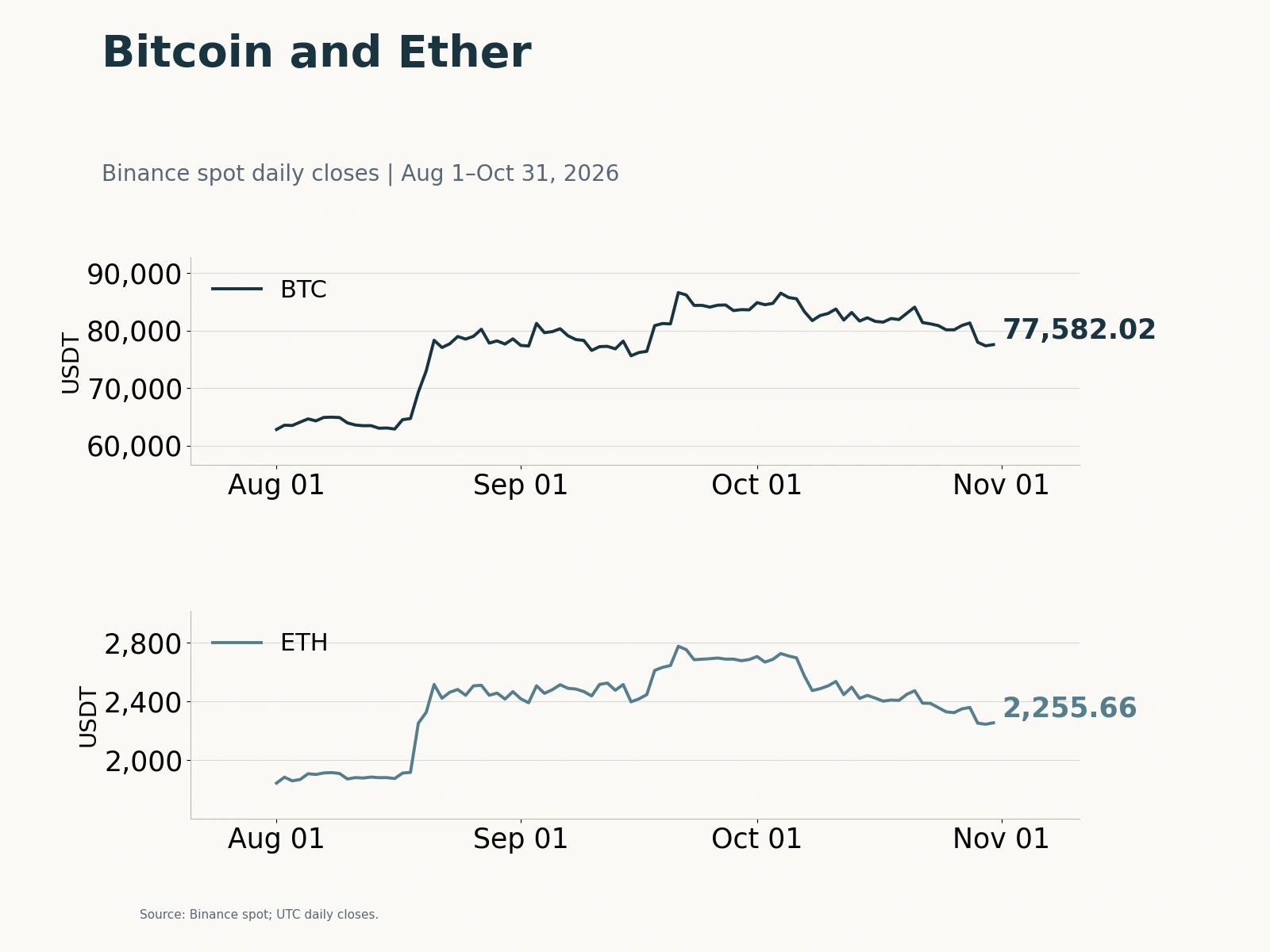
Based on Binance spot prices quoted in USDT and UTC daily candles, over the trading day from 8 a.m. Beijing time on October 31 to 8 a.m. on November 1, Bitcoin closed at 77,582.02 USDT, up 0.28% from the previous day; Ether closed at 2,255.66 USDT, up 0.45%. Bitcoin traded between 77,114.01 and 77,796.01 USDT during the day, and Ether between 2,237.00 and 2,268.76 USDT. Both trading ranges narrowed markedly.
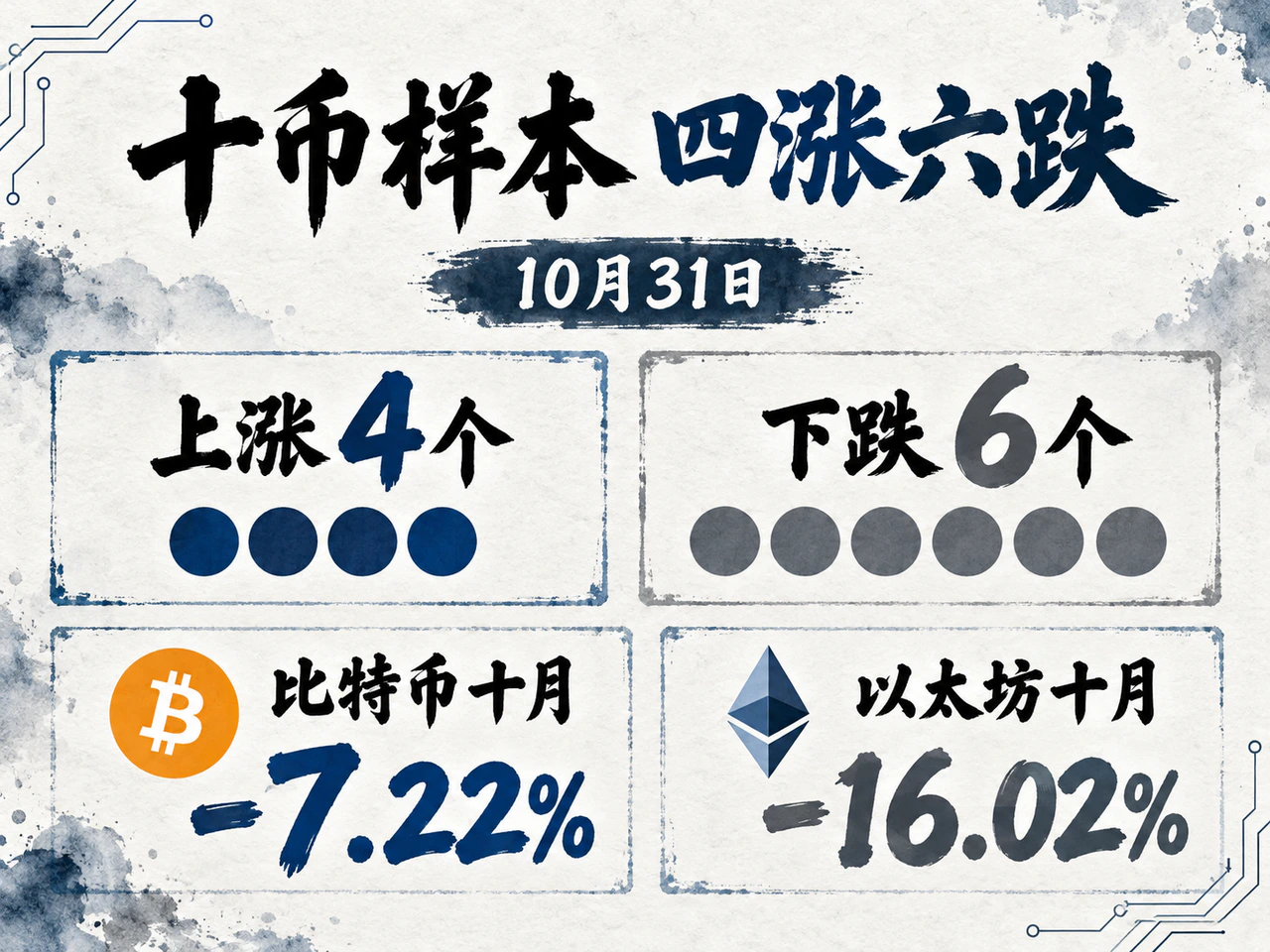
The rebound remained narrow. Only four of the fixed sample of ten highly liquid Binance spot coins rose: alongside Bitcoin and Ether, LINK gained 1.79% and AVAX 0.30%. BNB, XRP, DOGE, SUI, SOL and ADA fell 0.07%, 0.38%, 0.43%, 0.64%, 0.87% and 1.13%, respectively. The sample shows stabilization in the leading assets and divergence among coins, rather than a uniform recovery in risk appetite.
Ether's performance relative to Bitcoin improved slightly. Calculated from their same-day USDT closing prices, the ETH/BTC ratio rose from 0.02902 to 0.02907, but remained below its end-September level of 0.03212. Ether's relative weakness has not reversed. A market-wide snapshot updated by CoinGecko at 23:57 UTC on October 31 put Bitcoin's share of market capitalization at approximately 59.25%. This measures the structure of total market capitalization and differs in scope from the same-platform price ratio above.
Set against October as a whole, the day's recovery was still limited. Measured from the September 30 close, Bitcoin fell 7.22% in October and Ether 16.02%; Bitcoin's latest close was still 4.62% below October 28. Both had previously reached their highest closing prices in this historical sample on September 21. In other words, the late-October security incident struck a market already in a drawdown, rather than one in a sustained rally.
Bitcoin and Ether spot turnover on Binance totaled 487 million and 134 million USDT that day, down 74.13% and 87.03%, respectively, from the previous day. The decline coincided with the weekend and the platform's withdrawal suspension. Trading within the platform can still establish prices, but suspended withdrawals impede transfers and arbitrage across venues. These data are therefore better suited to monitoring Binance's own trading conditions than to inferring a simultaneous global decline in willingness to buy and sell.
About 10% of assets remain to be replenished; flows after withdrawals resume will be crucial

According to Reuters on October 31, Binance said the roughly 10% not yet replenished consisted mainly of less liquid tokens that would take longer to purchase. The company plans to cover all losses, with the resumption of withdrawals still the next step. Market attention is shifting from the scale of the attack to two specific questions: whether customers can transfer assets out as scheduled, and whether sustained outflows follow the reopening.
Repurchasing stolen tokens creates demand for the relevant assets, but its economic purpose is to repair an exchange's asset shortfall; it is not equivalent to fresh investor allocations. Conversely, stolen assets that are transferred or sold could create supply on other trading venues. The two forces involve different coins, venues and execution times. Neither total losses nor total compensation alone provides a reliable basis for estimating the net buying or selling pressure on Bitcoin and Ether separately.
Defensive trading had already emerged in the options market. Citing trading information from Paradigm, CoinDesk reported on October 30 that Bitcoin options block trades on the platform reached approximately $590 million in notional value in the eight hours after the incident. Activity favored puts, with more active strikes concentrated around $74,000–$78,000. As context from the preceding trading day, this suggests concerns centered on further near-term declines, rather than solely on insurance against an extremely unlikely crash.
The industry response has extended beyond Binance. Reuters reported on October 31 that Coinbase had adjusted systems related to offline key storage, Kraken said it continually assessed industry incidents, and an OKX executive called for real-time alerts and coordinated responses. GSR's Josh Riezman, meanwhile, argued that Binance had the resources to absorb the losses and that the industry as a whole might avoid major financial damage. Trading firms' relatively steady assessment of solvency is consistent with security and operating mechanisms still needing repair.
Yahoo Finance that day quoted Sean Farrell, Fundstrat's head of digital asset strategy, as saying that if Bitcoin and other assets could absorb potential supply from the stolen coins without a clear breakdown, it would help validate demand at current prices. This is a more useful test than a simple analogy with past exchange incidents, because asset replenishment, disposal of stolen coins and customer withdrawals will exert pressure at different times.
The actual timetable for restoring withdrawals, net outflows after reopening and cross-platform price spreads will now provide a better test of the recovery in trust than compensation announcements alone. If assets can be transferred out normally and major coin prices remain stable, the current stabilization could broaden to more coins. If outflows are concentrated after withdrawals restart, the platform will still face pressure in meeting customer redemptions while maintaining trading liquidity. The October 31 closes offered an initial signal of stability; the full test must wait until funds are actually moving again.
Click through to the original article for full details.