On November 2, 2026, the Hong Kong Monetary Authority (HKMA) announced that the EnsembleTX pilot now supports 24/7 interbank settlement of tokenised deposits using tokenised central bank money. The number of participating banks has risen to 12, while the number of industry early adopters has reached 20. The same day, Standard Chartered announced the launch of a tokenised deposit solution for corporate clients in Hong Kong, with institutions already executing live transactions. As infrastructure upgrades and bank product launches advance together, the focus in tokenised finance is shifting from proof of concept to interbank fund flows and fund settlement.
Interbank Settlement Goes Round the Clock
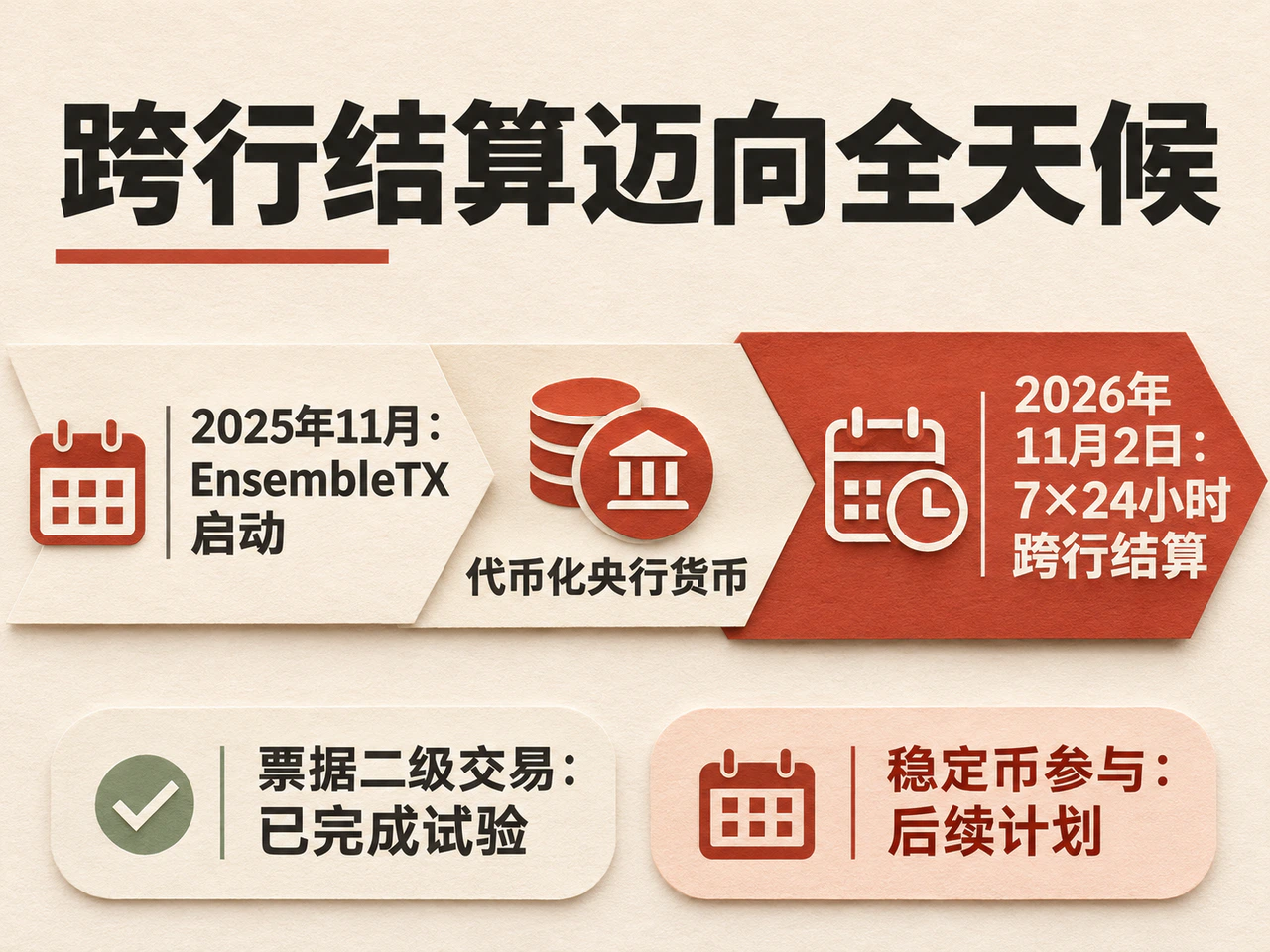
Launched in November 2025, EnsembleTX initially used the Hong Kong dollar Real Time Gross Settlement system to handle interbank settlement of tokenised deposits, enabling transactions involving real value within a controlled pilot. Corporate treasury management and trading in tokenised money market funds have emerged as use cases. The latest upgrade extends interbank settlement beyond traditional business hours, allowing participating institutions to settle funds promptly using tokenised central bank money.
For companies operating globally, the time lag between a transaction instruction and bank clearing directly affects cash management. Assets may be transferable around the clock, but if the cash leg is restricted to business hours, funds can become tied up while awaiting settlement. Round-the-clock interbank settlement puts companies in a better position to move liquidity as needed and makes it easier to synchronise asset delivery and payment in tokenised fund transactions. The actual savings in liquidity and time will still depend on the scale of adoption and participating institutions' business arrangements.
The HKMA also disclosed that it had completed a trial of secondary-market transactions in tokenised Exchange Fund Bills involving Recognised Dealers, exploring ways to improve the efficiency of secondary trading and repo transactions. It plans to extend the trial to regulated stablecoins soon. The two initiatives are at different stages: the bill trial has already involved actual transactions, while stablecoin participation remains a future step. Bringing bank deposits, tokenised central bank money and stablecoins into the same business workflow still requires the issuer, redemption terms and settlement rules for each to be clearly defined.
Standard Chartered Connects Corporate Treasury and Fund Settlement
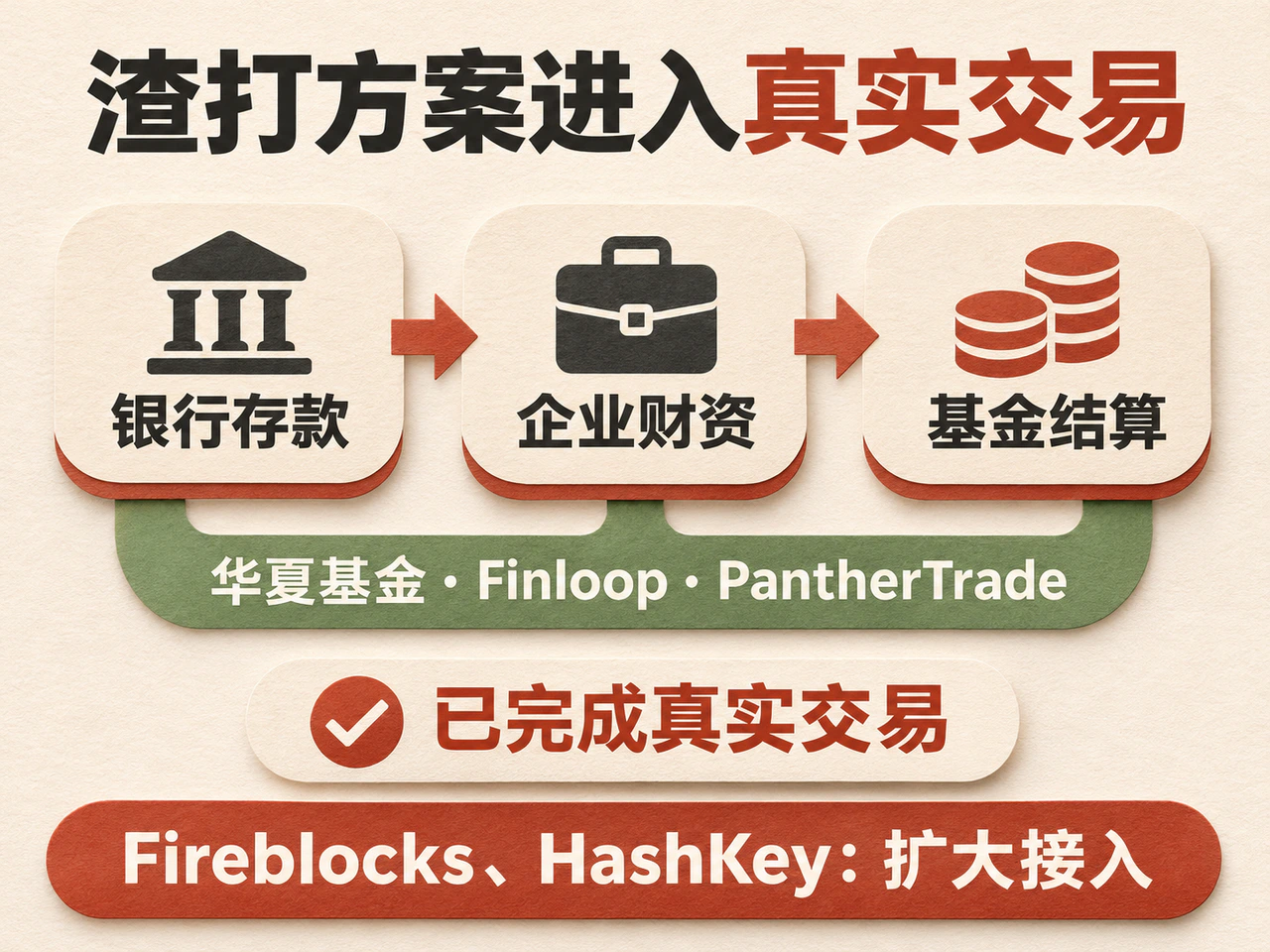
According to Standard Chartered's November 2 announcement, Hong Kong is the first market in the group to offer its tokenised deposit solution to corporate clients. Built on the bank's proprietary blockchain infrastructure, the solution is available to eligible clients. It allows them to use commercial bank deposits in digital treasury and investment workflows, including intragroup liquidity management. Through EnsembleTX, the solution enables real-time transfers between participating banks and round-the-clock settlement in central bank money.
Standard Chartered said China Asset Management, Finloop and PantherTrade had completed live transactions covering tokenised deposits and settlement of tokenised money market funds. The bank is also working with Fireblocks to connect banking services to its platform, while HashKey has joined the related ecosystem. These transactions show that the solution has entered actual use. Platform partnerships may broaden client access, but they do not yet establish that recurring transaction revenue has developed.
Such arrangements allow companies and investment institutions to keep holding funds as bank deposits while gaining programmable transfer capabilities and access to digital asset workflows. For banks, competition will gradually shift from whether they can offer tokenised deposits to how many accounts, trading platforms and asset management products they can connect. For fund managers and trading platforms, the availability of settlement tools will affect how conveniently clients can subscribe, redeem and trade in the secondary market.
With Participation Expanding, Sustained Transaction Volumes Are the Next Test
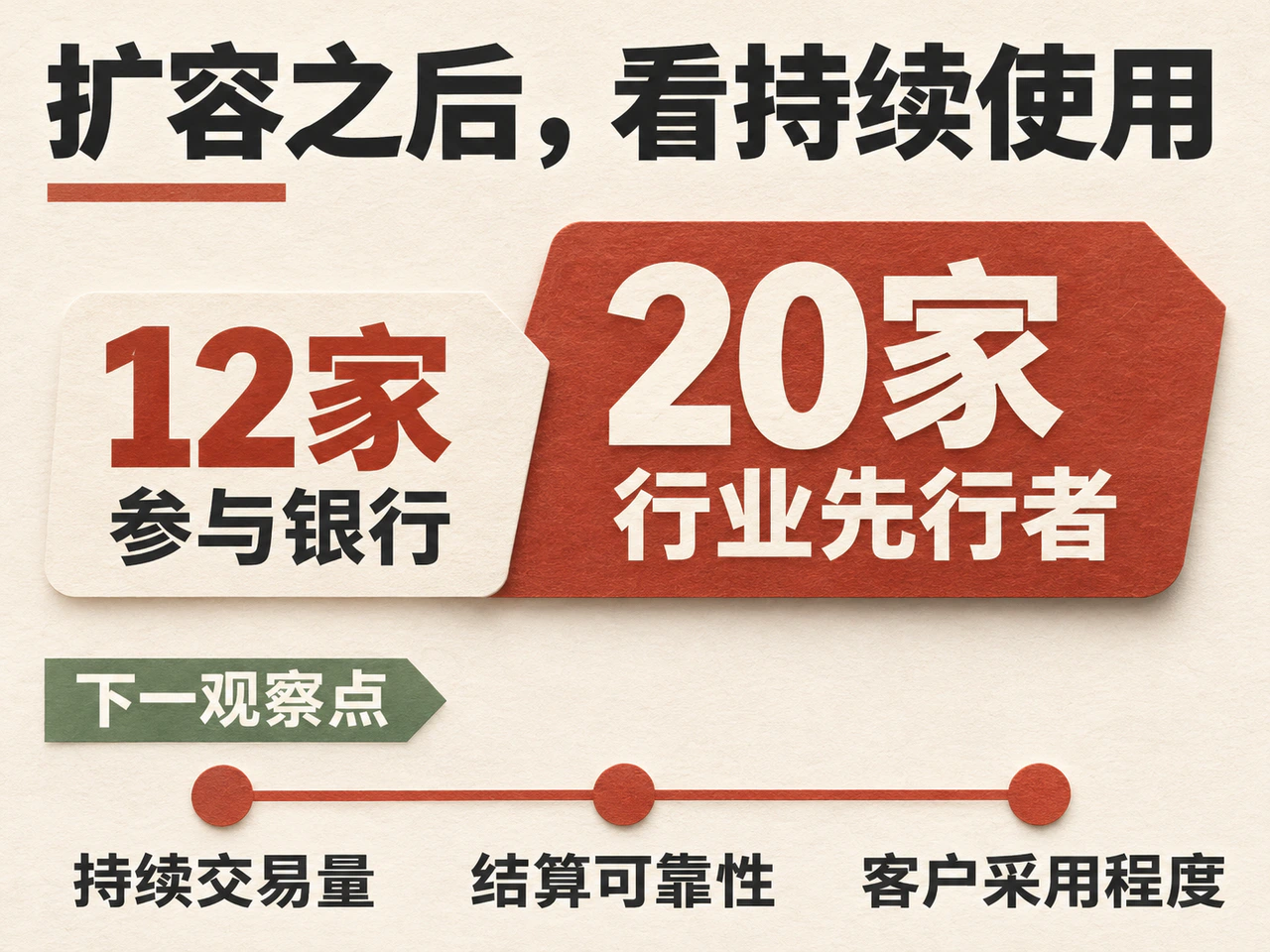
The key question in Hong Kong's latest progress is whether infrastructure capabilities can translate into recurring business: whether additional participants bring actual interbank transactions, whether fund settlement generates sustained demand, and whether the bill and stablecoin trials lead to clearly defined commercial arrangements. With participating banks and industry early adopters increasing to 12 and 20 respectively, the network's reach has expanded. Its economic value, however, will be determined by sustained transaction volumes, settlement reliability and client adoption.
Click “Read original” for further details.