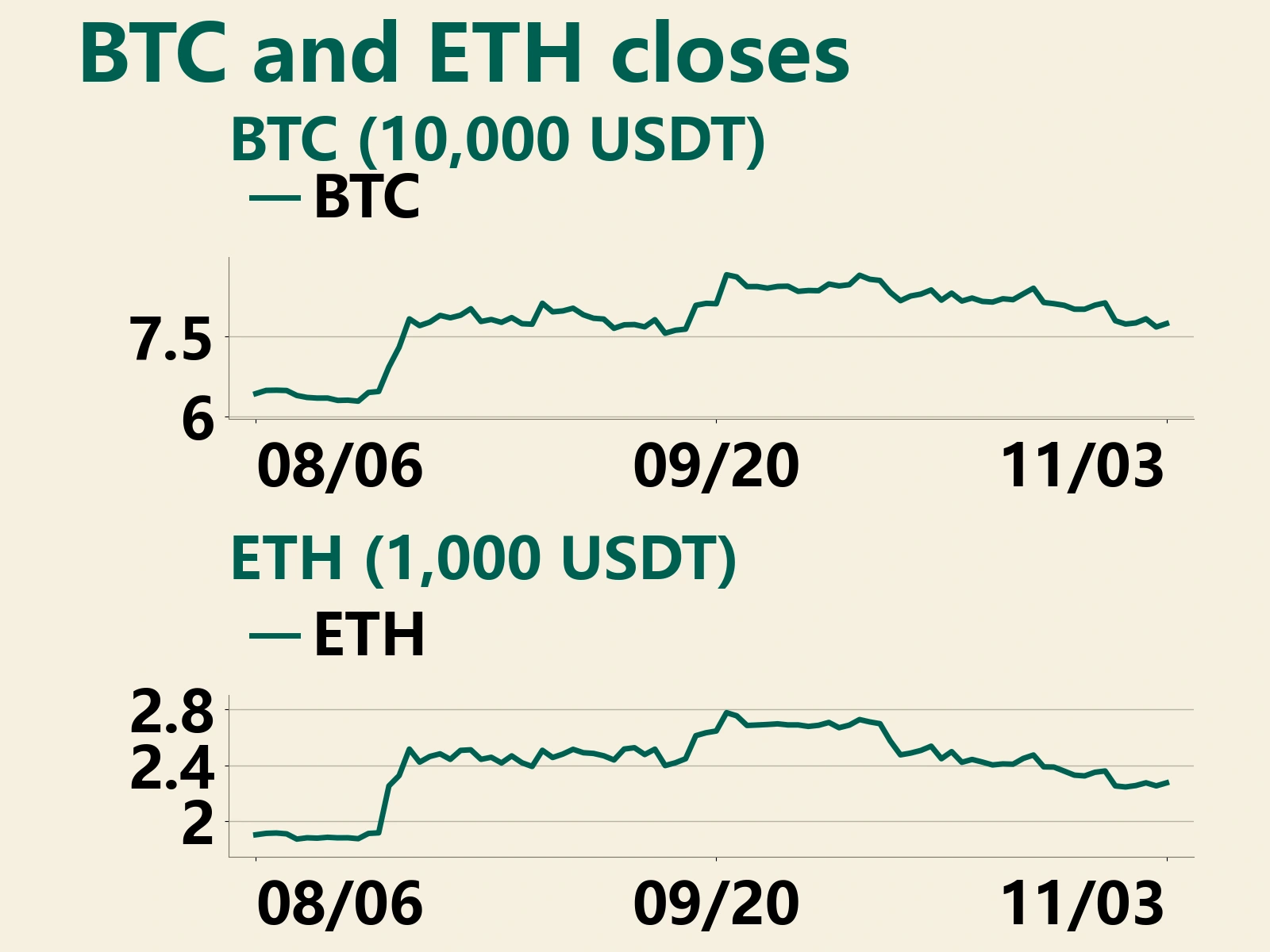
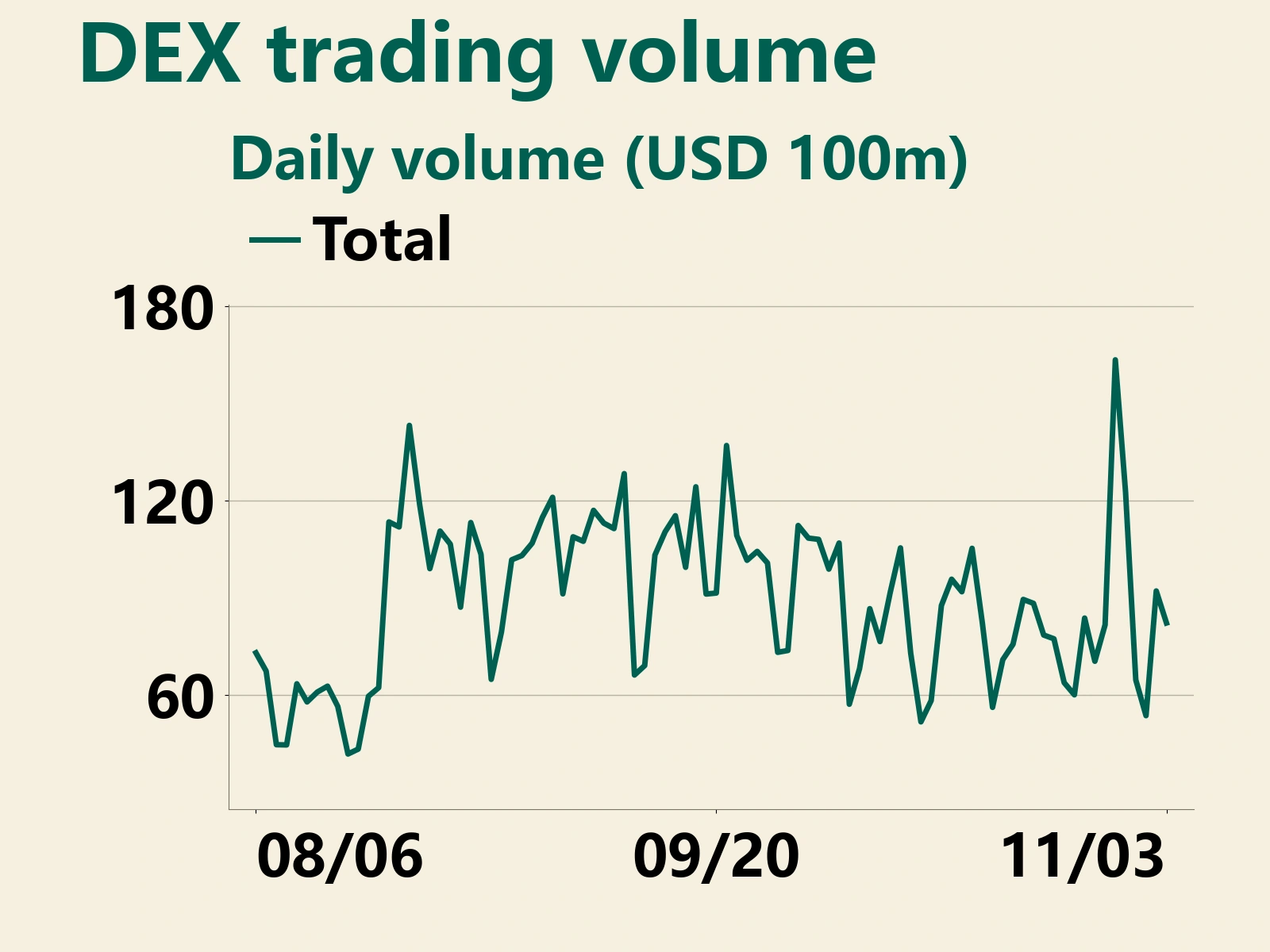
On November 2, U.S. spot Bitcoin and Ethereum ETFs recorded combined net outflows of $538.3 million. On November 3, the circulating face value of dollar-pegged stablecoins continued to decline. Meanwhile, open interest in Binance Ethereum perpetual futures recovered and funding rates rose markedly. Spot investment flows remain cautious, while derivatives have begun to regain their appetite for risk—the main divergence in the current funding picture.
Bitcoin ETFs Lose $1.04 Billion over Two Sessions; Stablecoin Supply Falls $1.1 Billion in a Day
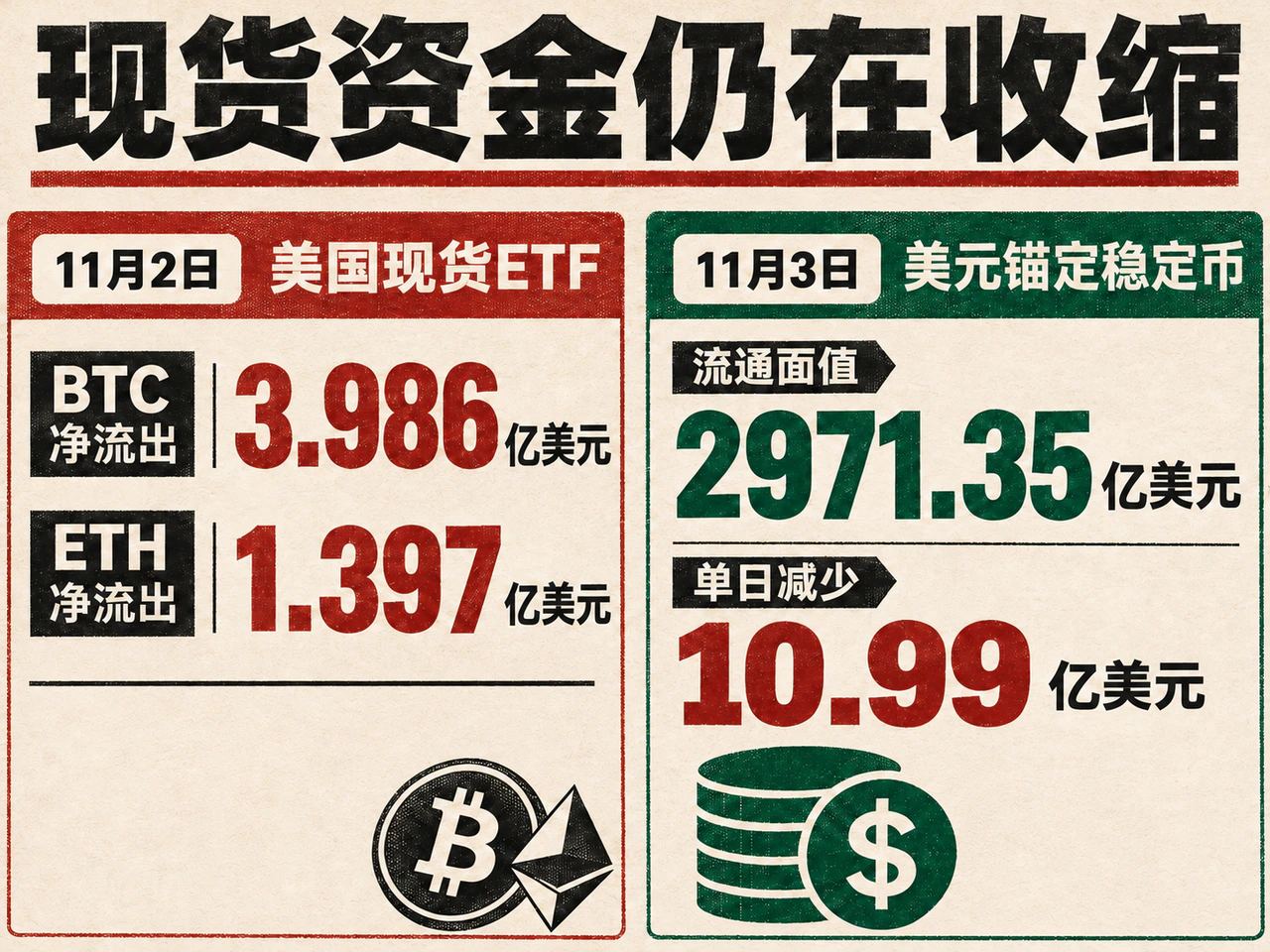
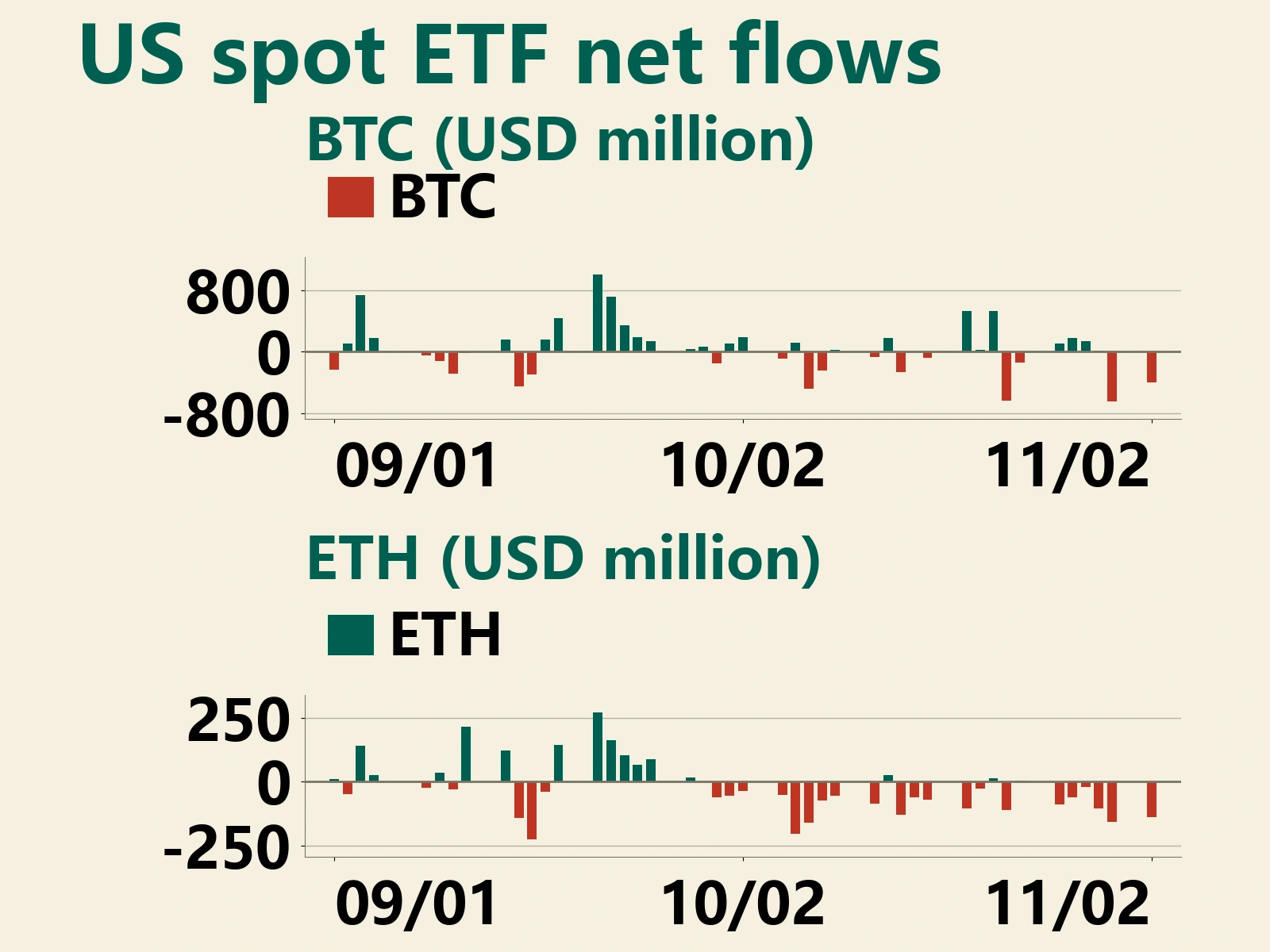
Farside data show that U.S. spot Bitcoin ETFs recorded net outflows of $398.6 million on November 2. BlackRock’s IBIT lost $405.3 million, partially offset by $6.7 million of inflows into Fidelity’s FBTC. This was the second outflow session following net redemptions of $643.2 million on October 30, bringing combined outflows over the two sessions to $1.0418 billion. Those redemptions more than erased the $440.8 million of combined inflows recorded from October 26 to 29.
Ethereum ETF outflows have been more persistent. Net outflows reached $139.7 million on November 2, following cumulative outflows of $431.4 million over the preceding five trading sessions, October 26–30. All six trading sessions from October 26 through November 2 therefore recorded outflows, totaling $571.1 million. ETHA accounted for most of the latest session’s redemptions, with $138.3 million in outflows.
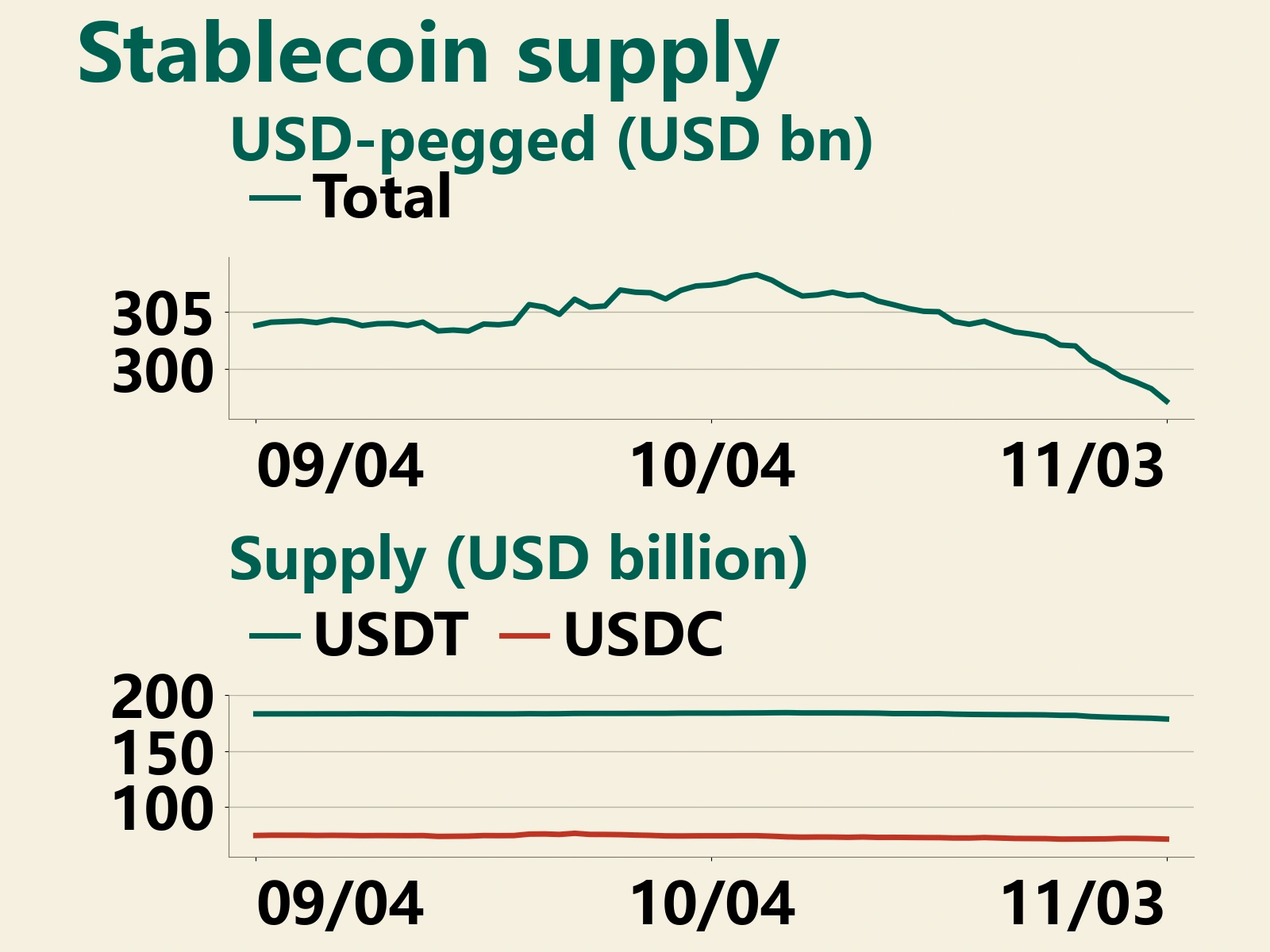
Stablecoin supply contracted alongside those fund flows. According to DefiLlama’s daily historical records, the circulating face value of dollar-pegged stablecoins stood at approximately $297.135 billion on November 3, down $1.099 billion from November 2 and $4.936 billion, or roughly 1.63%, from October 27. Measuring circulating supply at face value avoids distortions to market capitalization caused by changes in token prices.
USDT fell from $179.461 billion to $178.781 billion, a decline of $680 million; USDC fell from $71.647 billion to $71.282 billion, a decline of $365 million. Their combined $1.045 billion reduction accounted for most of that day’s supply contraction. Over the latest seven days, however, USDC was broadly unchanged while USDT declined by approximately $3.307 billion, showing that the adjustment has been uneven across stablecoins.
Net ETF outflows mean fund shares are being redeemed, pointing to weaker demand for spot investment exposure; a decline in stablecoin supply reflects a net contraction in dollar-denominated tokens onchain. Together, these indicators suggest weak replenishment of spot-market funding. Stablecoins also serve payment, settlement and collateral functions, so their outstanding supply does not translate one for one into funds available to buy crypto. But with spot investment demand subdued, a continued decline in supply means a price recovery depends more heavily on the turnover of existing capital than on a steadily expanding pool of funds.
Ethereum Perpetual Open Interest Rises; Options Implied Volatility Climbs
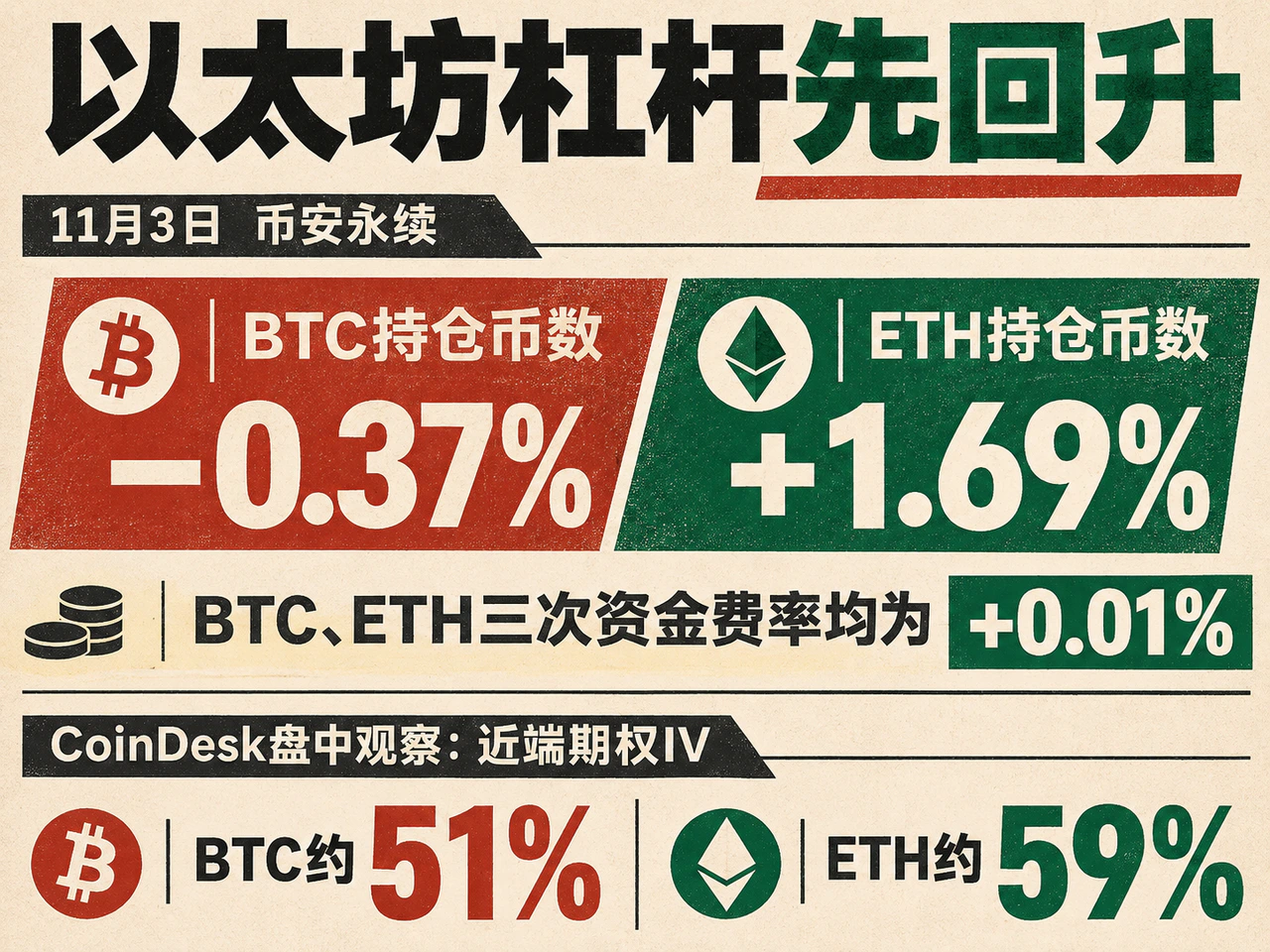
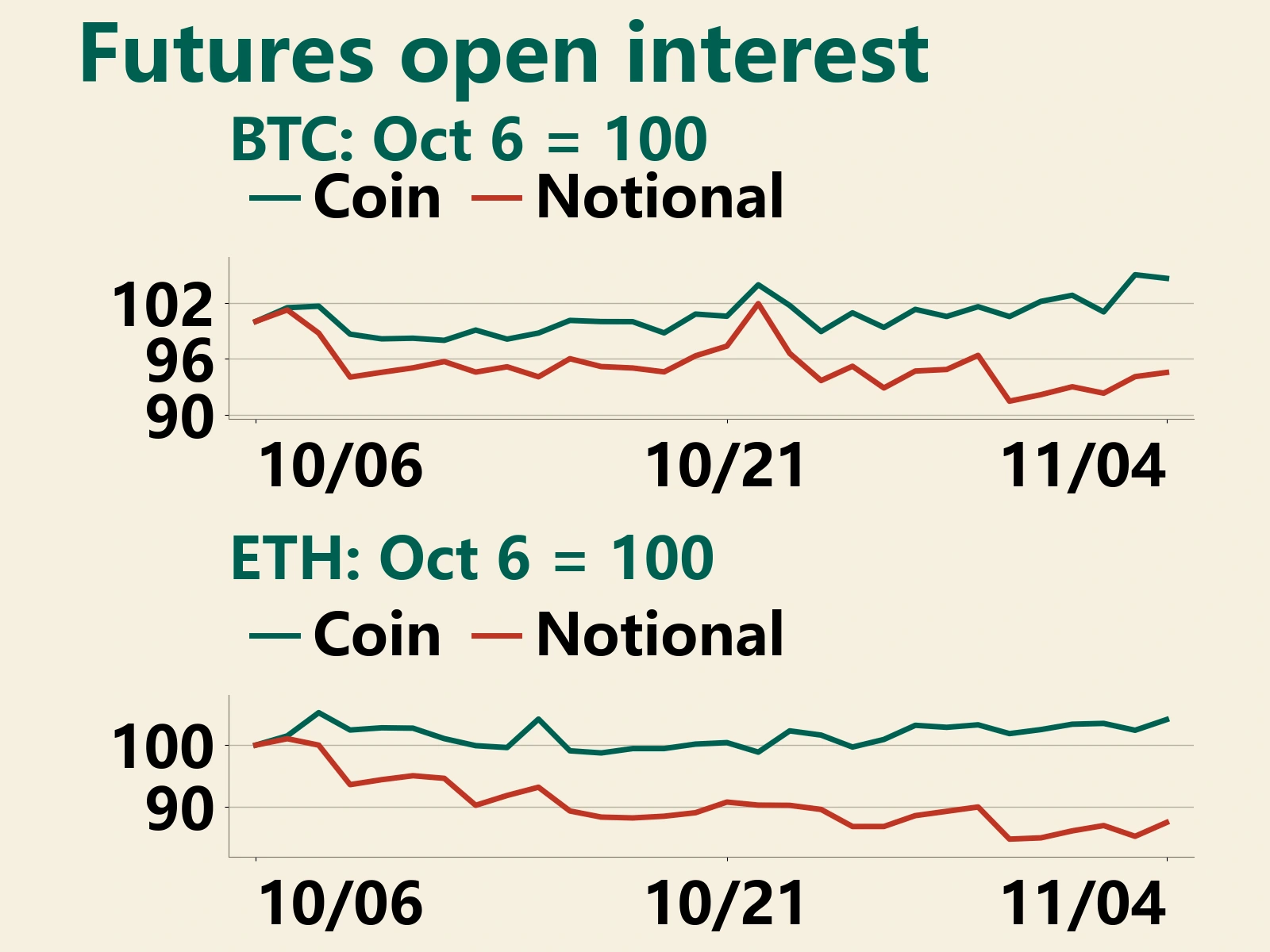
On a consistent snapshot basis using Binance’s UTC daily boundary, BTCUSDT perpetual futures open interest fell from 99,017.52 BTC to 98,654.13 BTC on November 3, a decline of 0.37%. Notional value rose from 7.604 billion USDT to 7.640 billion USDT, an increase of 0.48%. Higher contract prices lifted notional value even as open interest measured in coins contracted slightly.
ETHUSDT perpetual futures followed a different pattern: open interest rose from 2.3344 million ETH to 2.3739 million ETH, an increase of 1.69%, while notional value rose from 5.259 billion USDT to 5.397 billion USDT, up 2.63%. The expansion in Ethereum positions exceeded the contribution from price revaluation alone. These figures cover the corresponding Binance perpetual contracts. Open interest encompasses both long and short positions, including hedging demand, and reflects increased exposure in the contract market rather than a single directional view.
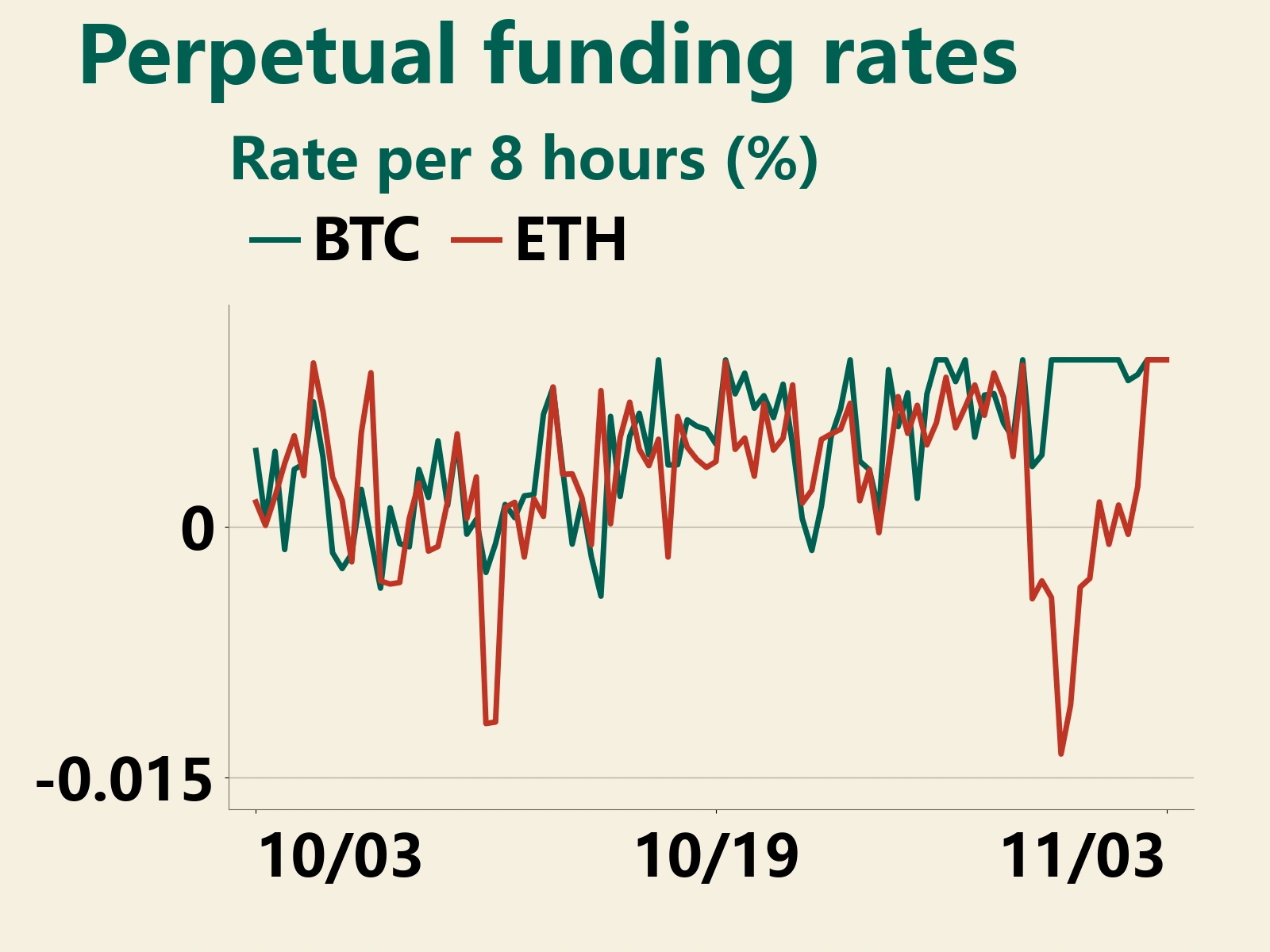
The cost of holding long positions also increased. On November 3, Bitcoin and Ethereum funding rates were each positive 0.01% at all three settlement times—00:00, 08:00 and 16:00 UTC—meaning longs paid shorts. Bitcoin’s combined rate across the three settlements rose from approximately 0.0279% the previous day to 0.0300%; Ethereum’s rose more sharply, from approximately 0.0033% to 0.0300%. Expanding Ethereum open interest alongside higher payments by longs indicates a greater willingness to take part through leverage.
Options markets continued to price in near-term volatility. CoinDesk’s intraday report on November 3 put near-term Bitcoin options implied volatility at approximately 51%, up from approximately 43.5% in its observation the previous day; near-term Ethereum implied volatility was approximately 59%. All six Ethereum options contracts with the highest trading volumes over the preceding 24 hours in the report were puts, as were four of the six Bitcoin contracts. Higher near-term implied volatility and trading concentrated in puts indicate that demand for short-term protection remains strong, with correspondingly higher hedging costs.
These signals point to an uneven recovery: Ethereum perpetual positions and the cost of holding them are rising first, while fund investment flows and the onchain dollar supply continue to contract, and options participants continue to pay for protection. If ETFs return to net inflows and stablecoin supply stops declining, new positions will have firmer support from spot demand. If leverage alone continues to increase, prices will remain more sensitive to unexpected news and position adjustments.
Click “Read the original” for further details.