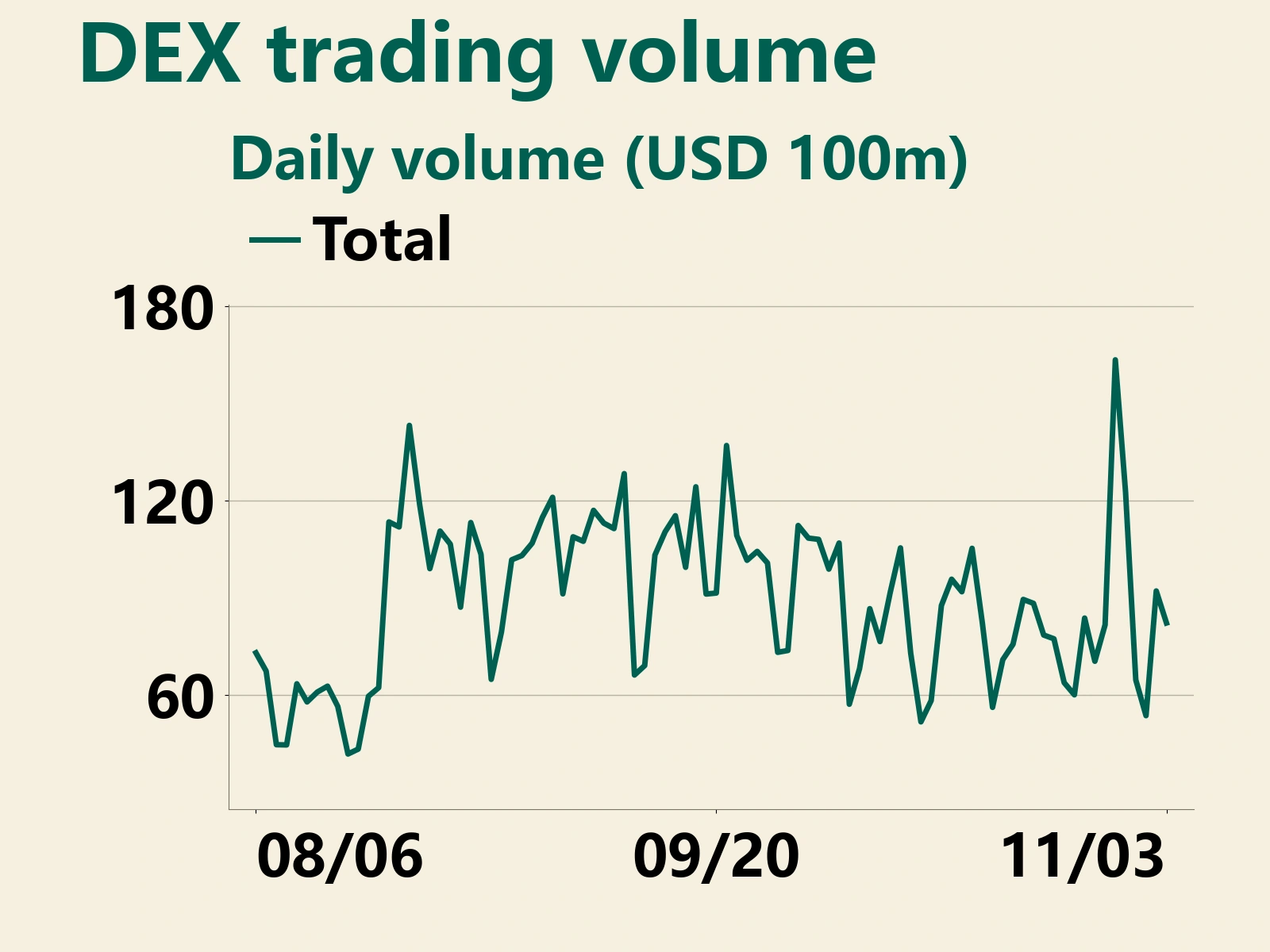
On November 3, 2026, trading volume on decentralized spot exchanges (DEXs) tracked by DefiLlama fell to $8.215 billion, down 10.75% from the previous UTC day. The reporting period ran from 8 a.m. on November 3 to 8 a.m. on November 4, 2026 (UTC+8), covering the full November 3 UTC daily session. The decline was uneven across networks: volume on Base nearly halved, while Ethereum and Solana recorded smaller decreases. Meanwhile, lending application Aave saw both user fees and protocol revenue rise. Trading activity and the operation of outstanding lending positions diverged. Looking only at aggregate trading volume can obscure the different ways on-chain businesses earn revenue.
Base Volume Falls 45.22%, Accounting for Roughly Three-Quarters of the Industry-Wide Decline
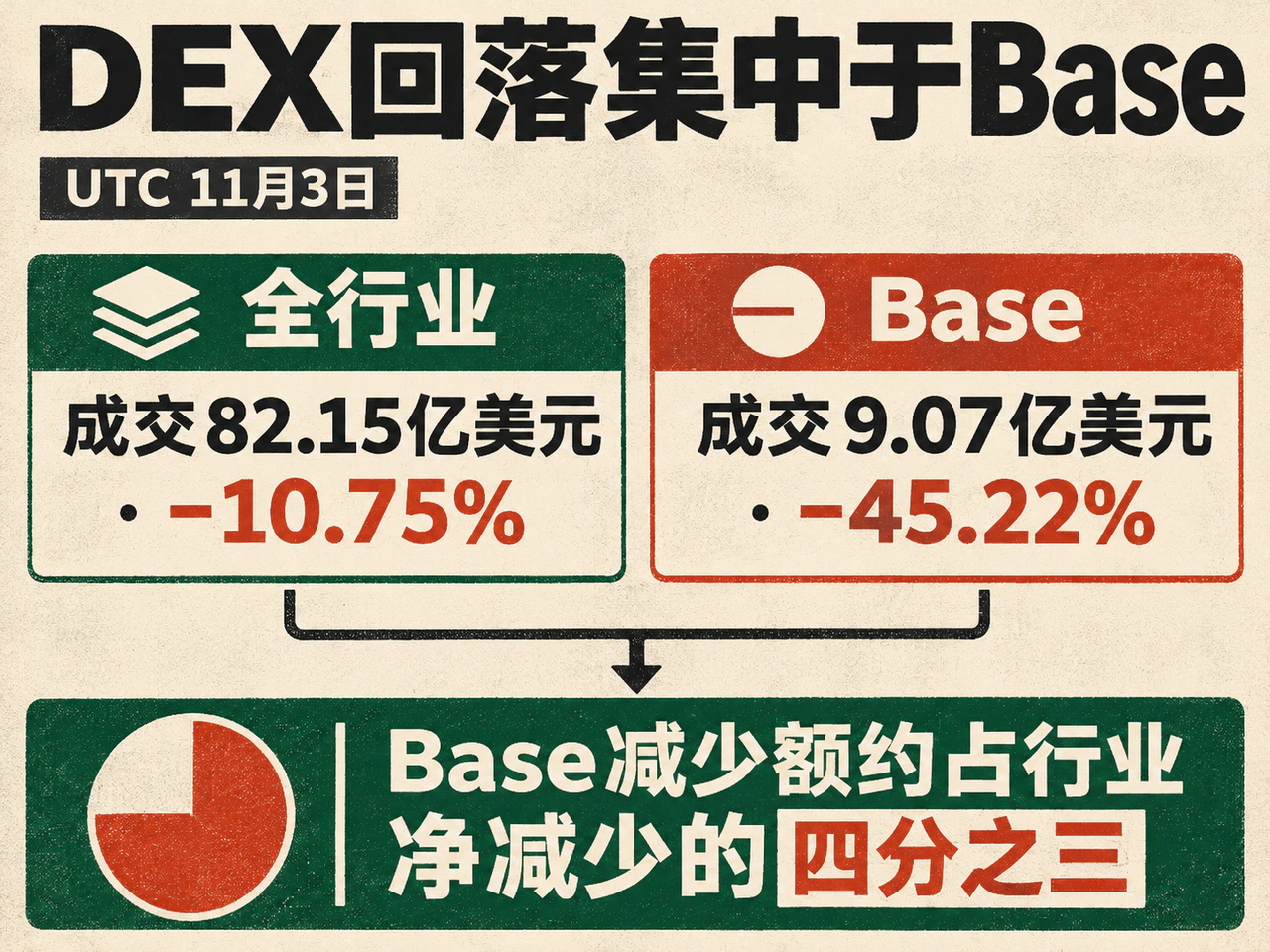
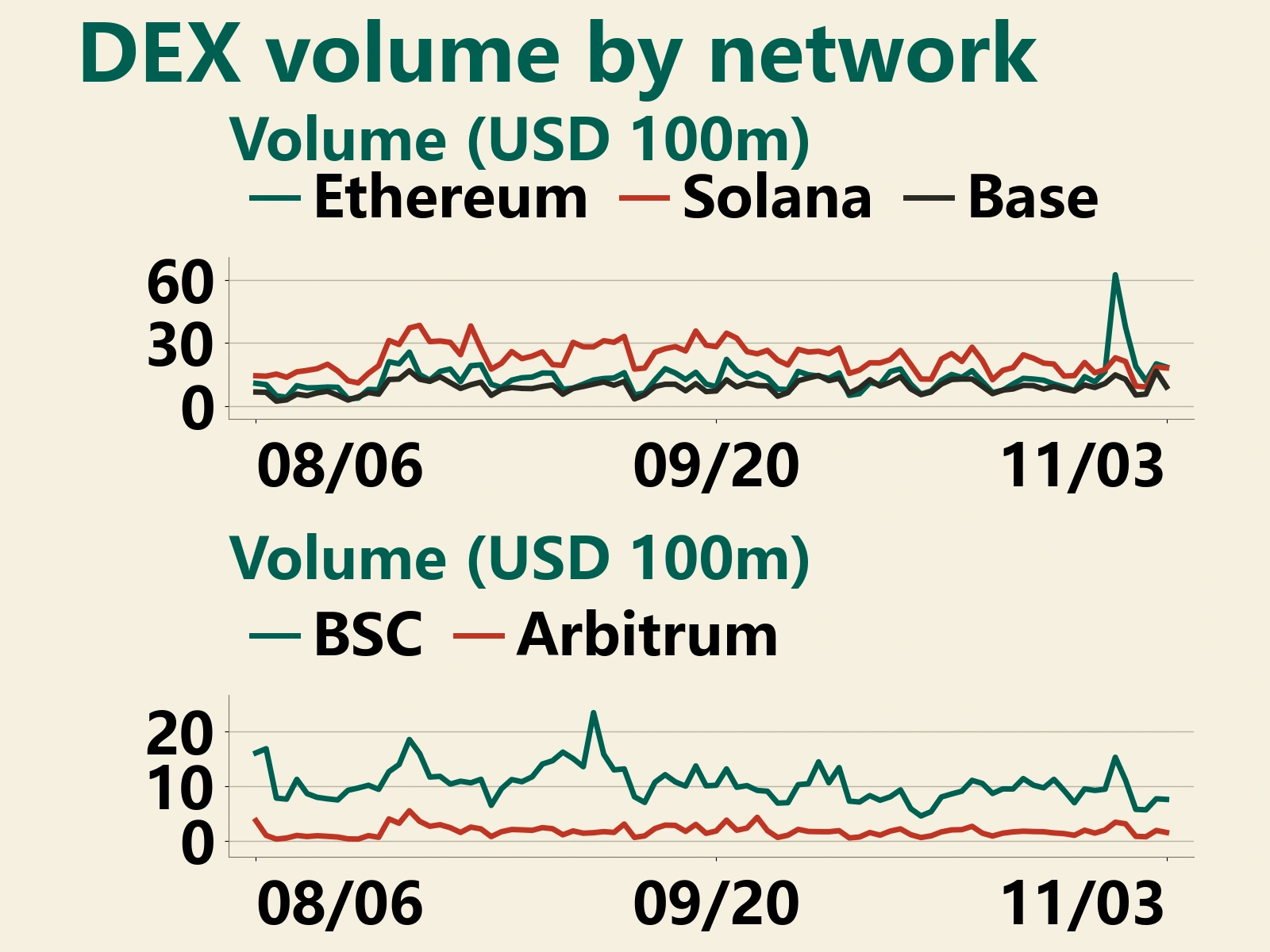
DEX volume on Base fell from $1.655 billion on November 2 to $907 million on November 3, a decline of 45.22%. Industry-wide volume decreased by approximately $990 million over the same period, of which Base accounted for around $748 million, or three-quarters of the total reduction. The day's decline was therefore heavily concentrated on Base. This primarily reflects a change in the distribution of trading volume, however, and is not sufficient on its own to establish a broad weakening in trading demand.
Ethereum recorded daily volume of $1.852 billion, down 7.72%; Solana recorded $1.810 billion, down 2.32%; and BNB Chain recorded $761 million, down 1.45%. Arbitrum, another Ethereum scaling network, recorded $159 million, down 18.88%. The major networks in the sample moved in the same direction, but the size of their declines varied sharply. Base's volatility amplified the industry's day-over-day change.
Over a longer period, industry-wide volume on November 3 was almost identical to the daily average of approximately $8.214 billion for the preceding 30 complete days. Base's $907 million was also slightly below its average of approximately $975 million over that period. Following the previous day's surge in volume, trading activity returned to a range commonly seen in recent weeks. A single day's decline provides little basis for describing industry demand as being in a sustained collapse.
Anchorpoint Plans to Support Native HKDAP Minting and Redemption on Solana
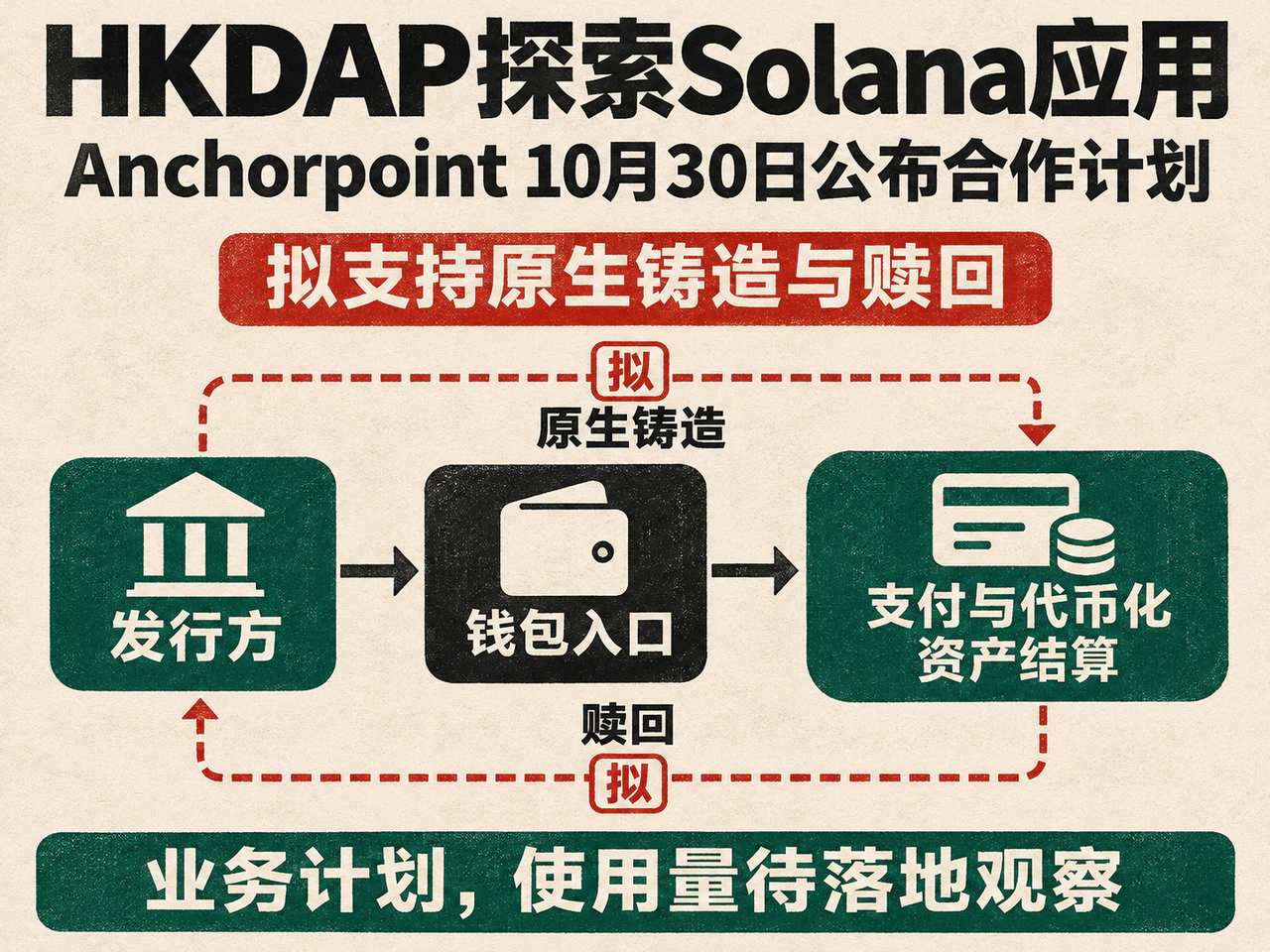
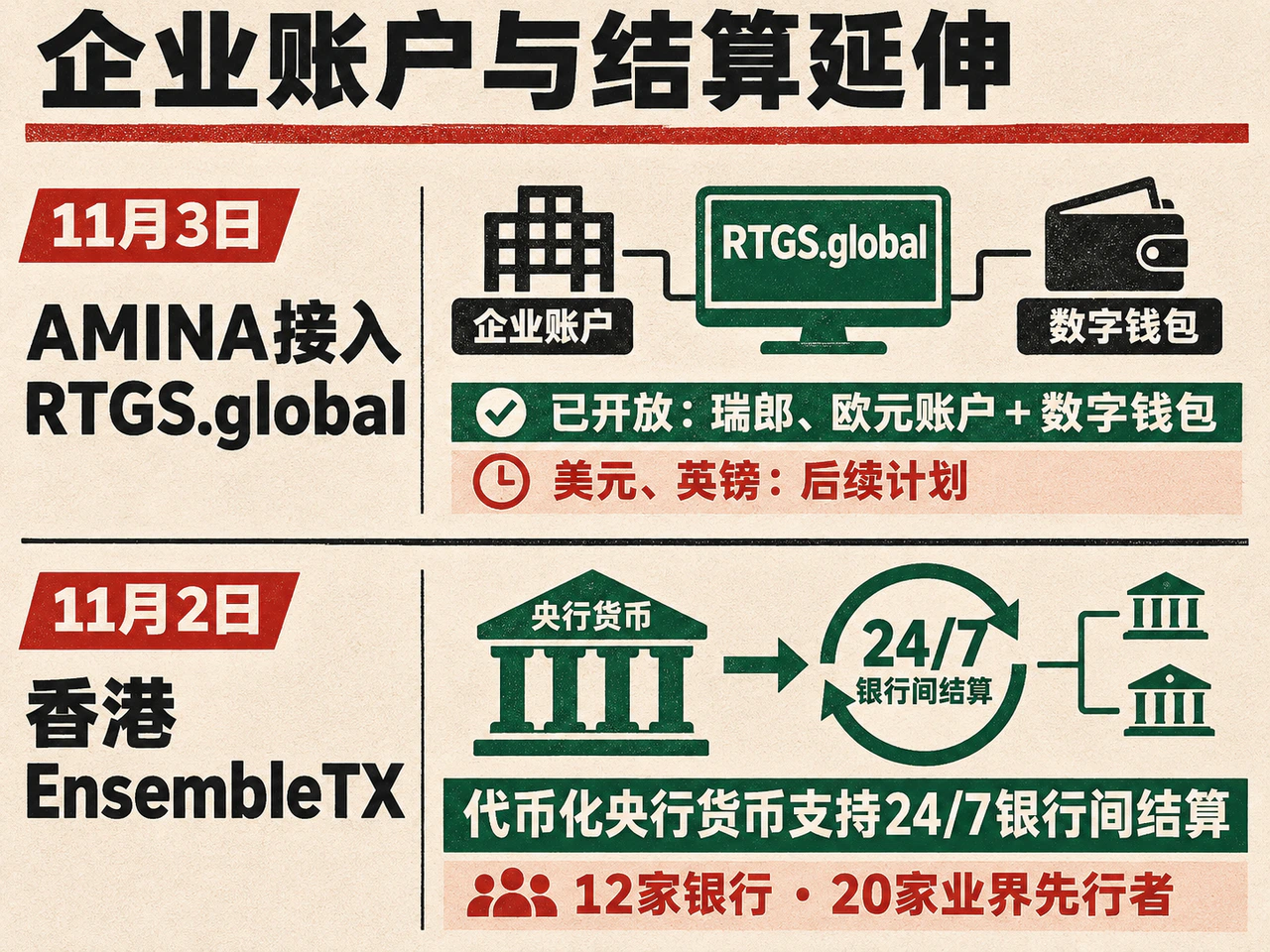
Payments and the settlement of tokenized assets are progressing along a different path. On October 30, Anchorpoint announced a collaboration with the Solana Foundation, with plans to support the native minting and redemption of its Hong Kong dollar stablecoin, HKDAP, on Solana for retail payments, transactions in tokenized real-world assets, and other high-frequency uses. This remains a business development plan; actual usage will need to be assessed after the product launches.
Such arrangements connect issuance and redemption, wallet access, and asset settlement. For participants requiring Hong Kong dollar-denominated settlement, the key question is whether funds can enter conveniently, be used for payments, and exit through redemption. DEX volume depends on willingness to trade assets, while payment settlement depends on merchants, wallets, and asset issuers developing practical use cases. The two types of demand share underlying networks, but may not rise and fall with the same trading cycle.
Aave User Fees Recover, While Protocol Revenue Remains Near Its 30-Day Average
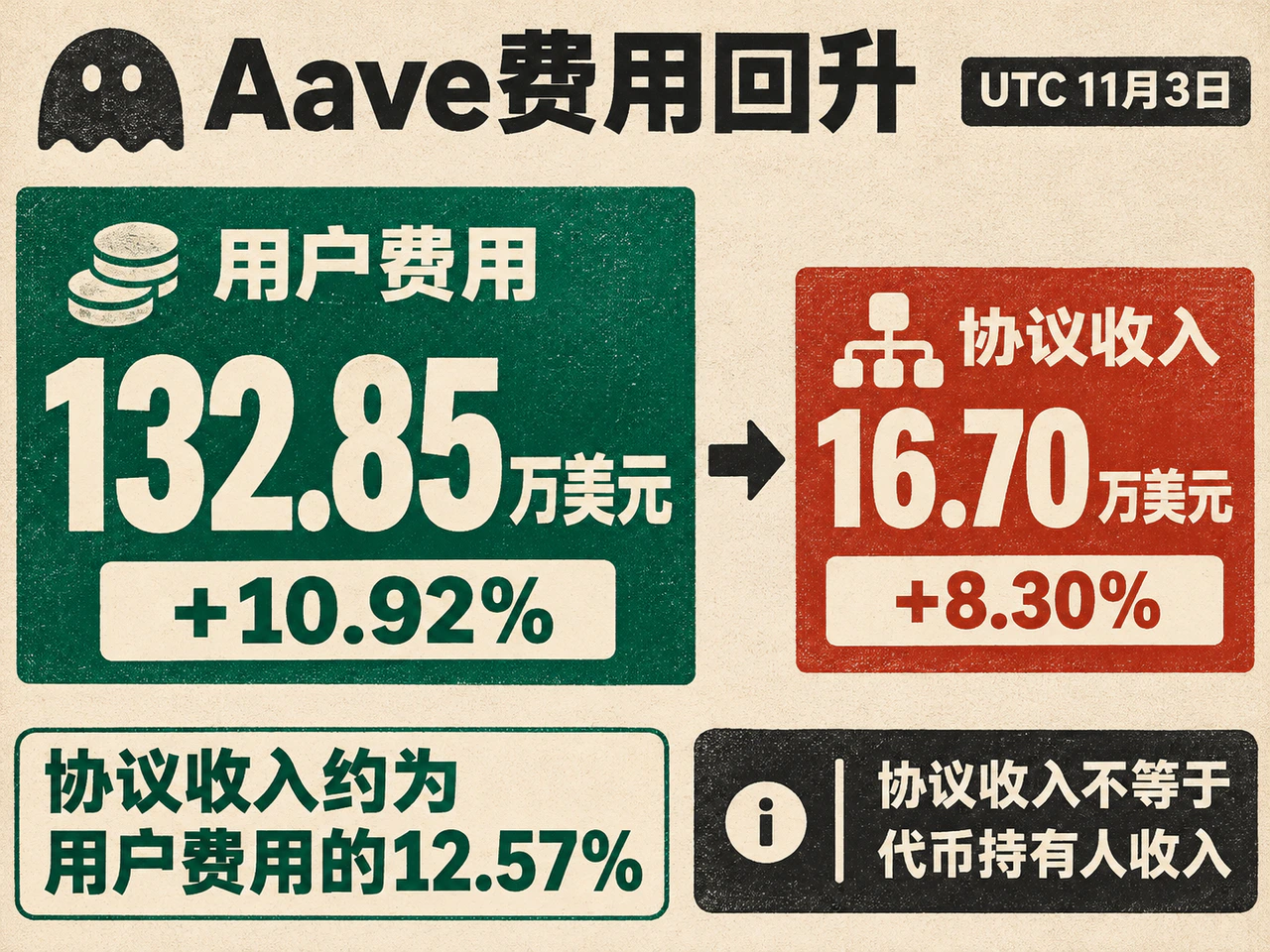
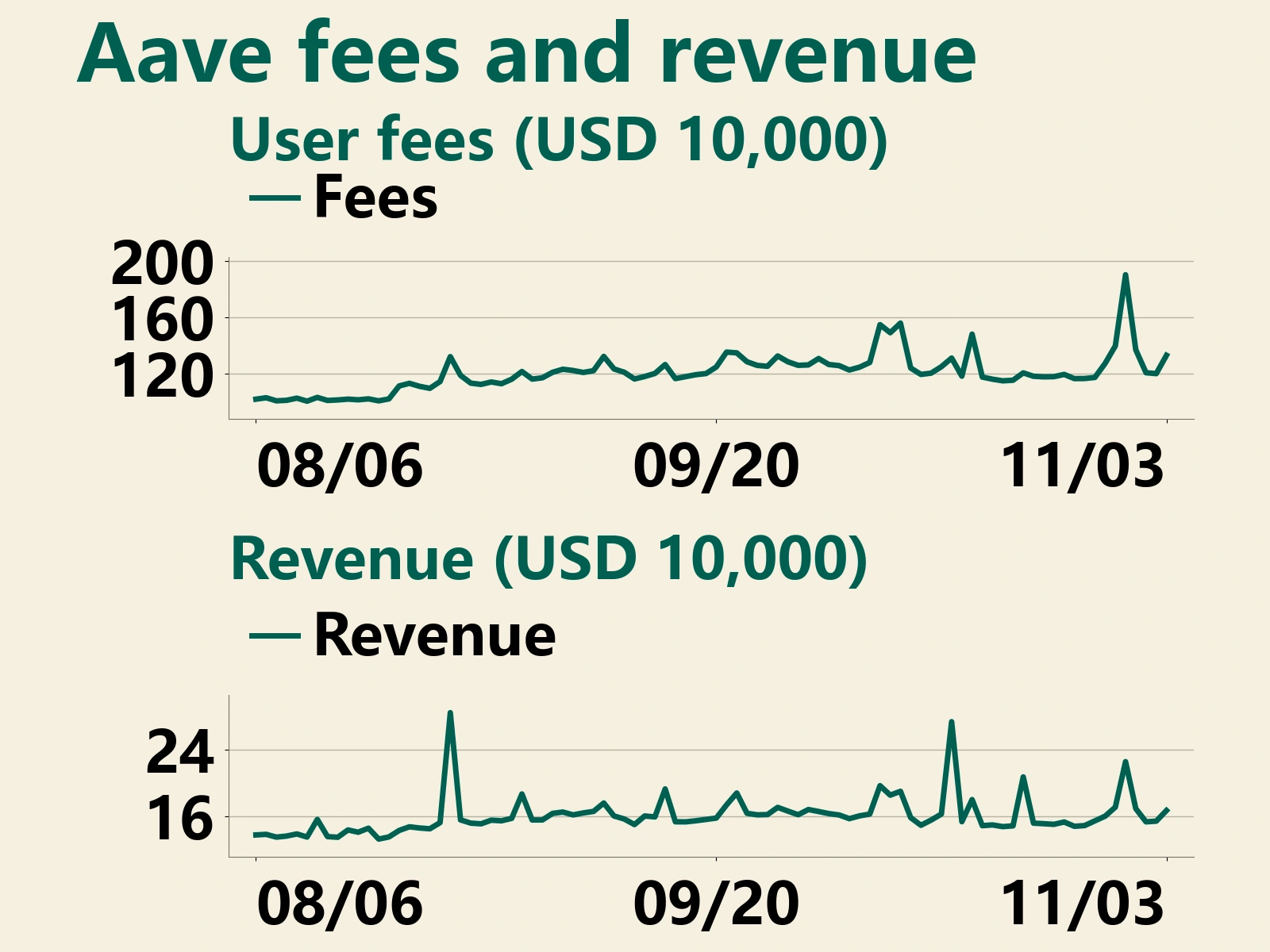
Aave offers an operating example that differs from spot trading. On November 3, Aave user fees tracked by DefiLlama totaled approximately $1.3285 million, up 10.92% from $1.1978 million the previous day. Protocol revenue was approximately $167,000, up 8.30% from $154,200. Lending fees grew on the same day that DEX turnover cooled.
These two measures need to be read separately. User fees measure the total amount users pay to access a service. Protocol revenue is the portion retained by the protocol after deducting amounts distributed to liquidity providers and other participants. Based on that day's figures, Aave's protocol revenue was approximately 12.57% of user fees. The measures differ in both scope and growth rate. Treating all fees paid by users as earnings retained by the protocol would overstate its value capture. Revenue distribution arrangements also stand between protocol revenue and the income token holders actually receive.
The day-over-day improvement also needs historical context. Over the preceding 30 complete days, Aave's average user fees were approximately $1.2784 million, and its average protocol revenue was approximately $167,400. User fees on November 3 were above that average, while protocol revenue was essentially in line with it. The day's figures therefore look more like a recovery within normal operating fluctuations than confirmation of a sustained improvement in profitability.
Lending demand can come from borrowing positions that remain open over time. Fees depend on the amount borrowed, borrowing costs, and revenue distribution rules. When spot turnover falls, interest expense may continue as long as borrowing remains outstanding. The day's data support the observation that trading activity and lending operations can move independently. Explaining whether Aave's growth came from increased borrowing or changes in rates would require a corresponding breakdown.
From trading across different chains to lending, payments, and real-world asset settlement, the core differences among on-chain businesses concern who continues to use the service, whom they pay, and who ultimately retains the revenue. The next points to watch are whether elevated DEX volume can persist, whether recovering lending fees can translate into more stable protocol revenue, and whether new settlement channels generate repeat usage after launch. Trading volume indicates activity; sustained payments and an appropriate distribution of revenue determine how much operating value an application can accumulate.
Click “Read original” for the full details.