On November 3, 2026, Binance co-CEO Richard Teng said at Hong Kong FinTech Week that withdrawals from the platform had largely returned to normal and that 95% of the affected tokens had been replenished. Extreme concerns following the earlier security incident eased somewhat, while the crypto market recovered on U.S. midterm election day. Yet the rebound in major coins came without an increase in turnover, leaving a gap between the easing of platform risk and fresh capital allocation. All prices below are for Binance spot pairs quoted in USDT, using UTC daily candles. The trading session ran from 8 a.m. on November 3 to 8 a.m. on November 4, 2026, Beijing time.
Six of Seven Coins Rise, but Turnover Falls Across the Board; BNB Edges Lower
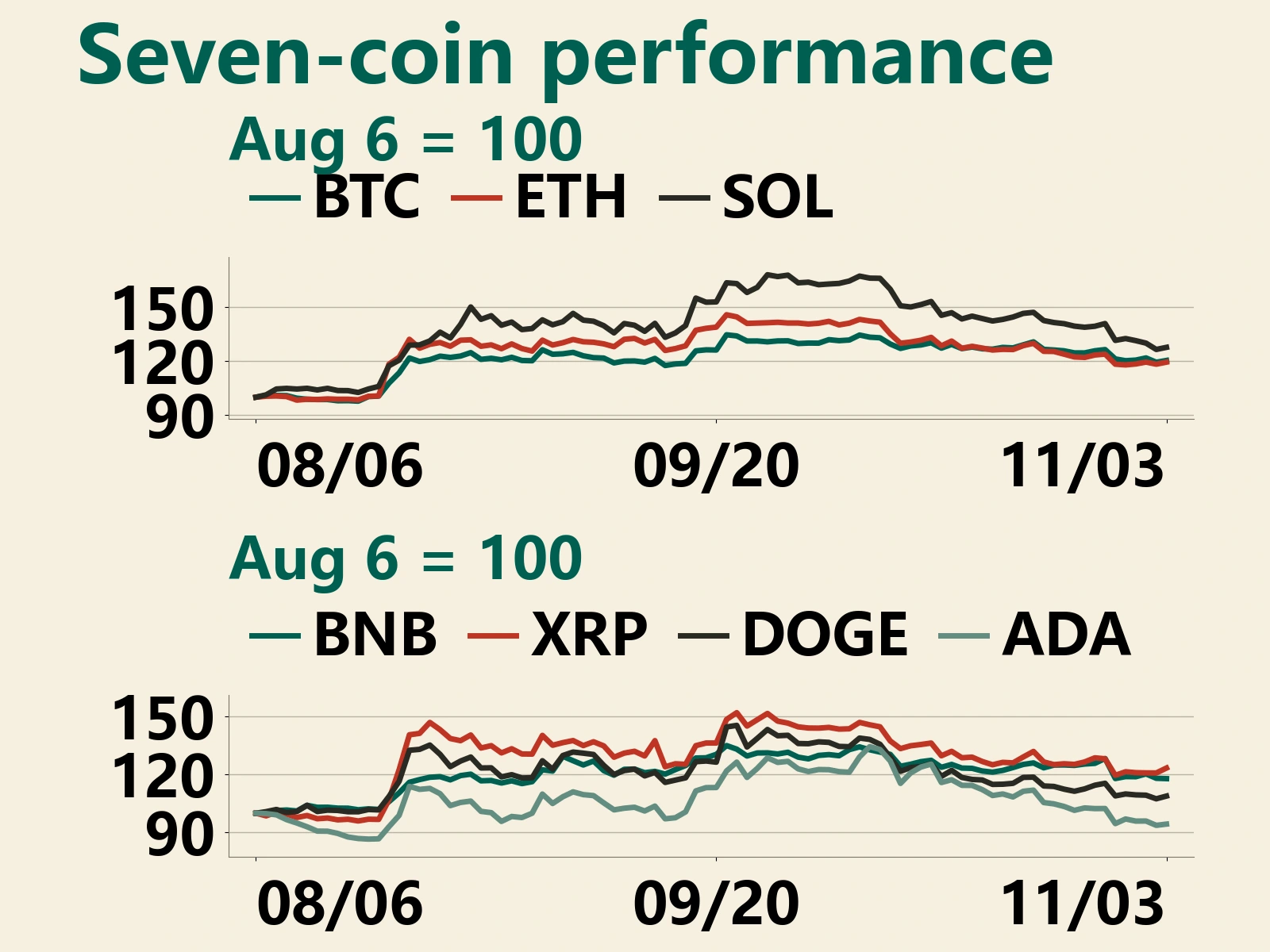
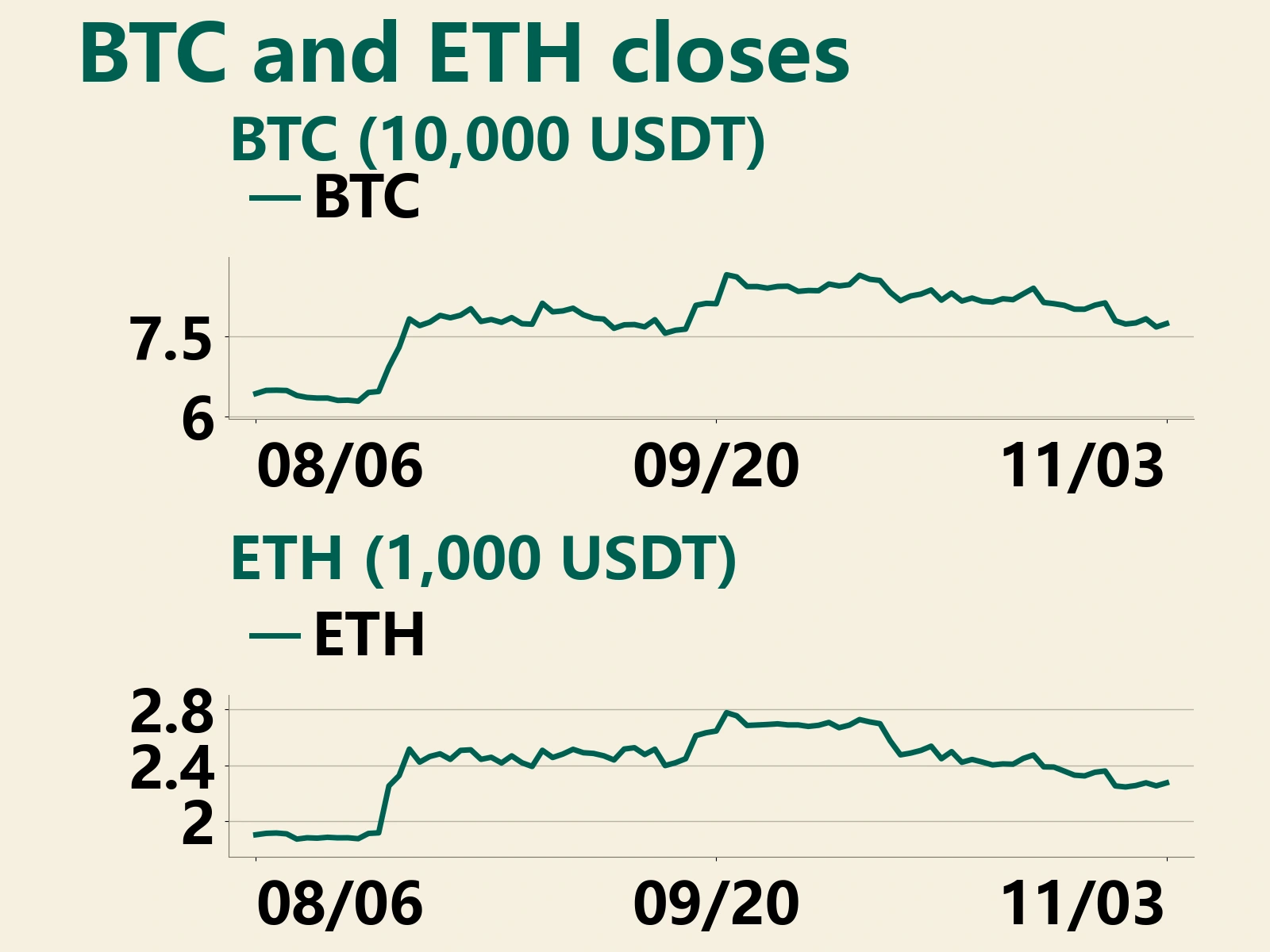
At 8 a.m. Beijing time on November 4, Bitcoin's UTC daily candle closed at 77,453.86 USDT, up 0.83% from the previous daily close. Ether closed at 2,274.77 USDT, up 0.95%. During that UTC trading day, Bitcoin traded between 76,388.88 and 78,063.30 USDT, while Ether ranged from 2,241.15 to 2,309.00 USDT. Both closed below their intraday highs and had yet to establish a sustained advance.
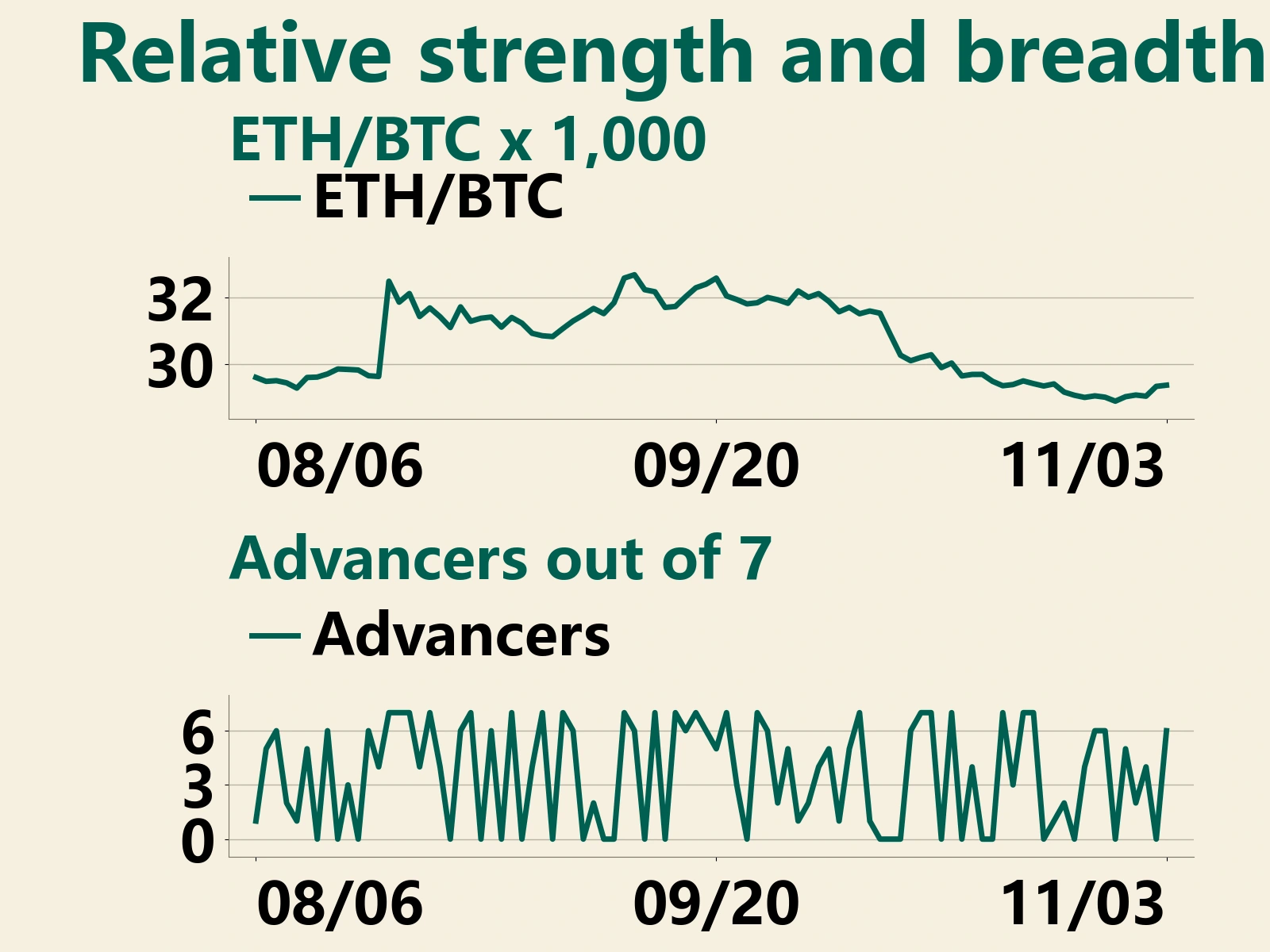
Six coins in the fixed seven-coin sample rose, after all seven had fallen the previous day. XRP led with a 2.12% gain, followed by DOGE at 1.32%; SOL and ADA rose 0.92% and 0.69%, respectively. BNB fell 0.16% to close at 698.14 USDT.
BNB's underperformance warrants attention. Binance's replenishment of assets and restoration of withdrawals for more tokens help ease users' concerns about access to their funds. Yet the token more closely associated with the platform still failed to join the sample's advance. A single day's divergence cannot establish all the causes, but it suggests that a halt in the broader industry's price decline and a recovery in confidence in the platform may proceed at different speeds.
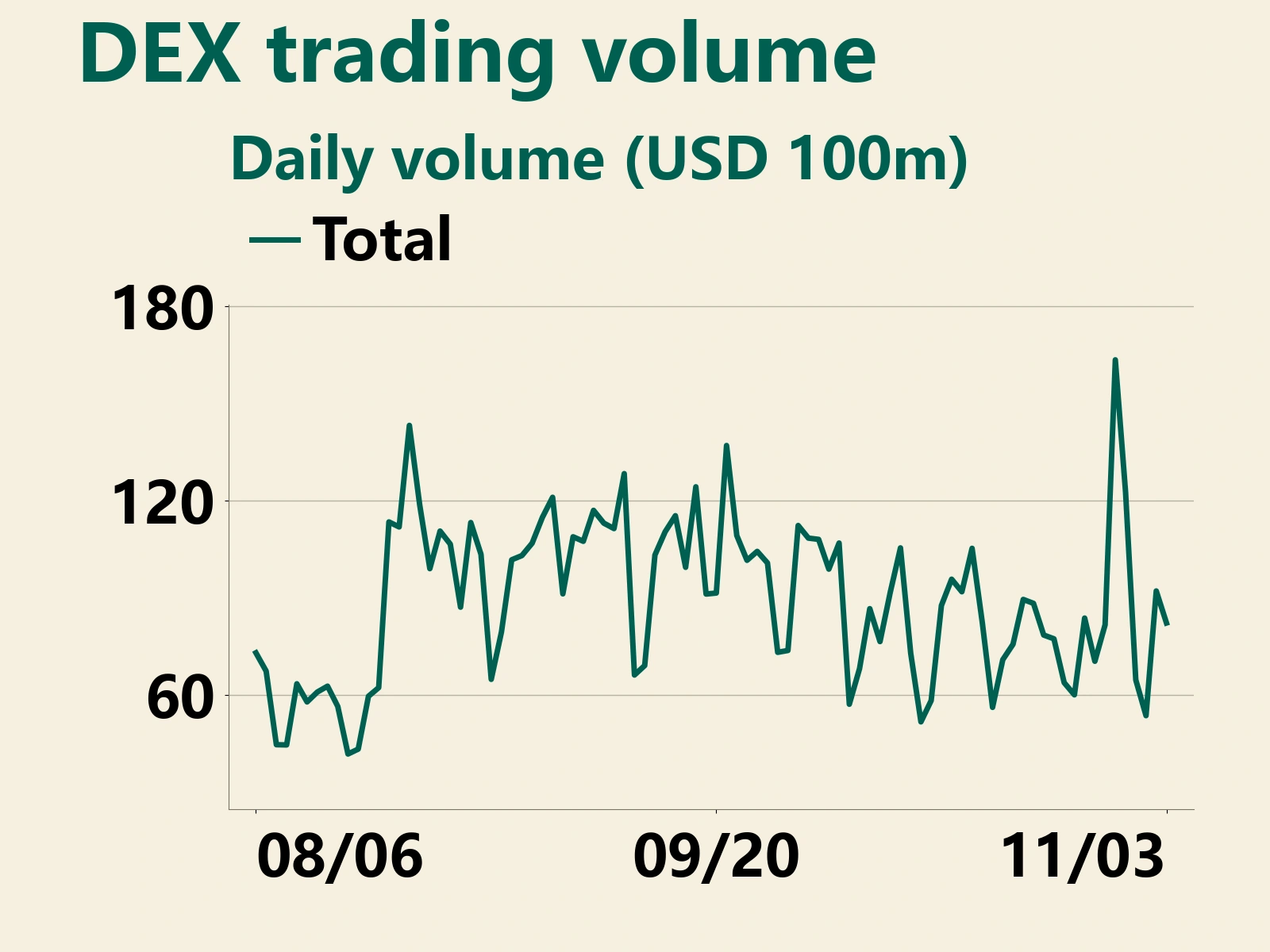
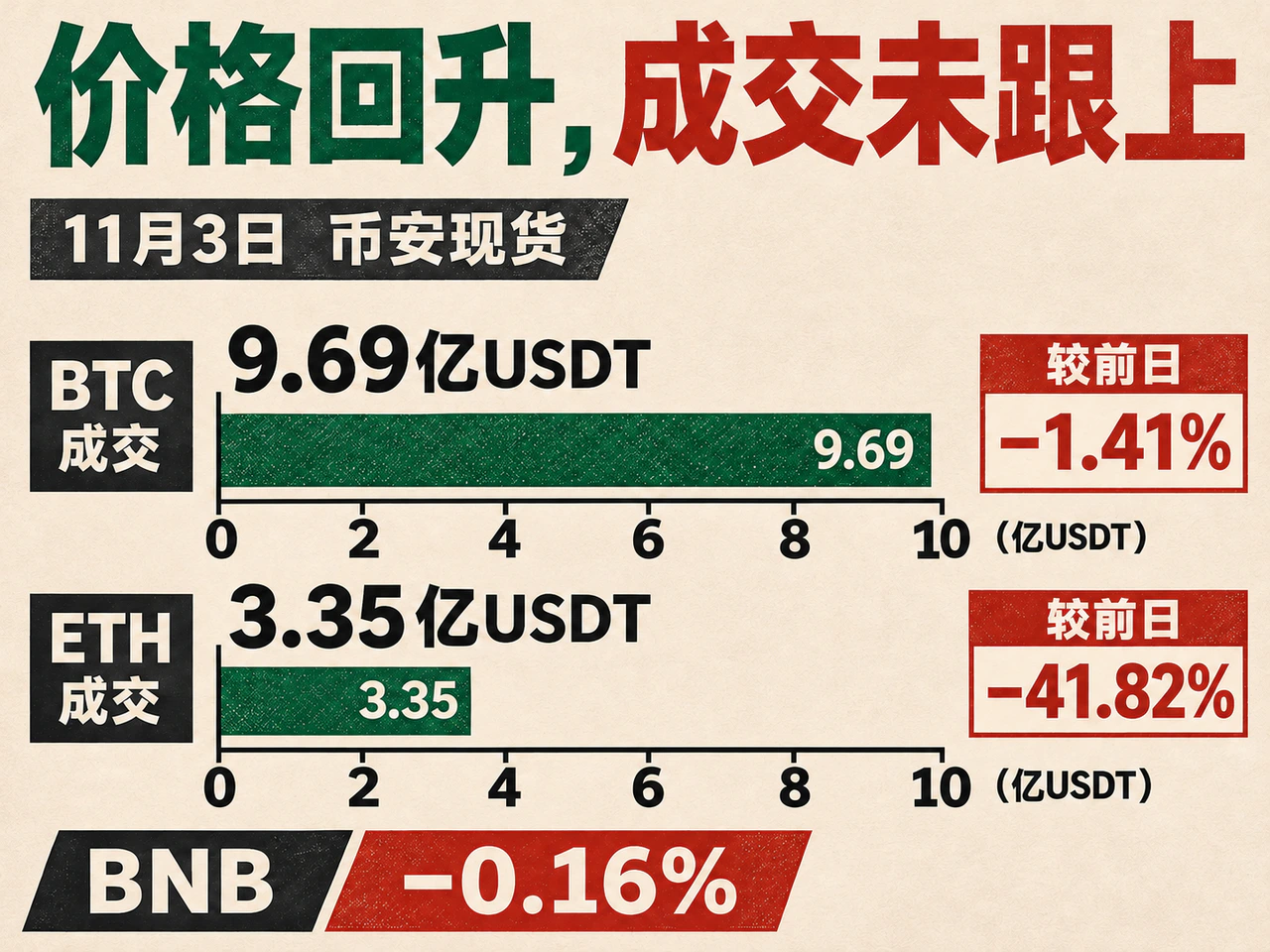
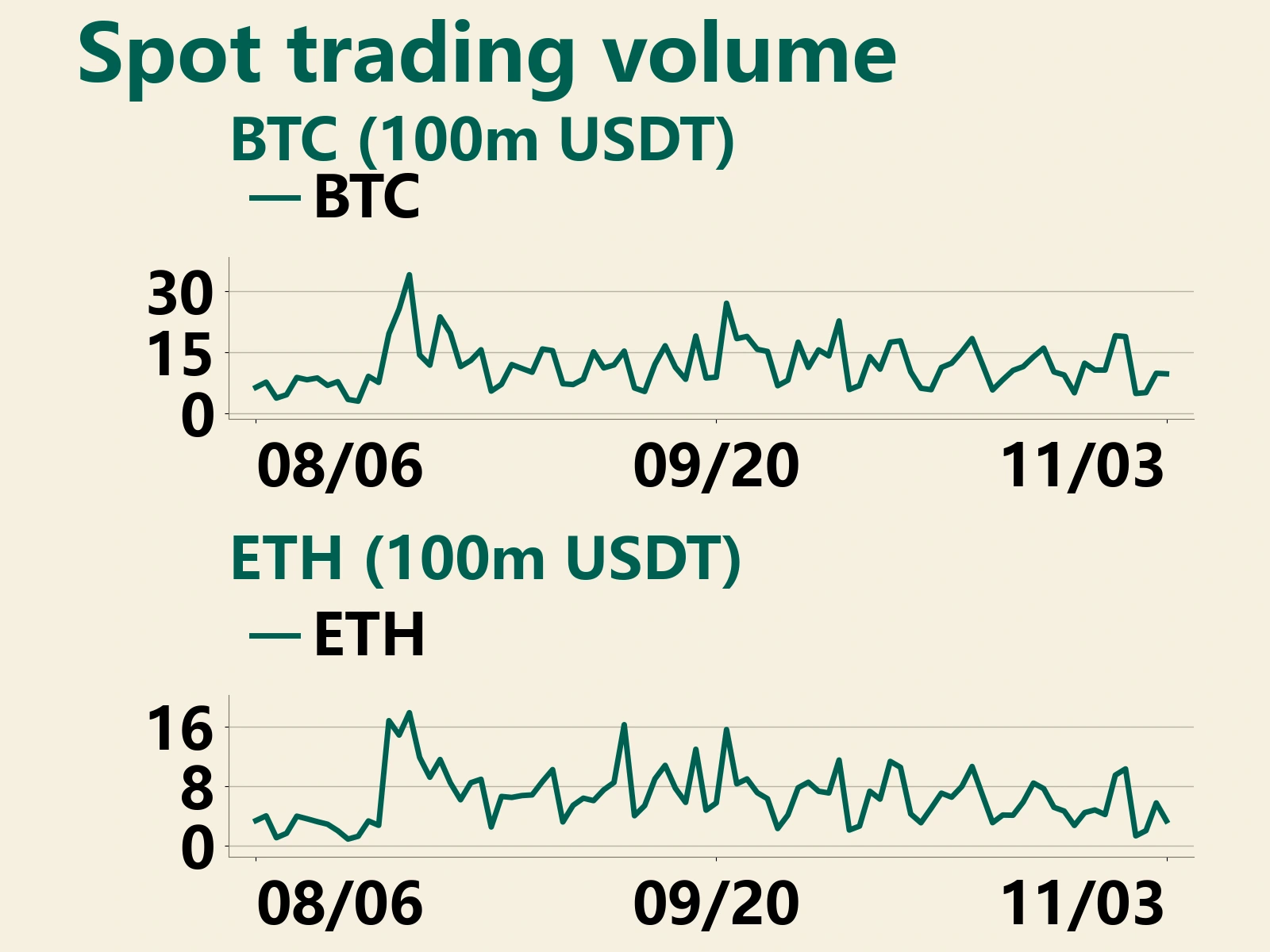
Turnover did not confirm the rebound. Daily BTC/USDT turnover was 969 million USDT, down 1.41% from the previous day; ETH/USDT turnover was 335 million USDT, down 41.82%. Turnover declined for all seven coins, with SOL down 38.80%. Compared with the daily averages over the preceding 30 completed trading days, Bitcoin turnover was 14.43% lower and Ether turnover was 43.48% lower. These figures measure turnover in spot pairs on Binance alone and reflect both the movement of funds between platforms and trading activity. They cannot be converted directly into fresh capital entering the market as a whole.
Relative performance also showed no clear rotation into Ether. Based on USDT closing prices at the same point in time, ETH/BTC stood at 0.02937, up approximately 0.12% on the day—a smaller increase than either ETH or BTC recorded against USDT. Over the 30-day change in closing prices from October 4 to November 3, Bitcoin fell 10.49%, Ether fell 16.58%, and ETH/BTC declined 6.81%. SOL and ADA fell 23.66% and 26.88%, respectively, over the same period. The day's gains across most coins therefore still took place within a longer correction.
Binance Says Withdrawals Have Normalized; Recovery of Net Outflows Remains Unverified
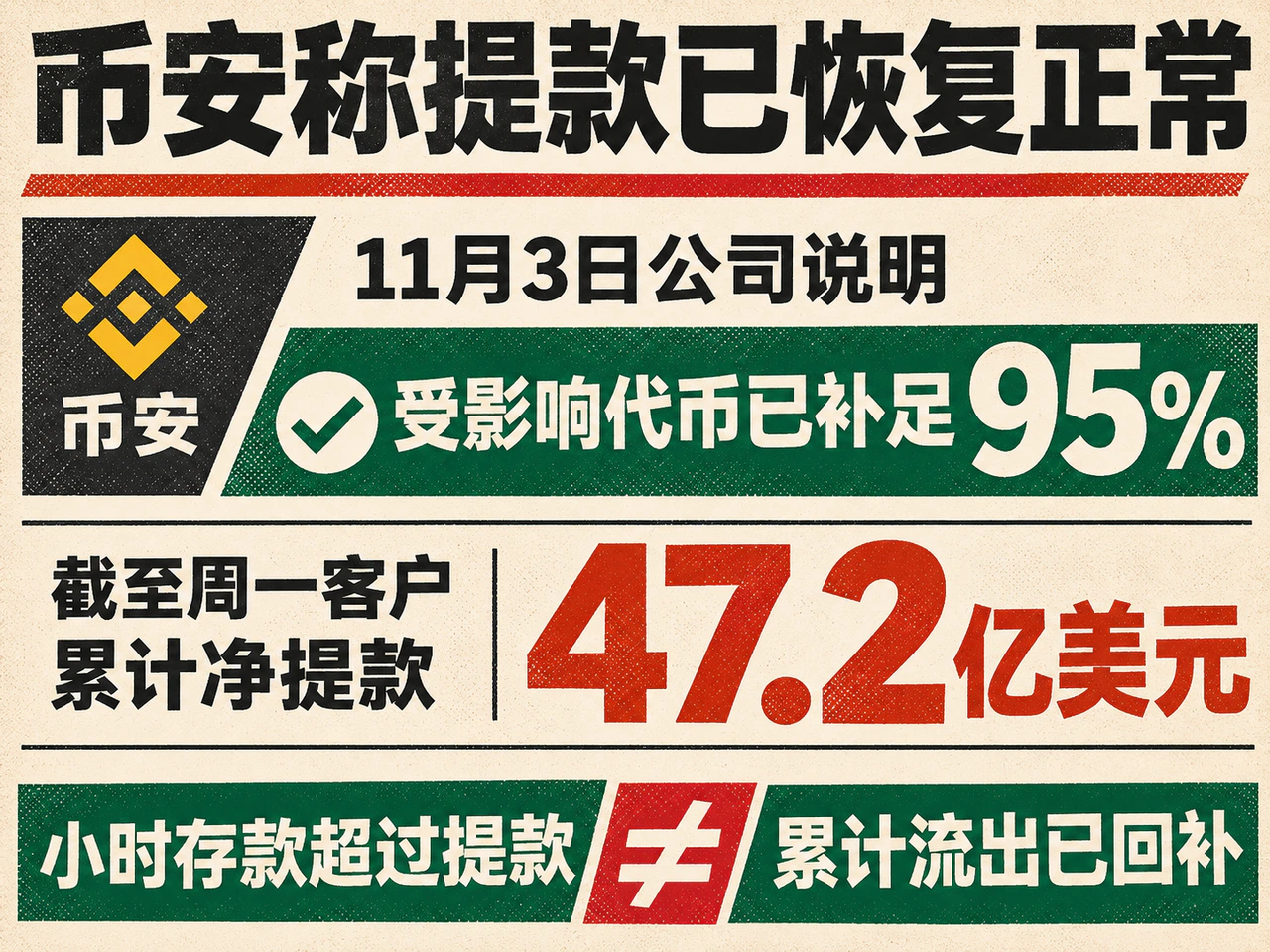
An important development directly relevant to the crypto market that day was Binance's further account of its funding position following the security incident. Reuters reported on November 3 that customers had withdrawn a cumulative net amount of approximately $4.72 billion through Monday, following the theft of roughly $6.3 billion the previous week. Teng said withdrawals had peaked in the first 24 hours and had since largely returned to normal. Binance also said on X that day that hourly deposits had exceeded withdrawals and that withdrawals had resumed for more assets.
These developments primarily affect expectations of extreme risk. If customers can withdraw assets normally and the platform can replenish the affected tokens, the likelihood of the security incident spreading into trading disruption, liquidity stress and forced selling may decline. However, the statements about funding conditions and replenishment progress come from Binance. Continued recovery still needs corroboration from the operation of withdrawals, asset coverage and users' funding behavior. Deposits exceeding withdrawals over a short period also does not mean that the earlier cumulative net outflows have all been reversed.
This helps explain why prices can recover without an expansion in turnover: a reduction in the discount for acute risk may ease selling pressure. Reuters quoted Maksym Repa, head of DeFi at Lombard, as saying that the relatively limited price response reflected investors beginning to distinguish security failures at centralized exchanges from problems with the Bitcoin network itself. BTC's rise and BNB's slight decline that day were consistent with that distinction, although they remain only a clue to the explanation.
Midterm Election Day and a Tech-Stock Recovery Offer Support; Turnover Remains Key to the Rebound
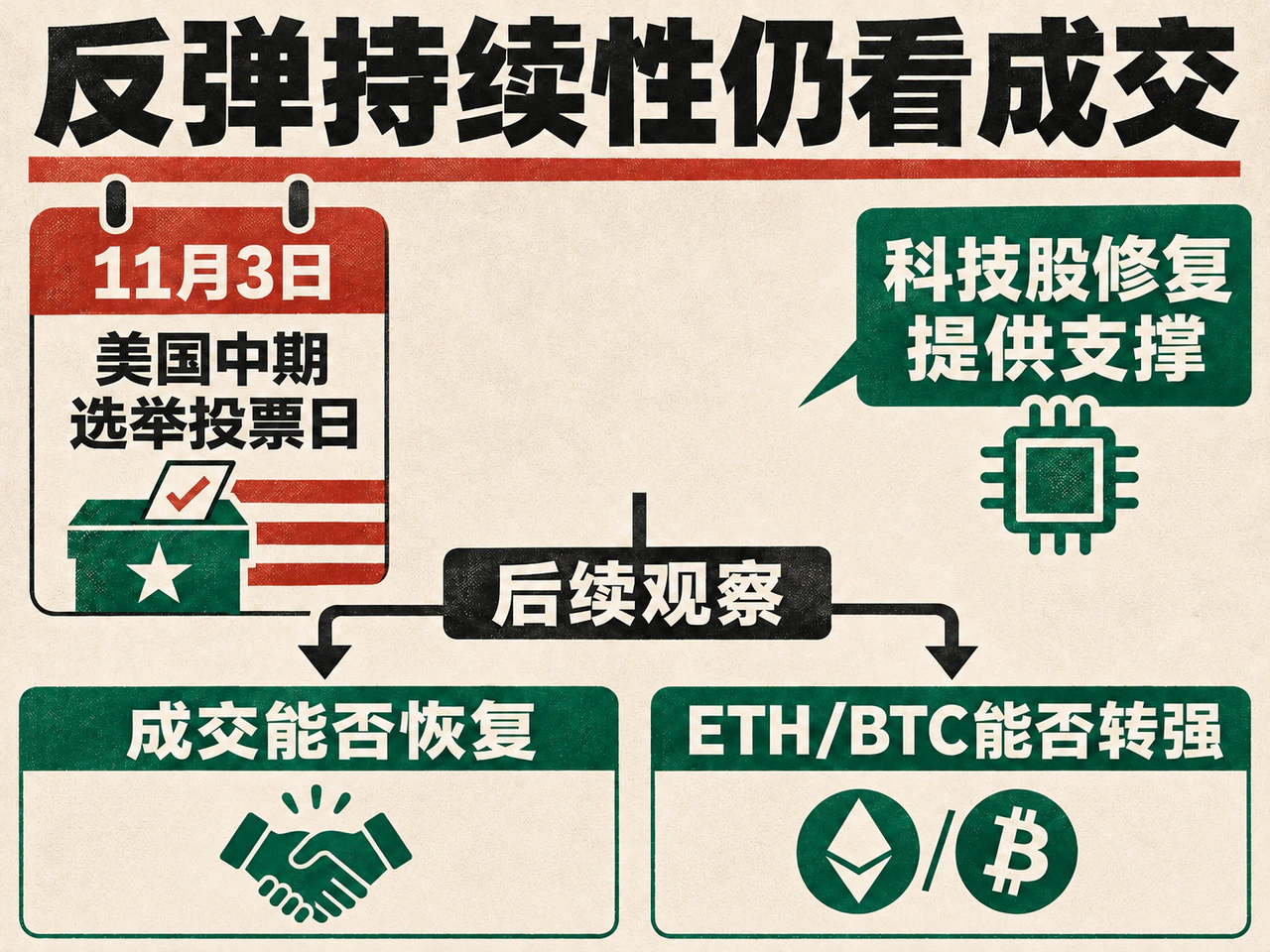
External markets also provided support. In its November 3 market coverage, The Motley Fool linked the crypto rebound to a recovery in technology stocks and said investors were waiting for policy signals from the U.S. midterm elections. On election day, digital-asset policy and the economic outlook remained uncertain. Before the news was settled, adjustments to risk positions could move prices, but could not confirm any particular election outcome.
Some traders also looked to historical patterns for reference. In its November 2 weekly preview, Cointelegraph reported Rekt Capital's comparison of the recent price pattern with the recovery phase in 2023, while noting that U.S. technology-company earnings and macroeconomic data could continue to influence the market. Historical analogies offer a framework for observation, but whether the recovery actually persists still depends on current prices and trading behavior: whether most coins can maintain relative strength over successive sessions, whether ETH/BTC can break out of its weakness over the past month, and whether turnover recovers as prices rise.
The clearer changes so far are an easing of the immediate pressure following the security incident and a broader rebound among major coins. Sustained follow-through in turnover and a reversal in relative performance have yet to emerge. If platform funding conditions continue to stabilize and gains in major coins are accompanied by recovering turnover, the recovery will be more likely to move beyond a narrowing risk discount toward support from fresh capital. If prices continue to recover while turnover contracts, the market is more likely to keep repricing developments in the incident and macroeconomic news.
Click “Read Original” for the full details.