On November 3, 2026, Mohsen Rezaei, secretary of Iran's Supreme National Security Council, said the U.S. response to Iran's demands was “unconvincing” and that reopening the Strait of Hormuz remained conditional on Washington responding to and implementing Iran's conditions. The same day, Qatar confirmed that the United States and Iran were still reviewing the mediation proposals. Negotiating channels remain active following limited U.S. strikes on Qeshm Island, but the two sides still need to resolve how to sequence an end to the fighting, the lifting of the blockade and the resumption of shipping.
Mediation channels remain open as Iran demands an agreement covering all fronts, including Lebanon

At a regular press briefing on November 3, Qatari Foreign Ministry spokesman al-Ansari said a Qatari delegation had held about three hours of talks with Iranian officials in Tehran on November 2 before returning to Doha that evening. The two sides continued to exchange proposals through the mediators, he said, while stressing that no concrete breakthrough could yet be announced. This suggests that both sides remain willing to negotiate, but have not made a shared commitment to an implementation plan.
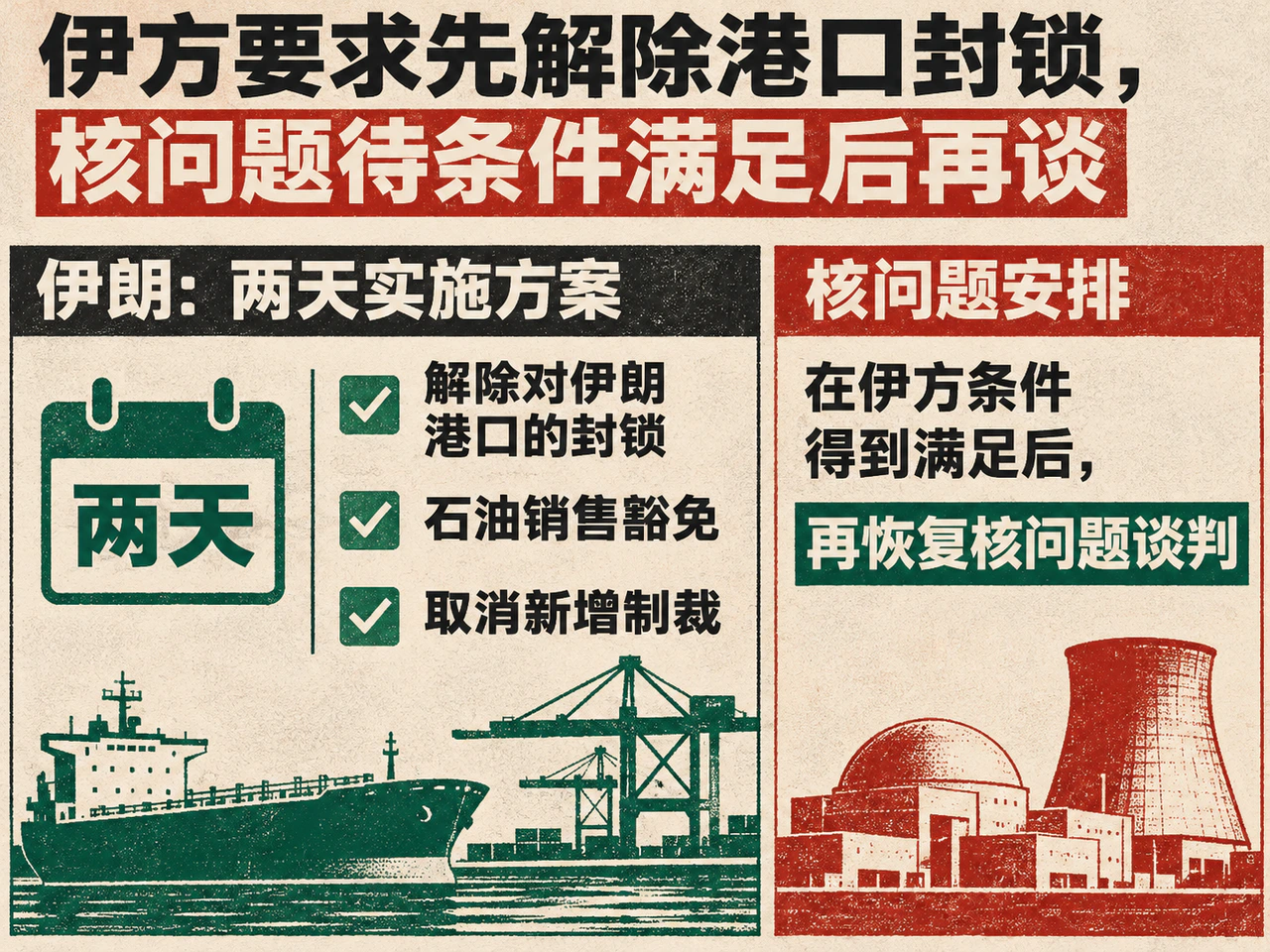
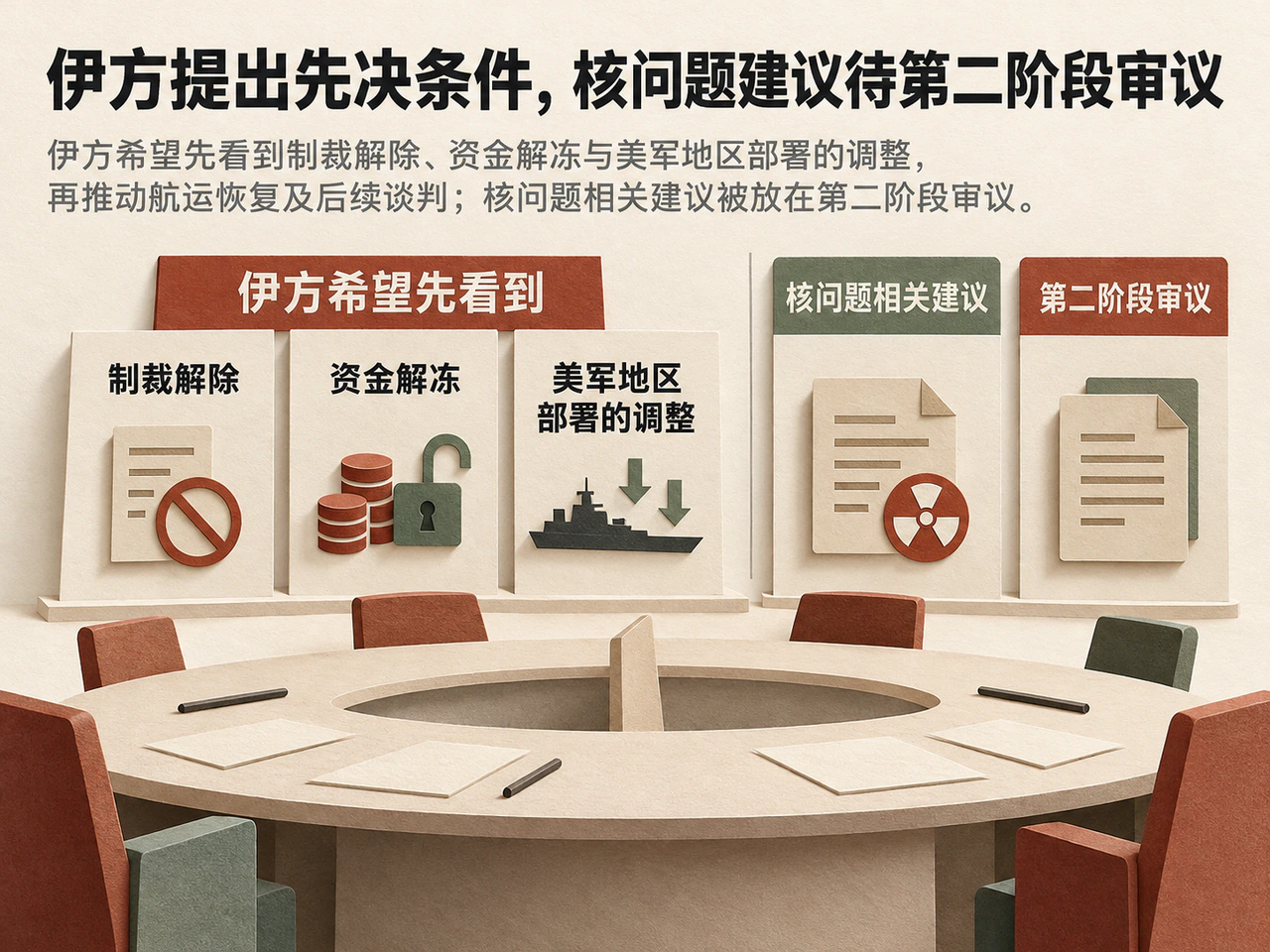
Iran has tied shipping access to broader arrangements for the war. Rezaei called on the United States to implement seven conditions. Iranian Foreign Ministry spokesman Baghaei stressed on November 3 that any understanding must include an end to the war on every front, including Lebanon. The Associated Press reported that Iran's proposed arrangements involved lifting the naval blockade of Iranian ports, granting waivers from sanctions on Iranian oil sales and resuming nuclear talks. An end to attacks in the strait in exchange for lifting the blockade could provide a starting point. Extending an agreement to other fronts, however, would involve more parties in implementation and make coordination more difficult.
Washington says Qeshm Island strikes responded to Iranian fire; an attack on a nuclear facility remains a threat

The United States continues to apply military pressure. Several media outlets had previously cited U.S. officials as saying that the U.S. strikes on Qeshm Island were a response to Iranian fire at U.S. aircraft. An Israeli military spokesman denied Israeli involvement in the strikes. In an interview on November 3, Trump acknowledged that the United States had struck an Iranian air-defense facility the previous night, describing it as a small-scale operation. These accounts of the target and the nature of the strikes come from U.S. statements.
Nuclear facilities feature in both military threats and the negotiating agenda. In an interview broadcast on the evening of November 2, Trump said the United States might attack “Pickaxe Mountain,” an underground nuclear facility near Natanz. This remains a threat, rather than a report that the facility has been hit in a new round of strikes. Iranian Deputy Foreign Minister Gharibabadi said on November 3 that Iran reserved its right to self-defense until military attacks stopped completely and permanently. The two sides remain far apart in their stated conditions for ending the war.
Repeated attacks on merchant vessels leave one Indian crew member dead

The attacks disclosed on November 3 involved civilian vessels. India's shipping minister said the small cargo vessel MSV Al Jusufi, carrying 14 Indian crew members, had been attacked near Oman. One crew member died from his injuries, while the other 13 were rescued. Relaying an Indian government report, the United Kingdom Maritime Trade Operations office described the vessel as a single-masted dhow crewed by Indians that was sailing out of the strait. Responsibility for the attack has not been confirmed.
On the morning of November 4, Beijing time, media outlets relayed another notice from the office saying that two unidentified projectiles had struck a tanker's engine room approximately 14 nautical miles northeast of Lima, Oman. No casualties or environmental impact had been reported at that point. This tanker attack differs from the incident involving the Indian crew in both vessel type and casualties, and the two should not be conflated. Qatar's Foreign Ministry also condemned an attack on its gas carrier Al Mayeda, saying such attacks would affect the negotiations. Coastal military operations, civilian vessel safety and the diplomatic process are influencing one another.
The Saudi-led coalition said it had intercepted drones in the Mecca region and the Eastern Province on November 3. The Houthis denied conducting operations against Saudi territory that day, leaving responsibility disputed. The same day, the Asian Football Confederation announced that the Asian Cup in Saudi Arabia, originally scheduled to open on January 7, 2027, had been postponed to December 23.
Mediation still matters, but shipping depends on implementation terms and safety along the route

For energy transport, mediation provides a channel to negotiate passage through the strait, the blockade of ports and the sequence of a ceasefire. What would actually change shipping arrangements is a set of implementation terms accepted by both sides, together with tangible improvements in safety along the route. Diplomatic contacts are continuing, while military operations and risks to merchant vessels persist. Carriers still need to make decisions about specific routes and vessel protection.
Two developments warrant attention: whether Washington can respond to and implement Iran's conditions, and the outcome of U.S. and Iranian reviews of the mediation proposals.
Key developments

| Key developments |
|---|
| 11-04 06:14Iranian Deputy Foreign Minister Khatibzadeh said in Minsk that Iran had never sought, and would never seek, nuclear weapons. This was a public statement of Iranian policy. |
| 11-04 05:15Media outlets relayed a United Kingdom Maritime Trade Operations notice saying that two unidentified projectiles had struck a tanker's engine room approximately 14 nautical miles northeast of Lima, Oman. No casualties or environmental impact had been reported at that point. |
| 11-04 03:28Egypt's foreign minister spoke by phone with his Iranian counterpart, calling for restraint, flexibility in the negotiations and a political solution. |
| 11-04 03:25The Saudi-led coalition said it had intercepted a drone in eastern Saudi Arabia, following an earlier interception in the Mecca region that day. The Houthis denied conducting operations against Saudi Arabia that day. |
| 11-03 23:29Rezaei said the U.S. response had not met Iran's demands, linking the reopening of the Strait of Hormuz to the implementation of Iran's seven conditions. |
| 11-03 22:34The United Kingdom Maritime Trade Operations office relayed an Indian government report that a small cargo vessel operated by Indian crew members had been attacked while leaving the strait. India reported one death and 13 people rescued. |
| 11-03 20:32An Israeli military spokesman denied Israeli involvement in the strikes on Qeshm Island. |
| 11-03 18:30Iran's Revolutionary Guards said through Iranian media that they had shot down two LUCAS drones off the coast of Bandar Khamir. The claim had not been independently confirmed. |
| 11-03 18:22Qatar said the mediation team that had traveled to Tehran had returned to Doha, while the United States and Iran continued to review proposals and hold consultations. |
| 11-03 10:48Media outlets cited U.S. officials as saying that U.S. forces had carried out limited strikes on Qeshm Island. Washington said this was a response to Iranian fire at U.S. aircraft. |