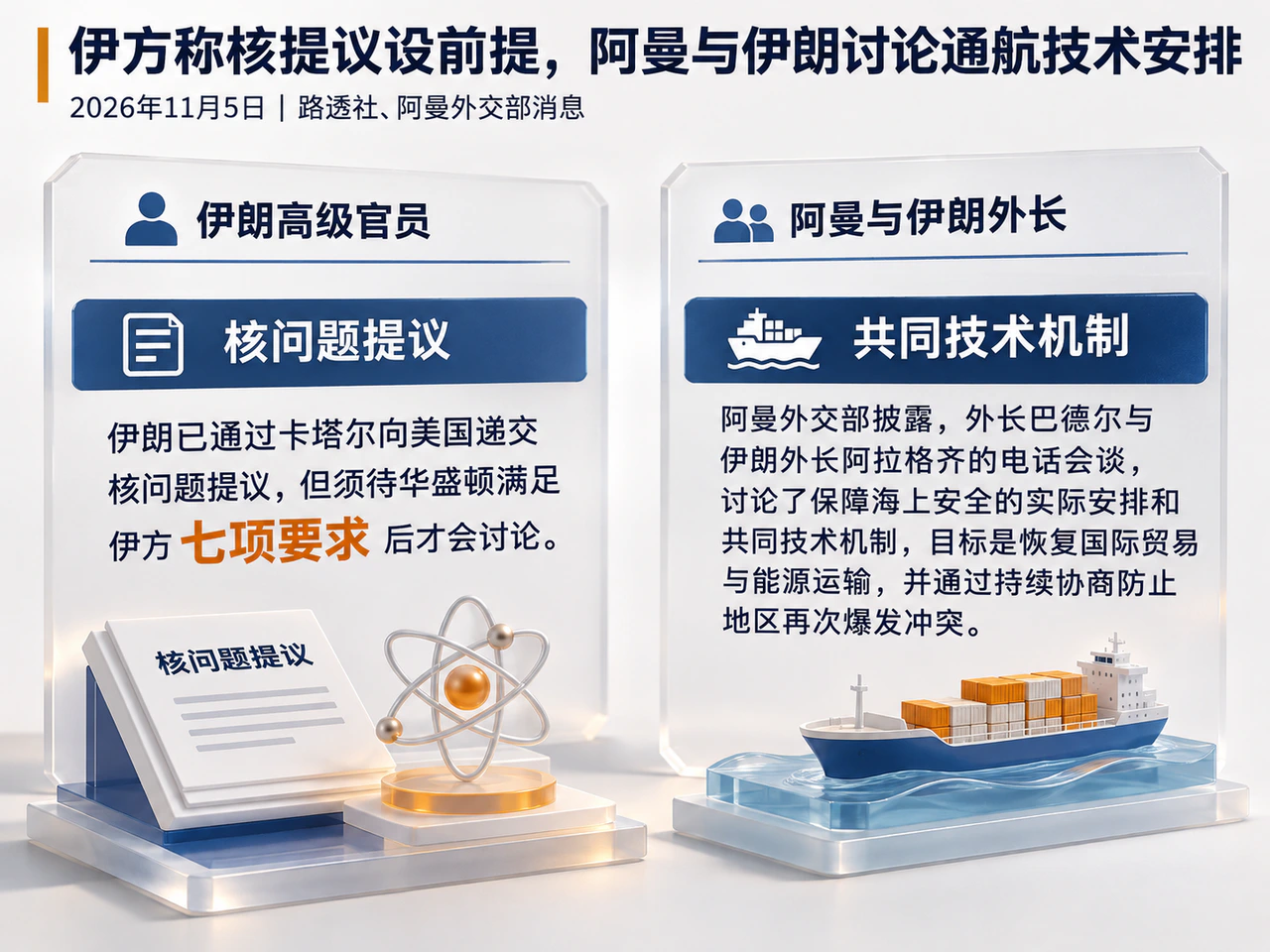
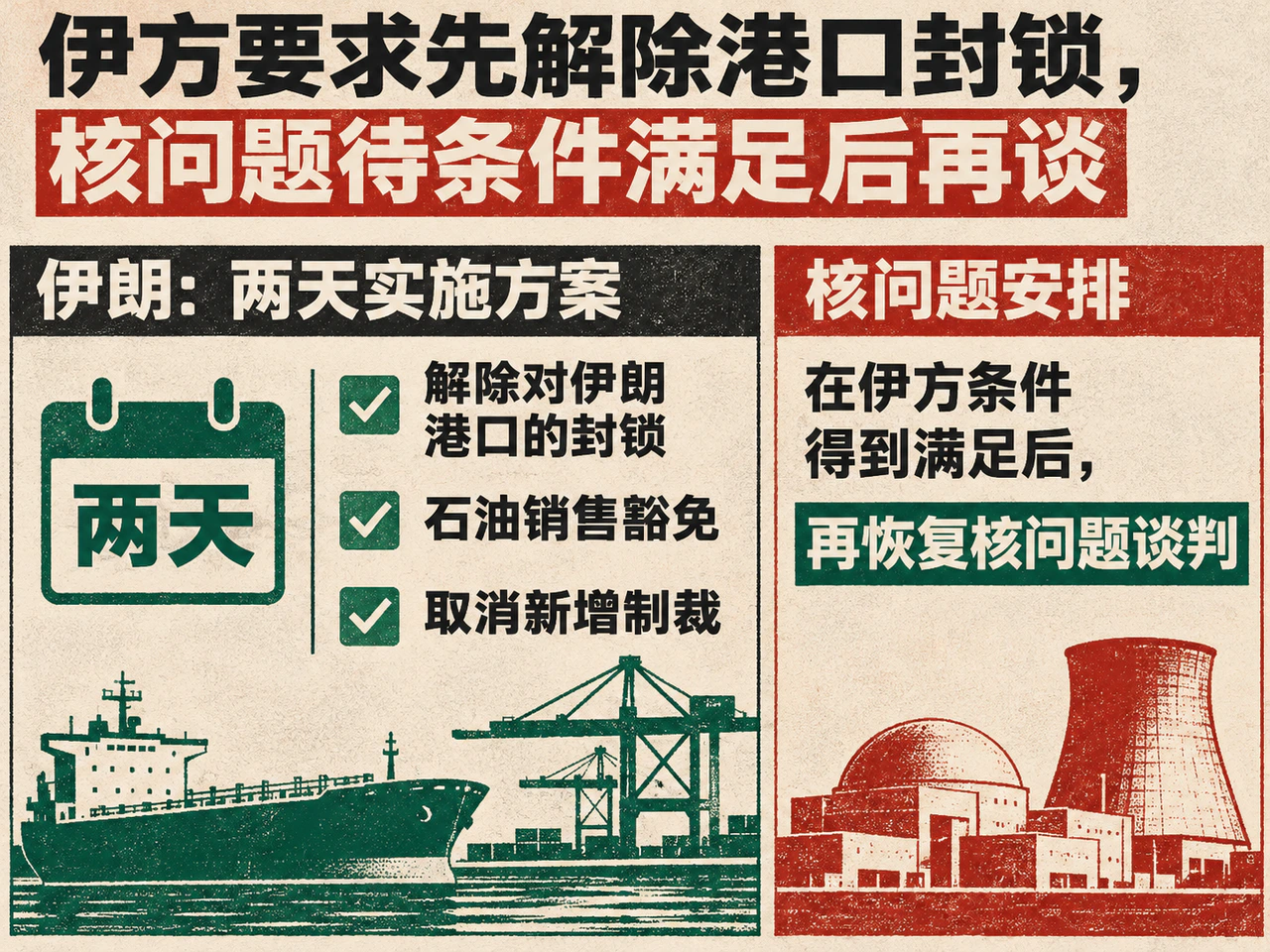
On November 6, 2026, US President Donald Trump confirmed that US forces had carried out another limited strike on Iran, saying the target was an air-defense system. Qatar continued to put nuclear-related proposals to Iran on the same day. Military pressure and diplomatic engagement are advancing in parallel, with the immediate dispute centering on the sequence of actions: Iran wants the blockade and sanctions lifted first, along with an end to regional hostilities, while the United States insists that nuclear issues be included in arrangements to end the war.
Qeshm Island explosions and tanker incident reported; one seafarer confirmed dead

Iranian media reported two explosions in the Suza area of Qeshm Island in the Strait of Hormuz. Trump described the operation as a small-scale strike and claimed that US forces had destroyed the air-defense equipment within minutes. Earlier, Iran’s Islamic Revolutionary Guard Corps had claimed to have shot down a US MQ-1 drone over Qeshm Island; the United States has not confirmed that claim. Both the air-defense strike and the drone incident took place around the Strait of Hormuz, where localized exchanges of fire could still directly affect navigation.
In shipping, Greek management company Velos Tankers disclosed on November 6 that the Marshall Islands-flagged tanker MT Velos Sapphire had suffered an explosion the previous day while sailing to Bahrain, and that a previously missing seafarer had been confirmed dead. The vessel was in ballast at the time and subsequently entered Bahrain’s Khalifa Bin Salman Port for an assessment of hull damage. The incident was reported as a suspected missile attack.
Separately, on November 7, Iran’s military said a tanker had struck a mine and caught fire east of the Strait of Hormuz. The ship manager has disclosed specific details of the earlier incident; for this separate incident, only the Iranian account is currently available.
On the same day, Revolutionary Guard spokesperson Hossein Mohebbi said Iran had removed its self-imposed 2,000-kilometer limit on ballistic missile range, without saying whether it already possessed missiles capable of exceeding that range. The statement expands the reach of Iran’s publicly declared deterrence; its military effect depends on actual equipment and deployment.
Qatar’s proposed two-day bridging plan links inspection access to port reopening and funds; it remains a proposal

According to regional officials speaking to the media, the bridging plan that Qatar is discussing with Iran would implement confidence-building measures over two days. On day one, the United States would lift its blockade of Iranian ports and release some frozen funds, while Iran would allow International Atomic Energy Agency personnel into nuclear facilities that have been bombed. On day two, Iran would reopen the Strait of Hormuz under revised arrangements discussed with Oman, before moving on to broader nuclear negotiations, including the enriched-uranium stockpile.
The plan has not been implemented, and the United States has not approved its provisions for the strait. It links inspection access with financial and shipping measures, addressing actions observable by both sides before proceeding to more difficult nuclear negotiations. There are three implementation challenges: who acts first; how lifting the blockade and granting inspection access would be synchronized; and whether other Gulf states would accept a temporary navigation mechanism.
Qatar denied reports that the talks had collapsed, saying it remained in close coordination with both the United States and Iran. At an event at the University of Oxford, Qatar’s prime minister stressed that waiting for a perfect agreement should not mean missing a workable one. Trump said talks with Iran were making progress but disclosed no specific terms. Iran is demanding sanctions relief, the unfreezing of assets, compensation for war damage, and an end to regional hostilities, including Israeli operations in Lebanon. A considerable gap remains between the two sides’ public statements and arrangements they can implement.
US offers up to $20 million for nuclear intelligence and sanctions eight Canadian money services businesses
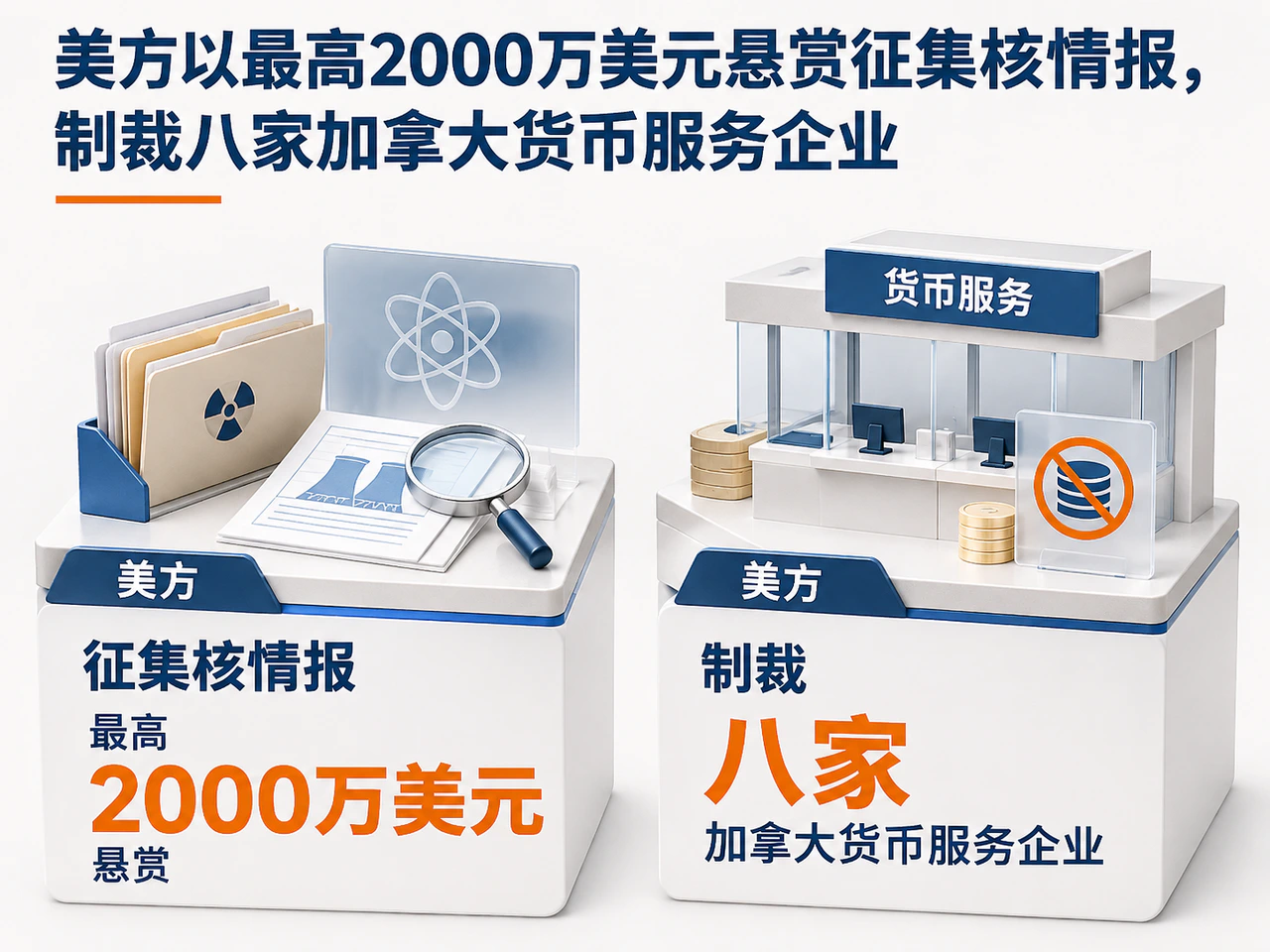
The United States is applying pressure on both nuclear intelligence and finance. On November 6, US Central Command announced a reward of up to $20 million for information on Iran’s nuclear facilities, equipment, personnel, and related transfers. The US Treasury Department sanctioned eight Canadian money services businesses that day, accusing them of helping Iran conduct cross-border transactions using digital assets, and coordinated its action with Canada’s financial intelligence authority.
The release of some frozen funds is included in the bridging proposal, but sanctions enforcement is still intensifying, and a diplomatic bargain has yet to reach the implementation stage.
Yemen conflict continues to cause casualties as Iran makes a regional ceasefire a negotiating condition

The war in Yemen continues to spill over. On November 7, the Houthis said Saudi airstrikes had hit the Al-Shariyah area of Sanaa province, killing 11 people and injuring 20. A deadly attack had struck the Al-Hadara market in Taiz the previous day. The Houthis said it had killed or injured dozens and blamed Saudi airstrikes; Yemeni government forces blamed a Houthi missile. The Saudi-led coalition separately reported intercepting a drone in the Mecca region.
Developments on regional fronts add further variables to the negotiations. Iran’s insistence on a regional ceasefire means that, alongside inspections, the port blockade, and navigation through the strait, fighting in Lebanon and Yemen will also affect mutual trust. Two developments warrant attention: whether the bridging proposal can become public, executable arrangements for inspection access and shipping, and whether localized strikes can be contained.
Key developments

The following items are listed in reverse chronological order by the time they were reported in Beijing time.
| Key developments |
|---|
| 11-07 19:38Revolutionary Guard spokesperson Mohebbi said Iran had removed its self-imposed 2,000-kilometer limit on ballistic missile range, without saying whether it already had missiles capable of exceeding that range. |
| 11-07 19:38Iran’s military said a tanker had struck a mine and caught fire east of the Strait of Hormuz; only the Iranian account is currently available. |
| 11-07 19:35Qatar denied reports that talks had collapsed and said it continued to coordinate closely with the United States and Iran; at a University of Oxford event, its prime minister urged against waiting for a perfect agreement. |
| 11-07 19:35The Houthis said airstrikes in the Al-Shariyah area of Sanaa province had killed 11 people and injured 20, and blamed Saudi Arabia. |
| 11-07 16:26Trump confirmed a limited US military strike, saying it had destroyed Iranian air-defense equipment; Iranian media reported two explosions in the Suza area of Qeshm Island. |
| 11-07 10:49Regional officials said Qatar was discussing a two-day bridging plan with Iran, covering the sequencing of lifting the blockade, releasing some funds, granting inspection access, and reopening the strait. No agreement had been reached. |
| 11-07 08:57US Central Command announced a reward of up to $20 million for information on Iran’s nuclear facilities, equipment, personnel, and related transfers. |
| 11-07 06:26A US Treasury announcement named eight money services businesses suspected of helping Iran evade sanctions, in an action coordinated by the United States and Canada. |
| 11-06 23:59The Houthis blamed Saudi airstrikes for an attack on the Al-Hadara market in Taiz that they said had killed or injured dozens; Yemeni government forces blamed a Houthi missile. |
| 11-06 23:26The Revolutionary Guard claimed to have shot down a US MQ-1 drone over Qeshm Island; the United States has not confirmed the claim. |
| 11-06 22:42Velos Tankers disclosed that the tanker MT Velos Sapphire had suffered an explosion the previous day while sailing in ballast to Bahrain. A previously missing seafarer was confirmed dead, and the vessel had entered a Bahraini port for a damage assessment. |
| 11-06 21:51The Saudi-led coalition said it had intercepted a drone in the Mecca region. |