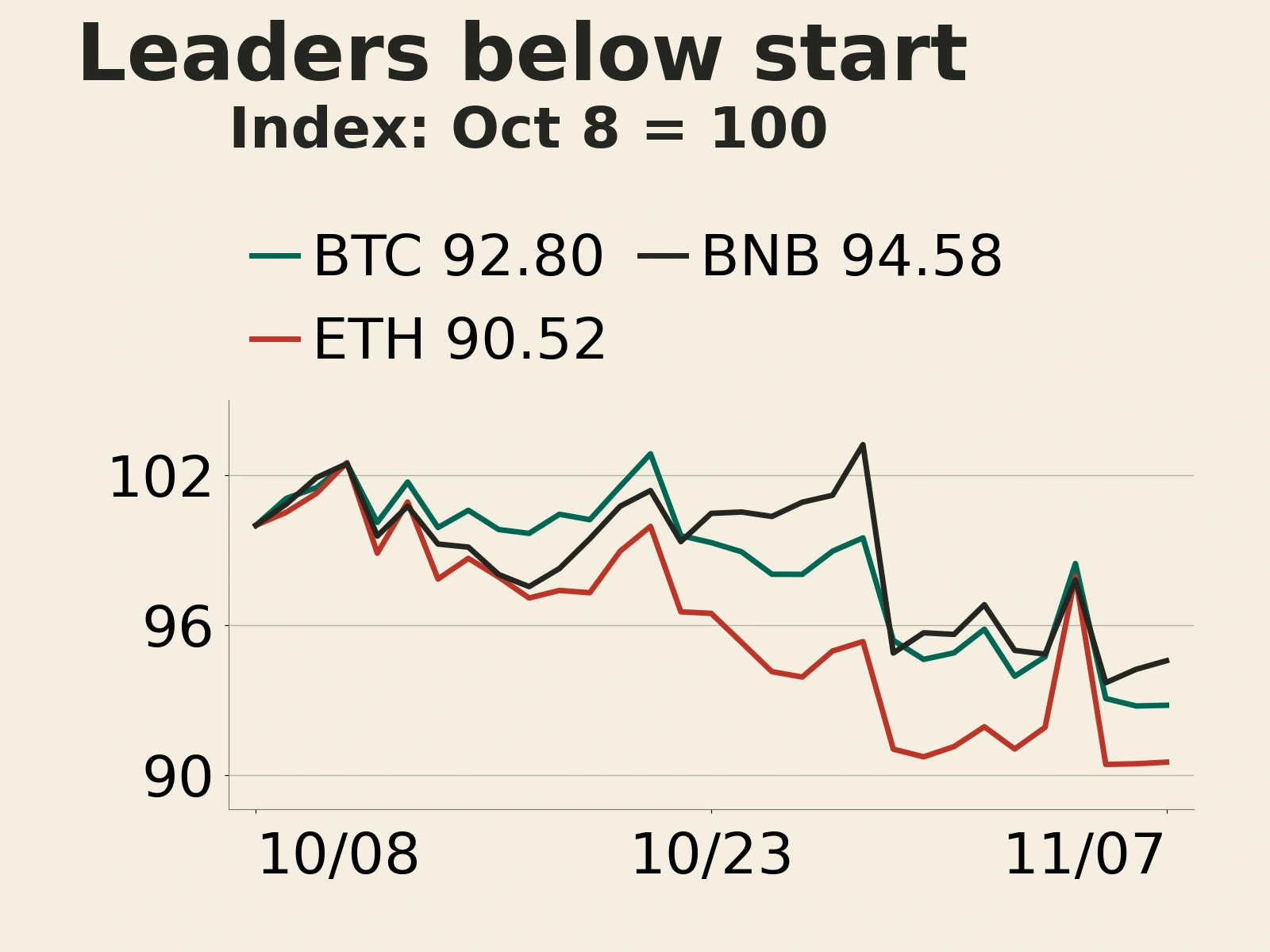
On November 7, 2026, Bitcoin and Ethereum edged higher in weekend trading, while most major coins in the fixed sample continued to decline. Based on Binance spot USDT quotes and UTC daily candles, which closed at 8 a.m. Beijing time on November 8, Bitcoin finished at 75,867.59 USDT, up 0.03% from the previous day; Ethereum closed at 2,240.24 USDT, up 0.07%. Only three of the ten highly liquid coins tracked in the fixed sample advanced. After the sharp selloff, the leading coins have temporarily stabilized, but market breadth remains weak. Whether investment demand can recover still needs to be tested against trading activity and capital flows.
Turnover in the leaders falls about 70%; only three of ten coins advance
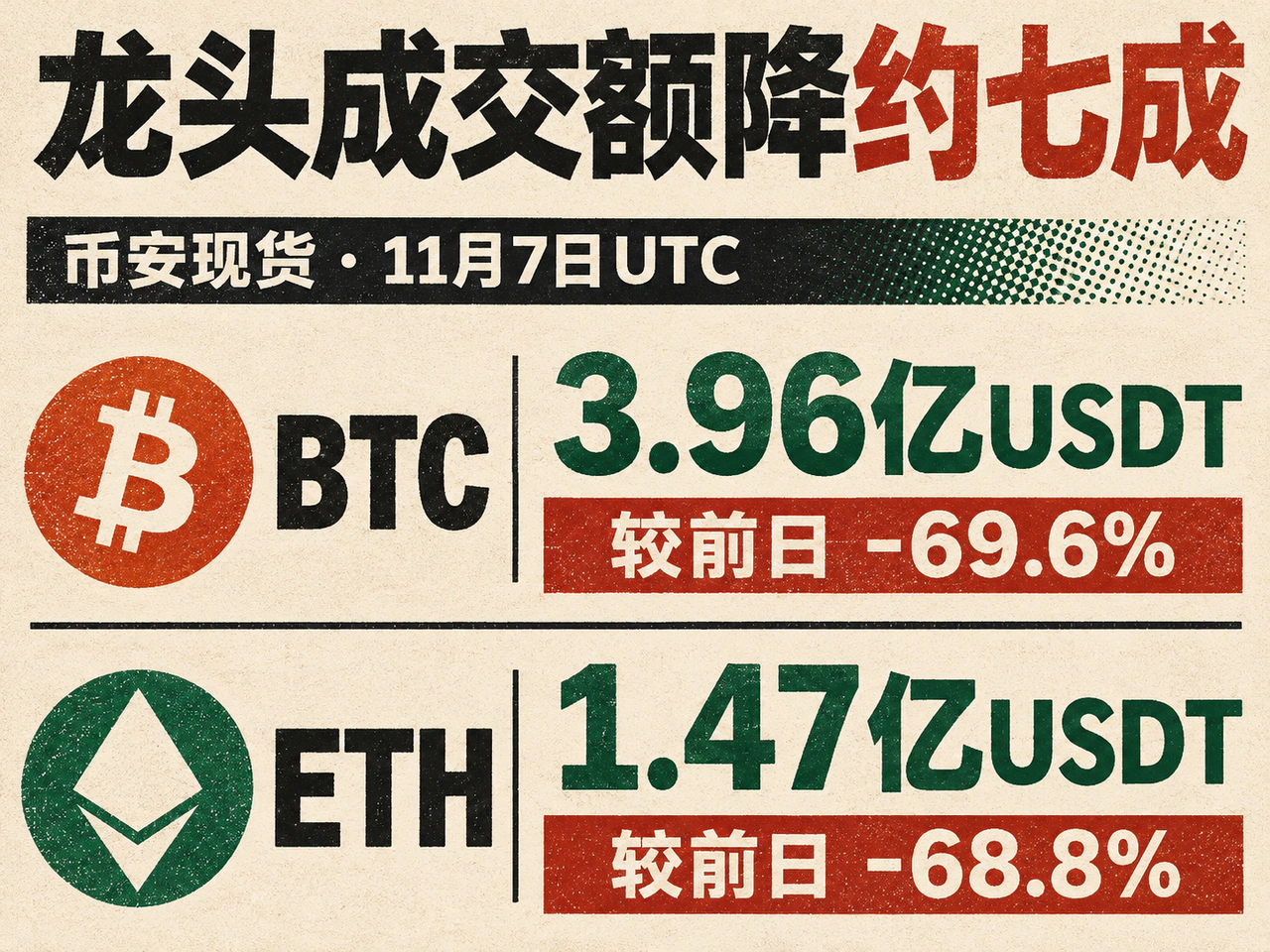
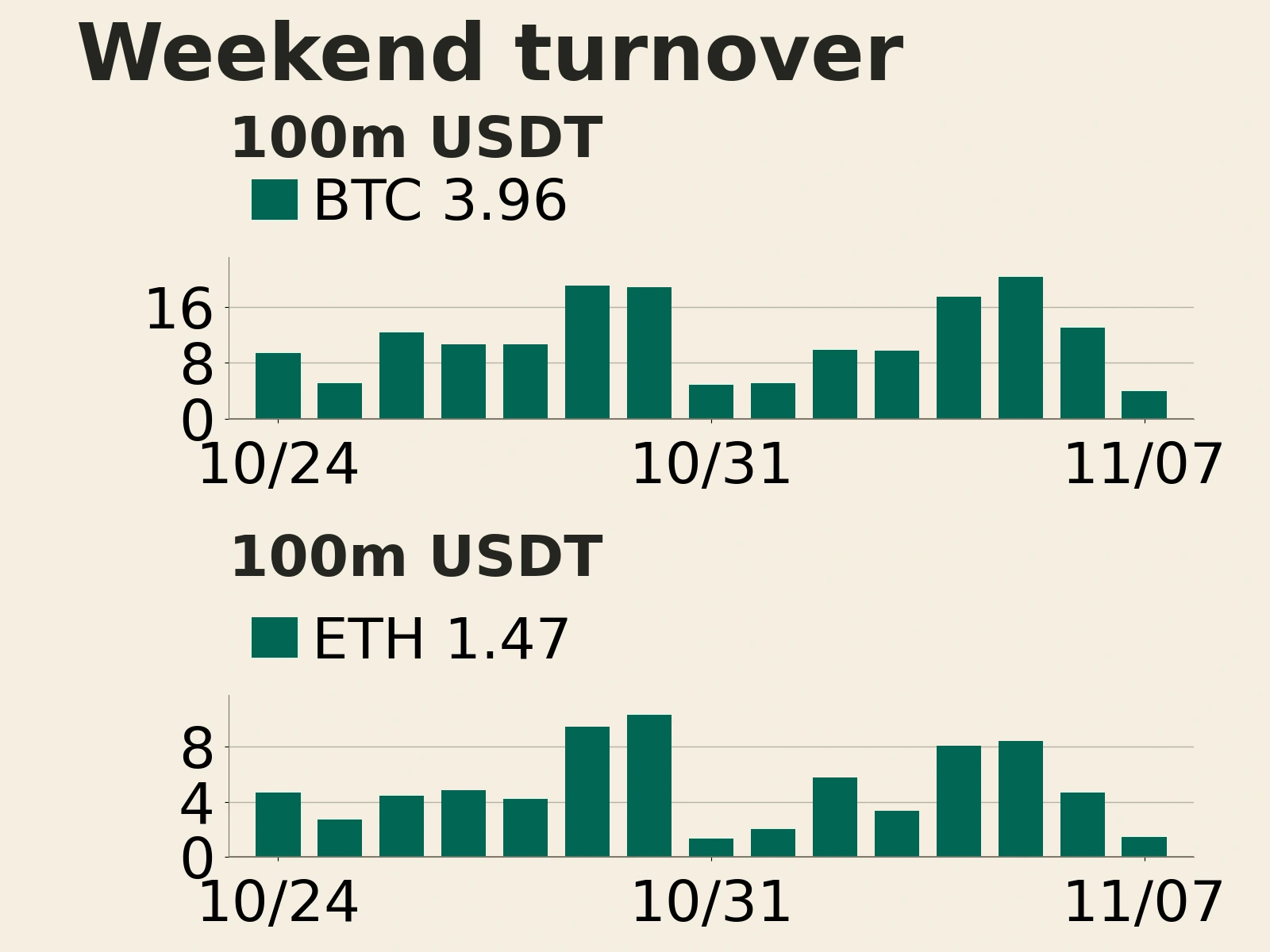
Bitcoin traded between 75,571.08 and 76,249.99 USDT during the day, while Ethereum ranged from 2,223.15 to 2,251.54 USDT. Both closed near the middle of their ranges. Turnover fell sharply: Binance BTC/USDT spot turnover was 396 million USDT, down 69.6% from the previous trading day; ETH/USDT turnover was 147 million USDT, down 68.8%. Trading participation differs between Saturday and Friday, so the decline primarily reflects the backdrop of sideways trading on lighter volume. Subsequent volume and price action will be needed to confirm whether buyers are regaining the initiative.
In the fixed sample comprising BTC, ETH, BNB, SOL, XRP, DOGE, ADA, LINK, AVAX and SUI, only BTC, ETH and BNB closed higher. BNB rose 0.36%, SOL fell 0.36% and XRP lost 1.27%; DOGE, ADA, AVAX and SUI each fell more than 1%, while LINK declined 0.21%. Three gainers against seven decliners show that the leaders' small advances have yet to produce a broad recovery among other highly liquid coins. This sample tracks breadth among liquid assets; it does not represent the number of gainers and decliners across the entire market.
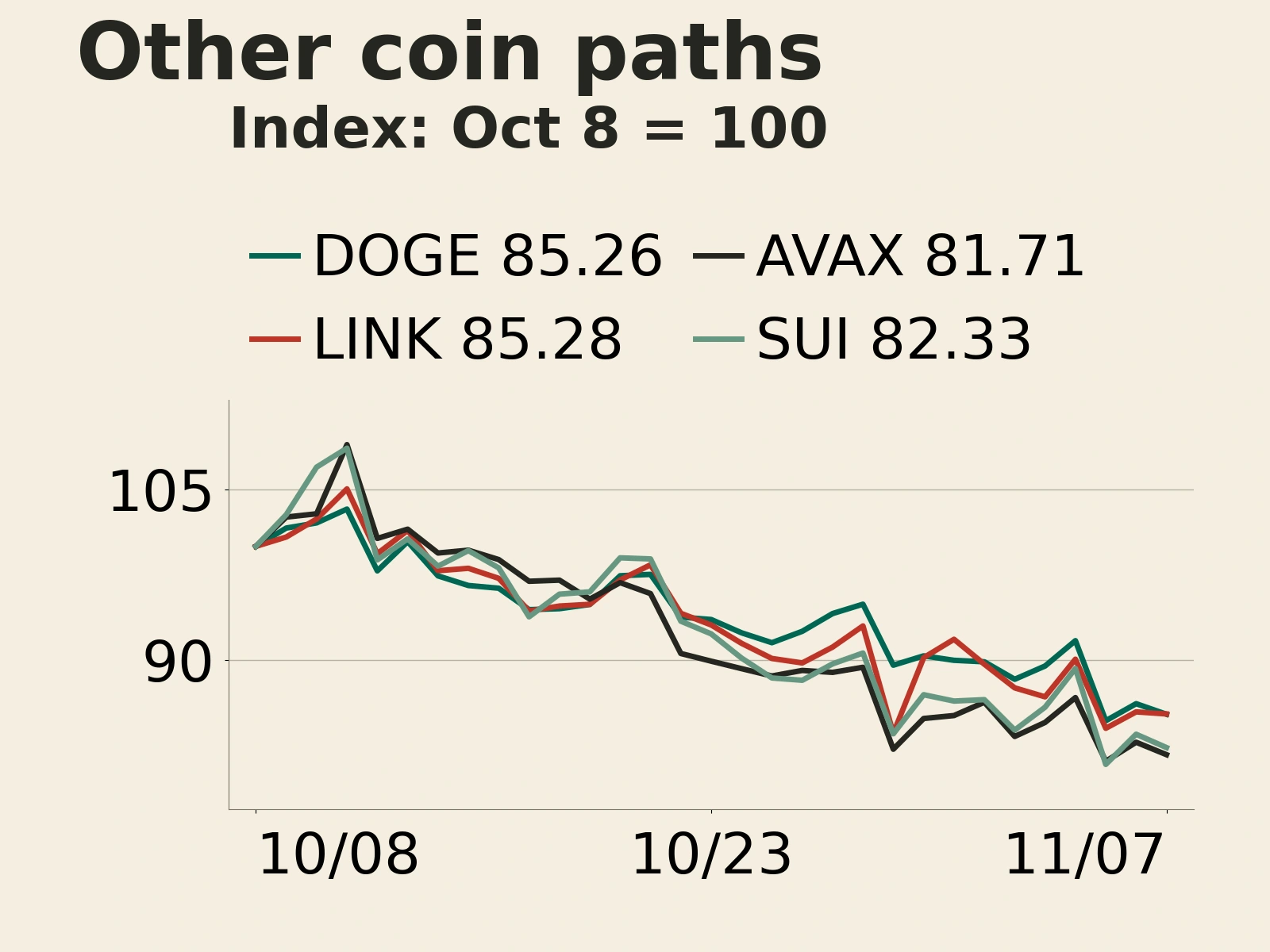
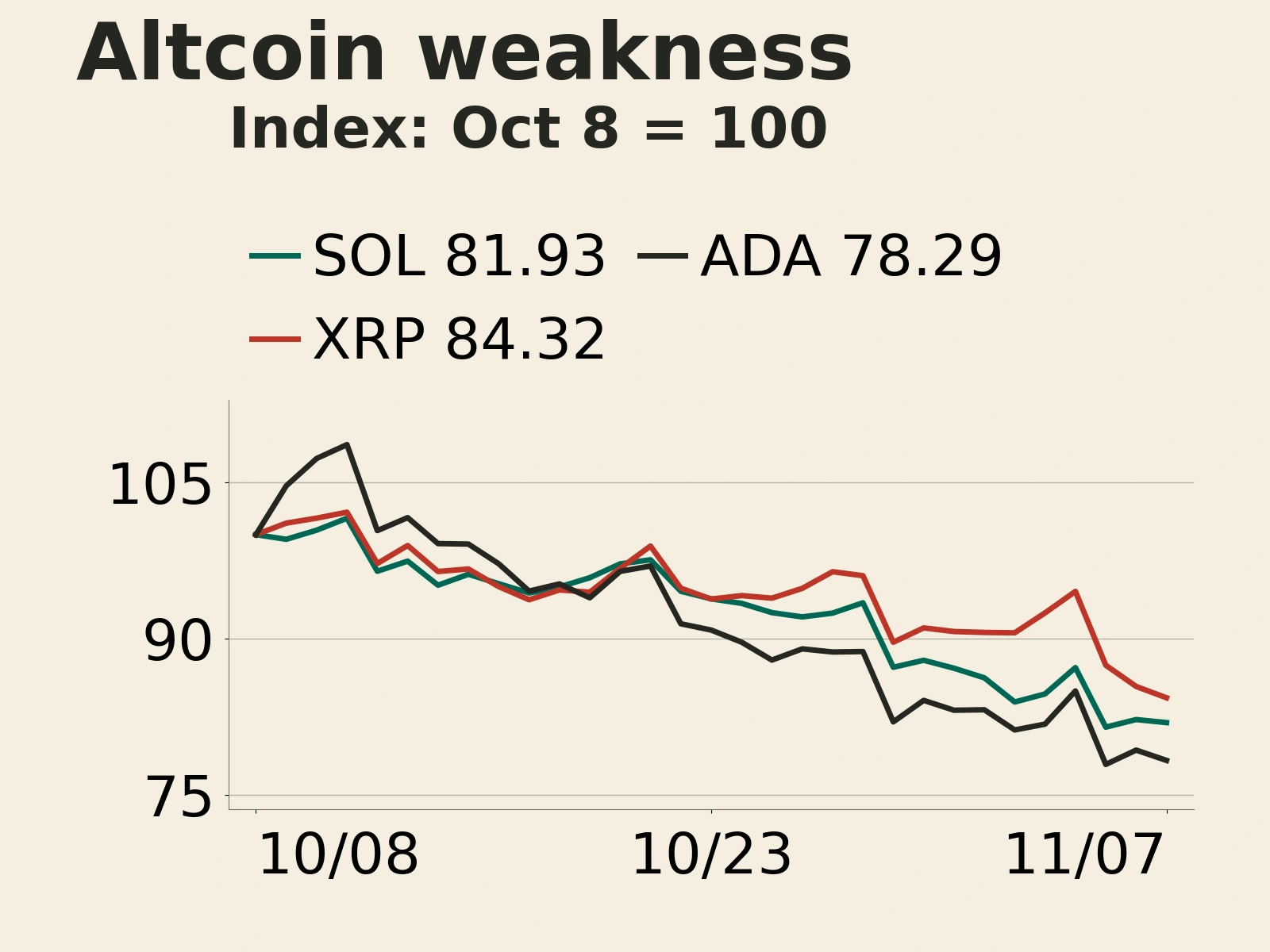
Over the longer, thirty-day comparison period from October 8 to November 7, Bitcoin fell 7.20%, Ethereum lost 9.48% and BNB declined 5.42%; SOL and XRP fell 18.07% and 15.68%, respectively, while ADA lost 21.71%. The weekend divergence extended the pattern of relative strength and weakness seen over the past month. The range of risks investors are willing to take remains limited, and a single day's stabilization has yet to develop into broad repricing.
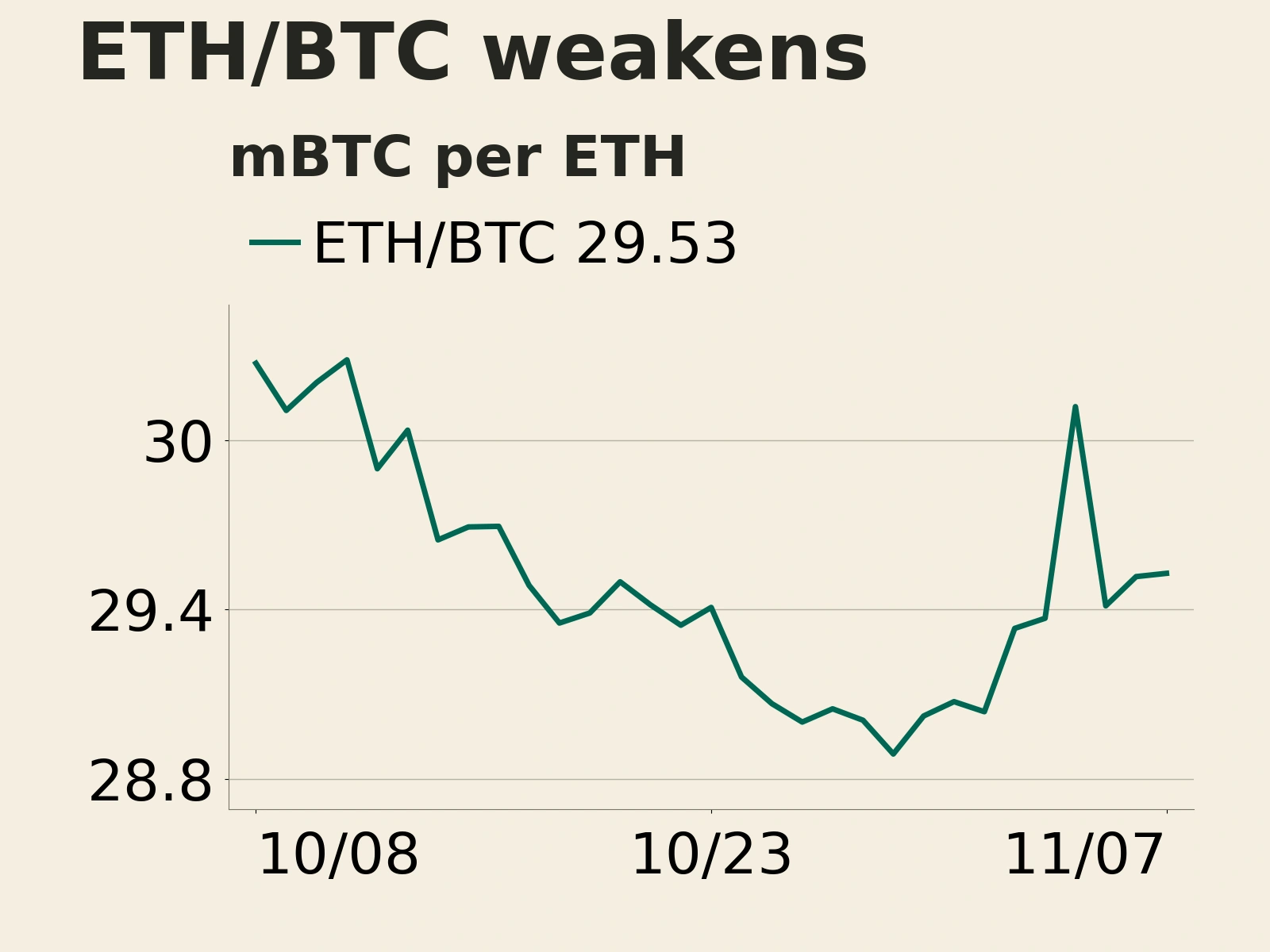
The ETH/BTC ratio reflects the same divergence. Calculated from the two assets' daily USDT spot closing prices on the same exchange, the ratio fell from 0.03027 on October 8 to 0.02953 on November 7. Ethereum slightly outperformed Bitcoin on the day, but remained weaker over the month. If subsequent gains remain concentrated in BTC while ETH/BTC and other major coins continue to lag, the pattern would be more consistent with a defensive preference for the market leader. A broad recovery would require wider participation across coins, a recovery in turnover and sustained improvement in prices.
Payrolls beat expectations; Bitcoin ETFs record $1.28 billion in weekly net outflows

Interest-rate expectations and investment flows remain constraints. On November 6, the U.S. Bureau of Labor Statistics reported that October nonfarm payrolls increased by 165,000 and the unemployment rate was 4.1%; a Reuters poll had forecast a gain of 65,000. Reuters' immediate coverage following the November 6 jobs release showed that traders' bets on a December rate increase rose from about 70% to 78%. Strong employment signals economic resilience, but also reinforces the interest-rate constraint: higher funding costs increase the opportunity cost of holding assets that do not generate fixed cash flows.
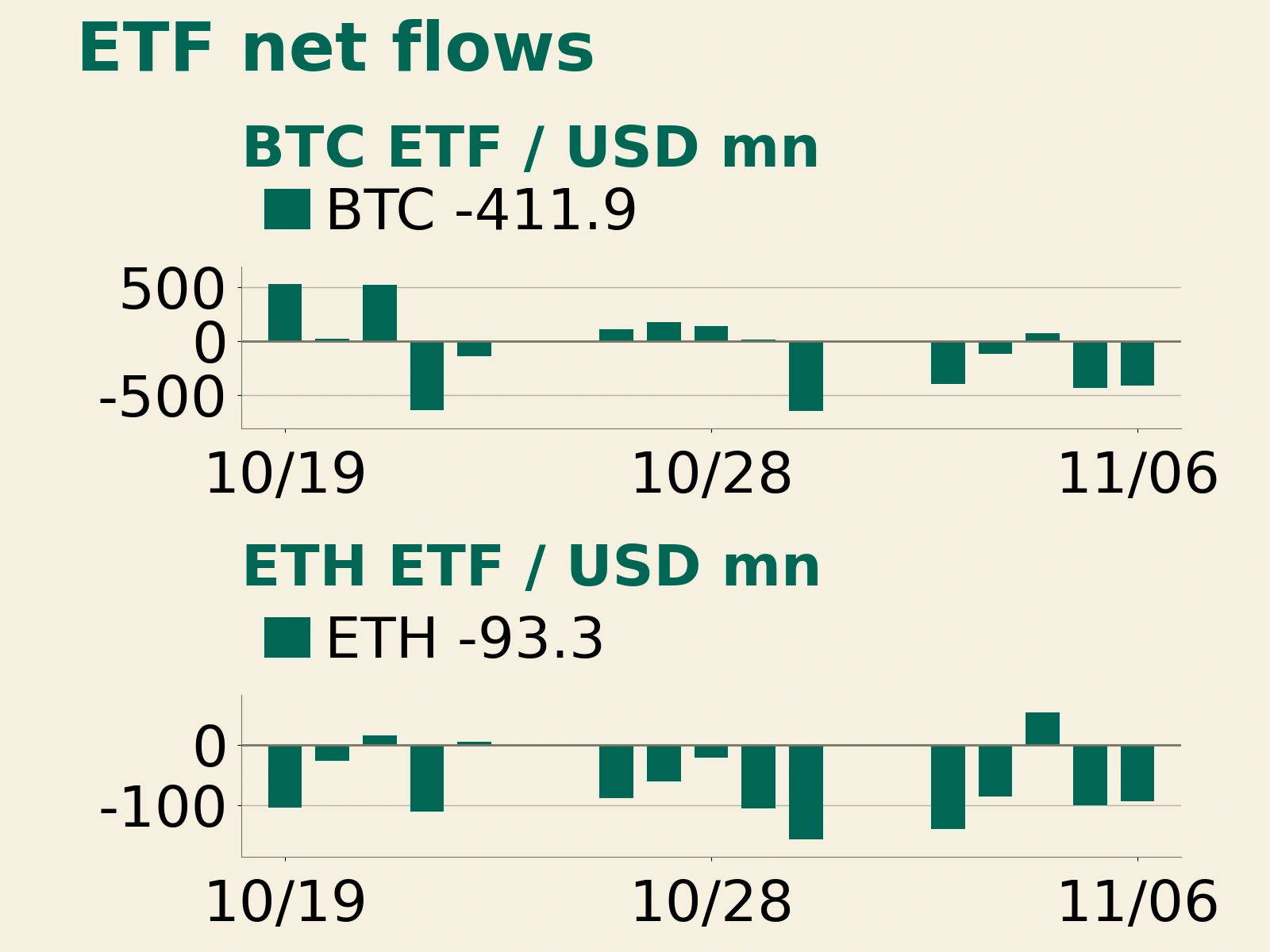
Investment channels have yet to signal a recovery in demand. Citing SoSoValue data on November 7, The Block reported that U.S. spot Bitcoin ETFs recorded approximately $1.28 billion in net outflows in the week ended November 6, the largest weekly outflow since late June; Ethereum ETFs also posted a sixth consecutive week of net outflows. These figures cover U.S. fund trading from Monday through Friday, whereas weekend spot prices form in a different trading environment. With large fund channels still seeing withdrawals, Saturday's price stabilization may ease short-term sentiment. Whether investment flows return in the next trading week remains to be seen.
Institutions and the community differ in their interpretations of the preceding selloff. Token Metrics relayed the view of Wintermute trader Jasper De Maere that crypto assets had shown resilience relative to some AI-related stocks, and that he remained relatively positive on the medium-term outlook. In commentary on November 6, The Wolf Den distinguished between losing less during a synchronized market decline and providing safe-haven protection during a risk shock. The two assessments address different questions: relative resilience can improve traders' expectations, while a sustained recovery requires new demand to absorb supply. The weekend divergence between the leaders and other coins makes that latter test important.
Developments in trading infrastructure also affect risk appetite. The Block reported on November 6 that blockchain analytics firm Elliptic had traced approximately $124 million in other tokens from assets previously stolen from Binance being converted into Bitcoin, and assessed that the proportion actually cashed out might be very small. According to the report, Binance said on November 6 that it planned to restore withdrawals for more coins by the end of the following week. Asset conversion, trading channels and the restoration of trust affect markets in different ways: after conversion into Bitcoin, the value remains within the crypto ecosystem; withdrawal arrangements still need to translate into available services.
The key developments to watch are whether Bitcoin's ability to hold steady can improve ETH/BTC and breadth among major coins, and whether the pattern of persistent ETF outflows turns when U.S. fund trading resumes. The current narrow trading range has eased price pressure for the day, but the market remains within the relatively weak structure of the past month. Assessments of the market will need to adjust as actual investment flows, performance across coins and the restoration of trading services develop.
Click “Read the original” for the full details.