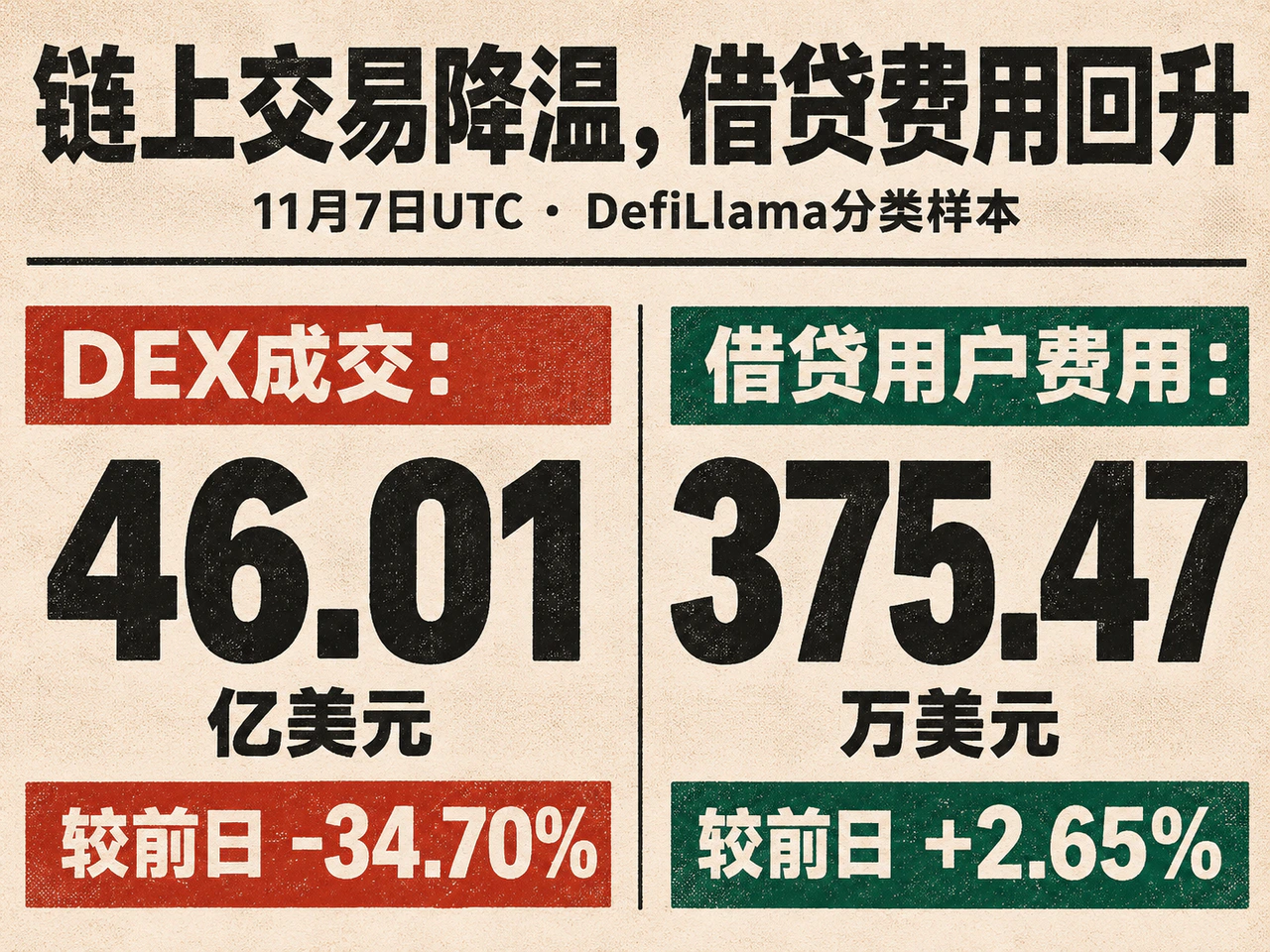
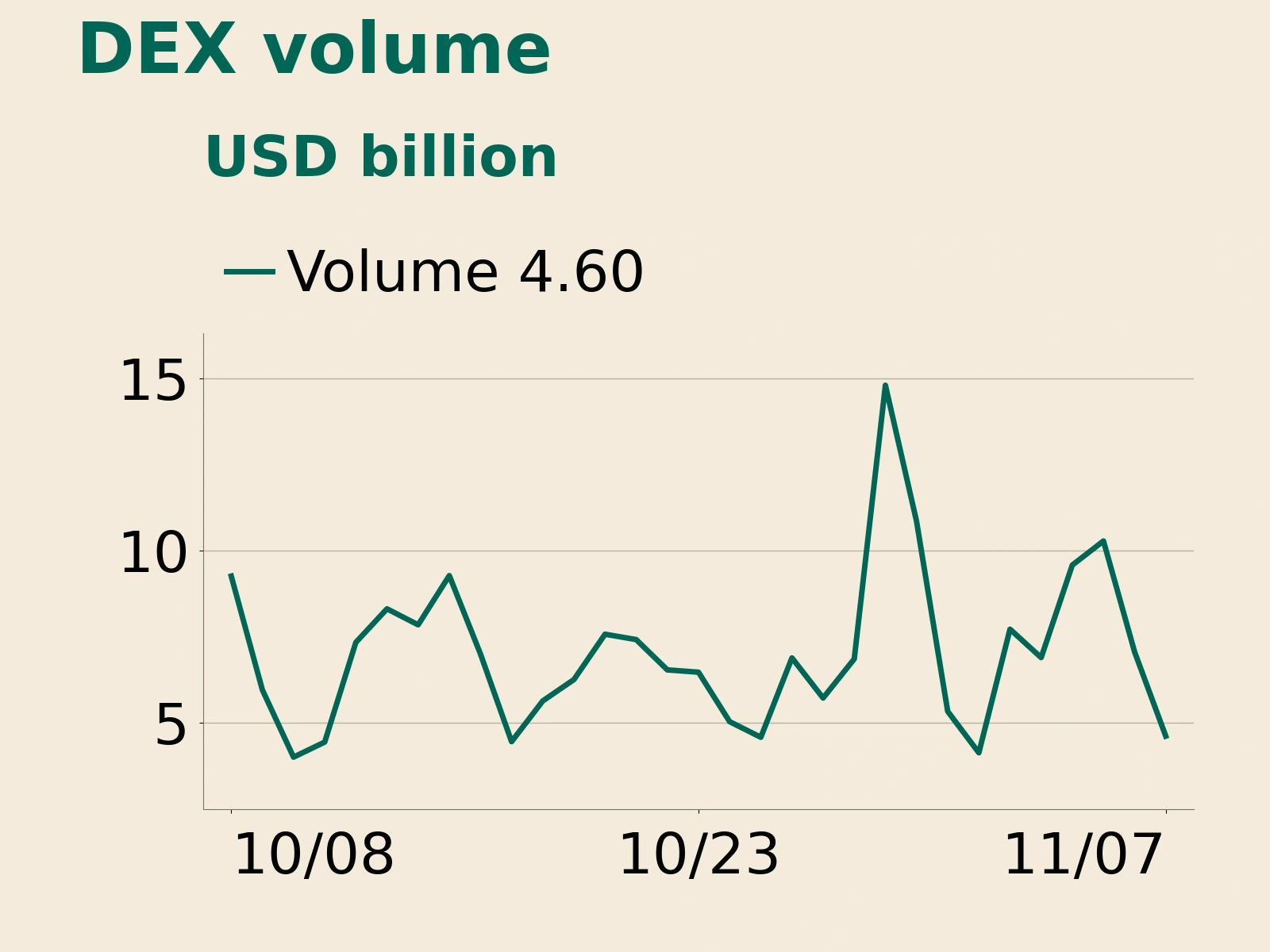
On November 7, 2026 (UTC), aggregate daily data for protocols covered by DefiLlama and classified as decentralized exchanges (DEXs) showed trading volume of approximately $4.601 billion, down 34.70% from the previous day. Over the same period, user fees at lending protocols edged higher. Trading, outstanding credit and payment settlement are moving at different speeds, making it necessary to examine onchain economic activity by business line.
DEX trading cools across multiple networks; daily lending fees rise 2.65%
Within the same source's DEX-category sample, daily trading volume was approximately $789 million on Ethereum, $1.072 billion on Solana and $774 million on BNB Chain. Base and Arbitrum recorded approximately $621 million and $74 million, respectively. All were below the previous day's levels. Solana had the highest volume among these networks, but it too was affected by declining trading activity. The slowdown extended across multiple layer-1 and layer-2 networks.
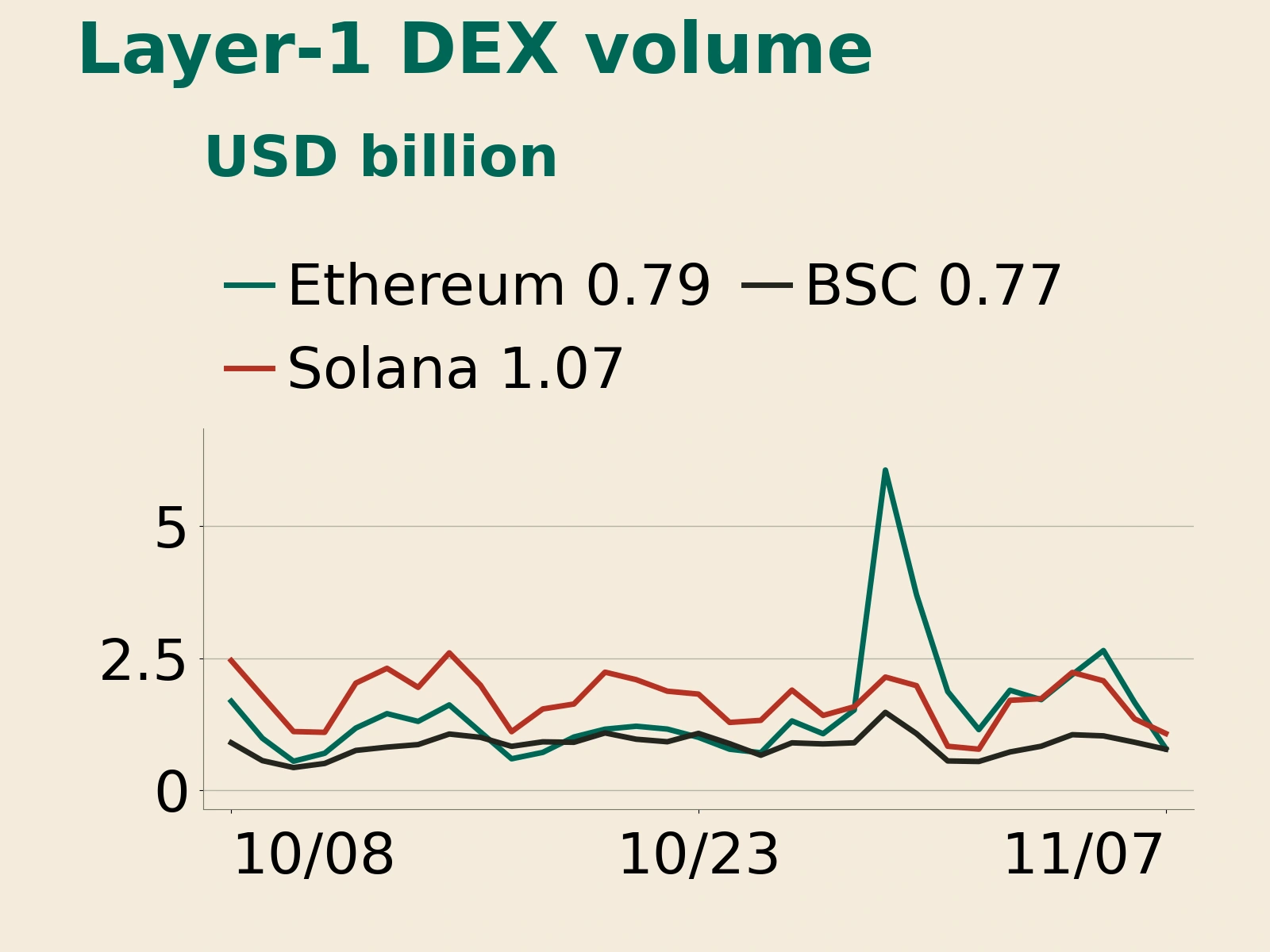
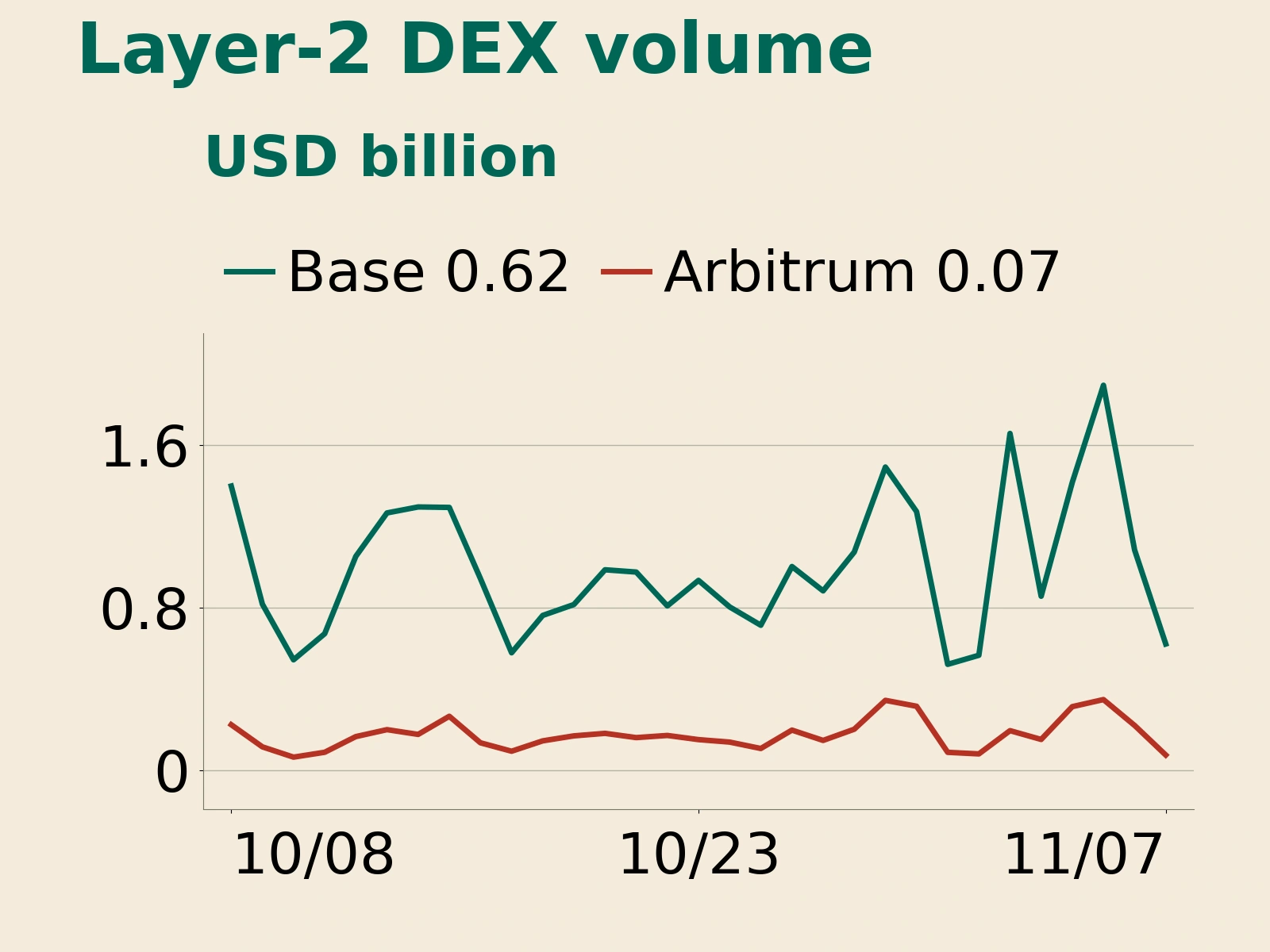
Over a longer observation period, DEX trading volume totaled approximately $50.190 billion from November 1 to 7, down 8.65% from the preceding seven days. The daily decline was substantially larger than the seven-day decline, indicating that the weekend pullback came on top of an already weakening trading environment. The declines varied by network; chain-level data are still needed to identify structural changes within the broader slowdown.
Fees are weakening as well. User fees at DEX-category protocols totaled approximately $5.0788 million for the day, down 22.74% from the previous day. The latest seven-day total was $52.1753 million, down 21.06% from the preceding seven days. That fee decline exceeded the 8.65% drop in trading volume over the same period, implying lower fees per unit of trading volume. Shifts in market share between high- and low-fee pools, and between exchanges, could both contribute to this change; their specific contributions require protocol-level analysis.
Lending presents a different picture. User fees at protocols in the same source's Lending category totaled approximately $3.7547 million for the day, up 2.65% from the previous day. Aave V3 accounted for approximately $1.1179 million, slightly lower on the day, while Morpho Blue generated approximately $1.1040 million, an increase. The two were similar in scale. Borrowing interest is determined mainly by outstanding loans and interest rates. Existing loans continue to accrue interest when new trading activity declines, so lending fees typically respond more slowly to a sudden fall in trading volume.
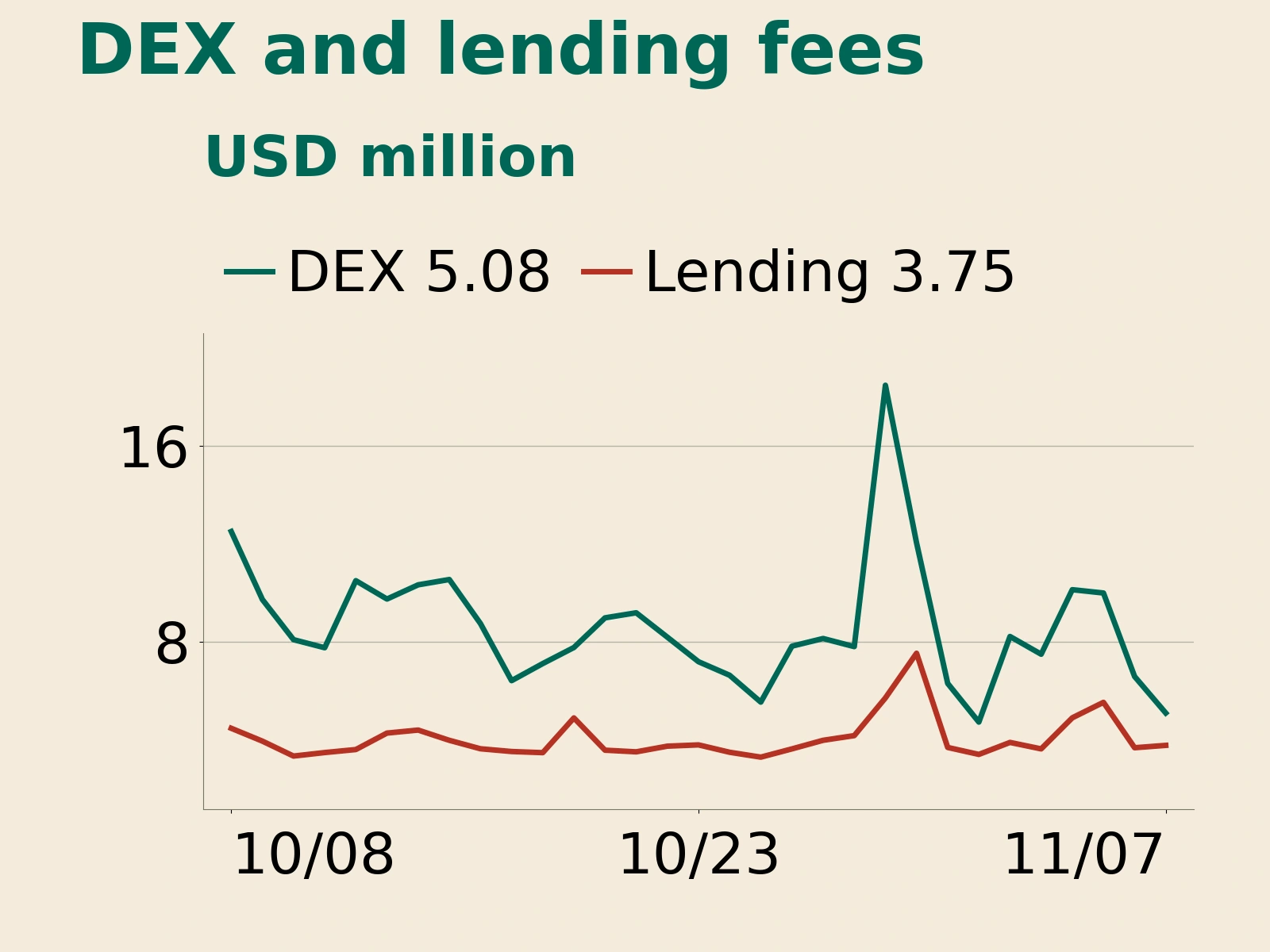
Nevertheless, lending fees totaled $28.6799 million over the latest seven days, still down 10.07% from the preceding seven days. The one-day recovery has yet to reverse the weakness over the period. Trading fees and borrowing interest reflect immediate willingness to trade and the use of outstanding funds, respectively. Loan balances, utilization rates and interest rates will also need to be examined to determine whether this divergence can persist.
Payments and asset tokenization advance; recurring usage demand remains to be seen
Payments and real-world asset tokenization provide another set of observations. RWA.xyz's network distribution as of November 7 showed substantial tokenized asset balances on Ethereum, BNB Chain, Solana and Stellar, with a presence on layer-2 networks such as Arbitrum and Base as well. Tokenized assets are now distributed across networks; exchange trading is only one form of onchain activity.
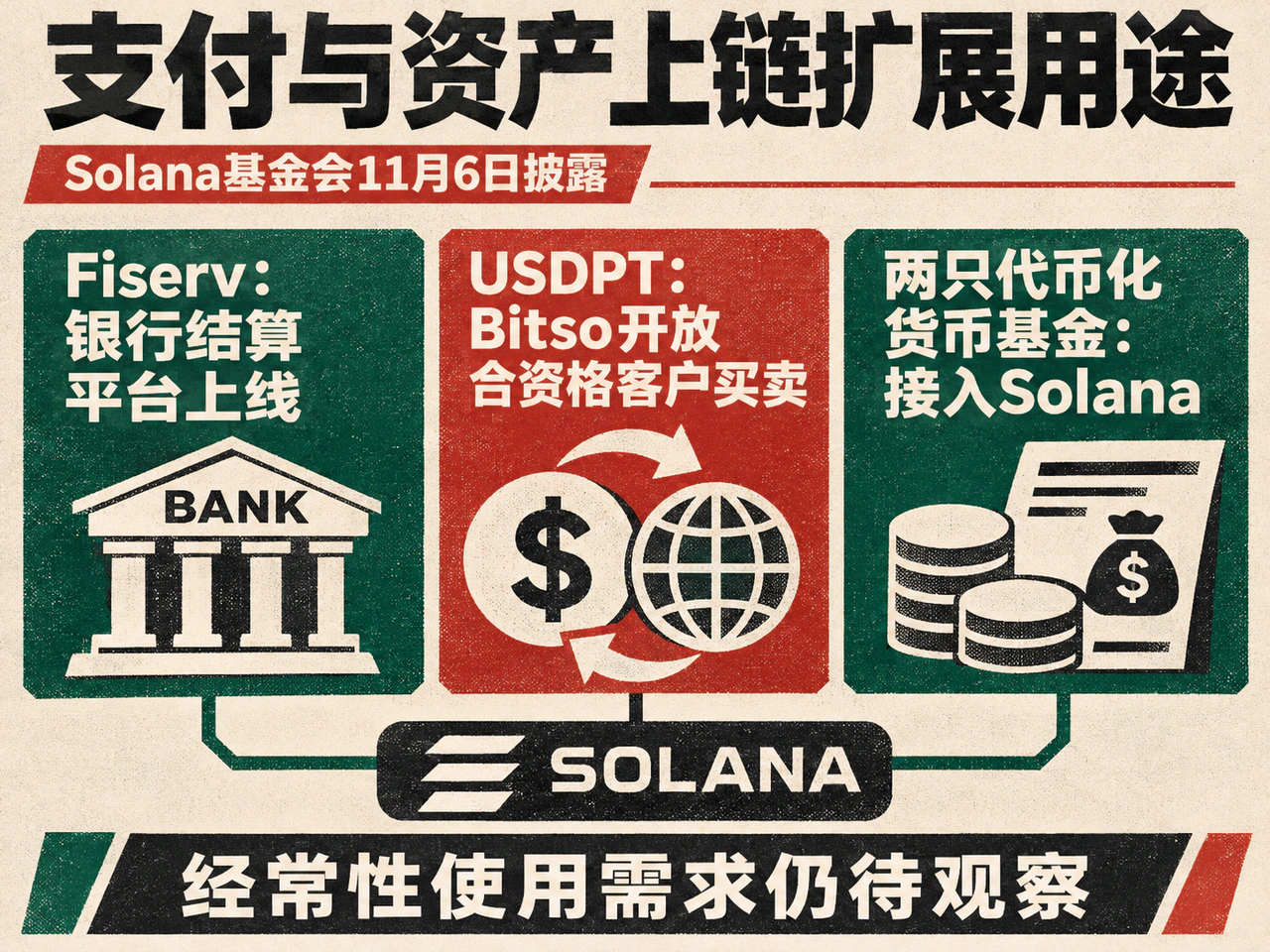
The Solana Foundation's October ecosystem review, published on November 6, reported specific developments. Fiserv's digital asset platform is live, with the Bank of North Dakota's Roughrider Coin as its first deployment and related transactions settling on Solana. Western Union's USDPT is available for eligible customers to buy and sell against pesos on Bitso in Mexico. These businesses provide access to bank settlement and cross-border currency exchange, respectively. Their frequency of use depends more on customers' business needs than on crypto traders' demand for turnover.
The stages of implementation still need to be distinguished. The Samsung Wallet USDC functionality discussed in the same review has been announced and is being made available gradually to eligible users; potential device reach is not equivalent to actual payment usage. Connections to wallets, banks and corporate systems create entry points for payment infrastructure. Whether they go on to generate recurring transfers and settlement will determine the quality of revenue.
Asset tokenization is also expanding investment and transfer use cases. According to the Foundation, two tokenized money market funds from J.P. Morgan Asset Management have connected to Solana through Morgan Money, allowing eligible U.S. investors to subscribe, redeem and receive onchain balances. Money market funds create demand to hold assets, while payment and settlement infrastructure provides use cases for moving them. Together, they could help onchain capital circulate more steadily outside exchanges.
Whether these business expansions translate into token value ultimately depends on fee distribution. Under DefiLlama's definitions, fees paid by users include amounts paid to participants such as liquidity providers; revenue retained by protocols and amounts accruing to token holders are subsets of those fees. Growth in trading volume, payment volume or asset balances must pass through actual charging, cost sharing and distribution mechanisms before it can translate into returns for holders. For now, the more useful questions to track are whether lending interest can remain resilient as trading cools, and whether payments and asset settlement can generate repeat usage demand.
Click Read Original for the full details.