On November 7, 2026, MEXC responded to the restrictive order issued the previous day by the U.S. Financial Crimes Enforcement Network (FinCEN), saying it was reviewing the order with its legal and compliance teams and had launched an independent review of its anti-money laundering and sanctions controls. The company said its platform was operating normally, user assets were safe, and it planned to engage with regulators.
The restrictions on processing funds linked to MEXC, alongside the enforcement action and acquisition approval facing Bitget in Thailand, highlight two basic requirements for operating an exchange: access to major financial systems and lawful operation in the jurisdictions where its customers are located. Acquiring a licensed entity can provide an entry point for local operations, but funding channels, entity licensing, approval of changes in control, and legal liability for past business conduct must still be addressed separately.
MEXC launches an independent review; restrictions on related funds processing have yet to take effect
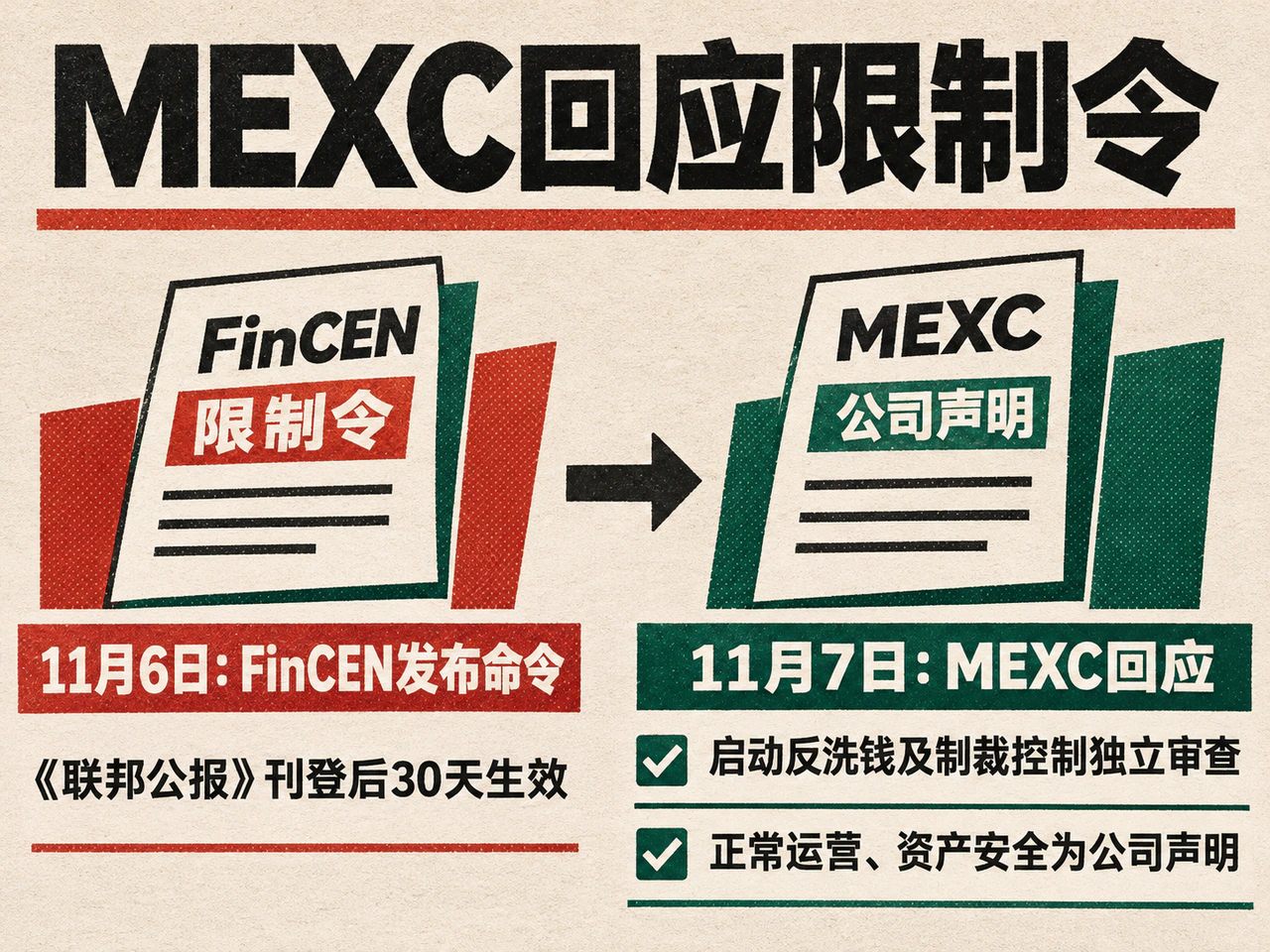
In a November 6 announcement, the U.S. Treasury Department said FinCEN had issued an order prohibiting covered U.S. financial institutions from processing funds transfers to or from MEXC Global. The order will take effect 30 days after publication in the Federal Register. Announcement, publication, and entry into force are distinct milestones; the precise timing of any changes to funding channels by partner institutions should be determined from the official documents.
The Treasury alleged that, from May 2021 to May 2026, MEXC processed at least US$16 billion in funds linked to sanctions evasion, cybercrime, and other illicit activity. This figure represents the cumulative amount the regulator alleges was processed over five years, rather than customer withdrawals or losses in the current episode. The order also leaves financial institutions’ existing anti-money laundering and sanctions obligations intact.
Following MEXC’s response, two developments will be particularly important to verify: whether the independent review produces remedial action, and whether engagement with regulators results in new public documents. Normal platform operations and the safety of assets are statements by the company; whether partner financial institutions maintain their existing arrangements will still depend on their assessment of the order’s scope and counterparty risk.
An exchange’s order matching, asset custody, and receipt and payment of funds rely on different systems, so a functioning trading interface reflects only part of its operating condition. If funding channels tighten, customers may need to adjust their deposit and withdrawal arrangements, and counterparties may increase scrutiny. Assessing the economic impact requires tracking actual changes in those channels and movements of customer assets; subsequent data will be needed to establish industry-wide fund flows.
Bitget’s Thai acquisition awaits approval as the criminal complaint and access restrictions proceed separately
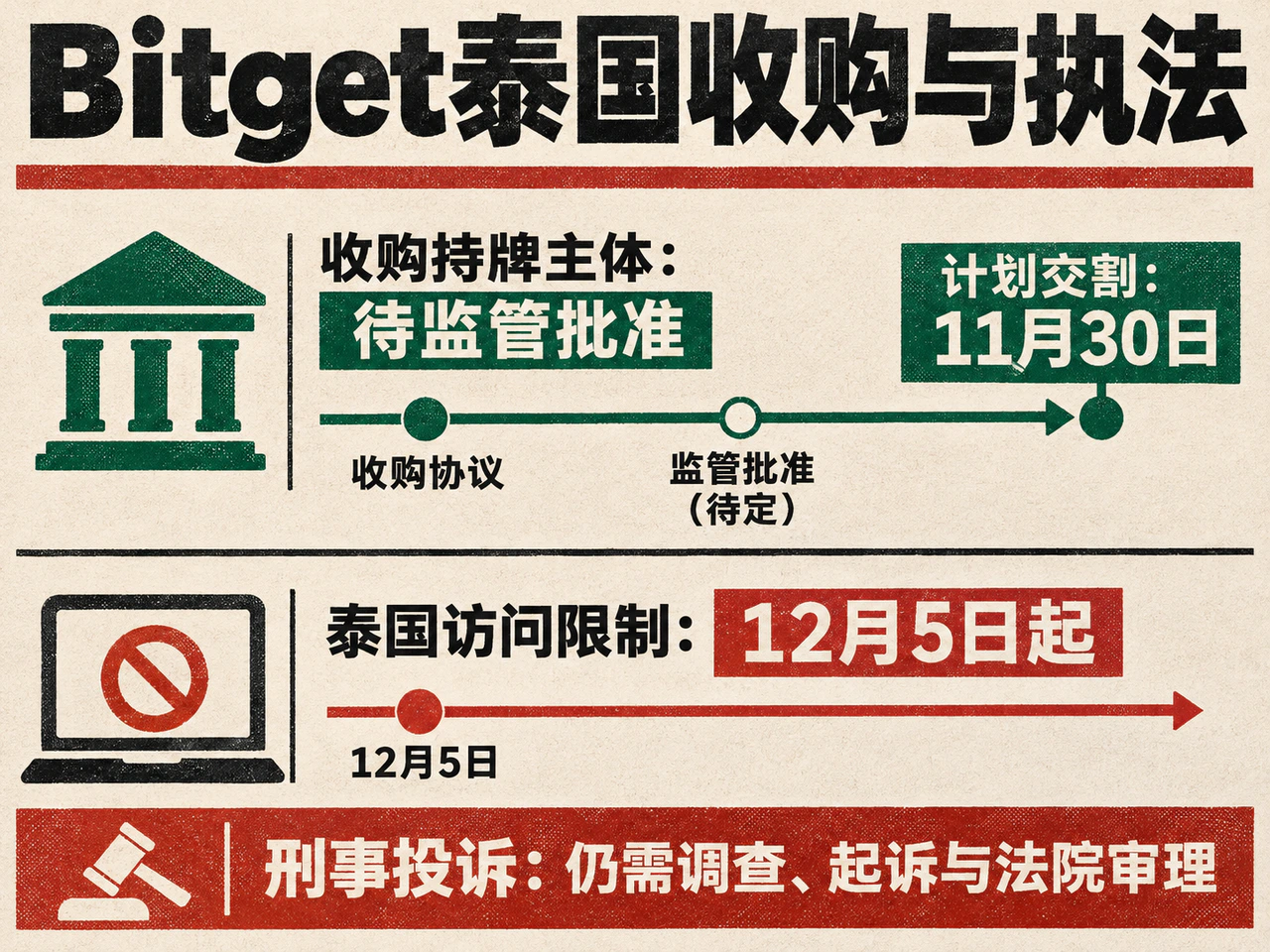
Thailand’s Securities and Exchange Commission has filed a criminal complaint against Bitget’s operating entity, BG Limited, and one associated individual. It alleges that the platform provided digital asset trading services and charged fees without authorization from 2022 to 2025, and solicited users through a Thai-language website, prices displayed in Thai baht, and local social media channels. The regulator made clear that investigation, a decision by prosecutors, and court proceedings are still required; there has been no court conviction.
A separate measure concerns local access. According to the Thai regulatory announcement, access to the relevant websites, domains, and applications will be blocked from December 5, and users were reminded to consider arrangements for their assets on the platform before that date. The restriction concerns access in the Thai market, rather than a shutdown of the platform’s global operations.
A November 7 report by Blockhead linked the enforcement action to Bitget’s ongoing local acquisition. Bitget had previously announced plans to acquire licensed exchange GMO-Z.com Cryptonomics (Thailand) through BTGT Management (Thailand). According to the report, GMO has postponed the share transfer date from October 31 to November 30, citing factors including applications, approvals, and related preparations in Thailand. The transaction still requires regulatory approval, and the planned closing date is only five days before the access restrictions are due to begin.
The proximity of the dates puts greater attention on the approval process, while the outcome of the transaction remains subject to the regulator’s decision. The Thai regulatory announcement did not explain how the criminal complaint would affect approval of the change in control. The commercial arrangements for acquiring a licensed company, approval of the buyer and significant shareholders, and legal proceedings concerning the original platform’s past business conduct must still be checked separately.
These two cases show how the compliance requirements for exchange expansion are taking concrete form through scrutiny of funding routes, licensing in customers’ jurisdictions, and approval of changes in control. Developments to watch include publication of the MEXC order in the Federal Register and its implementation arrangements, progress on the independent review, and approval and closing announcements for Bitget’s Thai acquisition. Platform scale and acquisition plans can provide a stable basis for customer service only if they translate into the capacity to operate in compliance with applicable rules.
Click “Read the original” for further details.