On November 7, 2026, U.S. Central Command said it had struck and disabled a cargo ship in the Gulf of Oman that was attempting to violate the maritime blockade of Iran. The same day, the United States announced an expansion of interagency coordination to Iran's land borders and the Caspian Sea. Military pressure is extending beyond ship interceptions to the movement of goods and funds, while Qatar is seeking to break the negotiating impasse through arrangements for inspections and maritime passage.
U.S. strikes HUDA as Iron Gate task force seeks to cut off land and Caspian routes
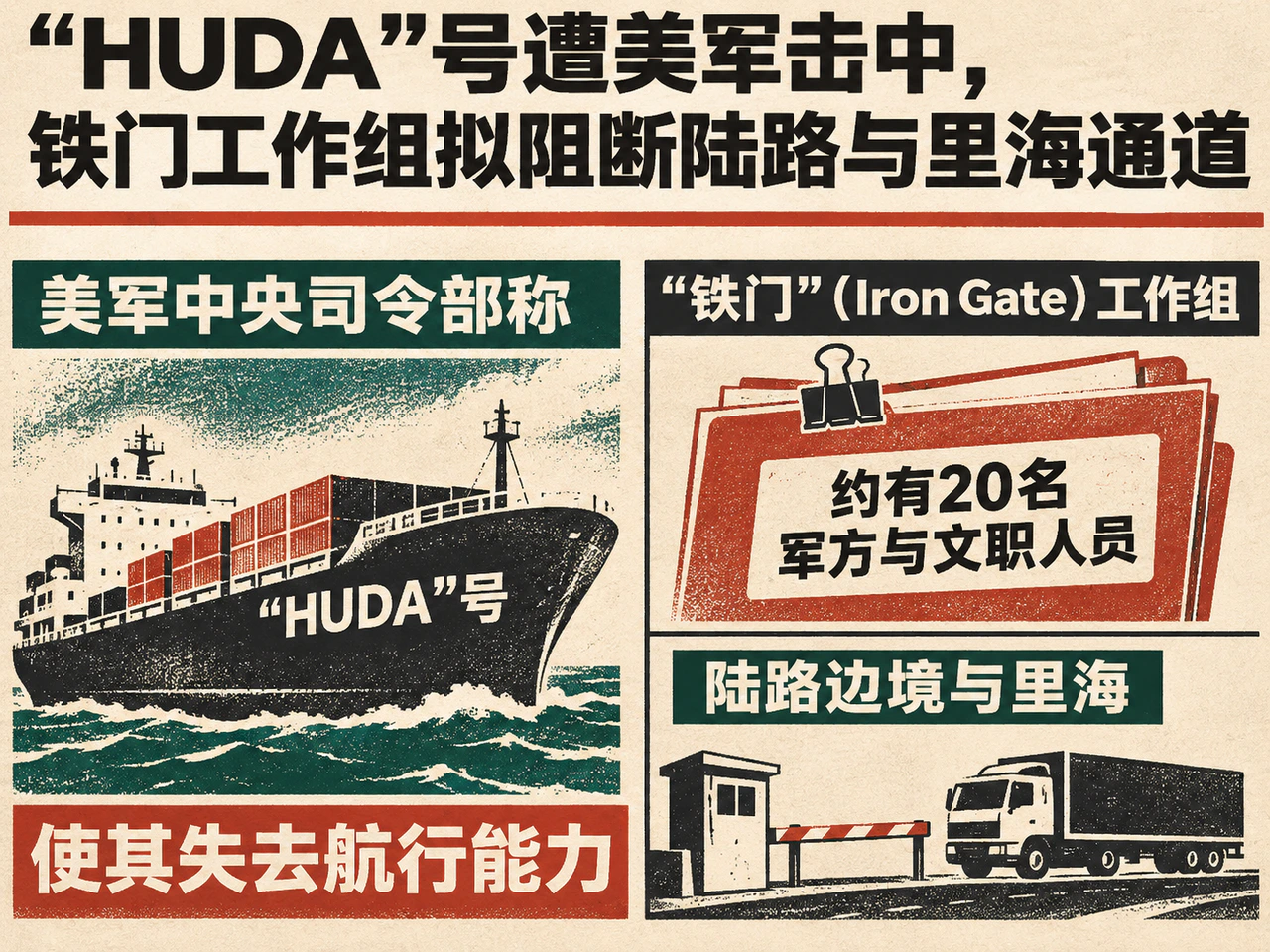
According to a U.S. Central Command statement, the St. Kitts-flagged HUDA had previously called at an Iranian port and attempted to leave the area after repeatedly ignoring warnings. U.S. aircraft fired precision-guided munitions at the ship's stern. The United States said it had instructed the crew to move clear of the targeted area before the strike.
The Florida-based Iron Gate task force comprises about 20 military and civilian personnel. It is intended to coordinate efforts to stop advanced weapons, dual-use technology, sanctioned goods and illicit funds from moving into or out of Iran through its land borders and the Caspian Sea. The announcement so far focuses primarily on interagency coordination. With the broader geographical scope, effectiveness will depend on whether transactions and transport operations along these land and Caspian routes can be consistently identified and constrained.
On the evening of November 6, U.S. time, Trump confirmed a “small-scale strike” against Iran, saying the United States had destroyed an air-defense installation. Iranian media reported that two missiles had hit the Suza area of Qeshm Island in the Strait of Hormuz.
On November 7, Revolutionary Guards spokesman Mohebbi said Iran had lifted its self-imposed missile-range restriction, but did not say whether it already possessed missiles capable of exceeding the previous limit of about 1,200 miles. If the statement reflects an actual capability, Iran's deterrent reach would extend farther. At present, only the policy statement can be confirmed.
Qatar's proposal envisages a phased exchange: lifting the blockade, inspections, then maritime passage
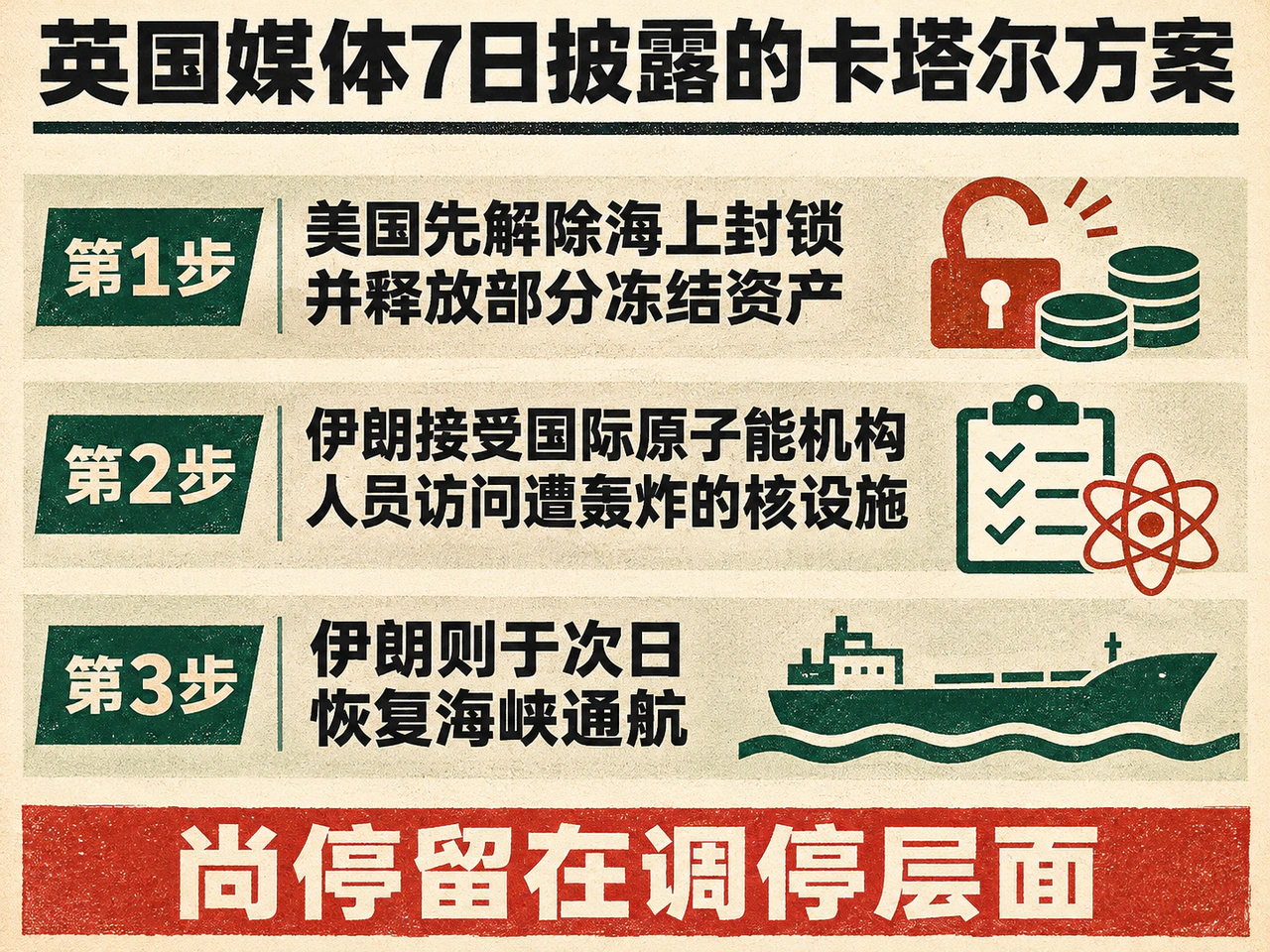
Qatar's proposal, disclosed by British media on November 7, envisages the United States first lifting the maritime blockade and releasing some frozen assets, Iran accepting visits by International Atomic Energy Agency personnel to nuclear facilities that have been bombed, and Iran reopening the strait to shipping the following day. According to the reporting, Iran would not have to commit in advance to sending its highly enriched uranium abroad; other approaches, including reducing its enrichment level, are also under discussion. The proposal also involves coordinating shipping routes with Oman and registering them with the International Maritime Organization.
As the military action unfolded, Trump said progress had been made toward an agreement with Iran. Qatar denied reports that the talks had collapsed, saying the mediators continued to coordinate closely with the United States and Iran. The two sides are still talking, but remain divided over the sequence of easing pressure and opening nuclear negotiations.
These arrangements remain at the mediation stage. Iran's conditions also include an end to conflicts on other regional fronts, sanctions relief and war reparations, so the issues extend beyond when the strait will reopen to shipping. Whether an agreement can advance will depend on who acts first at each stage, how fully each step is implemented and whether the next step is delivered.
During the same period, the United States announced a reward of up to $20 million, with possible relocation assistance, for information on Iran's nuclear facilities, equipment, associated personnel and their movements or transfers. The reward offer and the inspection negotiations address the same question: how to establish the actual state of Iran's nuclear program and turn that knowledge into sustained constraints.
Houthis claim attacks on Riyadh airport and Saudi Aramco facilities; coalition says it intercepted one missile
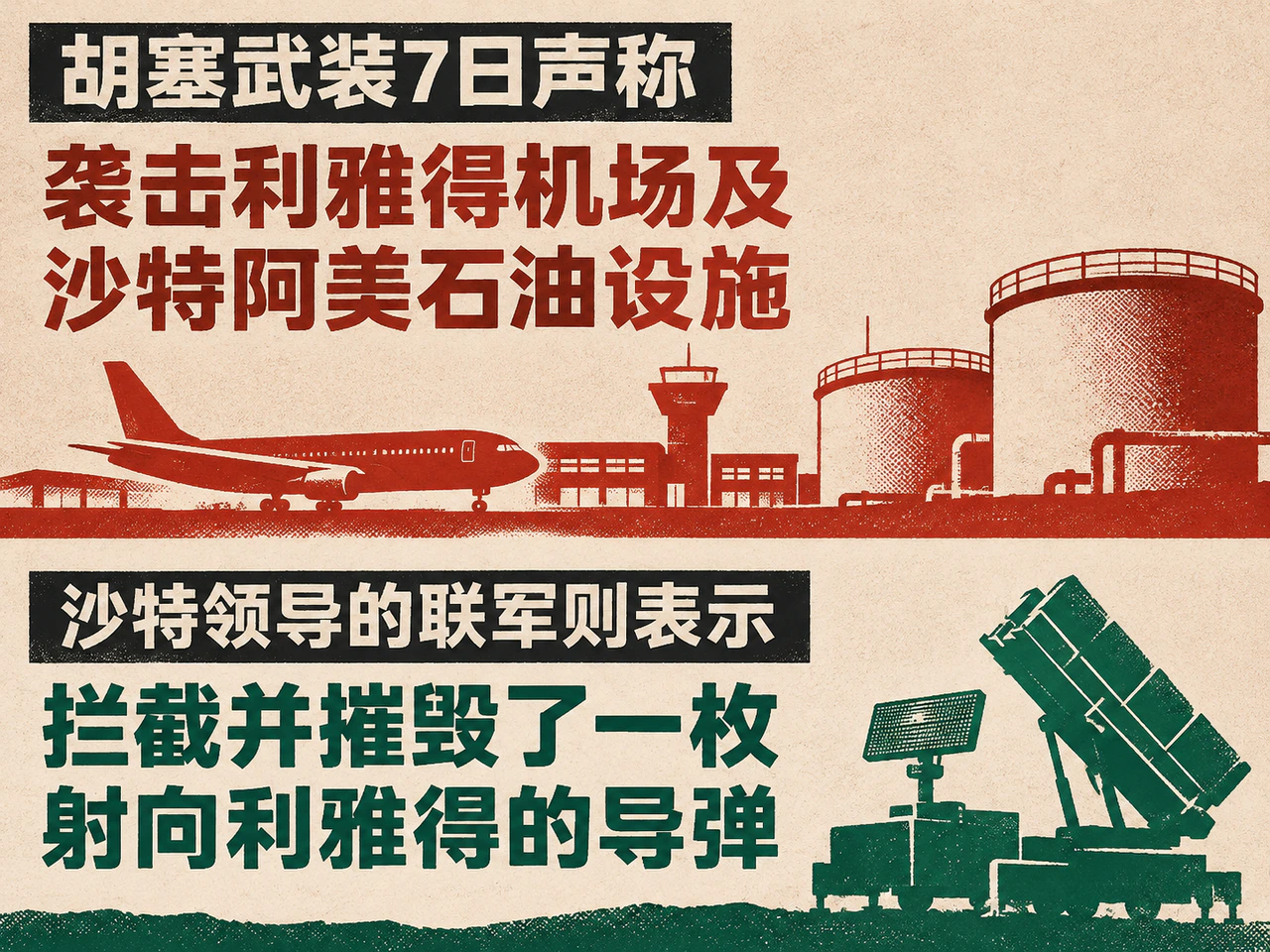
On November 7, the Houthis claimed to have attacked Riyadh airport and Saudi Aramco oil facilities. The Saudi-led coalition said it had intercepted and destroyed a missile heading toward Riyadh. The same day, Houthi media said a Saudi airstrike on the Al-Shariyah area of Sanaa province had killed 22 people and injured 30. Both the casualty figures and the attribution of responsibility came from the Houthi side.
If a mediation proposal is to cover the regional fronts, it will need to address the demands of the warring parties in Yemen as well as the terms of the U.S.–Iran exchange. Military pressure and diplomatic engagement are proceeding in parallel: the United States is stepping up enforcement of the blockade, Iran is escalating its statements of deterrence, and Qatar is trying to separate inspections, assets and maritime passage into steps that can be implemented in sequence.
Key developments
The following are report publication times in Beijing time, listed in reverse chronological order.
| Key developments |
|---|
| 11-08 05:00U.S. Central Command said it had struck the stern of the St. Kitts-flagged cargo ship HUDA in the Gulf of Oman, disabling the vessel. The United States said the ship had repeatedly attempted to violate the maritime blockade of Iran and that the crew had been instructed to move clear of the targeted area before the strike. |
| 11-07 22:23U.S. Central Command announced the formation of the approximately 20-person Iron Gate task force to coordinate efforts to stop advanced weapons, dual-use technology, sanctioned goods and illicit funds from moving into or out of Iran through its land borders and the Caspian Sea. |
| 11-07 21:43Revolutionary Guards spokesman Mohebbi said Iran had lifted its self-imposed missile-range restriction, but did not say whether it already possessed missiles capable of exceeding the previous limit of about 1,200 miles. |
| 11-07 21:16Houthi media said a Saudi airstrike on the Al-Shariyah area of Sanaa province had killed 22 people and injured 30. The Saudi-led coalition said it had intercepted a missile heading toward Riyadh. |
| 11-07 19:35Qatar denied that the talks had collapsed and said it continued to coordinate closely with the United States and Iran. Iran's conditions included lifting the blockade and sanctions and unfreezing assets. Differences remained over the sequencing of nuclear negotiations. |
| 11-07 15:00British media reported that Qatar's proposal envisaged the following sequence of exchanges: the United States would first lift the blockade and release some frozen assets; Iran would accept visits by International Atomic Energy Agency personnel to nuclear facilities that had been bombed; and Iran would reopen maritime passage the next day. No agreement had been announced. |
| 11-07 10:13Trump confirmed a “small-scale strike” against Iran, saying an air-defense installation had been destroyed. Iranian media said two missiles had hit the Suza area of Qeshm Island. |
| 11-07 08:57The United States announced a reward of up to $20 million, with possible relocation assistance, for information on facilities, equipment and personnel associated with Iran's nuclear program and their movements or transfers. |