On November 2, 2026, the Hong Kong Monetary Authority announced that its EnsembleTX pilot supports interbank settlement of tokenised deposits in tokenised central bank money 24 hours a day, 7 days a week. Standard Chartered launched a tokenised deposit solution for corporate clients in Hong Kong on the same day and disclosed that several institutions had carried out live transactions. Last week’s digital asset developments thus moved along two tracks. Banks turned settlement capabilities into corporate services, while tax reporting and restrictions on fund transfers involving a specific platform further defined the scope of compliance obligations.
Both developments will shape how digital asset businesses expand. Settlement hours determine how flexibly funds can be moved. Customer identification, transaction reporting and counterparty due diligence affect which institutions can handle those funds. Assessing policy progress requires looking at both the scope of the services available and when new obligations take effect.
EnsembleTX Reaches 12 Participating Banks as Standard Chartered Reports Live Transactions
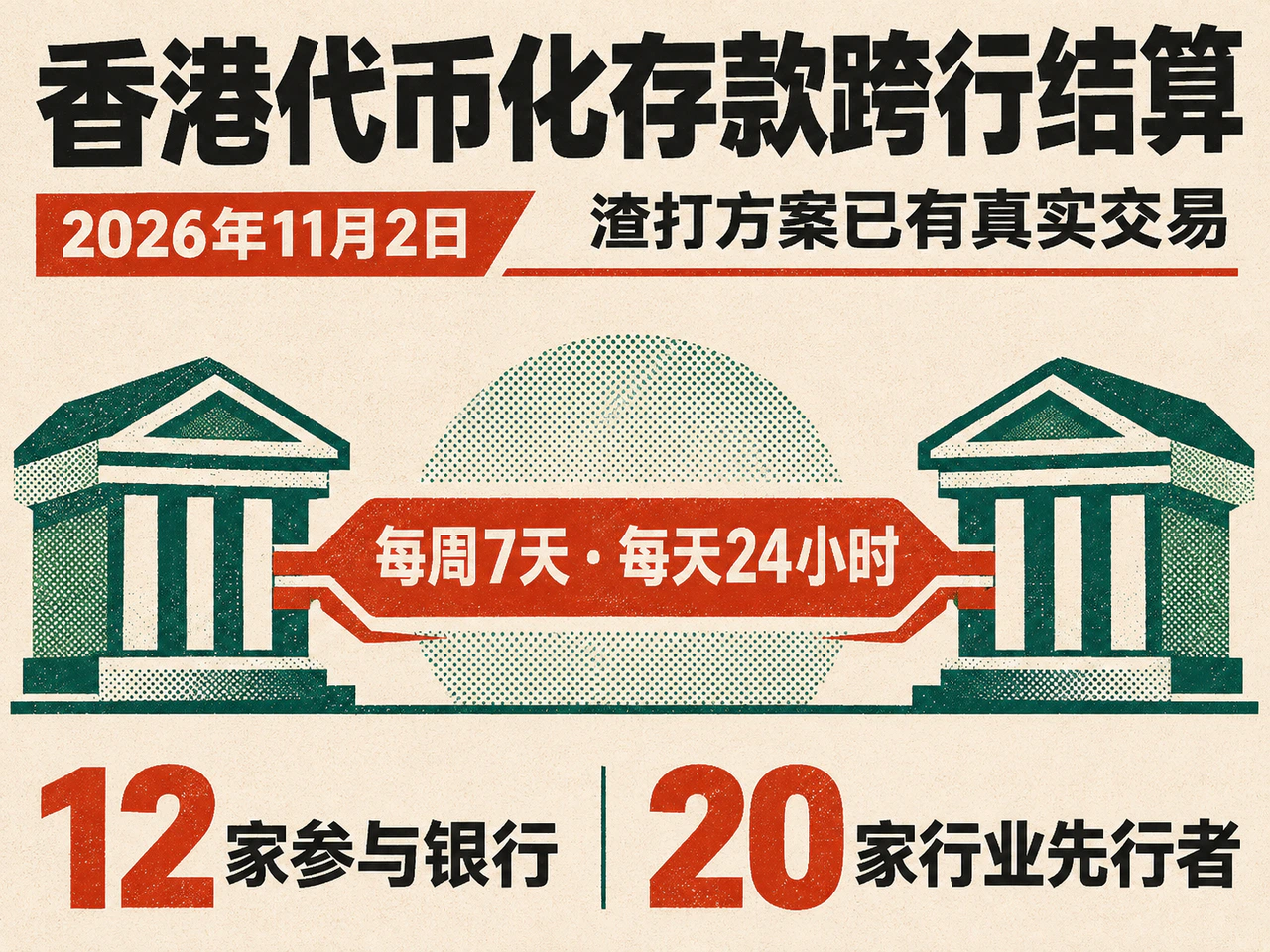
The Hong Kong Monetary Authority disclosed that participation in EnsembleTX had grown to 12 banks and 20 industry pioneers. The pilot began in November 2025. In its initial phase, it used Hong Kong’s real-time gross settlement system for Hong Kong dollar payments to settle tokenised deposits between banks and supported real-value transactions in a controlled environment. The upgrade extends settlement beyond traditional banking hours, making the new capability available for corporate treasury management and transactions in tokenised money market funds.
Standard Chartered’s announcement explained how corporate clients can use the service. They can move liquidity within their corporate groups and transfer tokenised deposits in real time over infrastructure connecting participating banks. The bank said China Asset Management (Hong Kong), Finloop and PantherTrade had carried out live tokenised deposit transactions and settled transactions in tokenised money market funds. Its partnerships with Fireblocks and HashKey are intended to broaden connectivity.
Round-the-clock settlement narrows the gap between trading an asset and settling the cash leg. Even if fund units can trade, institutions still have to pre-position liquidity or wait for settlement if payment and final settlement depend on banking hours. Bringing payment hours closer to asset trading hours allows companies to manage cash as part of a more continuous treasury and investment process. More participants can extend the reach of the network. Actual transaction volumes, frequency of client use and cost savings will help gauge commercial adoption.
The US also saw discussion last week about continuity in tokenisation regulation. CoinDesk reported on November 4 that industry participants it interviewed believed tokenised securities and stablecoin businesses could continue to develop under existing law. The lawyers interviewed differed on how quickly regulators would issue their proposed rules. For institutions, bringing products to market under existing law and assessing comprehensive legislation that is still pending call for different timelines.
Hong Kong Sets CARF and CRS Timelines as the US Issues an Order Restricting MEXC Fund Transfers
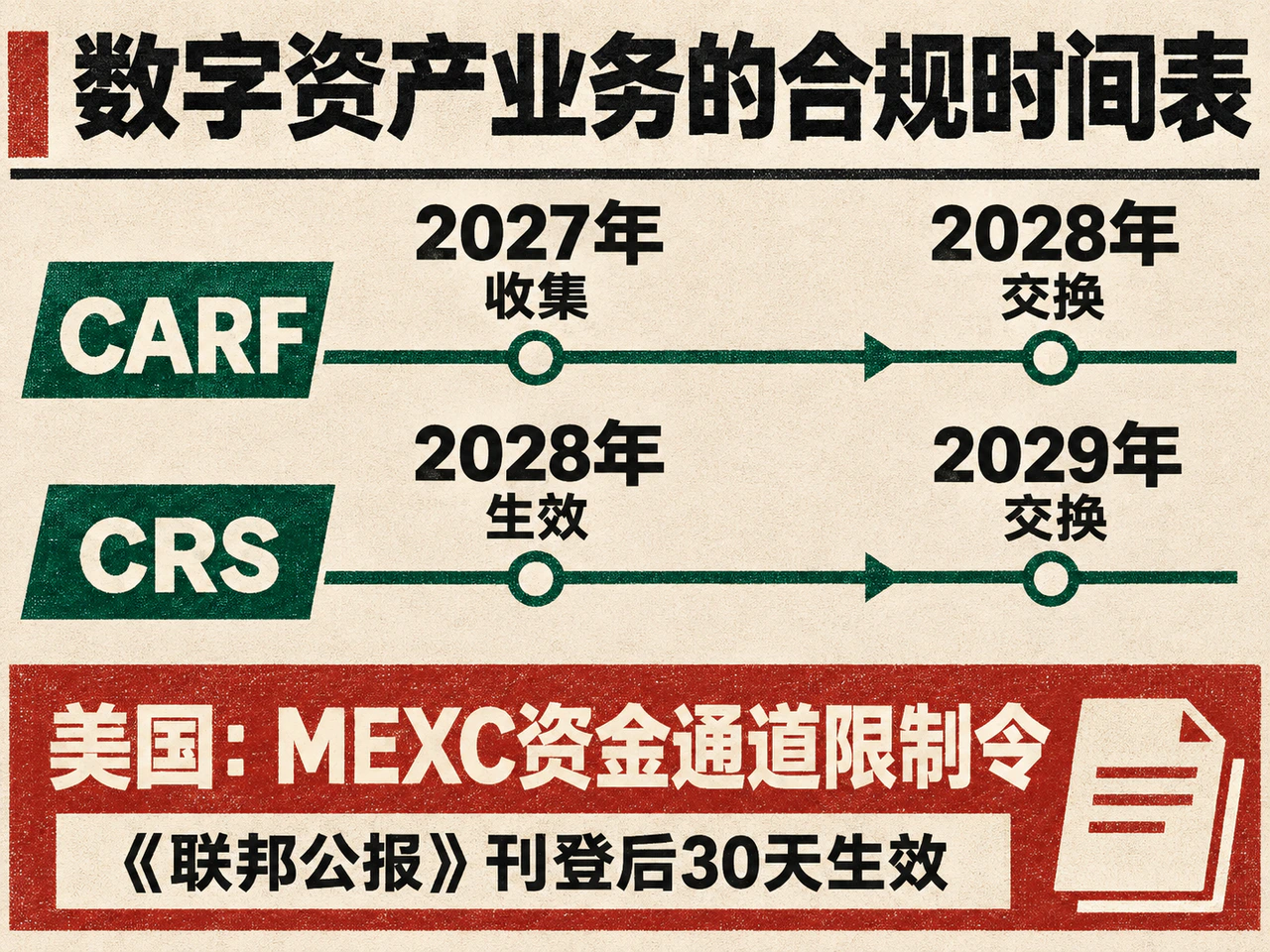
On November 4, Hong Kong passed tax amendments covering the Crypto-Asset Reporting Framework (CARF) and the amended Common Reporting Standard (CRS). According to the government announcement, CARF will be implemented in 2027, when covered service providers will start collecting the information required under the framework. The Inland Revenue Department will begin exchanging information with partner jurisdictions in 2028. The amended CRS will take effect in 2028, with exchanges under the revised standard beginning in 2029.
Platforms need to prepare customer information, transaction records and reporting systems in advance. Institutional clients’ cross-border digital asset activities will also come more clearly within the scope of annual tax information exchange. Adoption of the rules, information collection and cross-border exchange each have their own milestones. The cost of upgrading systems will come before formal exchanges begin.
Two US actions illustrate different layers of compliance. A document made public on November 6 shows that FinCEN and the Federal Reserve withdrew a proposed rule amendment dating to 2020. The proposal would have lowered the threshold for collecting and transmitting information on certain cross-border funds transfers from US$3,000 to US$250. The withdrawal notice was scheduled for formal publication on November 9. Existing recordkeeping and information transmission obligations continue to apply.
That same day, the US Treasury announced an order targeting MEXC Global. It prohibits US financial institutions from processing transmittals of funds involving the platform and takes effect 30 days after publication in the Federal Register. The Treasury alleged that between May 2021 and May 2026, the platform facilitated at least US$16 billion in fund flows linked to illicit activity. That figure represents the regulator’s allegation and is cumulative over five years.
MEXC responded on November 7 that the platform was operating normally and that users’ assets were safe. It said it had begun an independent review of its anti-money-laundering and sanctions controls and intended to engage with regulators.
The Treasury order governs the channels through which financial institutions move funds, while MEXC’s statement describes the state of its own operations. The impact will depend on how the institutions implement the restrictions, how the platform adjusts its partnerships, and how the independent review and regulatory discussions progress. The order and the platform’s response alone do not provide a basis for quantifying how much customer money may move.
Over the week, digital assets moved further into institutional use on both the settlement and compliance fronts. Bank payment and settlement capabilities extended toward round-the-clock operation, while service providers took on broader responsibilities for managing information and overseeing counterparties. Businesses that combine usable settlement infrastructure with sustained client demand and compliant operations are better positioned to turn these developments into stable revenue. Technology demonstrations and expectations about future rules alone are insufficient to make that transition.
Click to read the original article for more details.