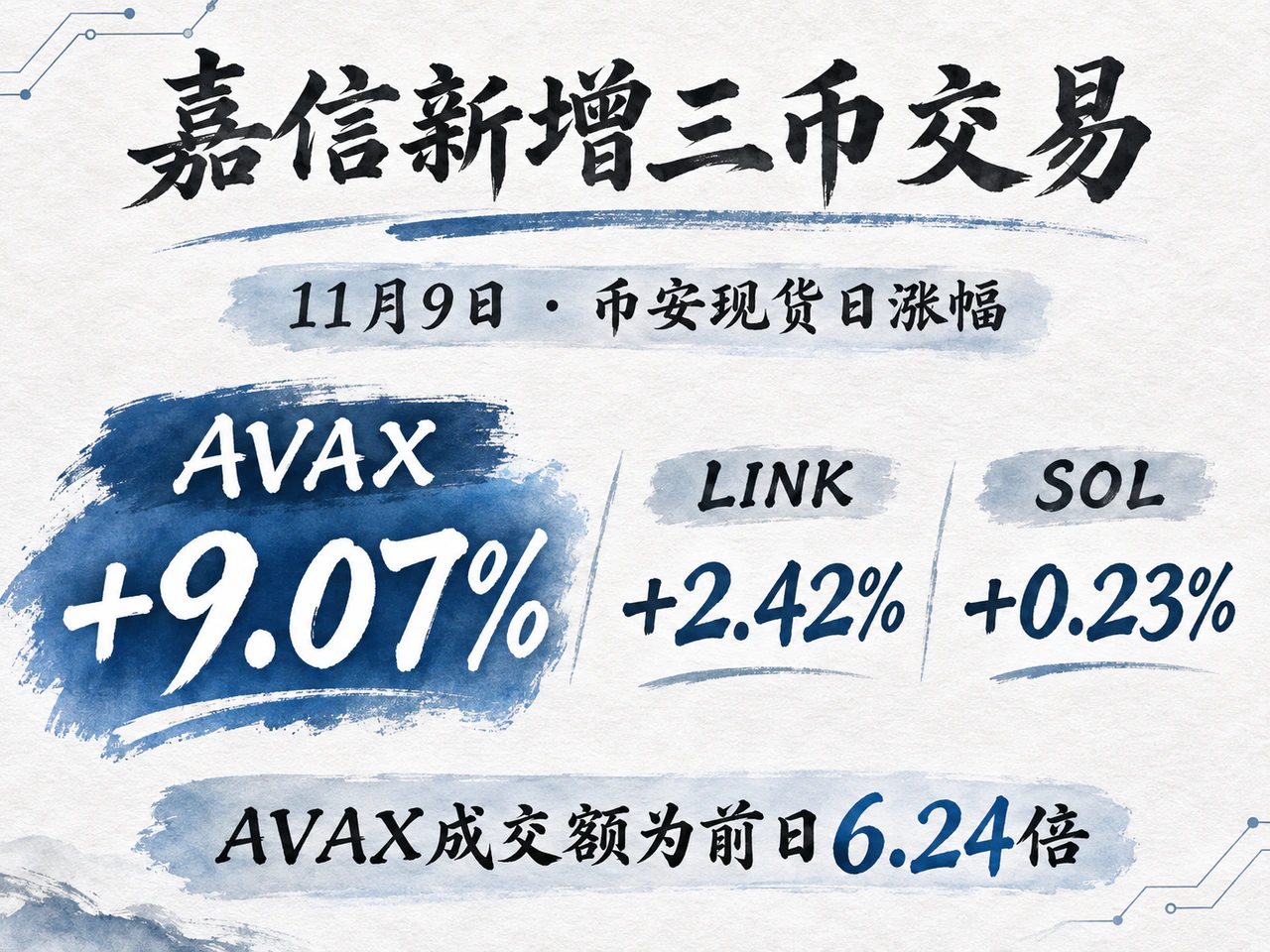
On November 9, 2026, Charles Schwab announced that it was adding Solana, Avalanche and Chainlink to its crypto trading accounts, bringing the number of assets available for direct trading from two, Bitcoin and Ethereum, to five. The broader crypto market rebounded from its lows that day. Among the three newly available tokens, AVAX led the gains on heavier trading, LINK rose moderately and SOL edged higher. Market breadth improved on the day, while the losses of the past month persisted.
Using Binance spot prices quoted in USDT and daily closes in UTC, Bitcoin finished at 75,368.41 USDT at 8 a.m. Beijing time on November 10, up 0.69% from the previous day. Ethereum rose 0.37% to 2,135.24 USDT. Nine of the ten tokens in a fixed sample of highly liquid assets rose and one fell. The rebound extended beyond the newly added tokens, with wide differences in gains and trading activity.
AVAX leads on heavier trading while SOL gains just 0.23%
All three additions are now available for trading at Schwab. The company launched its crypto service in May, expanded it to all eligible retail clients in October and added the three tokens in November. Clients can view and trade crypto assets alongside traditional investments on Schwab’s existing website, mobile app and thinkorswim platform. Existing brokerage clients can skip some of the steps involved in establishing a separate crypto trading relationship and access the new tokens through familiar account and trading interfaces.
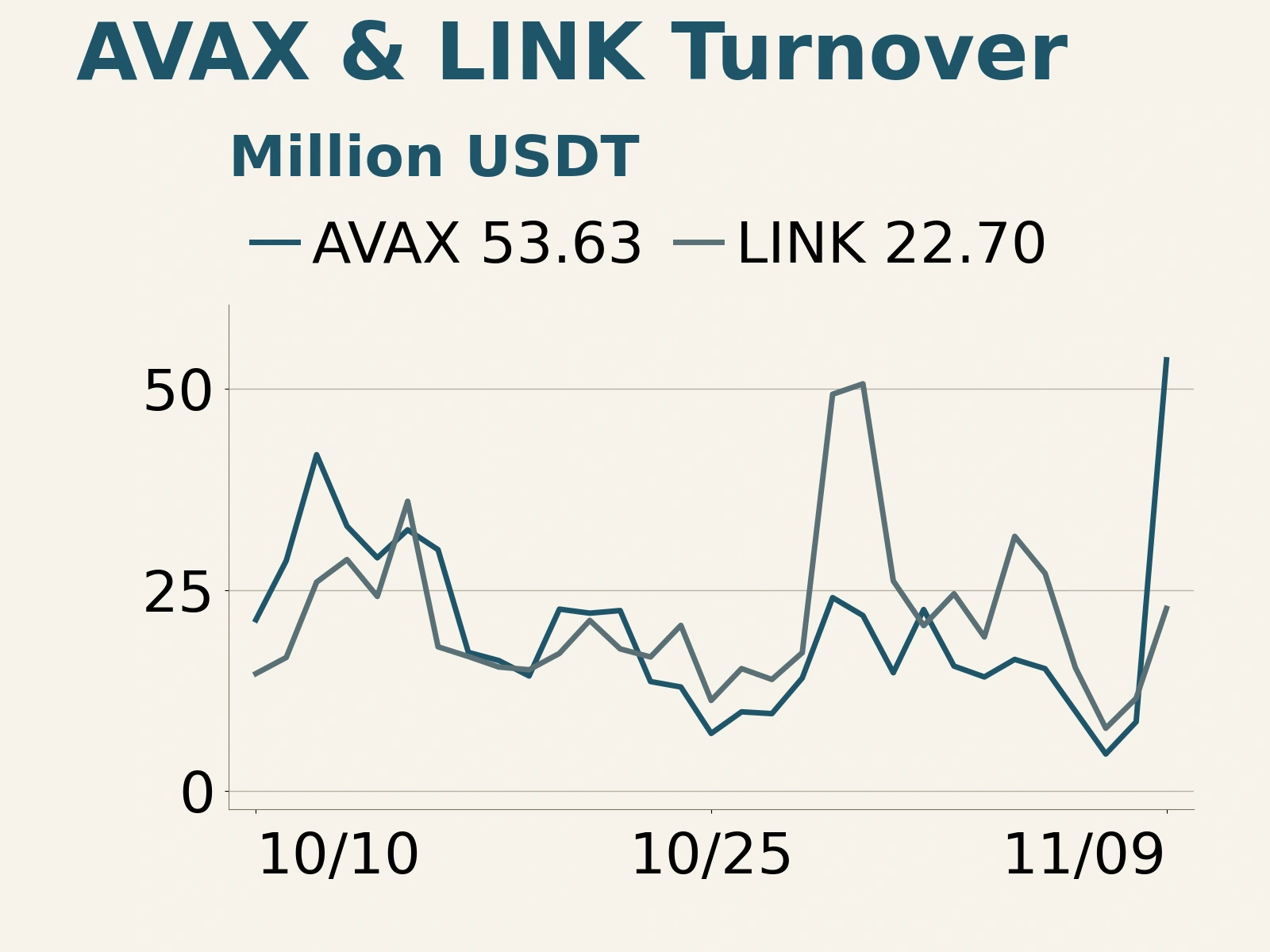
AVAX closed at 8.656 USDT, up 9.07%, the largest gain in the ten-token sample. Binance AVAX/USDT turnover reached 53.6288 million USDT, 6.24 times the previous day’s level. LINK closed at 10.663 USDT, up 2.42%, and turnover was about 1.97 times the previous day’s level. Trading picked up sharply in both assets on the day Schwab expanded access, reflecting increased market attention.
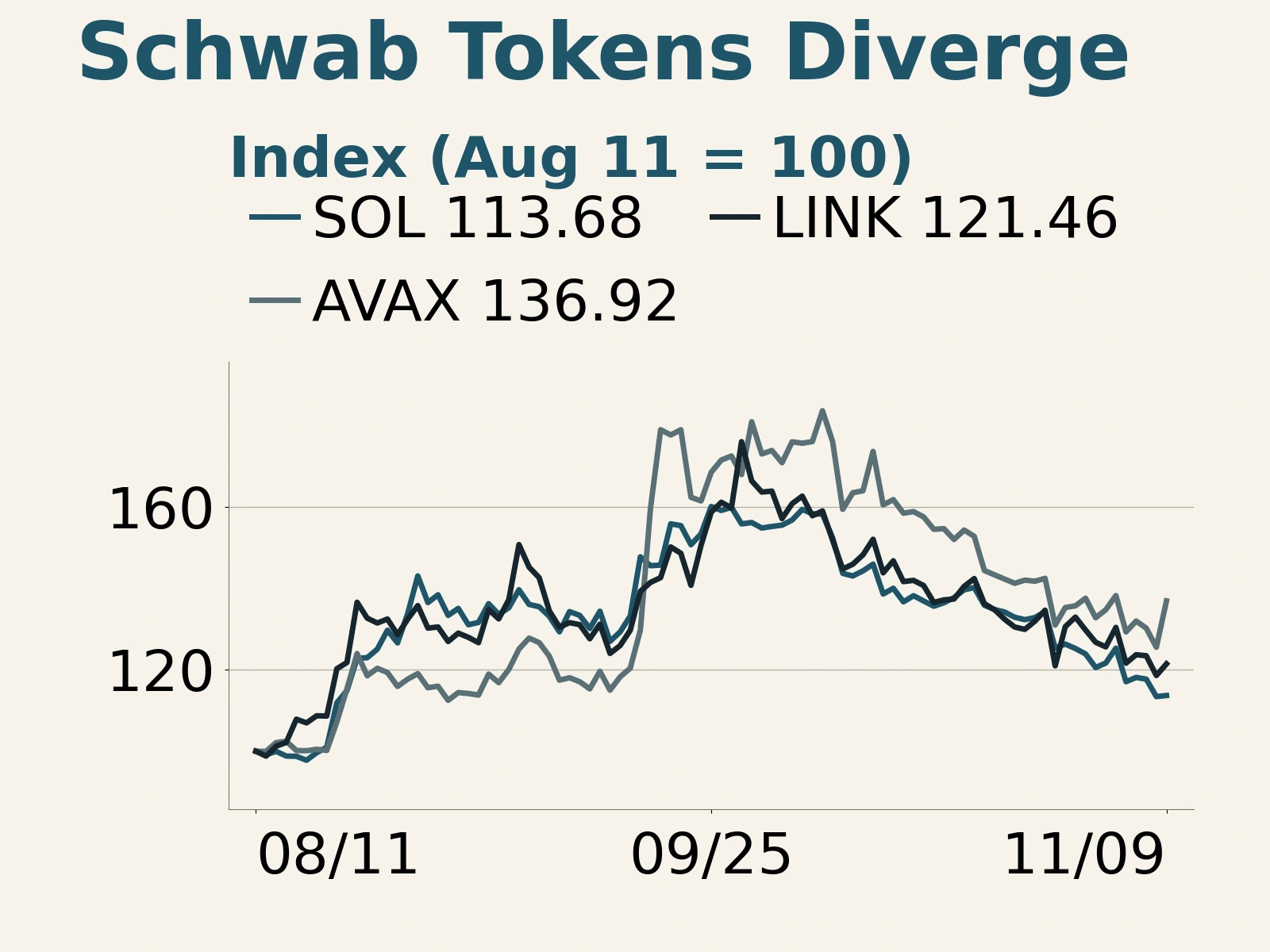
SOL gained just 0.23% despite also becoming available at Schwab, closing at 86.74 USDT and trailing Bitcoin and most of the sample. Whether easier access translates into actual positions depends on client allocations, existing selling pressure and price expectations. The day’s trading gives no measure of how much Schwab clients committed, and several factors may have contributed to the gains.
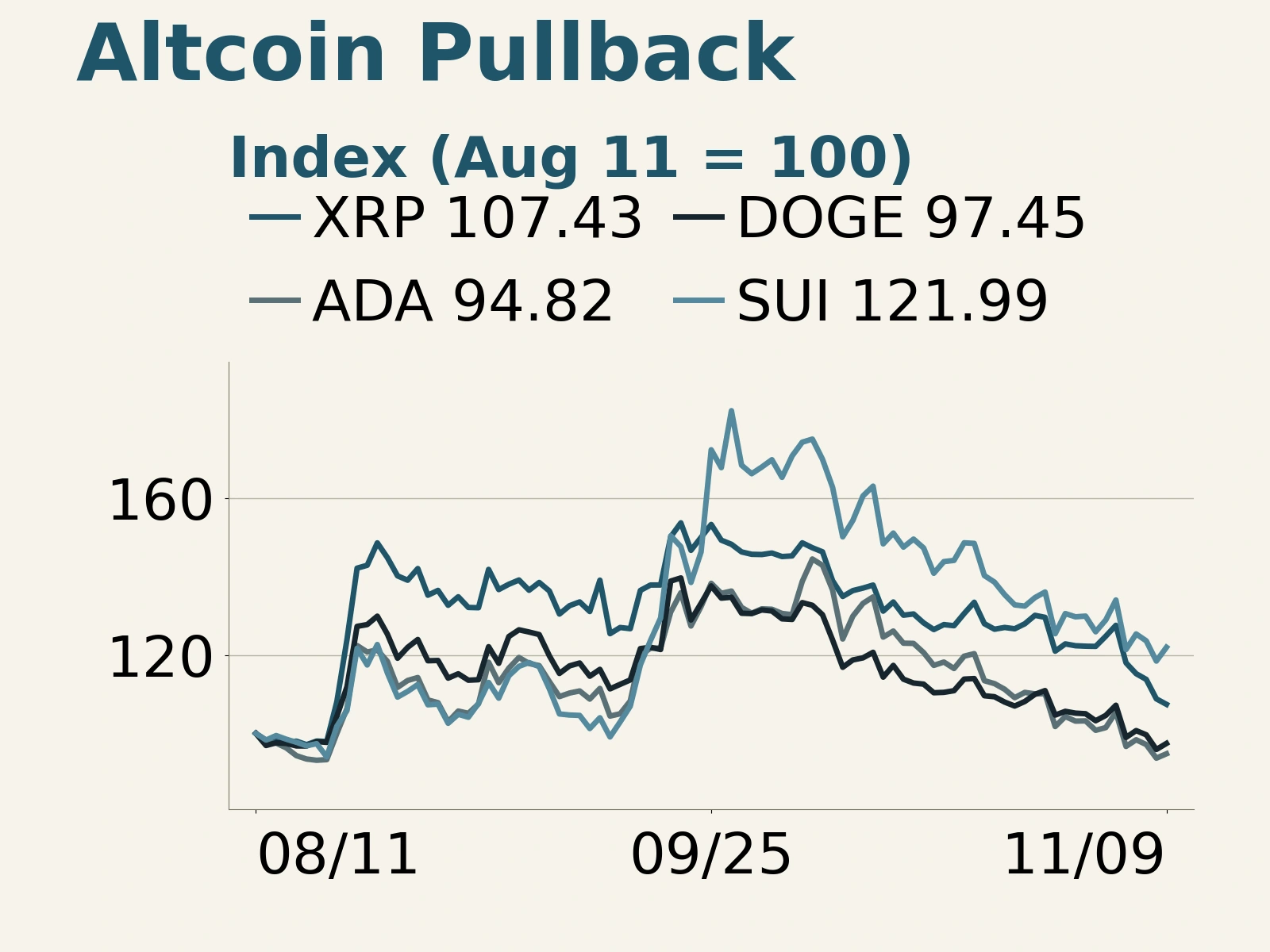
Elsewhere in the sample, SUI rose 2.97%, DOGE gained 1.61%, ADA added 1.20% and BNB rose 0.91%. XRP fell 1.28%, the only decline. Gains extended beyond Schwab’s additions, though AVAX’s jump stood out. The equal-weighted return across the ten tokens gives a sense of how broadly assets participated. A market-cap-weighted return better reflects the influence of Bitcoin and other large assets on a portfolio.
Payments also saw progress that day. Reuters reported that PNC and Coinbase were running a limited pilot that lets eligible corporate and institutional clients receive USDC and automatically convert it to US dollars. The arrangement streamlines collections and settlement without requiring clients to retain long-term exposure to price movements in other crypto assets. The brokerage expansion and the bank’s on-chain payments pilot both bring crypto infrastructure into traditional finance. The brokerage serves demand for risk-asset exposure, while the bank helps clients move working funds.
The immediate effect is to make access, trading and payment services more widely available. For that improved access to support a lasting rise in token valuations, demand to hold the assets and actual network usage would also need to grow.
Trading picks up with the rebound, but all ten tokens are still down over 30 days
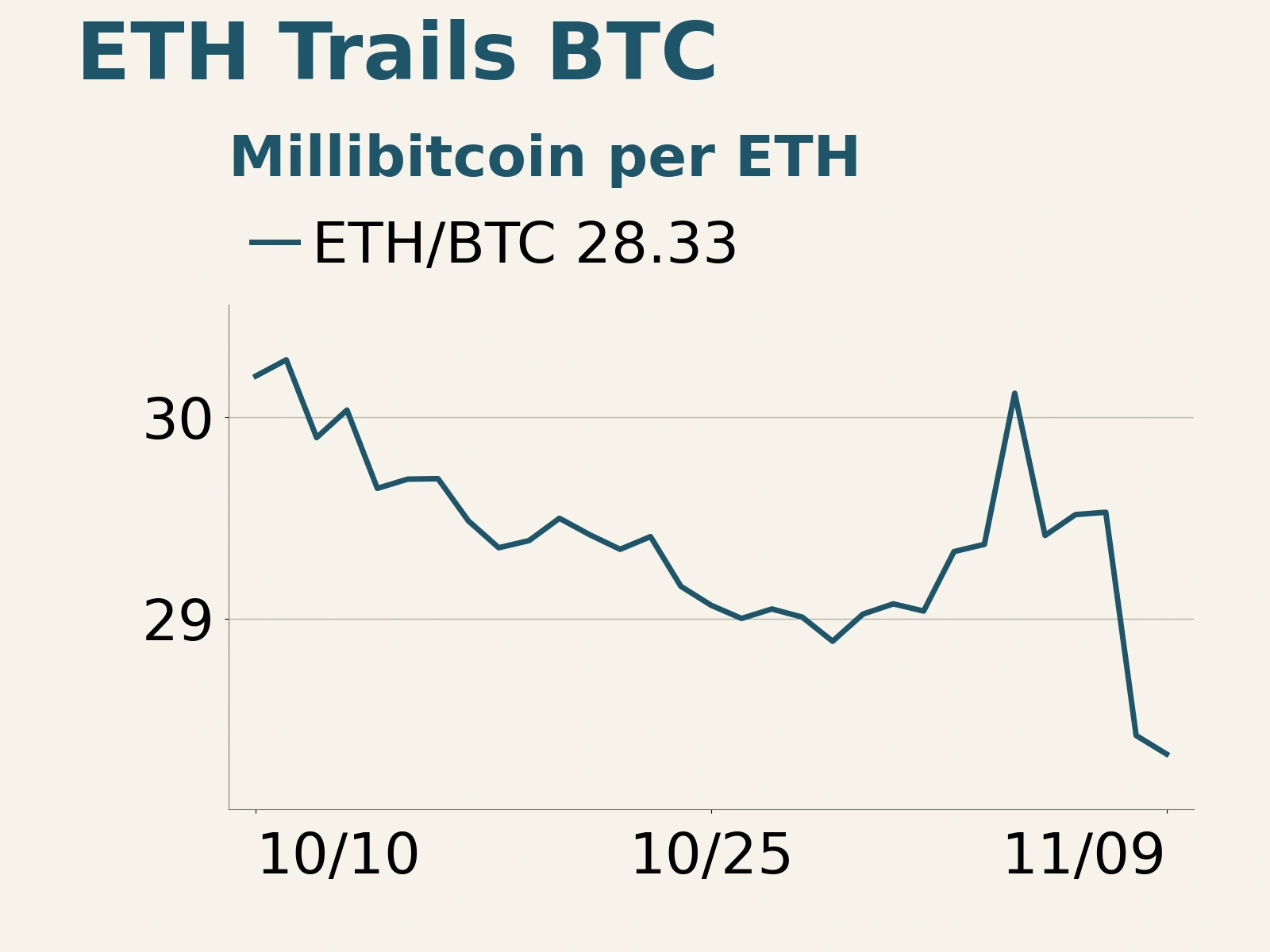
Bitcoin traded between 73,750 and 75,599.22 USDT and closed near its intraday high. Ethereum traded between 2,083.10 and 2,160.50 USDT and ended further from its high. The ETH/BTC ratio closed at about 0.02833, down 0.32% from the previous day, as Ethereum gained less than Bitcoin.
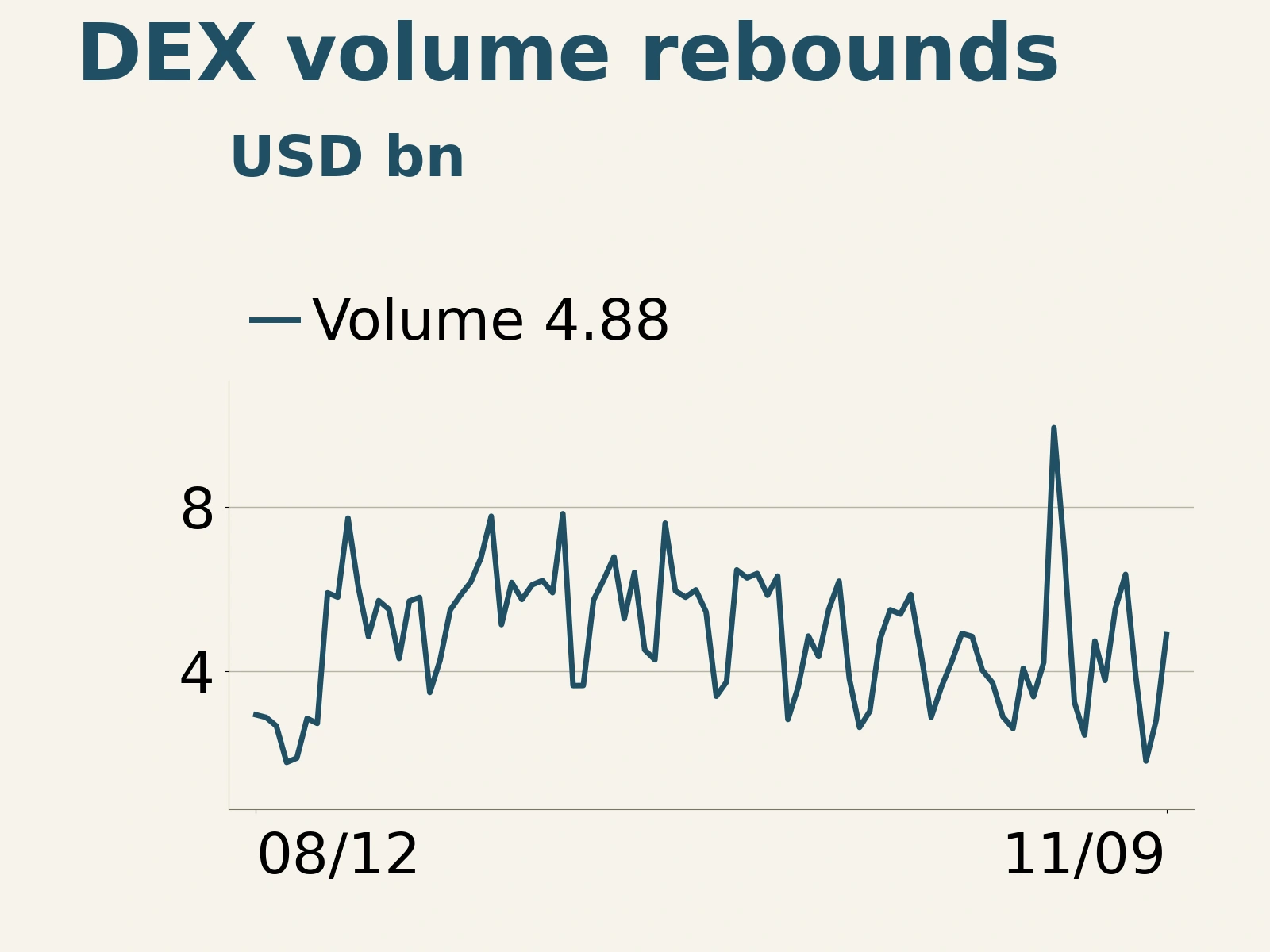
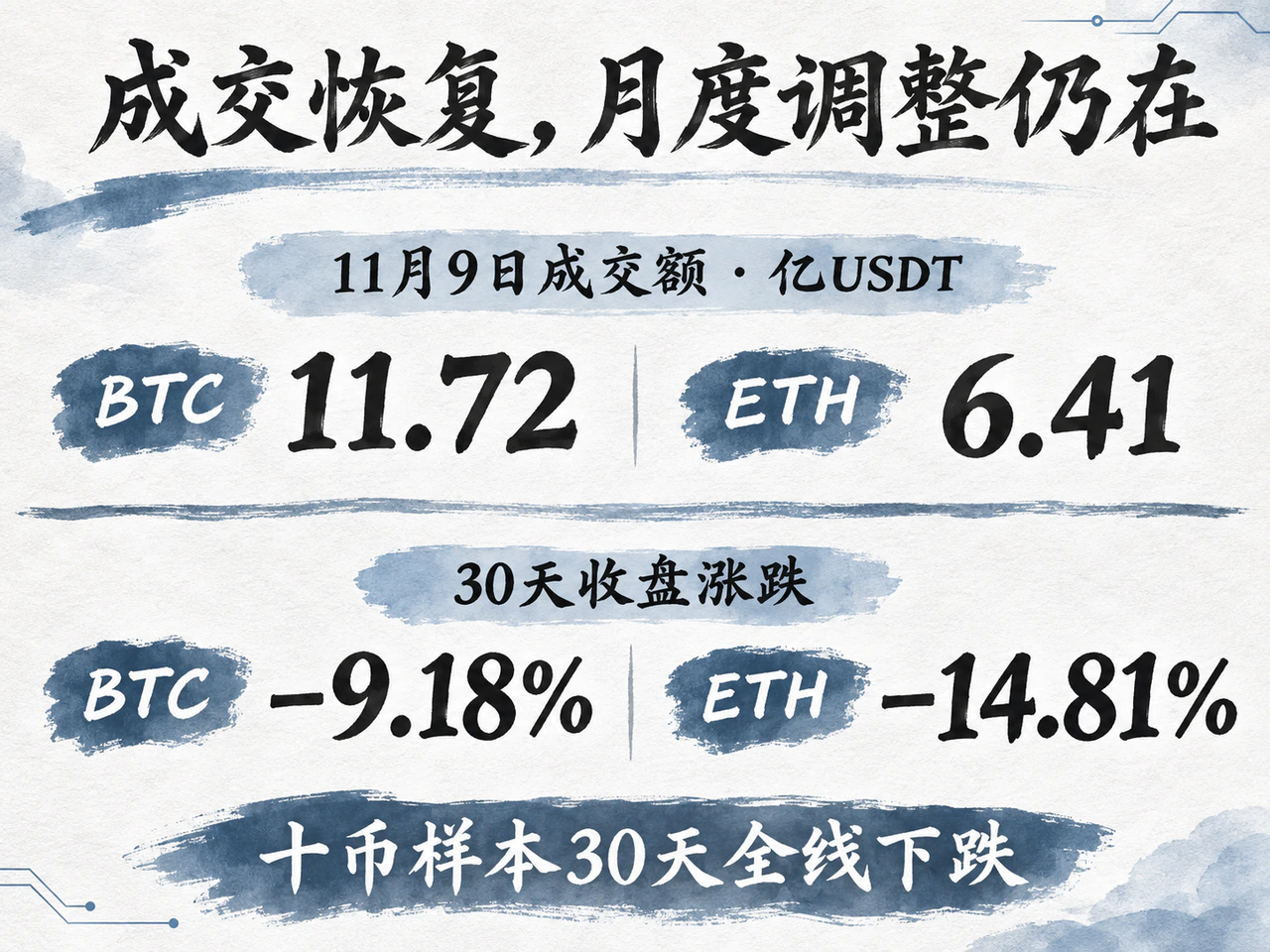
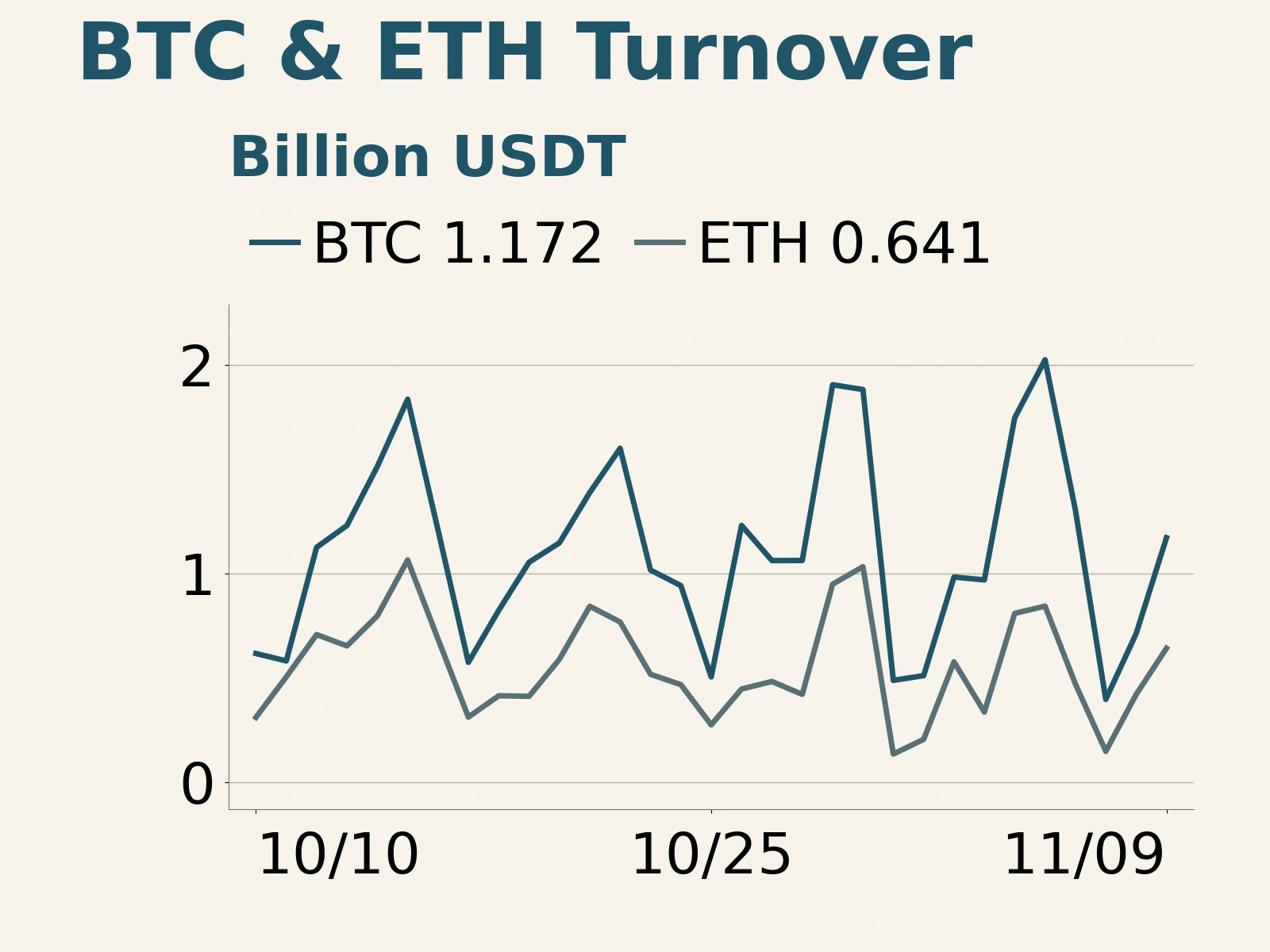
Trading activity picked up alongside prices. Binance BTC/USDT turnover rose 64.71% from Sunday to 1.172 billion USDT, and ETH/USDT turnover rose 52.89% to 641 million USDT. Monday’s rebound drew more trading activity, though the comparison is with Sunday. Turnover records both sides of trades and cannot establish net inflows.
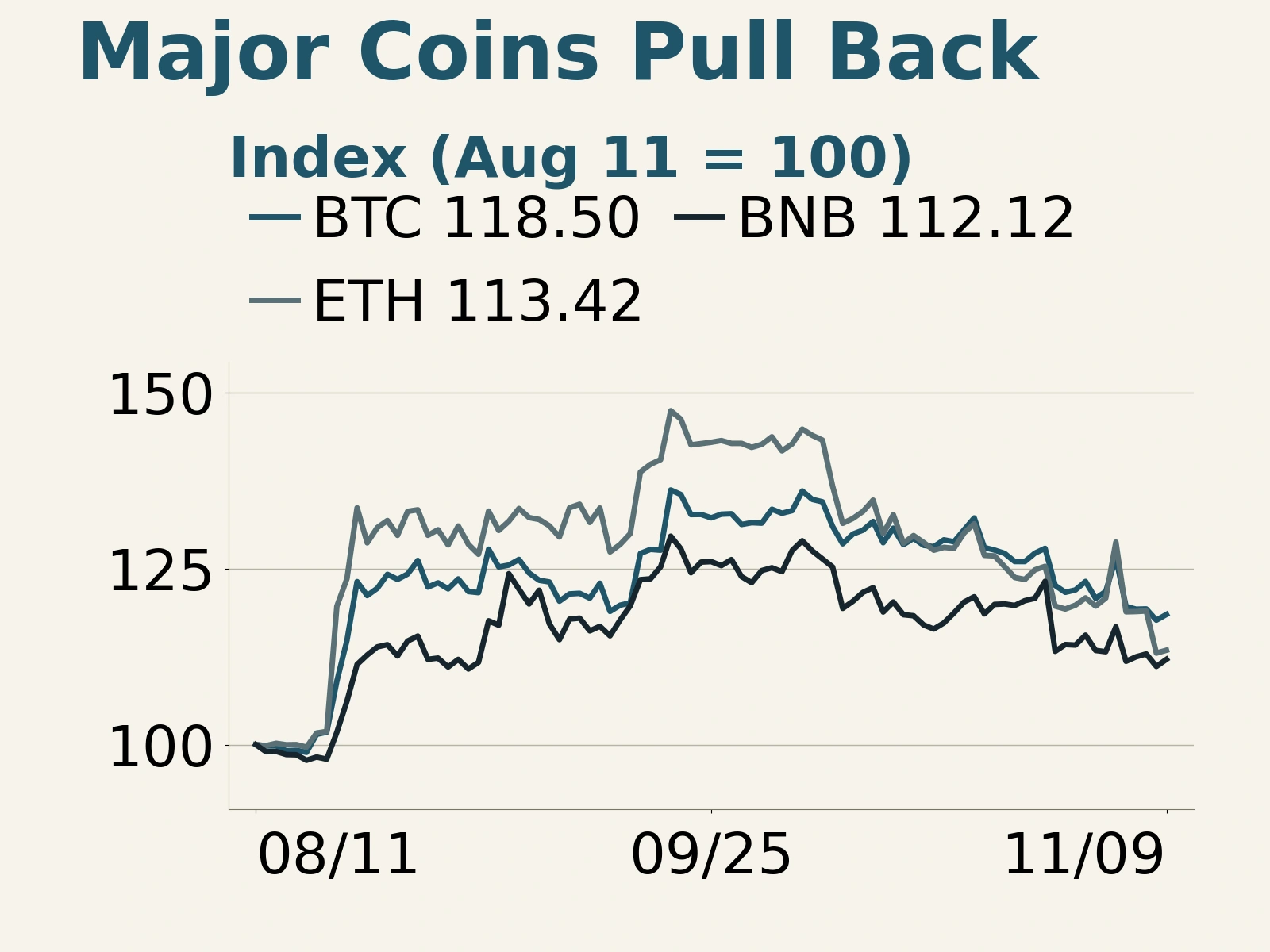
All ten tokens still closed below their levels 30 days earlier. Bitcoin was down 9.18% and Ethereum 14.81%. SOL and XRP fell 21.21% and 21.64%, respectively, while ADA fell 28.81%. Even AVAX, which jumped 9.07% on the day, was down 16.48% over 30 days. Those sharp gains came after deeper drawdowns, and prices would have to rise further to recover the losses.
The 90-day window adds context. Bitcoin gained 18.50%, Ethereum rose 13.42% and AVAX climbed 36.92%. DOGE and ADA fell 2.55% and 5.18%, respectively. Most assets still held on to gains from earlier in the period, though the broad decline over the past month weighed on those returns. The contrast across time horizons is consistent with a correction and a redistribution across assets after the earlier rally, with individual assets moving at different speeds.
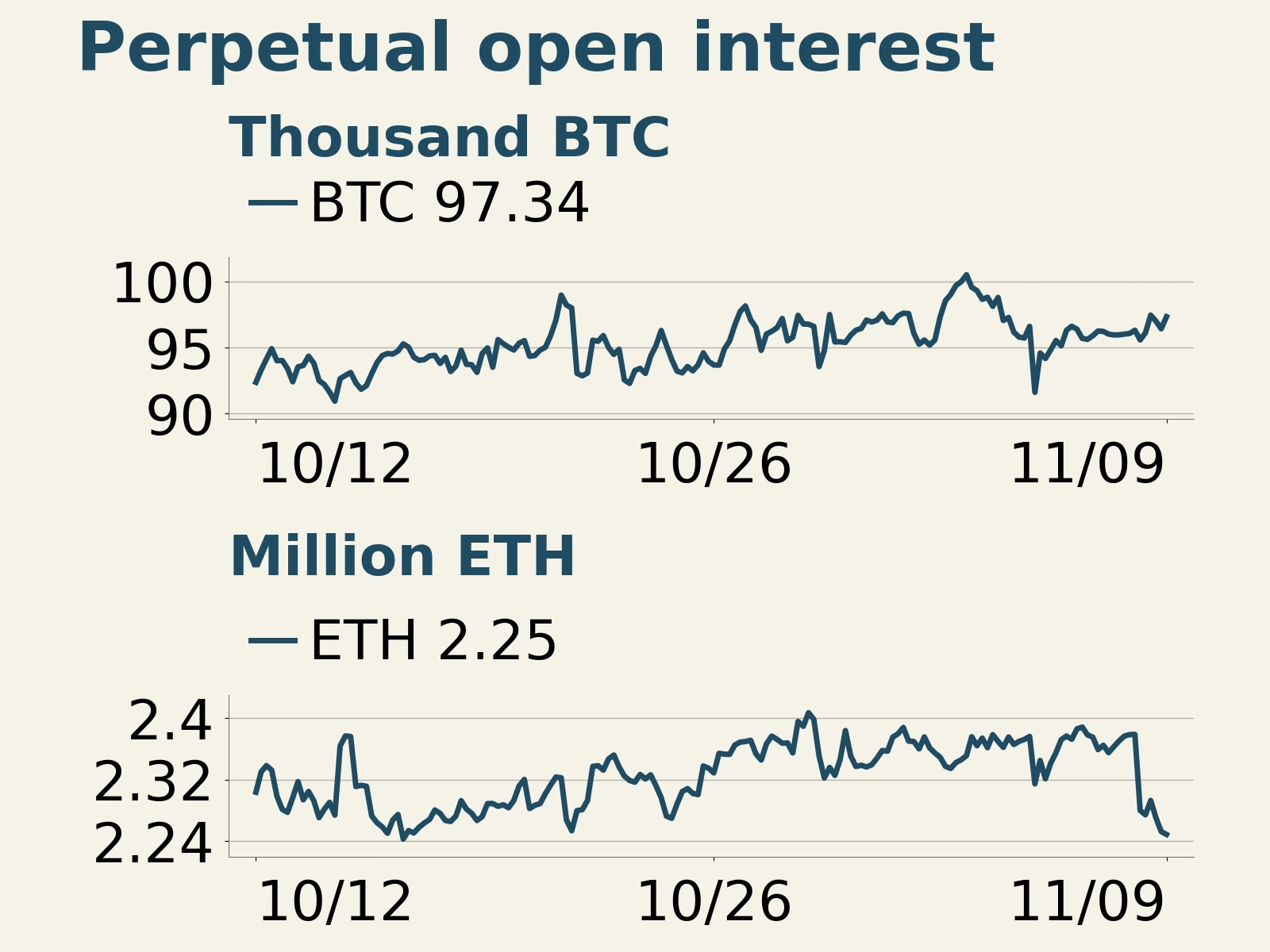
Analysts also focused on where buying support has come from. In its public market commentary on November 9, Glassnode said short-term holders were near breakeven after Bitcoin failed to reach $80,000, while leverage and demand for protection remained elevated. In a report that day, Bitfinex said much of the support during the earlier pullback had come from long positions in perpetual futures, and that a sustained recovery would require spot demand. Both observations point to potential selling near buyers’ cost basis. As prices recover to levels at which earlier buyers entered, more holders may sell to break even. New trading channels would need to generate sustained buying to shift that balance.
On November 9, the recovery showed up in where prices closed, how many tokens advanced and how much trading picked up. Schwab’s expansion gave several assets a specific catalyst. So far, the rebound has produced markedly different gains across tokens, while the market remains in a month-long correction. The repricing is more likely to spread if the assets newly available at Schwab continue to outperform and spot demand for Bitcoin and Ethereum holds up.
Click through to the original article for the full details.