On November 9, 2026, trading volume rebounded sharply across a comparable sample of decentralized exchanges, while institutional cross-chain trading infrastructure also advanced. Talos announced the integration of NEAR Intents into its existing request-for-quote workflow, allowing clients to execute cross-chain swaps through their existing custody relationships. Trading activity picked up as access to execution improved. A recovery in on-chain businesses still depends on sustained demand and how much of that activity translates into fees and retained protocol revenue.
Comparable DEX volume rises 74.1% in a day as monthly demand and lending fees remain weak
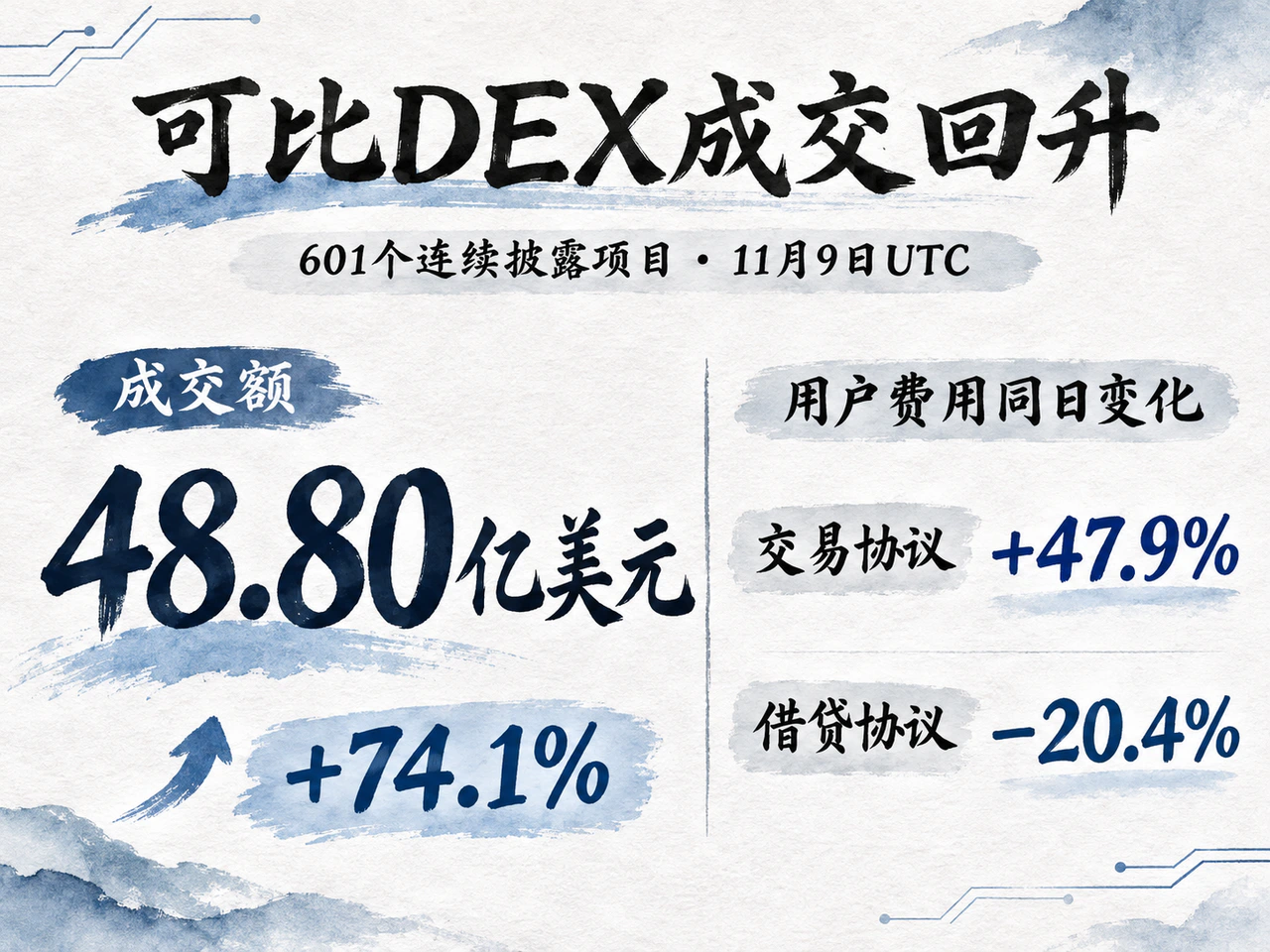
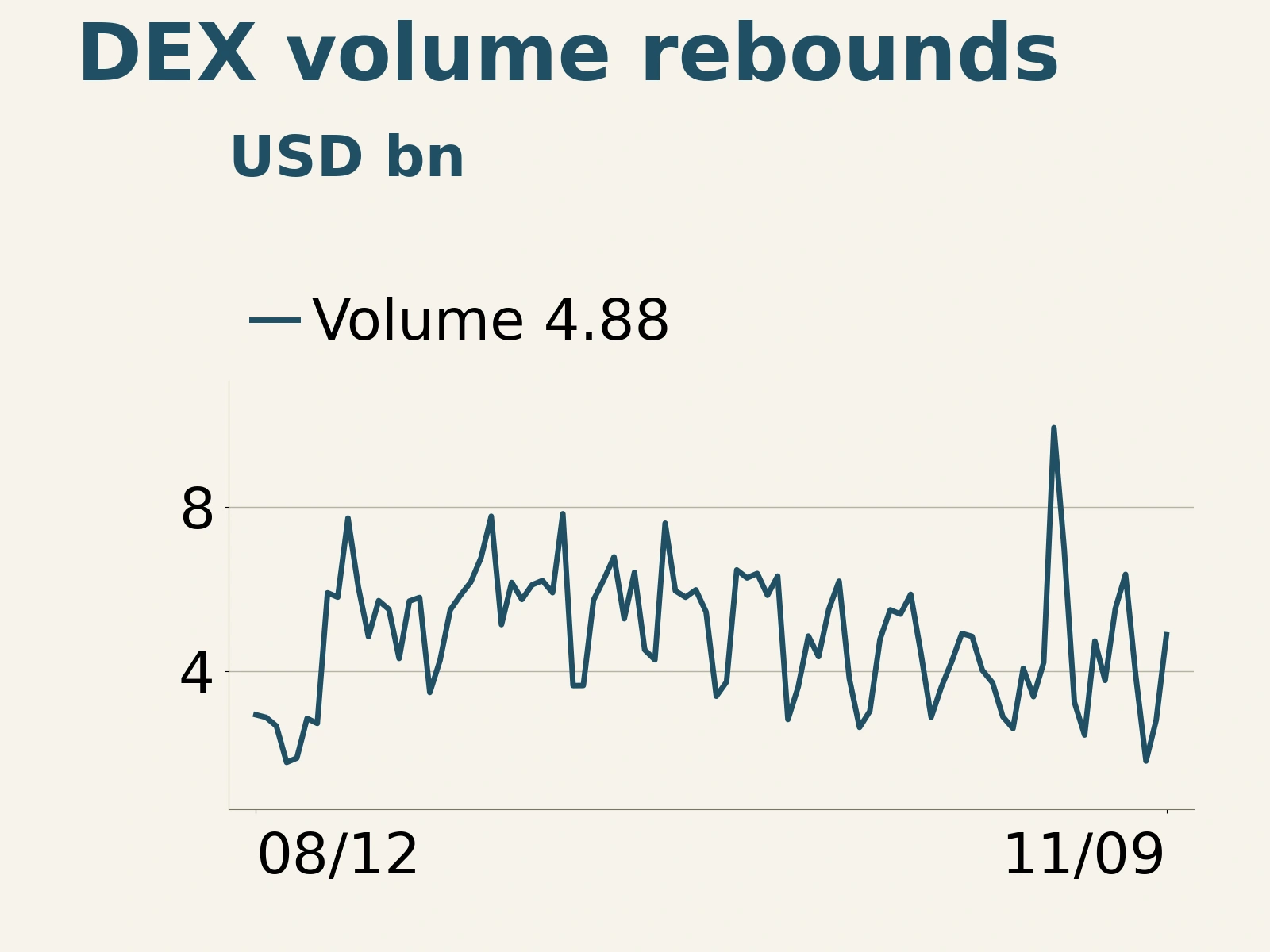
Using DefiLlama’s classifications, we selected a fixed sample of 601 decentralized exchange projects with recorded volume on every day from August 12 through November 9. The sample traded $4.880 billion over the full UTC day on November 9, up 74.1% from the previous day. Holding the sample fixed reduces distortions from changes in which projects report each day. It covers only part of the industry, and late reporting may lead to revisions.
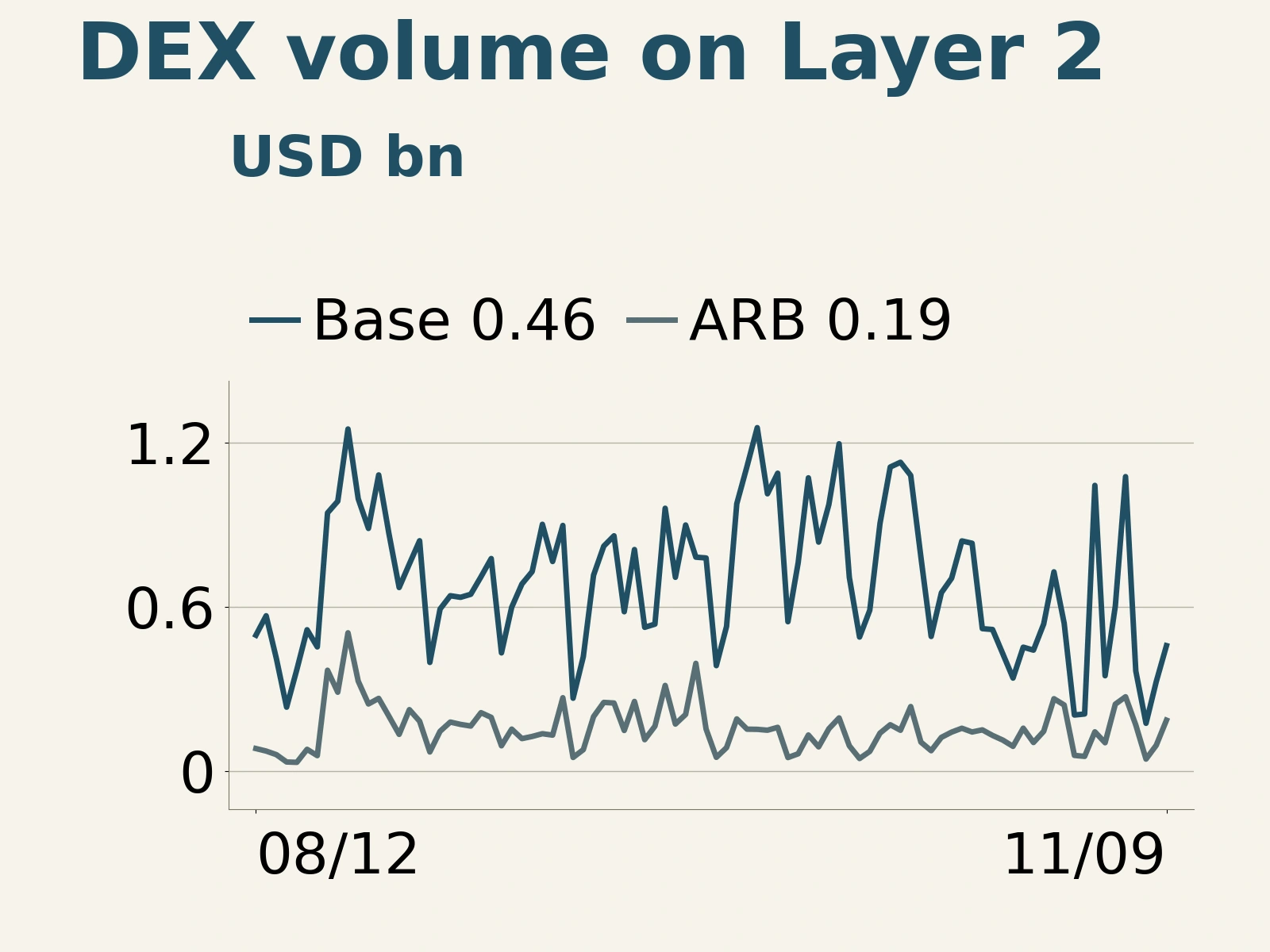
Trading volume recovered across the major blockchains and Layer 2 networks tracked here. In comparable samples selected separately for each network based on 90 consecutive days of data, Ethereum volume rose 96.4% from the previous day to about $1.797 billion, Solana rose 46.3% to about $501 million, and BNB Chain rose 24.7% to about $295 million. Base and Arbitrum recorded about $458 million and $186 million, up 40.3% and 97.4%, respectively. Sample sizes vary by network, but the breadth of the rebound suggests that more than one protocol drove it.
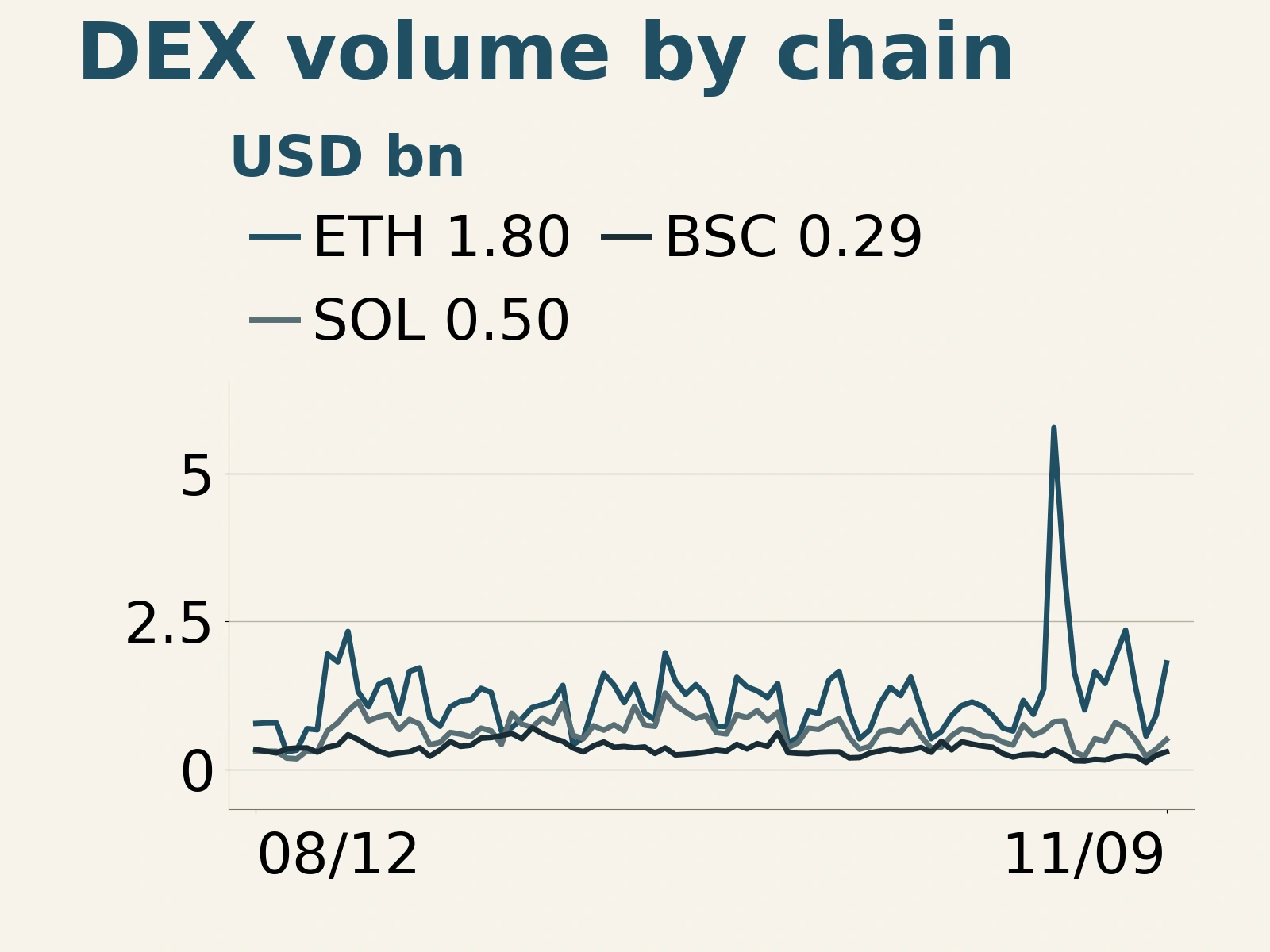
Underlying demand remained weak over a longer period. From October 11 through November 9, the 601 projects averaged $4.352 billion in daily trading volume, down 16.9% from the preceding 30 days. Volume on November 9 exceeded the latest 30-day daily average, but the contraction over the month persisted. In the continuously reporting samples, Ethereum volume rose 22.4% in the latest 30 days compared with the preceding 30 days, while Solana volume fell 28.8% over the same comparison, showing a marked divergence in demand. Changes in the distribution of volume reflect how liquidity is used across networks and cannot be translated directly into net cross-chain flows.
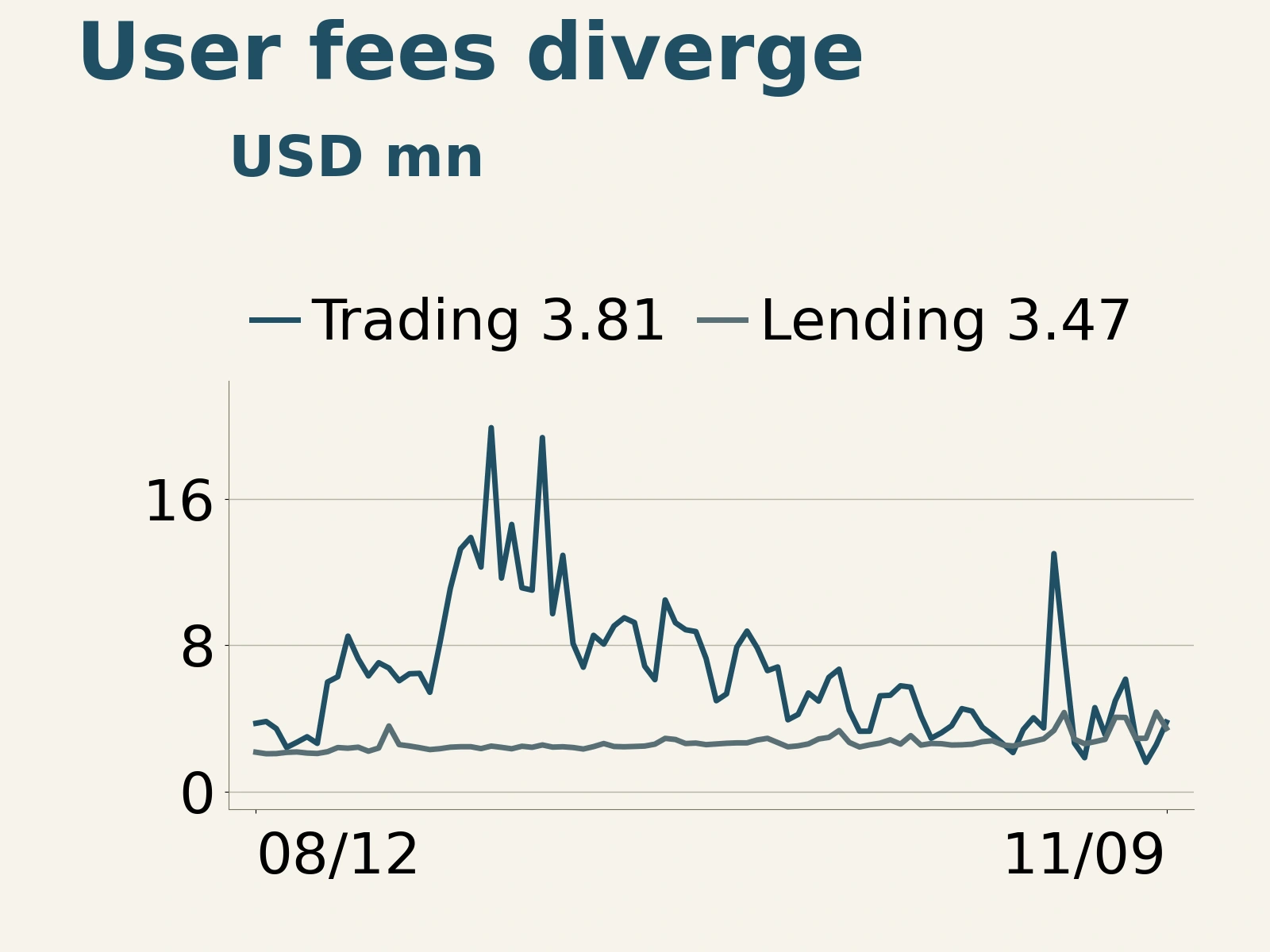
Fees also moved in different directions. On November 9, user fees across 448 trading protocols with continuous records rose 47.9% from the previous day to about $3.81 million. Across a separate sample of 112 lending protocols, user fees fell 20.4% to about $3.47 million. Turnover and the mix of trades affect trading fees, while lending fees also depend on borrowing volume, capital utilization and interest rates. With lending fees falling even as trading volume rebounded, those indicators remain important for assessing whether on-chain credit demand is recovering.
Talos integrates NEAR Intents for cross-chain swaps through existing custody workflows
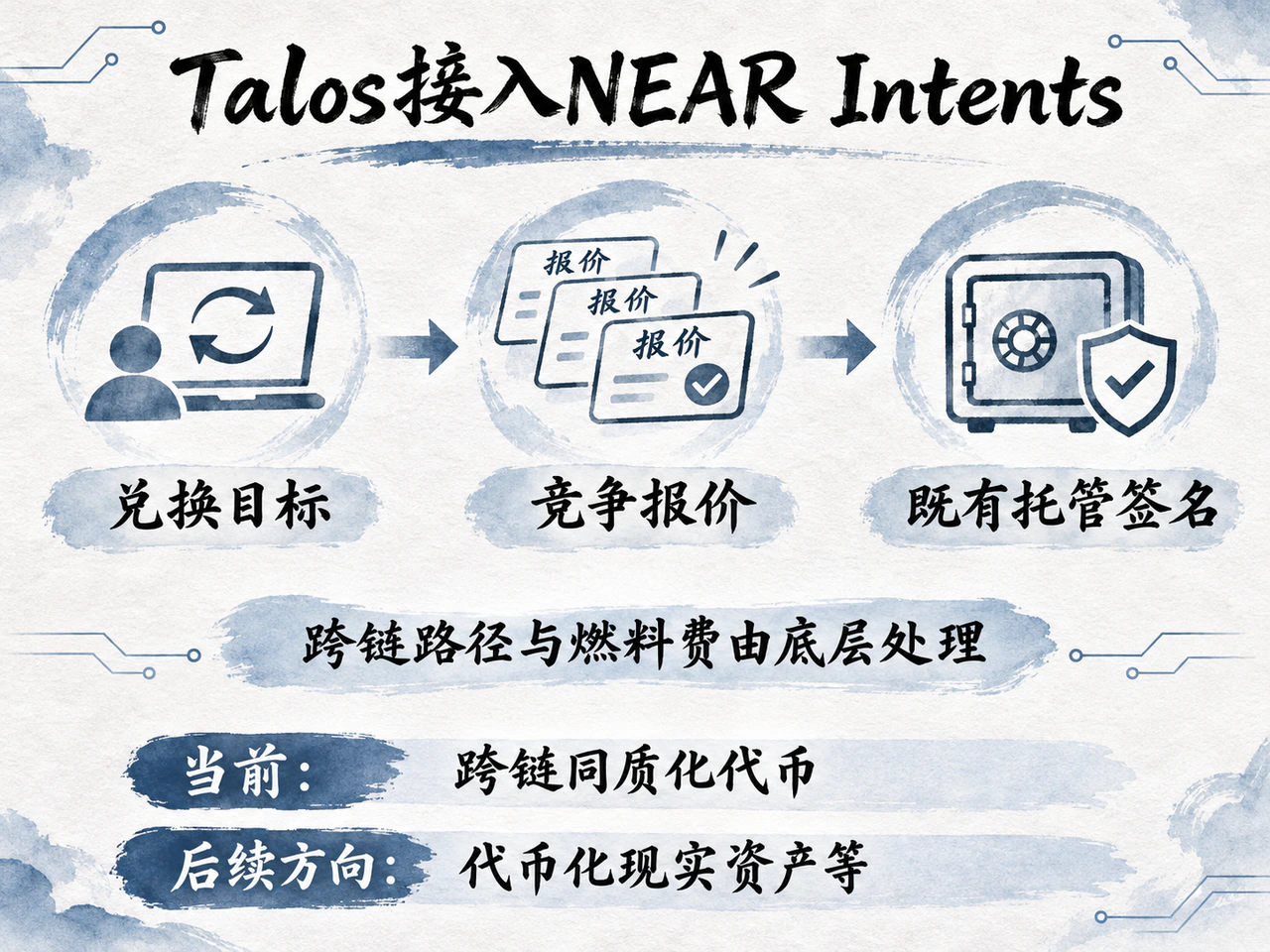
As trading spreads across multiple networks, ease of access to liquidity becomes a point of competition among infrastructure providers. NEAR Intents uses competitive quoting. The client specifies the desired swap, and specialized liquidity providers called solvers compete to quote, sourcing inventory and execution routes across more than 30 blockchains and centralized trading venues.
According to Talos and NEAR, clients who accept a quote still sign through their existing custody workflow. The underlying infrastructure handles cross-chain routing and gas fees, and the resulting positions appear in the existing portfolio view. For institutions, this primarily reduces the operational and reconciliation costs of accessing new sources of liquidity. It also makes it easier for quotes from different networks to compete for the same order. Trades can still draw on inventory at centralized venues. Whether broader institutional access results in net on-chain inflows depends on where orders are routed and how they settle.
The integration also has implications for on-chain trading in real-world assets. NEAR’s announcement identifies tokenized real-world assets, yield-bearing assets and prediction markets as areas for future expansion. The integration currently supports swaps in fungible tokens across chains. For payments and asset tokenization to generate lasting commercial value, swaps, custody and settlement need to become part of routine workflows alongside issuance at scale. The integration provides access to execution, with broader asset coverage still to be implemented.
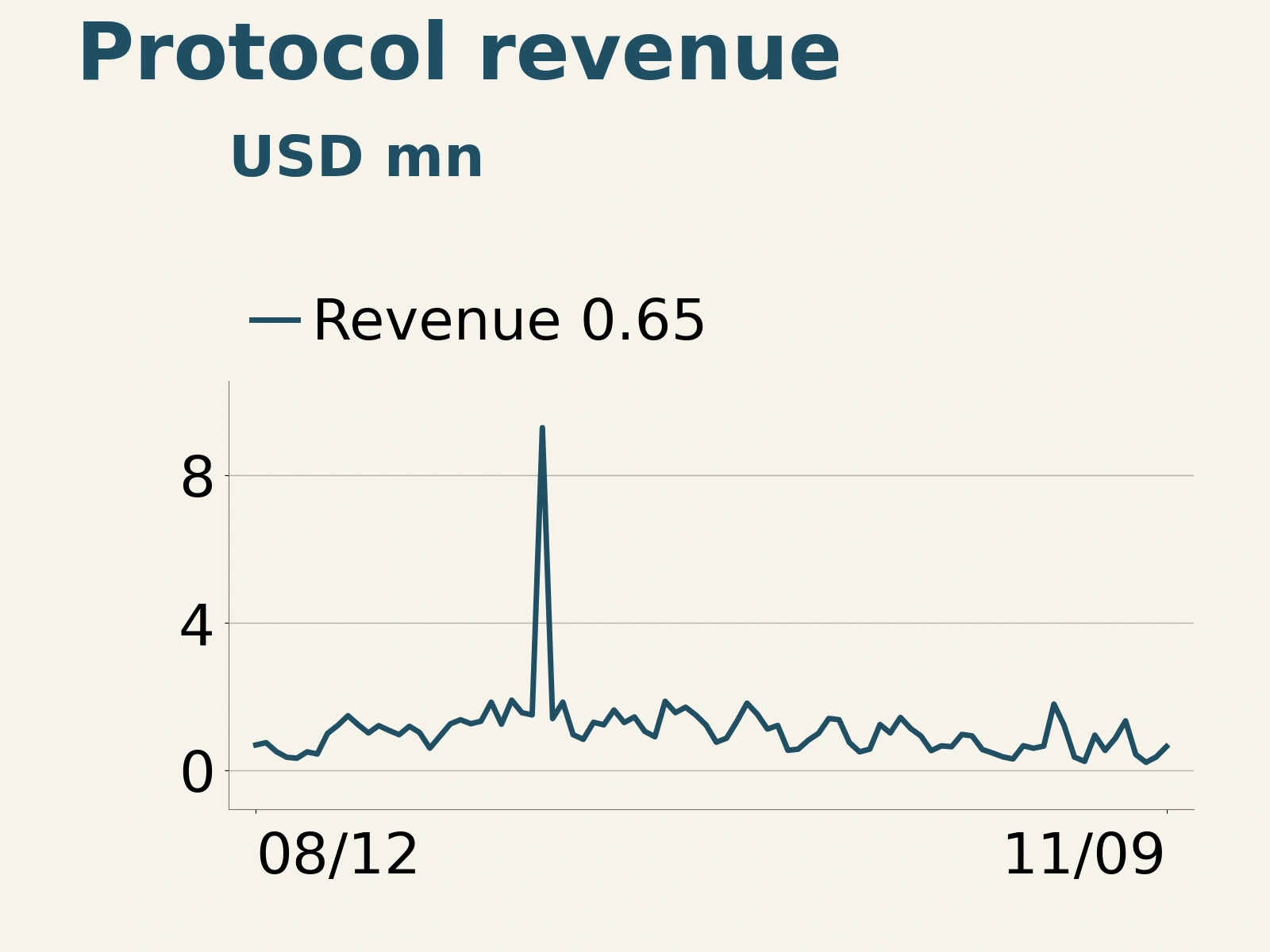
Protocol revenue falls 36.9% across 333 trading projects in the latest 30 days as pressure on retained revenue persists
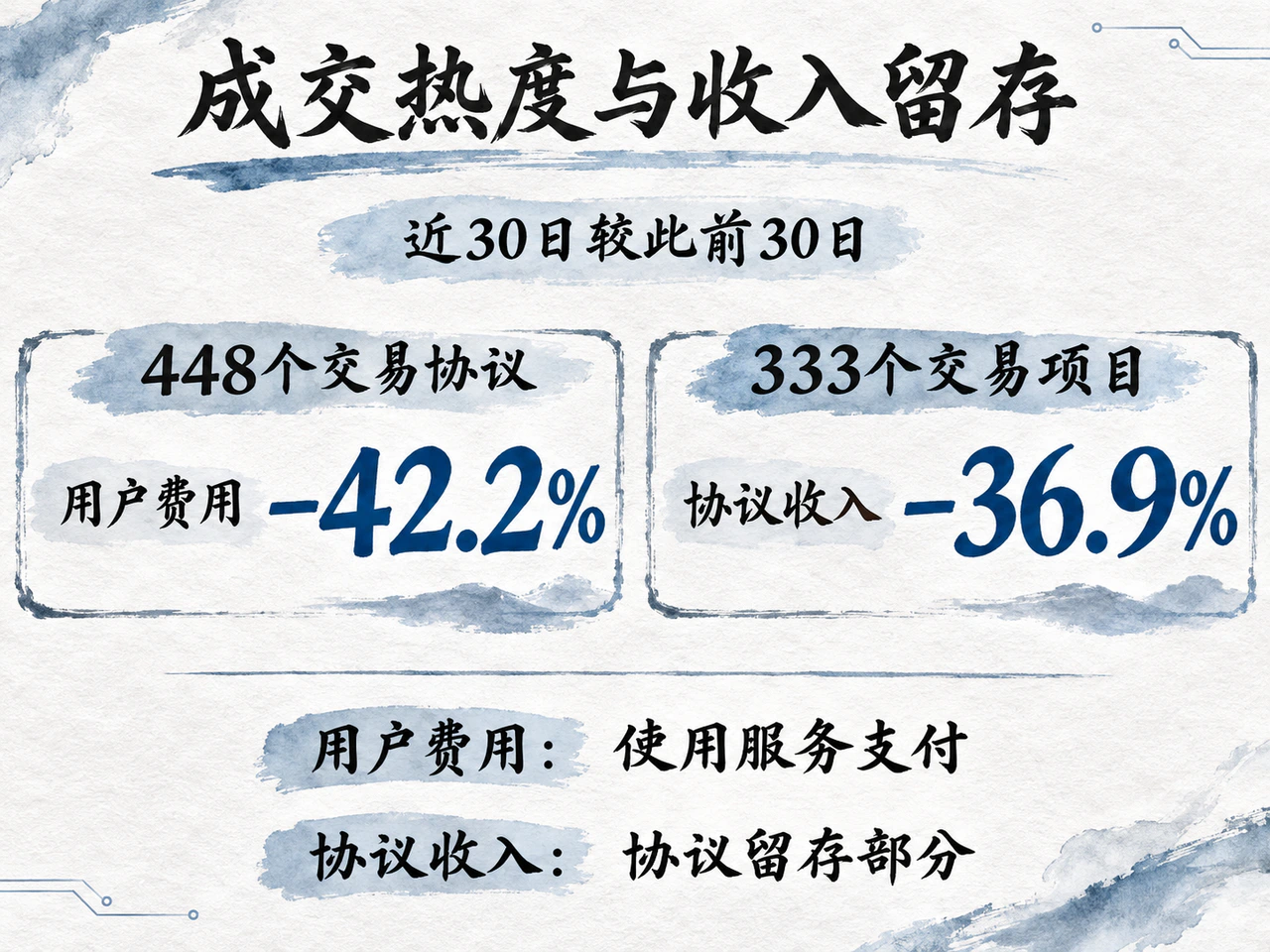
Revenue data show the gap between trading activity and the value protocols retain. User fees for the 448 trading protocols fell 42.2% over the latest 30 days compared with the preceding 30 days. That was steeper than the 16.9% decline in average daily volume across the 601 projects in the volume sample. The two samples cover different projects, so the comparison illustrates operating pressure and cannot establish a common fee rate. In a separate sample of 333 trading projects that continuously disclosed protocol revenue, revenue fell 36.9% over the latest 30 days compared with the preceding 30 days. Consistent fee and revenue measures over time will show whether the recovery in volume translates into better operating results.
User fees are the total amount customers pay for a service, a portion of which goes to liquidity providers. Protocol revenue is the amount the protocol retains, and distributions to token holders are narrower still. Competitive quoting could lower execution costs for users and put pressure on intermediaries’ margins. With better institutional access, the resilience of on-chain businesses still depends on whether new usage persists, how much revenue protocols retain and how they ultimately distribute it.
Click Read Original for the full details.