On November 9, 2026, Coinbase announced that its national trust company had received final approval from the U.S. Office of the Comptroller of the Currency (OCC). That same day, Coinbase and PNC Bank announced a pilot that lets business and institutional clients receive USDC payments. The trust approval brings institutional custody under federal trust oversight. The pilot automatically converts the USDC businesses receive into U.S. dollars and deposits the proceeds in a bank account. The integration of digital assets into institutional finance is taking shape through specific regulatory permissions and connections to banking services.
Trust Charter Process Concludes, Bringing Institutional Custody Under Federal Oversight
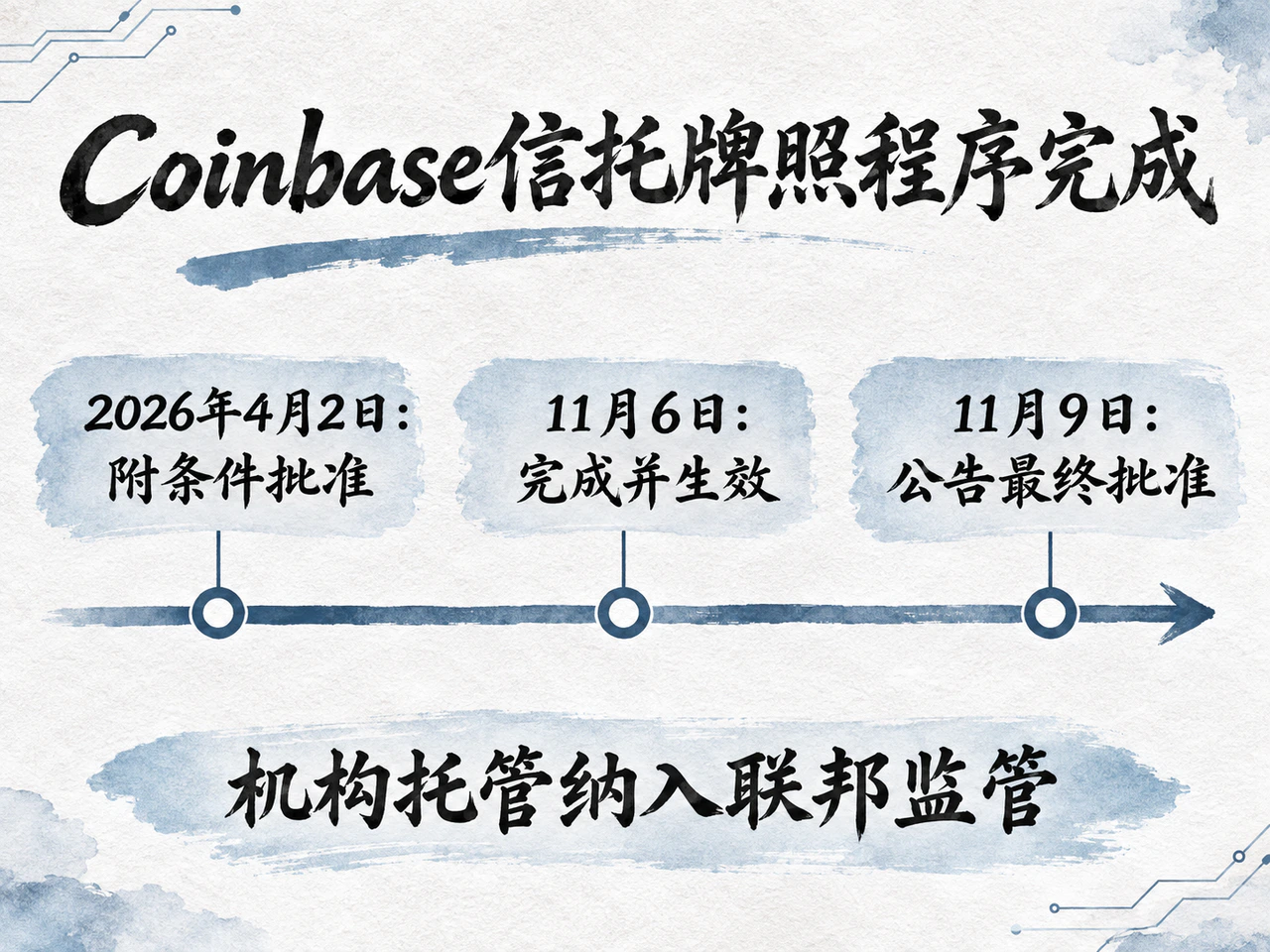
The OCC’s application record shows that it received Coinbase National Trust Company’s application on October 3, 2025, approved it on April 2, 2026, and recorded the action as completed and effective on November 6. The April document made clear that the approval was preliminary and conditional, with requirements to be met before the company could open for business. Coinbase’s November 9 announcement confirmed that the approval was final. The announcement marked the shift from conditional to final approval, completing the charter process.
The authorized activities center on holding digital assets in a fiduciary capacity for institutional clients and providing related transaction services for assets in custody. The OCC’s original approval document says clients can receive, hold, and transfer fiat currency and digital assets in custody accounts. The plan calls for the relevant operations of the existing New York State-regulated custody entity to move to the national trust company during the three-year transition period for the newly chartered institution.
The federal framework clarifies who regulates the custodian, what fiduciary duties it owes, and how ongoing supervision works. This can make it easier for asset managers that operate across jurisdictions to assess custody providers. The custodian remains responsible for security, compliance, operations, and protecting client assets. The value of the charter ultimately depends on how well it meets those obligations.
The company’s authority has clear limits. Coinbase previously said the charter would not make the company a conventional commercial bank, and that it would neither take retail deposits nor engage in fractional-reserve banking. The OCC document says the trust company does not plan to issue stablecoins. It may help custody clients access staking, Prime trading, and financing through affiliates, while the affiliates provide the underlying services. Custody and related transaction services, along with services such as affiliate-provided financing, remain distinct and subject to each entity’s responsibilities and authorizations.
PNC Pilot Automatically Converts Incoming USDC to U.S. Dollars
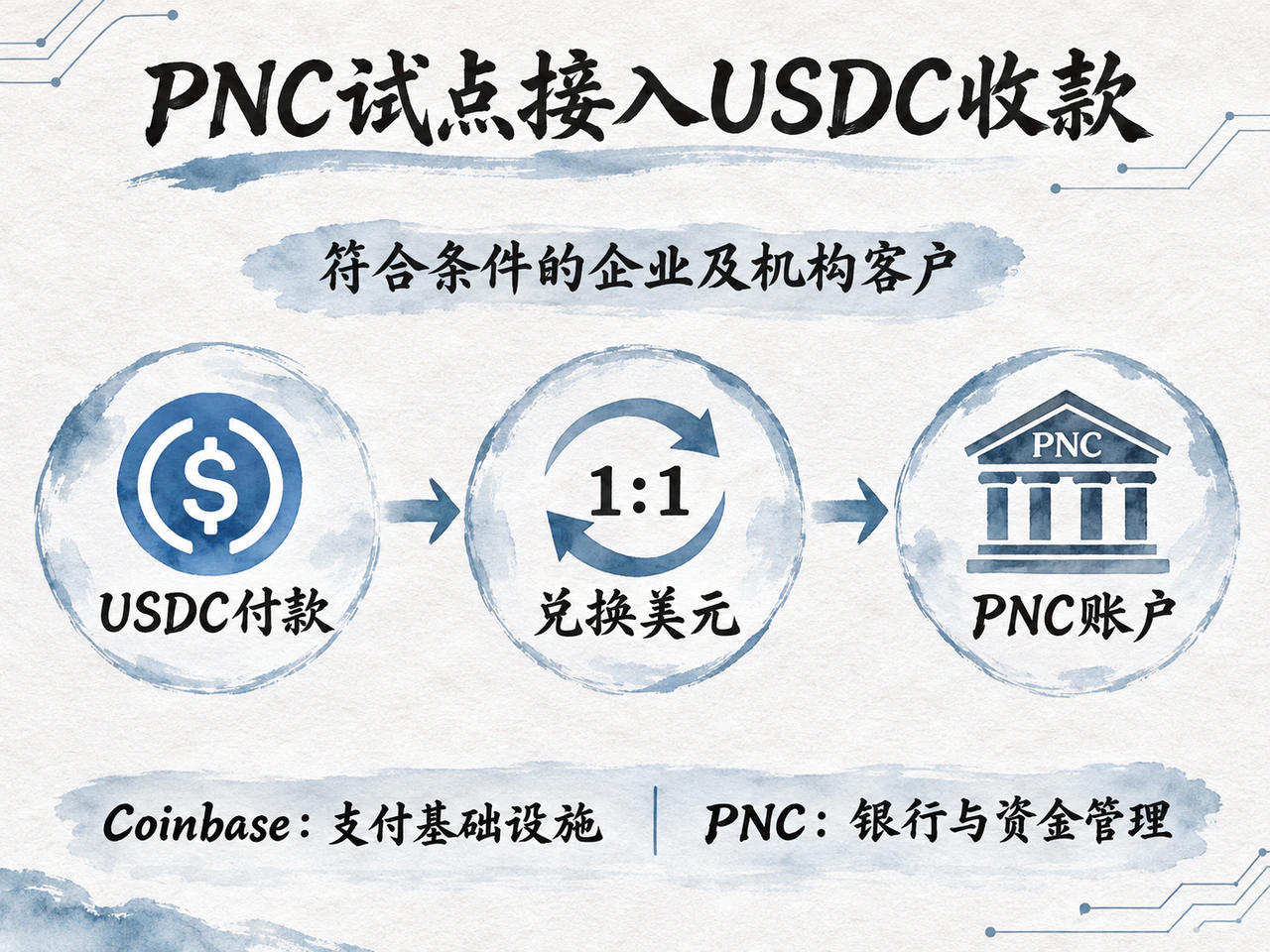
PNC’s partnership with Coinbase shows how the connection to banking services works. Eligible PNC business and institutional clients taking part in the pilot can receive payments in USDC. The incoming USDC is automatically converted to U.S. dollars at a 1:1 rate, and the proceeds are deposited in a designated PNC deposit account. Coinbase Payment APIs provide the stablecoin payment infrastructure, and PNC provides banking and cash management services.
The payer settles in USDC, and the recipient ends up with U.S. dollars that it can manage through its existing bank account without having to hold stablecoins over time to receive payments. For businesses exploring cross-border collections, the arrangement connects on-chain payments to day-to-day cash management. The practical question moves from whether a business can receive assets on-chain to how those funds enter its existing finance workflows.
The pilot is currently limited to eligible clients who take part. The companies cite faster access to funds and more efficient cross-border transactions as goals. The actual results will depend on adoption, conversion and service fees, payment routing, and operational performance. The announcement has yet to provide data on usage or costs, making it difficult to quantify additional revenue or the impact on industry-wide settlement costs.
The two developments show how traditional financial institutions and digital asset service providers divide the work. Trust institutions hold assets and assume fiduciary duties, payment infrastructure handles incoming and outgoing stablecoin payments, and commercial banks provide dollar accounts and corporate cash management. The next questions are whether the New York State custody operations can move smoothly during the transition period and whether businesses will use PNC’s pilot as a regular way to receive payments. The regulatory framework and bank connections are being established first, while revenue still depends on actual usage.
Click to read the original article for more details.