On November 10, 2026, stronger-than-expected US inflation data for October pushed Treasury yields and the dollar higher, while US equities retreated after the previous day's rebound. Crude oil continued to fall on expectations of recovering supply, but the decline failed to offset the tightening pressure from sticky core inflation; gold also came under pressure as its holding cost rose. The day's central market theme was a repricing of funding costs: although real economic growth and industrial orders offered support, future profits, housing demand and expansion plans dependent on financing all faced greater constraints from higher interest rates.
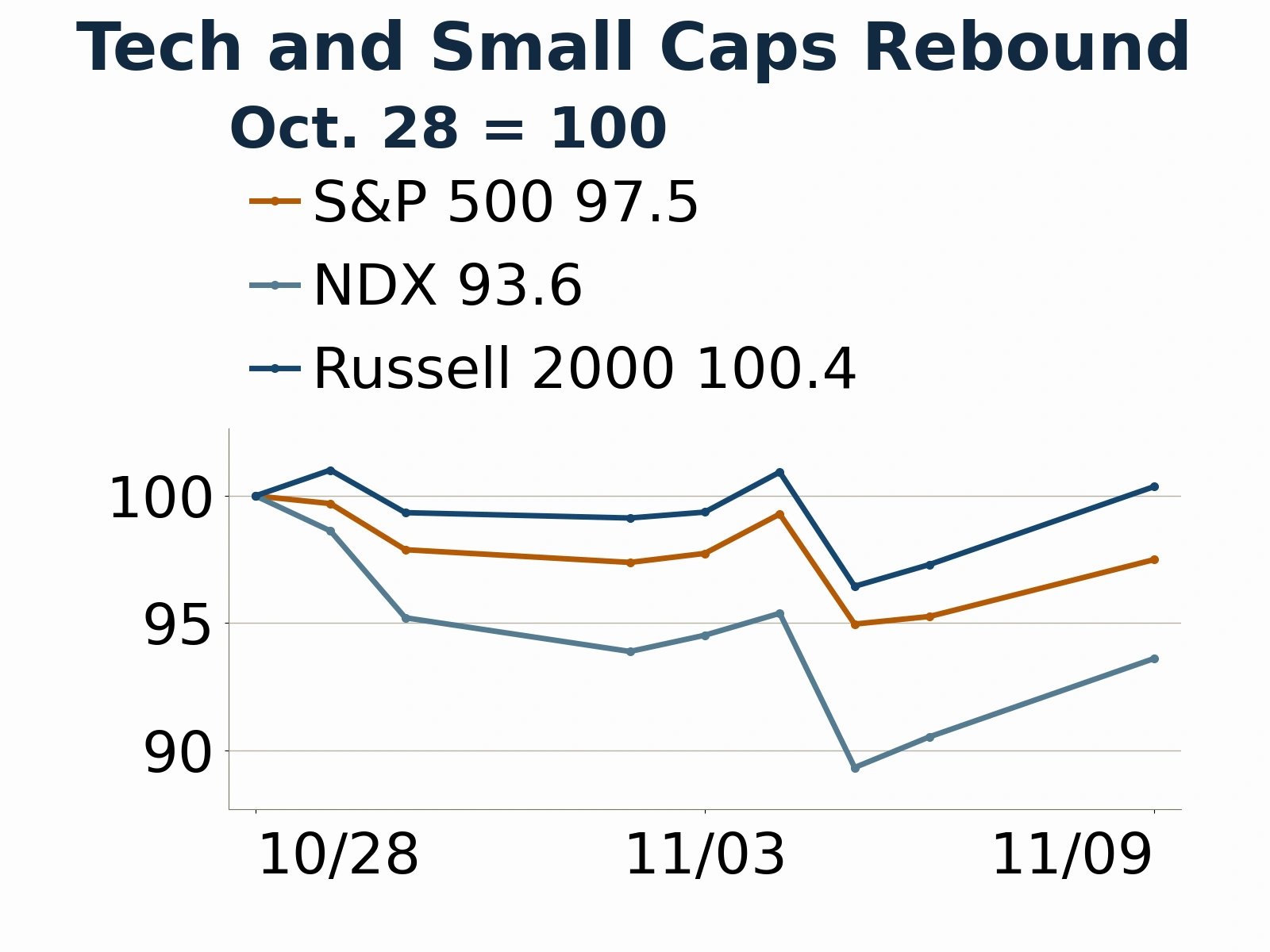
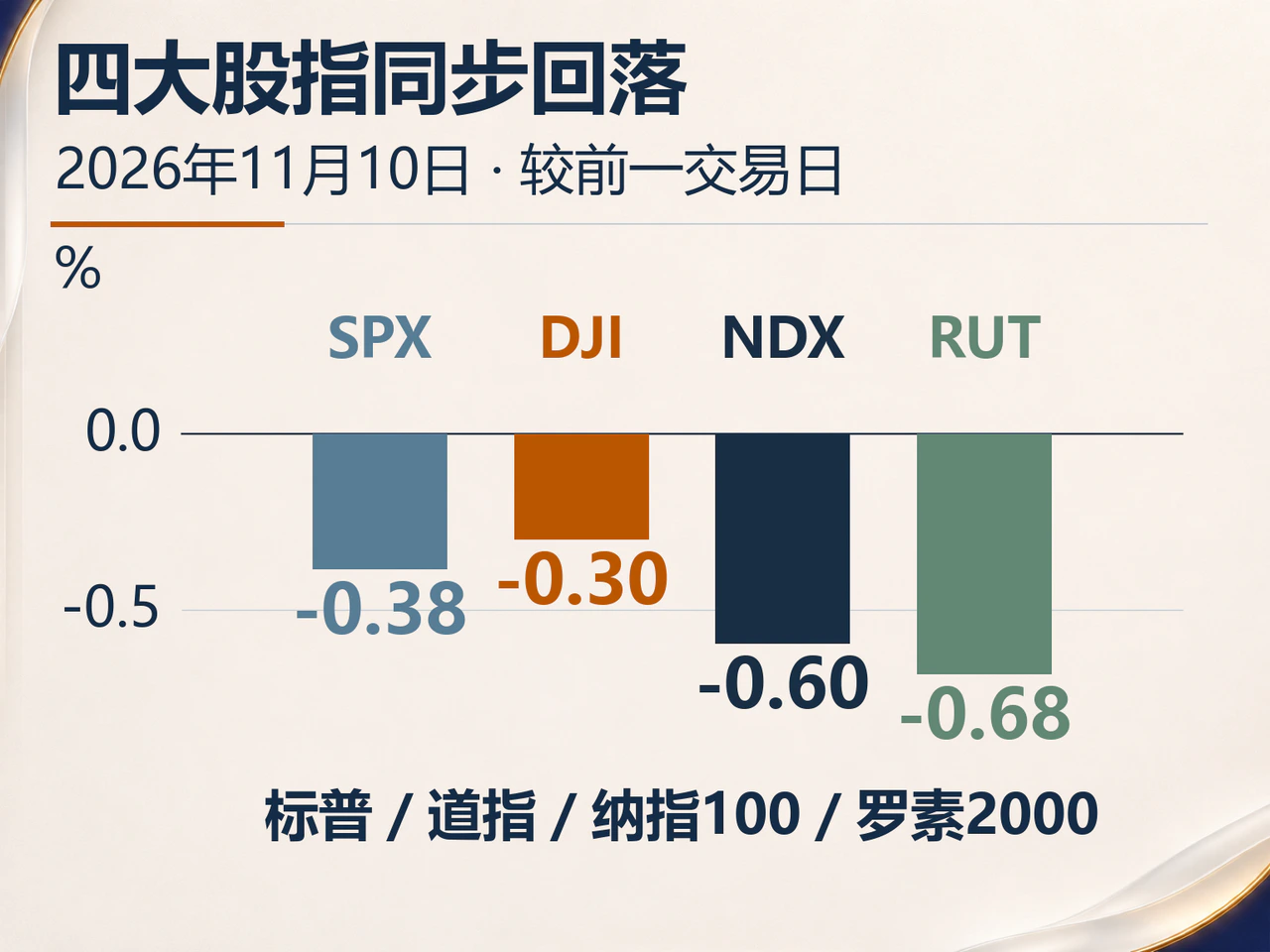
At the close, the S&P 500 stood at 7520.93, down 0.38%; the Dow Jones Industrial Average at 52231.89, down 0.30%; the Nasdaq 100 at 27740.79, down 0.60%; and the Russell 2000 at 2821.38, down 0.68%. Meanwhile, the VIX fell from 19.92 to 19.46, and financials and energy rose against the broader decline, showing that higher interest rates were widening performance differences across sectors and assets.
US core CPI rises 0.3% for a third consecutive month; 2-year Treasury yield jumps 17 basis points
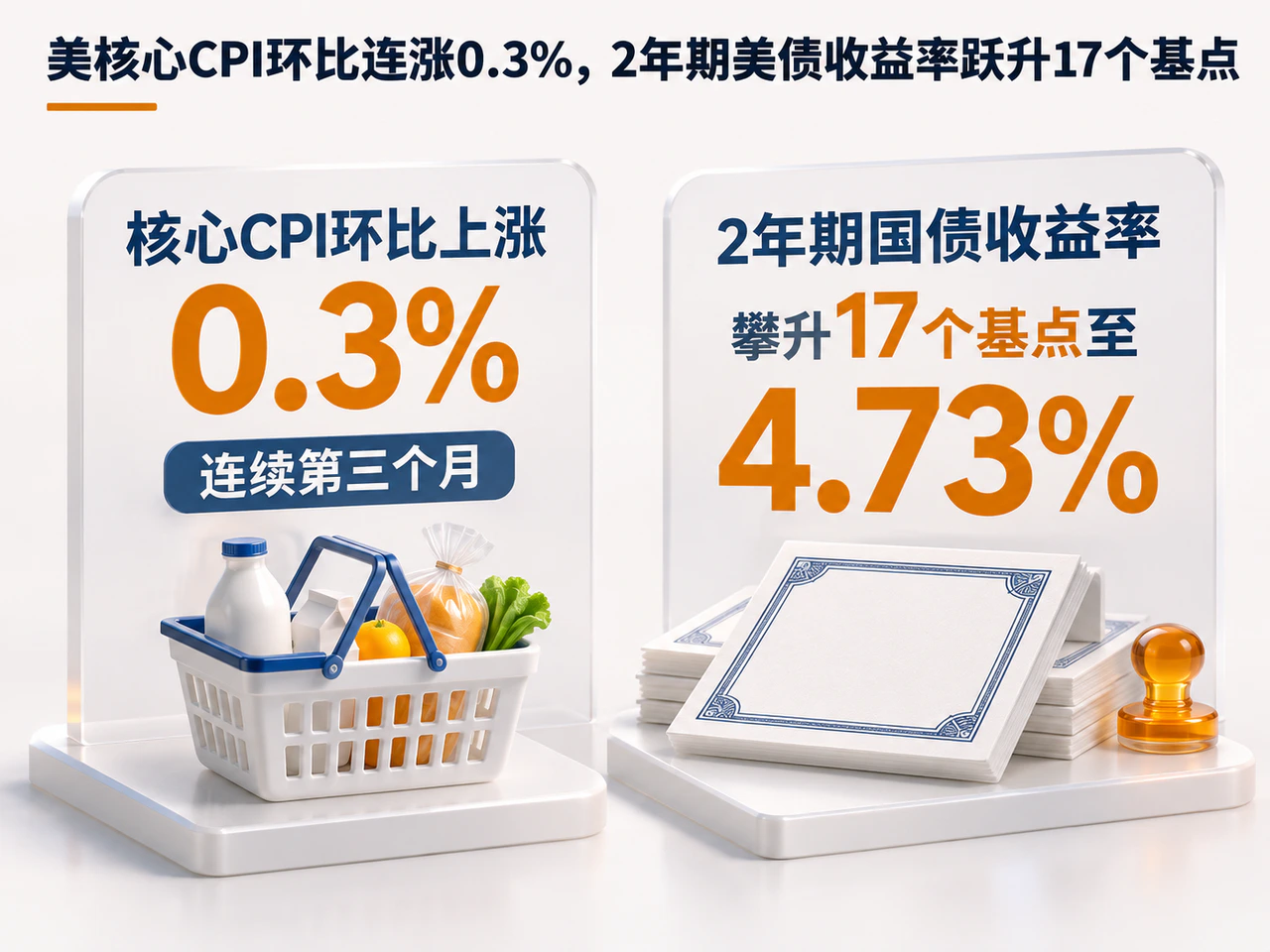
Data released by the US Bureau of Labor Statistics (BLS) showed that headline CPI rose a seasonally adjusted 0.4% month on month in October. That was below September's 0.6%, but above the market expectation of 0.3%. Core CPI, which excludes food and energy, rose 0.3% month on month, exceeding the expected 0.2% and maintaining that pace for a third consecutive month.
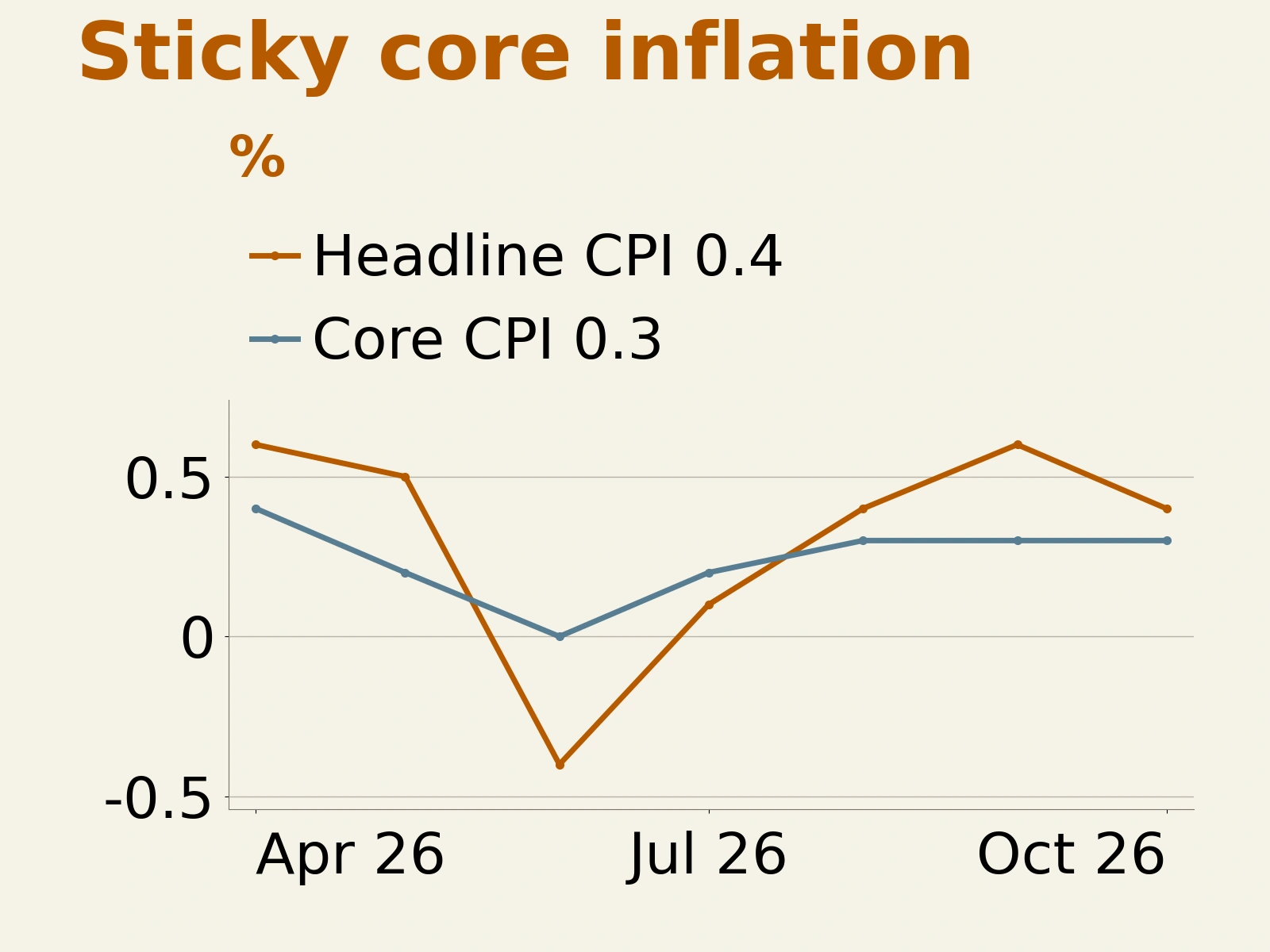
The slowdown in headline inflation was largely attributable to cooling energy inflation: the monthly rise in energy prices narrowed sharply from 5.2% in September to 0.7% in October. Improvement in core components remained limited. Shelter prices rose 0.3% month on month, accounting for more than 30% of the overall monthly increase; transportation services and recreation prices both rose 0.8%, while motor vehicle insurance increased 0.7%. Food prices also rose 0.5%, while used vehicle prices fell 1.2%. The data show that although the energy shock is fading, price stickiness persists in services and everyday consumption.
Business pricing surveys provided further evidence of sticky inflation. Although the NFIB Small Business Optimism Index edged down from 97.9 to 97.8 in October, the net share of firms planning to raise selling prices over the next three months climbed to 37%, its highest level in more than four years. According to Bloomberg, respondents' assessments of sales and their own business conditions improved, more firms planned wage increases, and capital spending intentions weakened slightly. With demand still present and wage and cost pressures continuing, falling energy prices alone are unlikely to reverse price pressures completely.
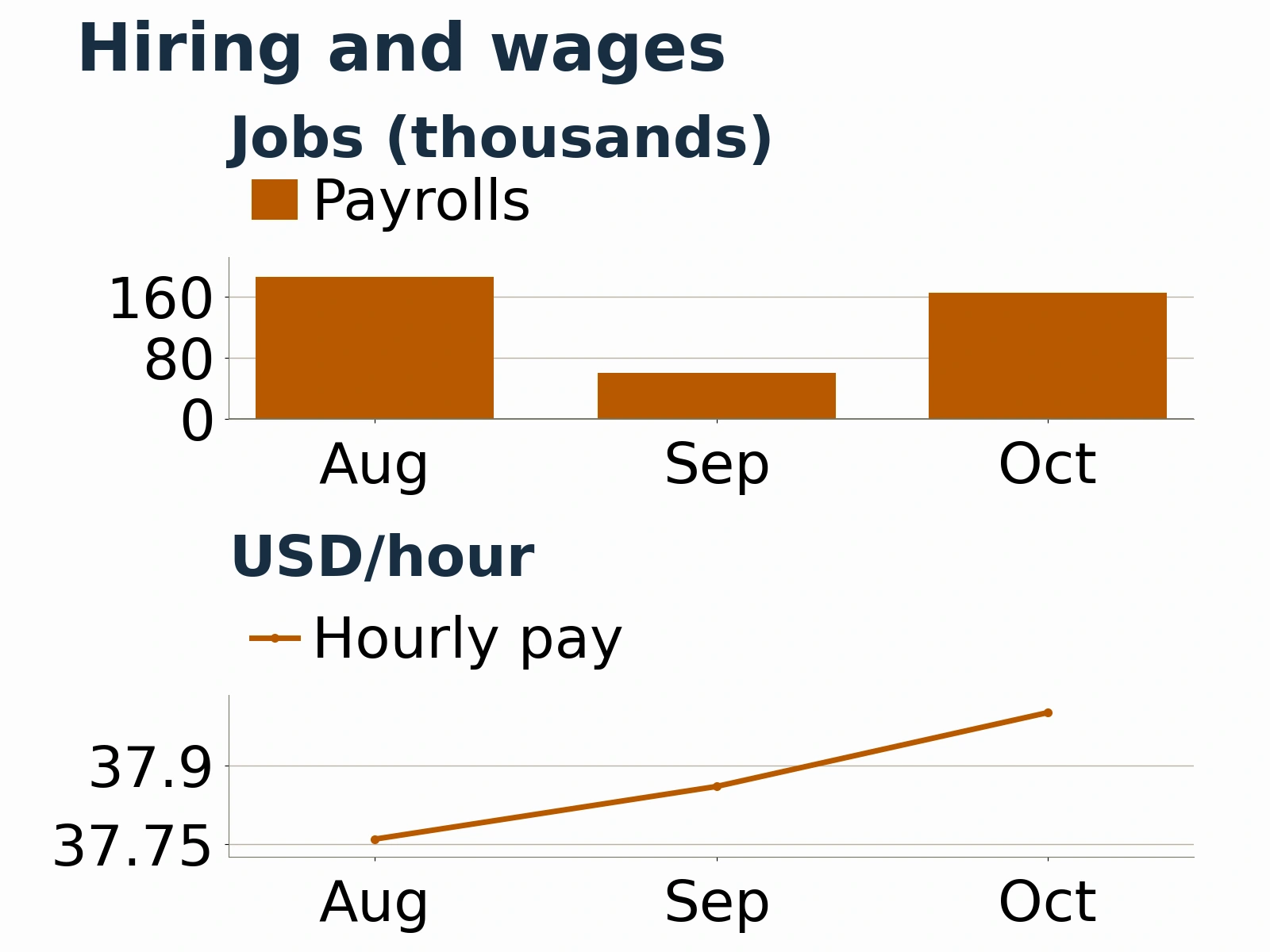
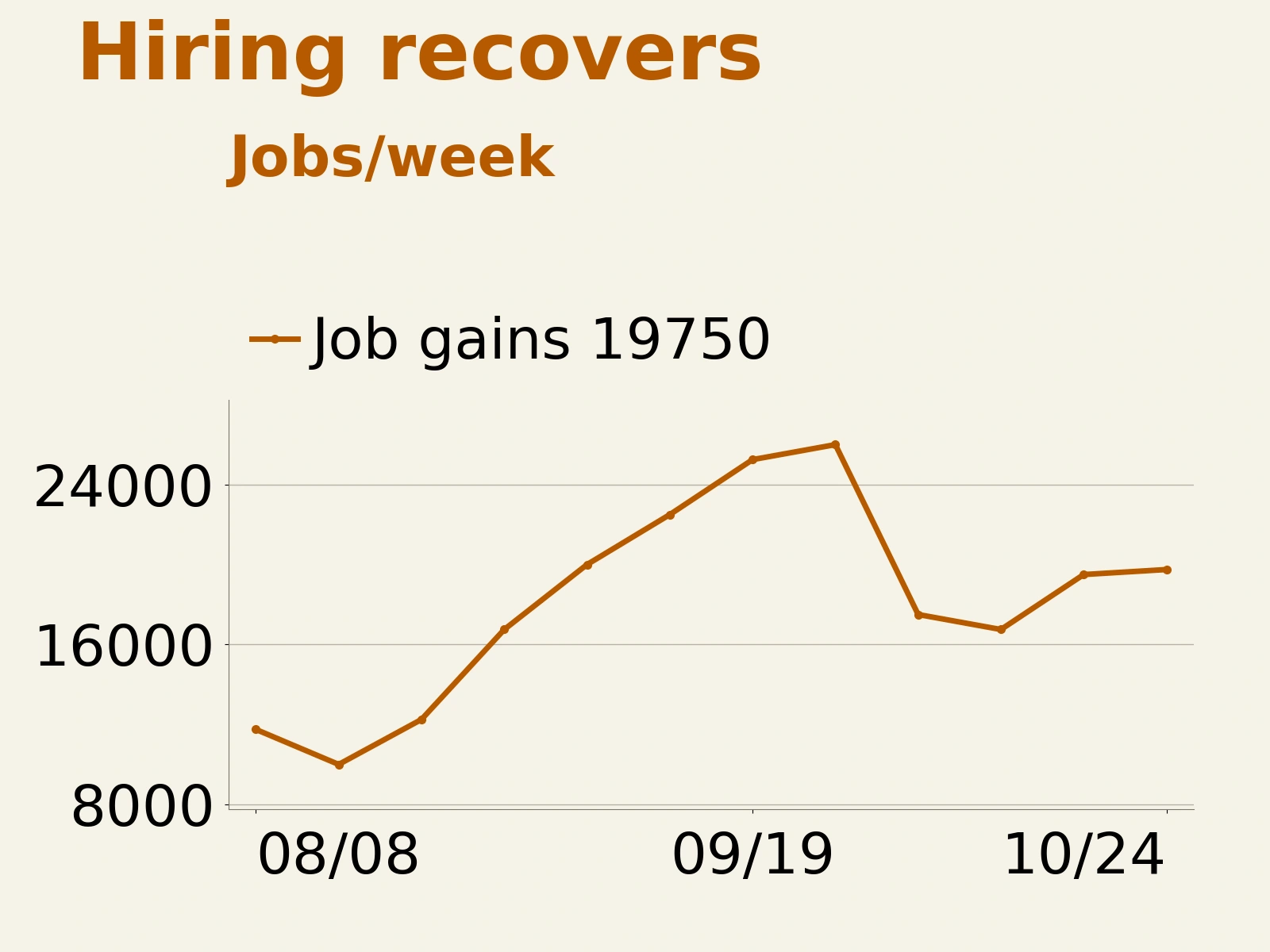
Employment and real income data, meanwhile, diverged. ADP data released on November 10 showed that seasonally adjusted private-sector employment increased by an average of 19,750 jobs per week over the four weeks ending October 24, above the previous two readings of 19,500 and 16,750. That indicates hiring had recovered somewhat from its early-October lows. However, a BLS report released the same day showed that nominal average hourly earnings for all employees rose 0.4% month on month in October, exactly offset by that month's CPI increase, leaving both real average hourly and weekly earnings unchanged. Employment growth provided a floor for consumption, but real purchasing power did not improve alongside it.
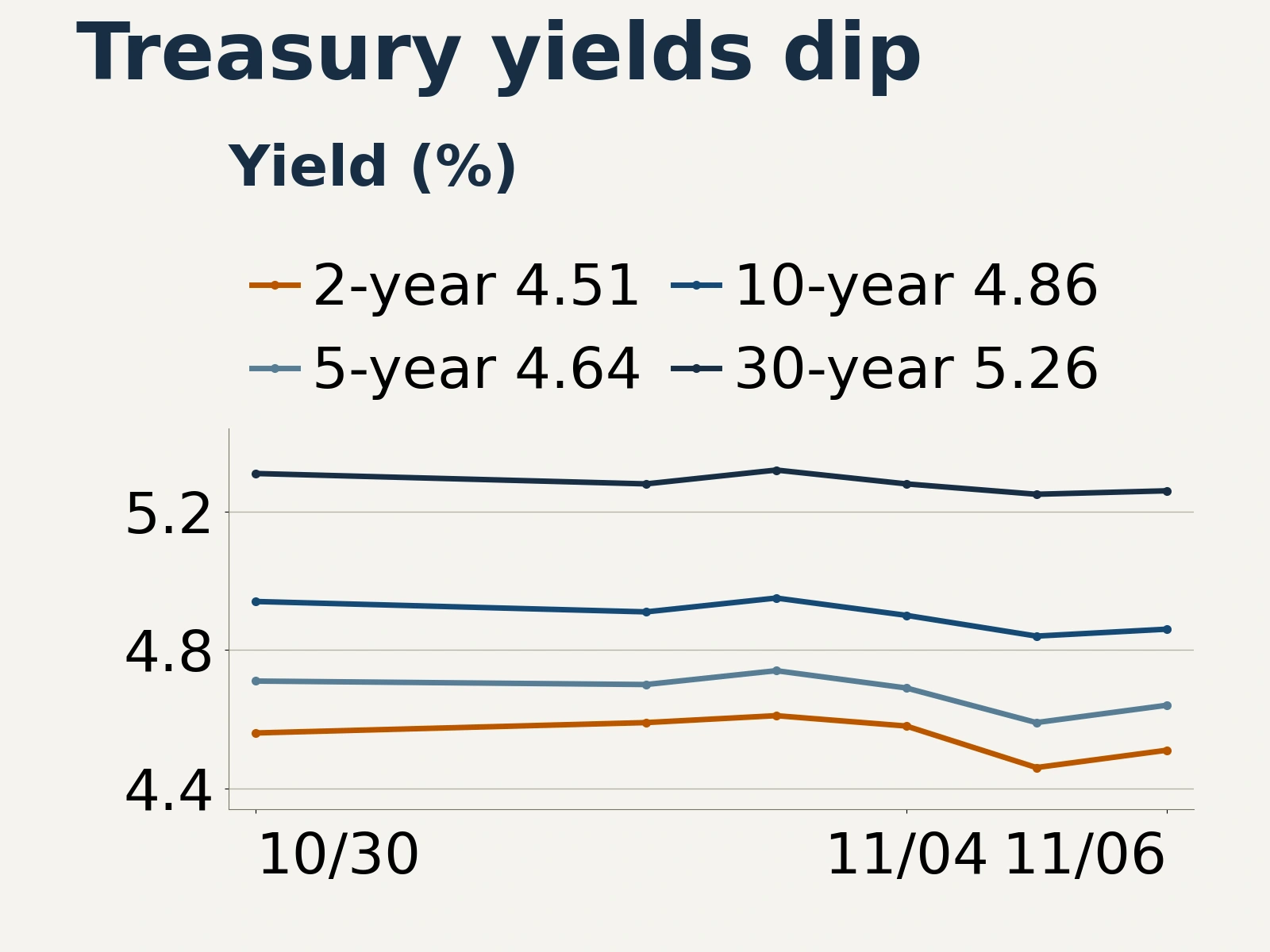
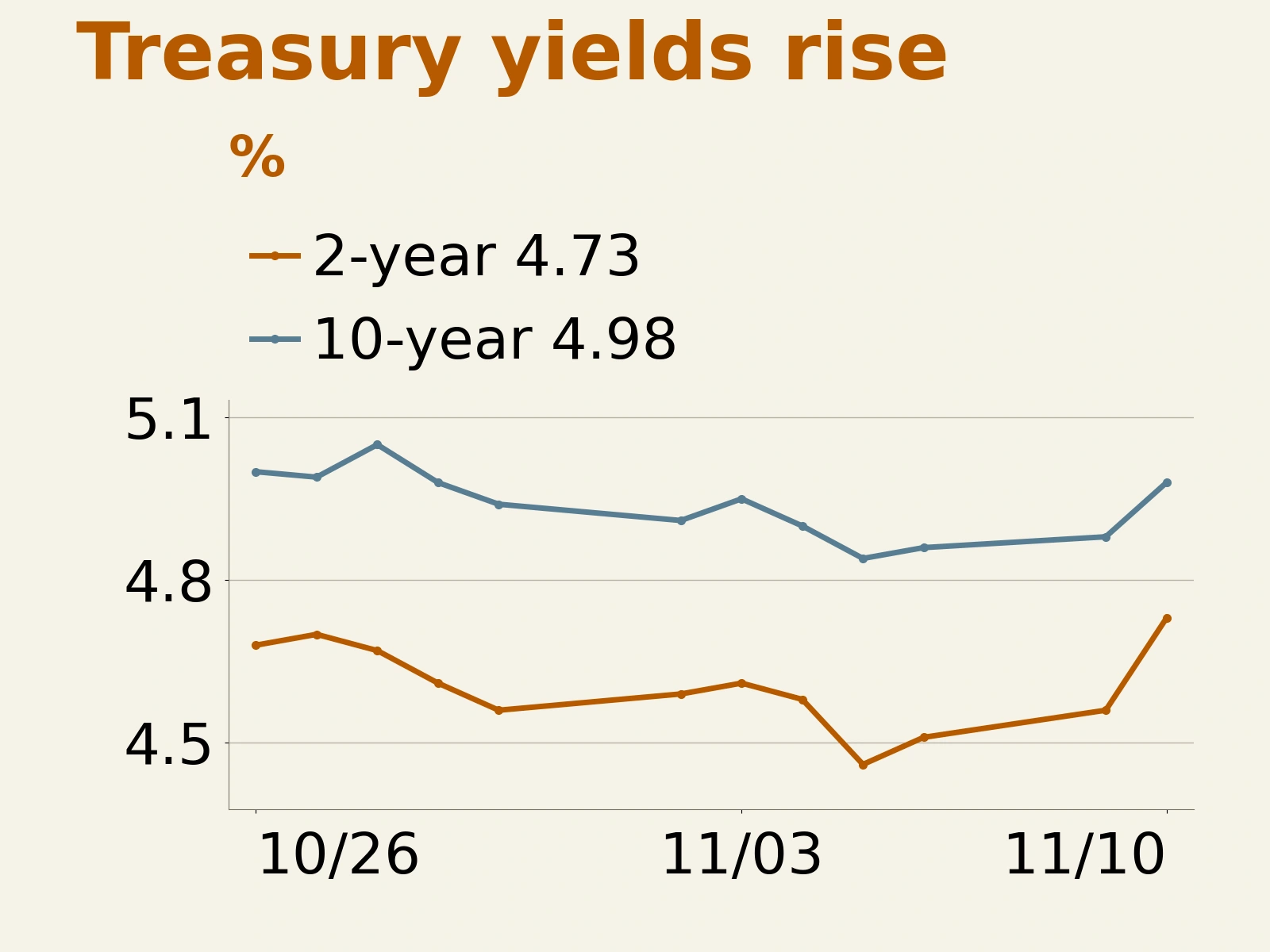
Rate markets quickly repriced the near-term policy path in response to the hot inflation reading. CNBC reported that Federal Reserve Governor Waller said at a conference in London that a 50-basis-point rate increase should be considered at the December meeting if inflation readings exceeded expectations. Lindsay Rosner of Goldman Sachs Asset Management also made a December rate increase her base case and said the tightening cycle could extend into 2027. Against that backdrop, the US Treasury's end-of-day yield curve shifted higher across maturities, with a particularly pronounced move at the short end: relative to November 9, the 2-year yield climbed 17 basis points to 4.73%, the 5-year rose 14 basis points to 4.81%, the 10-year increased 10 basis points to 4.98%, and the 30-year rose 9 basis points to 5.35%. The 10-year/2-year Treasury spread narrowed from 32 to 25 basis points.
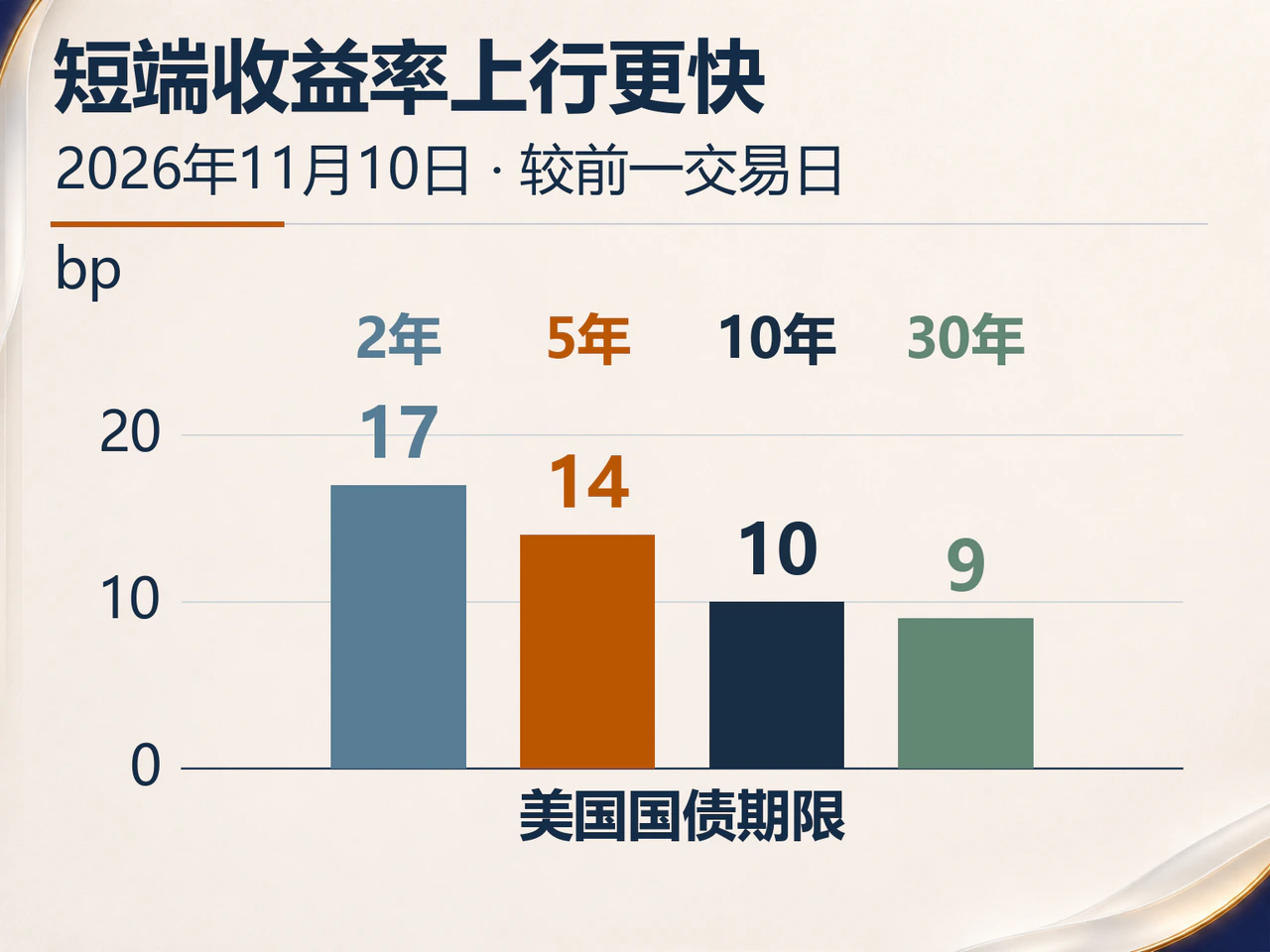
Longer-dated Treasuries also had to absorb pressure from new supply. The day's $42 billion 10-year Treasury auction cleared at a high yield of 5.02%. According to BMO commentary cited by CNBC, secondary-market yields had already risen substantially before the auction and edged higher again after the results. Expectations of tighter policy and pressure to absorb new debt supply combined to overshadow the relief that falling oil prices might otherwise have offered the bond market.
Recovering Middle East crude supply keeps oil falling; higher rates and a stronger dollar weigh on gold
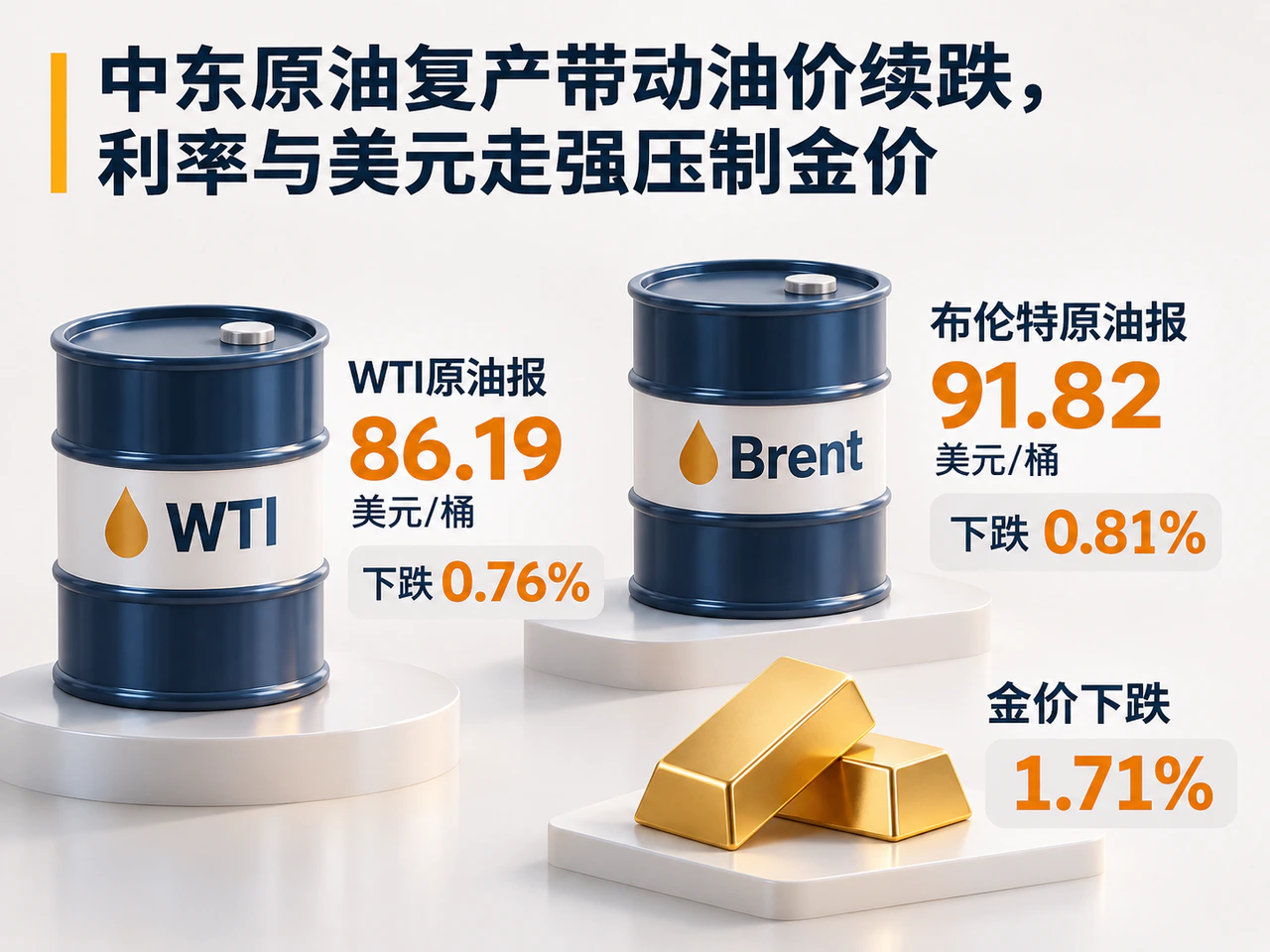
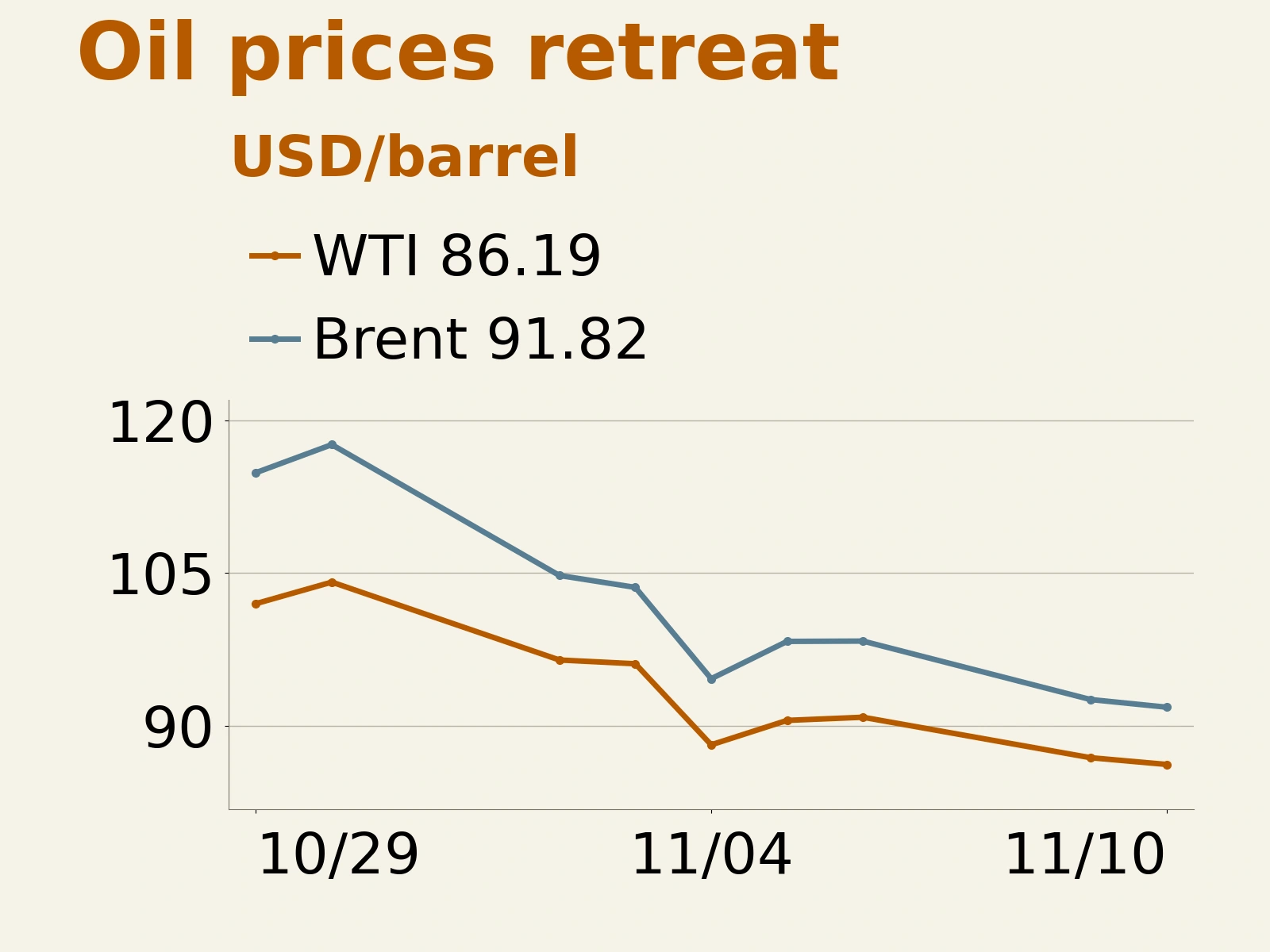
In commodities, oil and gold both fell, but for very different reasons. On Yahoo's continuous futures closing-price basis, WTI crude closed at $86.19 per barrel on November 10, down 0.76% from the previous trading day, while Brent closed at $91.82 per barrel, down 0.81%. Compared with $104.12 and $117.64 per barrel respectively on October 30 on the same basis, international oil prices have retreated markedly in recent sessions.
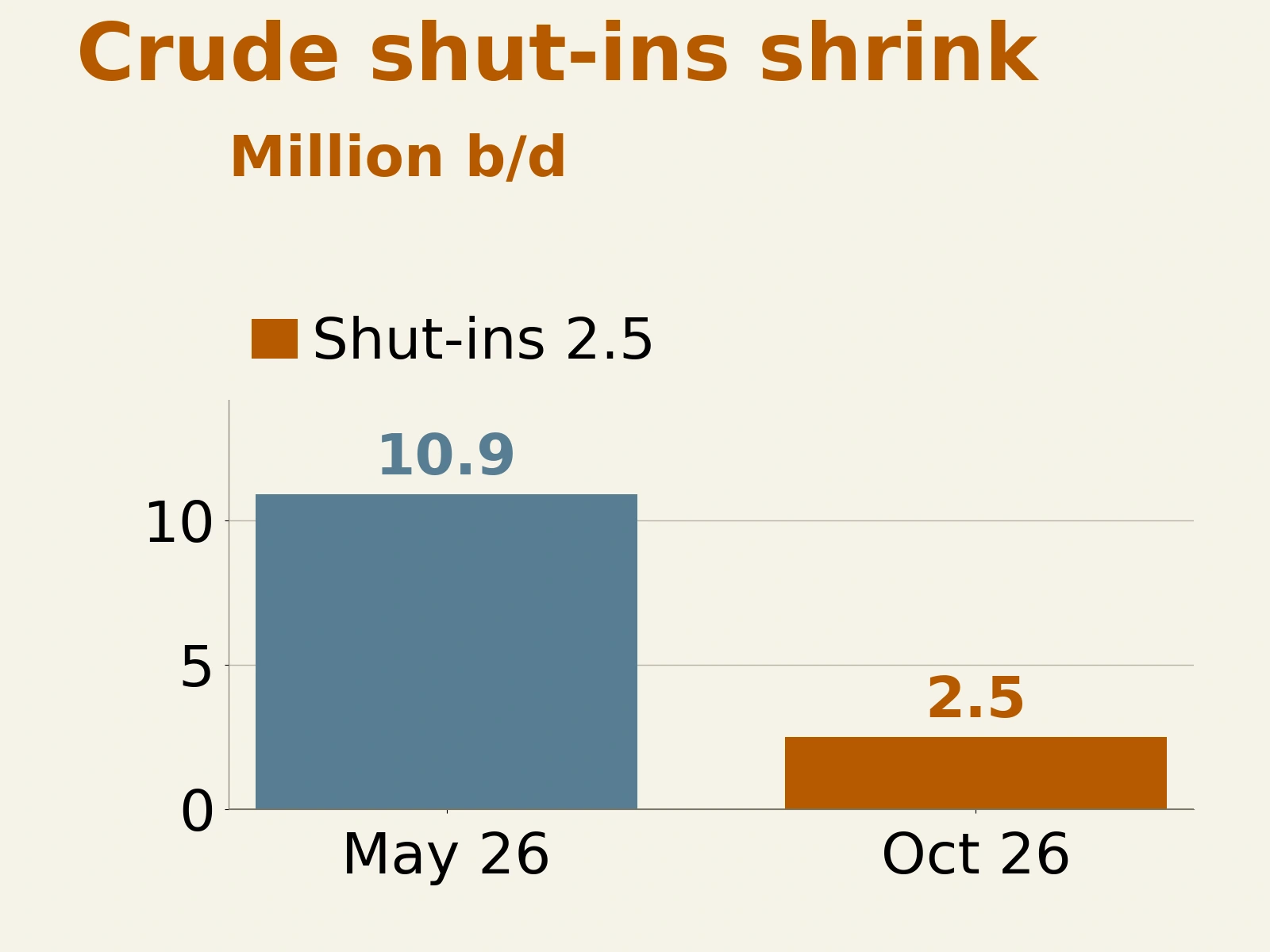
The decline in crude was driven mainly by recovering supply. In its November Short-Term Energy Outlook, the US Energy Information Administration (EIA) said estimated Middle East crude production shut-ins had fallen from a May peak of 10.9 million barrels per day to 2.5 million barrels per day in October, as Saudi Arabia's East-West pipeline returned to service and alternative arrangements, including ship-to-ship transfers off Oman, expanded export routes. The United States also deferred further strikes on Iran and pursued diplomatic engagement, easing expectations of an escalation, although the associated maritime blockade remained in place. With alternative export routes and supply continuing to recover, the EIA expects global oil inventories to shift from draws to builds in the fourth quarter. However, with logistical constraints and low inventories still supporting prices, it continues to forecast monthly average Brent spot prices of about $100 per barrel in November and December. The pace of further declines in energy costs therefore still depends on the actual progress of production restoration.
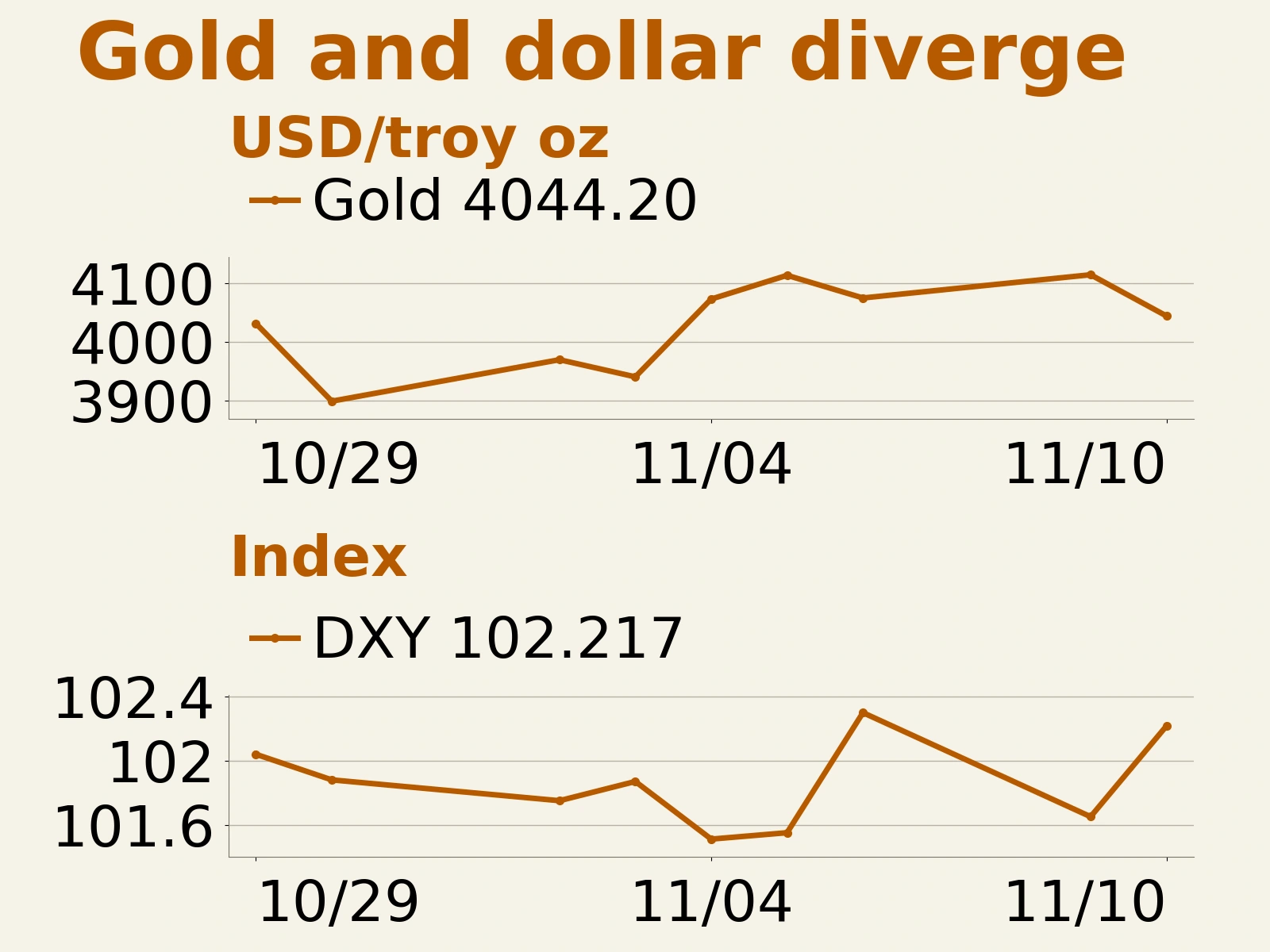
Gold was constrained mainly by tighter financial conditions. On the same continuous futures closing-price basis, gold fell 1.71% on November 10 to $4044.20 per troy ounce, while the dollar index rose 0.56% to 102.217. Stronger-than-expected inflation reinforced expectations of Fed tightening. A stronger dollar raised the cost of gold for non-dollar buyers, while rising Treasury yields directly increased the opportunity cost of holding non-interest-bearing gold.
Rate shock deepens US sector divergence as the AI supply chain balances order growth against interest costs
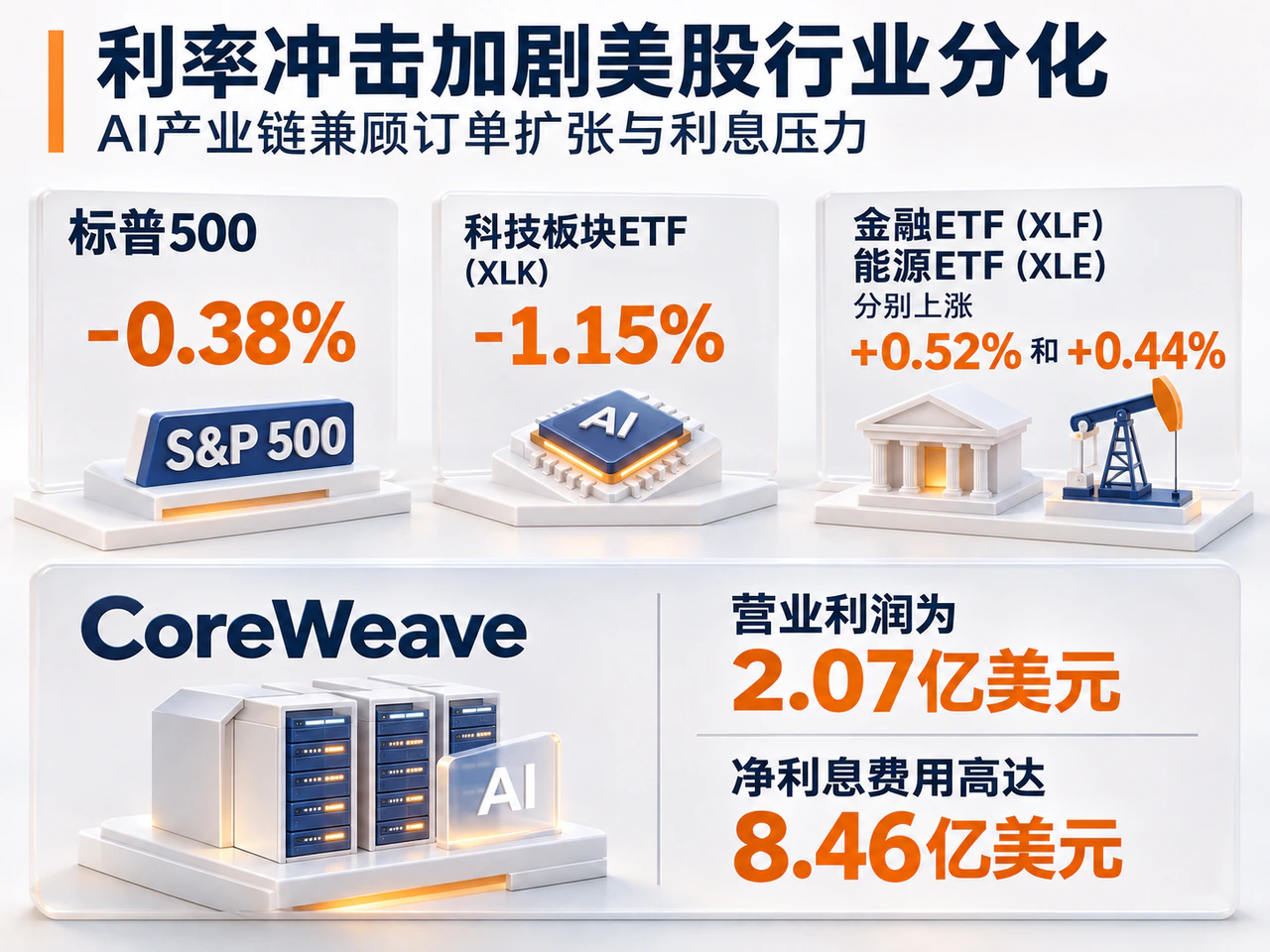
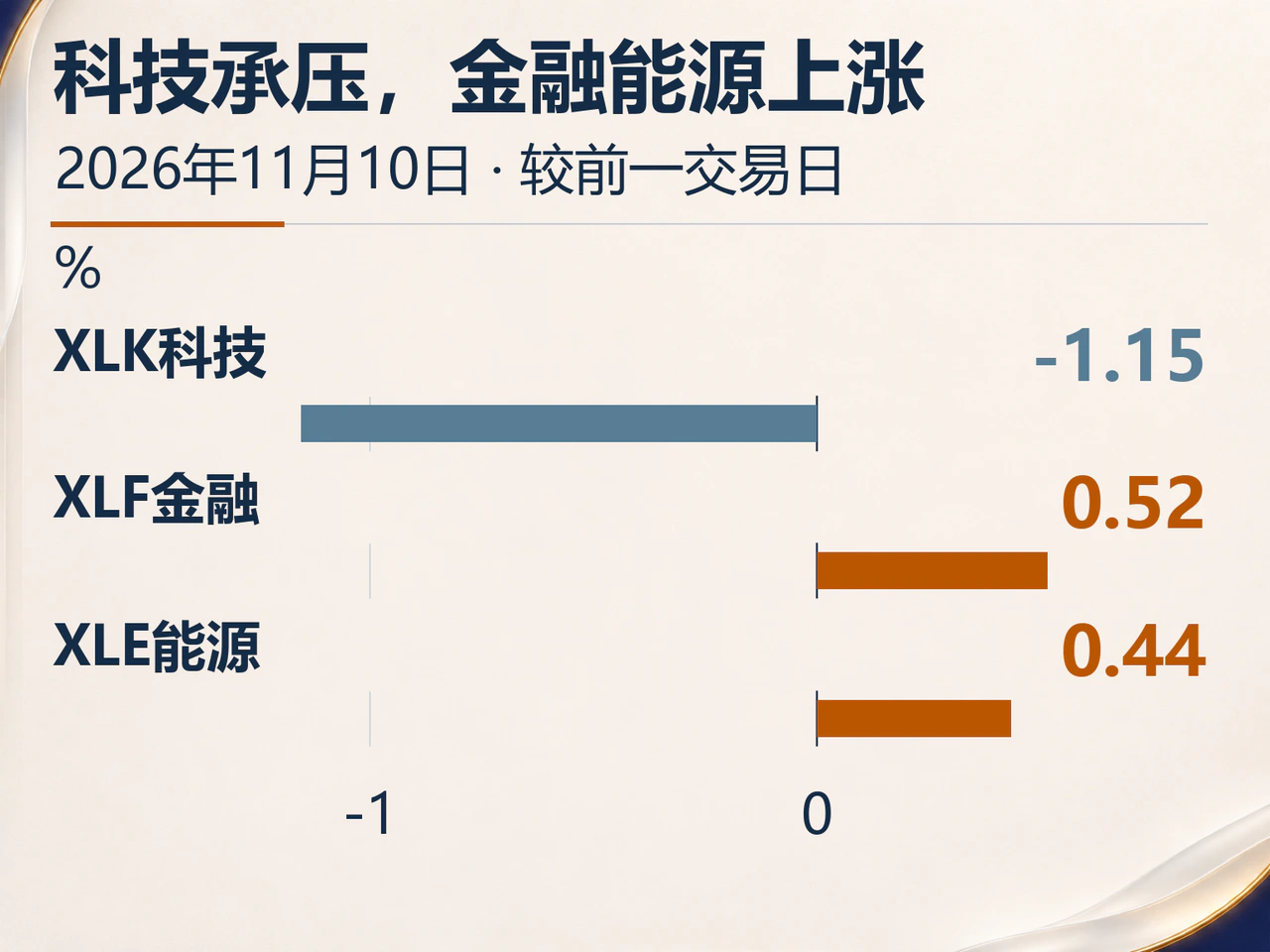
Divergence within US equities clearly illustrated where higher rates were having an impact. Six of the S&P 500's eleven sectors fell and five rose. The technology sector ETF, XLK, declined 1.15%, while the financials and energy ETFs, XLF and XLE, which benefited from expectations for interest margins and their traditional businesses, rose 0.52% and 0.44% respectively. The highly rate-sensitive housing and construction chain weakened broadly. According to the Associated Press, homebuilders Lennar, D.R. Horton and PulteGroup fell 5.4%, 3.8% and 3.9% respectively, while building materials supplier Builders FirstSource dropped 4.6%. The moves reflected the pressure that higher mortgage costs transmit to housing affordability and orders for construction and building materials.
Technology and semiconductors also saw divergent performance. Nvidia fell about 5.5% and Micron declined 1.1%, while Broadcom and AMD gained 3.9% and 1.3% respectively. Although demand for AI hardware and infrastructure continues to expand, the market is drawing sharper distinctions between companies' competitive positions and their ability to turn business growth into profits.
Upstream in the supply chain, data center orders remained strong. In a November 10 announcement, Infineon forecast that group revenue would grow more than 20% year on year to about EUR 20 billion in fiscal 2027, including nearly EUR 4 billion from its data center power business. Citi analysts viewed the outlook as a positive signal for AI and data center demand, indicating that infrastructure segments beyond chips, such as power semiconductors, still offered clear visibility on growth.
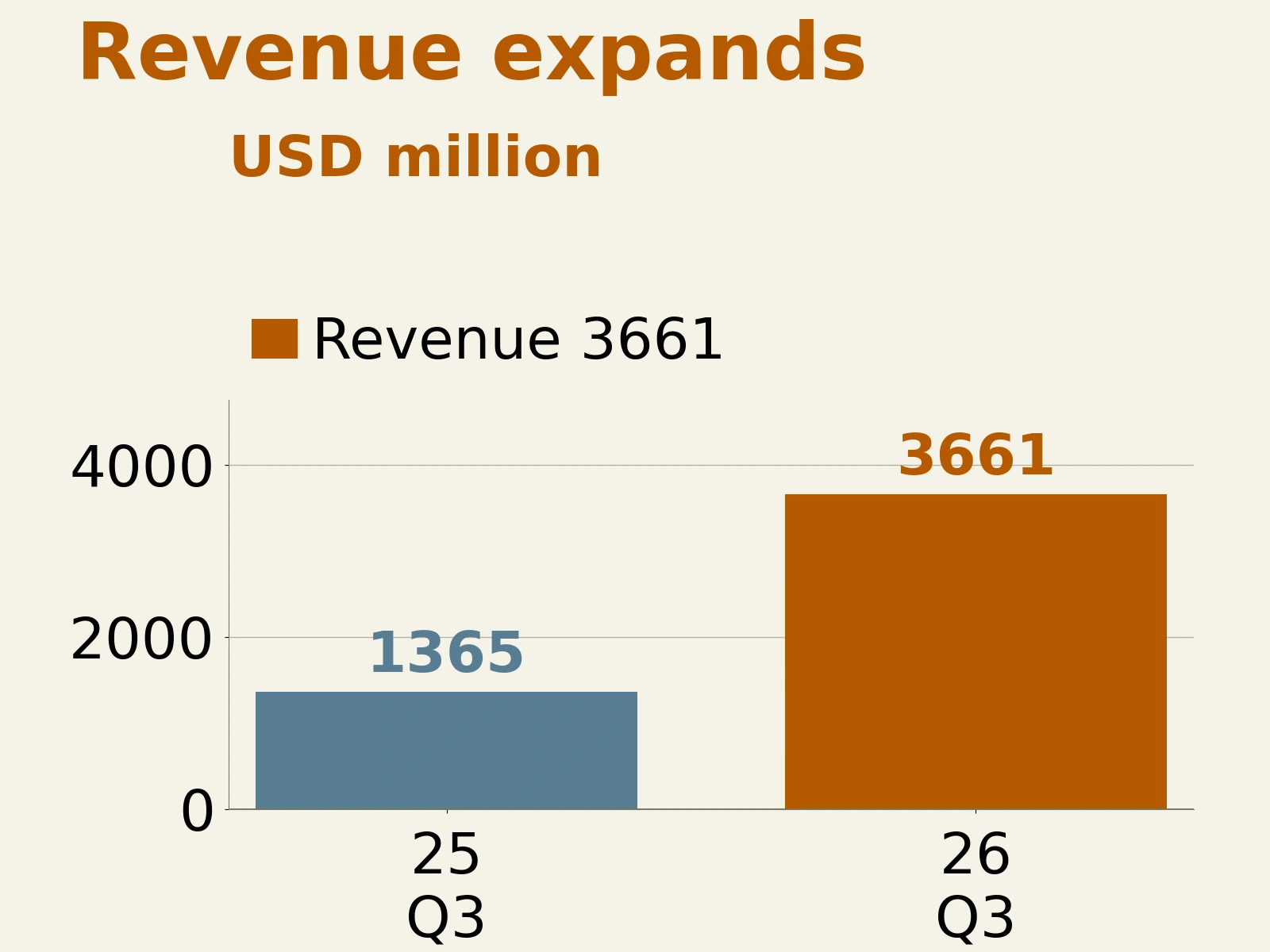
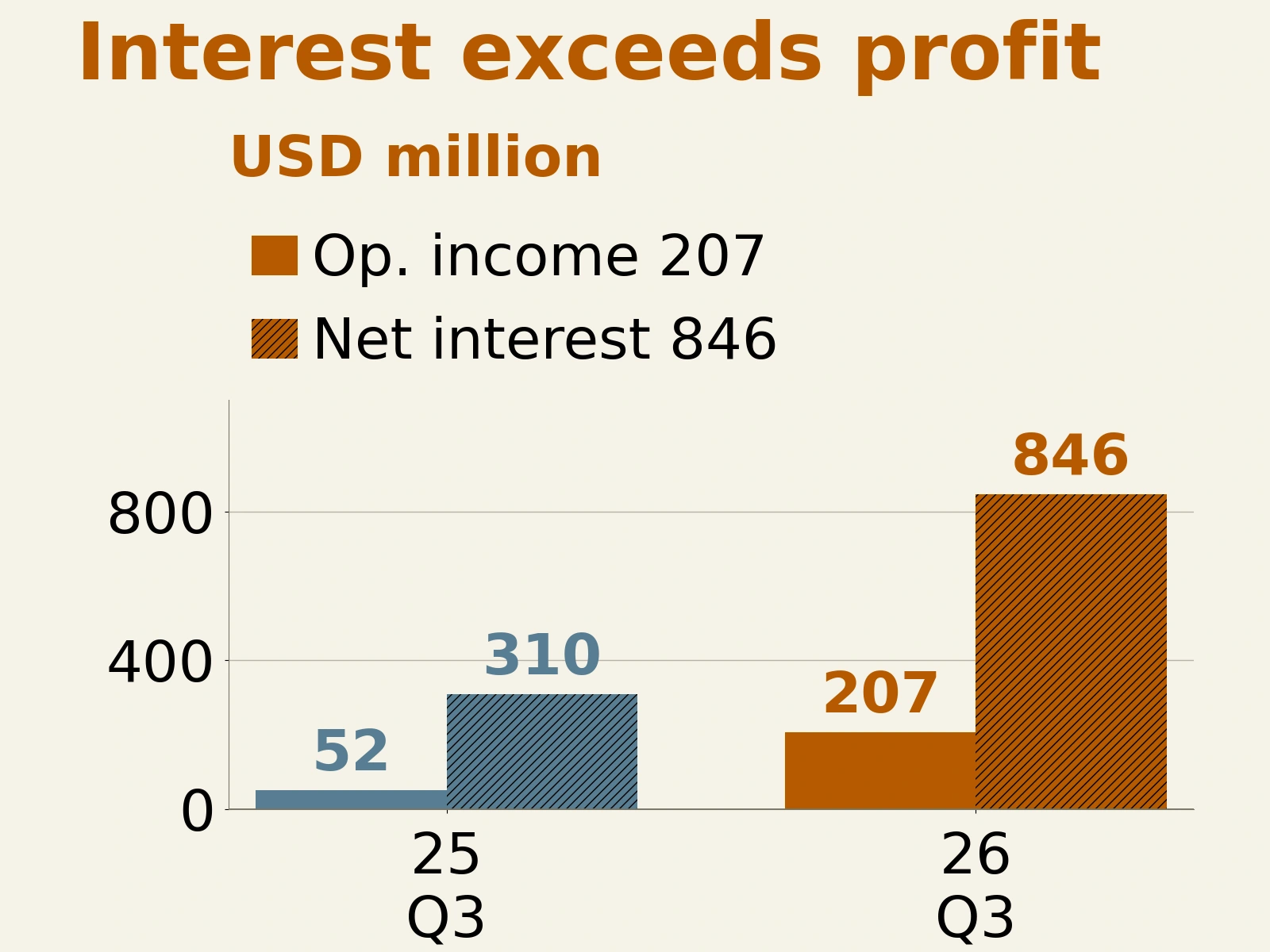
However, earnings reports from computing service providers further down the chain highlighted the funding-cost constraints behind aggressive expansion. CoreWeave's third-quarter results, released the same day, showed quarterly revenue jumping from $1.365 billion a year earlier to $3.661 billion, with operating income of $207 million. Yet quarterly net interest expense reached $846 million, far exceeding operating income and resulting in a net loss of $709 million. The company also raised its full-year 2026 revenue guidance to $13.0 billion-$13.3 billion and lifted the lower end of its capital expenditure range from $35 billion to $37 billion, leaving the upper end unchanged at $39 billion. It expects fourth-quarter interest expense to increase further to $1.05 billion-$1.15 billion. As risk-free rates rise, expansion that disregards financing costs faces greater scrutiny. Investors are focusing on whether new orders can cover capital investment and translate into free cash flow.
Beyond financing hurdles, supply-chain policy is also affecting the pace at which AI computing capacity enters service. Reuters reported on November 10 that the US Federal Communications Commission (FCC) was examining possible import restrictions on Chinese optical transceivers, and that Microsoft was seeking to stop the proposal. Citing Counterpoint Research, the report said Chinese manufacturers account for about two-thirds of the global optical module market. Industry associations warned that shortages of connectivity components could delay the deployment of AI chips already purchased. If the technical thresholds under discussion mainly target next-generation products, the direct impact on existing projects would be smaller and alternative suppliers would have more time to expand production. For cloud providers, revenue realization is secure only when orders, financing and equipment deliveries are all in place together.
High-yield credit risks diverge; strong Chinese trade and policy buffers support Asian markets
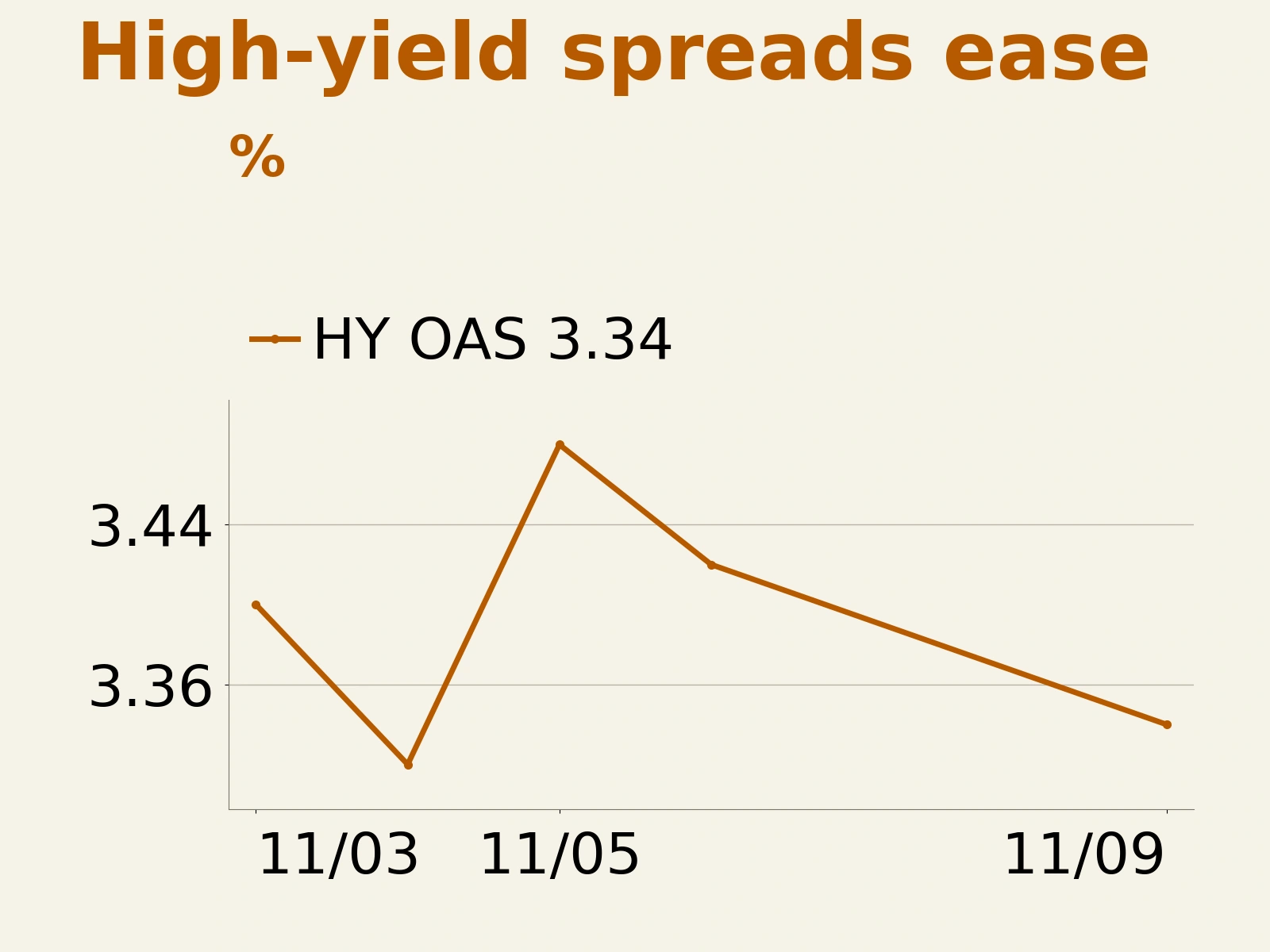
The corporate bond market showed a similar stratification of risk. The ICE BofA US High Yield option-adjusted spread narrowed to 334 basis points on November 9, below 342 basis points on November 6 and 348 basis points on November 5, reflecting an improvement in risk premiums early in the week. Nonetheless, pressure on lower-rated borrowers remained pronounced. In research dated November 10, Vanguard said spreads on BB- and B-rated bonds were relatively stable, while CCC spreads had widened by more than 500 basis points from their low for the year to about 1000 basis points. Risks were concentrated in a limited number of issuers and sectors such as telecommunications and media. The report also noted that CCC bonds now account for less than 10% of the traditional high-yield bond market, as some lower-quality financing has shifted to leveraged loans and private credit. Stability in the overall index therefore masks financing difficulties among issuers at the risky end of the market. For Hong Kong institutions participating in the dollar bond market, rising Treasury benchmark yields directly depress the prices of outstanding fixed-rate bonds and increase financing costs for new issues. Lower-rated borrowers also face the additional pressures of wider credit spreads and tighter refinancing conditions.
To fund substantial capital expenditure, technology giants are actively broadening their access to financing in multiple currencies. On November 10, Fixed Income News Australia, citing Bloomberg, reported that Alphabet was considering its first Hong Kong dollar and Singapore dollar bond issues, seeking to raise the equivalent of $1 billion-$1.5 billion and about $1.5 billion respectively. The deals could launch as early as that month, with terms still under discussion. This would provide high-quality new supply to Asian bond markets including Hong Kong, while underscoring the urgent demand for diverse funding sources to support AI infrastructure expansion.
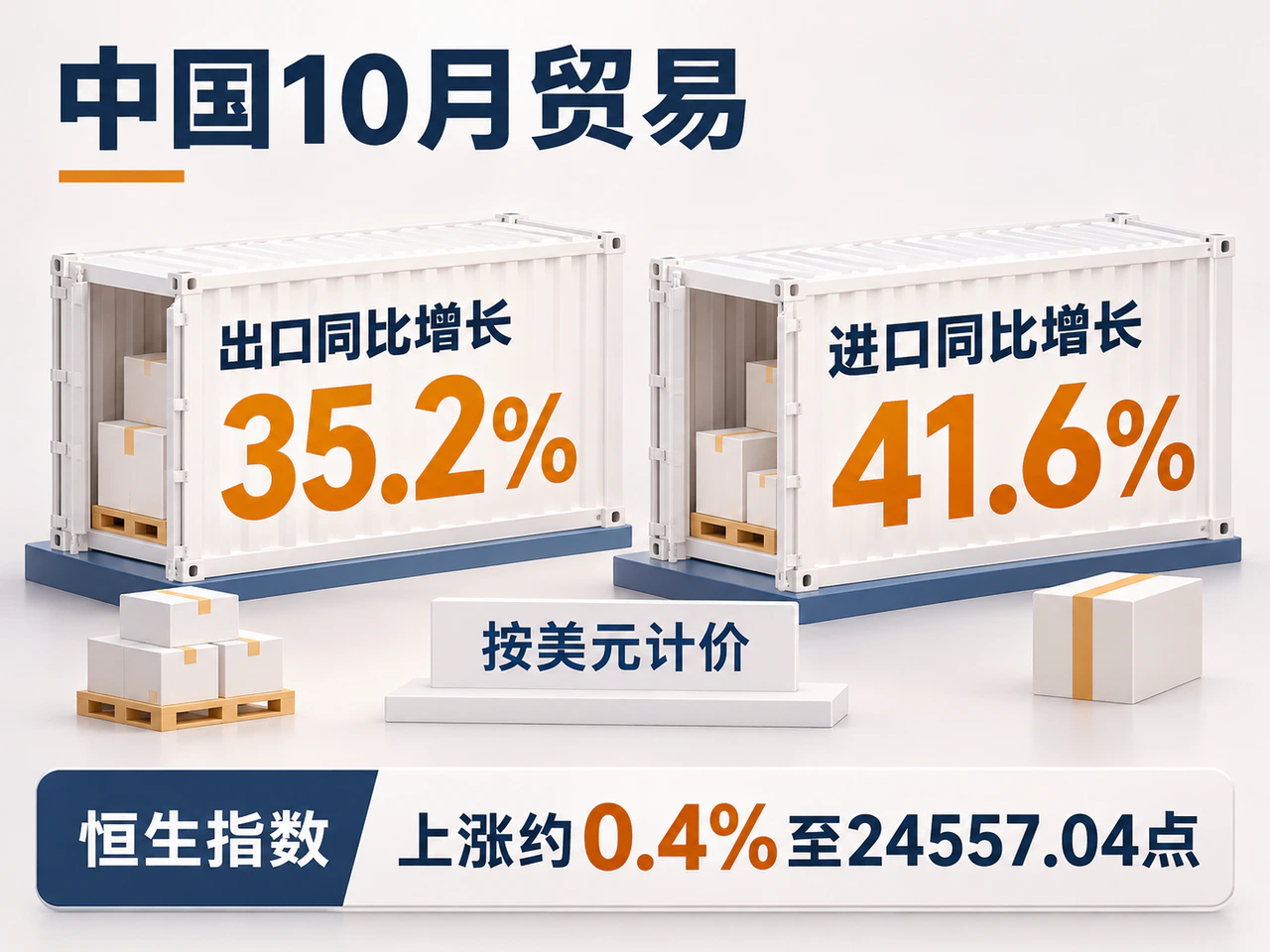
In equities, the November 10 Asian session mainly reflected the previous day's US rebound. The Hang Seng Index rose about 0.4% to 24557.04, the Nikkei 225 gained about 2.9% to 60459.58, and South Korea's KOSPI surged about 4.4% to 5239.13, led by Samsung Electronics and SK Hynix. Because those moves preceded the release of US October CPI, Asian markets will have to absorb the conflicting signals of a jump in Treasury yields and growing AI orders in early trading on November 11. Hong Kong growth stocks and financing-sensitive companies face more direct valuation constraints from higher dollar interest rates. Japanese and South Korean semiconductor supply chains, meanwhile, continue to benefit from global capital spending demand while facing scrutiny of deliveries and realized profits.
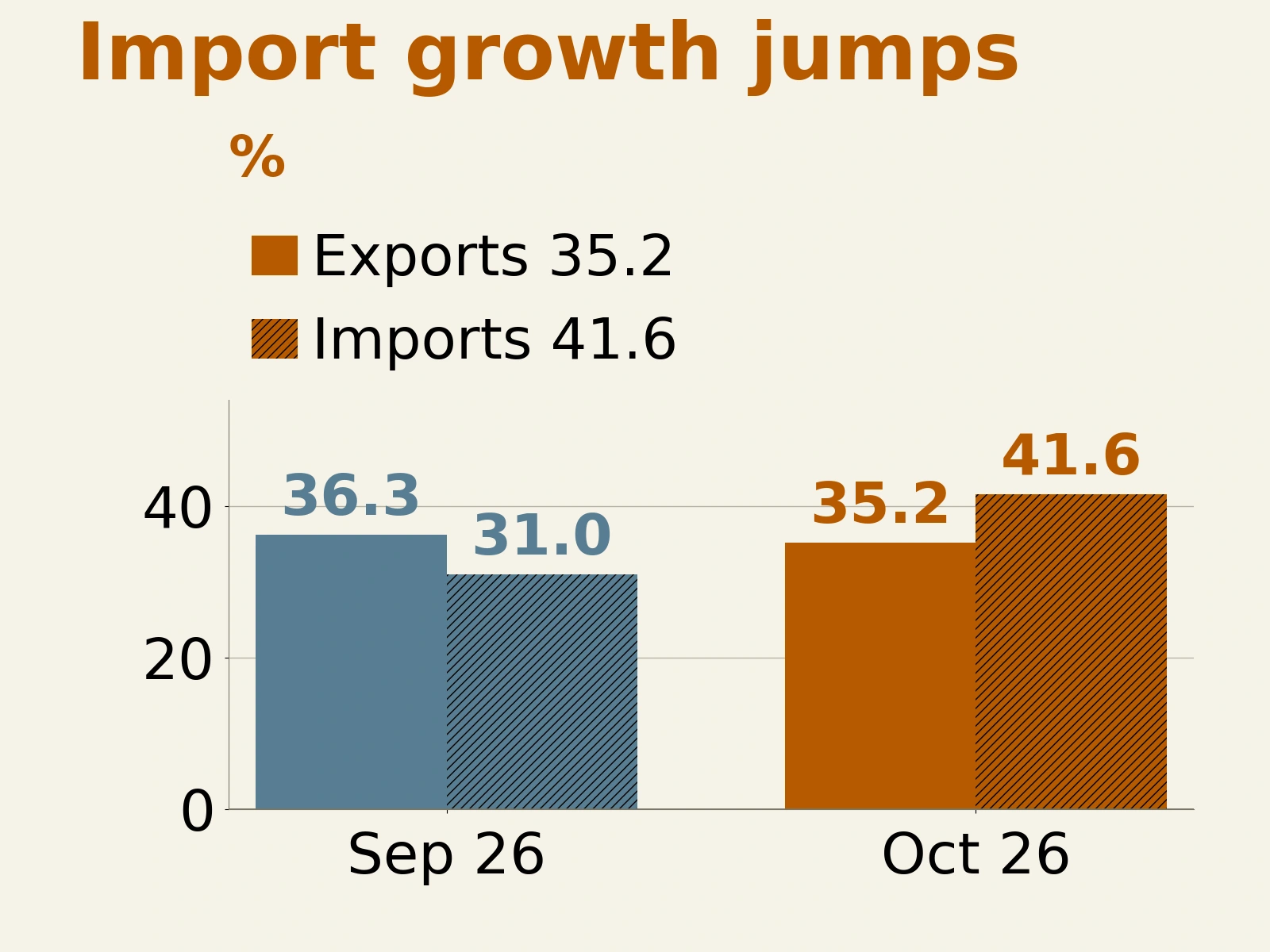
Regional fundamentals also offered tangible support for corporate orders through Asian trade growth and policy buffers. China's October trade data, released on November 10, showed dollar-denominated exports rising 35.2% year on year, slightly below September's 36.3% but above the 33.5% expected in a Reuters poll. Imports grew 41.6% year on year, well above September's 31% and the market forecast of 32%. The cumulative trade surplus for the first ten months reached $1.04 trillion. Reuters reported that China's dollar-denominated semiconductor exports surged 111.1% year on year in the first ten months, while high-tech product exports grew 47.9%, with AI infrastructure construction a central driver. ING economist Lynn Song said that although base effects could slow trade growth next year, AI-related trade should remain resilient over the coming months.
The extension of bilateral trade arrangements also reduced the likelihood of an abrupt near-term increase in supply-chain costs. In a notice issued on November 10, the Office of the US Trade Representative (USTR) extended the suspension of maritime service fees and additional tariffs on certain port cargo-handling equipment, together with the existing 178 product exclusions from Section 301 tariffs on China, to 11:59 p.m. US Eastern Time on January 9, 2027. The arrangement gives importers, shipping companies and equipment projects a two-month cost buffer.
Meanwhile, domestic liquidity conditions in China remained stable and relatively loose. Xinhua Finance's November 10 money market report showed that the central bank made a net injection of RMB 8 billion through open market operations that day. DR007 stood at 1.3493%, down a modest 0.87 basis points from the previous day. In a joint announcement that day, the Ministry of Finance and the People's Bank of China said they would auction RMB 100 billion of one-month Treasury cash deposits on November 13. China's strong trade expansion and stable domestic short-term funding conditions contrasted with the dollar rate environment being pushed higher by US inflation.
Overall, recovering oil supply, trade policy buffers and AI capital spending continue to improve the operating outlook for the relevant supply chains, but sticky US core inflation has raised the funding hurdle for dollar assets worldwide. In this environment, growth companies heavily dependent on external financing and future earnings urgently need to demonstrate that their cash generation can cover substantial interest costs. Companies with genuine order support and sound finances are better placed to withstand a high-rate cycle. Whether subsequent energy price declines pass through to services and wage costs will determine how long the current funding constraints persist.