On November 9, 2026, U.S. equities rebounded broadly after last week’s selloff. The S&P 500 rose 2.35%, the Nasdaq 100 gained 3.40%, and small caps rallied as well. In commodities, crude oil extended its losses and gold edged higher. Short- and intermediate-maturity U.S. Treasury yields continued to climb. Lower energy costs and stronger corporate earnings helped restore risk appetite, but rising real rates meant financing conditions did not ease in tandem for companies and households.
Semiconductors lead U.S. stocks higher as Wall Street debates AI earnings
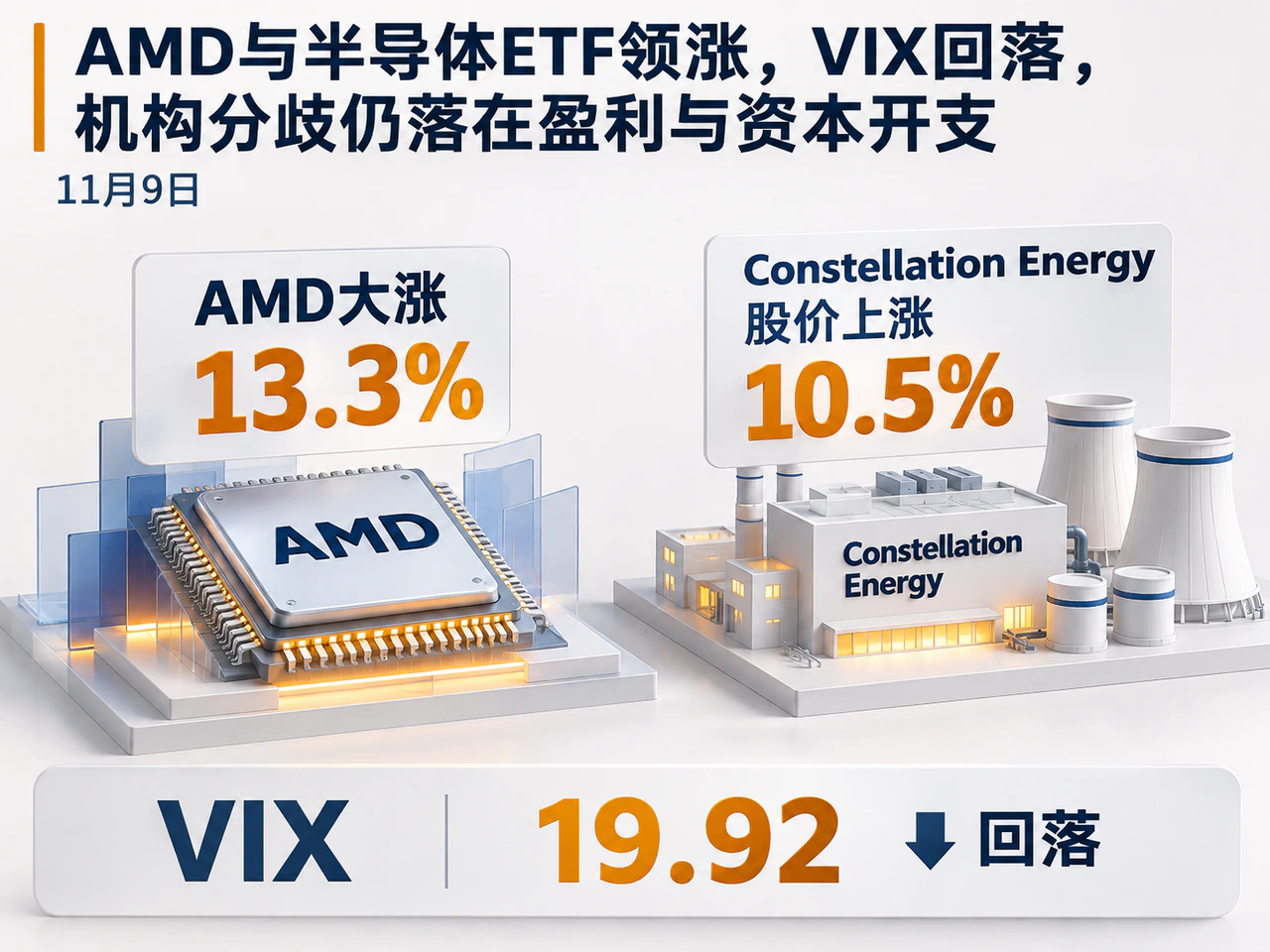
The S&P 500 closed at 7,549.94 on November 9. The Dow Jones Industrial Average gained 1,104.02 points, or 2.15%, to 52,389.75. The Nasdaq 100 finished at 27,907.63, while the Russell 2000 rose 3.15% to 2,840.81. The VIX fell 5.72 points to 19.92 from 25.64 on November 6. Growth stocks and small caps both led the rebound, pointing to a broad return to risk-taking.
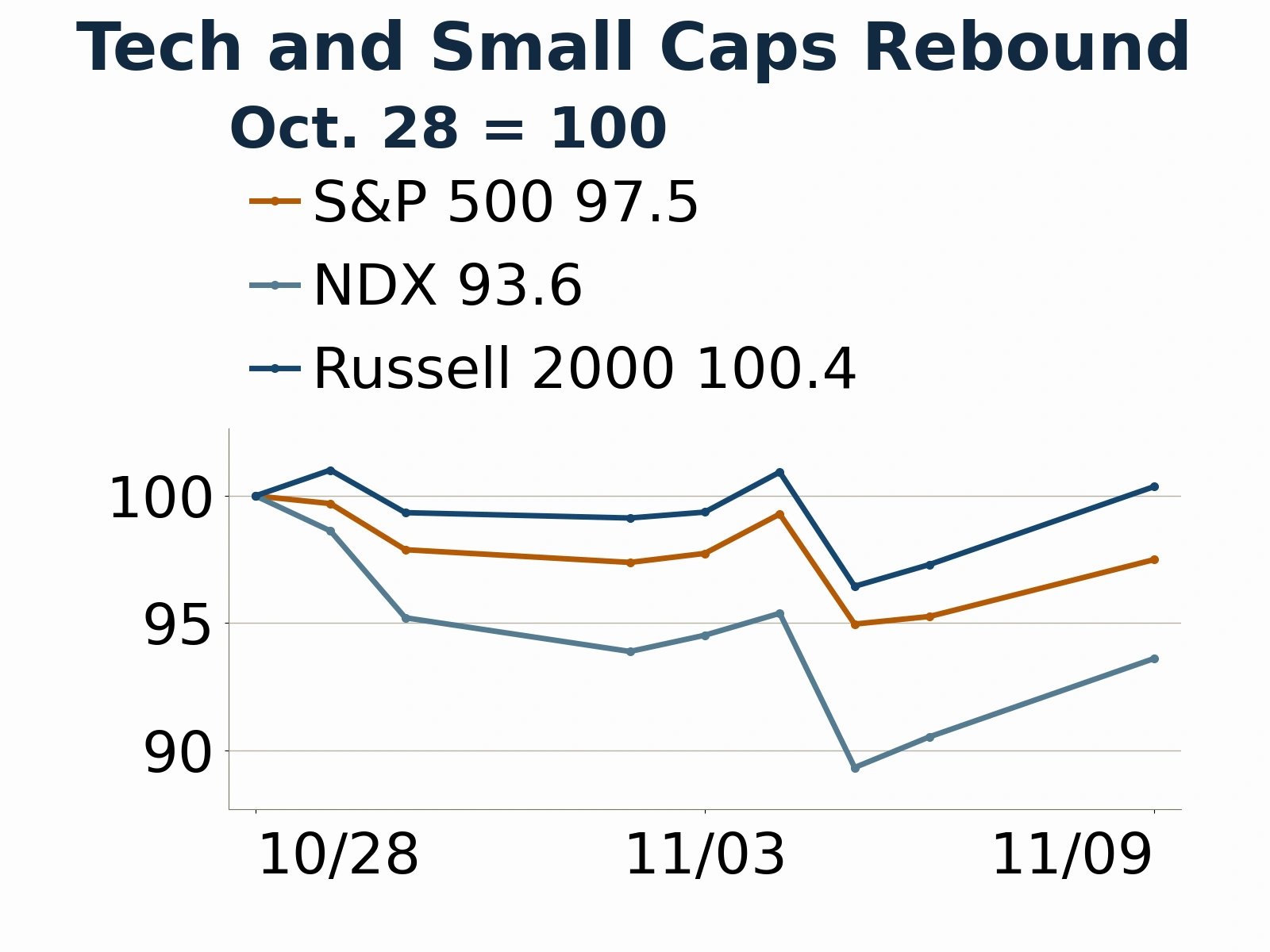
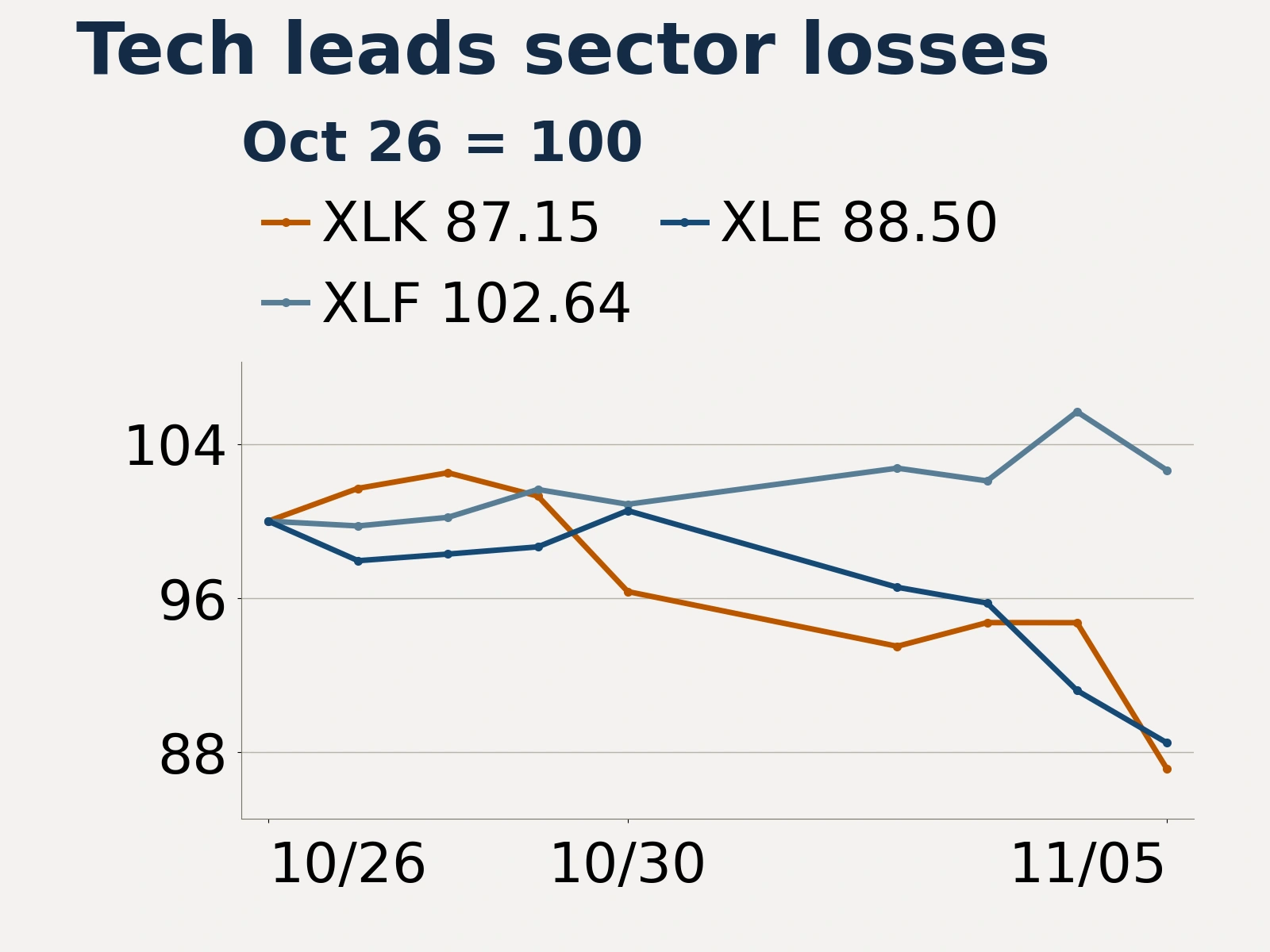
AFP reported that all 11 S&P 500 sectors closed higher, though the size of the gains varied widely. Industrials and consumer discretionary rose more than 3%. The technology ETF (XLK) gained 3.73%, the financials ETF (XLF) rose 1.45%, and the energy ETF (XLE) added just 0.52%. Lower oil prices eased cost pressures for energy users and reduced the burden on household budgets, but weighed directly on upstream producers’ shares.
Semiconductors powered the rebound. The semiconductor ETF (SOXX) rose about 7.5%, Broadcom and Marvell Technology each gained about 9%, and CoreWeave rose 5.6%. AMD jumped 13.3% after Oppenheimer upgraded it from Neutral to Outperform and set a $600 price target, citing progress in expanding its AI computing customer base, its rack-scale offerings and its software ecosystem. Constellation Energy rose 10.5% after data center power agreements helped the utility beat expectations for both third-quarter revenue and profit. The outlook for chip demand and the earnings delivered by the power supplier both point to strength across the AI supply chain.
Institutions disagree over how much of that good news is already priced in. On Monday, Citi cut its tactical allocation to U.S., global and European technology stocks from Overweight to Neutral. It remains positive on AI over the medium term but would rather wait for sentiment, positioning and earnings-per-share expectations to stabilize. Oppenheimer strategist John Stoltzfus sees room for stocks to recover as long as economic growth and the fundamentals of corporate revenue and profits do not deteriorate materially. The question is whether actual earnings growth can cover the scale of capital spending and the financing costs that come with it.
Short-term Treasury yields and real rates rise as concentration in long-dated AI debt draws scrutiny
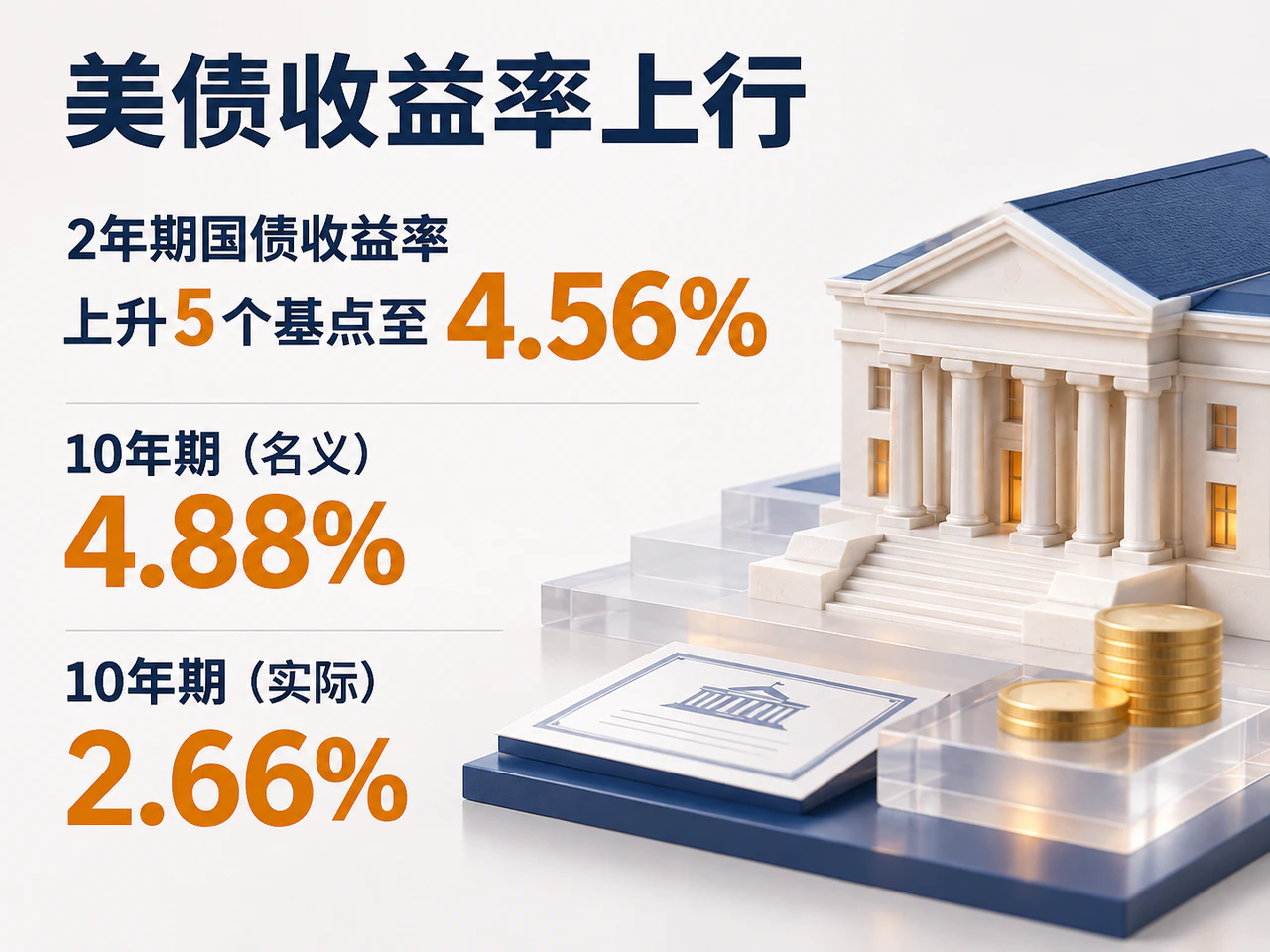
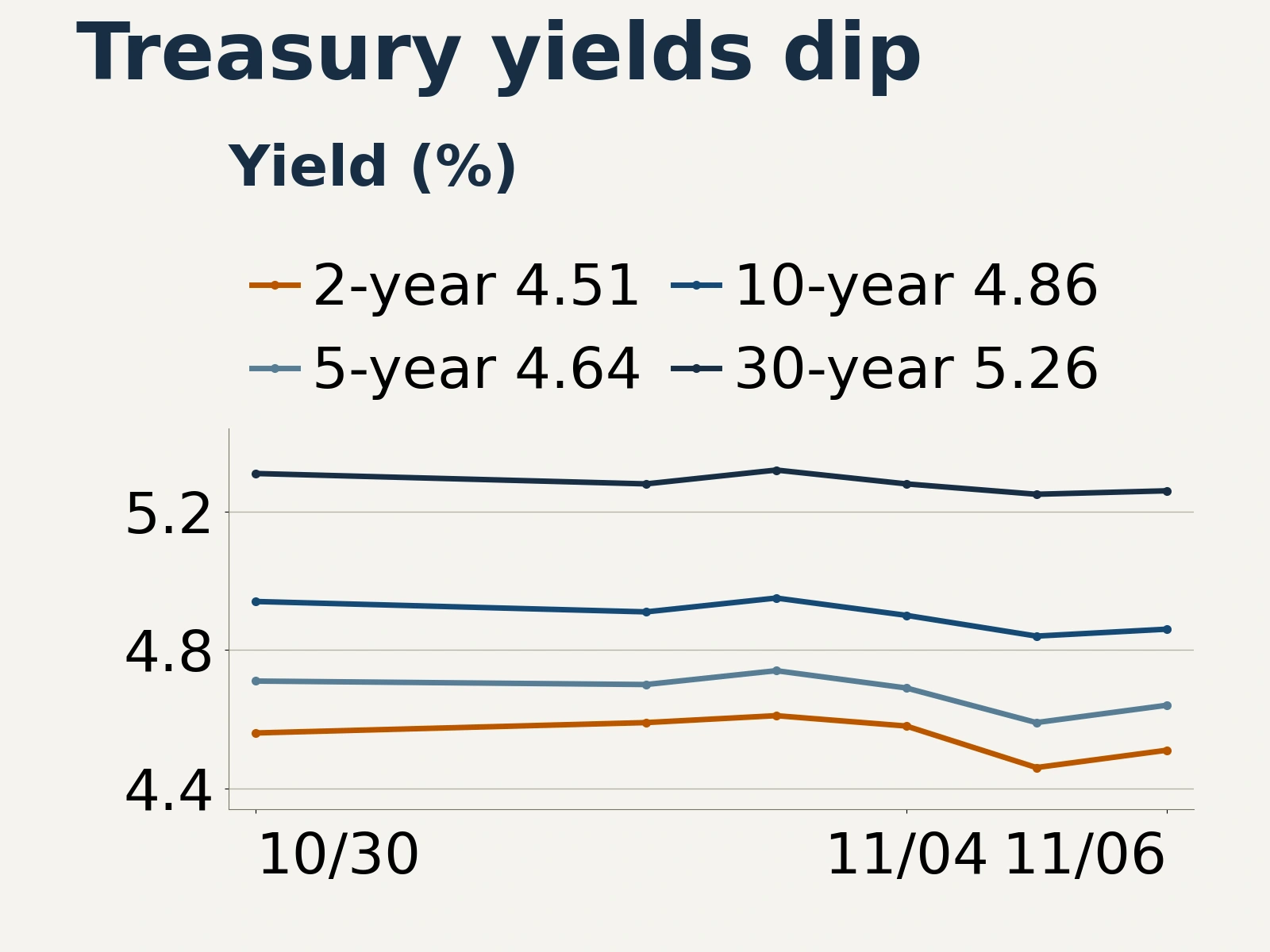
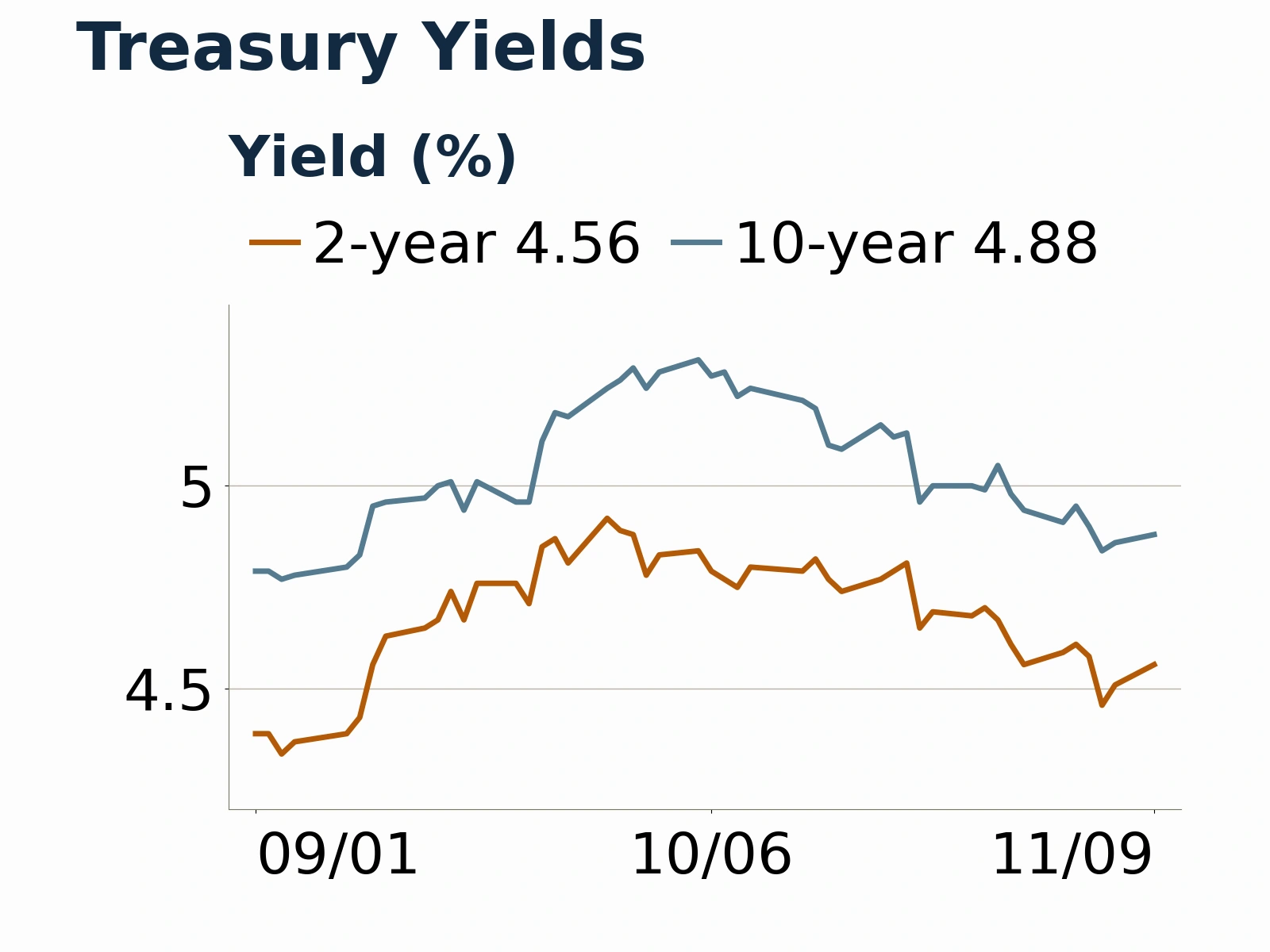
The U.S. Treasury’s November 9 end-of-day curve showed the 2-year yield up 5 basis points from November 6 to 4.56%, the 5-year up 3 basis points to 4.67%, the 10-year up 2 basis points to 4.88%, and the 30-year unchanged at 5.26%. The 10-year–2-year spread narrowed from 35 to 32 basis points as the larger rise at the short end flattened the curve further.
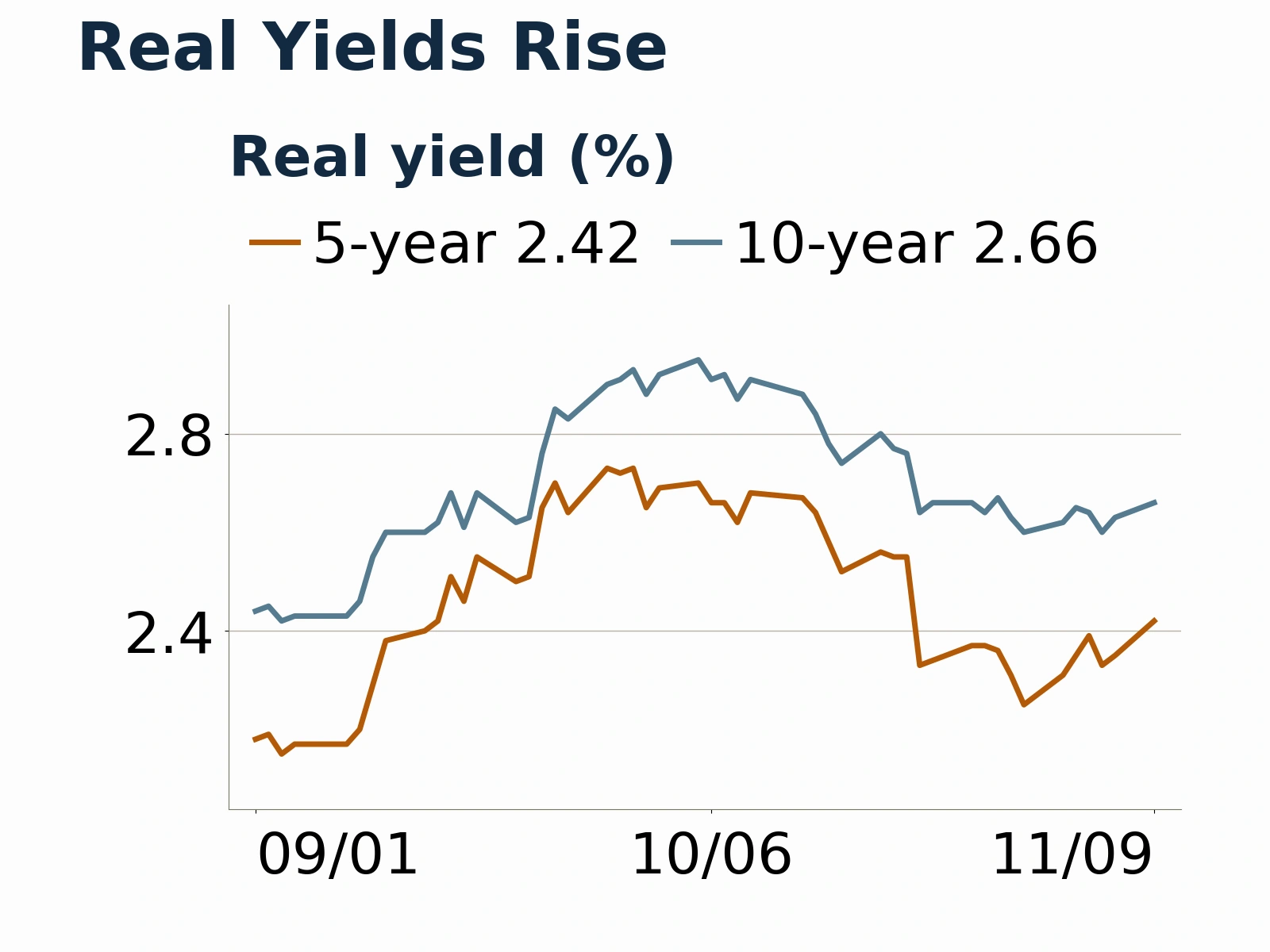
Higher real rates accounted for most of the rise in Treasury yields. The 10-year real yield rose from 2.63% to 2.66%, and the 5-year real yield rose from 2.35% to 2.42%. Inflation compensation, measured as the difference between nominal and real par yields of the same maturity, eased slightly: from 2.23% to 2.22% at 10 years and from 2.29% to 2.25% at 5 years. Lower oil prices pulled inflation expectations down and improved the cost outlook for equities, but the risk-free real rate that anchors valuations continued to rise.
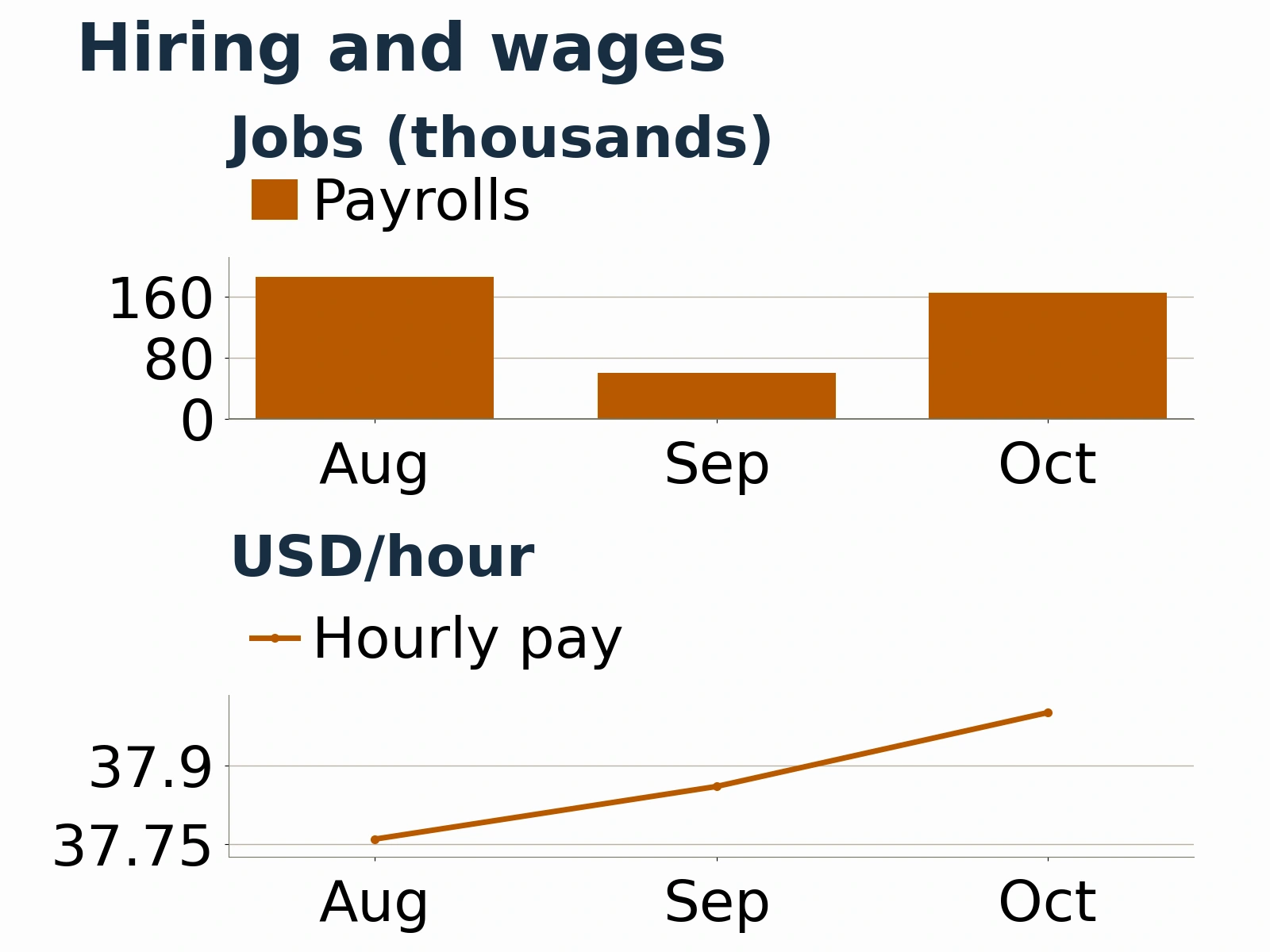
Strong jobs data and elevated inflation continued to shape monetary policy expectations. CNBC reported that October U.S. nonfarm payrolls, released last week, rose by 165,000, well above the 59,000 consensus estimate it cited, and that the unemployment rate fell to 4.1%. Edward Jones analyst Brock Weimer said the Federal Reserve could raise rates by 25 basis points in December. Expectations of tightening continued to push up short-term yields.
A busy Treasury auction calendar is testing how much supply buyers can absorb. Investing.com reported that the November 9 auction of $58 billion in 3-year notes cleared at 4.627%, 0.5 basis points above the level at which the notes traded in the secondary market before the sale. The bid-to-cover ratio was 2.53. Another $42 billion of 10-year notes and $25 billion of 30-year bonds are due on Tuesday and Thursday, respectively.
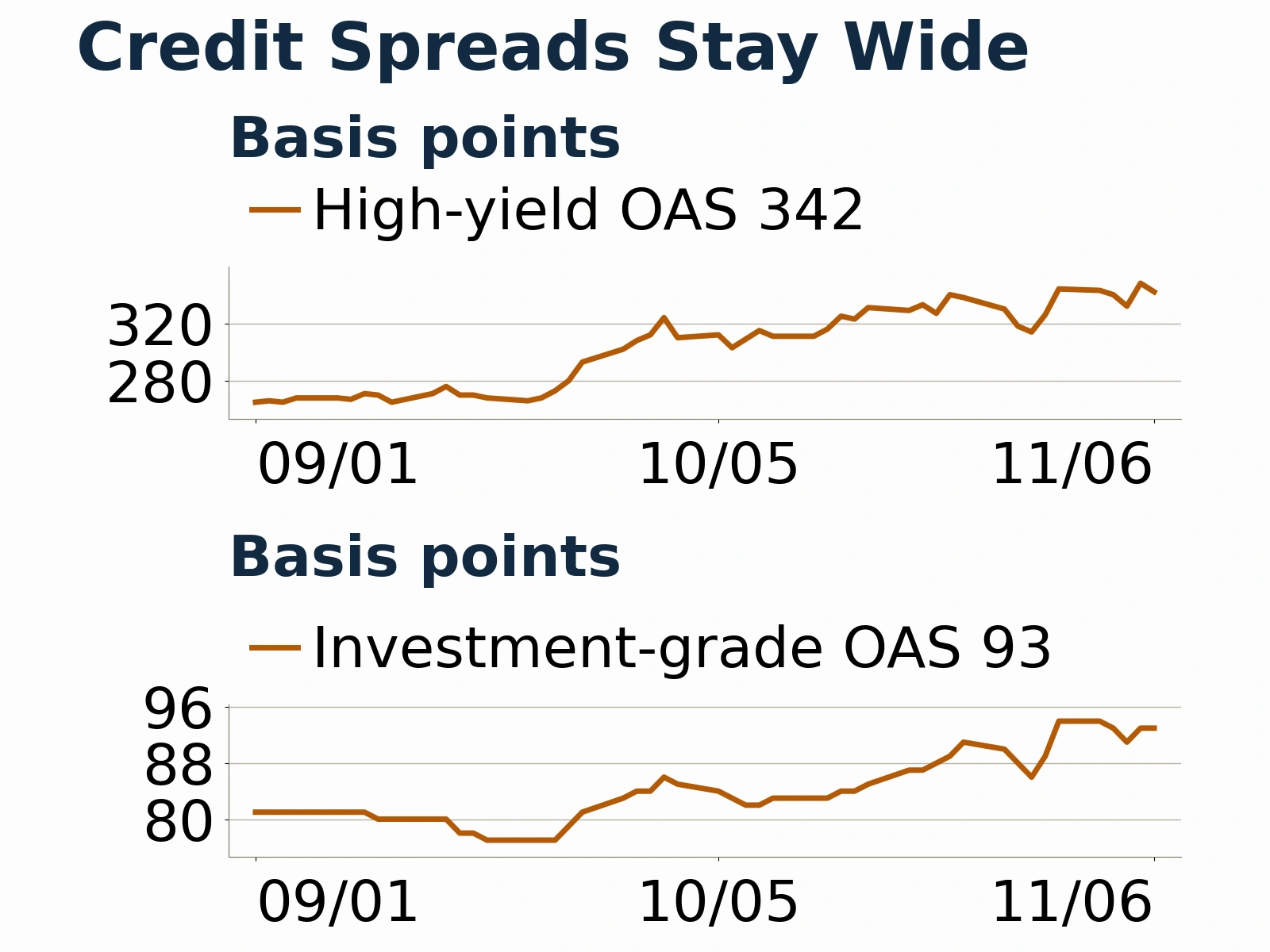
Credit spreads have narrowed, but borrowing costs remain above early-autumn levels. As of November 6, the ICE BofA high-yield option-adjusted spread had narrowed 6 basis points from the previous day to 342 basis points, while the investment-grade corporate spread was unchanged at 93 basis points. Compared with September 1, the two spreads were still 77 and 12 basis points wider, respectively.
AI capital spending is changing the mix of credit supply. PIMCO said on November 9 that, as of October 30, AI-related borrowers had accounted for nearly half of this year’s issuance of U.S. dollar investment-grade bonds with maturities of 15 years or more by nonfinancial companies. Slower construction could stretch out borrowing needs, but markets would still have to absorb this concentration of long-dated supply. Amundi said the same day that demand for high-quality bonds remained strong enough to absorb heavy issuance. It was close to neutral on Treasury duration, with a relative preference for intermediate maturities.
Big technology companies are looking to local-currency bond markets in Asia to diversify their funding. Bloomberg, citing people familiar with the matter, reported that Alphabet was discussing sales of Hong Kong dollar and Singapore dollar bonds as early as this month. It aims to raise the equivalent of US$1 billion to US$1.5 billion in Hong Kong dollars and about US$1.5 billion in Singapore dollars, though terms could still change. That would bring fresh issuance to Hong Kong’s bond market. Pricing for U.S. dollar bonds in Hong Kong will still depend on dollar benchmark rates, issuer cash flows and the concentration of technology-sector borrowing.
Oil slides nearly 6% and gold rebounds as energy pressures ease and rates stay high
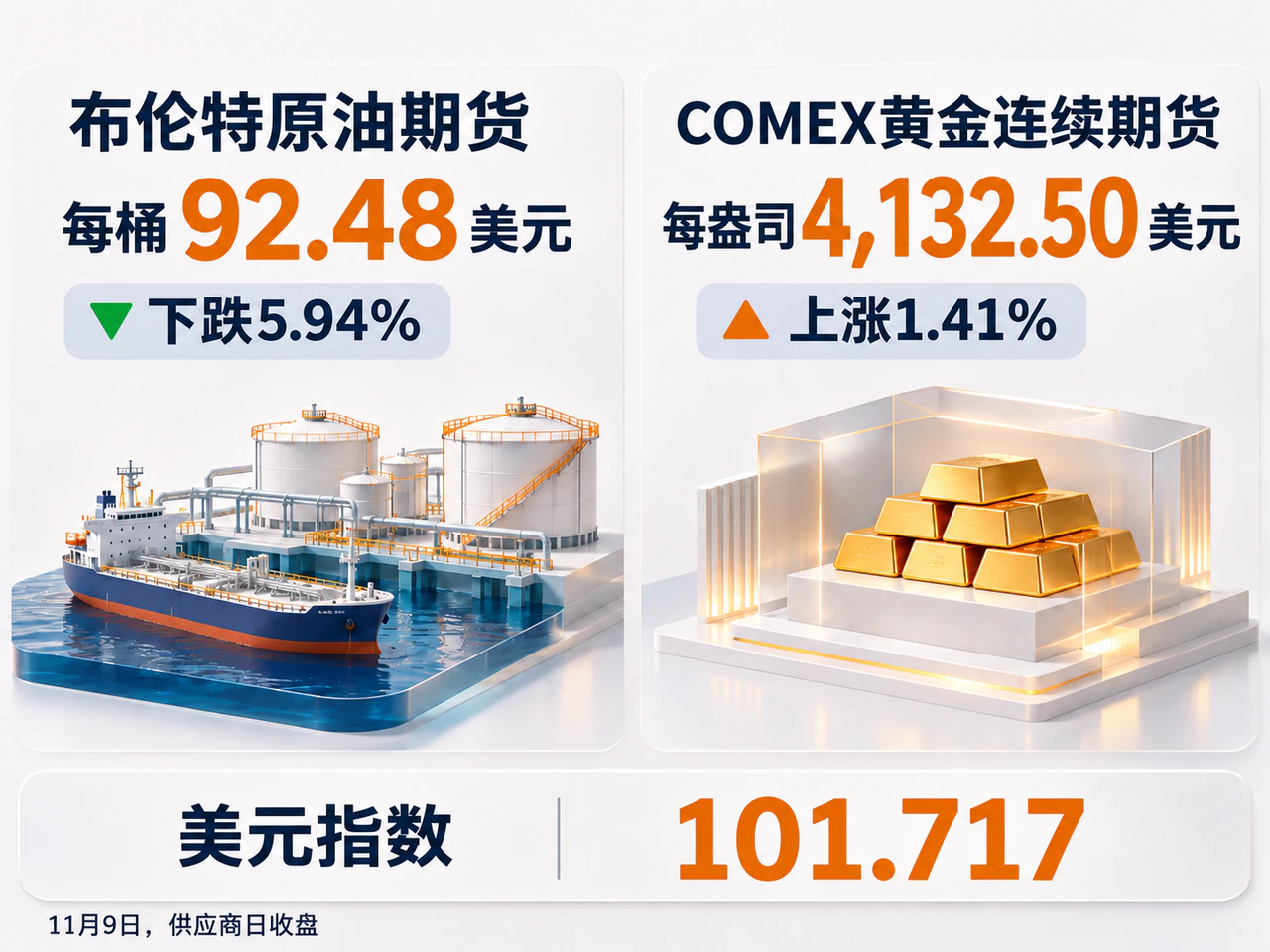
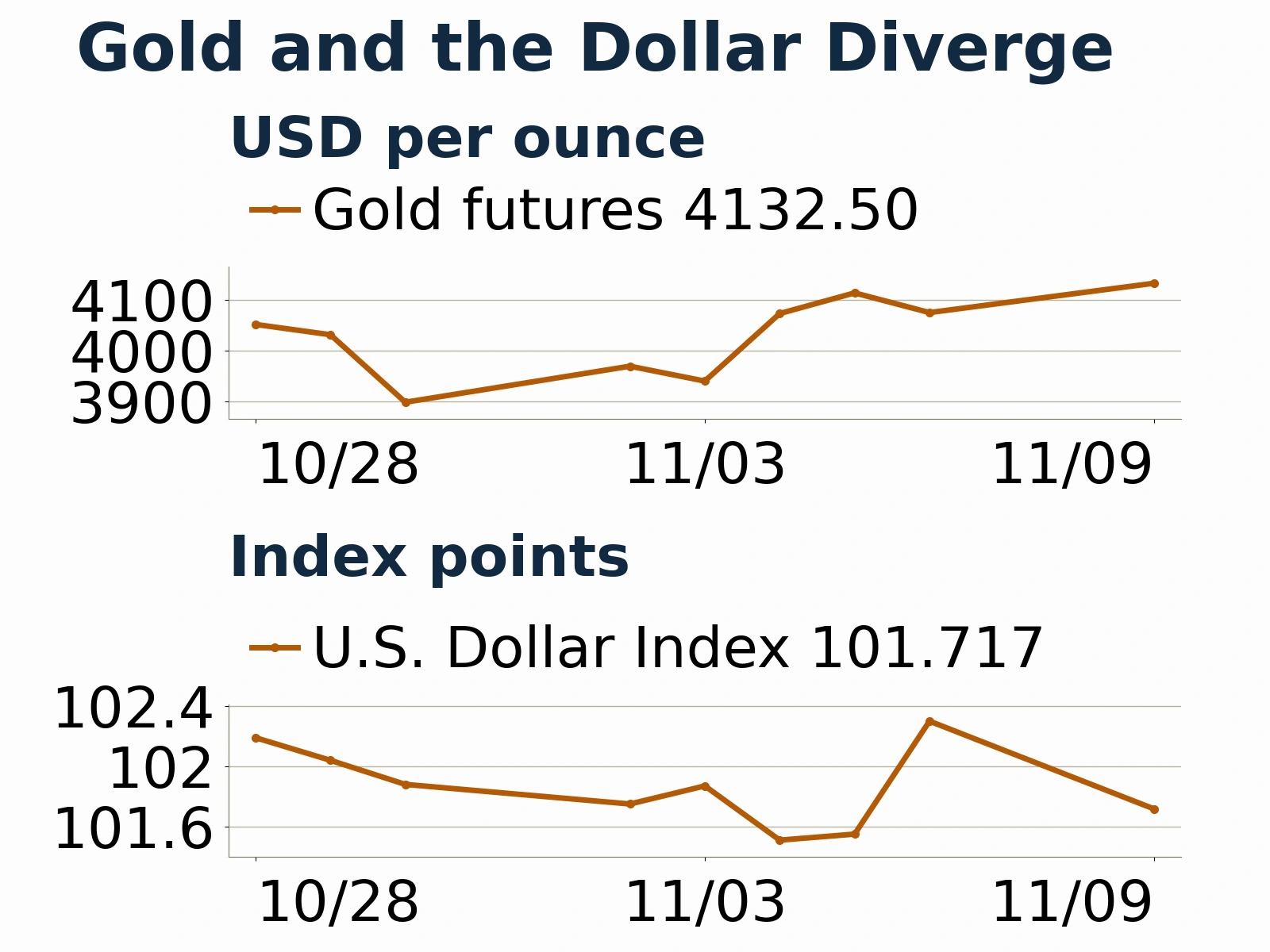
On a continuous futures daily close basis, Brent closed at $92.48 a barrel on November 9, down 5.94% from November 6, while WTI fell 4.62% to $86.63 a barrel. Continuous COMEX gold futures rose 1.41% to $4,132.50 an ounce. The U.S. Dollar Index fell 0.57% to 101.717 over the same period.
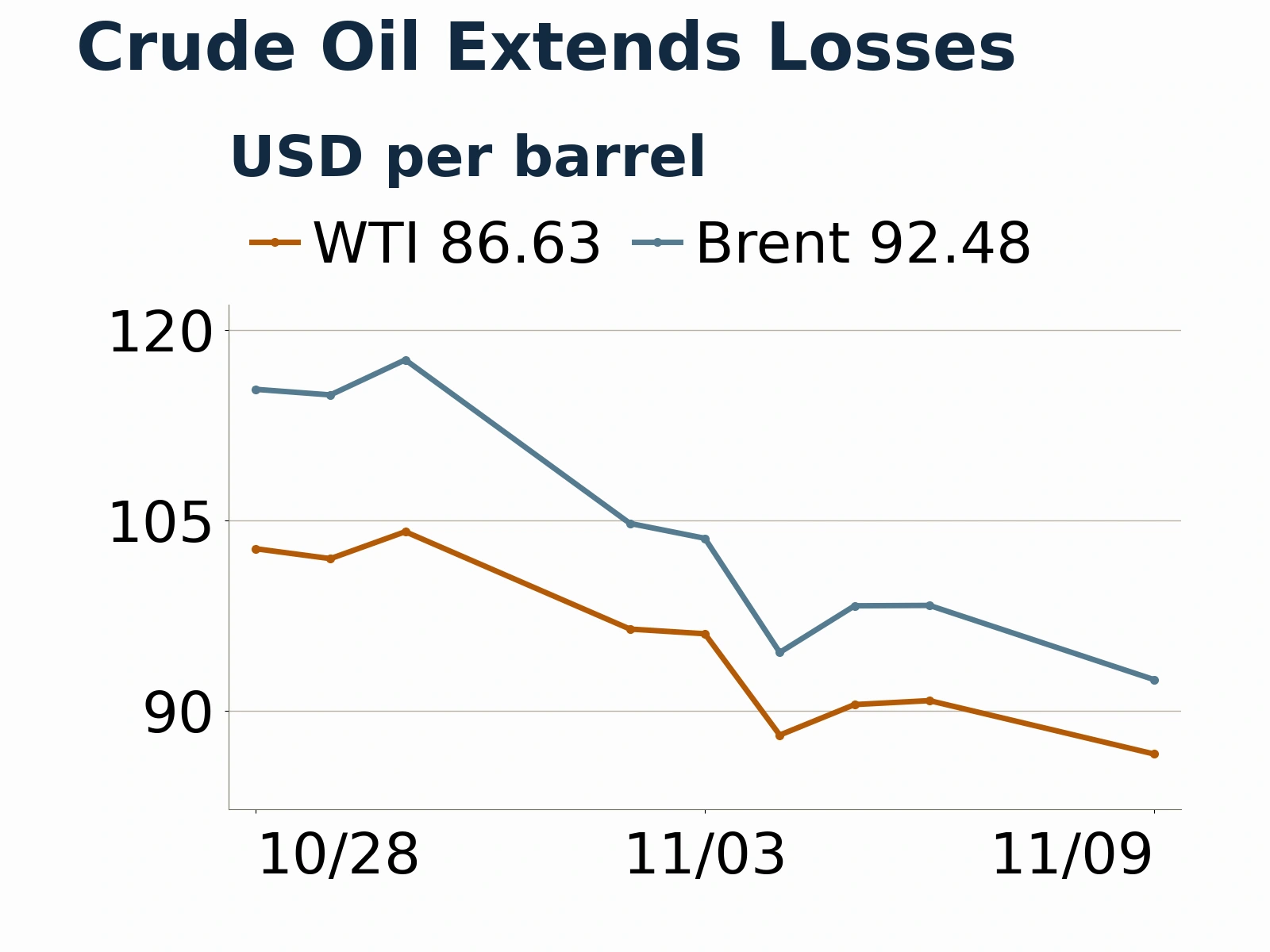
Easing geopolitical risk and rising physical supply both pushed oil prices lower. On November 8, Trump said another strike on Iran was highly unlikely if talks kept making progress. That sharply reduced the war-risk premium in crude, although attacks on shipping near the strait could still disrupt the market. Supply also loosened. A Reuters survey estimated that crude production across 11 OPEC members rose by 1.38 million barrels a day from the previous month to 22.87 million barrels a day in October. Reuters also cited a Morgan Stanley report saying Dated Brent, a benchmark used to price physical crude, had shifted to a discount to front-month futures, a sign of weakness in the physical market.
A weaker dollar and central bank buying supported gold. Citing World Gold Council data, Reuters reported that China’s central bank added about 25.8 metric tons of gold in October, its largest monthly purchase in three years. Higher real Treasury yields raised the opportunity cost of holding gold, which pays no interest, but a softer dollar and official reserve demand still pushed its price higher.
China and U.S. inflation diverge as markets look for pass-through in tonight’s month-over-month U.S. CPI readings for October
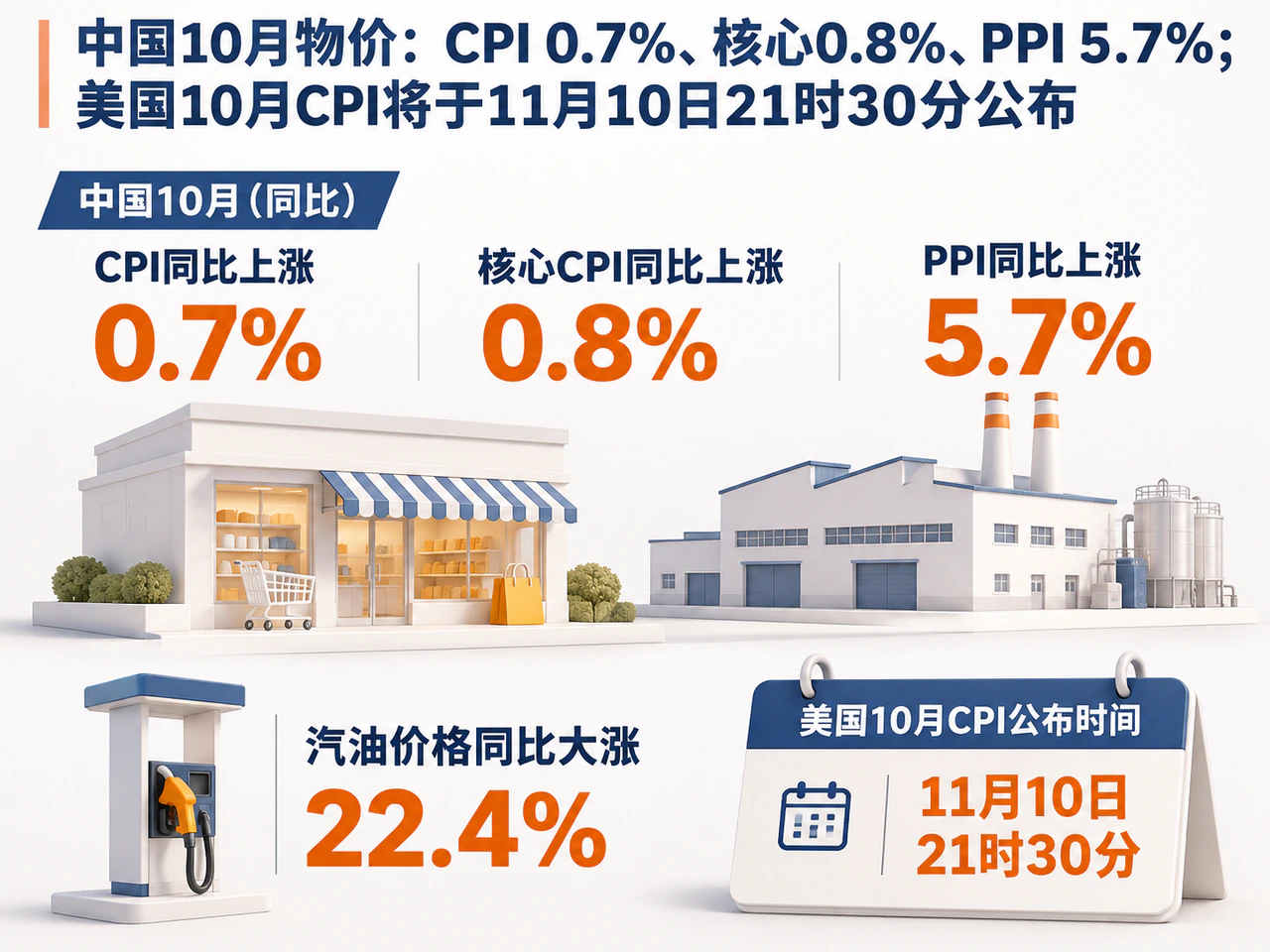
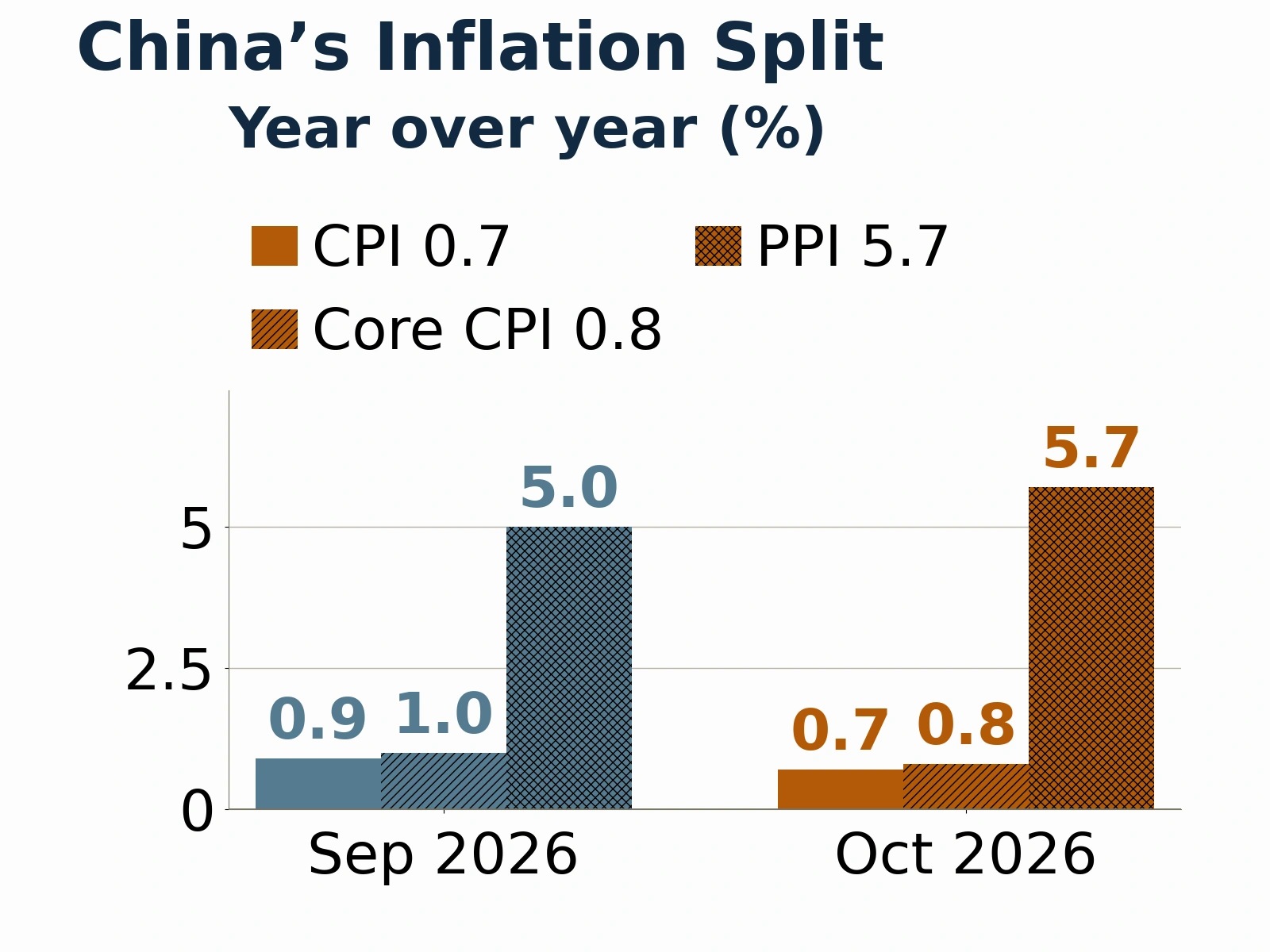
China’s National Bureau of Statistics released October inflation figures on November 9 that showed high upstream energy costs alongside weak end demand. Headline CPI rose 0.7% from a year earlier, down from 0.9% in September. Core CPI, excluding food and energy, rose 0.8%, down 0.2 percentage points, while services prices rose 0.7%, down 0.1 percentage points. Retail gasoline prices rose 22.4% year over year, adding about 0.63 percentage points to CPI. Food prices fell 2.9%, subtracting about 0.49 percentage points.
China’s producer price inflation accelerated to 5.7% year over year in October from 5.0% in September, but the month-over-month rise slowed to 0.7% from 1.2%. The statistics bureau said six energy-related industries together contributed about 0.61 percentage points to the monthly PPI increase, more than 80% of the total. Margins remain under pressure for companies further down the supply chain that depend on energy inputs but have little pricing power. A sustained decline in international oil prices would directly ease those cost pressures.
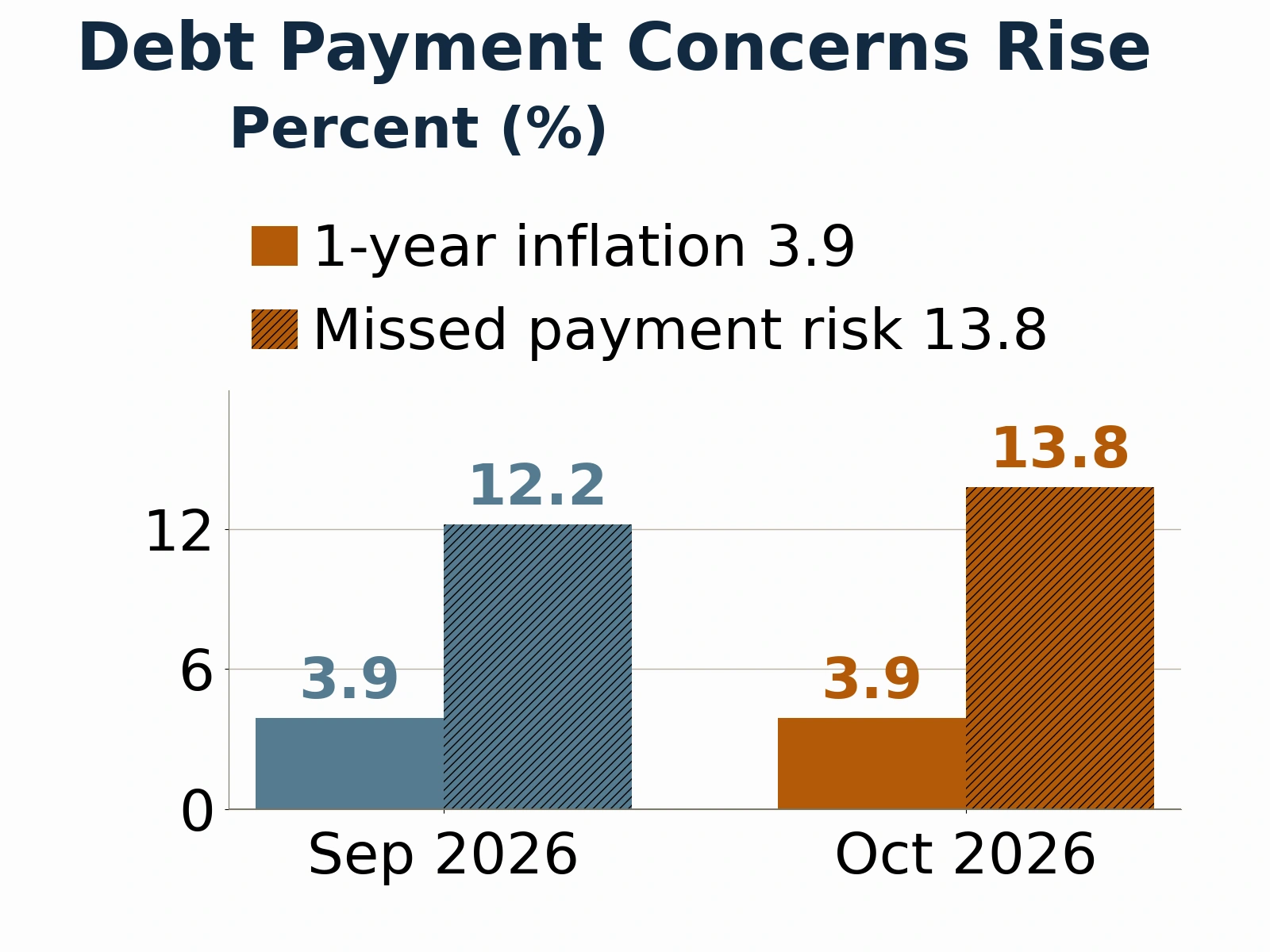
U.S. households are also contending with a high cost of living and growing pressure to service debt. In the New York Fed’s October Survey of Consumer Expectations, released November 9, median one-, three- and five-year inflation expectations were 3.9%, 3.3% and 3.0%, respectively, all unchanged from September. Expectations for gasoline price increases fell, but expected rent growth jumped to 7.7% from 6.8%. Expected household income growth slipped to 3.0% from 3.1%, while the average perceived probability of missing a minimum debt payment over the next three months rose to 13.8% from 12.2%.
Elevated inflation expectations limit the Fed’s room to ease quickly, while rising debt-service pressure makes consumption more sensitive to high interest rates. The U.S. will release October CPI at 9:30 p.m. Beijing time on November 10. Market surveys project monthly increases of 0.3% for headline CPI and 0.2% for core CPI. Scotiabank forecasts a 0.3% rise in core CPI. A Bureau of Labor Statistics spokesperson confirmed to the media that standard year-over-year readings for headline and core CPI will not be published this time because the government shutdown disrupted price collection in the same period last year. Investors will look to the monthly figures and their components to assess whether earlier energy cost pressures have spread to services and other areas.
Trade rule extensions improve the near-term outlook as Asia-Pacific stocks diverge
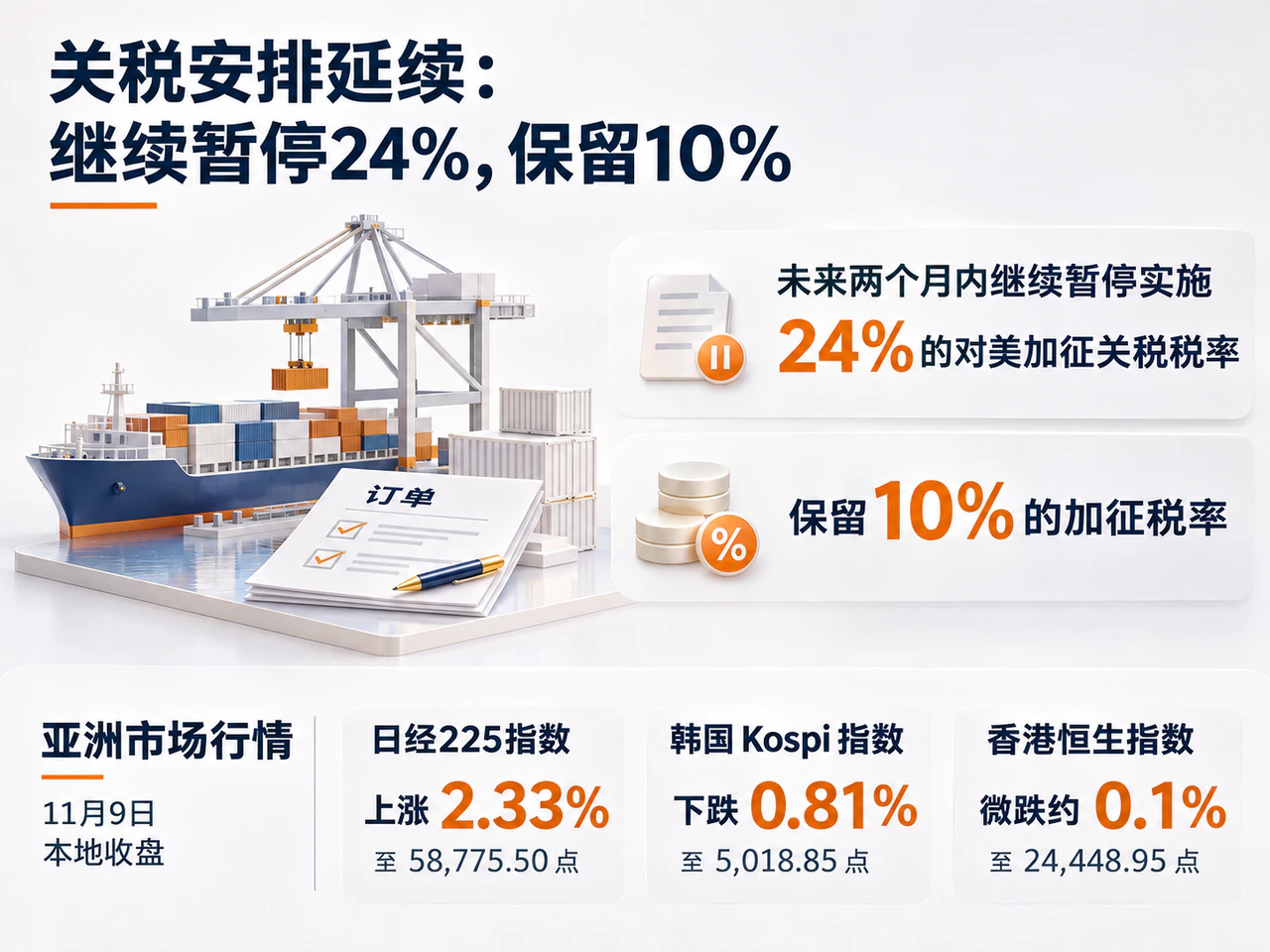
Cross-border trade policy offered businesses some near-term breathing room this week. Under the tariff arrangement announced on November 9, the 24% additional tariff on U.S. goods will remain suspended for two more months from 1:01 p.m. on November 10, while the 10% additional tariff stays in place. Extending the existing arrangement gives foreign trade businesses more certainty in planning near-term customs declarations, orders and inventories. Also on November 9, the U.S. Commerce Department’s Bureau of Industry and Security issued a final rule extending the suspension of the Affiliates Rule to January 10, 2027, after previewing the extension publicly on November 5. Existing Entity List restrictions and related licensing requirements remain in force.
U.S. fiscal negotiations are also shaping market expectations. Congress reconvened on November 9, and current stopgap government funding expires on December 11. Negotiations over another stopgap or a full-year budget will determine whether federal spending continues without interruption. Looking further ahead to the debt limit, Bank of America previously estimated that repayment risk could come to a head in November 2027. In Europe, reports on November 9 said the U.S., Russia and Ukraine planned to resume trilateral talks in Abu Dhabi the next day to discuss security guarantees and postwar arrangements, though EU foreign policy chief Kaja Kallas remained skeptical that Russia was negotiating in good faith.
Major Asia-Pacific markets were mixed in the session that ended before U.S. stocks opened on Monday. On November 9, Japan’s Nikkei 225 rose 2.33% to 58,775.50, South Korea’s Kospi fell 0.81% to 5,018.85, and Hong Kong’s Hang Seng slipped about 0.1% to 24,448.95. The subsequent rally in U.S. chip stocks could improve investor sentiment toward Japanese semiconductor equipment makers and South Korean memory-chip suppliers, but their actual earnings still depend on orders coming through, exchange rate moves and customer mix. Hong Kong technology shares are more directly exposed to shifts in global risk appetite and U.S. dollar funding costs.
The rebound in risk appetite rested on lower oil prices, earnings delivered by some AI supply-chain companies, and extensions to near-term trade rules. Yet high real Treasury yields, the concentration of long-dated issuance among major technology companies and growing debt-service pressure on U.S. households show that financing conditions remain restrictive. After valuations have recovered, further gains in risk assets will ultimately depend on whether corporate earnings can grow fast enough to outrun the high cost of capital.