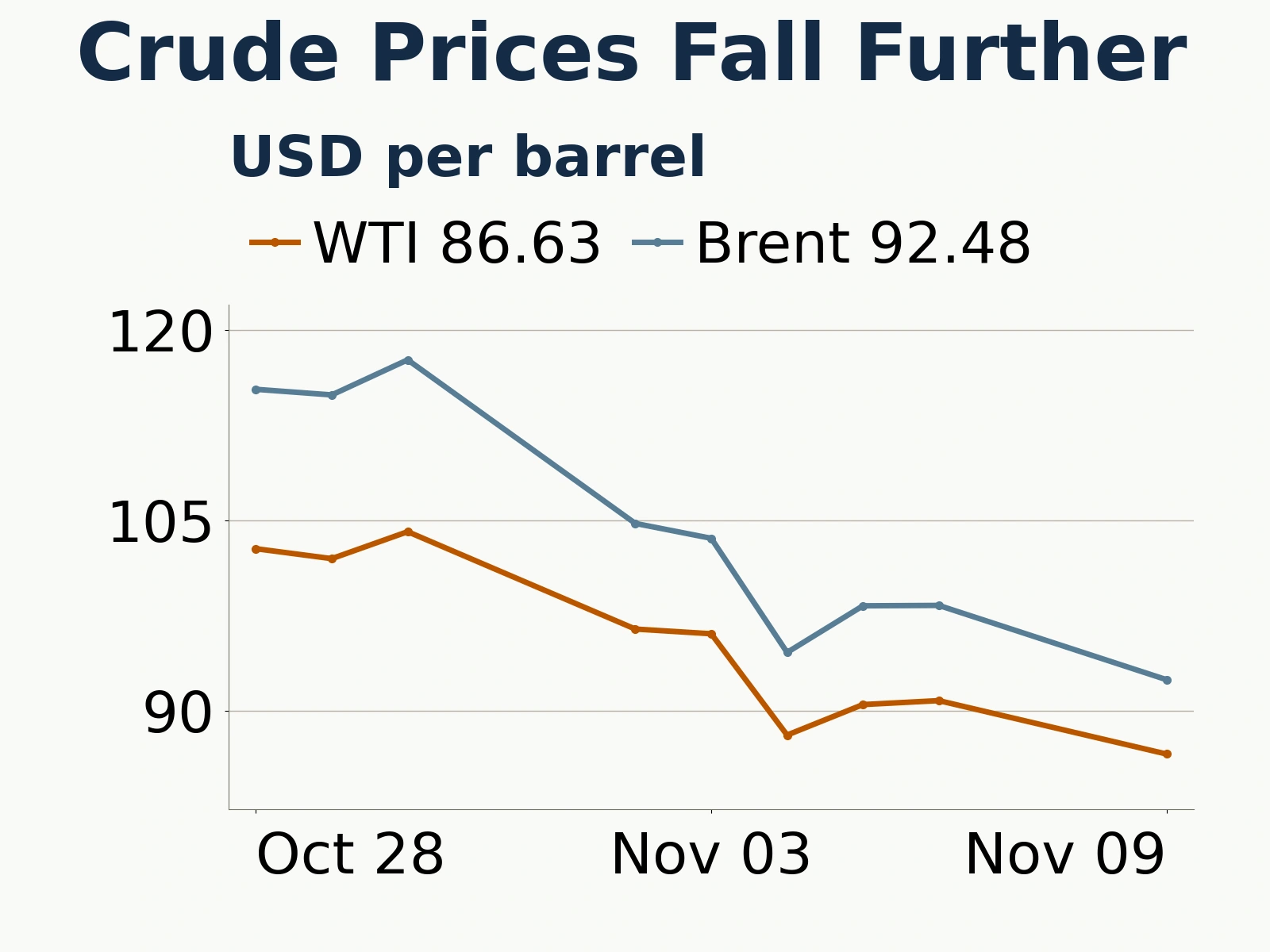
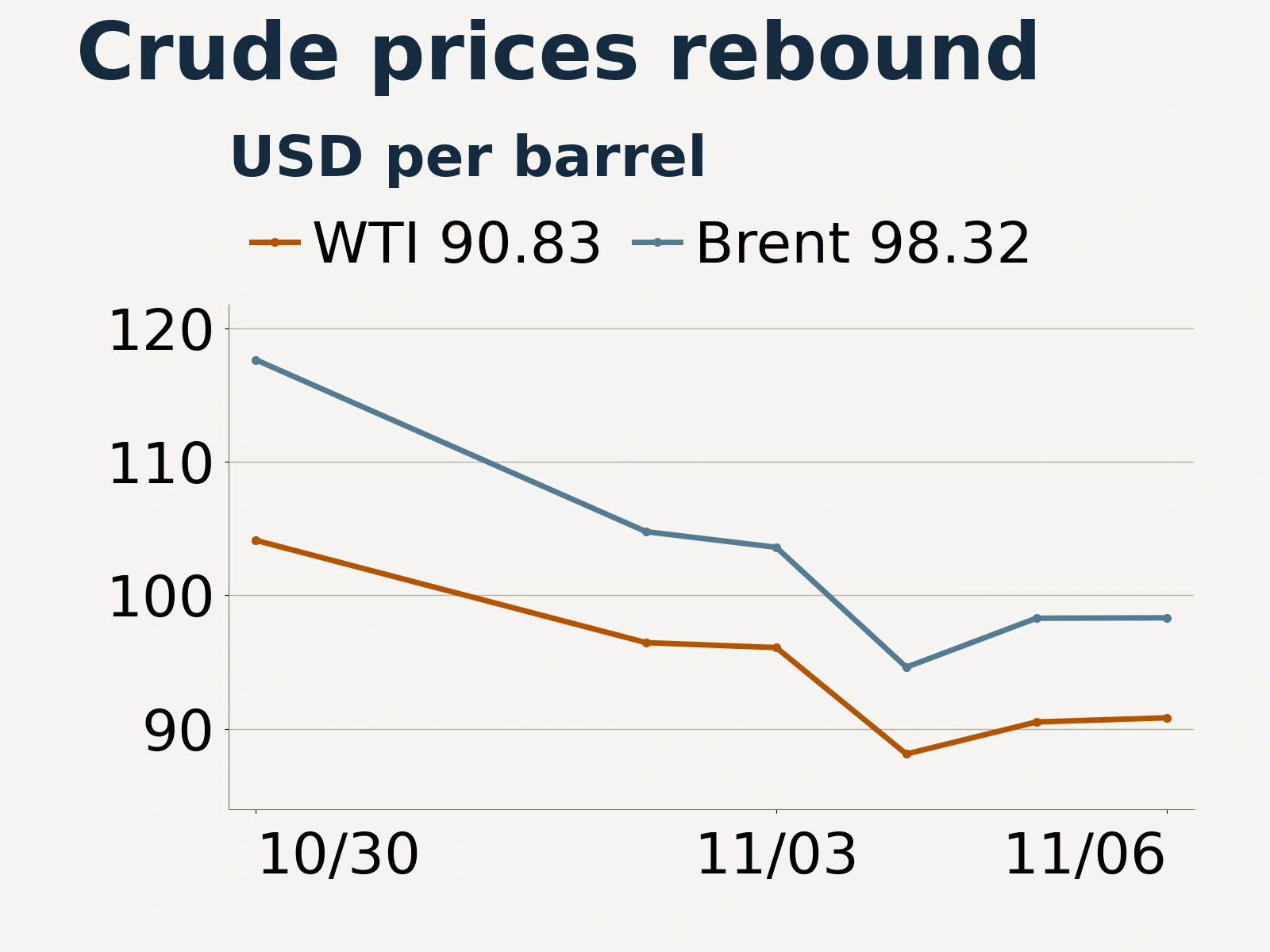
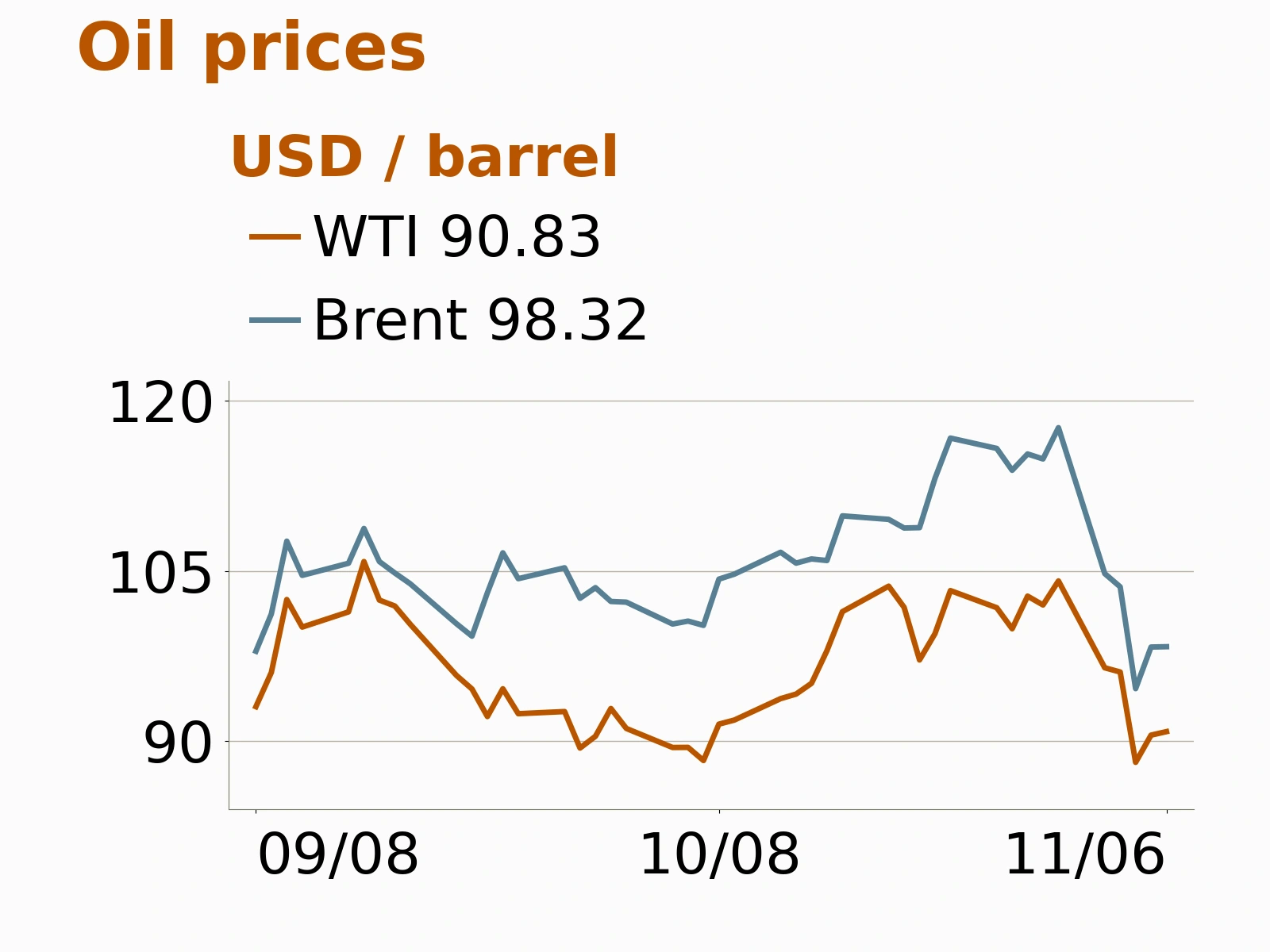
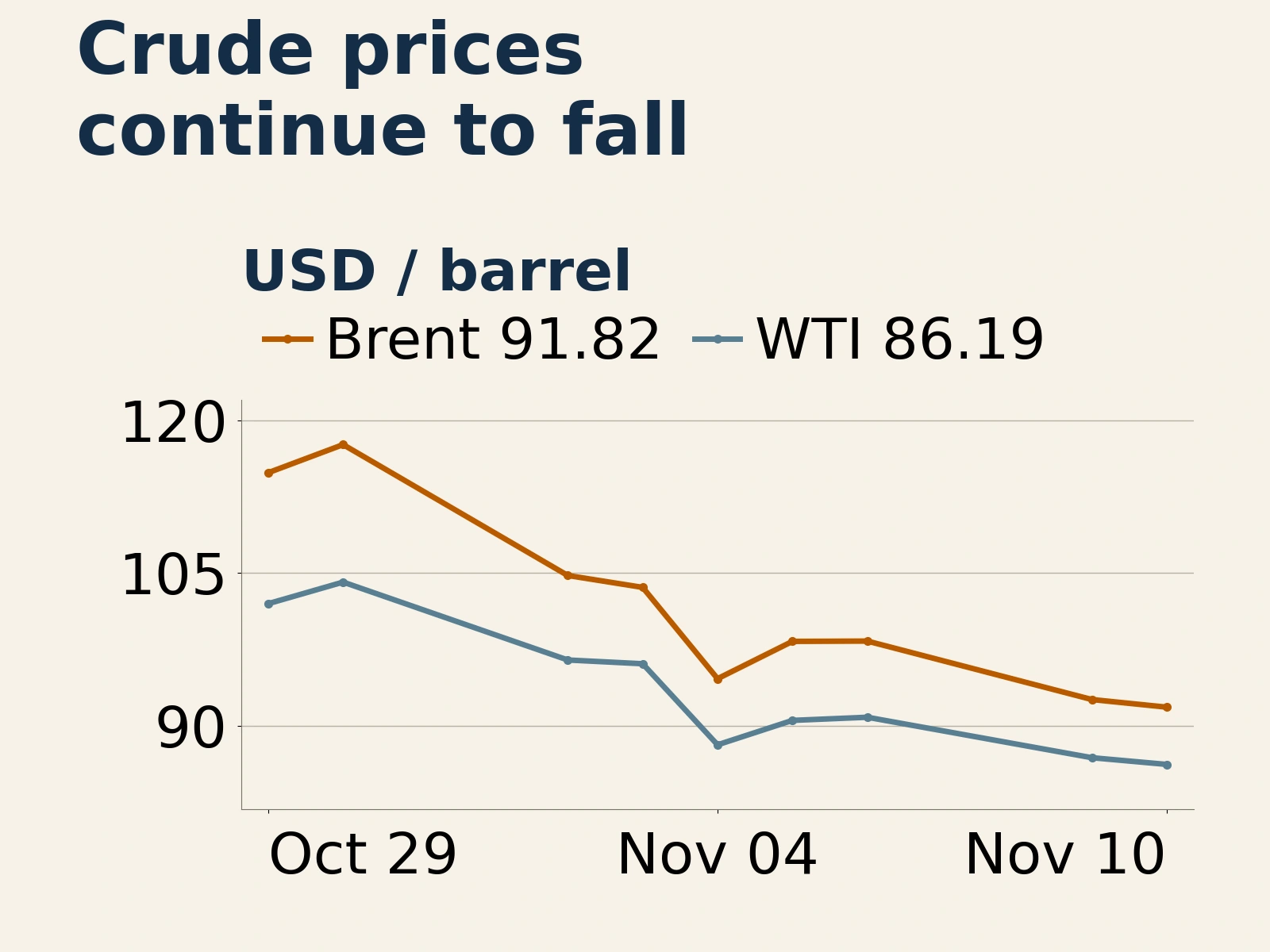
On November 10, 2026, crude oil prices continued to fall. On Yahoo's provider-reported daily closing basis for continuous futures, Brent closed at $91.82 a barrel, down 0.81% from the previous trading day, while WTI closed at $86.19, down 0.76%. As the United States played down the need to expand military action against Iran, the market continued to reduce the premium for supply disruption. The monthly report released that day by the U.S. Energy Information Administration (EIA) provided further context: Middle Eastern production outages had fallen substantially and global inventories were expected to begin building, but existing stocks and transportation capacity remained tight.
The oil market is moving at two different speeds. Crude supplies available to the market are recovering relatively quickly, but delivering that crude safely, refining it into fuel and rebuilding inventories take longer. Falling crude prices can coexist with tight physical logistics, and refined-product prices may not fall at the same pace.
Expectations of easing tensions and recovering supply push crude prices lower

According to Reuters, U.S. Secretary of State Rubio said during the G7 foreign ministers' meeting that economic sanctions and the naval blockade were working, and that the president did not need to undertake major combat operations against Iran. Trump had also said the previous day that he was holding off on a new round of strikes. Oil prices fell by more than $3 a barrel at one point in early trading on November 10, before recovering part of the decline after a senior Iranian security official denied that talks with the United States were taking place. Prices initially reflected a reduced risk of further deterioration; the intraday rebound showed that diplomatic progress remained fragile.
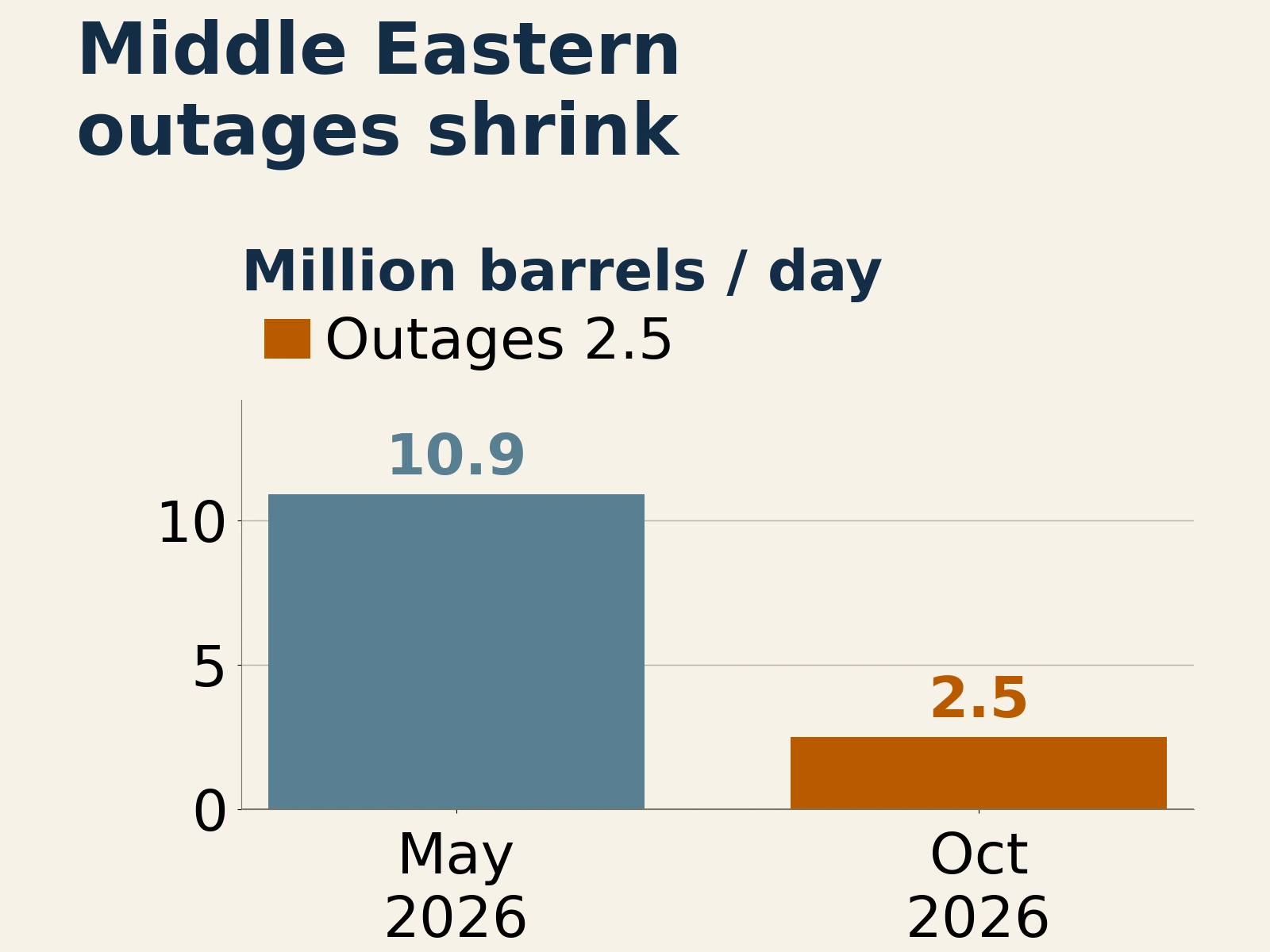
Physical flows are also changing the supply-demand balance. EIA estimates that Middle Eastern crude production outages averaged 2.5 million barrels per day in October, sharply below the May peak of 10.9 million barrels per day. The restoration of Saudi Arabia's East-West Pipeline and arrangements such as ship-to-ship transfers off Oman have increased exports. Even though transportation has yet to return to normal, more crude can now leave producing areas.
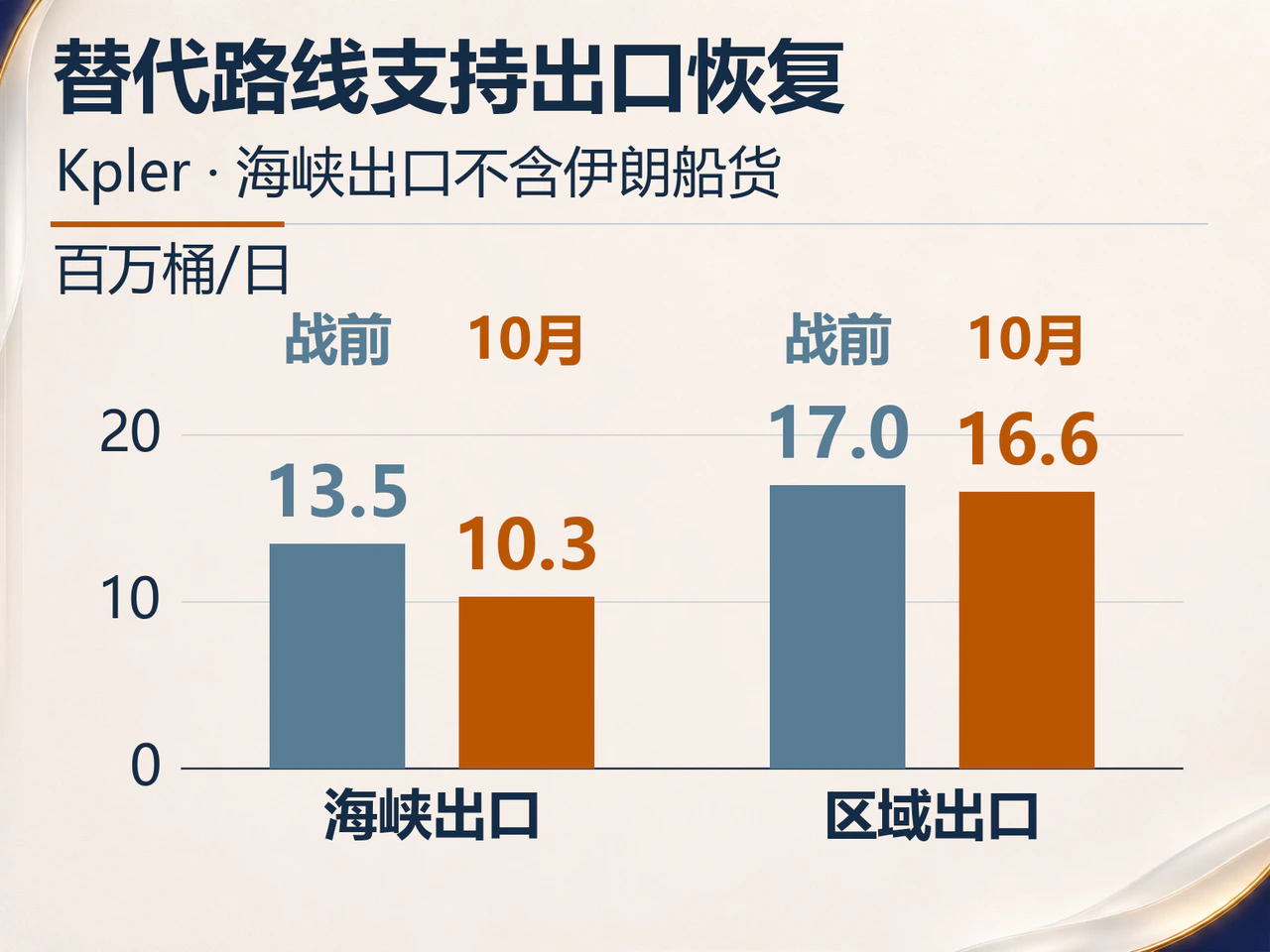
Reuters columnist Ron Bousso, citing Kpler data, reported that October crude exports through the Strait of Hormuz, excluding Iranian cargoes, were about 10.3 million barrels per day, still below the prewar level of 13.5 million barrels per day. Including alternative routes such as Saudi Arabia's Yanbu and the UAE's Fujairah, regional crude exports were about 16.6 million barrels per day, close to the prewar level of 17 million barrels per day. The incomplete recovery of the strait as an individual route is consistent with a substantial rebound in total regional supply.
The pace at which demand can absorb supply, however, is constrained by high oil prices and refinery limitations. EIA expects global liquid fuels consumption in 2026 to fall by 2 million barrels per day from a year earlier, to 102.4 million barrels per day. Its November forecast projects that global inventories will begin increasing in the fourth quarter. On the same provider-reported daily closing basis, the U.S. Dollar Index rose 0.56%. A stronger dollar increases oil-purchasing costs for buyers using other currencies, while expectations of monetary tightening amid inflationary pressure also affect future consumption and financing.
Crude supply recovers, but refined products still face bottlenecks
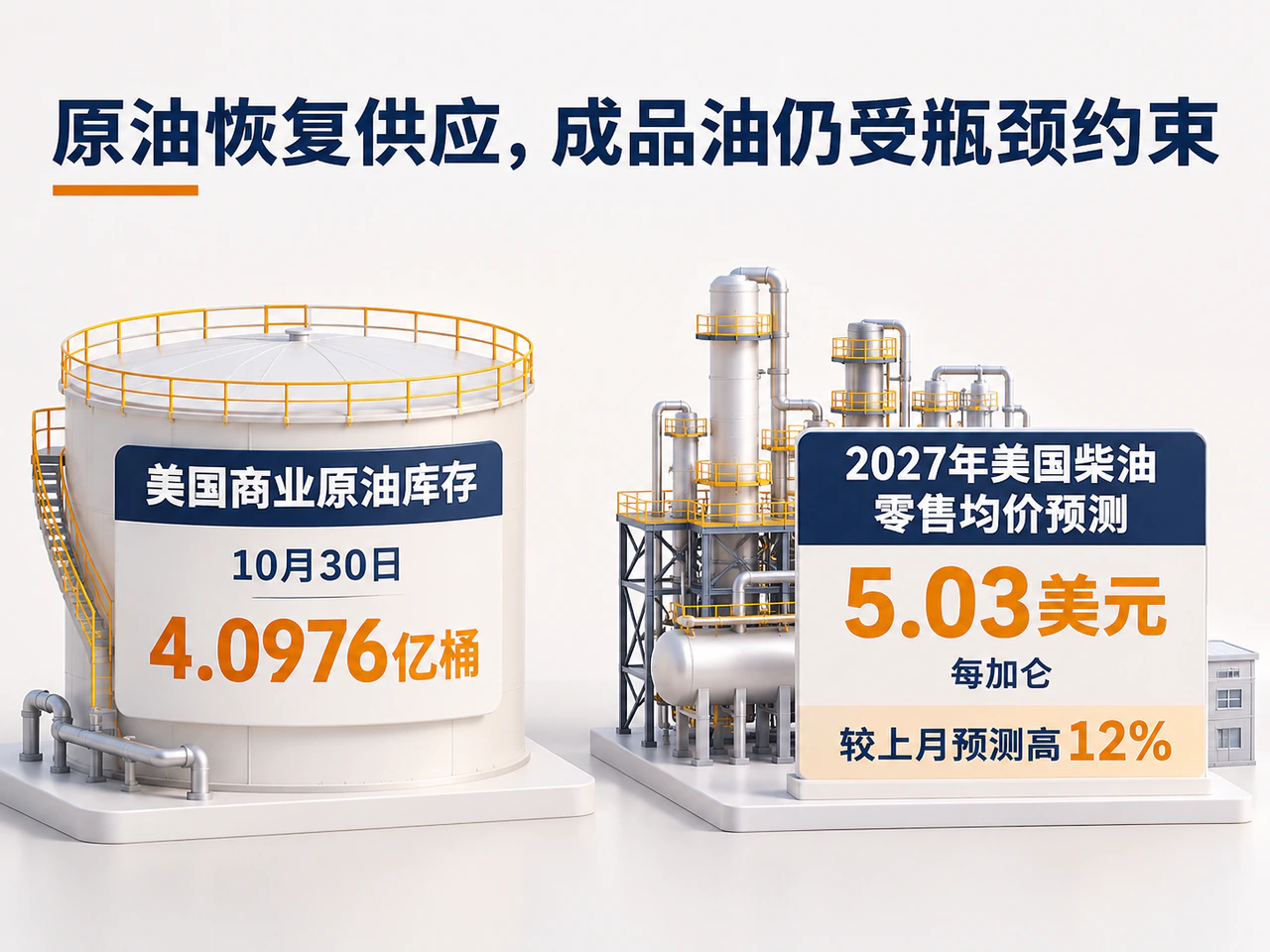
Inventories are a key reason oil prices remain volatile. EIA weekly data show that U.S. commercial crude inventories, excluding the Strategic Petroleum Reserve, fell from 427.32 million barrels on September 25 to 409.76 million barrels on October 30, a decline of 17.56 million barrels. The November monthly report rounded end-October inventories to 410 million barrels, the lowest end-October level since 2014.
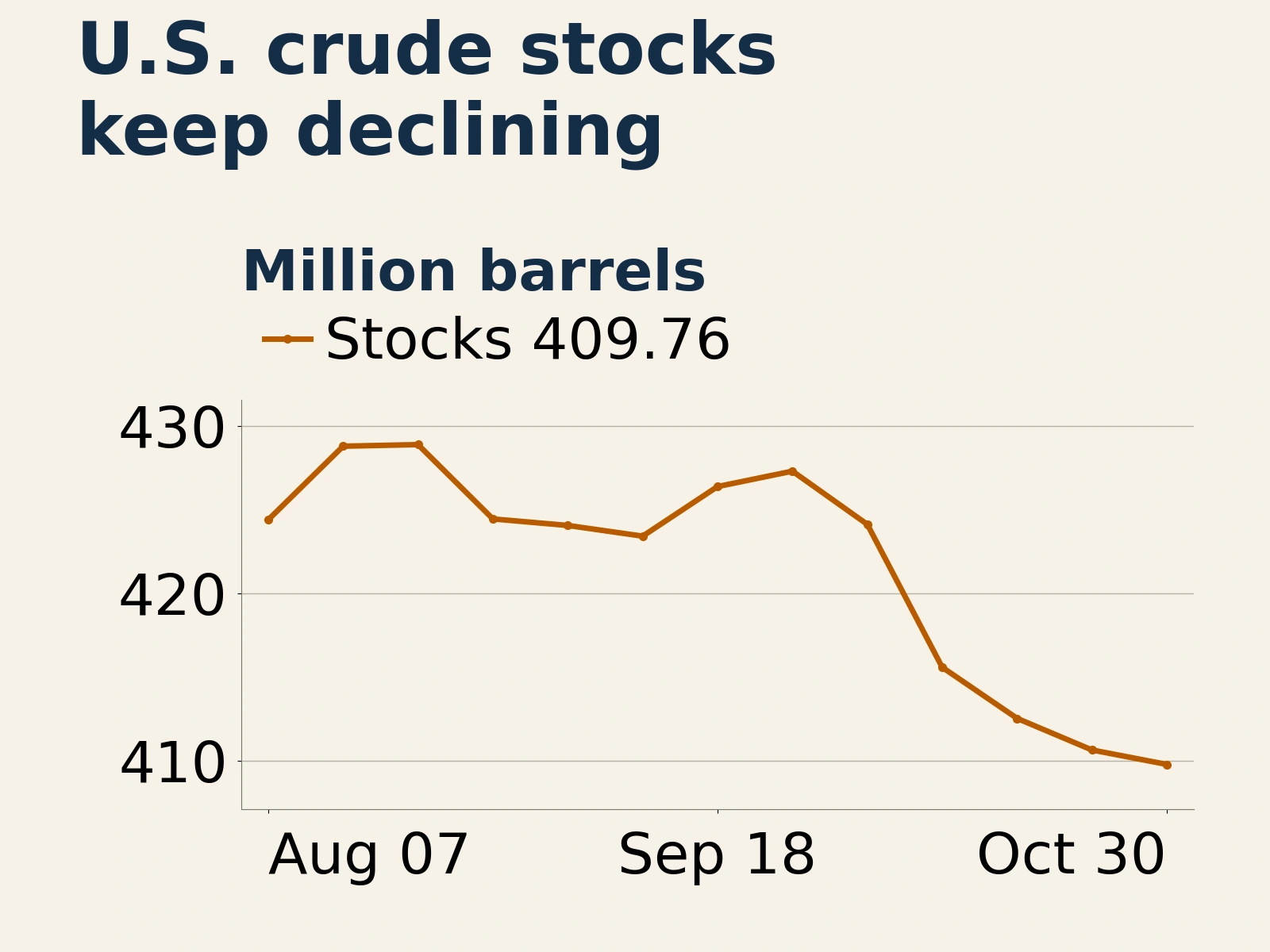
This drawdown is associated with U.S. crude exports supported by the Brent-WTI spread, relatively low imports and elevated refinery crude throughput. Recovering exports reflect improving supply flows, whereas rebuilding inventories requires production to exceed consumption for a sustained period. The two processes cannot be completed simultaneously.
The term structure still reflects concern about near-term supply. Bousso's analysis noted that front-month Brent prices remained above prices for more distant months, a structure known as backwardation. Buying crude to store and selling it later at a lower price makes it difficult to cover costs, so producers have a greater need to offer prices that attract refiners. With more crude options available while some refining capacity remains damaged, plentiful crude and scarce fuel can coexist.
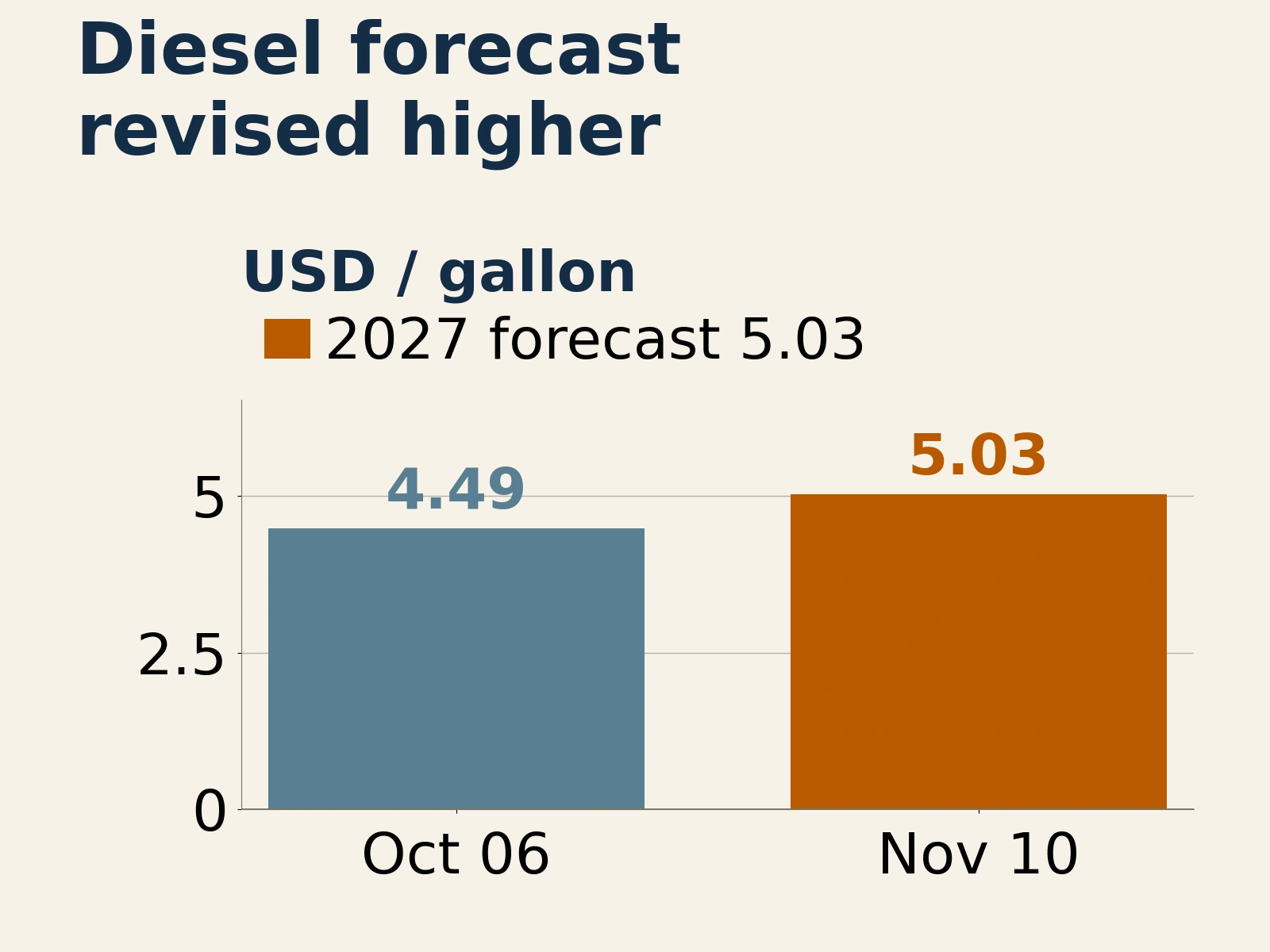
In this report, EIA raised its forecast for the 2027 average U.S. retail diesel price to $5.03 a gallon, 12% above the previous month's forecast, while projecting that refined-product supply constraints would persist through the end of 2027. How far lower crude prices feed through to prices at the pump depends on the recovery of transportation, refining and distribution. Improving crude supply may therefore not immediately eliminate energy inflation.
Watch whether logistics, inventories and refining improve together

The model inputs for EIA's forecast this month were current through November 5. It continues to assume constrained Middle Eastern transportation for the remainder of the year and forecasts average Brent spot prices near $100 in November and December. As most Middle Eastern production outside Iran recovers by mid-2027 and global inventories rebuild, it projects that the average price will gradually decline to $77 in the fourth quarter of 2027. This forecast path depends on supply recovery and differs from the faster pace at which the futures market priced in expectations of easing tensions on November 10.
Four signals will be particularly informative next:
- Whether exports through the strait and alternative routes keep increasing will determine how firmly the supply recovery is established;
- Whether tanker freight rates and war-risk insurance costs fall will determine whether crude can reach refineries more cheaply from producing areas;
- Whether U.S. commercial crude inventories stop falling and start rising will test whether additional supply is beginning to build a buffer;
- Whether diesel crack spreads and refinery utilization improve together will indicate whether lower crude prices can feed through to end-user fuel prices.
The current downward pressure comes from the combination of recovering supply and subdued demand. Low inventories and expensive transportation leave this repricing vulnerable to renewed disruption. A sustained, orderly decline in oil prices requires the improvement in supply to extend beyond export data into inventories and refined-product availability.