On November 2, 2026, signs that Iran was open to talks and Qatar’s mediation efforts drove global oil prices sharply lower, setting off a week of repricing. From November 2 to 8, markets priced in both a greater chance that the conflict could end and the initial easing of spot tightness as Middle Eastern crude flows recovered. A tanker attack lifted prices late in the week, though both benchmarks still closed the week lower.
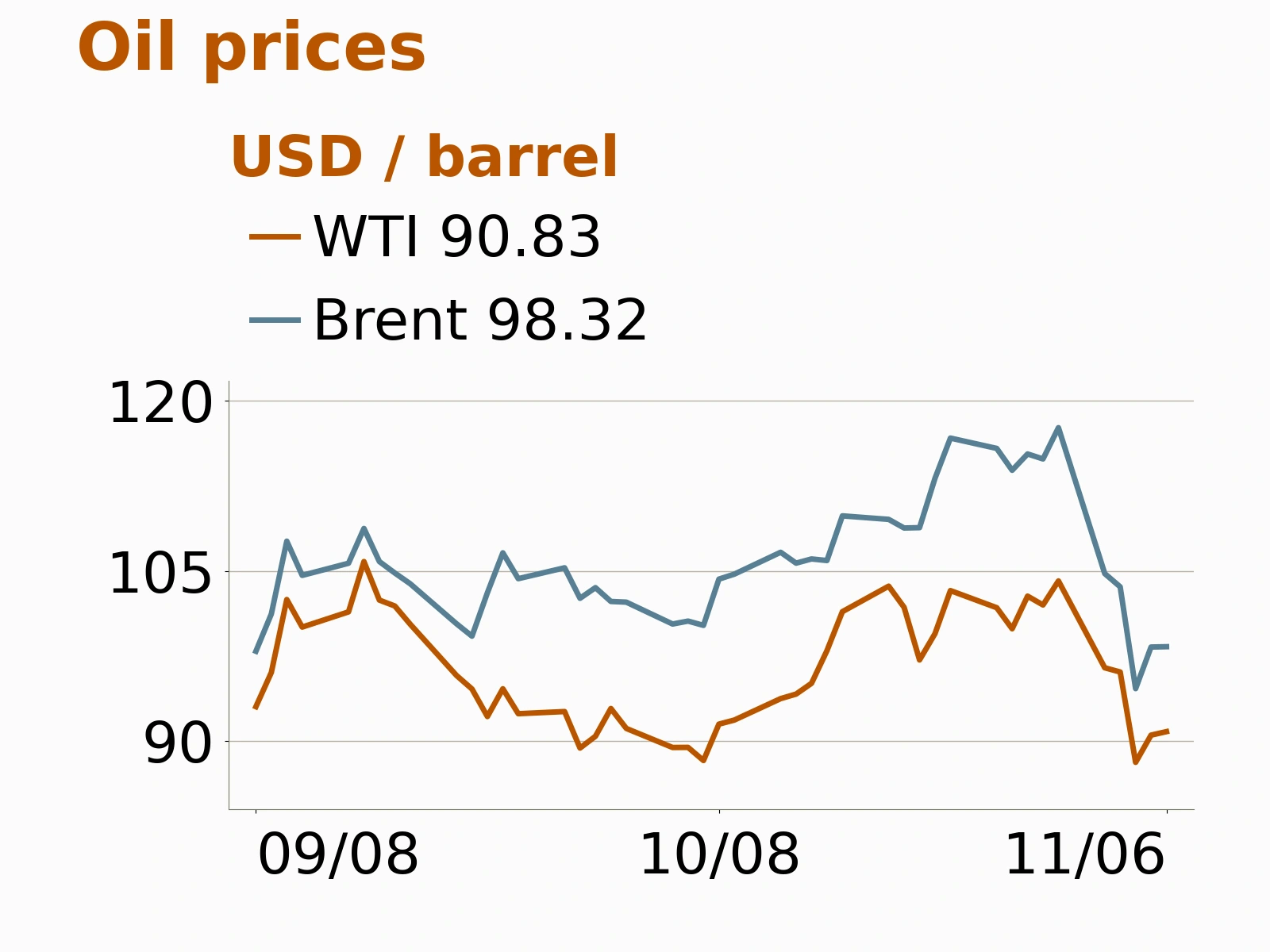
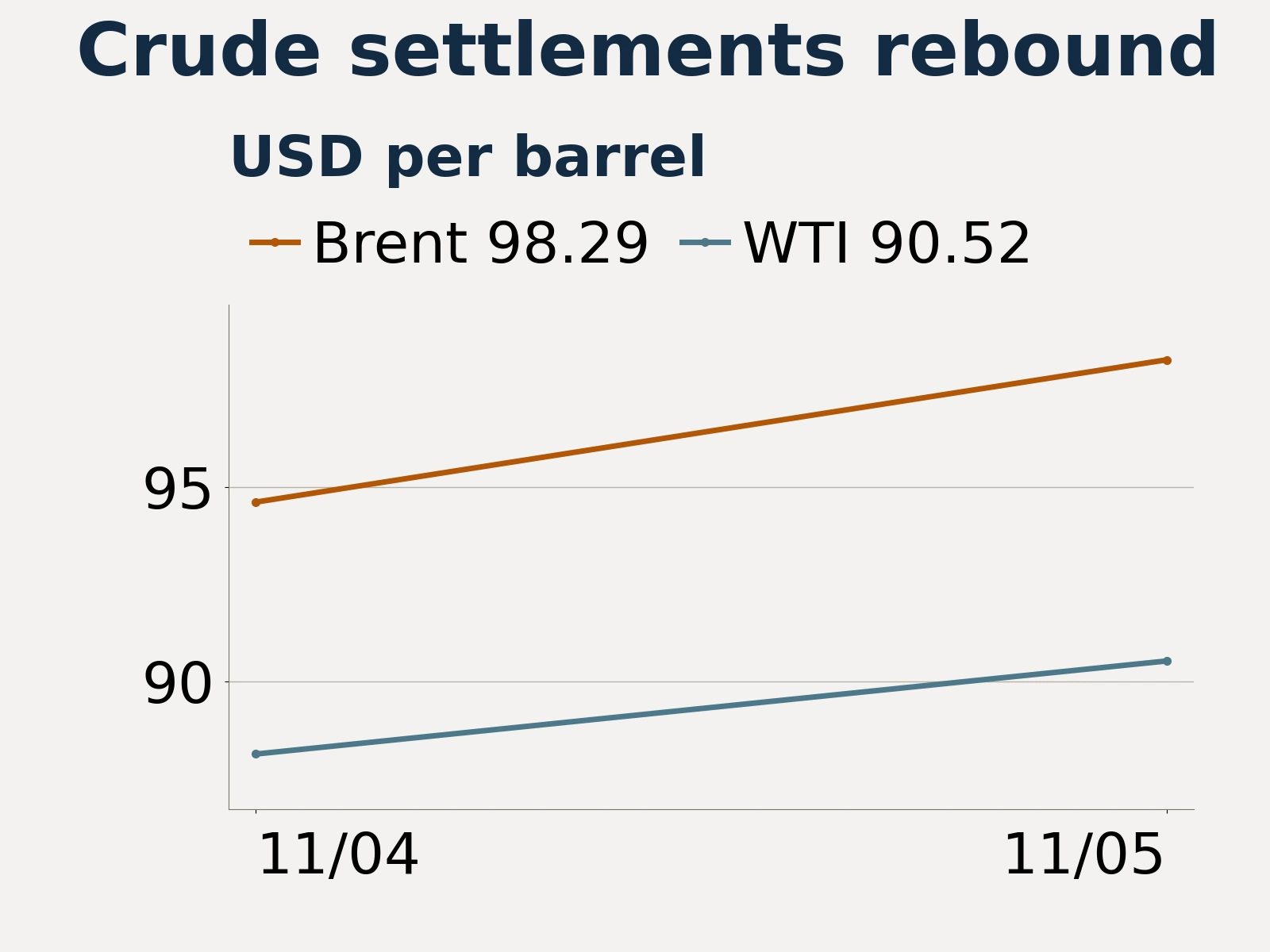
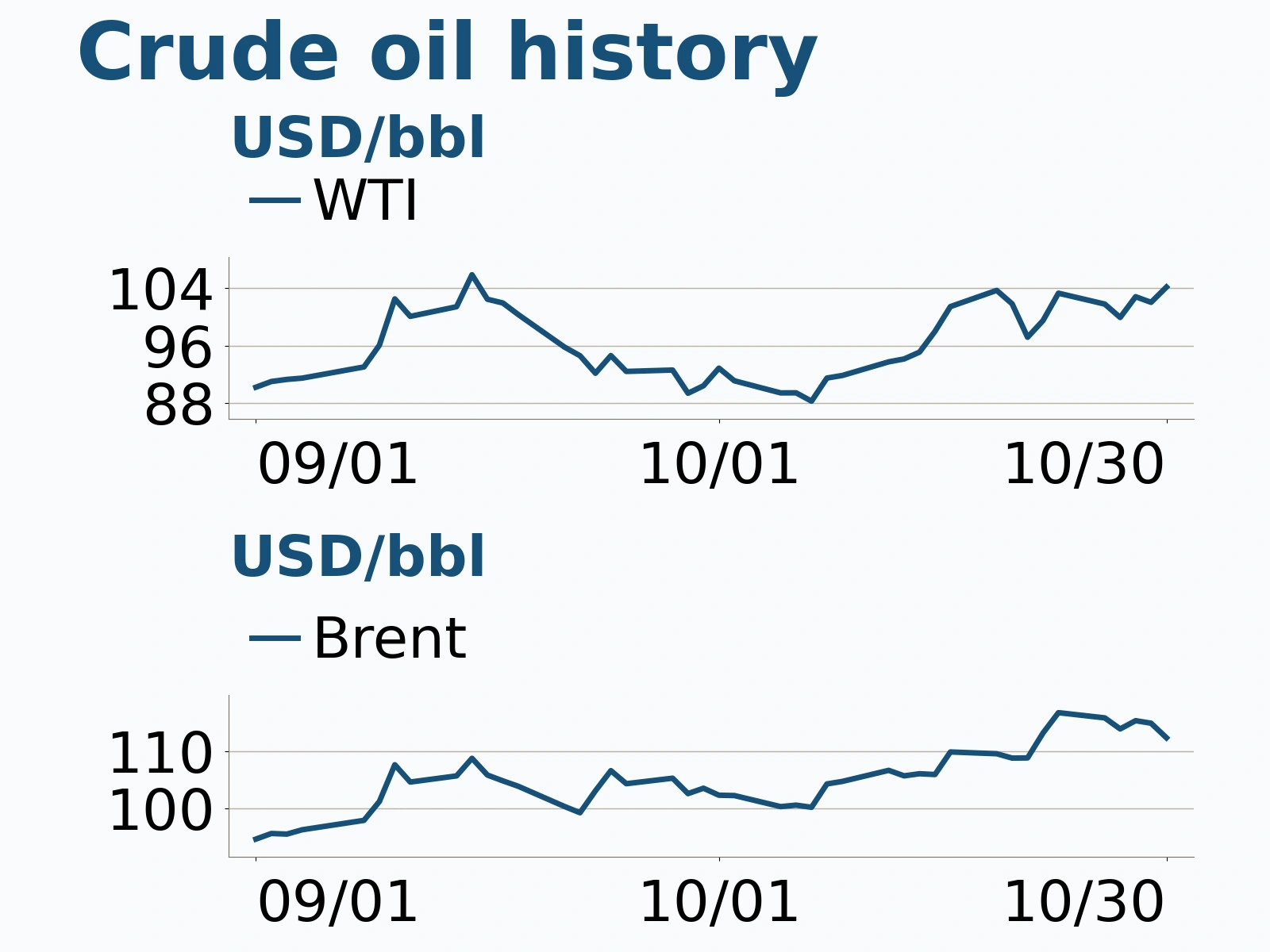
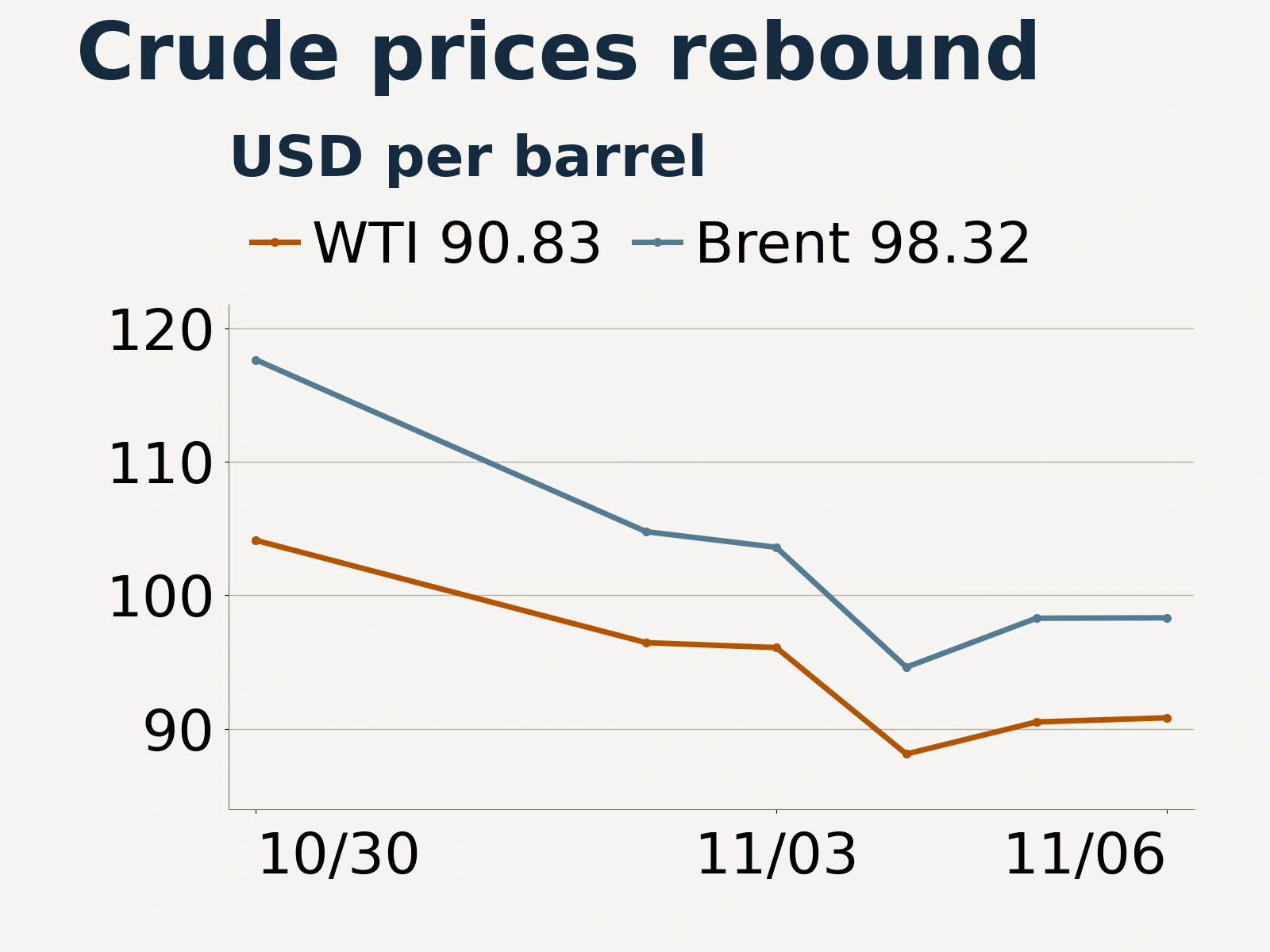
Using Yahoo’s daily closes for continuous futures, WTI ended November 6 at $90.83 a barrel, down 12.76% from October 30. Brent closed at $98.32 a barrel, down 16.42% on the week. On Wednesday, the benchmarks had fallen to $88.12 and $94.62 a barrel, respectively, before recouping part of their losses on Thursday and Friday. Reuters also reported a Friday settlement of $98.32 a barrel for the January 2027 Brent contract.
Gulf crude exports recover to 86% of prewar levels as the spot market eases first

Diplomacy triggered the selloff early in the week. Iran signaled a willingness to negotiate and Qatar pressed ahead with mediation, leading the market to anticipate a further recovery in Middle Eastern exports. After the U.S. midterm election results came out on Wednesday, expectations of de-escalation strengthened and oil prices fell sharply again. The market’s response to progress toward talks came on top of an improvement in physical supplies that was already under way.
Reuters reported on November 6, citing Vortexa data, that Gulf crude and condensate exports averaged 14 million barrels a day in October, about 86% of their prewar level. Refined product exports averaged 3.1 million barrels a day, only slightly above half their usual level. Crude exports have recovered faster than product exports, so refinery feedstock availability and end-user fuel supply are recovering at different speeds.
Banks are also revising their assessments of supply and demand. JPMorgan estimated that global oil supply exceeded demand by 1.1 million barrels a day in September and by 1.4 million in October. Goldman Sachs saw the market as roughly balanced over September and October, with the earlier marked decline in global inventories coming to an end. The banks differ on the size of the imbalance, but both assessments point to a rebalancing driven by recovering Middle Eastern supply, increased output outside the Gulf and high oil prices curbing demand.
The shift showed up first in near-term physical pricing. Reuters reported that in Brent contracts for differences, the price for delivery in each of the first three weeks was below the price for the following week, pointing to relatively ample near-term supply. Meanwhile, the Brent futures curve remained in backwardation from the January 2027 contract onward. The spot market has eased, while the futures curve still embeds a premium for near-term supply risk.
U.S. distillate stocks fall sharply, highlighting tight fuel supply

U.S. inventories show the other side of the market. EIA data for the week ended October 30, as reported by Trading Economics, showed that commercial crude inventories fell by 865,000 barrels, their fifth consecutive weekly decline. Distillate stocks fell by 3.565 million barrels and gasoline stocks by 222,000 barrels. Refinery crude runs rose by 199,000 barrels a day, and net imports increased by 1.179 million barrels a day. As crude prices fell, refinery runs rose and fuel stocks declined, with tightness concentrated in refined products.
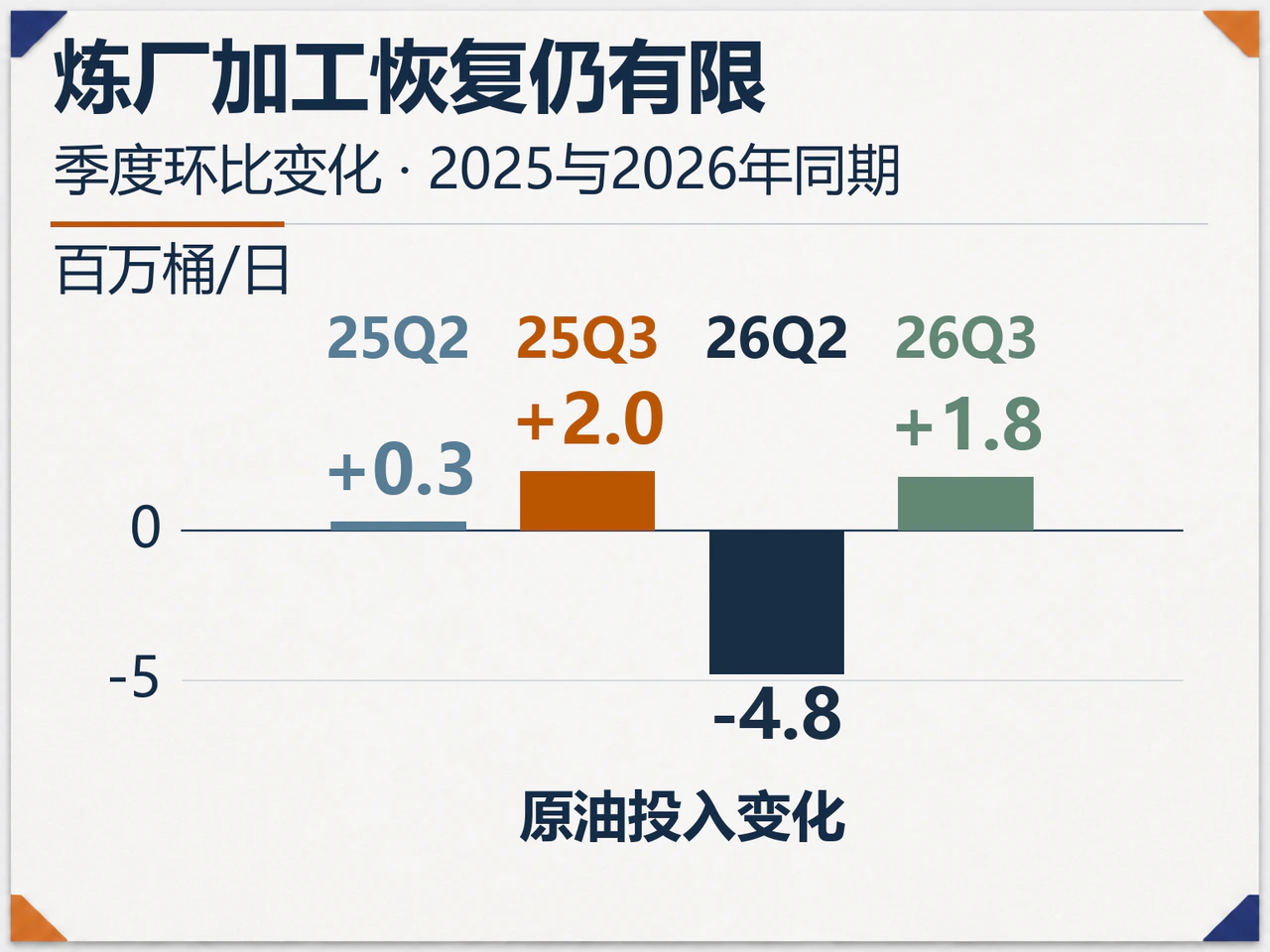
The EIA’s quarterly analysis, released November 3, also explains the divergence. According to Kpler data cited by the agency, global refinery crude inputs fell by 4.8 million barrels a day in the second quarter and recovered by just 1.8 million in the third. The third-quarter average was still about 5% below a year earlier. Rerouting, alternative shipping arrangements and ship-to-ship transfers helped bring crude back to market, but refineries take time to recover. Damage to Russian refineries added to pressure on diesel supplies.
Supply policy remained broadly stable. At their November 1 meeting, seven OPEC+ members agreed to keep December production requirements at September levels. The decision was already in place when markets opened for the week. Changes in physical flows and diplomatic expectations drove most of the repricing, while quotas stayed at the agreed levels.
The late-week rebound showed that shipping risks still constrain supply. Reuters reported that a Greek ship management company said an explosion aboard a refined product tanker in the Gulf on November 5 killed one crew member. A missile strike was suspected. For refiners and buyers, attacks like this can affect the crude and fuel they can actually source through freight rates, insurance costs and the reliability of deliveries. The U.S. Dollar Index rose about 0.41% over the week, adding pressure on dollar-priced crude. Shifting supply expectations and the change in spot market structure better explain the size of the move.
Four indicators to watch across Gulf exports, refinery runs, the Brent futures curve and U.S. distillate stocks

Four developments will help determine whether the decline can continue. Can Gulf crude exports move closer to prewar levels? Can refined product exports and refinery runs keep pace with the crude recovery? Will nearer deliveries remain cheaper than later ones in Brent contracts for differences, and will that pricing pattern carry over into the futures curve? Can U.S. distillate stocks stop falling so quickly? The EIA’s next weekly report, scheduled for November 12 because of a holiday, will provide fresh U.S. inventory and refinery data.
This week, the crude market began pricing in a recovery in supply and softer demand even as conflict risks persisted. If shipping continues to improve, a looser spot market is more likely to erode the risk premium in futures. If attacks disrupt flows again, vulnerabilities in refined product supply may become apparent before crude tightens overall, pushing energy costs higher again. The next move in oil prices depends on whether expectations of talks translate into reliable deliveries.