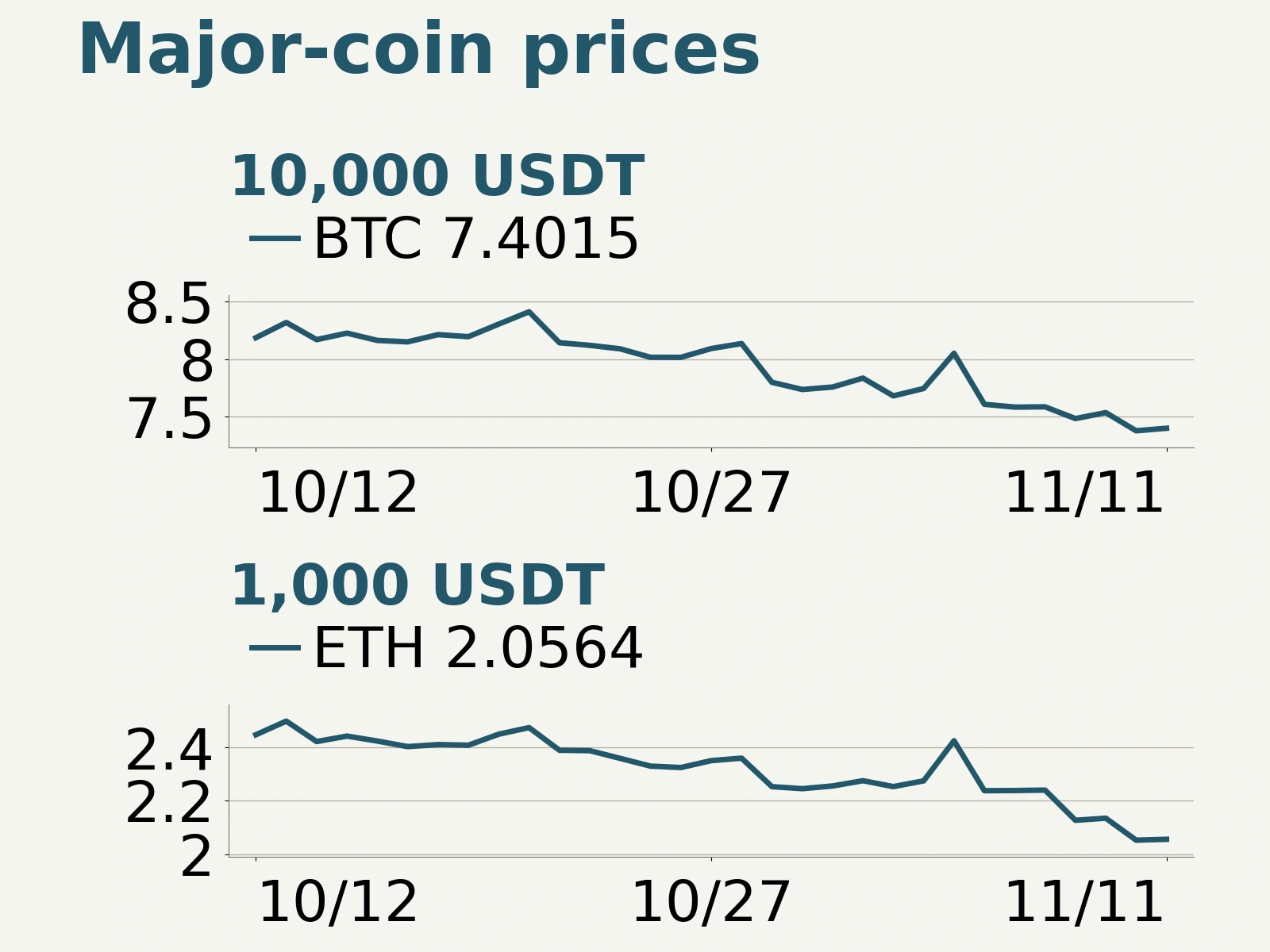
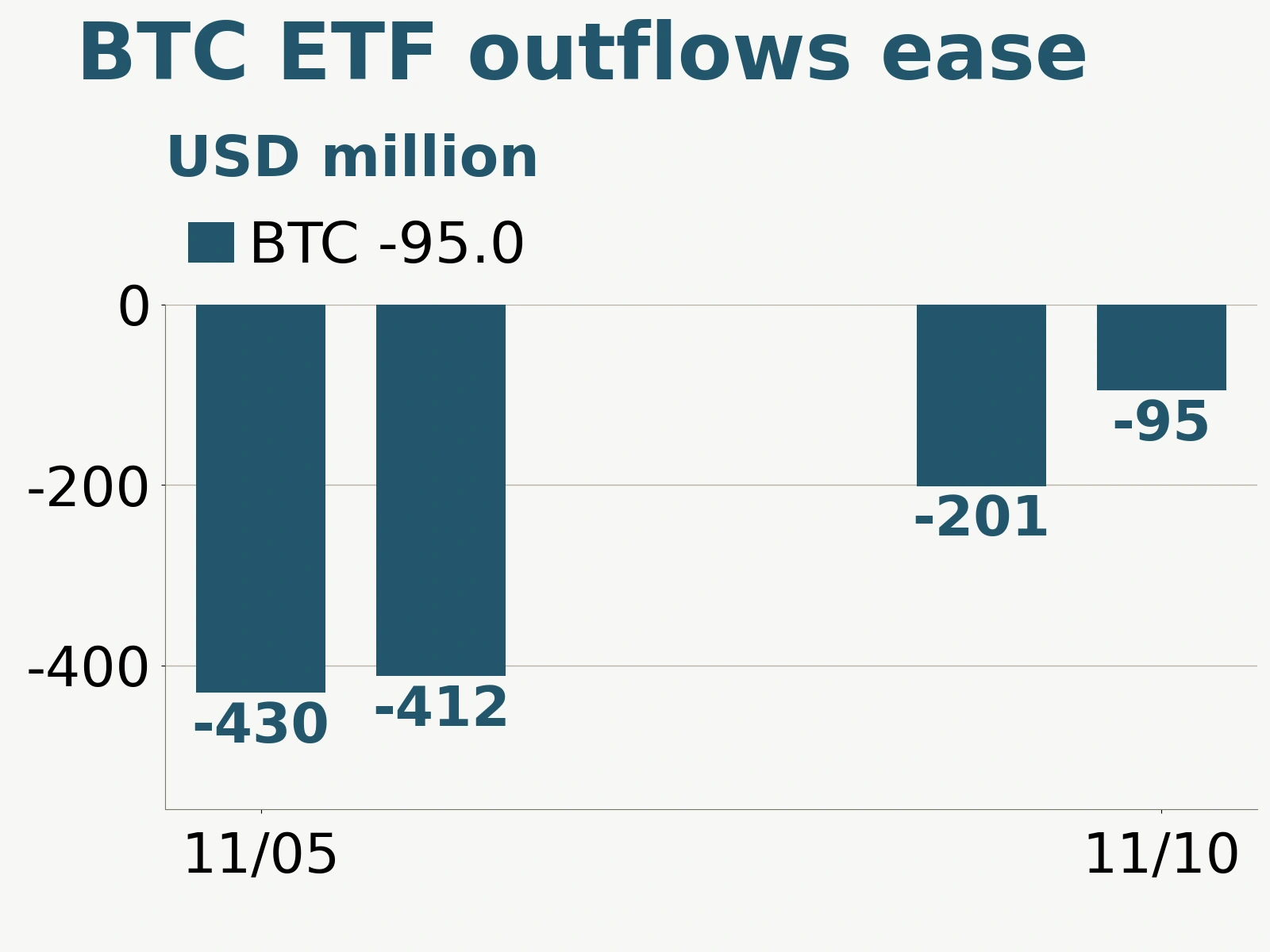
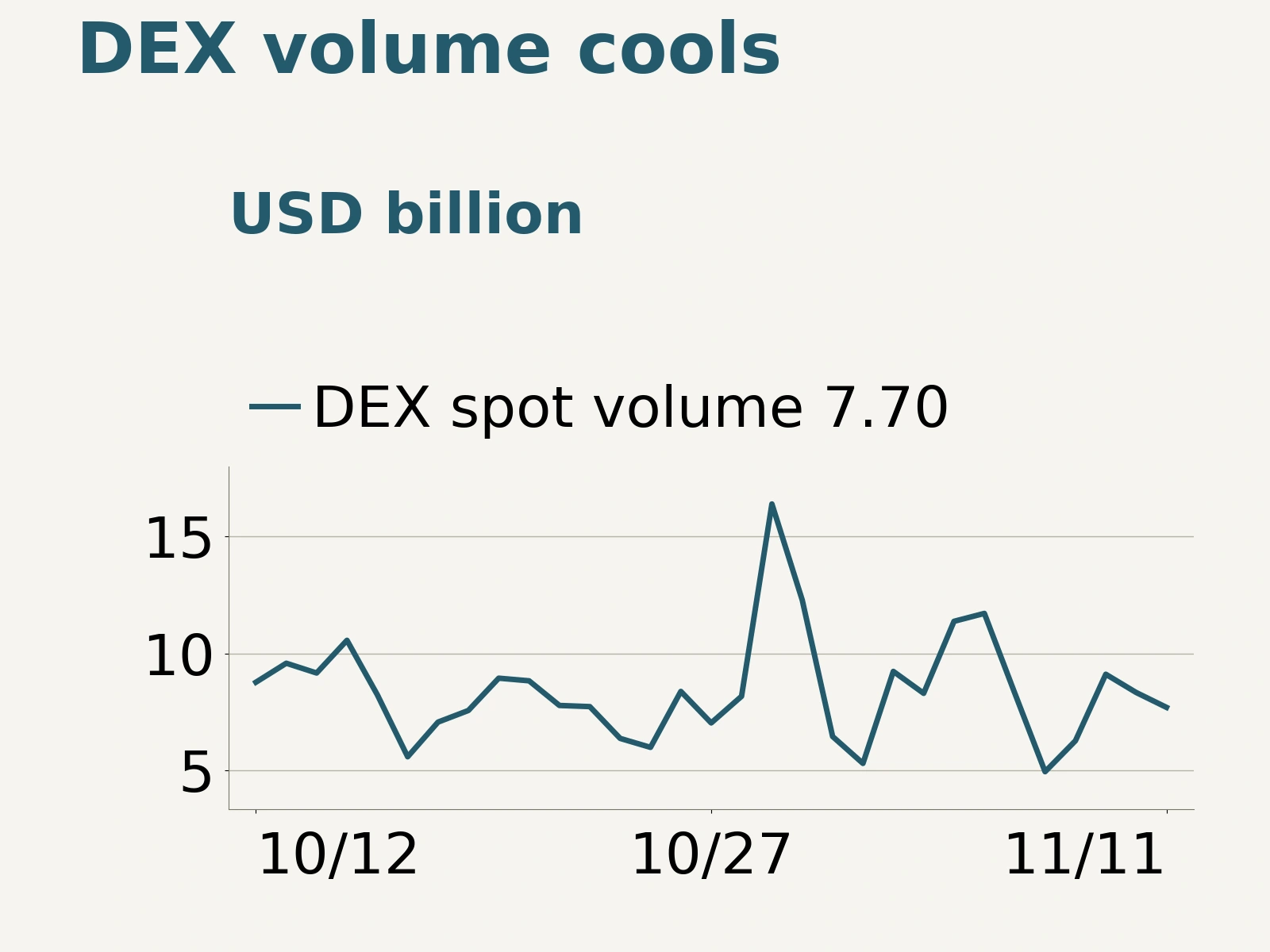
On November 11, 2026, MSCI announced the results of its November index review: Strategy will be removed from the MSCI USA Index, effective after the close on November 30. The same day, the Financial Stability Board (FSB) published its peer review of Türkiye, calling for a dedicated stablecoin framework and financial stability monitoring alongside the existing oversight of crypto service providers. The first development concerns whether companies holding crypto assets can remain in passive investment portfolios; the second concerns whether token risks can be identified and contained. The conditions for institutional participation in crypto markets are taking the form of more specific institutional arrangements.
Strategy to Leave the MSCI USA Index, with the Initial Impact on Equity Financing
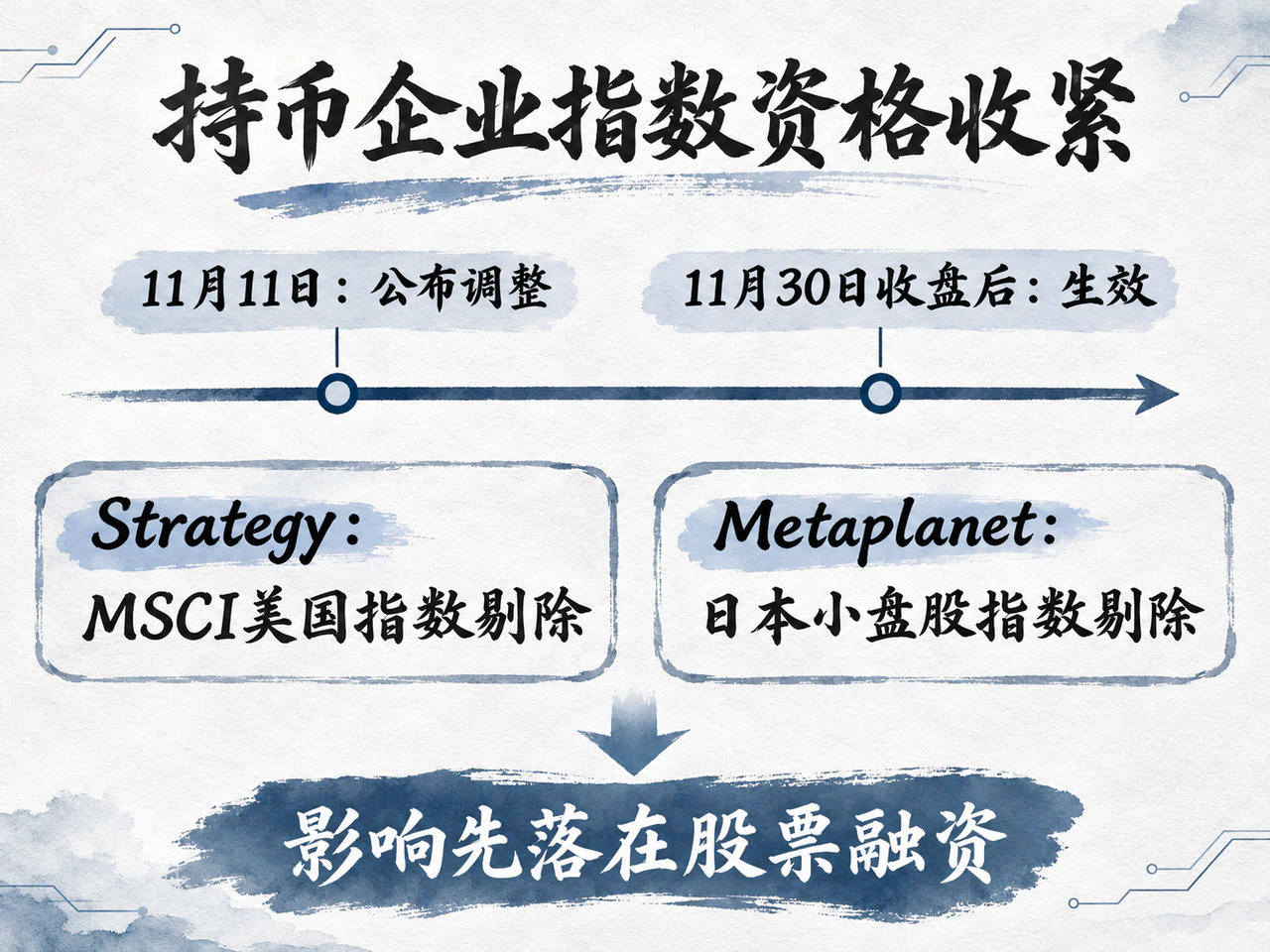
Strategy is explicitly listed in MSCI's changes to its Global Standard Indexes. The Block reported the same day that Metaplanet would also be removed from the MSCI Japan Small Cap Index; Sharplink, an Ethereum treasury company, did not appear on the small-cap deletion list covered by that report.
The index review documents did not explain the reasons company by company. The Block placed the changes in the context of MSCI's revision last month to its eligibility rules for non-operating companies: the new rules assess operating assets and five financial metrics, replacing the earlier temporary restriction on companies whose crypto assets accounted for more than half of their assets.
For companies that link equity financing to crypto purchases, index eligibility directly affects the investor base. Portfolios passively tracking the relevant indexes need to adjust their holdings around the effective date, while active managers will reassess operating cash flow, the net asset value of crypto holdings, and financing capacity. If a stock's premium to the net asset value of its crypto holdings narrows, issuing the same number of shares will raise less money, reducing the capital efficiency of reserve expansion. This transmission initially affects equities and financing conditions; any effect on spot token demand will depend on the companies' subsequent financing and crypto purchases.
Exchange listing, index inclusion, and investment institutions' internal risk controls are three separate hurdles. The economic significance of this review is that the growth models of crypto treasury companies are coming under more detailed scrutiny of their operating characteristics. Market valuations must also assess both token assets and access to capital markets.
Coinbase Separates Custody and Brokerage Functions; Unified Margin Does Not Yet Cover Global Derivatives
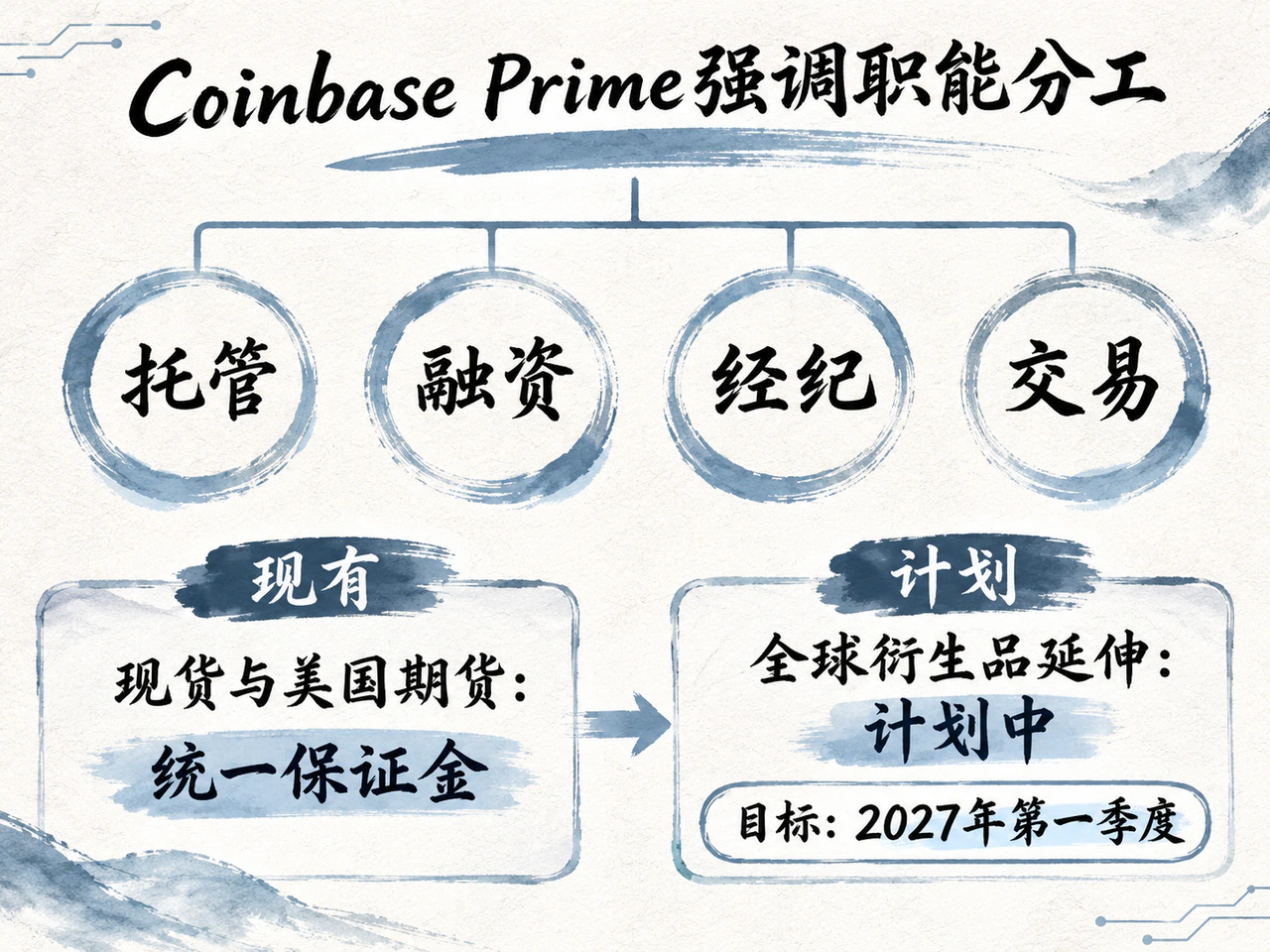
Institutional service providers emphasize a different set of foundational arrangements. In its November 11 overview of Prime, Coinbase said the platform separates qualified custody, financing, the futures commission merchant, and the trading venue. It also said Coinbase National Trust Company had received final approval from the US Office of the Comptroller of the Currency that week.
According to the company, spot and US futures currently operate within a unified margin framework with daily net settlement. An extension to global derivatives positions is planned for the first quarter of 2027. There is a clear timing distinction between features already available and future arrangements; the benefits of integration still depend on implementation.
Competition in these services centers on connecting trading capabilities with the asset segregation, credit provision, and audit processes institutions require. When institutions choose a platform, the range of tradable products is only one consideration. Clear custody responsibilities also help determine whether capital can enter.
Türkiye Already Regulates Service Providers; the FSB Calls for a Stablecoin Framework and Cross-Border Monitoring
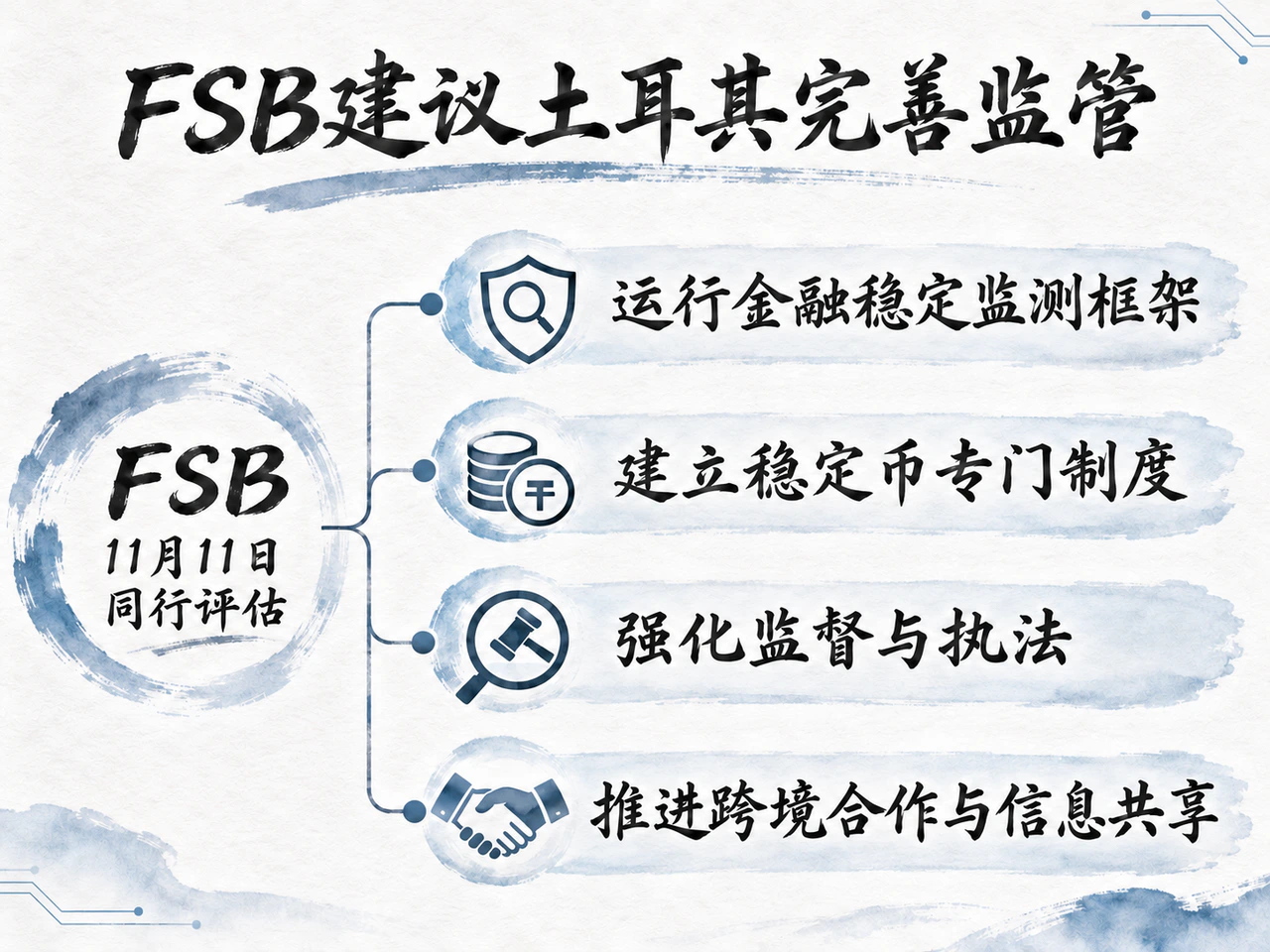
The FSB's assessment of Türkiye covers both progress and gaps. The country has brought a substantial part of its crypto market within the regulatory perimeter, established service provider registration and licensing requirements, implemented strict custody segregation, and prohibited the use of crypto assets for domestic payments. Regulators have also introduced a centralized data platform to track crypto activity and service providers' business models.
Building on this, the FSB recommended further operationalizing the financial stability monitoring framework, establishing a dedicated stablecoin framework, strengthening supervision and enforcement, and advancing cross-border cooperation and information sharing. These are policy recommendations arising from a peer review. The details of subsequent rules and their implementation schedules still need to be established by the local authorities.
Service provider licensing addresses who may operate and how they may operate. A stablecoin framework must also address the chain of responsibilities arising from token issuance, reserves, redemption, and ongoing circulation. In cross-border use, the issuer, reserve custodian, trading platform, and ultimate holder may be located in different jurisdictions. Even if a market has data from local platforms, it may not have a complete view of offshore issuance and capital flows. Centralized data collection must be combined with risk indicators, supervisory powers, and cross-border information exchange to support timely intervention.
From index eligibility and custody responsibilities to cross-border stablecoin monitoring, the conditions for connecting crypto markets with traditional finance are increasingly defined by institutional details that can be put into practice. The pace of further expansion in institutional business will increasingly depend on stable eligibility criteria, enforceable asset segregation, and continuous monitoring of cross-border risks.
Click Read Original for the full details.