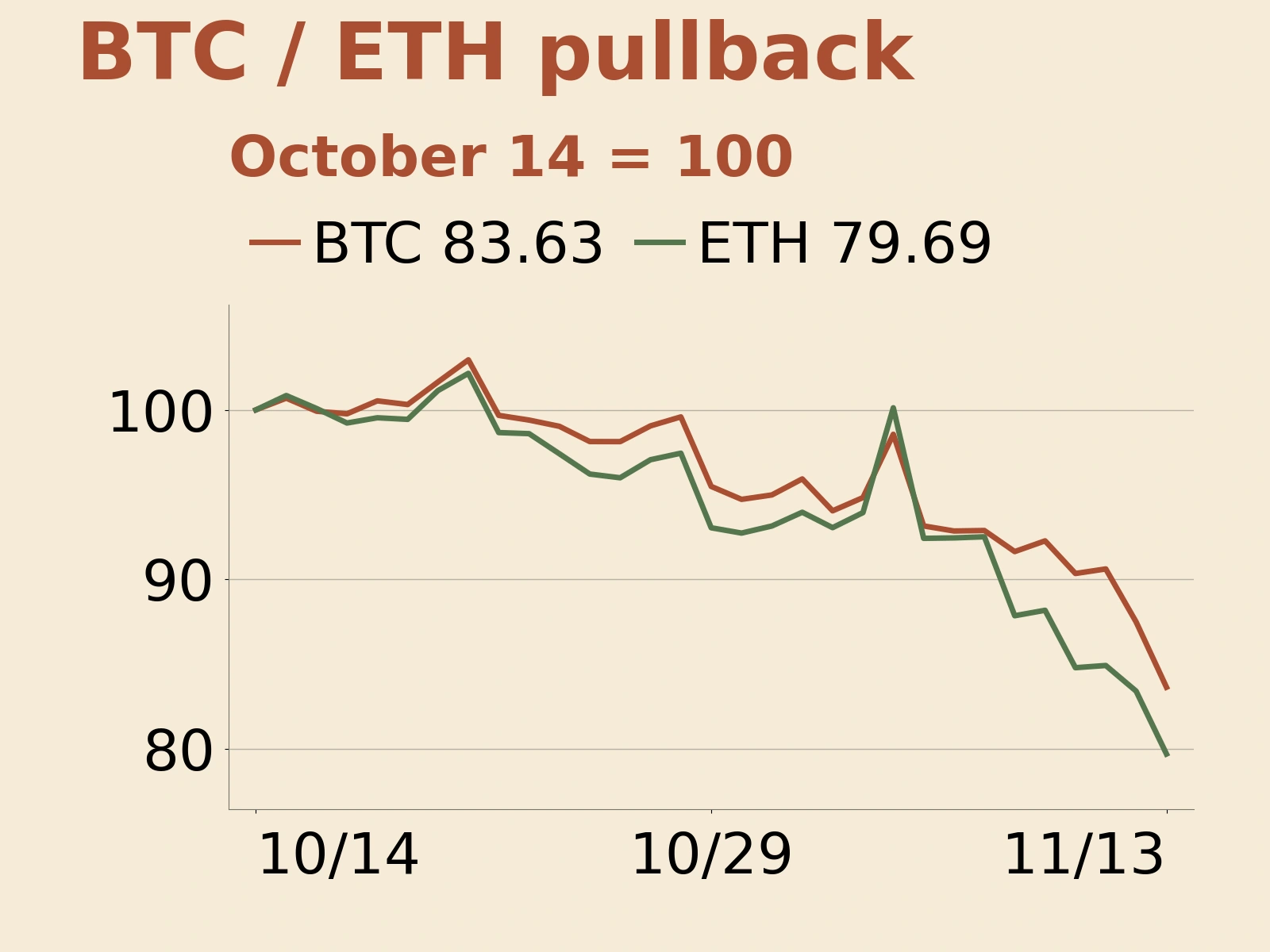
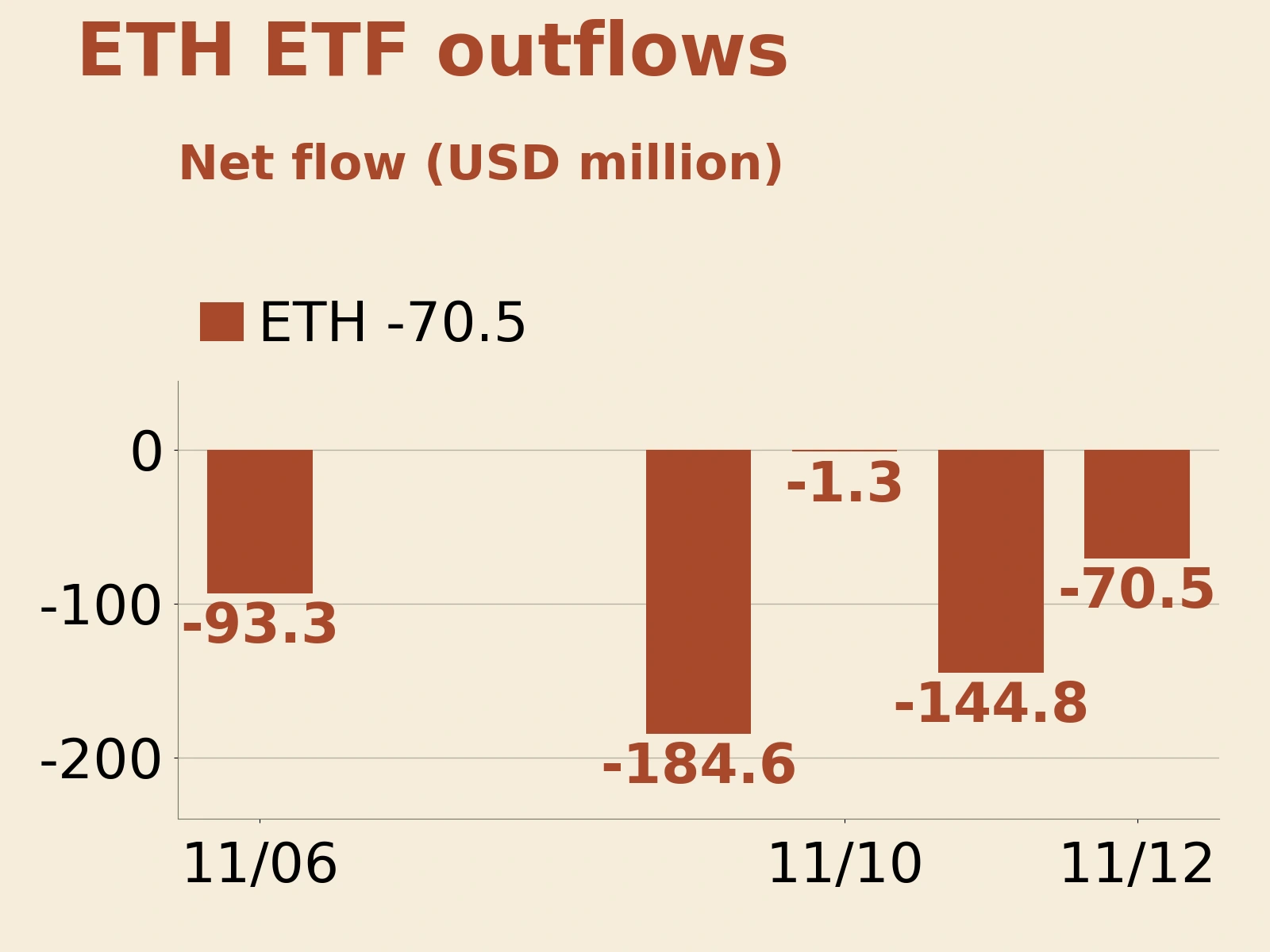
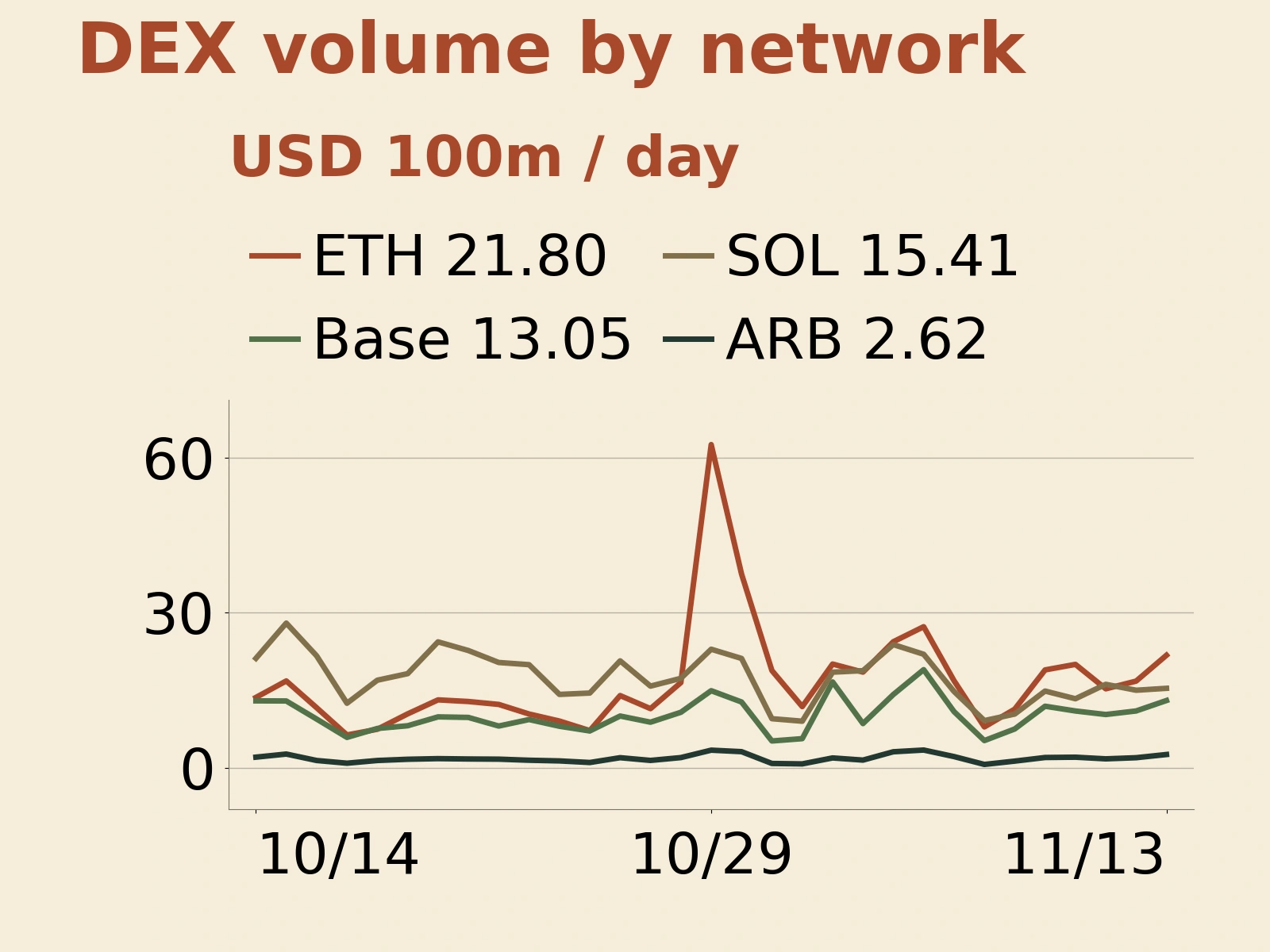
On November 13, 2026, Jamie Selway, Director of the Division of Trading and Markets at the U.S. Securities and Exchange Commission (SEC), delivered a speech at Baruch College in New York, identifying round-the-clock trading, tokenized securities and perpetual futures as developments reshaping market structure. On the same day, KUN Group announced that its Hong Kong subsidiary had obtained three types of licenses covering securities dealing, securities advice and asset management, and planned an initial launch of tokenized investment product distribution services in the first quarter of 2027.
The two developments concern trading experiments and licensed distribution, respectively. Moving securities on-chain requires coordination among trading venues, licensed intermediaries, investor eligibility and records of ownership rights. Longer trading hours are one part of this process. Client access, responsibilities for execution and distribution, and the continuity of rights in the underlying assets will directly affect whether viable business models can emerge.
SEC Lists Notices from Four Firms; Prospective Venues Must Disclose Plans at Least 30 Days in Advance
Selway’s speech focused on market research and institutional design. He noted that markets are moving toward round-the-clock trading, new instruments for taking on risk exposures continue to emerge, and vast quantities of data place greater demands on research resources. The speech also stated that its contents do not necessarily reflect the views of the SEC, its commissioners or his colleagues in the division.
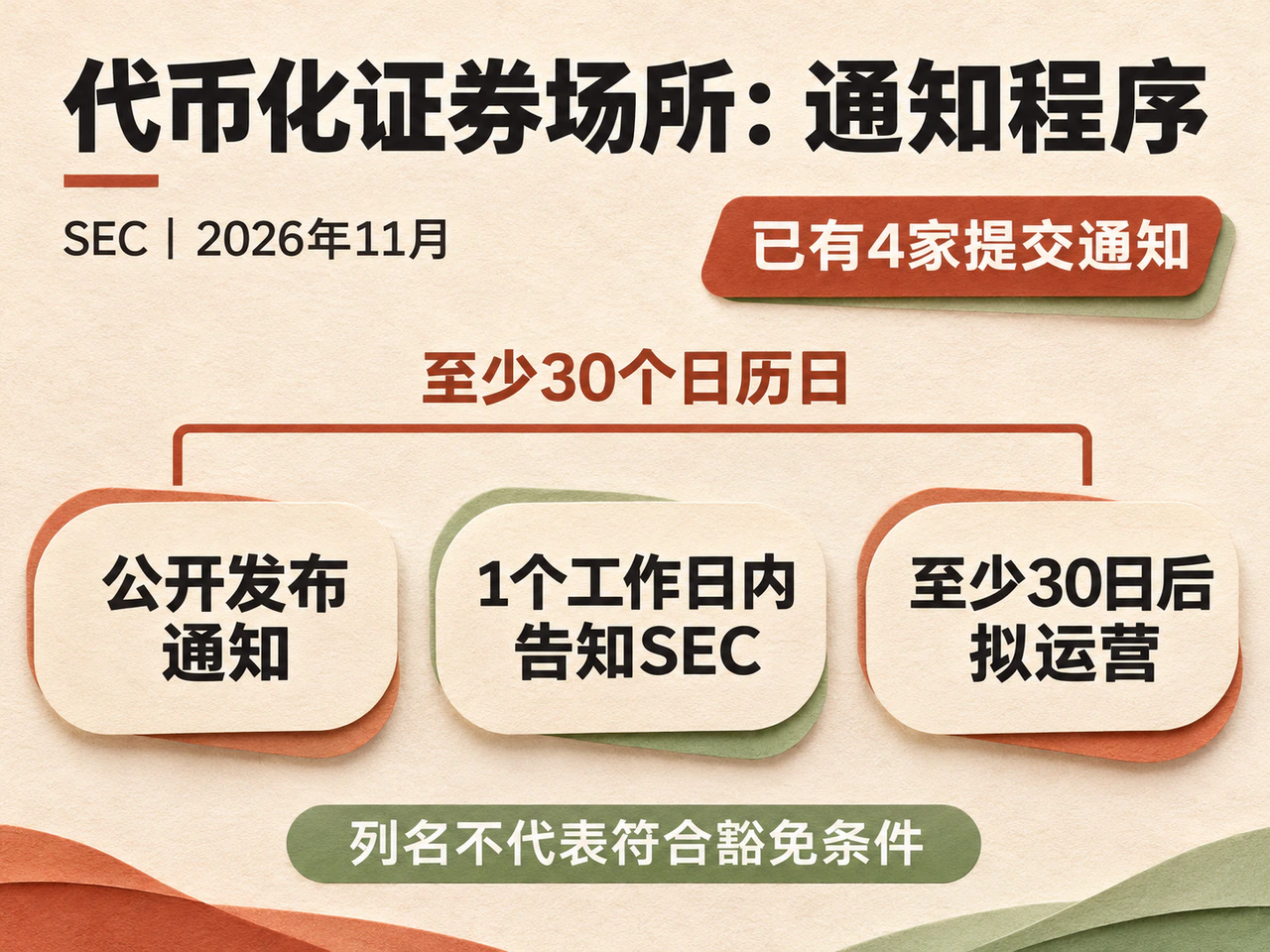
The specific arrangements appear on the SEC’s Innovation Exemption register. The page lists four firms that have submitted notices of their intention to operate under the exemption: TSV LLC, OKXICE TSV, Kephas doing business as Perpetuals.com, and Formation Securities. Submission dates range from September 23 to November 9.
The procedure sets out explicit disclosure deadlines and responsibilities. A firm intending to operate a tokenized securities venue must publish a notice on a public website at least 30 calendar days before its intended start of operations, and separately notify the SEC in writing within one business day after publishing that notice. The register also states that being listed does not itself indicate that a firm meets the definition of a venue or the conditions of the exemption, and that staff do not substantively endorse the truthfulness or compliance of a notice.
This procedure takes the discussion of round-the-clock trading into the realm of operational responsibility. Even with longer trading hours, venues need a stable supply of liquidity. When tokens are transferred, securities rights and investor eligibility must carry through the process. Operators must also assume public disclosure and compliance responsibilities. Technology can shorten some operational steps, but market quality still depends on continuous quoting, depth of participation and arrangements for fulfilling obligations.
For the crypto industry, potential businesses along this path include securities infrastructure services such as account verification, compliant trading technology, transfer agency and asset recordkeeping. For now, the list reflects the progress of experimentation. Whether venues actually open and generate trading activity will be the key evidence for assessing subsequent network usage and related service revenue.
KUN’s Hong Kong Subsidiary Obtains Three Types of Licenses, with Product Distribution Planned for Q1 2027
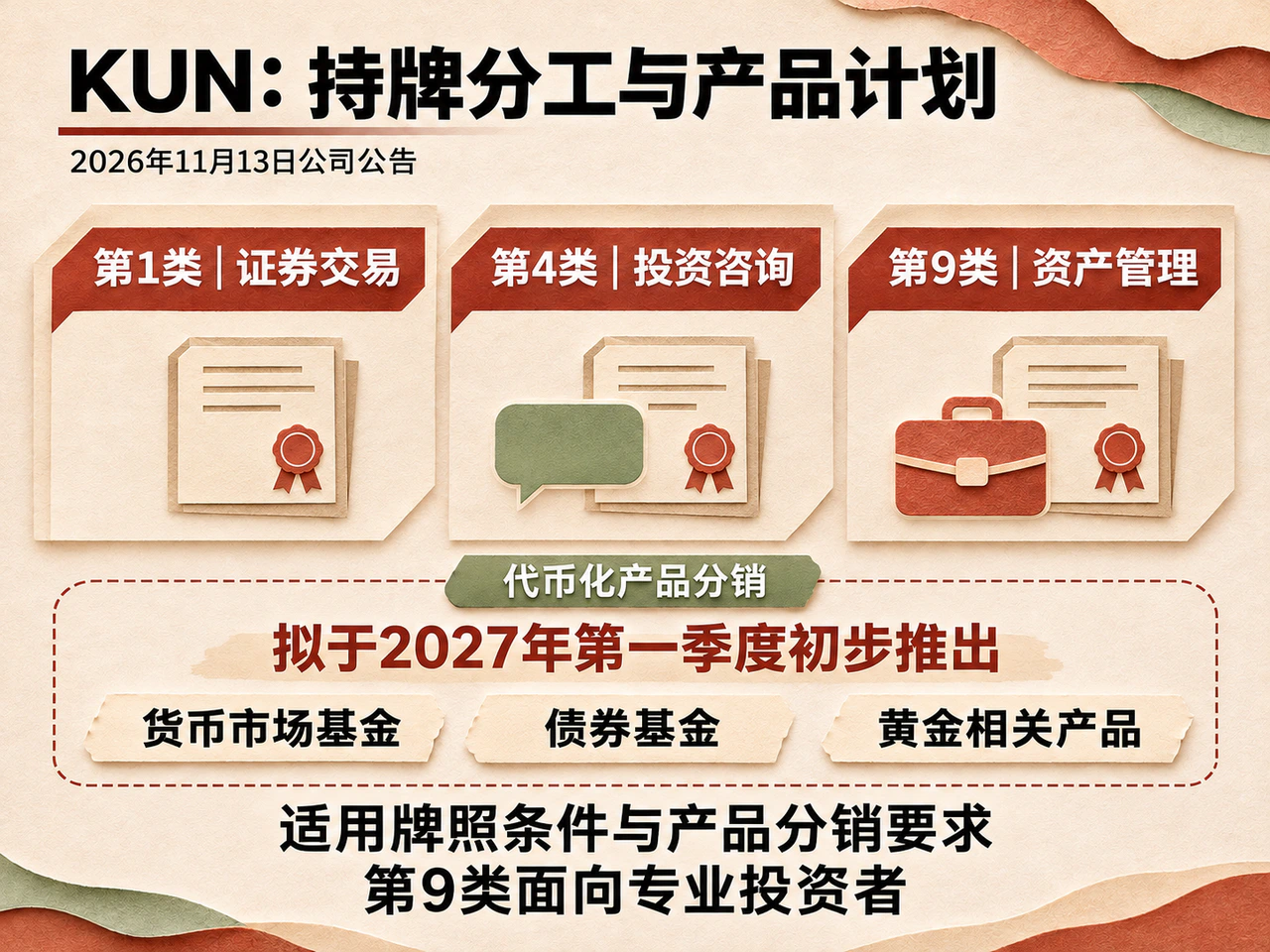
According to KUN’s corporate announcement on November 13, its Hong Kong subsidiary formally obtained Type 1 (dealing in securities), Type 4 (advising on securities) and Type 9 (asset management) licenses after receiving approval in principle in September. Subject to applicable license conditions, the Type 1 business is permitted to provide virtual asset trading services through trading platforms licensed by Hong Kong’s Securities and Futures Commission. Type 4 covers advice on securities and virtual assets, while Type 9 supports asset management for professional investors.
The announcement also set out the next stage of its product plans. KUN intends an initial launch of tokenized investment product distribution services in the first quarter of 2027, covering money market funds, bond funds and gold-related investment products, subject to product eligibility and distribution requirements. The licenses provide a basis for access to these future businesses. Whether distribution services launch as planned, and the associated revenue and assets under management, will need to be assessed once operations begin.
The three types of licenses cover dealing, advice and asset management, providing a licensed foundation for KUN to participate in tokenized product distribution. In this division of responsibilities, issuers are responsible for the underlying assets and products; intermediaries identify clients, assess suitability and connect them to trading channels; and on-chain technology handles the recordkeeping and transfer steps within that process. Investors purchase the legal and economic rights represented by the tokens, while intermediaries’ capacity for compliant distribution affects whether products can reach suitable clients.
The United States is exploring institutional arrangements through a notice-based experiment for trading venues, while Hong Kong relies on licensed intermediaries to undertake product distribution. Both paths are bringing on-chain records into the securities industry’s systems of market access, disclosure and accountability. The next developments to watch are the actual commencement of authorized businesses, completed product distribution, and whether transactions and records of asset rights can remain reliably connected in day-to-day operations. These operational developments will provide direct evidence of whether network usage and demand for services can persist.
Click “Read the original” for further details.