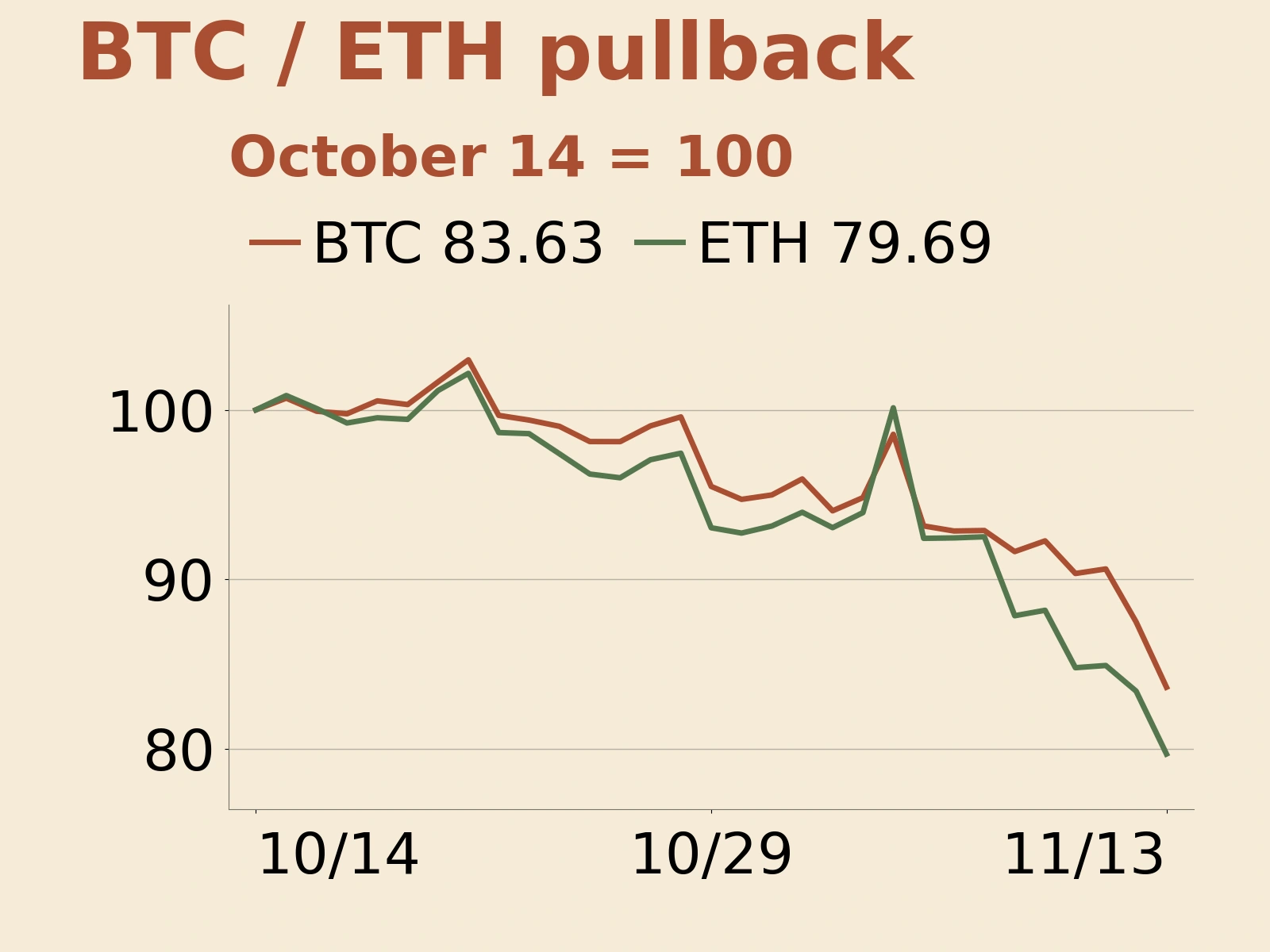
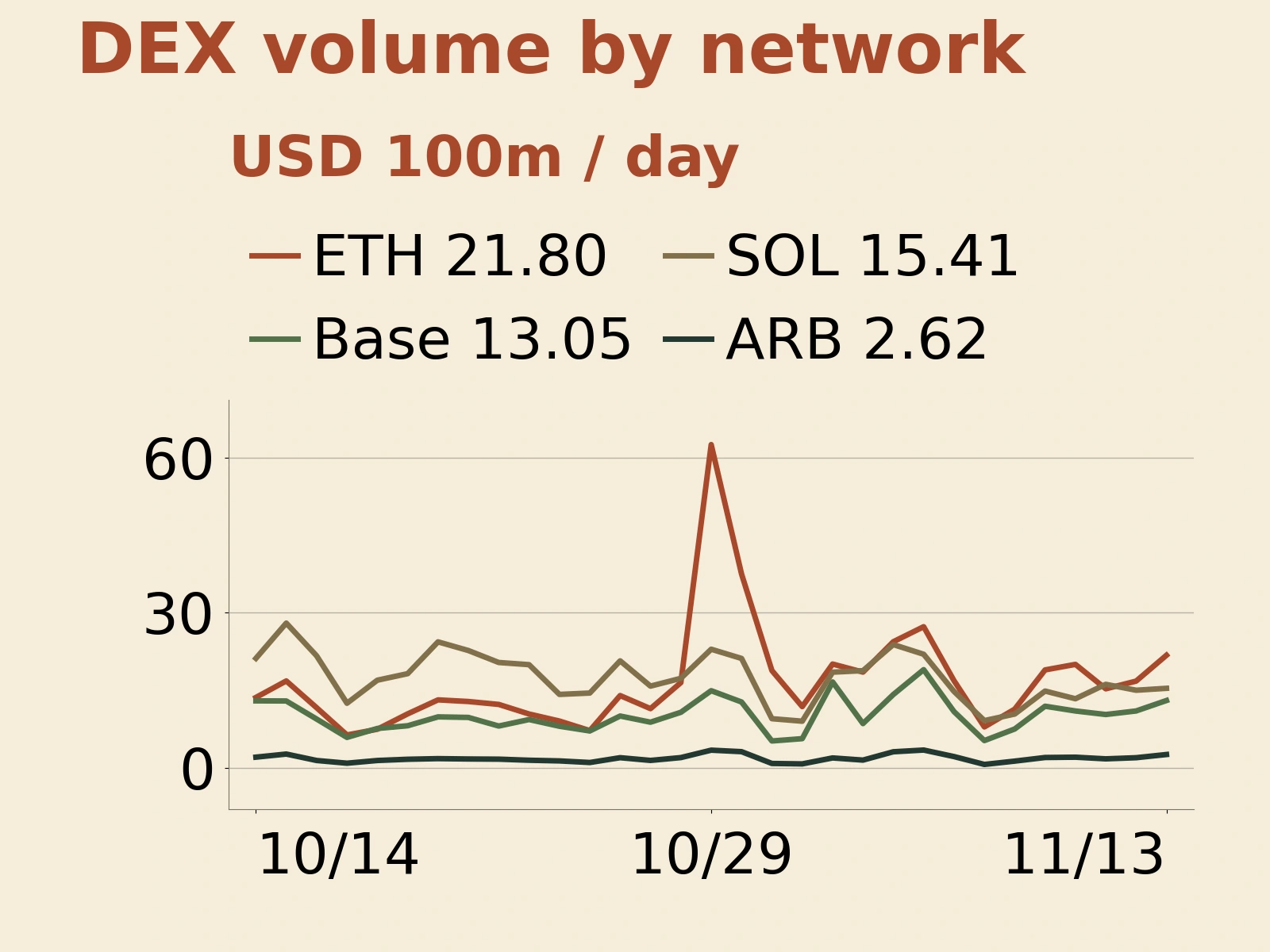
On November 13, 2026, Bitcoin's price retreat coincided with a contraction in leverage, while persistent ETF redemptions and a decline in stablecoin supply further weakened the spot market's capacity to absorb selling. Funding rates on Binance perpetual contracts fell sharply at the second settlement of the day before recovering; the notional value of open interest declined much more than the number of coins represented by those positions, indicating that falling prices accounted for a substantial part of the reduction in value. For funding conditions to stabilize, investment flows and the supply of on-chain dollars still need to stop deteriorating.
Bitcoin and Ether ETFs post five consecutive trading days of outflows; stablecoin face value in circulation falls 5.32% over 30 days
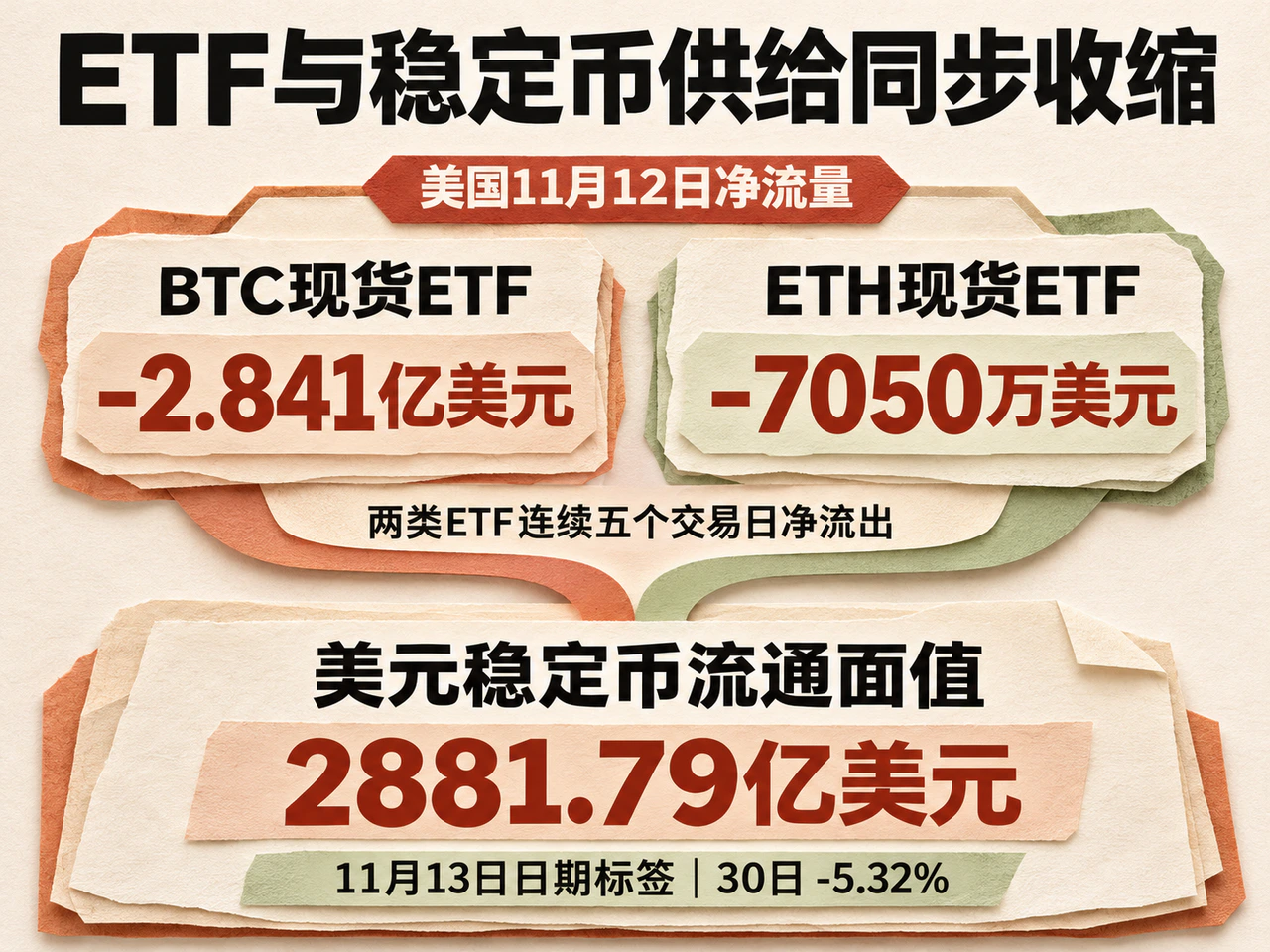
In the November 12 U.S. trading session, spot Bitcoin ETFs recorded aggregate net outflows of $284.1 million, while spot Ether ETFs saw $70.5 million leave. Among the Bitcoin funds, BlackRock's IBIT lost $203.8 million, accounting for roughly 70% of the day's aggregate net outflow. Fidelity's FBTC, Bitwise's BITB and ARKB recorded outflows of $32.6 million, $26.4 million and $18.5 million, respectively. Inflows into a small number of products were insufficient to offset redemptions from the major funds.
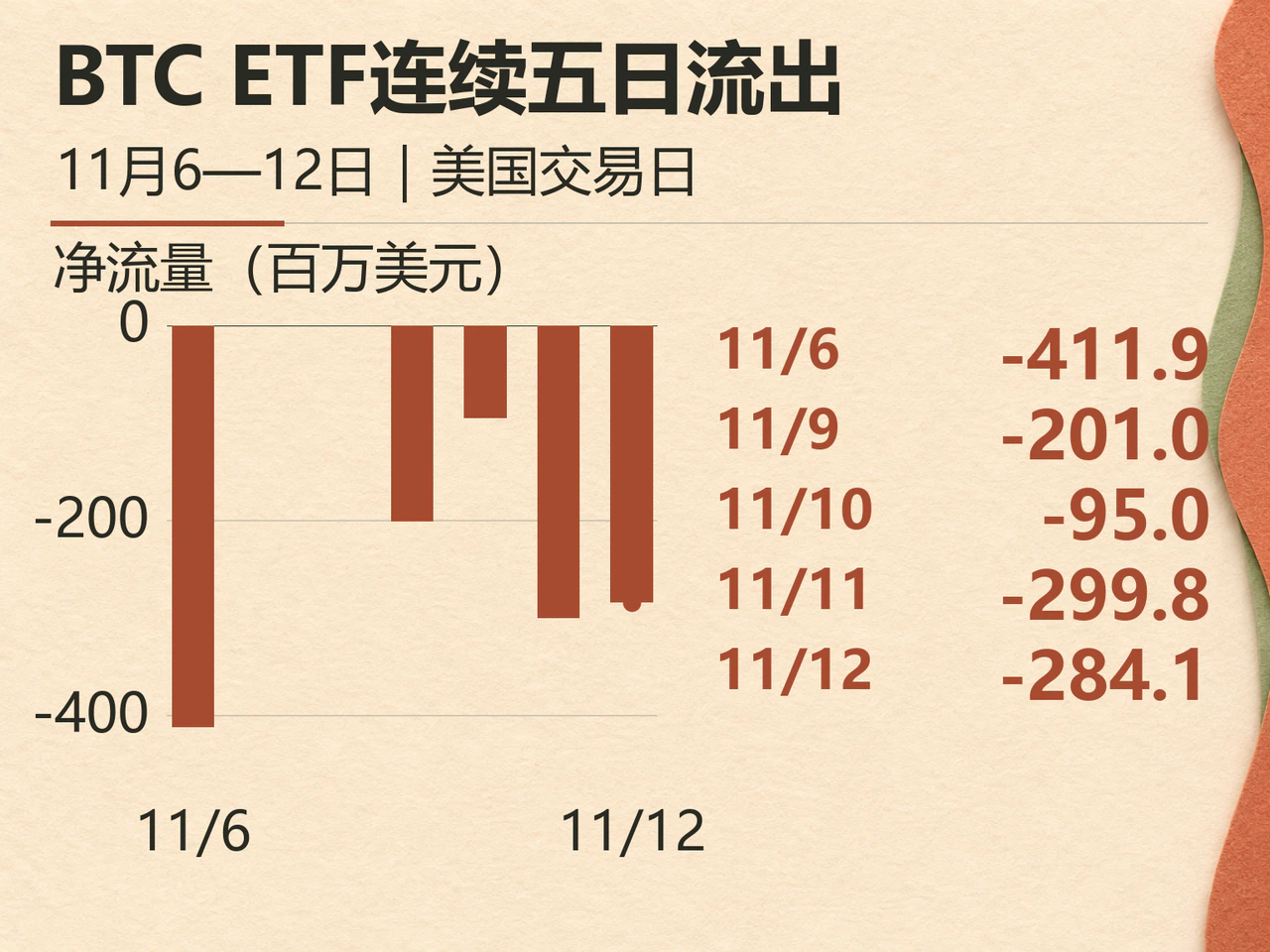
According to the U.S. trading-day data fully reported by Farside, spot Bitcoin ETFs recorded net outflows on each of the five trading days from November 6 through November 12, totaling $1.2918 billion. Spot Ether ETFs also posted net outflows on every trading day over the same period, totaling $494.5 million. Pressure on both groups of funds shows that withdrawals through this investment channel extended to both Bitcoin and Ether. A smaller daily outflow can ease pressure at the margin; more stable spot demand requires a return to net subscriptions over several consecutive days.
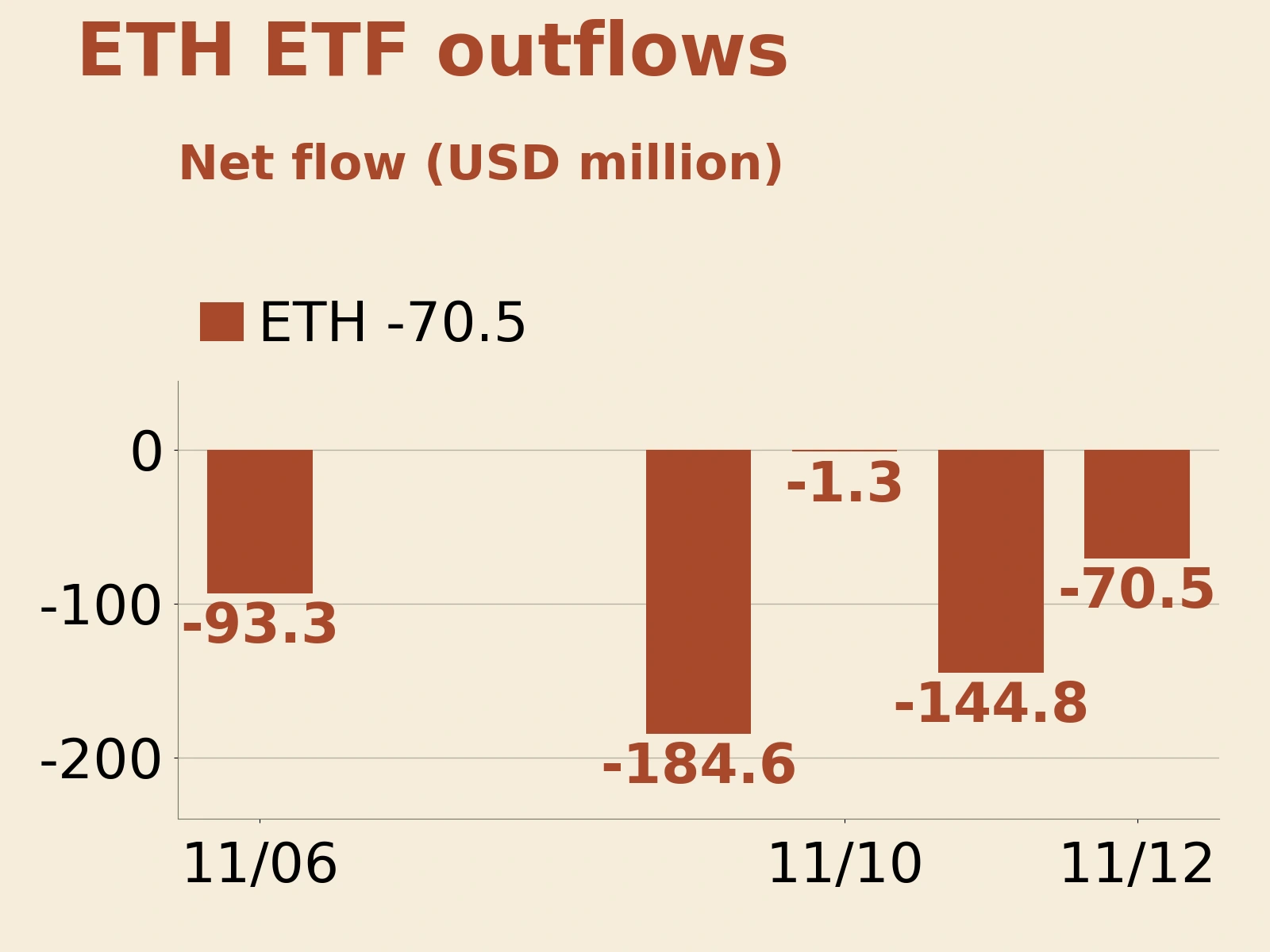
Persistent net ETF redemptions mean that this investment channel is struggling to sustain the incremental demand it previously provided. Trading in fund shares and underlying assets is connected through authorized participants, market makers and fund creation and redemption arrangements, with actual execution potentially spread across different times. As prices retreat and an existing source of demand weakens, other buyers must absorb more supply. Repeated outflows from both groups of ETFs over the same period also leave less scope for flows rotating between the two assets to cushion selling pressure.
The supply of on-chain dollars is also contracting. Using DefiLlama's date labels, the face value of U.S. dollar-pegged stablecoins in circulation was approximately $288.179 billion on November 13, down $1.325 billion from the preceding date label, $4.843 billion from seven days earlier and $16.191 billion from 30 days earlier. The 30-day decline was approximately 5.32%. This measure counts the face value of circulating dollar-pegged tokens and provides a gauge of the overall pool of funds available for on-chain settlement and positions.
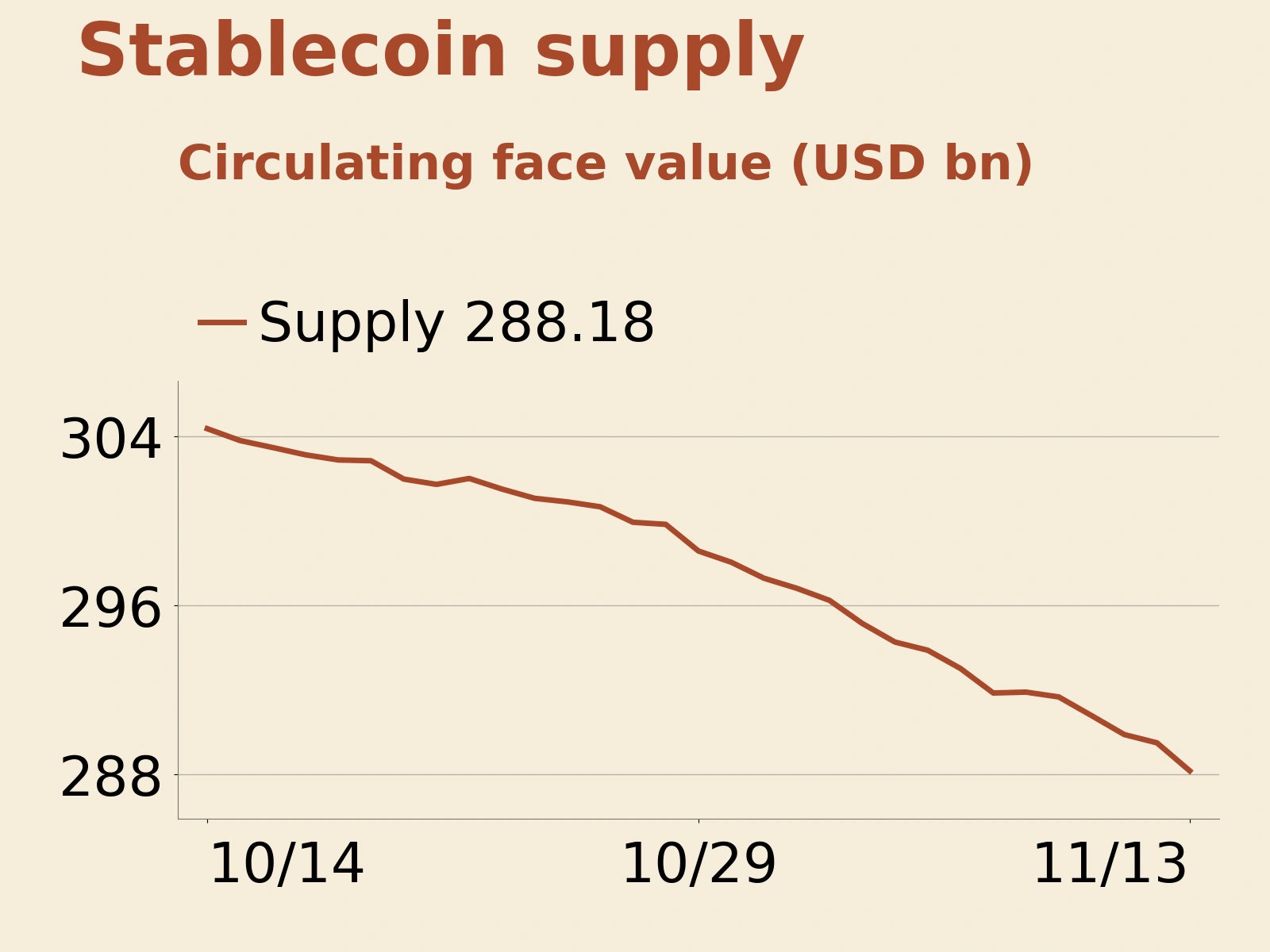
Stablecoins serve trading, payments, lending and collateral functions, so a decline in circulation reduces the dollar funding pool shared by these activities. With ETF redemptions continuing, both traditional funds and on-chain dollars are struggling to provide incremental funding. Even if some money remains on exchanges waiting to buy, a smaller overall funding pool limits the market's ability to absorb sustained selling. Whether an improvement in funding conditions can endure depends on a continuing supply of new funds, rather than a short-lived change driven by a single large token issuance.
Funding rates ease; falling prices account for a significant part of the decline in notional open interest
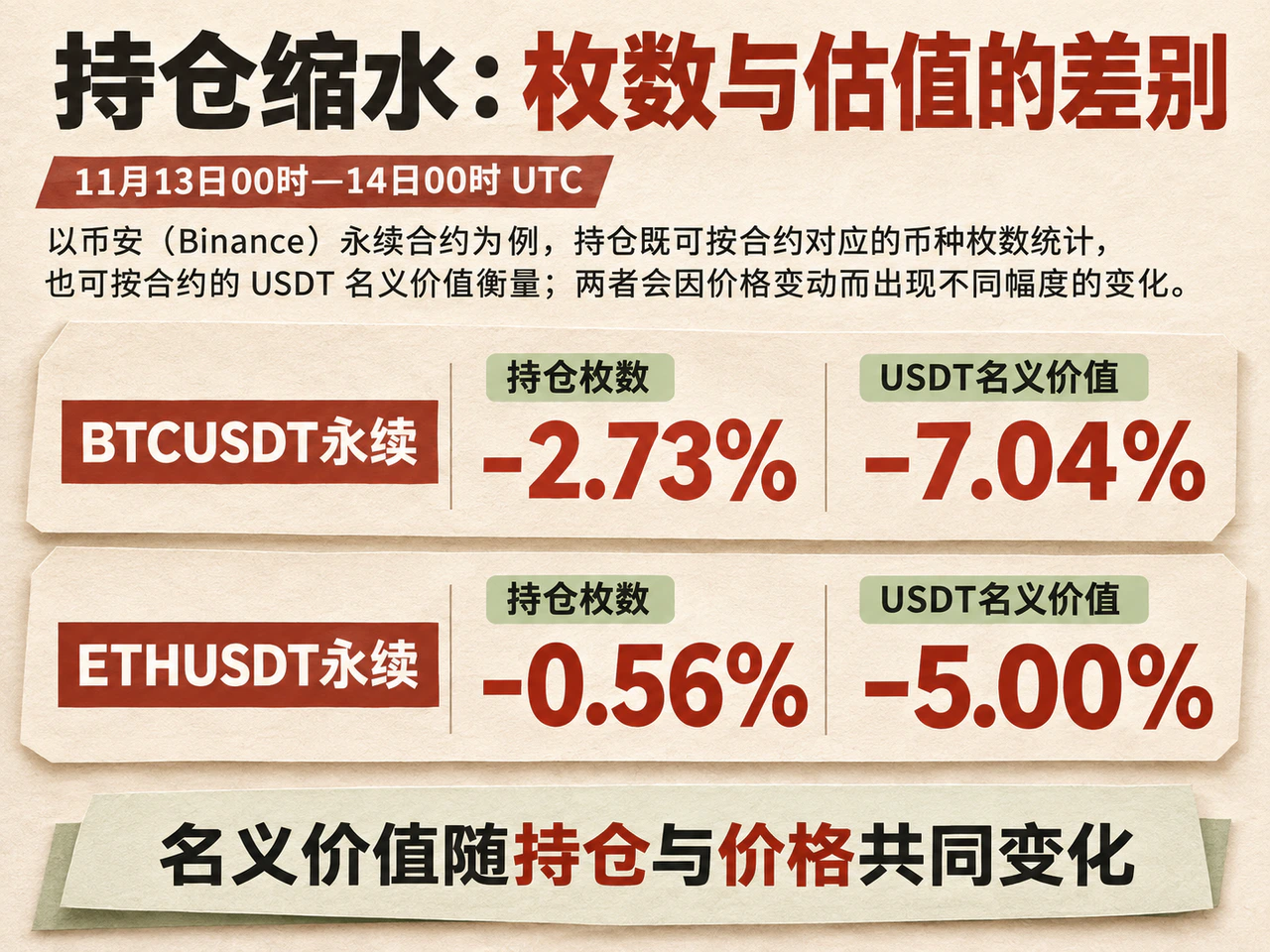
Derivatives markets showed signs of cooling. Settled Binance perpetual-contract data show that at 00:00, 08:00 and 16:00 UTC on November 13, the eight-hour funding rates for BTCUSDT perpetuals were 0.0100%, 0.00127% and 0.004045%, respectively; the corresponding rates for ETHUSDT perpetuals were 0.009474%, 0.000971% and 0.004743%. Both fell sharply at 08:00 before recovering at 16:00. All three settlement rates remained positive, meaning longs continued to pay shorts, although the intraday funding burden on long positions eased considerably.
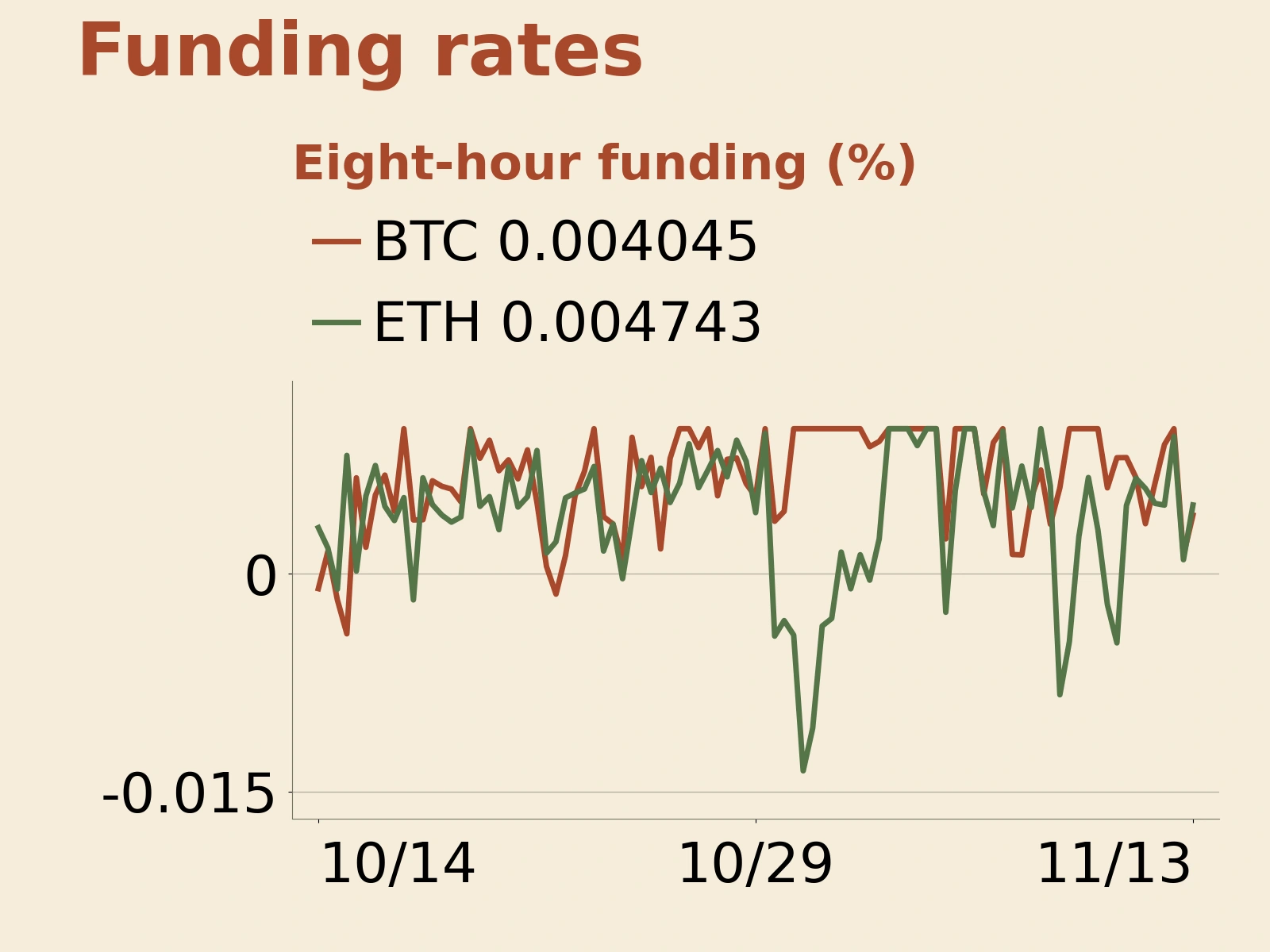
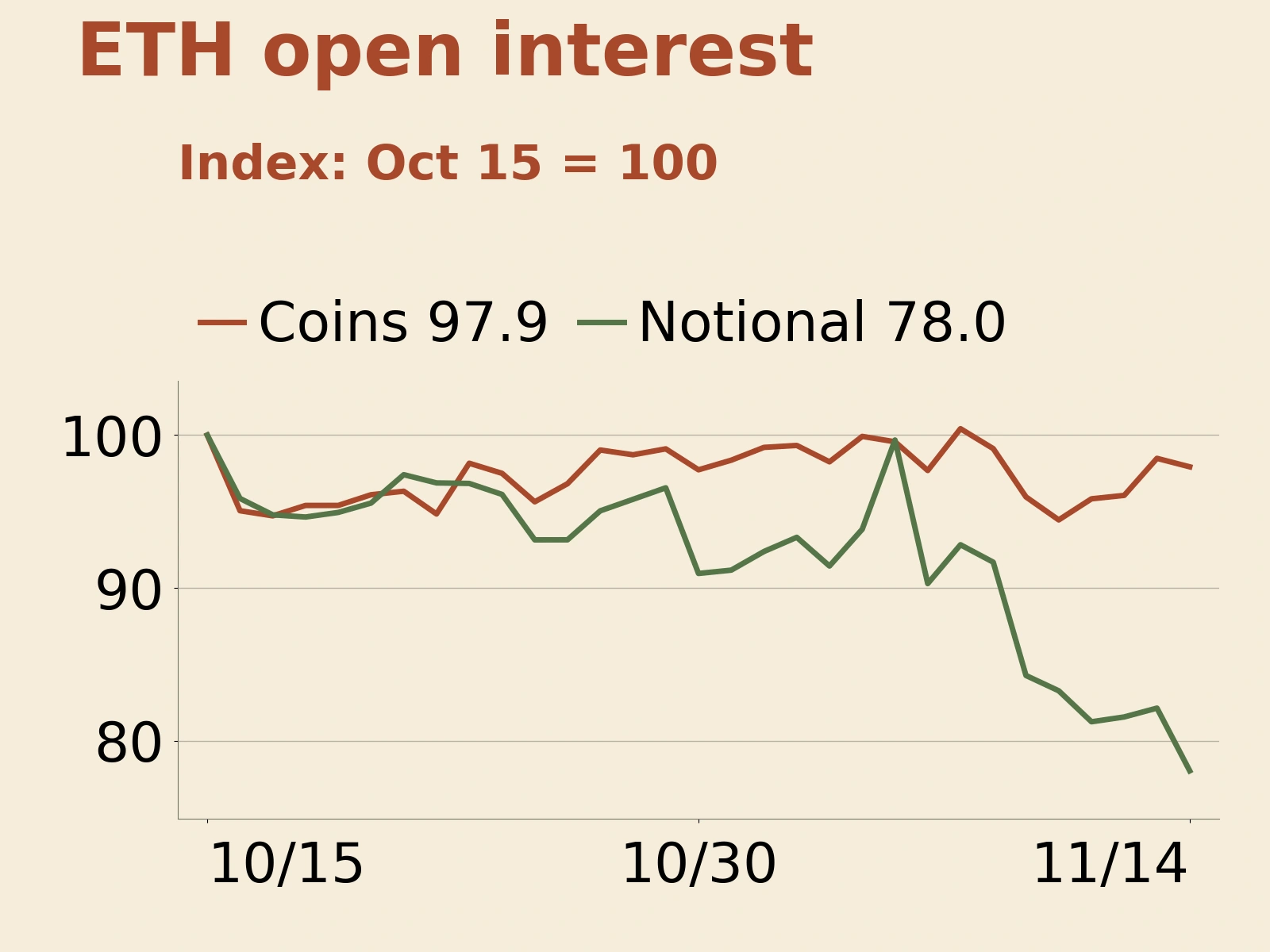
From 00:00 UTC on November 13 to 00:00 UTC on November 14, open interest in Binance BTCUSDT perpetuals fell from approximately 101,150 BTC to 98,390 BTC, a decline of 2.73%. Its notional value fell from 7.226 billion USDT to 6.717 billion USDT, down 7.04%. Open interest in ETHUSDT perpetuals declined by 0.56% in coin terms and by 5.00% in notional value. Open interest fell in both contracts, but the declines in coin terms were much smaller than those in notional value, indicating that falling underlying prices accounted for a substantial part of the reduction in value.
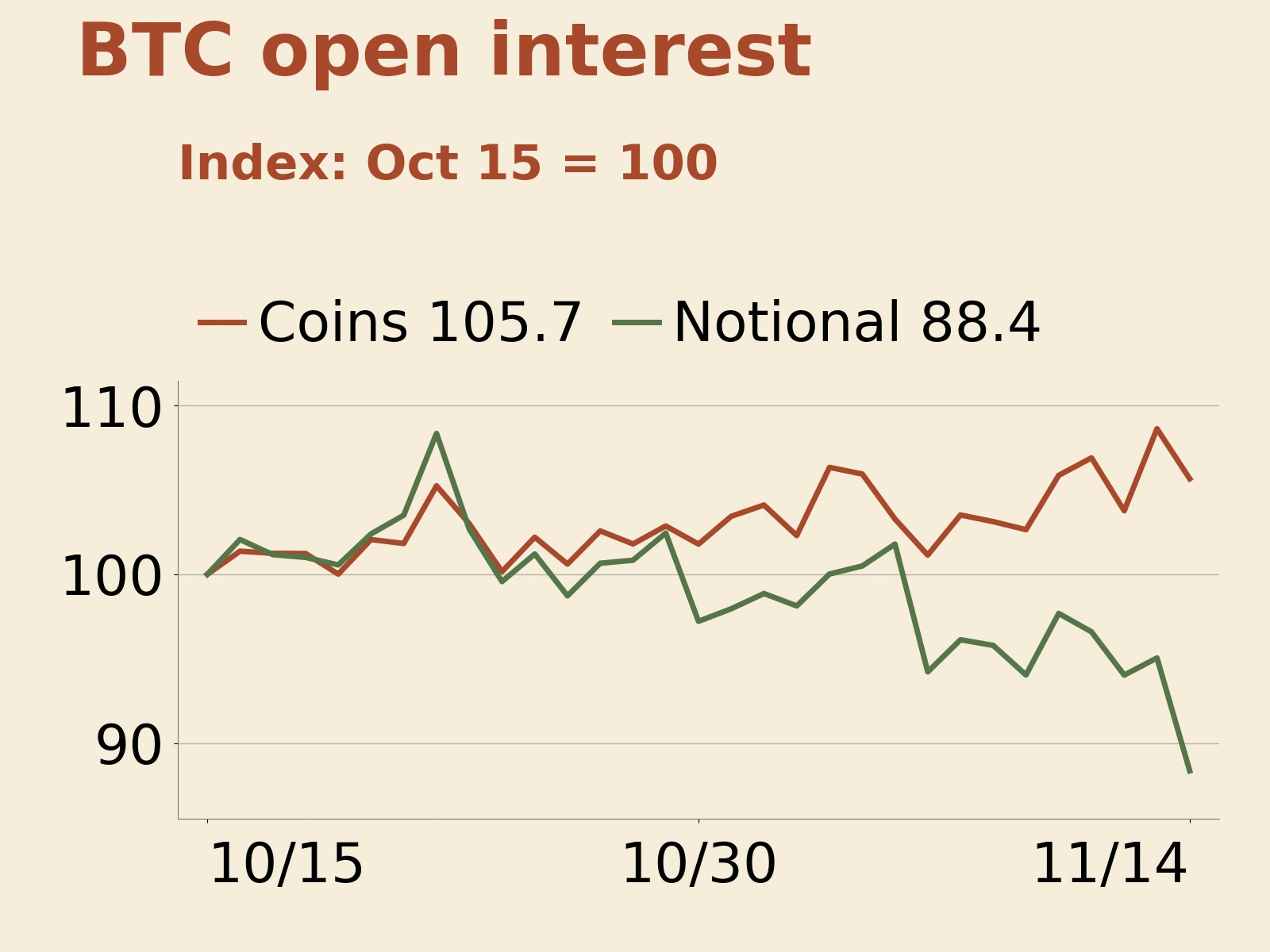
These changes have different implications. Lower funding rates help reduce the cost of maintaining positions, and a decline in the number of coins represented by open positions can unwind some crowded exposure. A reduction in notional value caused by falling prices does not, by itself, mean positions have been closed. Taken together, the evidence points to a market gradually shedding leverage while still working through outstanding positions. Because open interest consists of matched long and short positions, assessing direction also requires actual trading activity and changes in funding rates.
Data cited in an FXStreet analysis at 10:27 UTC on November 13 put rolling 24-hour liquidations at $1.64 billion, of which approximately $1.46 billion, or about 89%, involved long positions. This intraday rolling measure indicates that forced closures of long positions were an important component of selling pressure at the time. The involuntary exit of positions with insufficient margin can briefly accelerate selling; once some of those positions have been cleared, prices may rebound as selling pressure eases.
Whether a rebound can last ultimately depends on spot-market funding. A return to consecutive days of net ETF subscriptions and renewed growth in stablecoin circulation would help make new buying more persistent; lower funding rates mainly alleviate pressure on leveraged positions. The simultaneous contraction in these two funding channels makes the capacity to absorb selling after deleveraging a key constraint. If the release of selling pressure is followed by a recovery in buying, the market will have a better chance of escaping the cycle of liquidation, rebound and renewed pressure.
Click “Read the original” for further details.