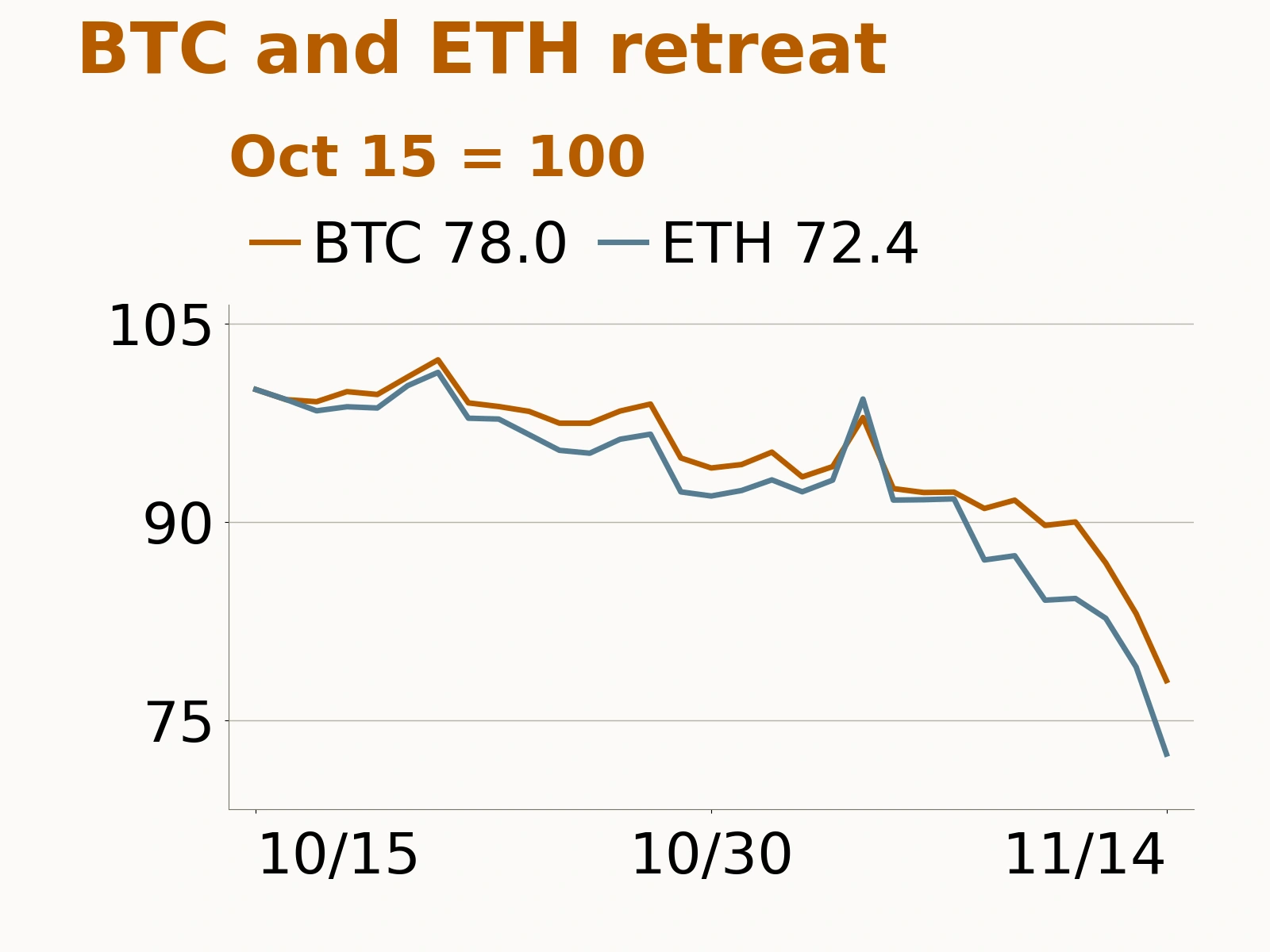
On November 14, 2026, Binance disclosed further progress in restoring withdrawals. During the same UTC trading day, Bitcoin and Ether fell 6.10% and 8.33%, respectively, with turnover in both increasing from the previous day. The day's central contrast was a gradual recovery in platform operations alongside continued weakness in prices and demand indicators.
On Binance's UTC daily candles for spot USDT pairs, the session ending at 8 a.m. Beijing time on November 15 saw Bitcoin close at 64150 USDT and Ether at 1769.20 USDT. Their intraday lows were 63320 USDT and 1729.16 USDT, respectively. Measured against the day's high-low range, Bitcoin closed only about 16% of the way up from the low: buying at lower prices had yet to produce a strong rebound. The more significant combination was falling prices on higher turnover, losses across the fixed sample of major cryptocurrencies, and underperformance against Bitcoin by all nine other assets.
Bitcoin turnover reaches 1.84 times its preceding 30-day average; all ten assets in the fixed sample fall

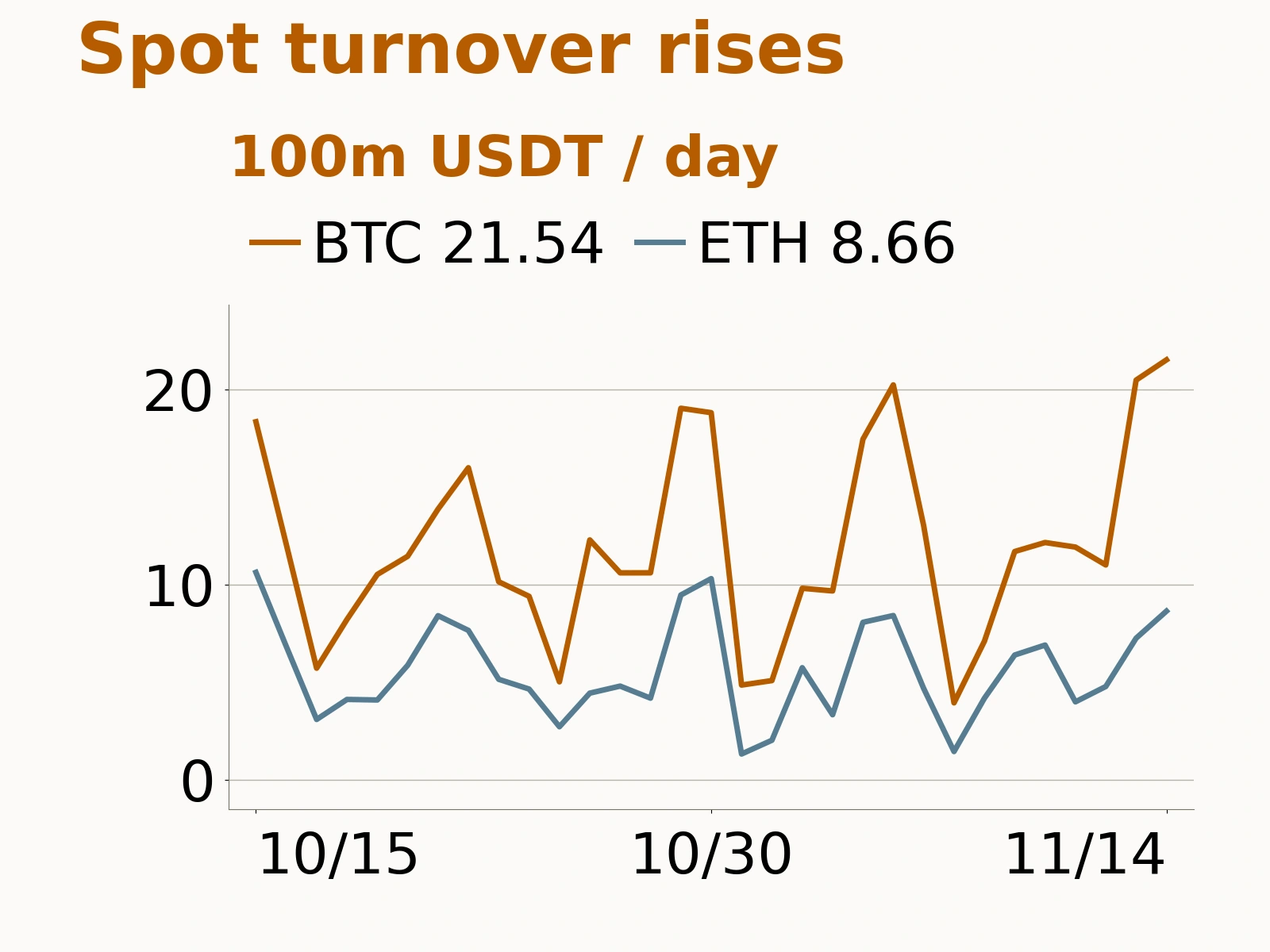
Bitcoin's daily turnover was 2.154 billion USDT, up 5.07% from the previous day and equivalent to 1.84 times average turnover over the preceding 30 complete trading days. Ether turnover was 866 million USDT, up 19.05% on the day and 1.57 times its preceding 30-day average. Neither pair experienced a weekend decline in turnover; prices moved lower amid relatively active trading.
Higher turnover does not directly imply net capital outflows, since every sale has a buyer. The direction of aggressive trading is more revealing about the day's trading bias: Binance's taker-buy turnover accounted for 46.36% of Bitcoin turnover and 44.89% of Ether turnover, both below half. Under this measure, taker selling was greater, corroborating the price declines on higher turnover and indicating that sellers were more eager to execute. The indicator describes which side initiated trades; it cannot be used to calculate investor redemptions or capital outflows from exchanges.
At the start of the research, the observation sample was fixed at ten Binance spot USDT pairs: BTC, ETH, BNB, SOL, XRP, DOGE, ADA, LINK, AVAX and SUI. All fell on November 14, and all nine pairs other than Bitcoin underperformed Bitcoin. SOL, XRP, DOGE and AVAX declined 10.12%, 9.55%, 11.11% and 13.75%, respectively. At least within this fixed sample, weakness was not confined to one blockchain or a single project.
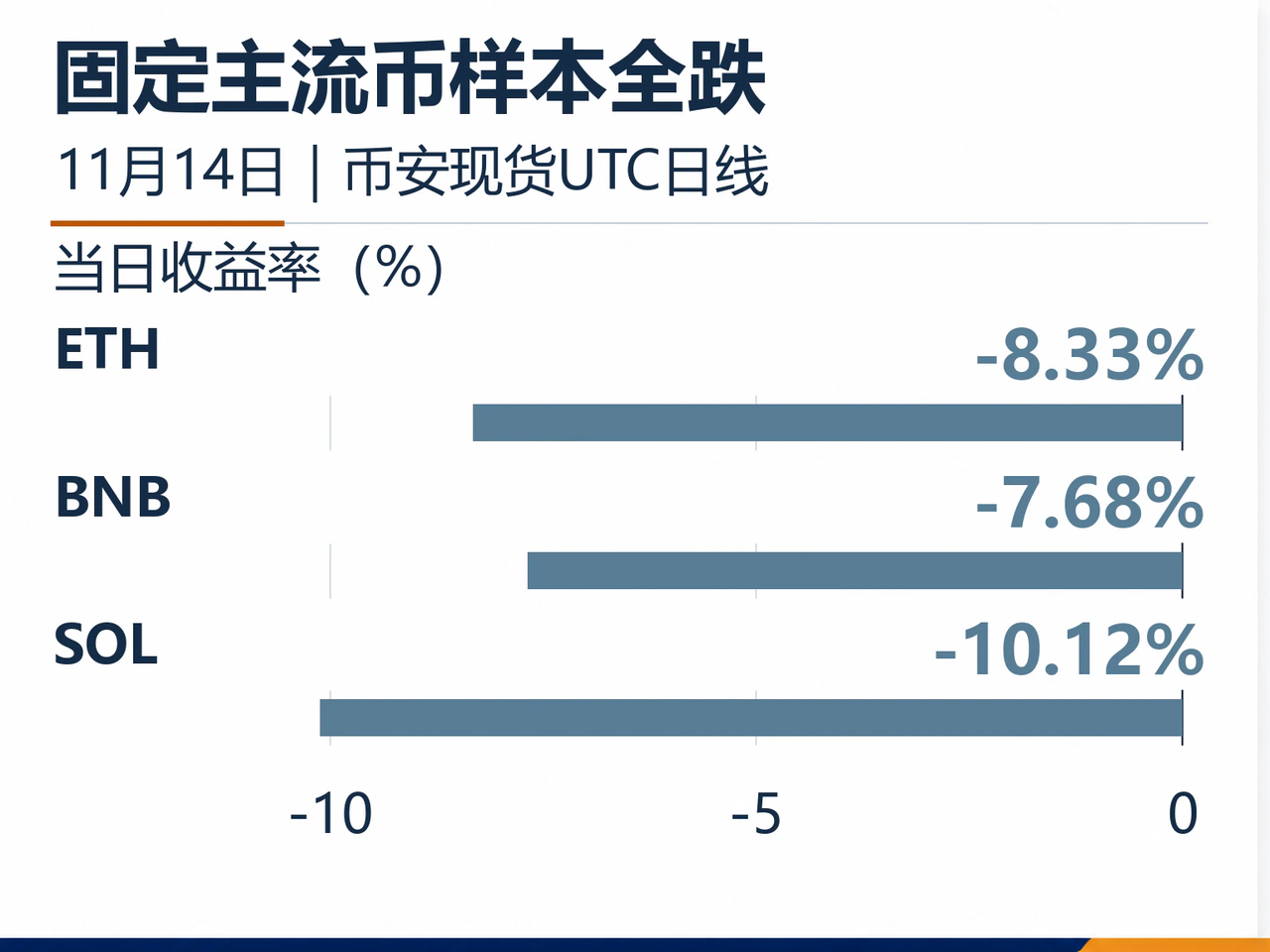
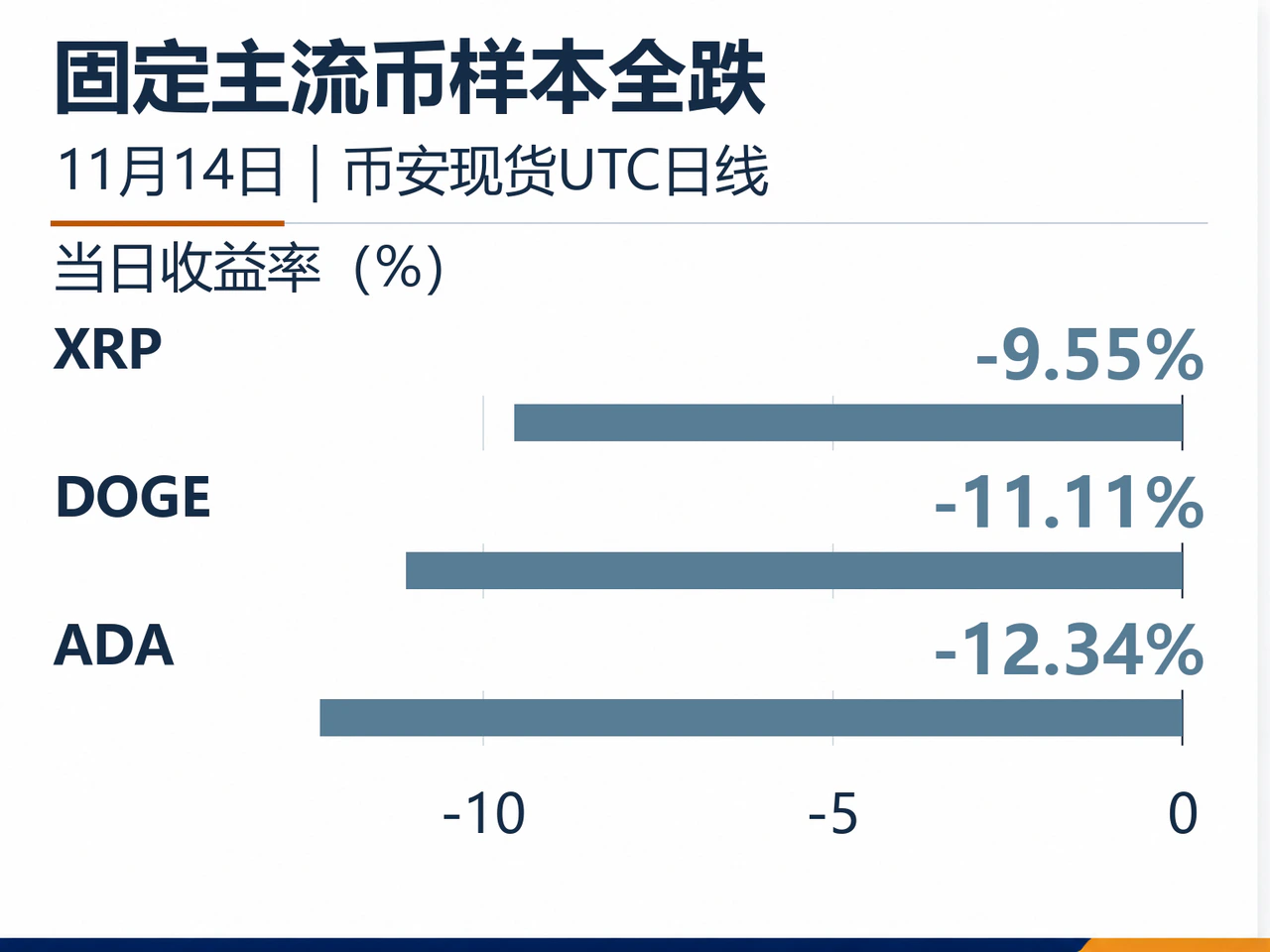
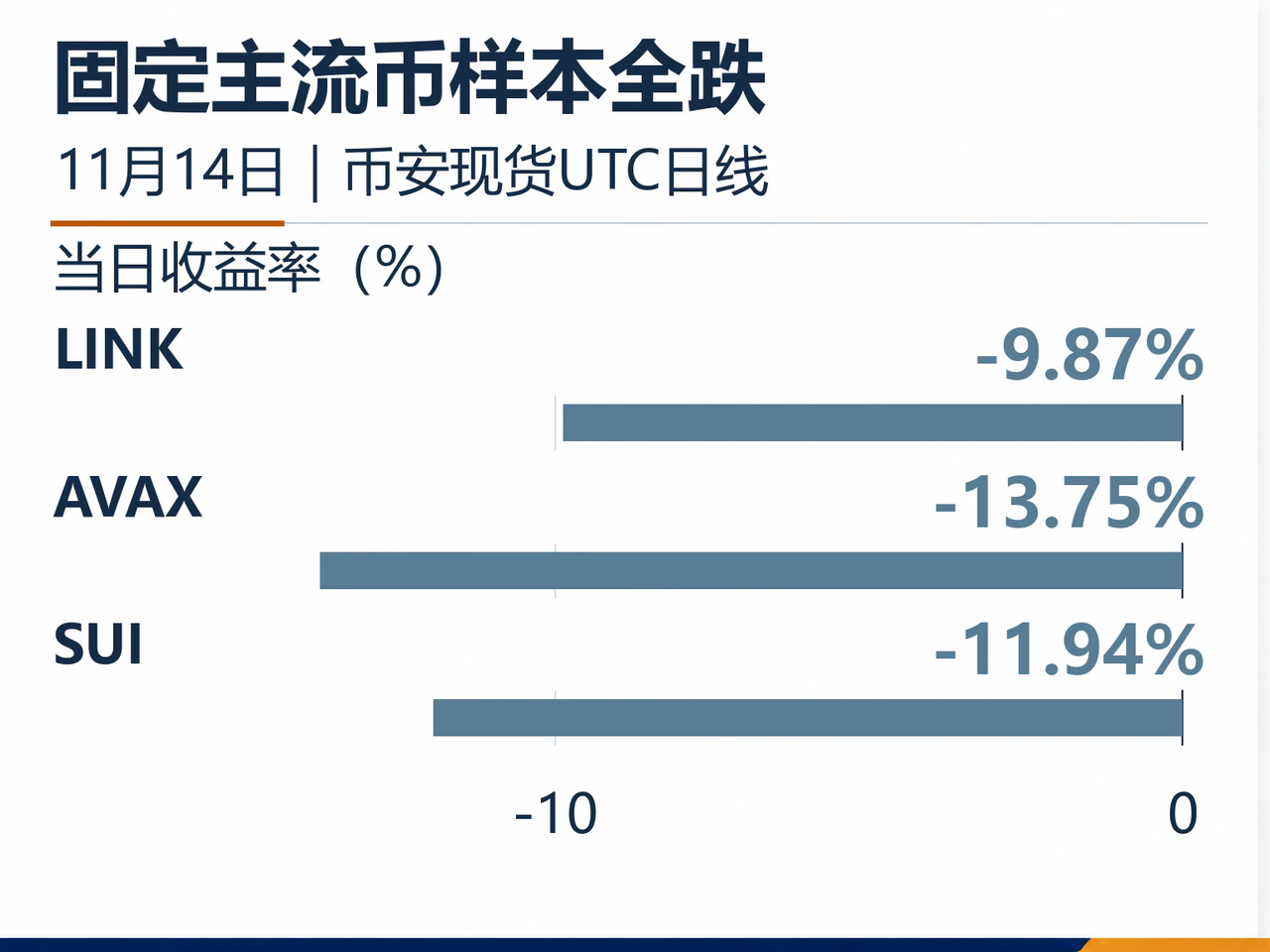
Calculated from their USDT closing prices at the same point in time, ETH/BTC fell to 0.02758, down 2.38% on the day and 6.60% over seven days. Over the past seven complete trading days, Bitcoin lost a cumulative 15.44% and Ether 21.03%. As investors reduced crypto risk, more volatile assets suffered greater price discounts. There was still no sign of capital rotating from Bitcoin into other major cryptocurrencies.
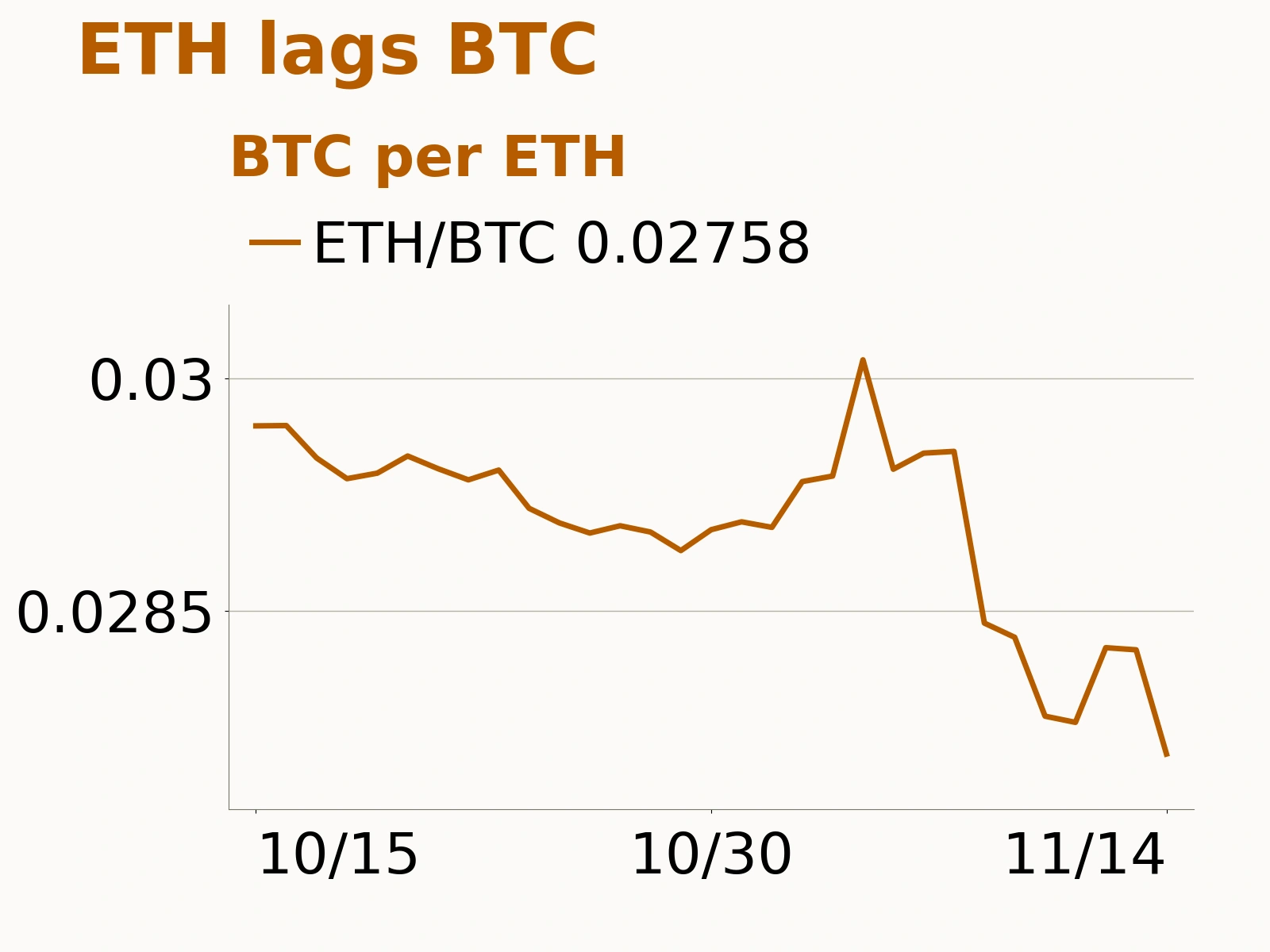
Assessing a broader recovery therefore requires more than watching for a one-day Bitcoin rebound. If a bounce is confined to Bitcoin while Ether's relative price and market breadth among major cryptocurrencies continue to weaken, asset allocation may still be in a de-risking phase.
Binance restores withdrawals on 87 networks this week; US spot Bitcoin ETFs record about $1.07 billion in weekly net outflows

The day's clearest operational progress came from Binance. Reuters reported on November 14 that Binance said it had reopened withdrawals on 87 networks during the week and was aiming to restore withdrawals for all remaining networks and assets by the end of the following week. The platform had been restoring operations in stages after the October 29 security incident. Restoration on 87 networks was completed progress; full restoration remained a company target.
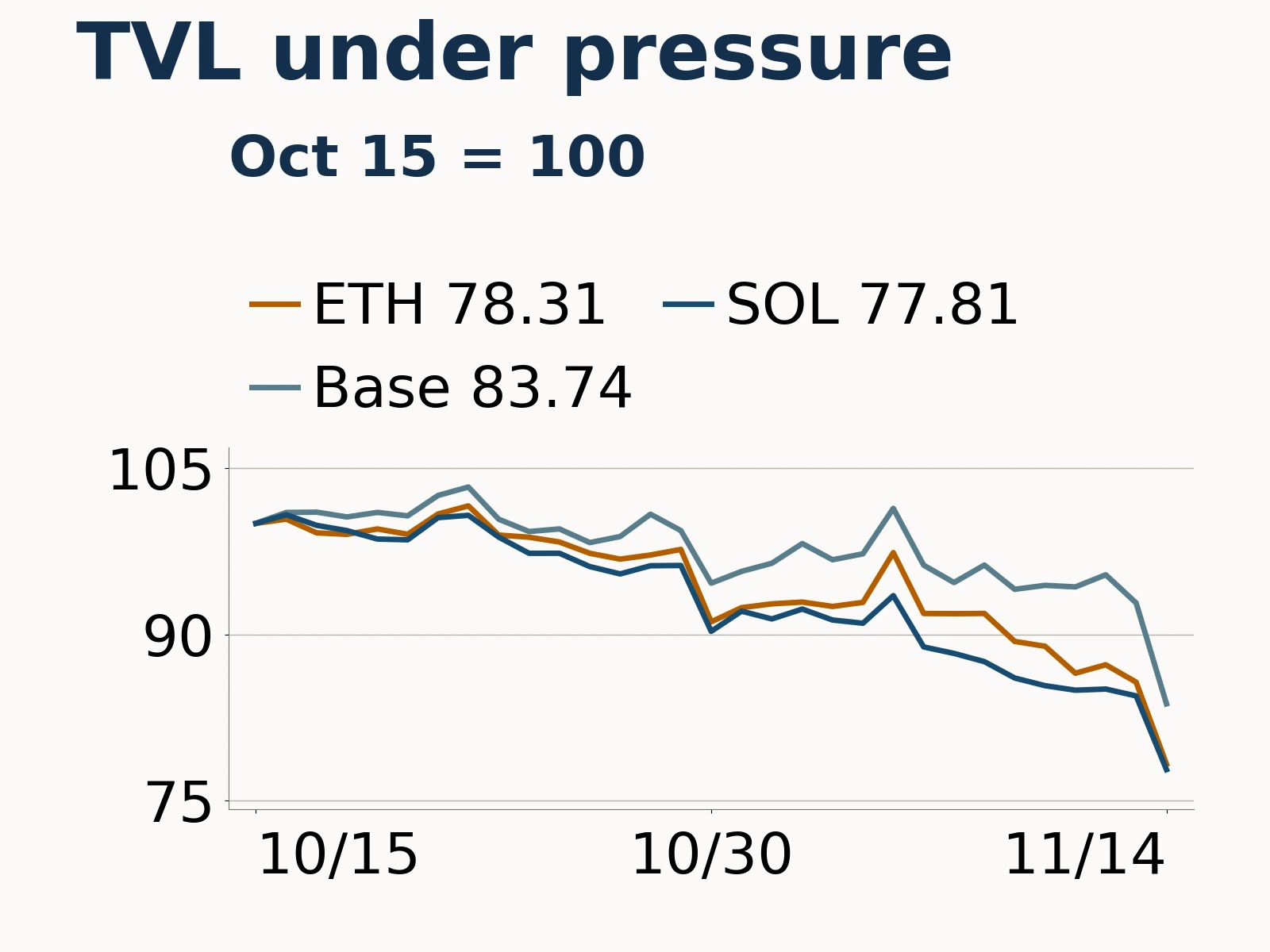
Restoring withdrawals first improves the channels for transferring assets and customers' assessments of platform operations and access to their funds. It may ease panic, while also making previously trapped assets transferable again. Whether customers subsequently keep holding, move assets elsewhere or sell will determine the actual effect of the restored withdrawal capacity on selling pressure. BNB fell 7.68% that day, while the fixed sample weakened broadly. The news is better understood in the context of weak market-wide demand than as evidence that price support had already emerged.
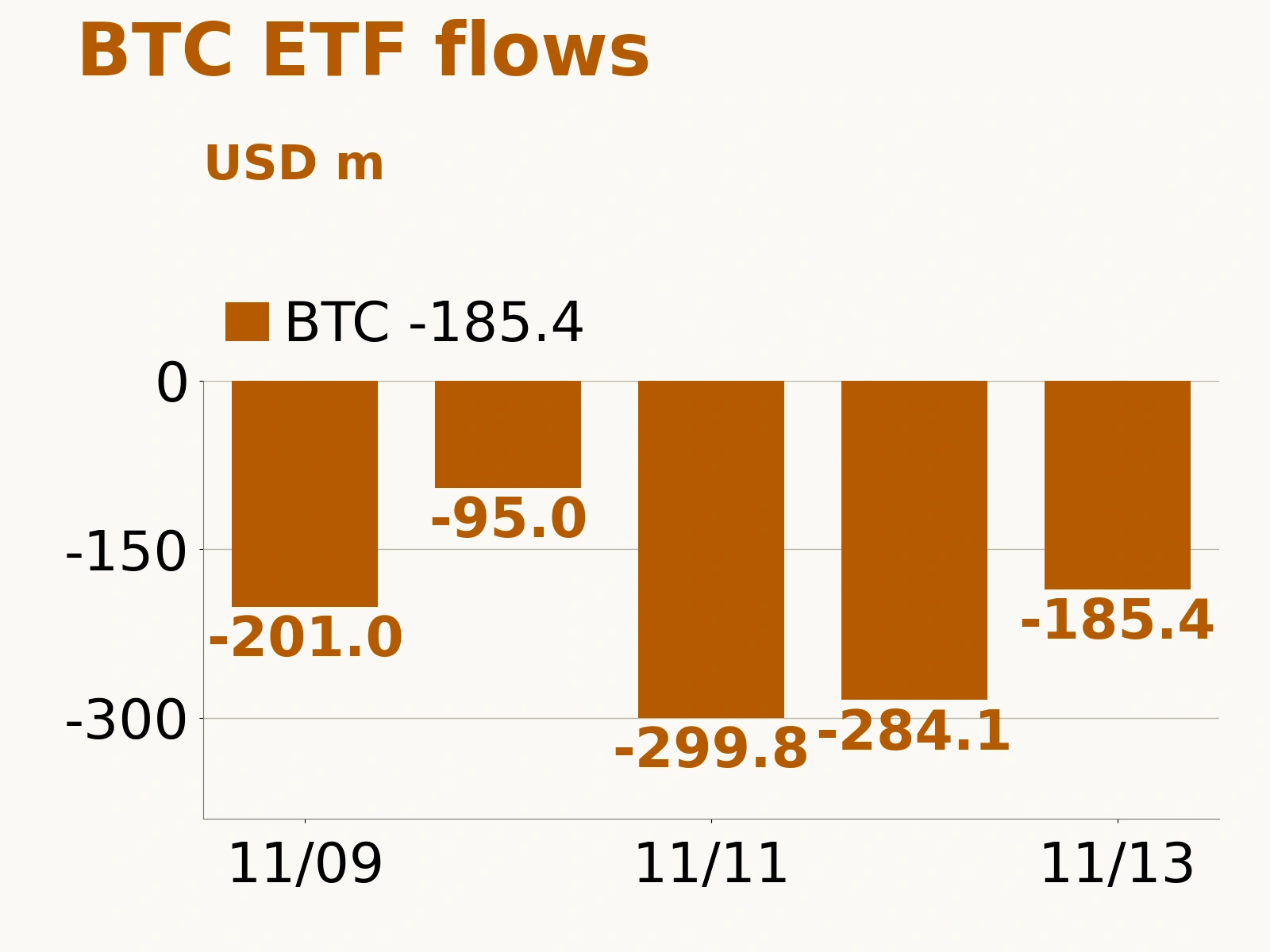
Investment demand remained weak. Citing SoSoValue data in a November 14 review, The Block reported that US spot Bitcoin ETFs recorded net outflows of about $1.07 billion in the week of November 9–13, their second consecutive week with net outflows above $1 billion. US ETFs do not have regular trading on Saturdays. These figures reflect flows over the preceding five trading days and show that the market's underlying buying support was already weak as it entered the weekend.
Macroeconomic and funding pressures that had built before the weekend also continued to feed through. In its November 13 weekly report, Coinbase Institutional argued that stronger-than-expected employment and inflation data had raised expectations of interest-rate hikes, contributing significantly to pressure during the week. Contracting stablecoin supply and ETF investor withdrawals, meanwhile, had weakened the crypto market's own purchasing power. These were conditions already in place before the weekend, rather than economic releases published on November 14. Against that backdrop, restoring operations at a single platform might not be enough to reverse the direction of asset allocation.
Lower prices may also trigger forced reductions in leveraged positions. CryptoSlate's reporting that day documented individual long liquidations on Binance and Bybit as Bitcoin broke below roughly $66000. Forced selling may amplify an existing decline, but these individual records cannot quantify full-day liquidations or establish liquidations as the initial trigger. Greater taker selling in spot markets, earlier outflows from investment allocations and forced deleveraging are three potentially reinforcing sources of pressure that need to be monitored separately.
Overall, the day's main development was a gradual recovery in platform operations without a corresponding recovery in market demand. To establish that buying support is becoming more durable, subsequent evidence would need to show whether taker-selling pressure eases during declines, whether Ether stops persistently weakening against Bitcoin, and whether redemption pressure subsides when US spot Bitcoin ETFs resume trading. Restored withdrawals or a single oversold bounce, by themselves, are insufficient to confirm those changes.
Click “Read the original” for the full details.