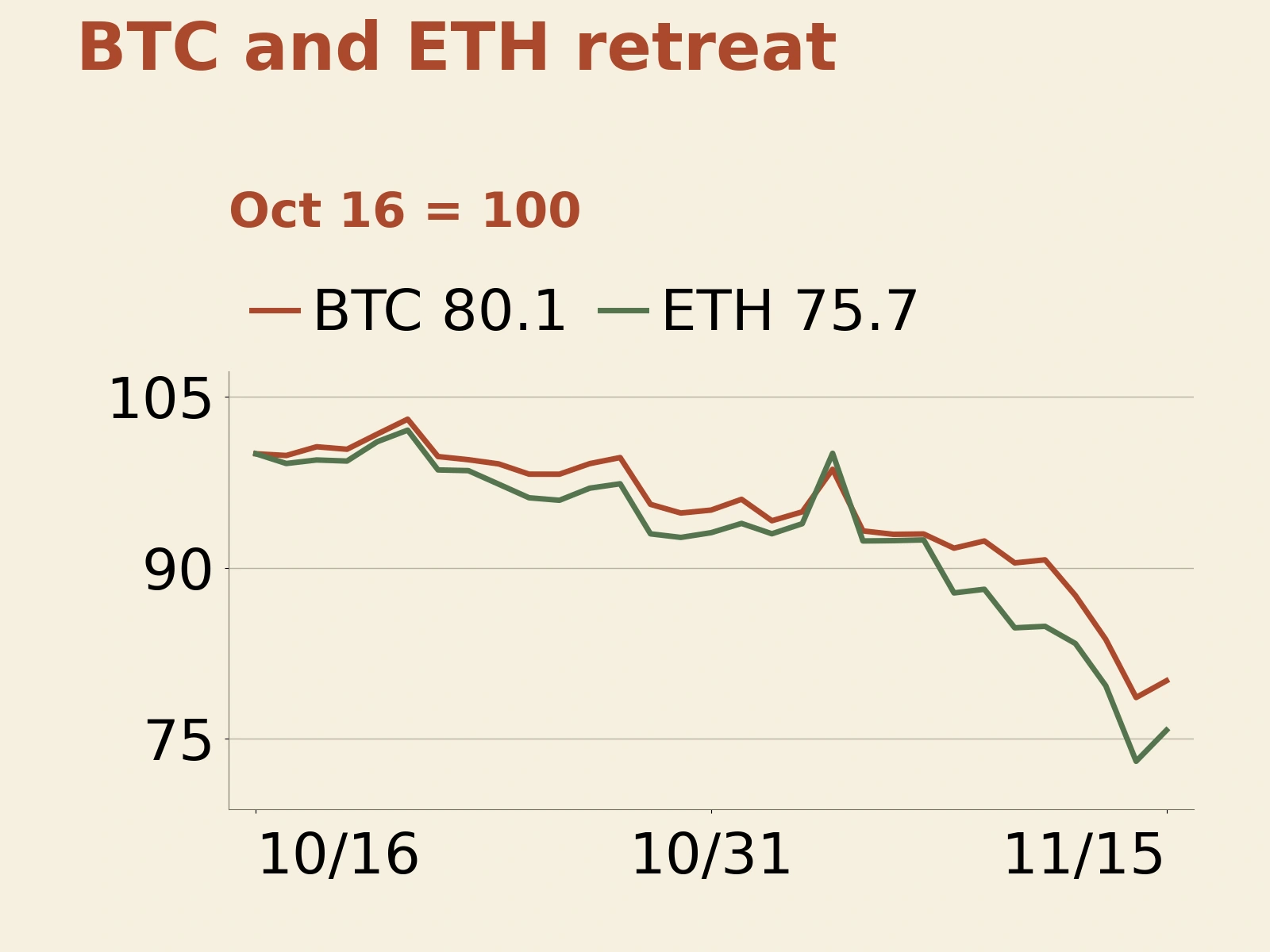
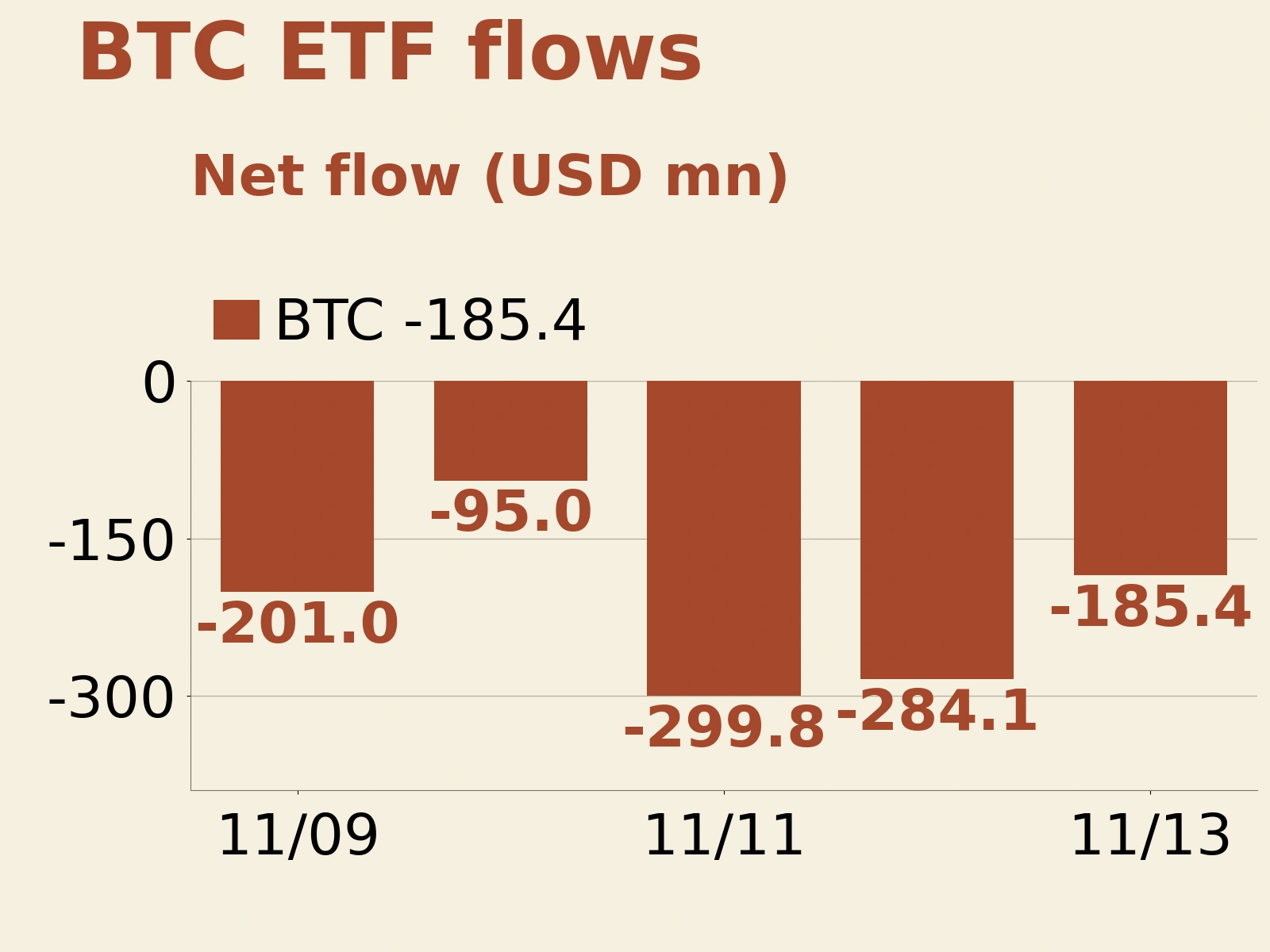
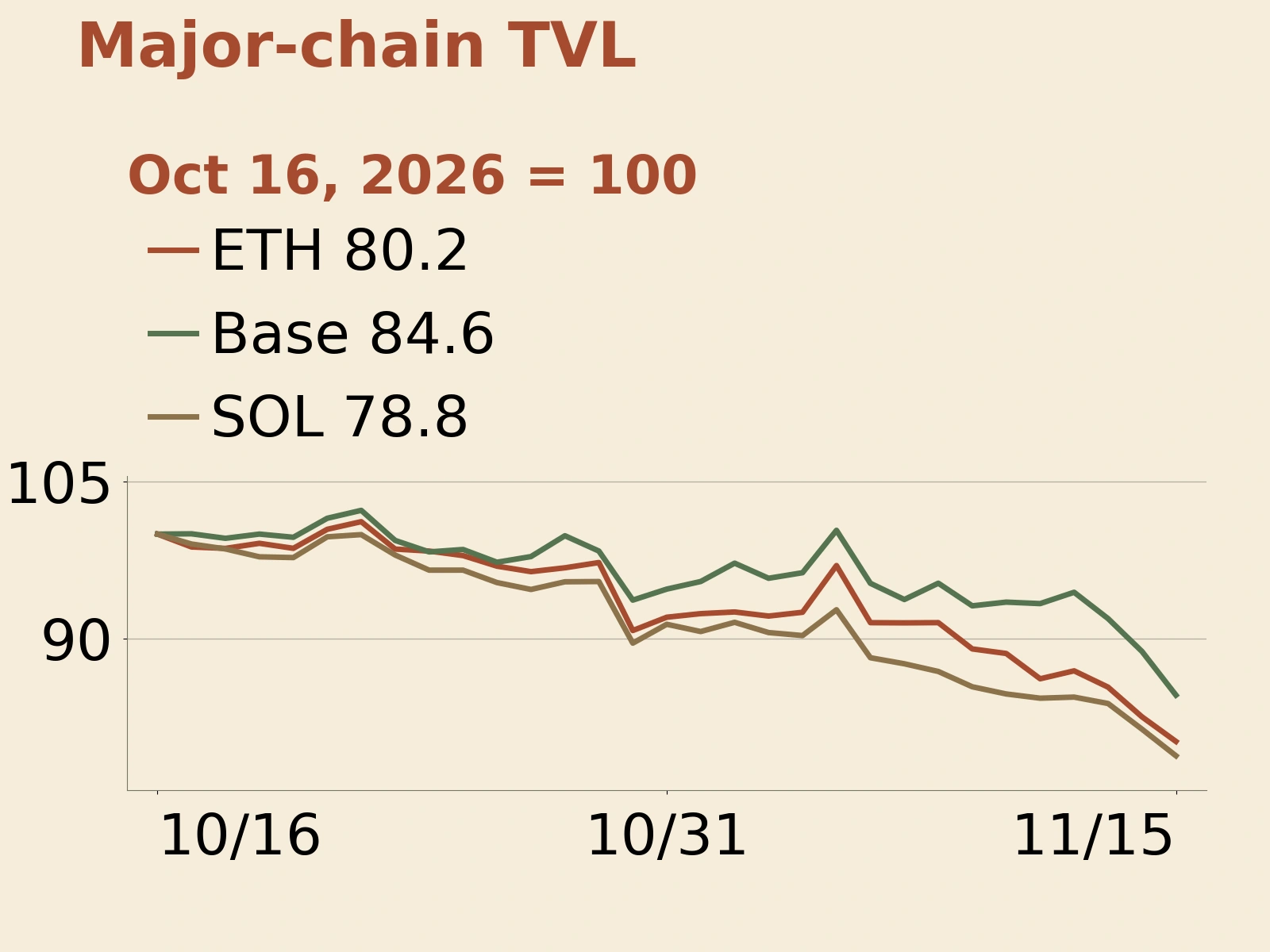
On November 11, 2026, Deutsche Bank announced that its digital asset custody service had opened to paying clients. Looking back at November 9–15, progress in institutions' entry into crypto markets was concentrated in operational functions such as wallet and private-key management, staking services and connections to settlement infrastructure; U.S. regulatory developments mainly involved studying rules and revising proposals. Service launches and the development of regulatory frameworks are advancing alongside each other, but at different stages.
Deutsche Bank opens custody to paying clients as institutional services extend to staking and settlement
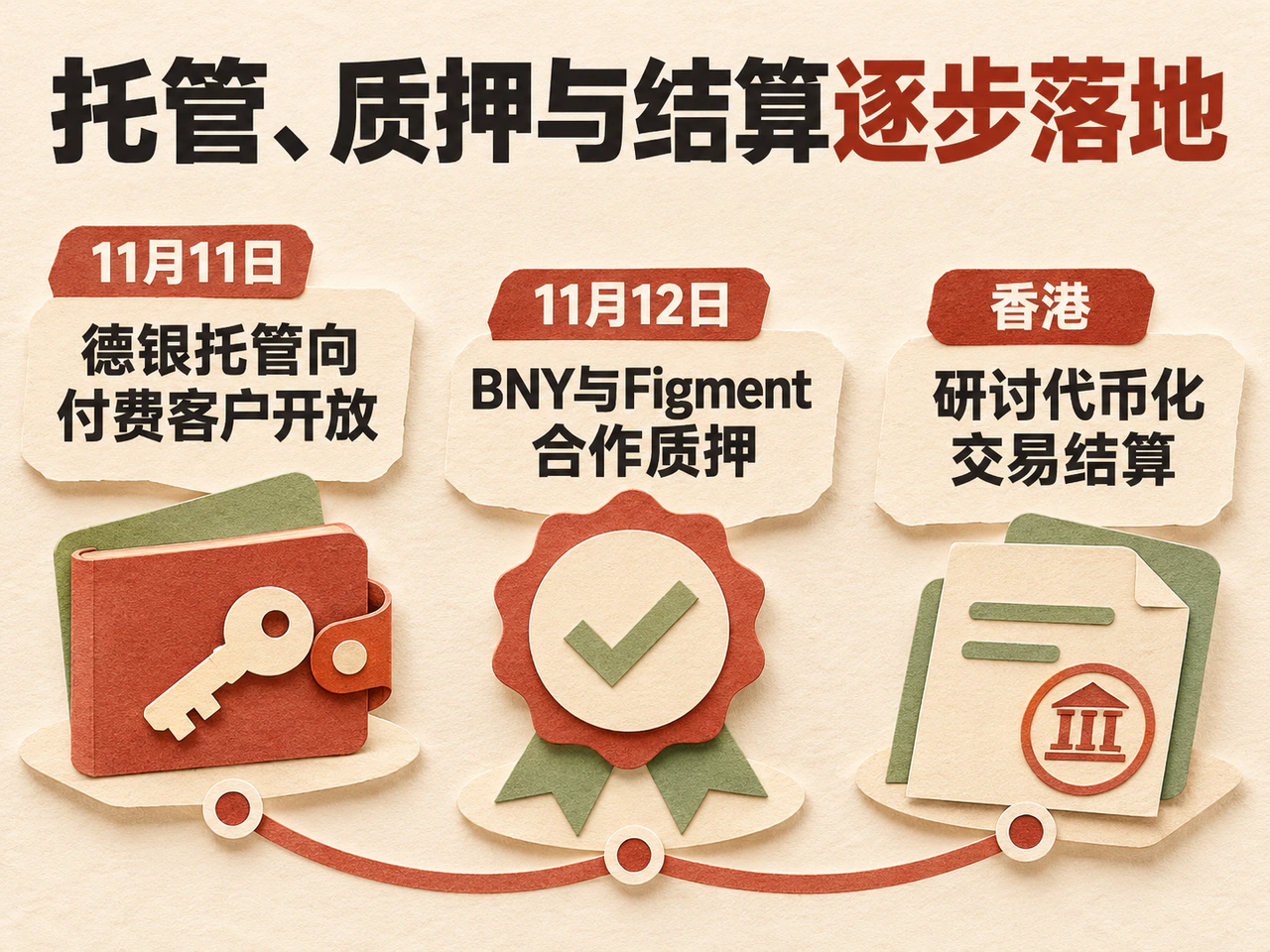
Deutsche Bank's launch follows through on plans announced in September. The bank's website confirms that the service has received approval from Germany's Federal Financial Supervisory Authority (BaFin). It initially serves corporate and institutional clients in Europe, supporting bitcoin, ether and stablecoins or e-money tokens including USDC, EURC and EURAU. The bank manages wallets and private keys on clients' behalf, with controls including segregation of duties, approval by multiple people, and hot and cold storage.
For institutional clients, the immediate change is the ability to bring digital asset safekeeping into an existing banking relationship, reducing the burden of building their own key-management systems and allowing them to use familiar organizational structures for client onboarding, operating permissions and risk management. Deutsche Bank also makes clear that tokenized financial instruments remain on its roadmap for later development, and that crypto assets do not receive the same deposit protection as eligible bank deposits. The service launched here focuses on safekeeping and transfer capabilities.
During the same week, custody services began to extend into the use of the assets held. On November 12, Figment announced a partnership with BNY to provide validator infrastructure for staking services on BNY's digital asset custody platform. Under the arrangements described in the announcement, eligible asset managers, ETF issuers, corporations and wealth managers will be able to stake supported assets through their existing custody services and manage on-chain rewards within established workflows. Institutions will still need to assess the liquidity, operational and slashing risks of staking; the announcement did not disclose the scale of client participation.
Hong Kong's focus this week was on connecting the funding and investment sides. In a disclosure on November 12, the Hong Kong Monetary Authority (HKMA) and the Securities and Futures Commission (SFC) said they had held an industry workshop the previous day to discuss using tokenized deposits in transactions involving tokenized investment products. This builds on the EnsembleTX upgrade announced on November 2: participating institutions can use tokenized central bank money for round-the-clock interbank settlement of tokenized deposits. The SFC had also previously approved round-the-clock secondary trading of tokenized money market funds.
If investment products can trade continuously while settlement funds remain constrained by traditional business hours, institutions need to set aside funds and bear the cost of waiting. Hong Kong is seeking to connect both trading and settlement, and the commercial value of that effort will depend on its ability to attract sustained trading and genuine funding demand. The HKMA's call this week to expand transaction volumes and add useful applications suggests that the next phase will place greater emphasis on actual usage.
CFTC studies retail crypto trading rules as FinCEN and the Federal Reserve withdraw an old proposal
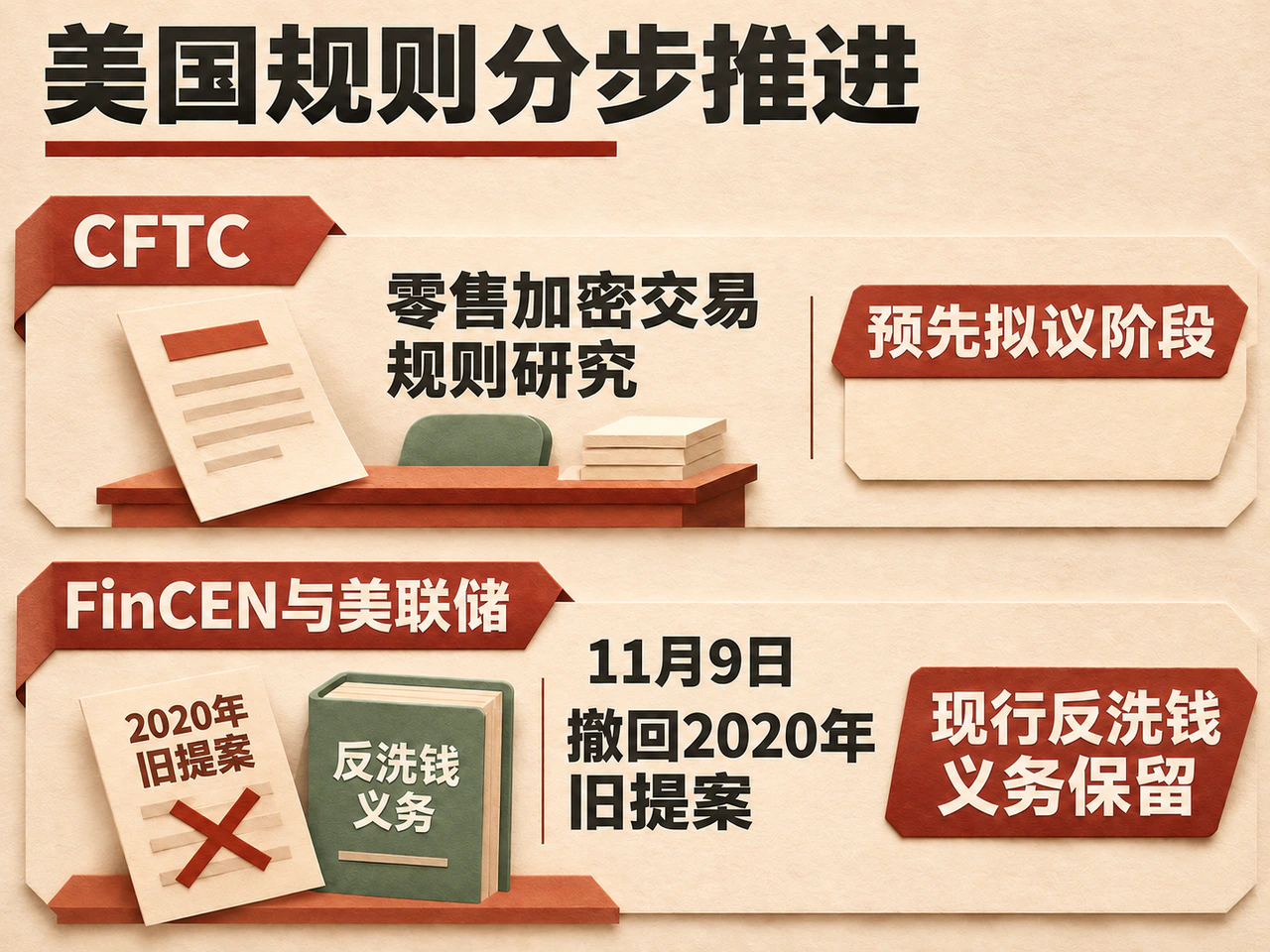
In a CNBC interview on November 13, CFTC Chairman Michael Selig said that major crypto trading platforms and new entrants had expressed interest in a federal regulatory framework. For firms, a single point of entry could reduce the complexity of state-by-state applications and compliance coordination; for regulators, a registration pathway could bring trading activity within market-conduct and customer-protection requirements.
This approach rests on the advance notice of proposed rulemaking issued by the CFTC on October 5. The document seeks comment on how to develop applicable rules for retail crypto commodity transactions involving margin, leverage or financing, and on establishing a dedicated “crypto asset market” registration subcategory. The notice makes clear that feedback will inform potential future rulemaking. The new information this week was the chairman's account of market interest and the direction of implementation; a complete framework still needs to go through the rulemaking process. Firms preparing products on that basis remain at a different stage from receiving final authorization and formally conducting business.
Another change concerned the anti-money-laundering rulemaking process. The Federal Register published on November 9 confirmed that FinCEN and the Federal Reserve had withdrawn their joint proposal from 2020. That proposal would have lowered the recordkeeping and information-transmittal threshold for certain cross-border transfers from $3,000 to $250 and further clarified the scope of its application to transactions involving convertible virtual currencies and other instruments.
Following the withdrawal, the old proposal will no longer proceed directly to a final rule through its original process. The two agencies explained that the industry and legal framework had changed significantly over more than five years, and that similar revisions should be put out for public comment again. Existing recordkeeping and Travel Rule obligations remain in force, and institutions must continue to meet the corresponding anti-money-laundering responsibilities.
This week's progress was mainly operational: a bank began providing custody to paying clients, a custody platform connected to staking infrastructure, and Hong Kong advanced efforts to link trading in tokenized investment products with the settlement of funds. U.S. regulation, meanwhile, remained at the stage of studying rules or revising proposals. To assess subsequent progress in frameworks and business activity, it will be useful to track separately whether rules are finalized, services actually open, and clients continue to use them. Actual adoption will determine whether these arrangements can gradually develop into stable financial businesses.
Click “Read the original” for further details.