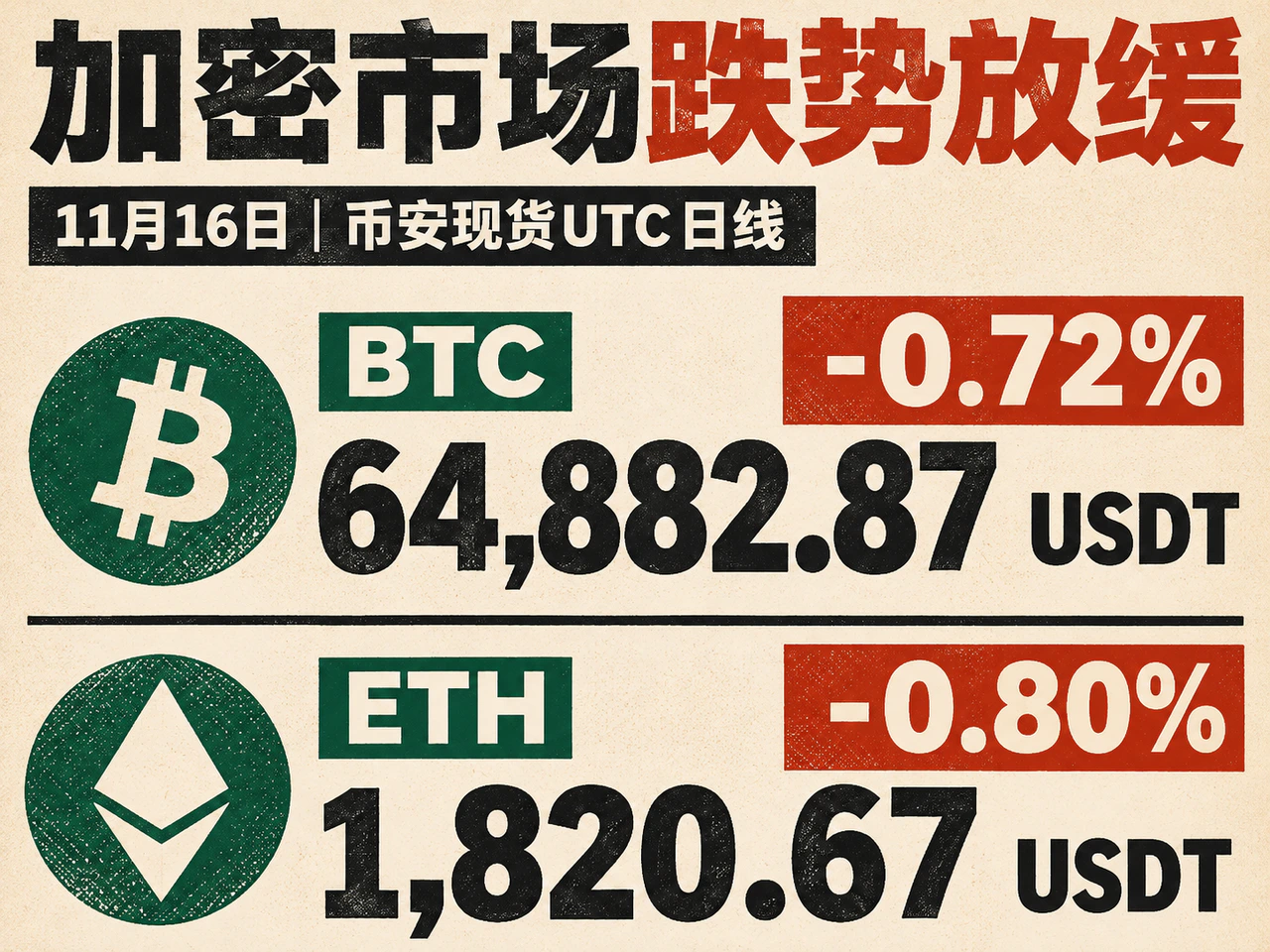
On November 16, 2026, Bitcoin fluctuated around 65,000 USDT on the first trading day after the weekend selloff. Losses in major cryptocurrencies narrowed, but the market had yet to stage a broad recovery. On Binance spot USDT daily candles measured in UTC, which closed at 8 a.m. Beijing time on November 17, Bitcoin finished at 64,882.87 USDT, down 0.72% from the previous day; Ether closed at 1,820.67 USDT, down 0.80%. As technology stocks remained under pressure, the crypto decline temporarily slowed, shifting attention from whether forced selling was subsiding to whether spot demand could provide sustained support.
Bitcoin closes down 0.72%; all ten sampled cryptocurrencies decline

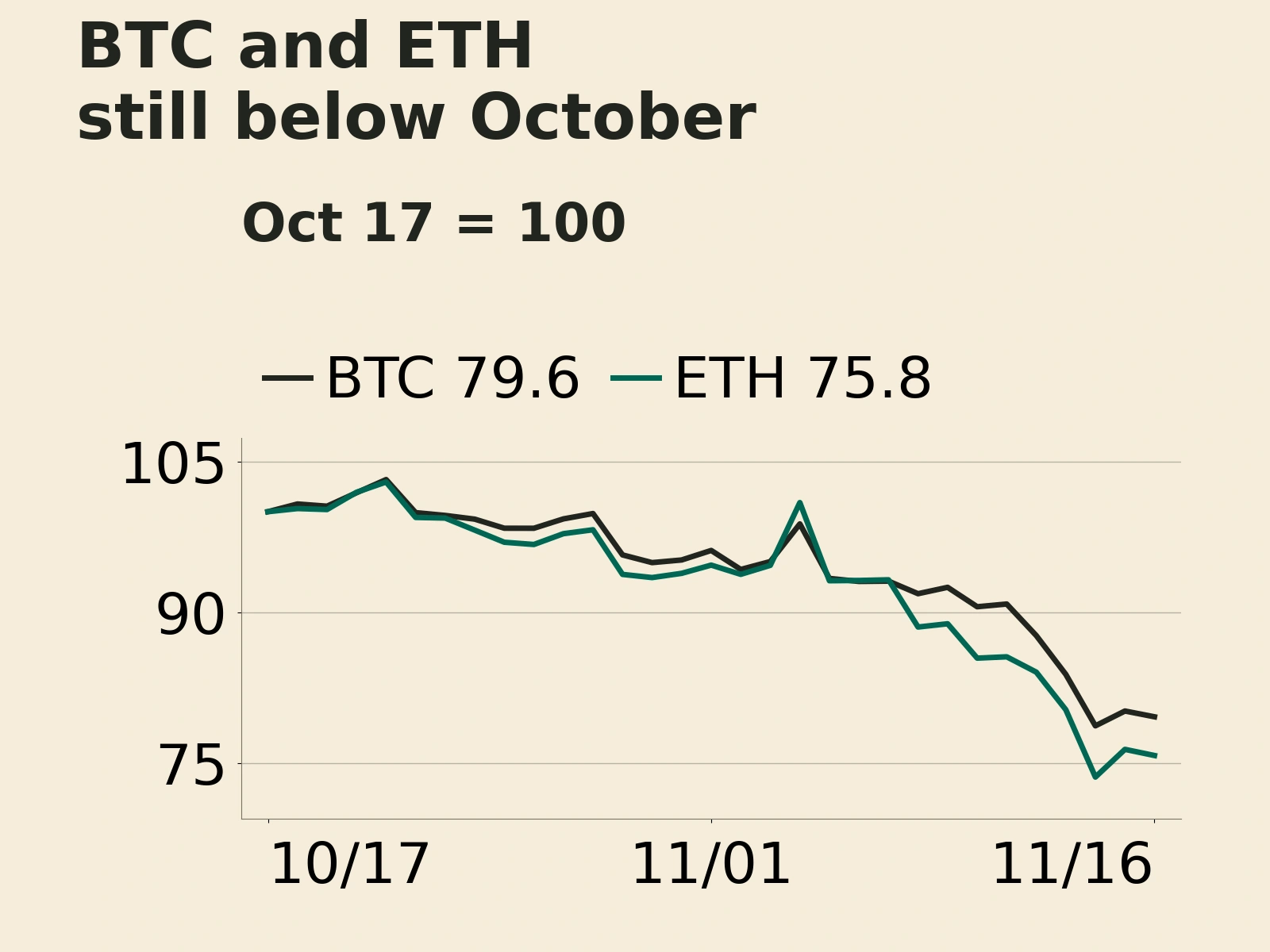
Bitcoin reached an intraday high of 65,696.16 USDT and a low of 63,905.01 USDT. It closed below its opening price and failed to hold 65,000 USDT. The previous day, it had recovered after touching 62,006 USDT; Monday did not bring selling on the same scale. Over the past seven complete trading days, Bitcoin fell a cumulative 13.91% and Ether lost 14.73%. After such a substantial correction, a daily loss of less than 1% primarily signals a slower decline. Prices remain in the early stages of repairing the damage near their lows.
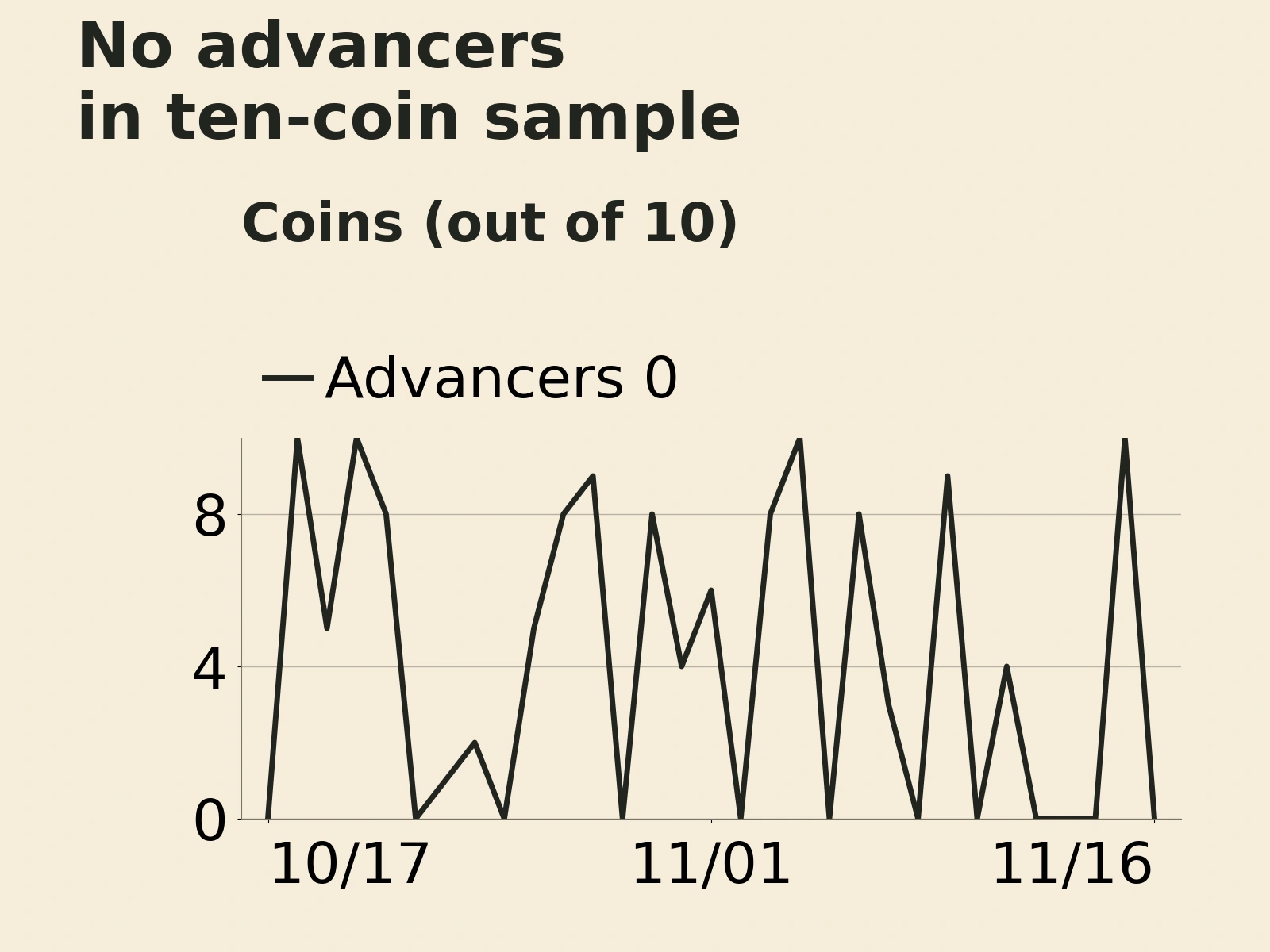
Weakness remained widespread across the sample. All ten cryptocurrencies in the predetermined Binance spot USDT sample—Bitcoin, Ether, BNB, SOL, XRP, DOGE, ADA, LINK, AVAX and SUI—fell on the day. SOL closed at 71.58 USDT, down 1.64%; XRP lost 1.94%; and AVAX and SUI fell 2.61% and 2.39%, respectively. Bitcoin and Ether were relatively resilient, with risk appetite yet to spread to other major tokens.
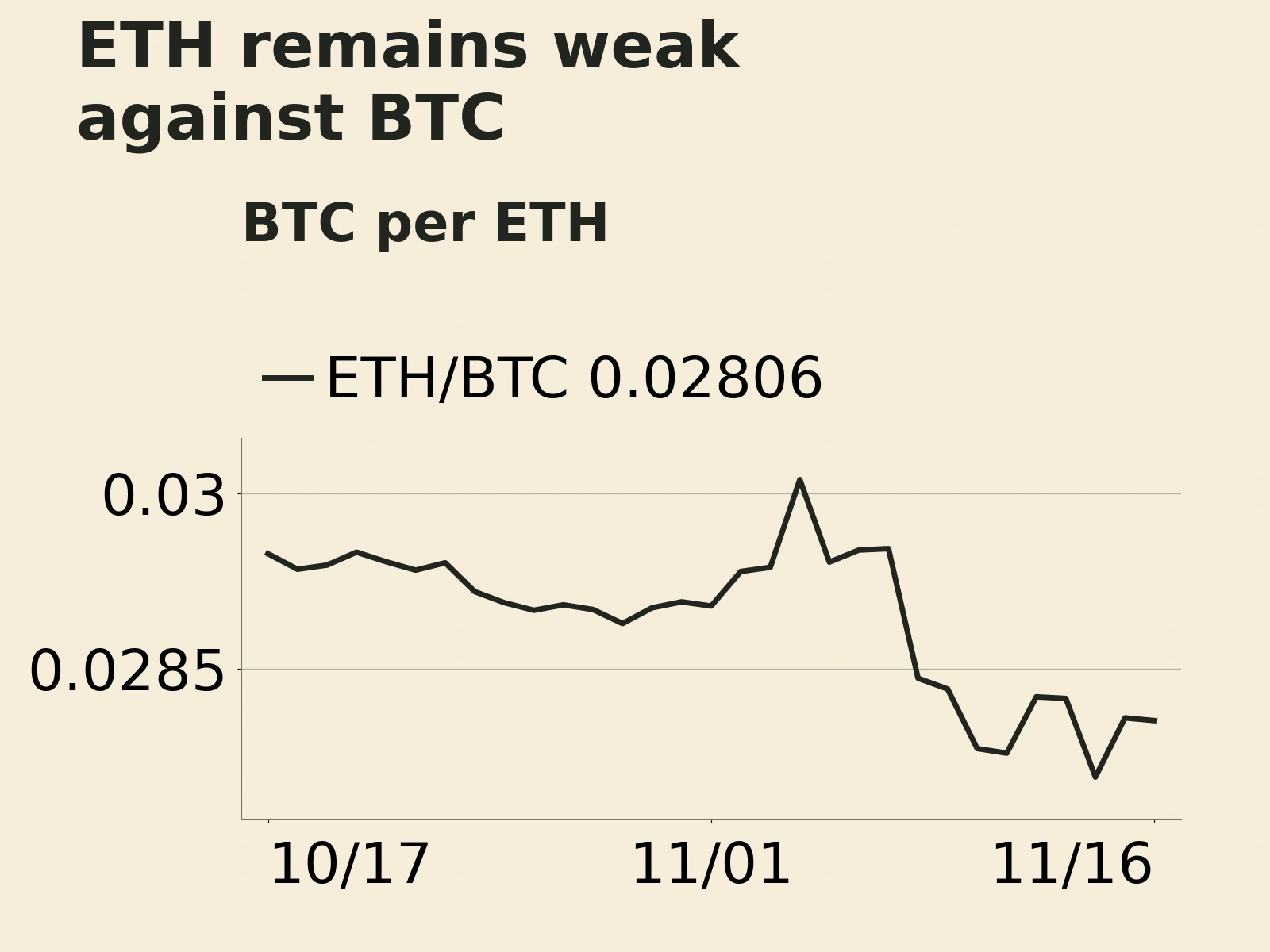
Calculated from their spot closing prices, the ETH/BTC ratio stood at 0.02806, down 0.08% on the day and 4.83% over the past 30 days. Despite long-term themes supporting Ethereum, including corporate accumulation and asset tokenization, the market currently assigns greater relative price resilience to Bitcoin. Assessing the quality of a rebound therefore requires watching participation among major cryptocurrencies and ETH performance relative to BTC alongside the Bitcoin price.
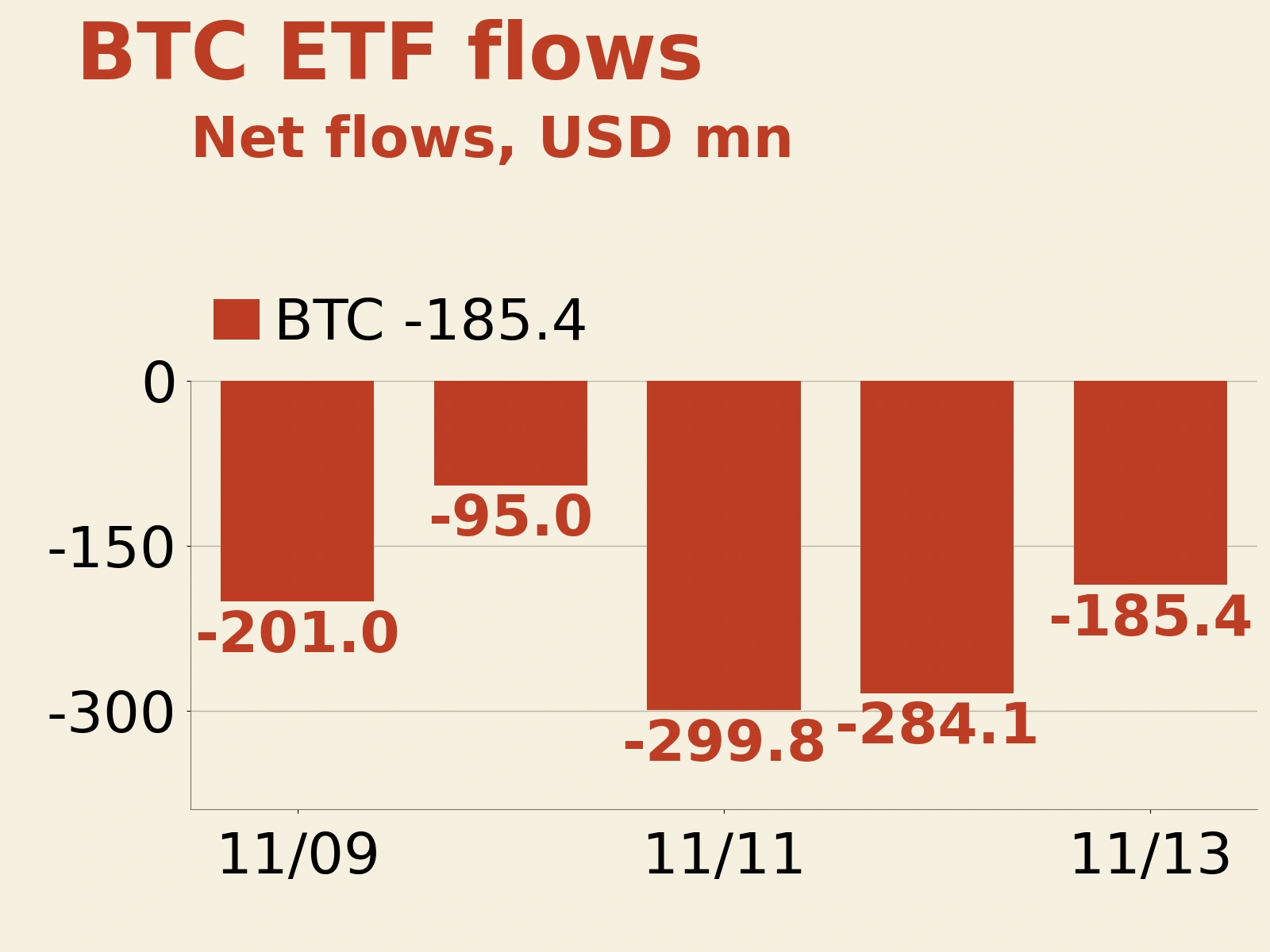
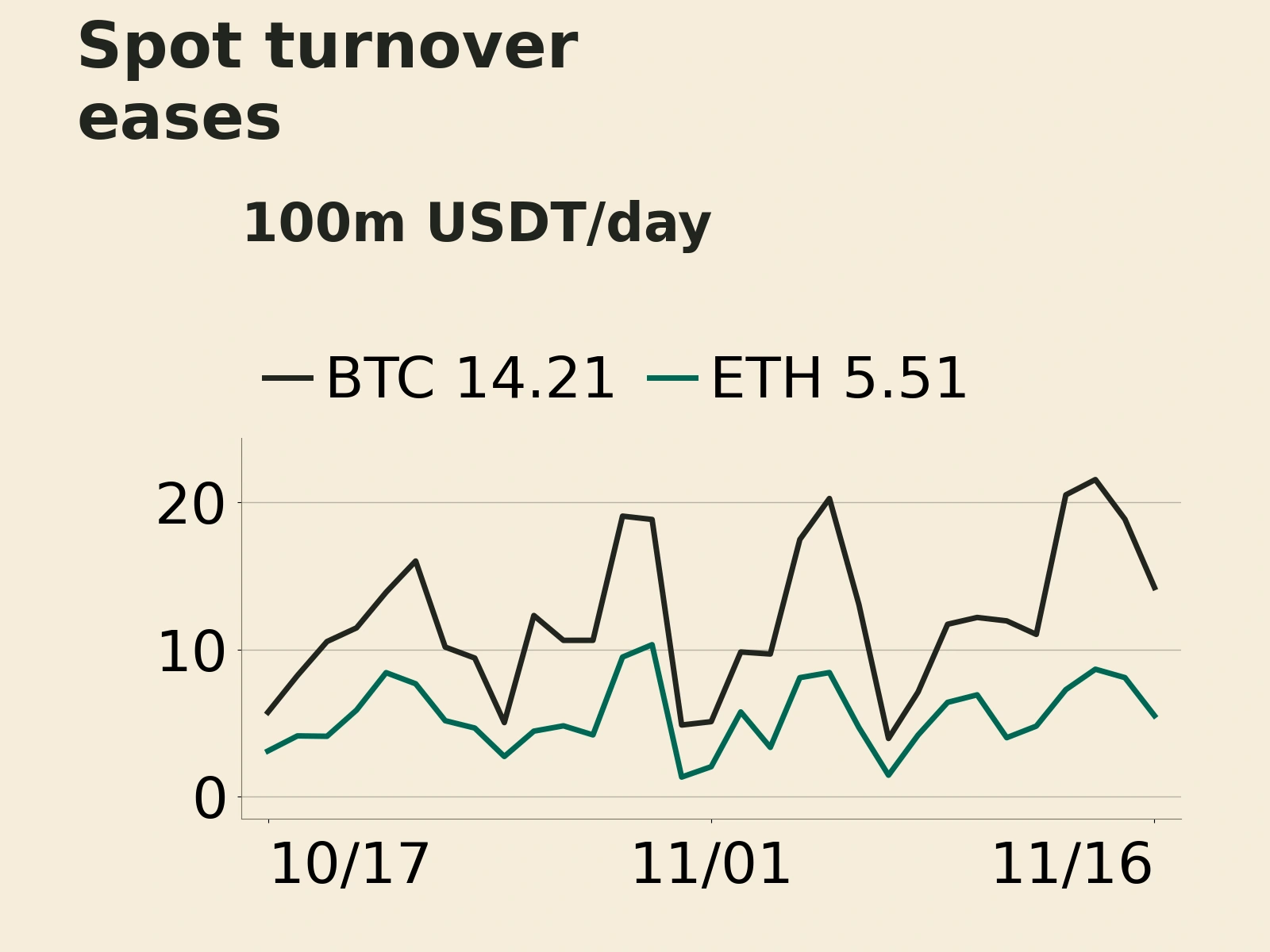
Trading activity also cooled. Bitcoin spot turnover totaled 1.421 billion USDT, down 24.60% from the previous day; Ether turnover was 551 million USDT, down 31.94%. Bitcoin turnover nevertheless remained 18.06% above its preceding 30-day average, while Ether was close to that average. Trading intensity has thus eased from the selloff phase without grinding to a halt. Narrower price losses alongside lower turnover are more consistent with a temporary easing of selling pressure. A sustained advance will require buyers to keep transacting at higher prices.
The weekend liquidity and leverage structure helps explain why the earlier decline was amplified. CNBC traced the transmission of several consecutive days of long liquidations: once prices broke key levels, undercollateralized positions were forced to sell at market prices, pushing prices lower and triggering further liquidations. In public commentary on November 16, 10x Research attributed the weekend decline to clustered stop-loss orders and emphasized constraints on professional investors replenishing fiat margin over the weekend. Both explanations point to the amplifying effects of liquidity and leverage. An easing of forced selling can give prices temporary breathing room; a new uptrend still depends on sustained discretionary buying.
Tech stocks fall and funding constraints persist; corporate purchases provide pockets of support
US technology stocks fell again on November 16. CoinDesk reported that evening that the Nasdaq index was down about 2.5%, Nvidia and Google were down roughly 4%, and the semiconductor ETF had fallen 5.4%. Investors were awaiting Nvidia earnings and assessing changes in AI investment and financing arrangements. Crypto assets and technology shares are both affected by adjustments in investor risk tolerance and cash allocation. Equity-market pressure can reach crypto through portfolio reductions, margin requirements and risk limits.
Attributing the entire correction to falling AI stocks also fails to explain the earlier relative weakness of crypto assets. In research dated November 13, Coinbase Institutional noted that semiconductor shares and the Nasdaq 100 had rebounded at one point in early November while Bitcoin continued to fall. The report identified higher interest-rate expectations and a contraction in the supply of crypto funding as more important constraints. Its analysis describes the backdrop last week: higher external financing costs increase the opportunity cost of holding assets that generate no income, while a shrinking internal pool of crypto capital makes it harder for existing holders to attract enough new buying through narratives alone.
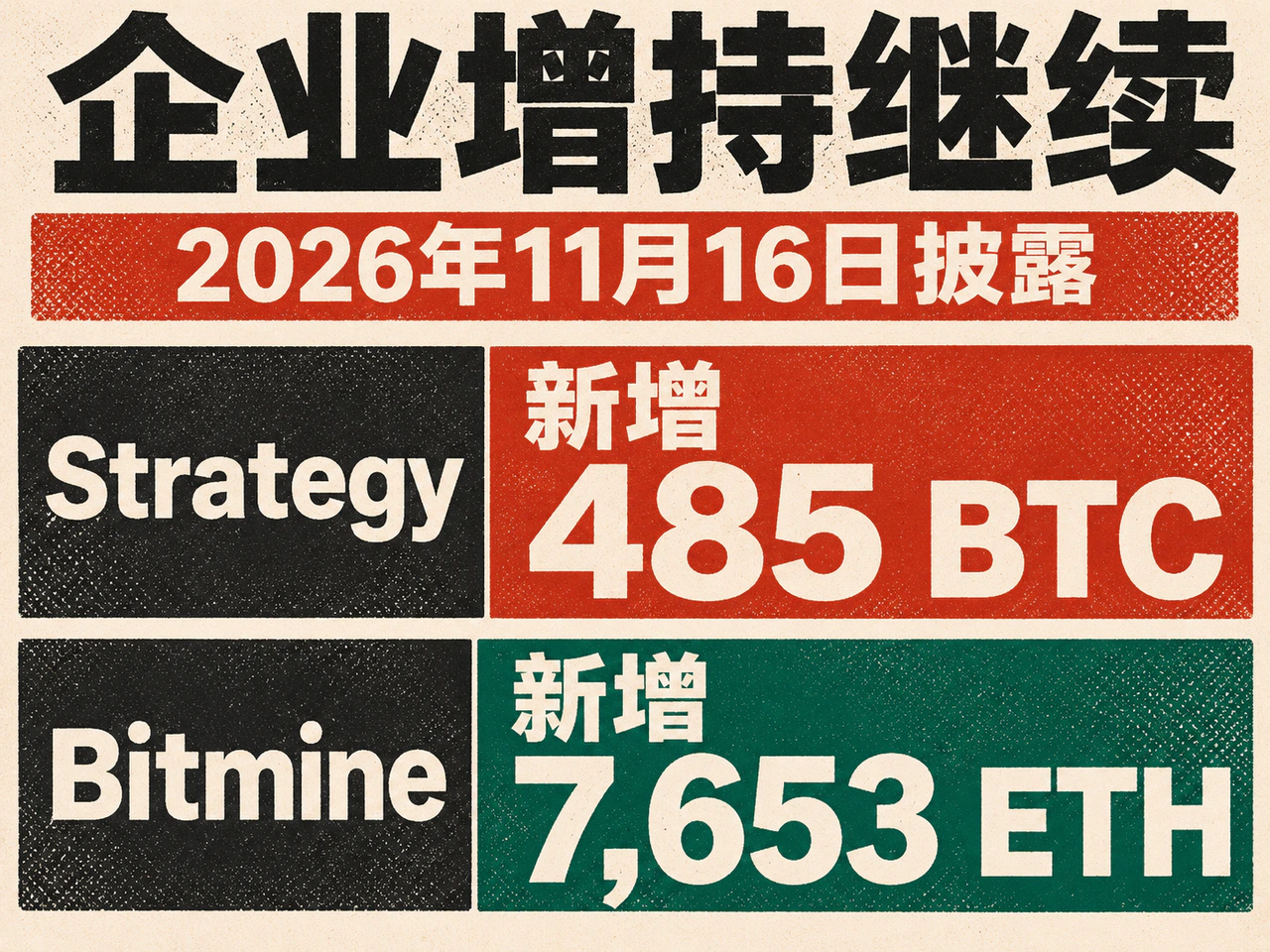
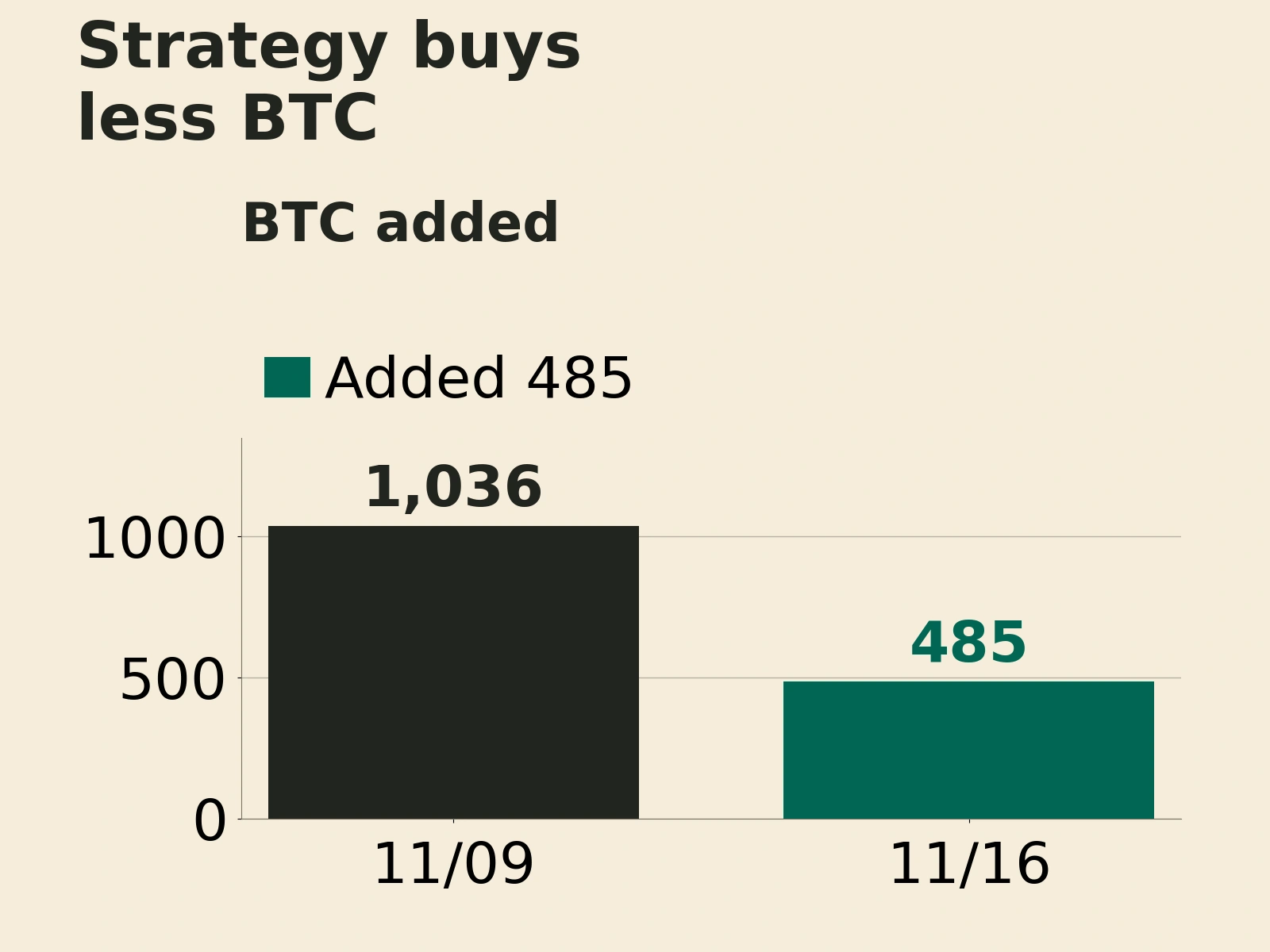
Corporate purchase announcements, meanwhile, show that pockets of demand remain. On November 16, Strategy announced the addition of 485 BTC and the repurchase of approximately $228 million of STRC preferred stock; a week earlier, it had announced the addition of 1,036 BTC. The company continues to accumulate Bitcoin, but the purchase was smaller than the previous one, with some funds also devoted to managing its capital structure. The announcement confirms continued buying, rather than an increase in its intensity. How much new funding translates into spot demand remains to be seen.
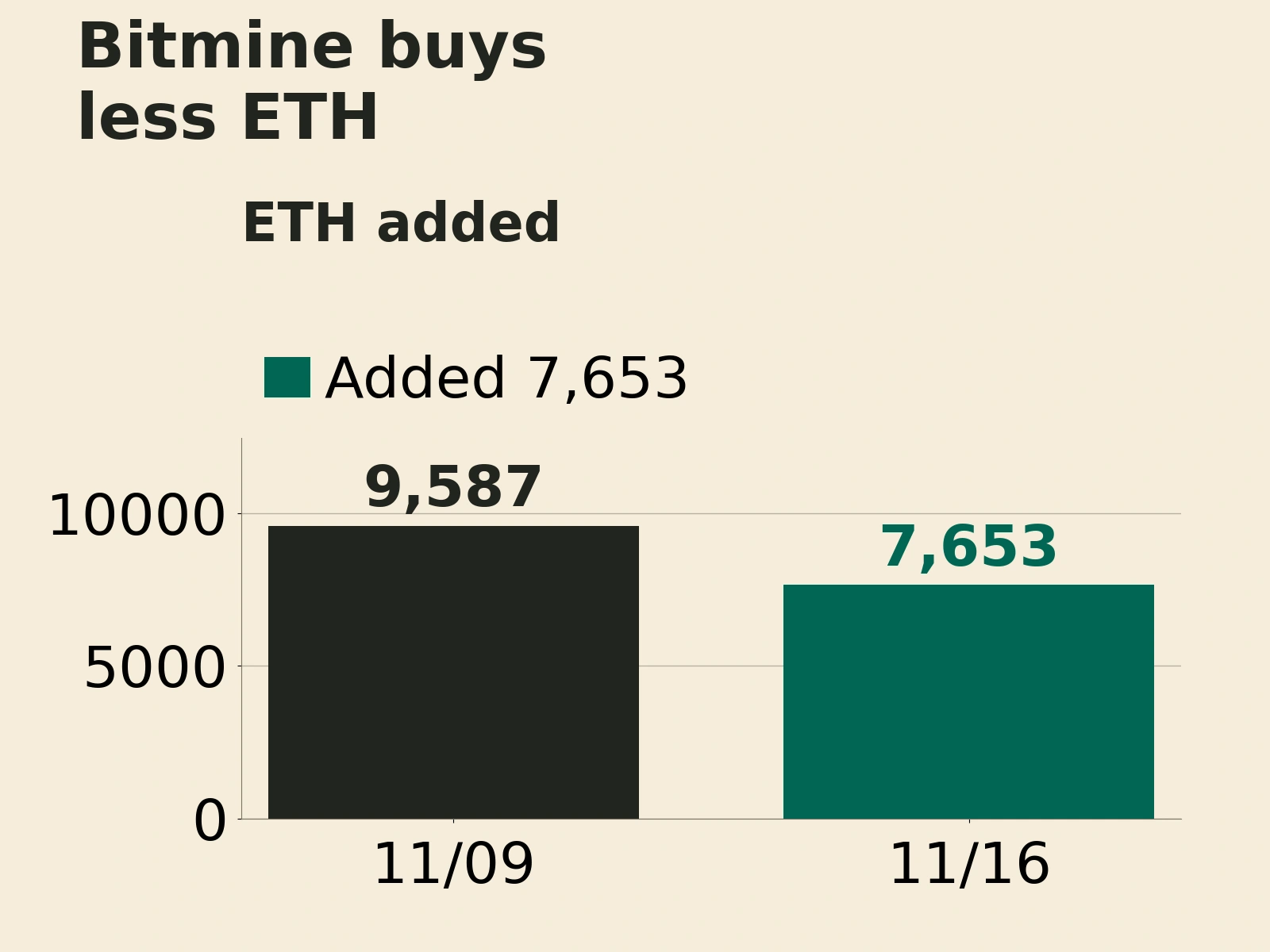
Bitmine disclosed on the same day that it had added 7,653 ETH over the past week. Its chairman, Tom Lee, suggested that Nvidia-related volatility and investors raising cash for the anticipated Anthropic IPO could be weighing on ETH. This management explanation connects ETH performance with volatility in external assets and demand for cash, and shows that market participants are assessing crypto assets within a broader competition for capital. Companies maintaining long-term crypto allocations can provide pockets of buying support; a market-wide recovery still requires more diverse and continuous sources of demand.
Long-term holder behavior is also open to different interpretations. CoinDesk cited VanEck research head Matthew Sigel as saying that shrinkage in some coin-age cohorts could reflect coins naturally aging into the next cohort rather than being sold, and that long-term holders had not capitulated broadly. Under this interpretation, the market retains a stable base of holders. Stable holding and incremental buying play different roles: the former reduces supply pressure, while the latter drives sustained price recovery.
Monday’s market can be characterized as a pause in the steep decline, with major tokens still broadly closing lower, corporate accumulation continuing and external market pressure unresolved. Any subsequent recovery would be more convincing if accompanied by expanding spot turnover, strength in more major cryptocurrencies and stabilization of ETH relative to BTC. For now, the market appears closer to searching for equilibrium after forced selling has run its course; the rebuilding of demand remains incomplete.
Click “Read the original” for further details.