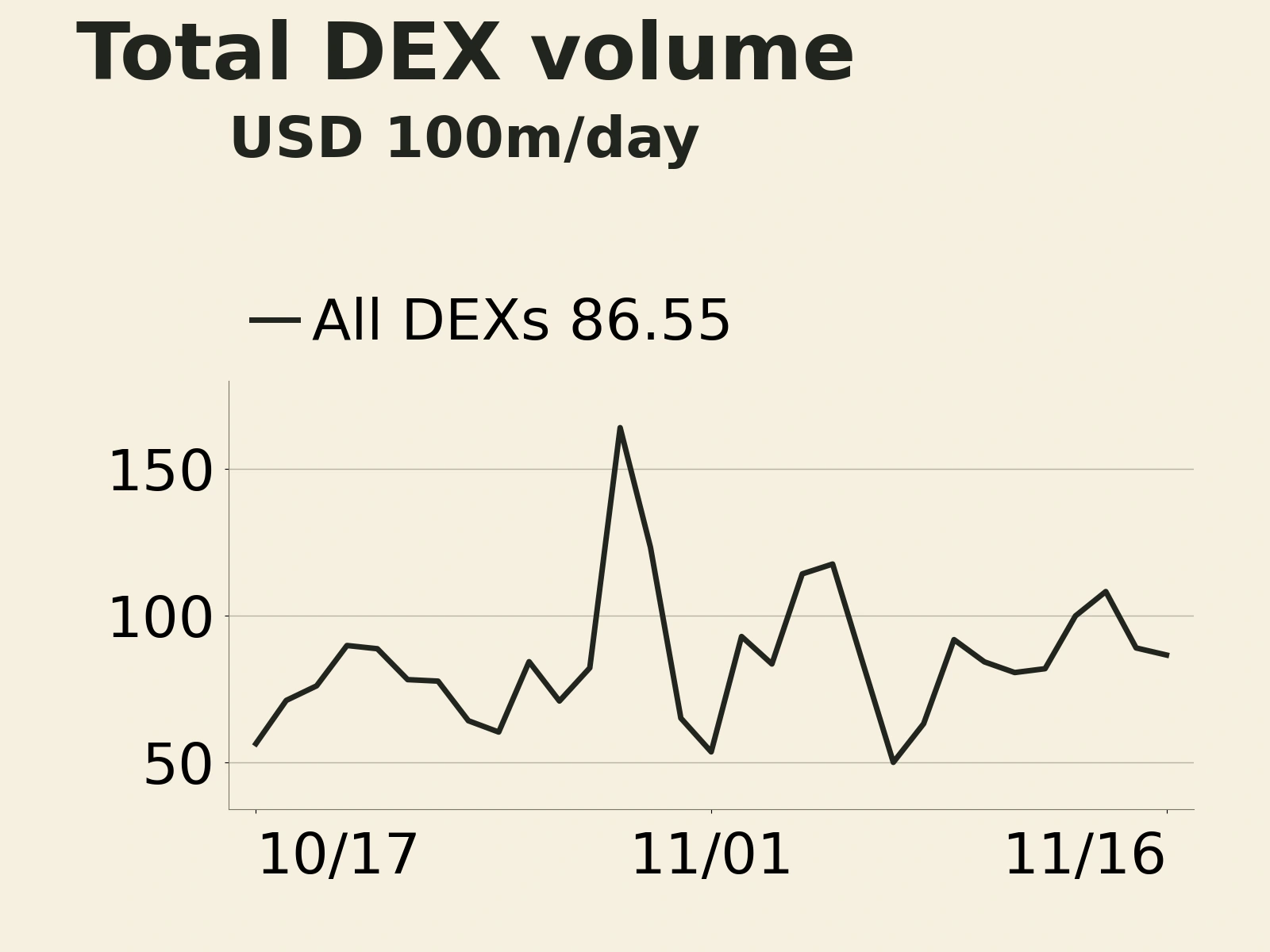
On November 16, 2026, CoW Swap launched an alpha version of native trading on Solana, with Kamino Swap integrating it on day one. The launch did not coincide with a broad increase in on-chain trading: daily DEX spot volume fell 2.72%, while Solana volume rose 3.25%. As trading activity diverges and applications expand, competition among trading platforms is increasingly focused on execution outcomes: how much users actually receive, the costs they incur when transactions fail, and how their orders are handled.
Daily DEX volume falls to $8.655 billion; Solana gains 3.25%
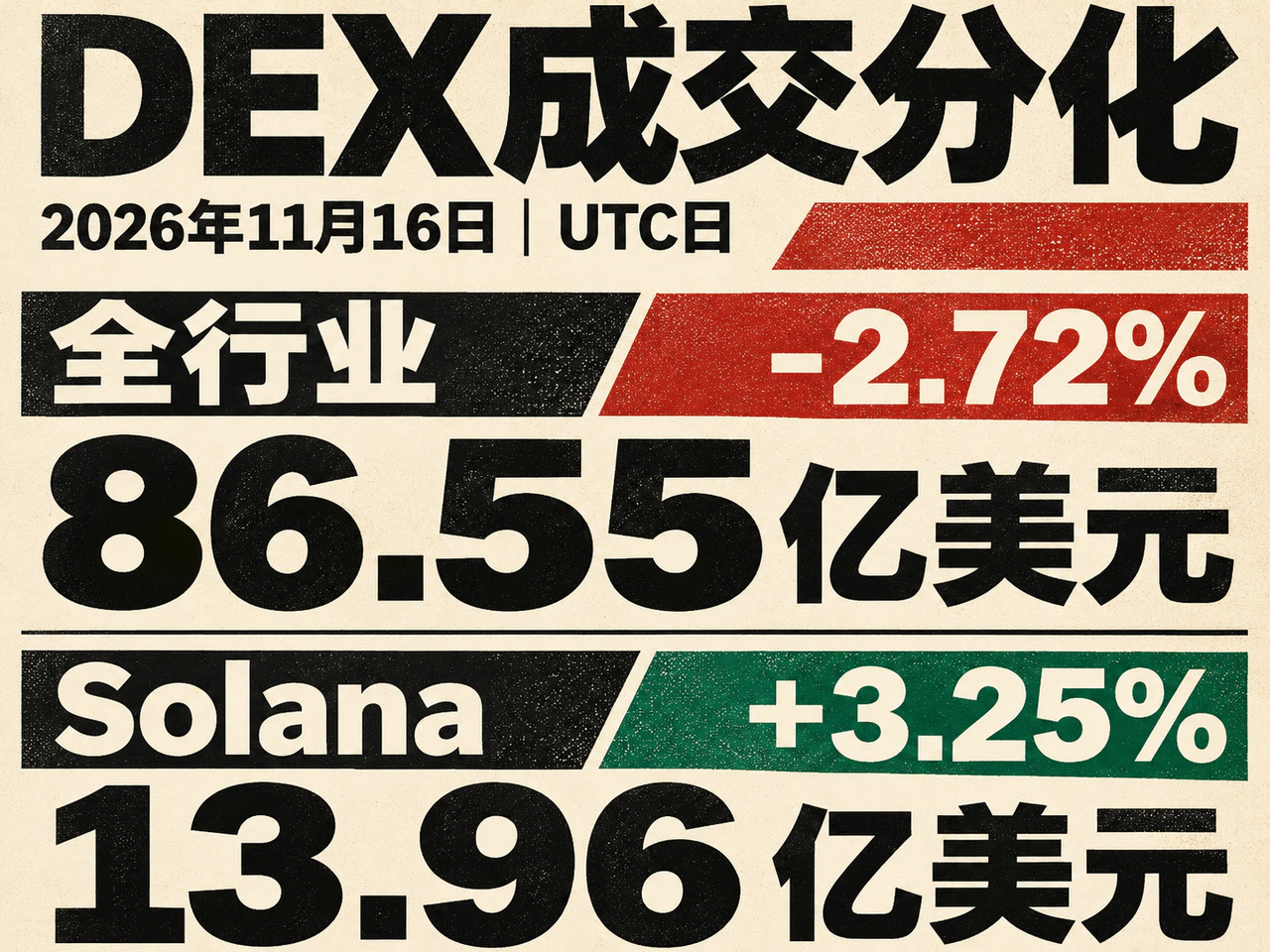
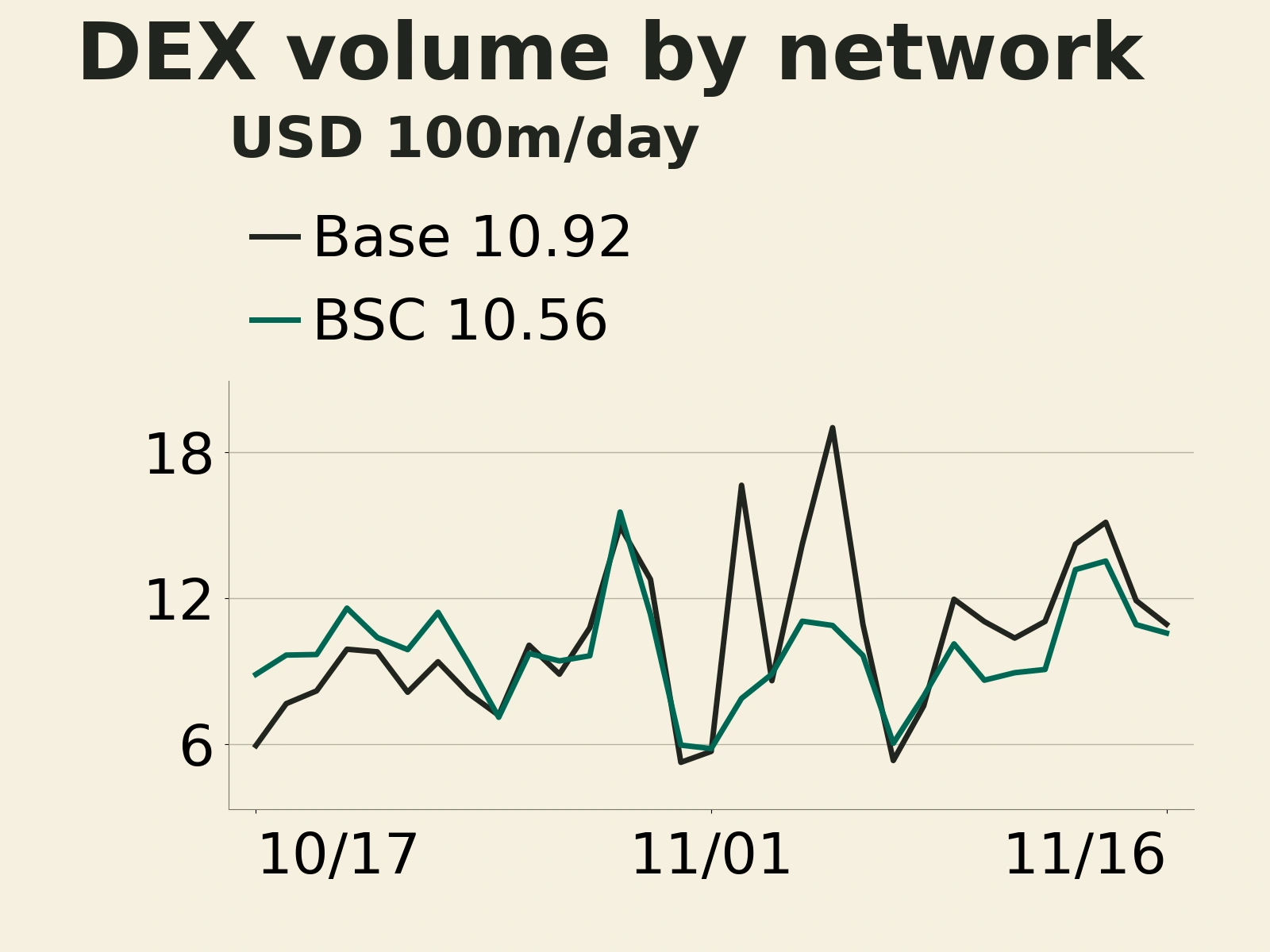
DefiLlama’s UTC daily series shows that spot trading volume on decentralized exchanges (DEXs) totaled $8.655 billion on November 16, down 2.72% from the previous day. Ethereum mainnet recorded $1.557 billion, down 11.69%; Base recorded $1.092 billion, down 8.18%; and BSC recorded $1.056 billion, down 3.19%. Solana recorded $1.396 billion, up 3.25%, in contrast to the declines on those networks.
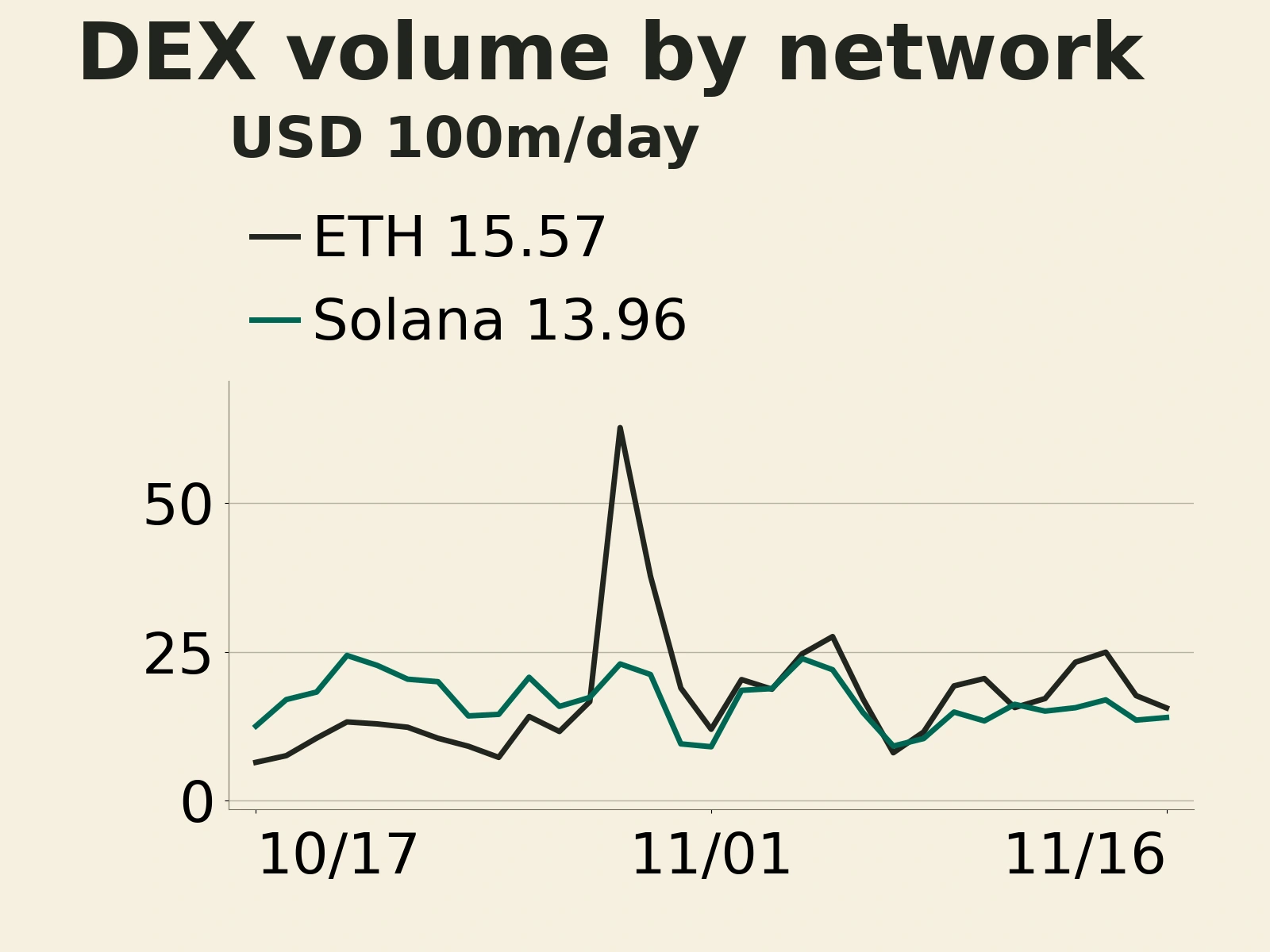
The seven-day picture also shows uneven expansion. From November 10 to 16, DEXs covered by DefiLlama recorded aggregate volume of $63.033 billion, up 4.38% from the preceding seven days. Solana’s volume over the same period totaled $10.462 billion, down 8.17% from the preceding seven days. Weekly volume across the covered DEXs was still growing, while Solana remained in a period of contraction; its one-day rebound on November 16 had not changed that backdrop. The daily figures therefore show an overall decline alongside divergence among networks. Solana’s rebound should not be extrapolated directly into broad industry expansion.
Solflare plans USDC cash withdrawals; Japanese government bond tokenization remains under study
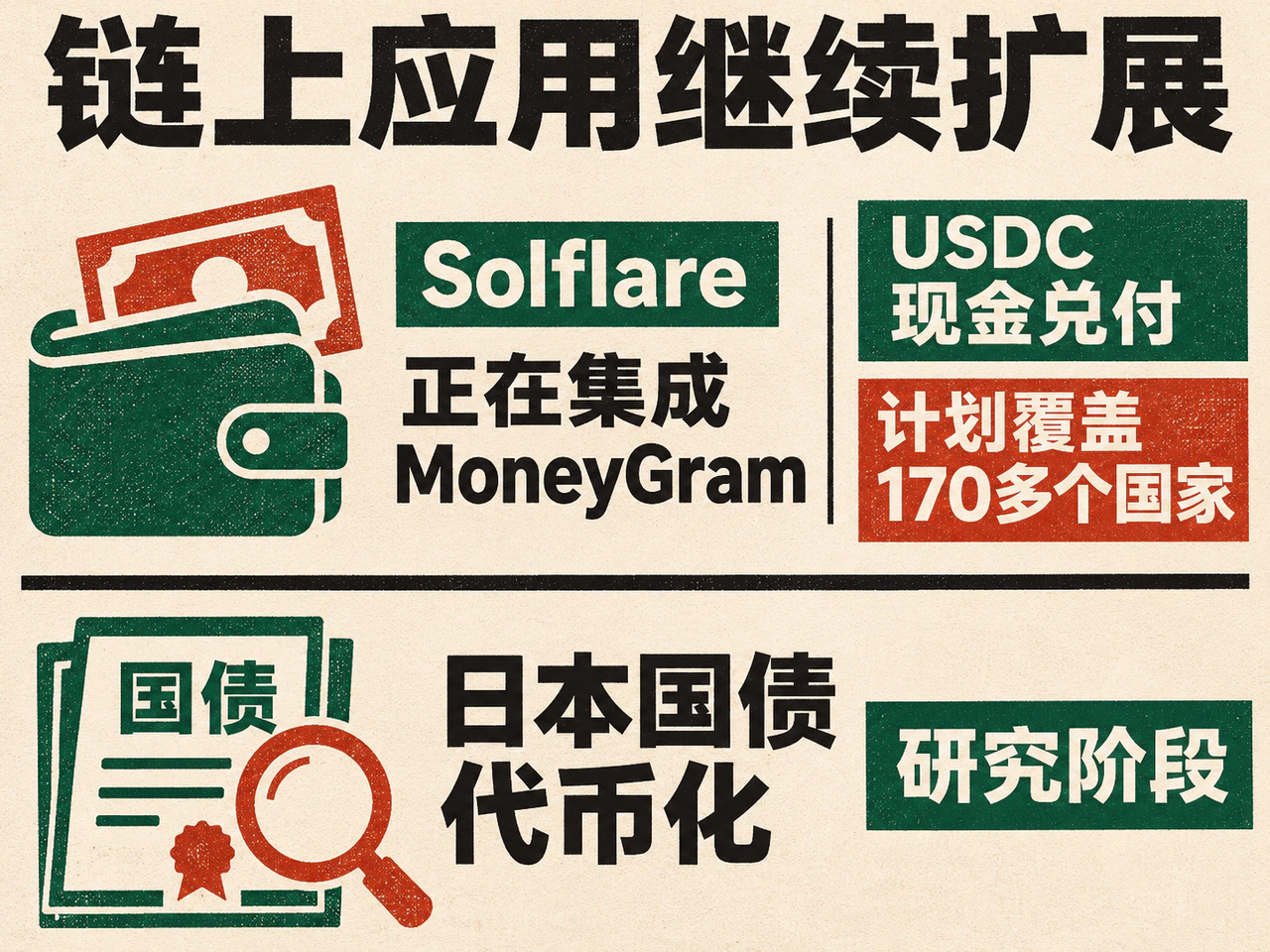
Application development has continued despite the decline in trading volume. In an interview with The Block that day, Solflare CEO Vidor Gencel said the wallet was directly integrating MoneyGram and planned to offer USDC cash withdrawals in more than 170 countries. If successfully implemented, this access point would complete the final step in converting on-chain funds into cash for everyday use. Its commercial value will still depend on the regions actually served, the withdrawal experience, and sustained usage.
Real-world asset tokenization is advancing at a different pace. In a research report that day, Standard Chartered discussed the potential for tokenizing Japanese government bonds, arguing that bringing longer-dated government bonds on-chain could broaden an asset universe currently dominated by short-term Treasury bills. Japan is still studying arrangements including tokenizing existing bonds and issuing directly on distributed ledgers. Neither the specific blockchain nor the implementation timetable has been determined.
Use cases for on-chain applications continue to expand across trading, payments, and bonds used as collateral, but the conditions for implementation differ. Network throughput is only the foundation: applications must also handle pricing, clearing, custody integration, and security costs. Whether new features retain users and generate stable operating revenue depends on the coordinated functioning of fund flows into and out of the system, asset availability, and trade execution.
CoW launches with 6 solvers and waives volume fees for at least 12 months
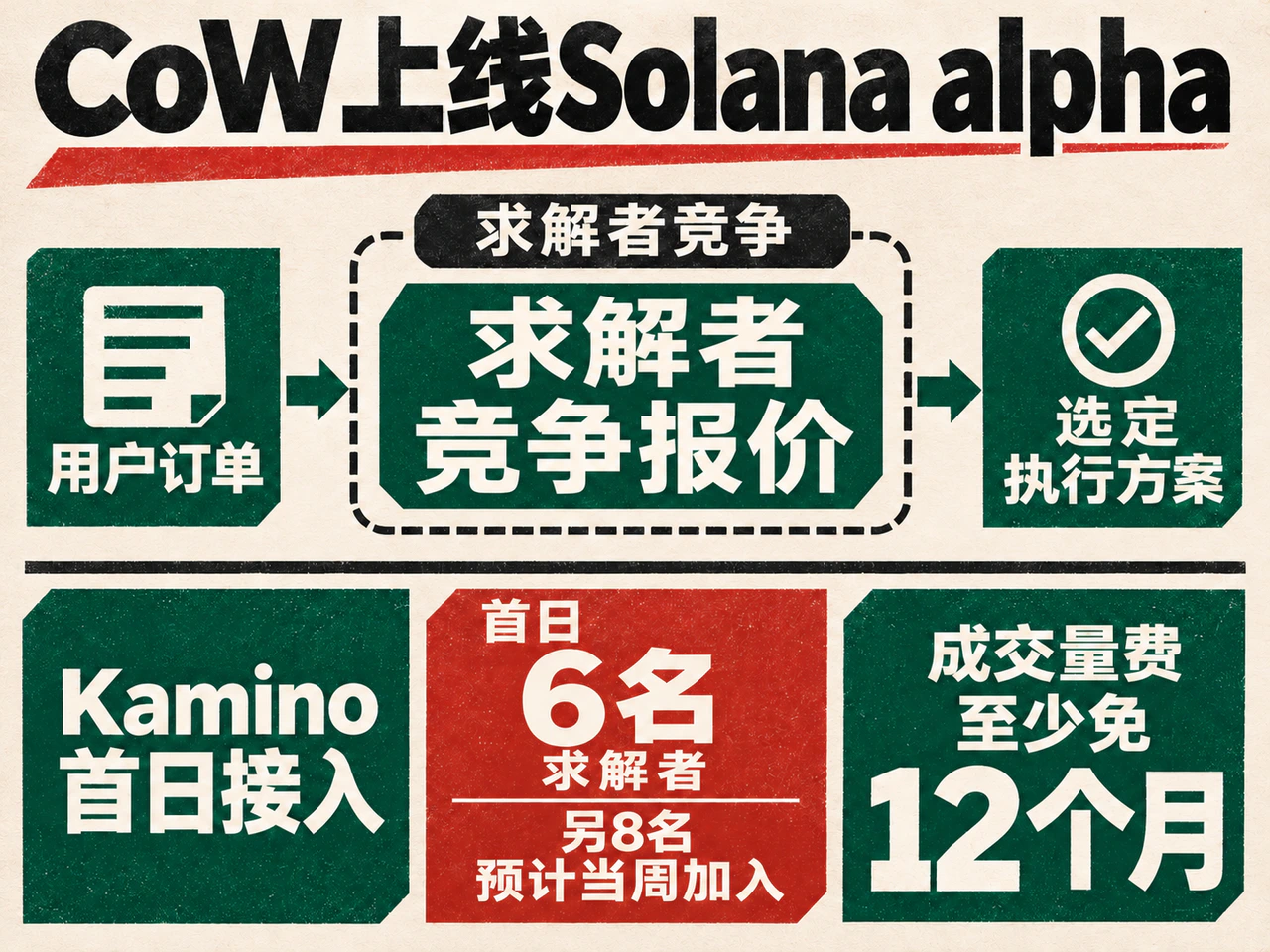
CoW’s latest expansion is into native trading on Solana. Previously, users could already use its cross-chain functionality to swap assets from Ethereum-compatible networks into Solana assets; orders can now be initiated and completed directly on Solana. According to the project’s official announcement that day, 6 trading solvers were participating on day one, with another 8 expected to join that week. Kamino Swap also integrated this execution channel from the first day.
Solvers are independent participants that seek execution solutions on users’ behalf. Once a user specifies the assets to swap and acceptable terms, multiple solvers compete to quote prices, drawing on on-chain trading pools as well as other sources of liquidity. Bringing dispersed orders into a common competitive mechanism could improve execution for large orders and in fragmented liquidity conditions, while existing trading pools continue to supply underlying liquidity.
Users can incur costs after receiving a quote as well. A conventional swap may fail when the price moves beyond its slippage limit, or suffer a sandwich attack in which bots insert trades immediately before and after it. CoW uses intent-based orders and batch settlement to try to reduce these frictions. Its official documentation states that, for sponsored orders, a sponsor pays the fees and account rent associated with the order-creation transaction; users remain responsible for unsponsored orders. Who pays these costs affects both the user experience and the operating expenses the platform must bear.
The Block, citing CoW DAO, reported that volume-based fees on Solana would be waived for at least 12 months. The waiver can help attract routing activity and users at launch, while also deferring the realization of this source of protocol revenue. Kamino provides an existing application distribution channel. CoW still needs to demonstrate that better execution can translate into sustained order flow and, after the promotional period, generate enough revenue to cover sponsorship and operating costs.
Measurement and business metrics also need to reflect these arrangements. A single trade routed through an aggregator may appear in both aggregator-level volume and the volume of the underlying trading pool, so the two cannot simply be added together. When assessing platform growth, trading volume should also be examined separately from fees actually retained by the protocol. CoW’s Solana business remains in alpha. What is confirmed is that native execution and a distribution channel have launched; sustained trading scale, the extent of price improvement, and revenue generation after the promotional period still require evidence from subsequent operating data.
Against the backdrop of lower industry trading volume that day, the day-one integration primarily points to competition for order routing. Platforms that reduce failed transactions and adverse execution have a better chance of securing ongoing routing from wallets and lending applications. Whether Solana’s volume continues to recover, whether CoW can consistently improve execution, and whether it can build revenue after fee waivers and subsidies will test network activity, user value, and commercial sustainability, respectively.
Click the original-article link for further details.