On November 16, 2026, the Hong Kong government confirmed plans to submit a bill before year-end to bring digital asset trading, advisory, management and custody businesses within an expanded licensing framework. On the same day, news of US approval for on-chain derivatives market infrastructure coincided with senators questioning exemptions for tokenized equities. As digital assets enter traditional finance, the regulatory debate is focusing on specific business functions: who safeguards client assets, who identifies counterparties, and who remains responsible after assets move to a new wallet.
Hong Kong Proposes Licensing for Trading, Advisory, Management and Custody
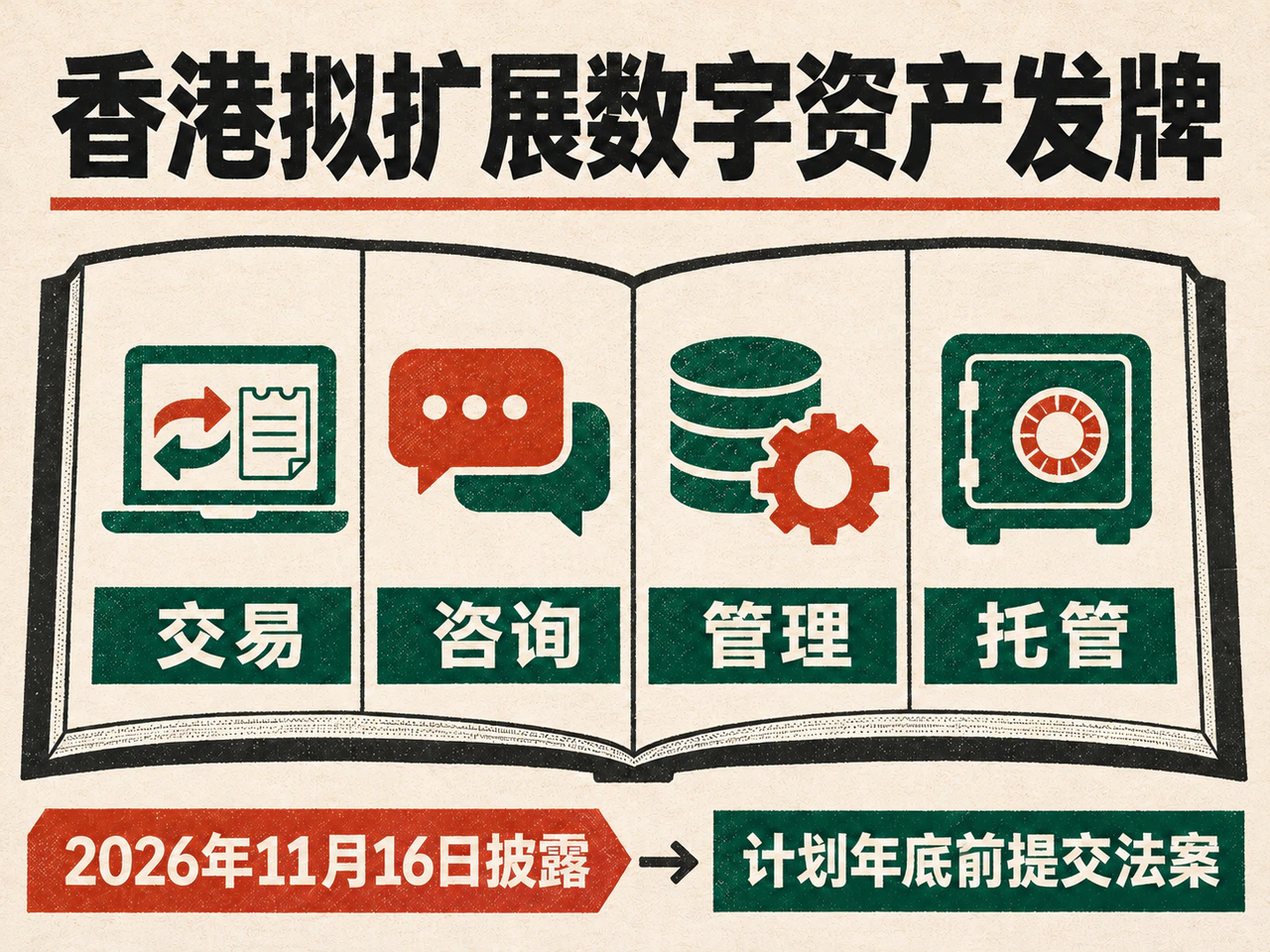
In a speech published on November 16, the Hong Kong government described its plan to submit a bill before year-end as a step toward refining the scope of digital asset regulation. The four proposed categories cover trade execution, investment advice, discretionary management and asset safekeeping. The announcement sets out a legislative timetable; the specific requirements that institutions will face still depend on the bill's text and the legislative process.
The government disclosed that, of the 36 applicants in the first round of stablecoin licensing, two received licences in April and have since both launched Hong Kong dollar stablecoins. Two tokenized money market funds have also offered round-the-clock trading on licensed platforms since October. As stablecoins and funds move from experimentation into operation, clients now encounter a complete service chain: fiat funding, token issuance, trading, investment management, custody and redemption.
Whether a platform can offer trading answers only part of the question. A manager may make investment decisions on a client's behalf, an adviser may influence product selection, and a custodian controls assets or private keys. Regulating these activities individually helps clients identify their service providers and requires institutions to define their responsibilities for sales, operations and asset security more clearly. For banks, brokers and technology providers planning to enter this market, product design and the division of work between partners need to reflect these business boundaries.
Licence counts and commercial performance need to be assessed separately. Approvals and token issuance establish that products have begun operating; the more telling evidence will be whether actual payments, settlement and redemptions can be sustained. The Hong Kong government specifically emphasized real-world applications and credible business models, citing cross-border payments as an example. If stablecoins can shorten settlement waits and make reconciliation and fund transfers easier, issuance and custody services will be better placed to attract sustained demand. Longer trading hours alone still do not establish that clients have changed how they use their money.
US Derivatives Infrastructure Wins Approval as Tokenized Equity Exemptions Face Questions
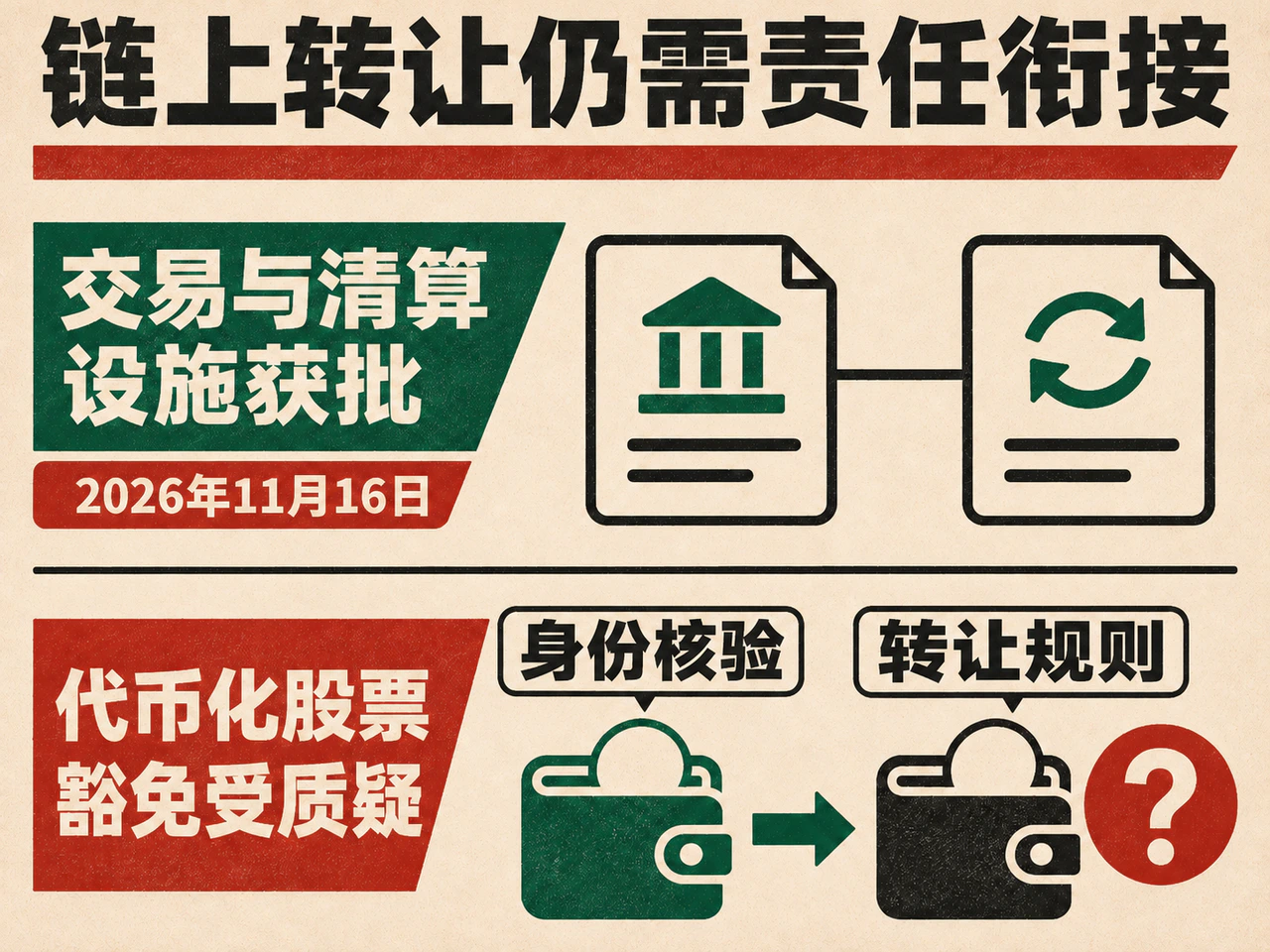
According to The Block's November 16 report, Backpack announced that day that it had received approval from the US Commodity Futures Trading Commission to develop regulated derivatives trading and clearing infrastructure. tZERO obtained its exchange approval the previous week, having already secured derivatives clearing organization status. The report linked these developments to market infrastructure that uses blockchain to execute and settle trades. For institutions, connecting trading and clearing within a clearly defined regulatory framework is an important condition for applying on-chain technology to financial business.
Meanwhile, four US senators wrote to the Securities and Exchange Commission questioning the five-year exemption arrangement for tokenized securities trading venues that it introduced in September. The Block reported that the senators were concerned about how customer identification and anti-money-laundering requirements would apply to trading, and whether platforms would need to restrict who can receive tokens. The specific risk they raised was that tokenized shares initially purchased by a verified customer could subsequently be transferred to an unverified wallet.
This debate reaches a critical junction in tokenized markets. A trading venue can identify the customer who opens an account, yet on-chain assets can move between different wallets and service providers. The easier token transfers become, the more clearly issuers, platforms and custodians need to define transfer rules, eligibility checks and subsequent recordkeeping. For the convenience of on-chain transfers to translate into market liquidity that institutions are willing to use, rights, responsibilities and mechanisms for handling problems must remain connected as assets change hands.
Hong Kong's proposed expansion of service licensing, and the US review of exemption boundaries alongside approvals for new infrastructure, reflect similar business requirements under different systems: institutions can use new technology, while responsibility for client assets and transactions must rest with identifiable entities that can be held accountable. The pace of institutional entry will next depend on how Hong Kong's bill delineates the four business categories and how US rules on trading, clearing and token transfers are implemented. Clearer boundaries of responsibility make it easier for financial institutions to assess compliance costs and the clients they can serve, and to estimate the commercial potential of on-chain products.
Click through to the original article for full details.