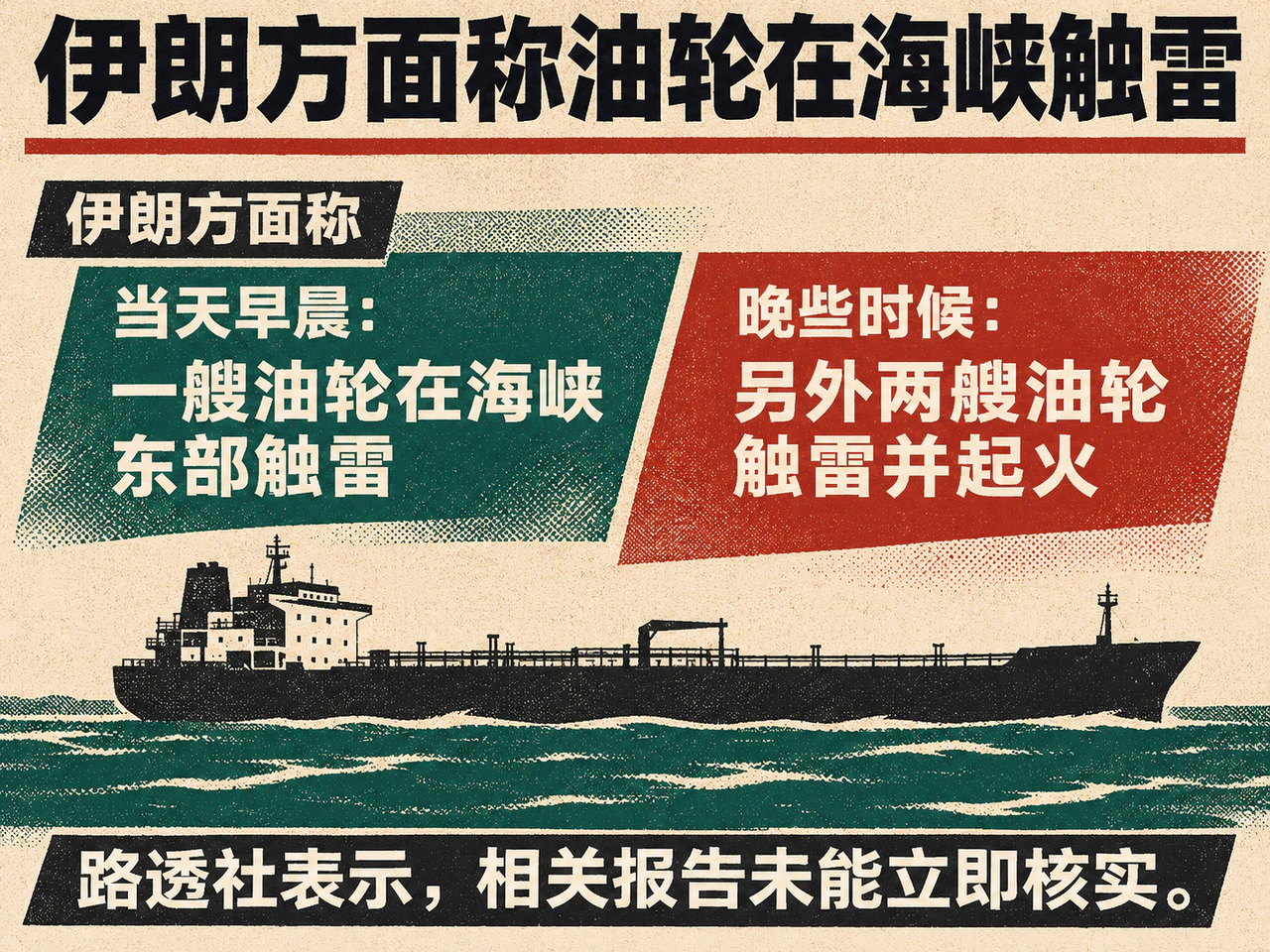
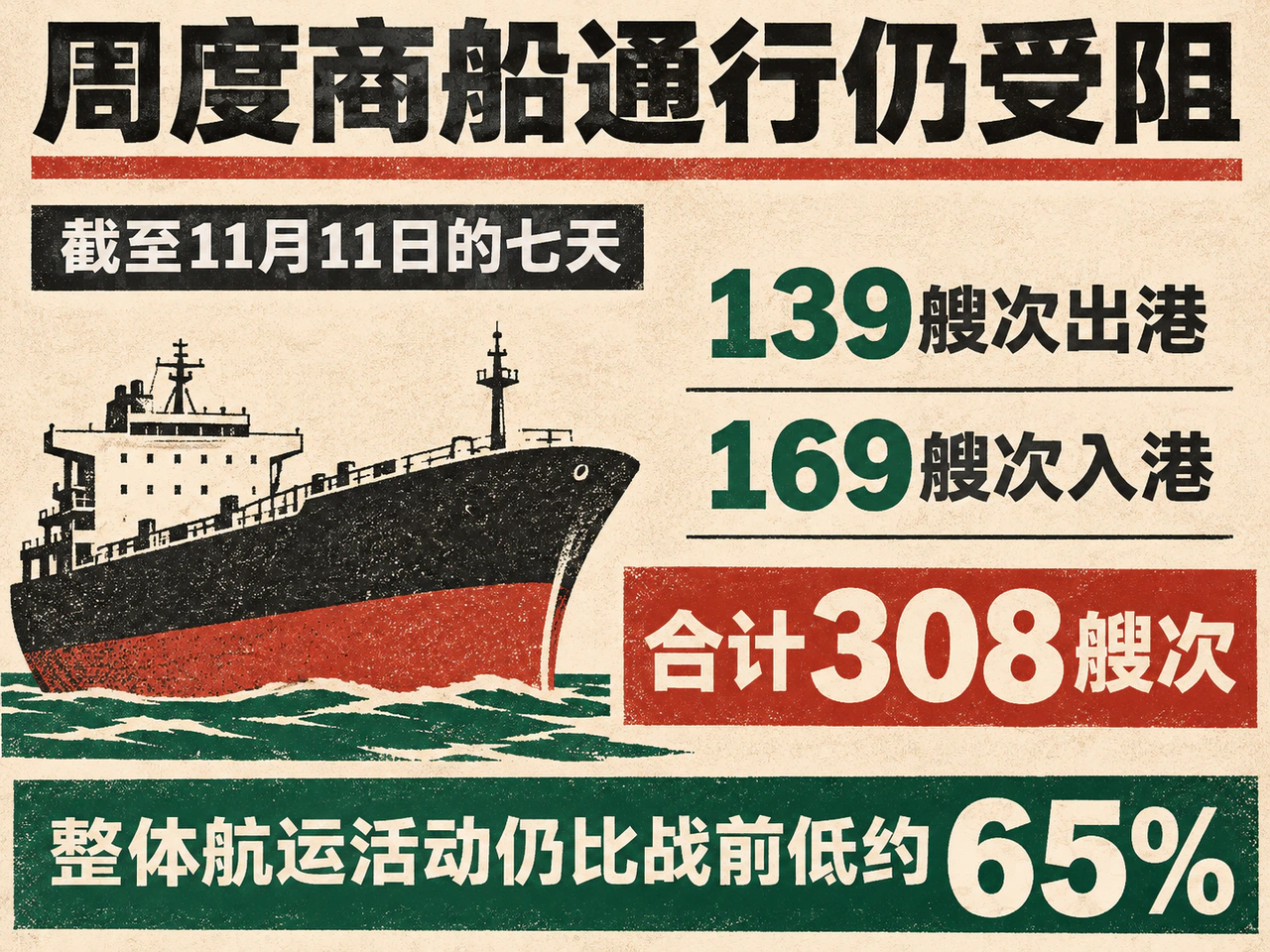
On November 16, 2026, successive alerts reported attacks on oil tankers in the Strait of Hormuz. Iran continued to link the restoration of shipping to lifting the blockade, releasing frozen assets and ending the war. News that a third U.S. aircraft carrier had arrived in the Middle East coincided with Tehran’s proposed two-day reopening plan. Military pressure and diplomatic bargaining are proceeding in parallel, while the vessels attacked have already borne the direct costs of the impasse.
British Alerts Report Two Tanker Incidents; Revolutionary Guards’ Claim of Six Damaged Vessels Cannot Be Matched to Them
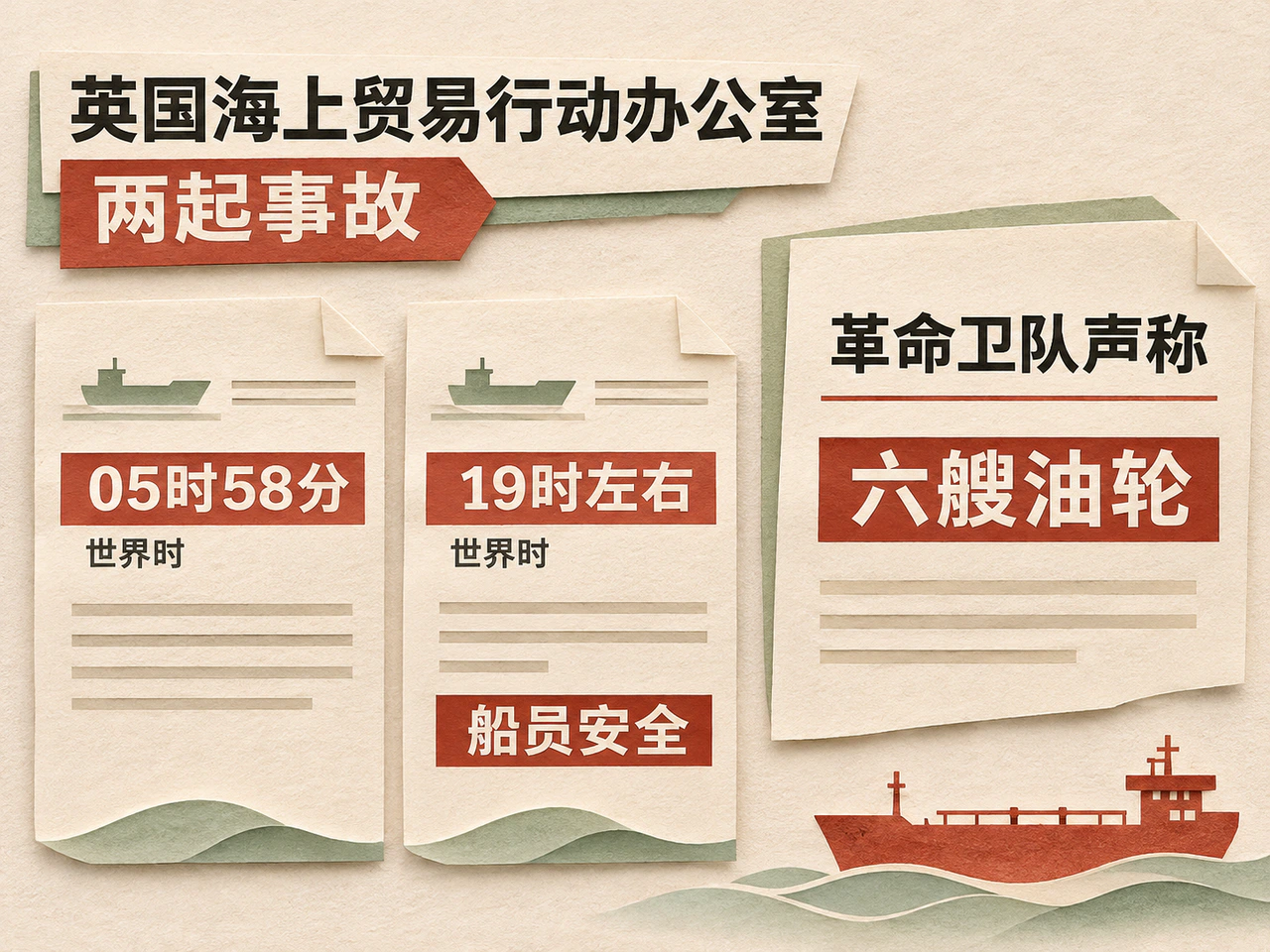
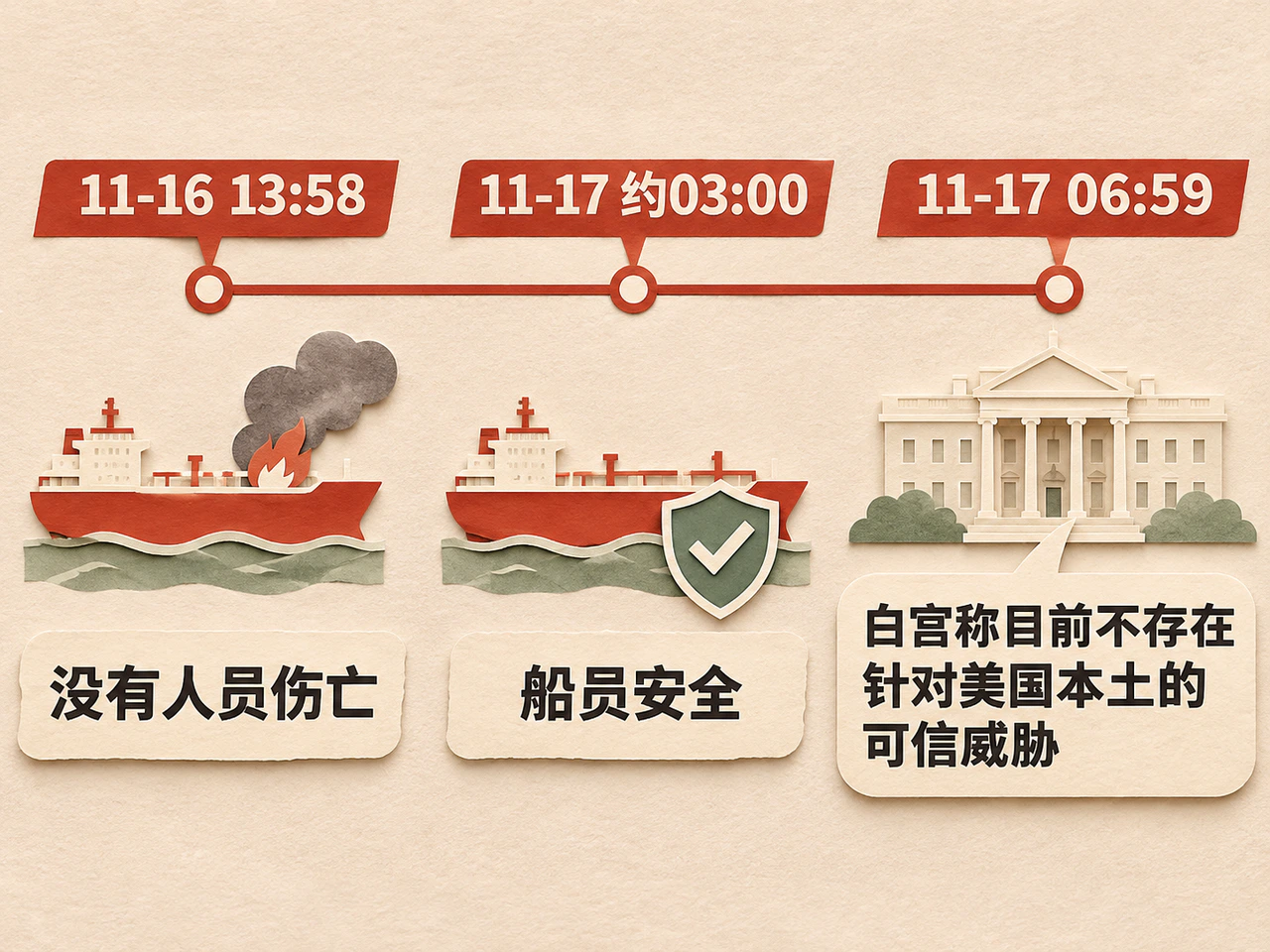
Two alerts from the United Kingdom Maritime Trade Operations office (UKMTO) concerned two incidents that day. According to accounts carried by shipping media, the first occurred at 05:58 UTC (13:58 Beijing time), when a tanker leaving the Strait of Hormuz was struck by an unidentified projectile and a fire broke out in its engine room. There were no casualties, and all crew members were accounted for.
The second occurred at around 19:00 UTC (around 03:00 on November 17, Beijing time), approximately 7 nautical miles north of Khasab, Oman. A third-party report said a tanker had been disabled following an attack and its engine room was on fire; the crew were safe. Neither alert identified who was responsible.
In separate statements that day, Iran’s regular navy and the Revolutionary Guards’ navy said several tankers had struck mines in what Iran described as a restricted area. The Revolutionary Guards claimed that six tankers had been damaged since Sunday, causing pollution. These statements did not provide full details of vessel names, flags or crew conditions, and could not be matched individually to the British alerts. The damage that can currently be verified is limited to the reported fires and loss of propulsion in the two incidents; adding all the damage counts claimed unilaterally by Iran would overstate the scale.
The Two-Day Proposal Draws a Positive Response, but No Agreement on the Core Terms of the Exchange
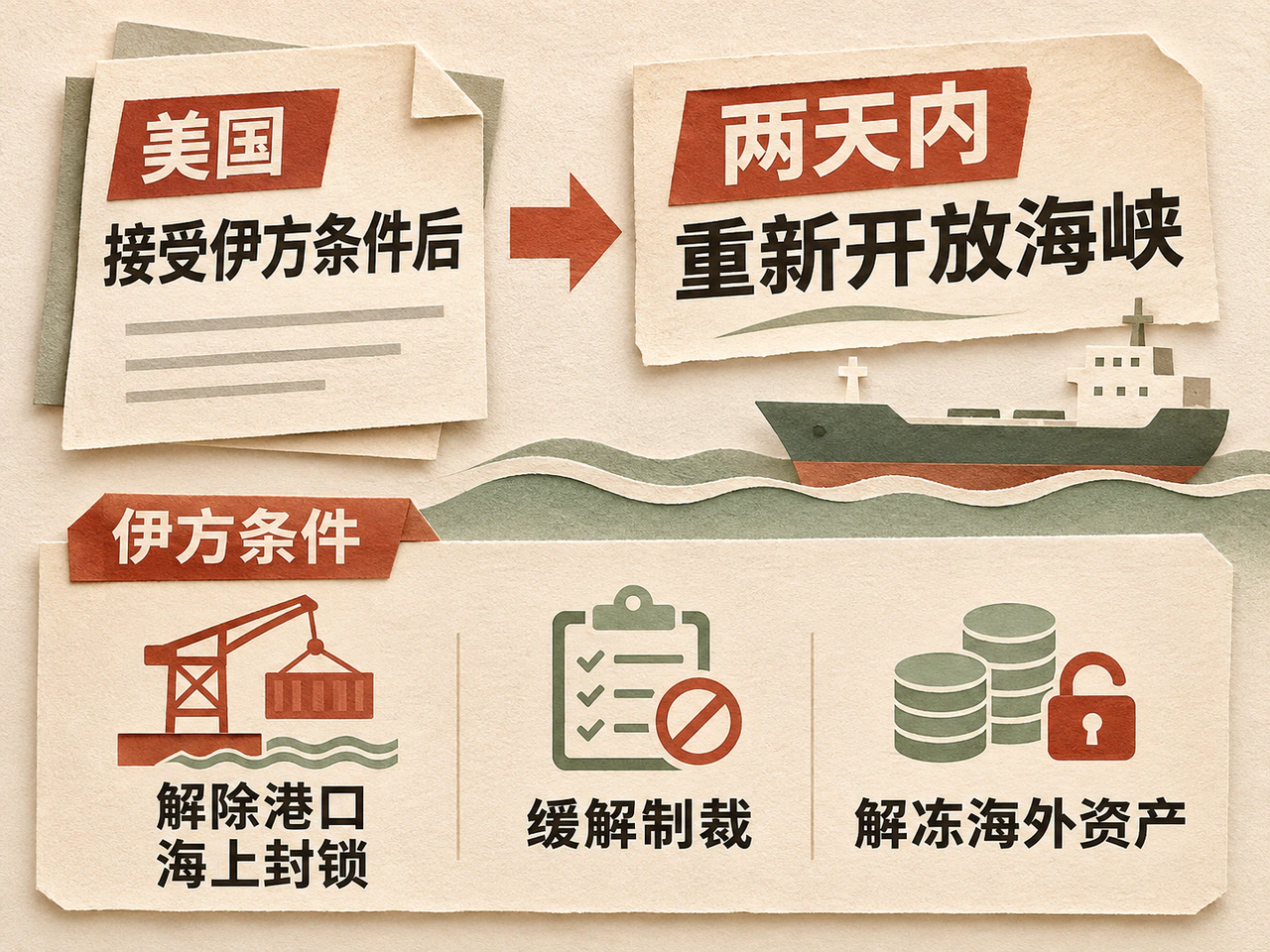
Iranian Foreign Minister Abbas Araghchi, attending an Economic Cooperation Organization foreign ministers’ meeting in Islamabad, said participants had responded positively to Iran’s two-day proposal. Specifically, Iran could reopen the strait within two days after the United States accepted its conditions, shortening the previously proposed period of one week. Iran’s demands include lifting the naval blockade of its ports, easing sanctions and unfreezing overseas assets. A shorter timetable could reduce disagreements over implementation, but there has been no report of an agreement on the core terms of the exchange.
After concluding his visit to Islamabad, Araghchi arrived in Muscat to discuss shipping through the strait and other issues with Oman’s foreign minister. Diplomatic channels remain active.
Nuclear inspections are also subject to conditions for ending the war. In an interview on Sunday evening, Iranian Deputy Foreign Minister Kazem Gharibabadi said the International Atomic Energy Agency would not be allowed into damaged nuclear facilities until the war had ended permanently and Iran’s conditions had been met. Related reporting noted that inspectors visited the Bushehr nuclear power plant in September, but had yet to enter bombed sites including Natanz, Fordow and Isfahan. The sequencing of shipping negotiations and the nuclear issue therefore remains part of the impasse.
U.S. Carrier Presence Returns to Three; Attacks in Yemen Kill Five
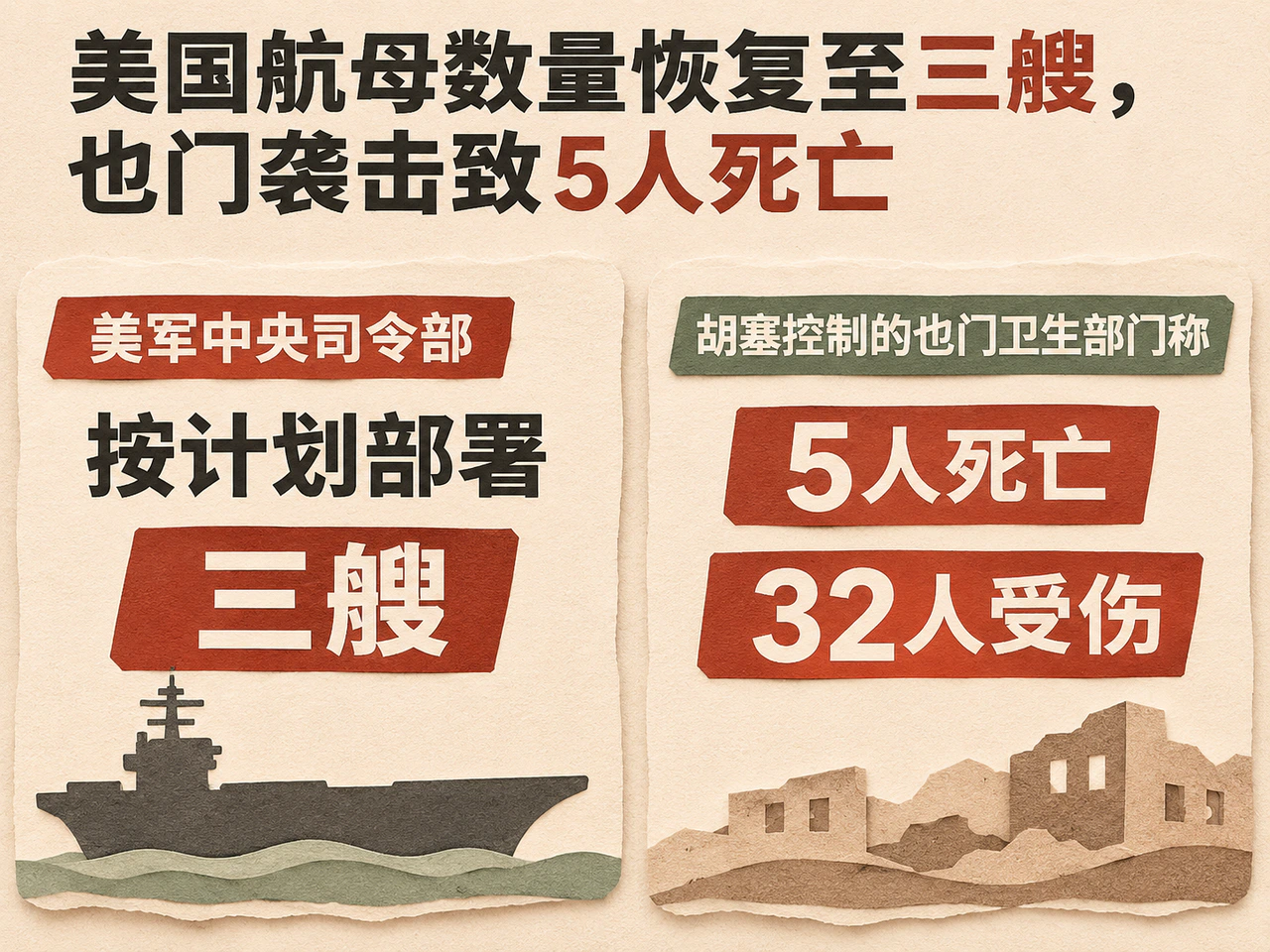
The Associated Press, citing U.S. officials, confirmed that the USS Theodore Roosevelt had arrived in the Middle East, bringing the number of U.S. aircraft carriers in the region back to three. U.S. Central Command subsequently confirmed that the carrier was conducting a scheduled deployment in its area of responsibility.
Iranian Parliament Speaker Mohammad Bagher Ghalibaf told his Lebanese counterpart, Nabih Berri, that same day that regional peace required an end to the fighting in Lebanon and the restoration of Lebanese territorial sovereignty. This indicates that Iran continues to extend its conditions for an end to hostilities to surrounding fronts.
In an updated report that day, the Associated Press cited Yemen’s Houthi-controlled health authorities as saying that attacks in several locations had killed 5 people and injured 32, with one child among the dead. The Houthis blamed Saudi Arabia. Separately, the Israeli military said it had struck a shipment of weapons intended for Hezbollah near Janta in northeastern Lebanon.
Iran’s Gas Supply Tightens as Households and Businesses Worry About Winter Energy

An interview-based Reuters report on November 16 said the National Iranian Gas Company attributed worsening supply difficulties to damage sustained by four processing plants early in the war. Households and businesses have already begun to worry about winter energy supplies. Citing Iranian officials, the report said the government feared that growing pressures on daily life would intensify public discontent, and was discussing natural gas imports from Russia.
U.S. Intelligence Says Iran Is Examining Options for Attacks on Senior U.S. Officials
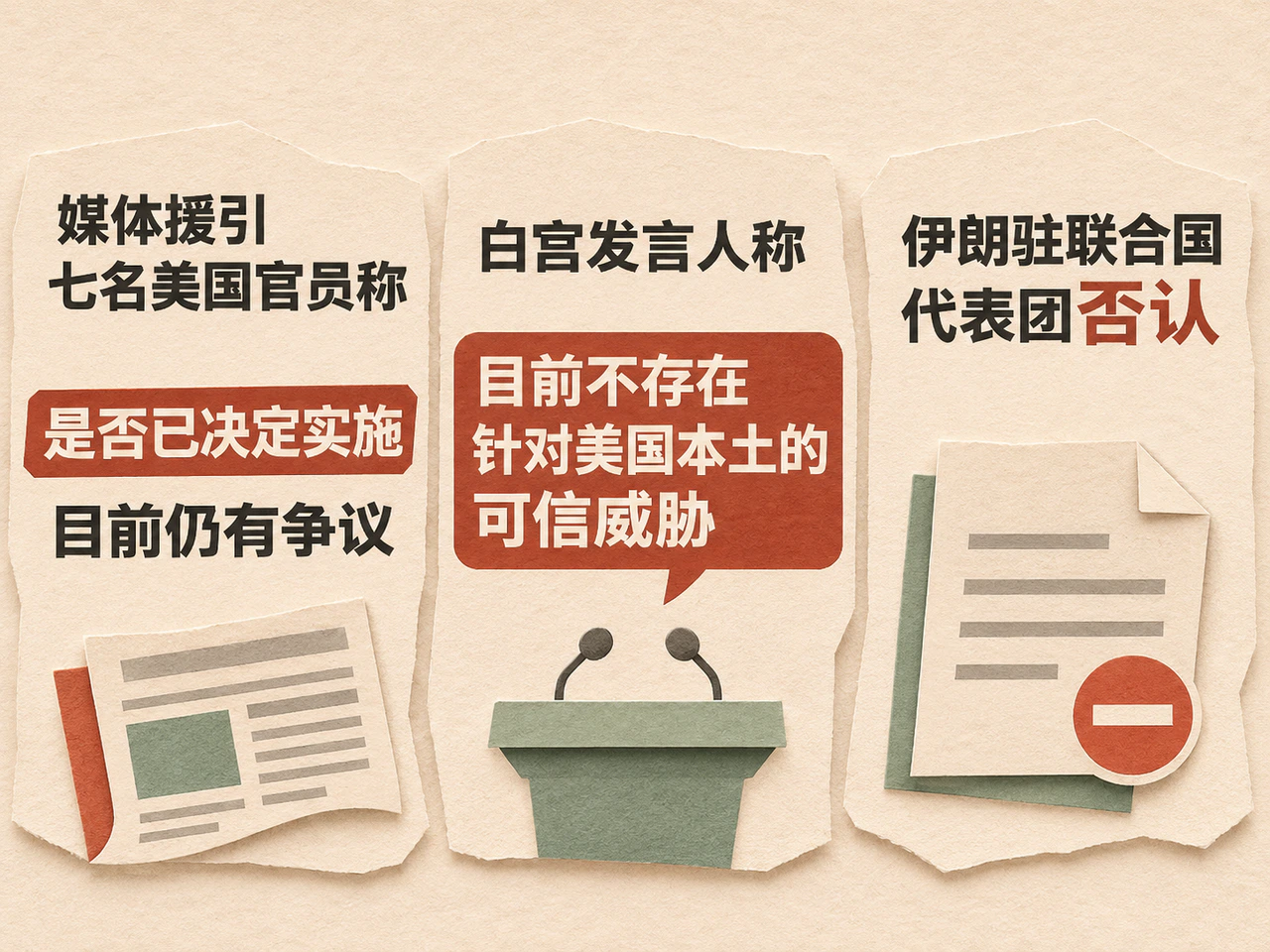
As dawn approached on November 17, Beijing time, media reports citing seven U.S. officials said intelligence indicated that Iran was examining options for attacks using a radiological dispersal device or chemical weapons against senior U.S. officials in Washington. The reporting also made clear that there was still disagreement over whether Iran had personnel available to carry out such attacks and whether a decision to proceed had been made.
A White House spokesperson said there was currently no credible threat to the U.S. homeland. Iran’s mission to the United Nations denied the chemical weapons allegations. The matter has increased pressure on security agencies to take precautions, but both operational capability and a decision to act remain disputed. The available information is insufficient to determine whether an attack is imminent.
Key Developments
| Key Developments |
|---|
| 11-17 06:59 Beijing timeMedia reports citing seven U.S. officials said Iran was examining options for attacks using a radiological dispersal device or chemical weapons against senior U.S. officials in Washington. Whether Iran had personnel to carry them out and whether it had decided to proceed remained disputed. The White House said there was currently no credible threat to the U.S. homeland; Iran denied the chemical weapons allegations. |
| 11-17 around 03:00 Beijing timeThe second incident occurred approximately 7 nautical miles north of Khasab, Oman. A third-party report said the tanker was disabled following an attack and its engine room was on fire; the crew were safe. |
| 11-16 13:58 Beijing timeAccording to accounts carried by shipping media, a tanker leaving the Strait of Hormuz was struck by an unidentified projectile and a fire broke out in its engine room. There were no casualties. |
| 11-16 Araghchi said participants at the meeting had responded positively to the two-day proposal. Reopening the strait still depended on U.S. acceptance of conditions including lifting the blockade and unfreezing assets. |
| 11-16 The Associated Press, citing U.S. officials, confirmed the arrival of the USS Theodore Roosevelt in the Middle East, restoring the number of U.S. aircraft carriers in the region to three. U.S. Central Command subsequently confirmed that the carrier was conducting a scheduled deployment. |
| 11-16 Iranian Deputy Foreign Minister Gharibabadi said on Sunday evening that the International Atomic Energy Agency would not be allowed into damaged nuclear facilities until the war had ended permanently and Iran’s conditions had been met. Yemen’s Houthi health authorities said attacks that day killed 5 people and injured 32. |