On November 17, bitcoin touched a low of 63,336 USDT on Binance’s spot market before returning to around 65,000 USDT near the UTC daily close. At the close, at 08:00 Beijing time on November 18, bitcoin stood at 64,947.35 USDT, just 64.48 USDT above the previous close, a gain of 0.10%. Ether fell as low as 1,751.39 USDT intraday and closed at 1,824.88 USDT, up 0.23%. Both ultimately finished slightly higher after a pronounced intraday decline and recovery.
Bitcoin was still below its previous close when Nvidia reported earnings

The session lows were 2.38% below bitcoin’s previous close and 3.80% below ether’s. With about three hours left before the daily close, neither had fully recovered its losses. At 16:15 Eastern Time, 15 minutes after the regular US stock trading session ended, bitcoin was at 64,078.17 USDT and ether at 1,799.07 USDT. Ether had yet to reclaim the 1,800 USDT level it had lost earlier in the day.
Five minutes later, Nvidia released results for the quarter ended October 25: revenue reached $115.8 billion, up 103% year on year, with the data center business contributing $107.6 billion. The Nasdaq Composite had fallen about 2.5% the previous day, and traders were waiting for the report to test the strength of spending on artificial intelligence. Christopher Perkins, Franklin Templeton’s head of crypto investments, told Dow Jones Newswires that day that losses caused by technology-stock volatility would prompt some investors to raise cash in other markets. Crypto assets trade around the clock, leaving almost three hours between the earnings release and the UTC daily close for the market to absorb the new information.
Binance trading records show that by 16:30 Eastern Time, bitcoin had recovered to 64,429.08 USDT and ether to 1,808.85 USDT. From that point to the UTC daily close, they rose a further approximately 0.80% and 0.89%, respectively. The earnings release and the late-session recovery followed one another in time, making the cross-market news part of the context for reviewing this stretch of trading.
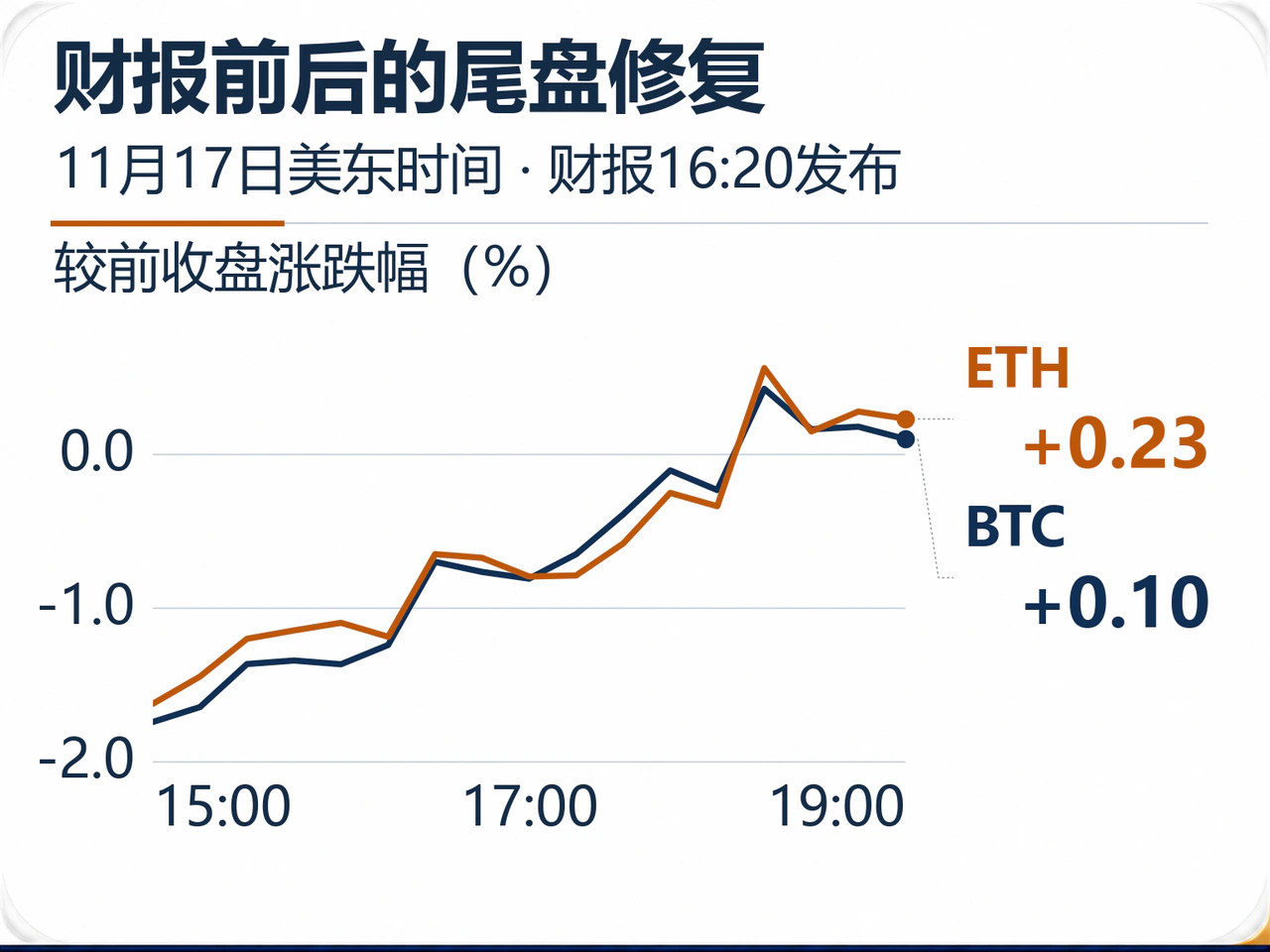
The opening and closing prices were nearly unchanged, yet substantial swings occurred within the session. Entering at different times could have produced very different trading outcomes. Prices alone still cannot establish how much of the recovery reflected renewed buying and how much came from short covering.
All eight coins rose, but changes in turnover diverged

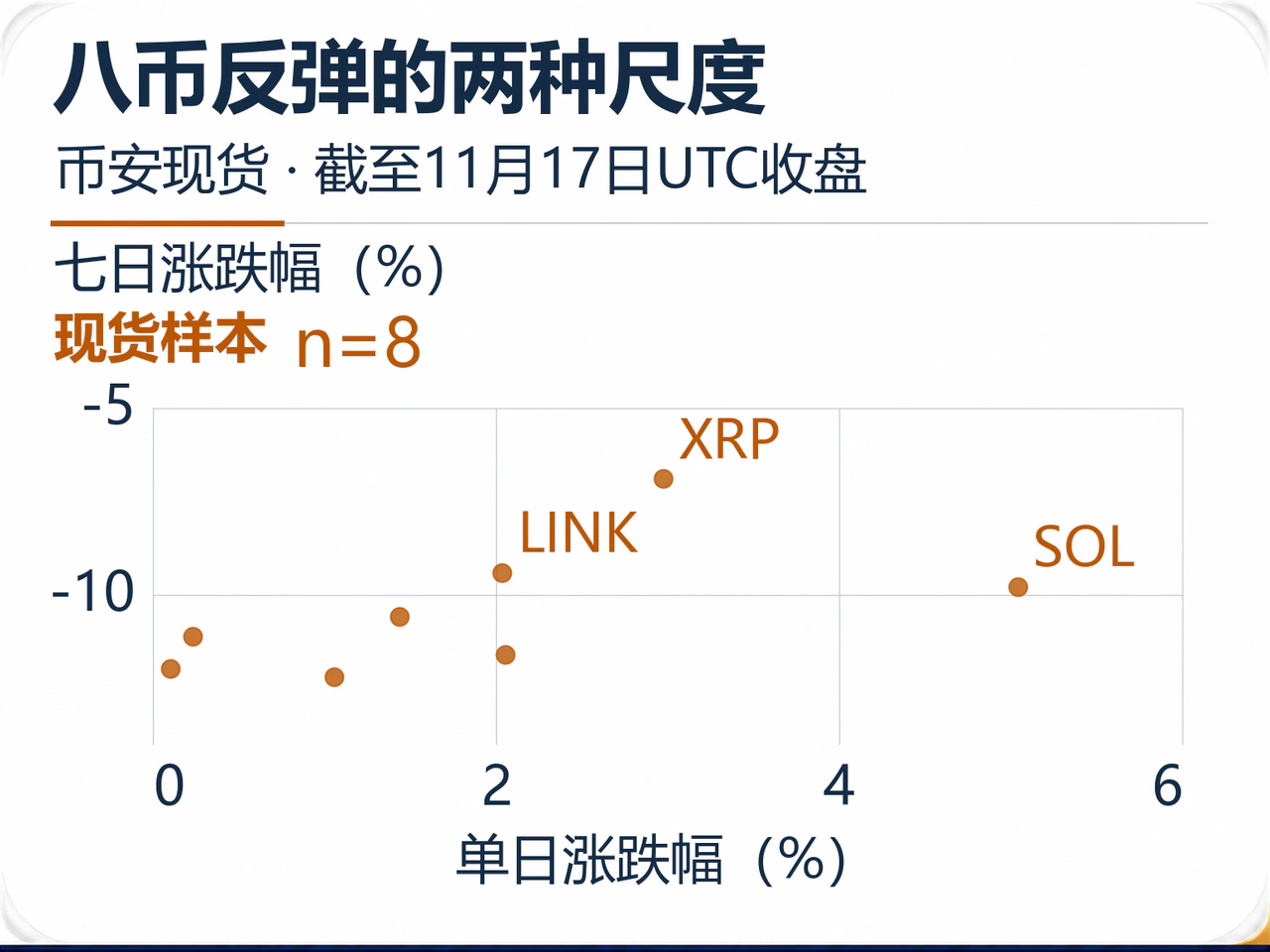
All eight coins in the fixed watchlist closed higher that day. Solana’s SOL led with a 5.04% gain, followed by XRP at 2.97%, dogecoin at 2.05% and Chainlink’s LINK at 2.03%. Cardano’s ADA and BNB rose 1.44% and 1.06%, respectively. Bitcoin and ether recorded the two smallest gains. Based on their closing prices, one ether was worth approximately 0.02810 bitcoin, up only about 0.13% from the previous day. In its market commentary that evening Eastern Time, Crypto Briefing put bitcoin’s share of total crypto market capitalization at 58.4%. With bitcoin accounting for nearly 60% of market capitalization, even faster rebounds in other coins have an impact on the total constrained by their respective weights.
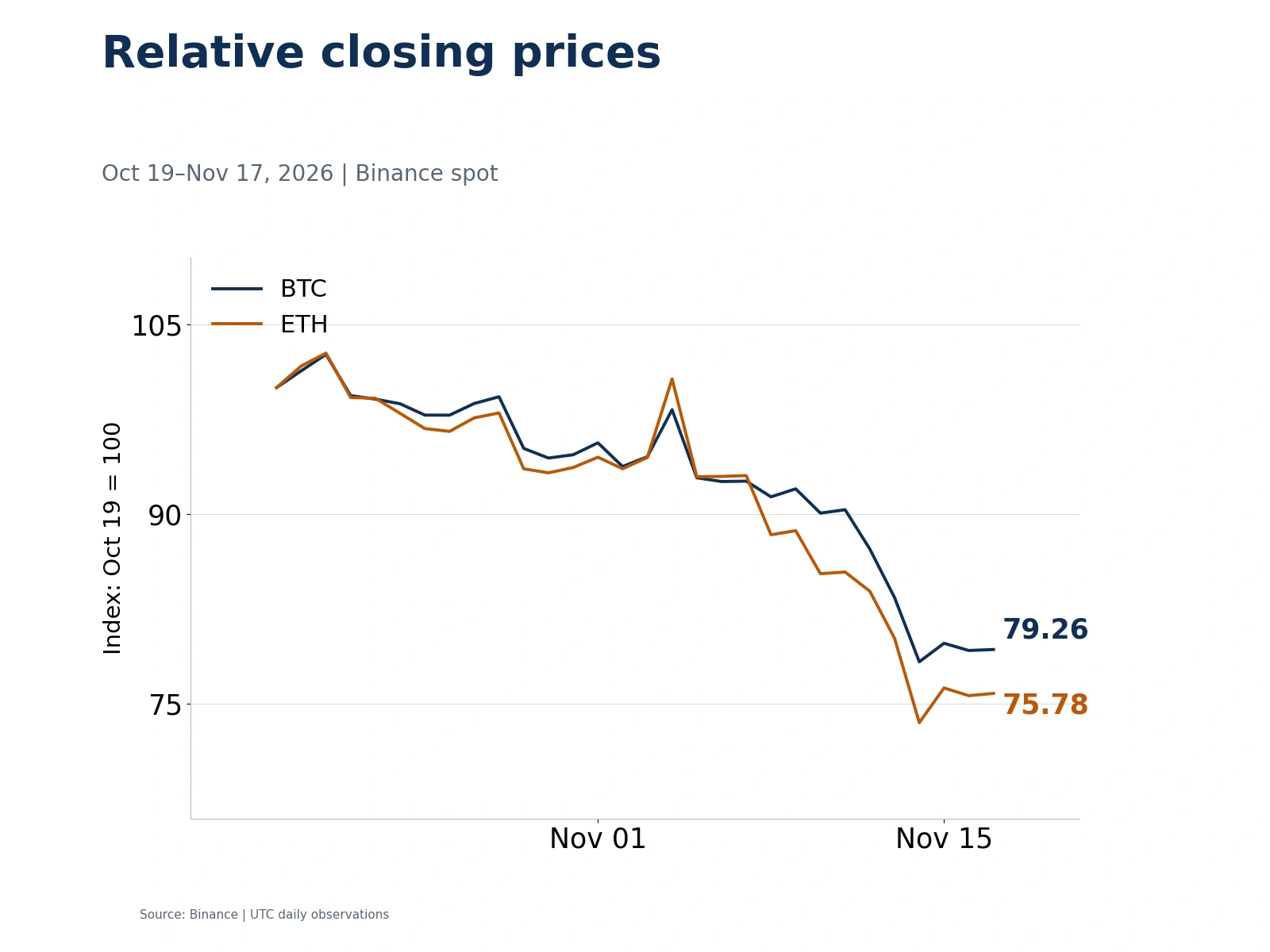
Compared with seven days earlier, every coin in the same sample was still down: bitcoin had lost 11.99% and ether 11.12%; SOL, the day’s best performer, was still down 9.79%, while XRP was down 6.89%. A lower price base also makes a one-day percentage gain more likely to look striking. Market breadth did improve that day. Whether the improvement lasts will depend on whether these assets can, one after another, regain the price levels lost in preceding days.
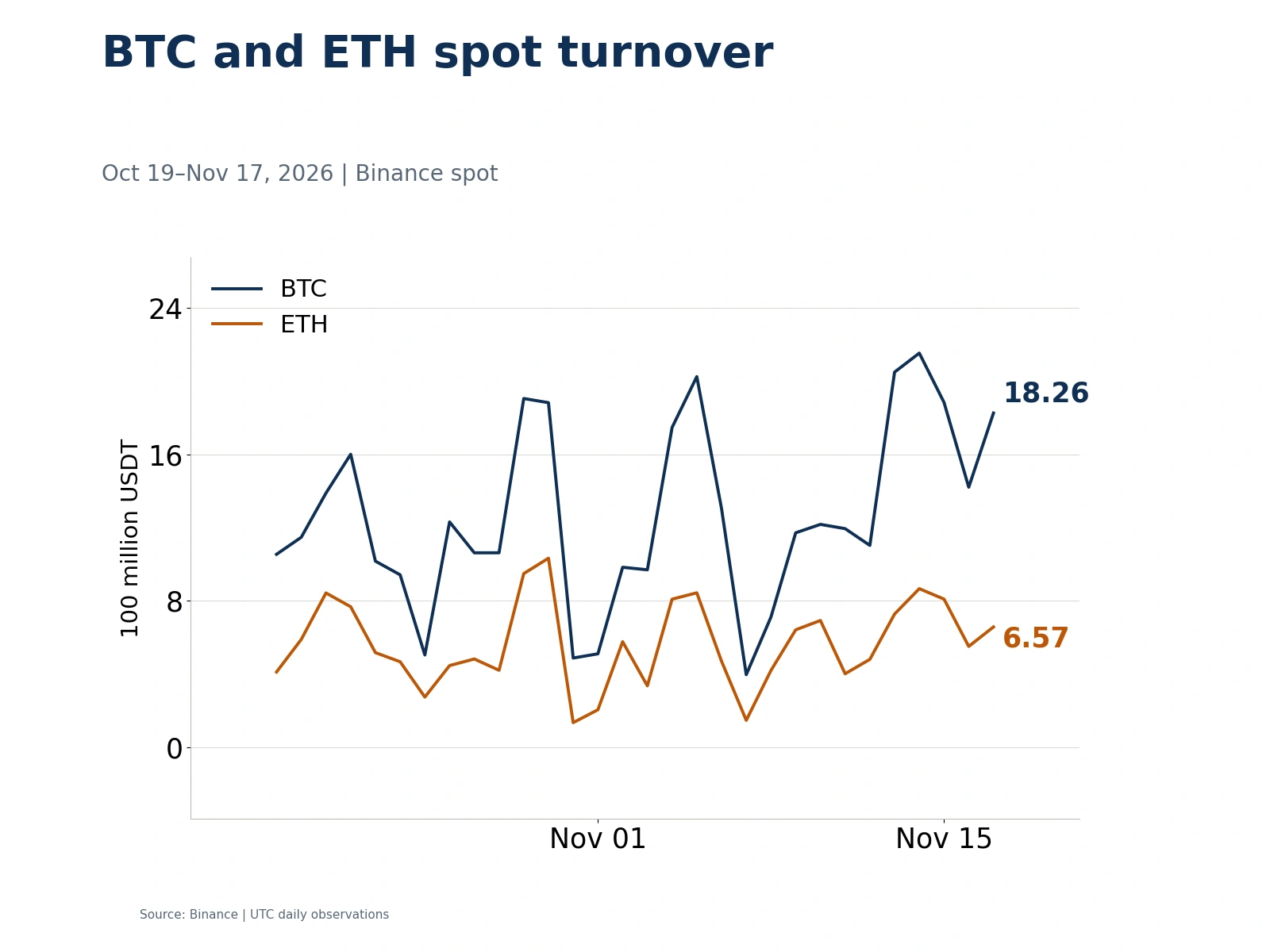
Turnover, however, diverged. Daily spot turnover in Binance’s BTC/USDT and ETH/USDT markets was 1.826 billion and 657 million USDT, respectively, up 28.5% and 19.3% from the previous day. SOL turnover also increased by approximately 17%. XRP gained almost 3% while its turnover fell about 16.5%, and dogecoin turnover declined by roughly 30% from the previous day. Prices moved in the same direction, but support from turnover was uneven.
Traders’ public comments reflected two different time horizons. On X, Crypto Rover illustrated drawdowns from the October 2025 highs: 27 of the 40 tokens he tracked had lost more than half their value. Another trader, Satoshi Flipper, saw signs of a bottom in that day’s rebound across several tokens. The former focused on the depth of the decline from the highs; the latter on the speed of the recovery from the lows.
If the rebound continues over subsequent trading days, two signals warrant particular attention: whether more coins can close higher while also recording a recovery in turnover, and whether bitcoin can sustain intraday gains through the close instead of relying only on a late-session rally.
Click “Read the original” for the full details.