On November 19, the Sui Foundation announced that Bitcoin finance protocol Hashi had launched on mainnet. Holders can deposit BTC into Hashi, receive an equivalent amount of hBTC on Sui, and then pledge it as collateral on lending protocol Fluid to borrow the dollar stablecoin USDC. This gives Bitcoin holders another way to raise dollar funding. For Sui, the durability of this business also depends on the other side of the market: alongside people willing to pledge Bitcoin, there must be lenders willing to supply USDC at rates borrowers can afford.
On-chain trading recovers, with gains concentrated in selected networks
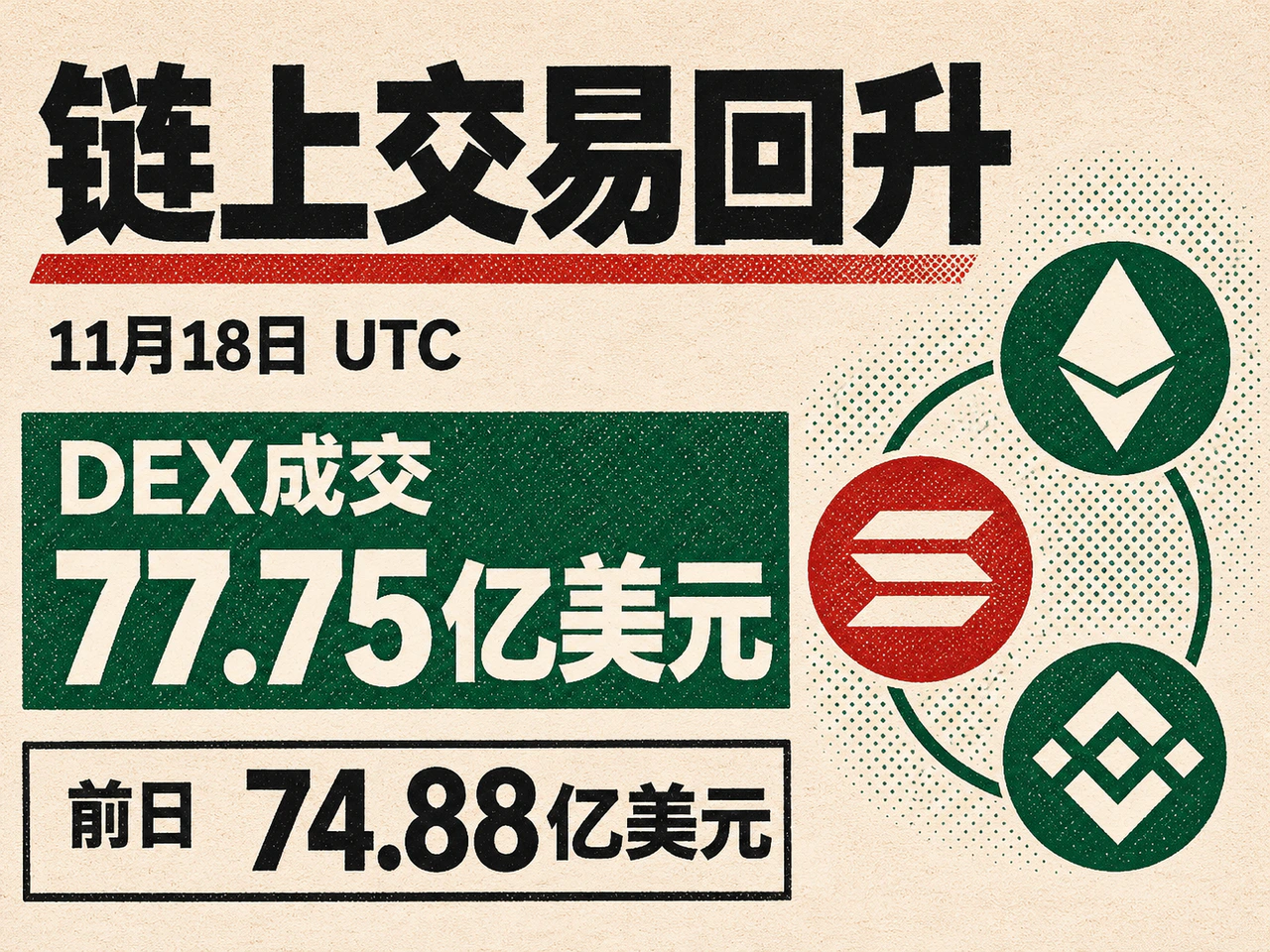
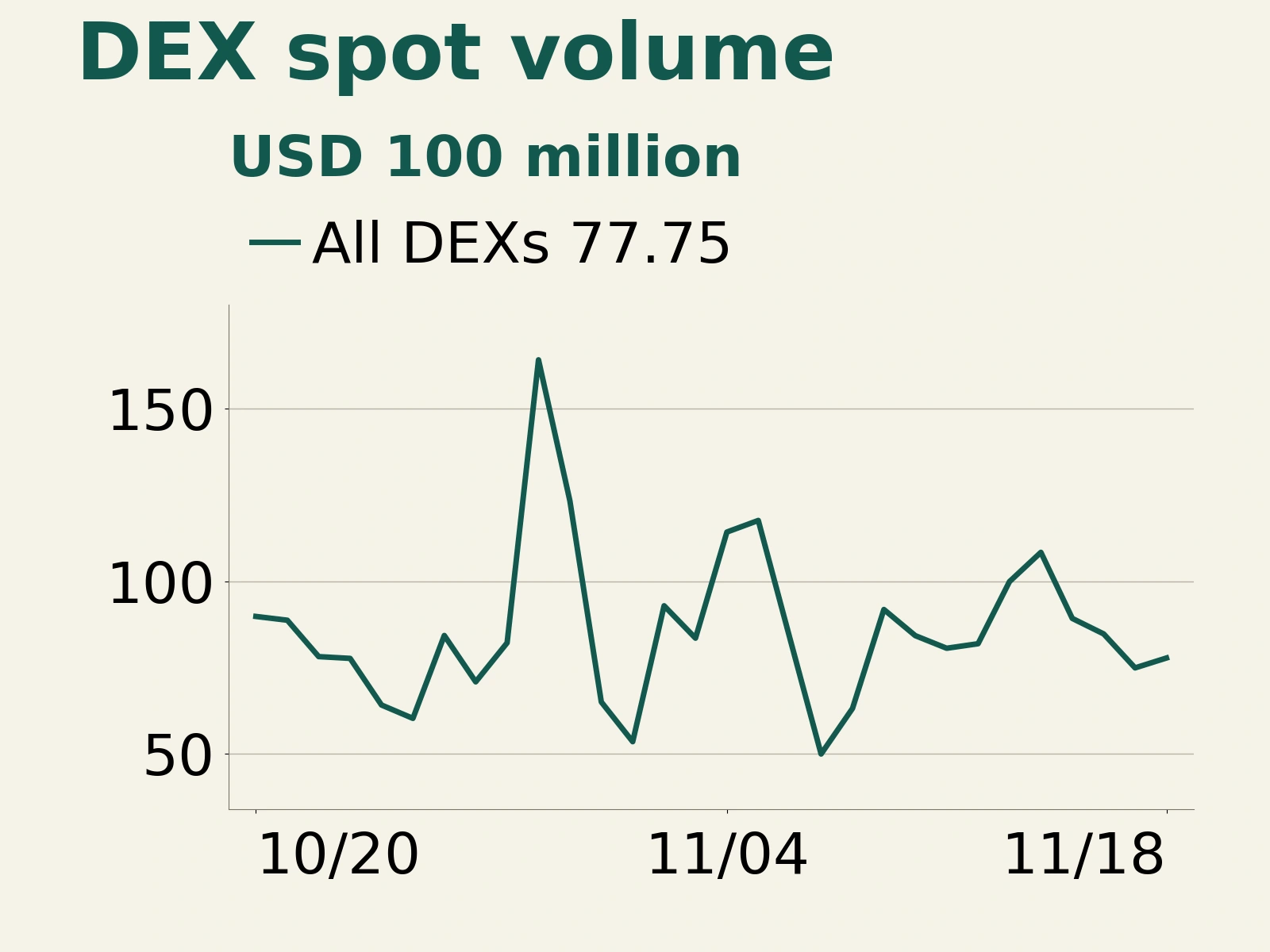
As of the morning of November 20 Beijing time, the latest date marked as a complete day in DefiLlama’s decentralized exchange volume statistics was November 18 UTC. Trading volume across the markets it covers totaled $7.775 billion that day, up from $7.488 billion on November 17 but still below the $8.473 billion recorded on November 16.
The aggregate recovered, but performance varied sharply across networks. Solana’s trading volume rose from $1.510 billion to $1.815 billion, while Ethereum mainnet’s increased from $1.161 billion to $1.448 billion. Their combined increase alone exceeded the roughly $287 million net gain across the entire market over the same period. Volume on Ethereum layer-2 network Base fell from $1.107 billion to $994 million, while BNB Smart Chain declined from $874 million to $835 million.
Trading volume measures the value of trades matched on-chain; market makers and traders repeatedly trading the same assets can also push this figure higher. Lending markets face a different constraint: once USDC is lent out, the lender’s corresponding claim remains outstanding until repayment or liquidation, and the funds already lent cannot be withdrawn by another borrower. Even with ample collateral, available lending liquidity can remain a constraint. Bringing Bitcoin to a new chain expands the range of assets that can serve as collateral; the scale of the lending market also depends on how much funding lenders are willing to keep there.
Collateral and lending liquidity need to be tracked separately
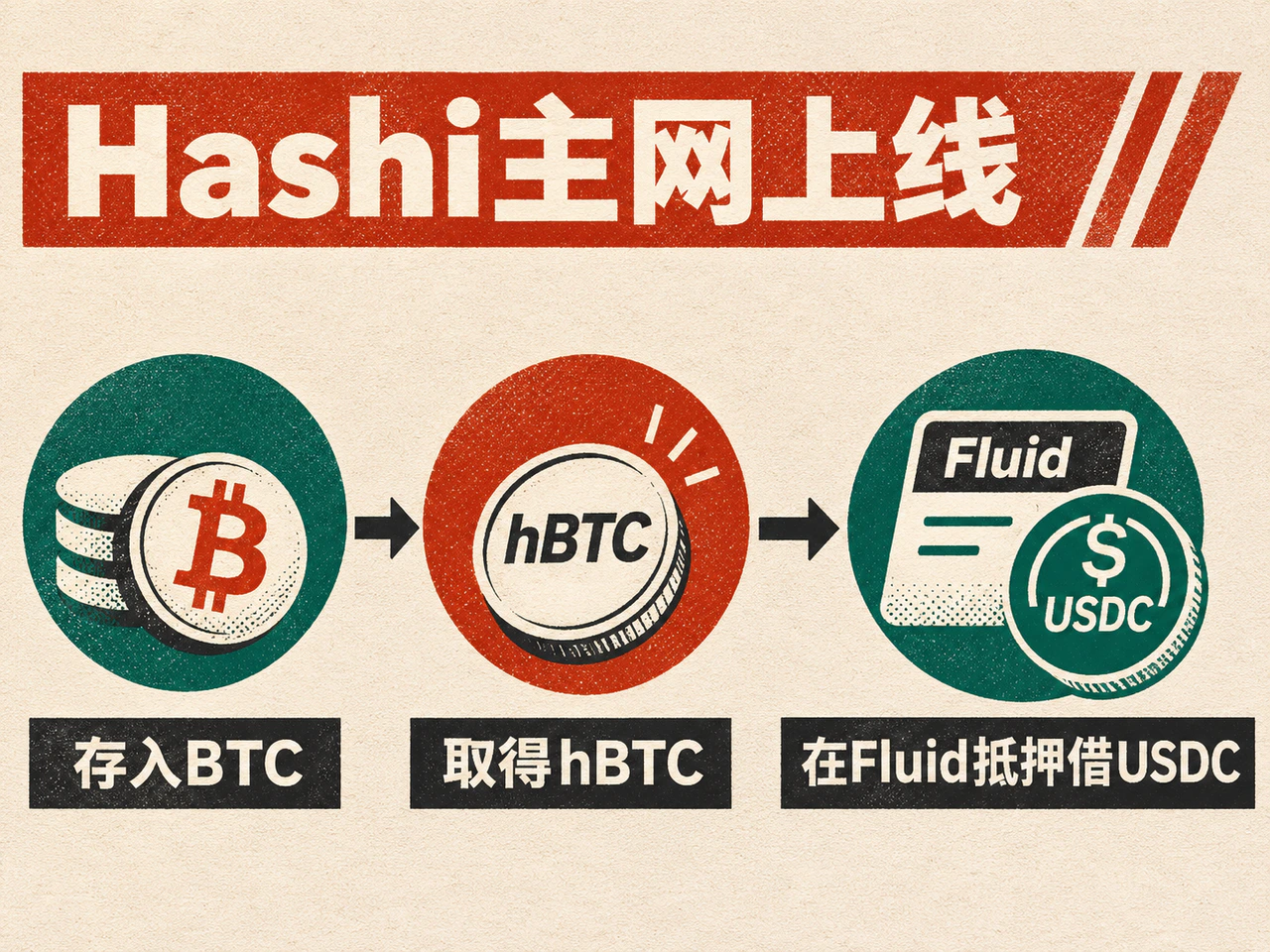
According to the Sui Foundation, BTC deposited into Hashi remains on the Bitcoin network, with hBTC on Sui representing the underlying BTC on a 1:1 basis. After holders pledge hBTC on Fluid to borrow USDC, the value of their collateral continues to fluctuate with Bitcoin’s price, while they also owe a debt repayable in stablecoins. If the collateral price falls, borrowers need to monitor their collateralization ratio and, where necessary, add collateral or repay the loan. If USDC supply tightens, borrowing costs can affect whether the financing is worthwhile even when Bitcoin’s price is stable. The price of BTC and the cost of USDC funding thus become linked within the same loan.
Beyond direct borrowing, HoneyB has opened two strategy vaults on Upshift, accepting hBTC and USDC respectively. The Sui Foundation says the strategies can invest in real-world assets, alternative investment products and publicly traded markets. The token a vault accepts determines the asset investors use to participate; returns and risks still depend on the manager’s subsequent allocations. For the USDC vault, deposits increase the dollar funding available to borrow from Fluid’s lending pool only if that money actually flows into the pool.
The Sui Foundation listed more than 20 partners involved in building the ecosystem, spanning custody, trading and decentralized finance. Institutions can now access hBTC and selected Fluid strategies through Anchorage Digital’s self-custody wallet Porto, while further integrations and tri-party settlement are scheduled for early 2027. Assessing the initial business requires distinguishing between access channels that have opened and borrowing that has actually taken place through them. hBTC issuance measures the amount of BTC deposited into Hashi for which corresponding tokens have been received on Sui; Fluid’s outstanding USDC loans measure how much of the associated borrowing demand has turned into dollar debt. Comparing these figures with available lending balances and borrowing rates is then necessary to judge whether expansion is constrained primarily by demand to pledge collateral or by dollar supply.
Click “Read the original” for the full details.