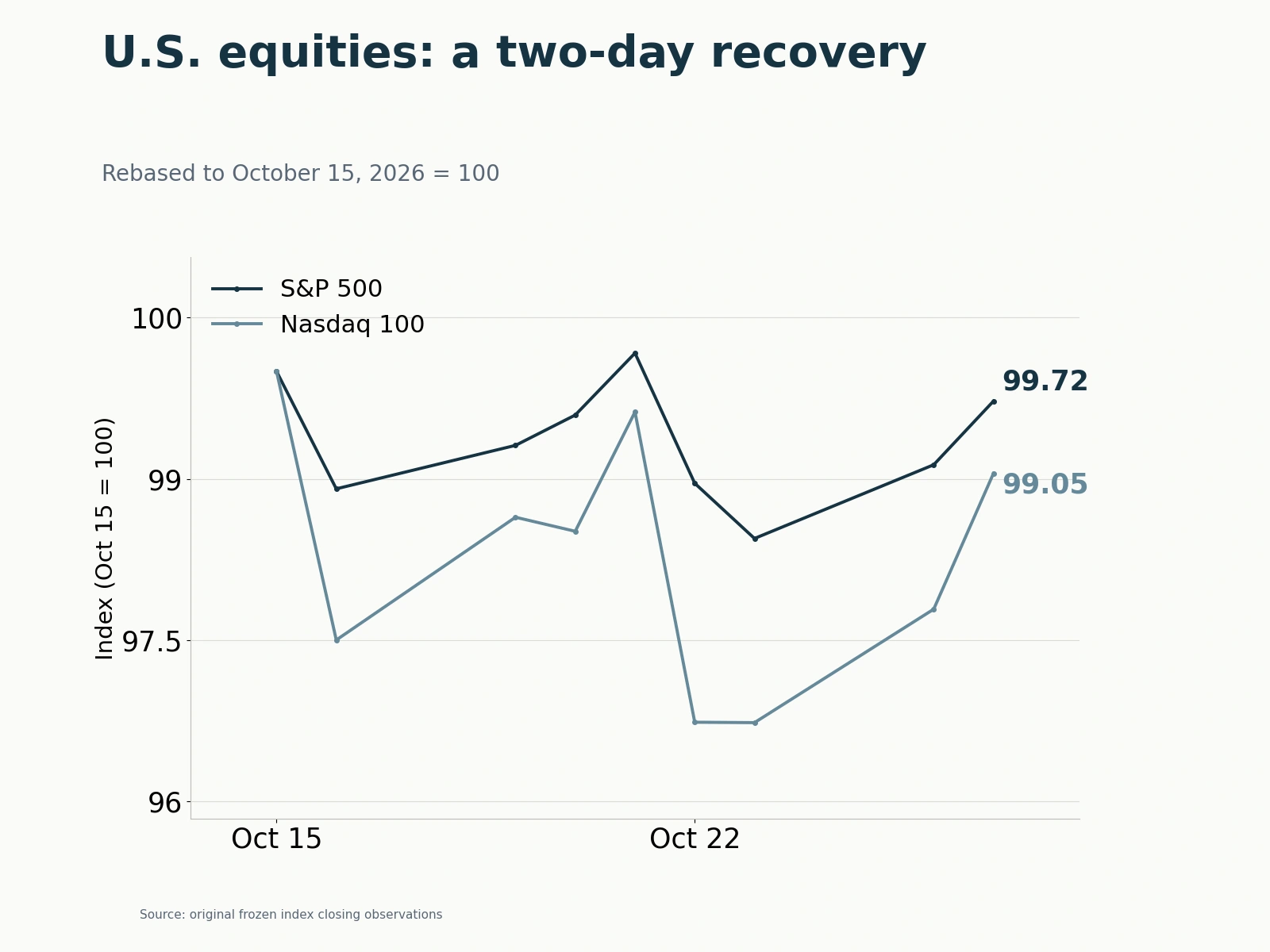
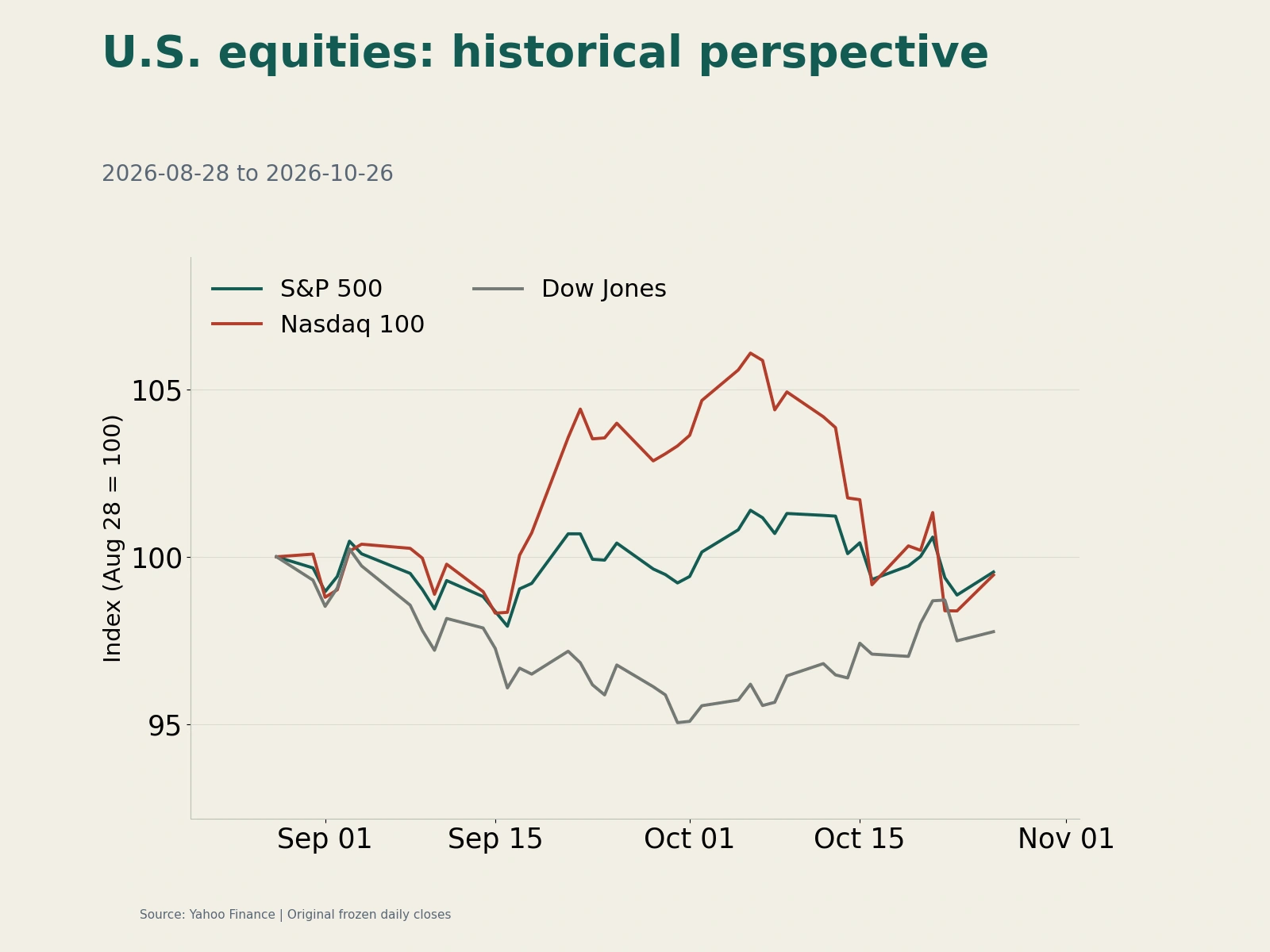
On July 27, 2026, the dominant theme in overseas markets was the sharp fall in crude oil. As US–Iran exchanges of fire entered a third consecutive day of a de facto ceasefire window, hopes of negotiations rose quickly. WTI and Brent fell 7.5% and 8.7% in a single day to close at $82.61 and $88.36 a barrel, respectively, largely erasing the geopolitical gains of the preceding week and a half. The cross-asset response was much more subdued: Treasury yields fell only two to three basis points, and the three main US equity indexes finished almost unchanged. Markets are pricing only a partial easing of extreme energy risks. With the Fed decision imminent, investors have not extrapolated that into the resumption of an easing cycle.
Fixed Income: Inflation Compensation Retreats Quickly, but Duration Defenses Remain Tight
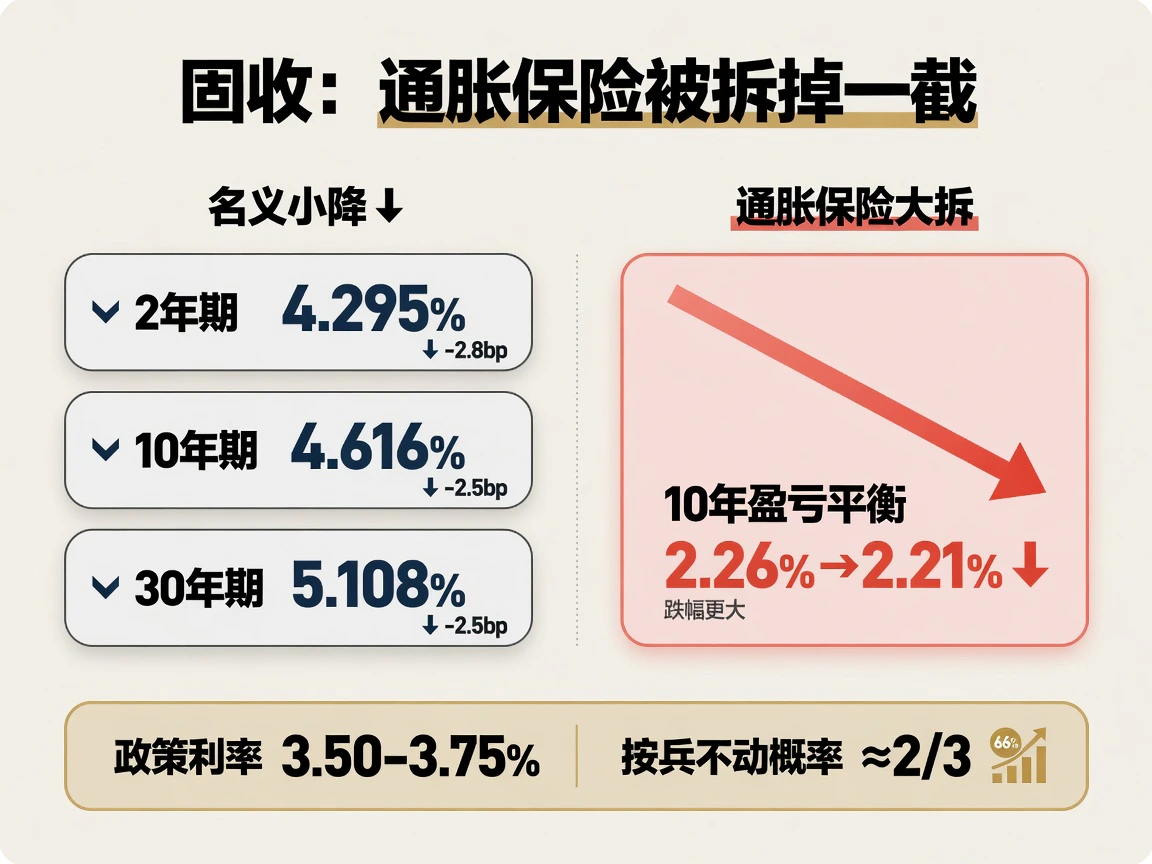
Nominal Treasury yields fell across the curve, but by limited amounts. The two-year closed at 4.295%, down 2.8 basis points, the ten-year at 4.616%, down 2.5 basis points, and the 30-year at 5.108%. The curve moved only slightly, with the 2Y/10Y spread fluctuating in a narrow range of roughly 32–34 basis points.
The more substantive change was in inflation expectations. The ten-year breakeven inflation rate fell from 2.26% to 2.21%, while the five-year declined six basis points to 2.18%. The contraction in inflation compensation was distinctly larger than the fall in nominal yields. A near-double-digit oil-price plunge produced only a modest easing in nominal yields, indicating that markets were mainly removing tail-risk protection against a second wave of inflation caused by an energy shock. The term premium and caution about a hawkish Fed have not collapsed. The VIX remained near 18.7, also suggesting that this is not a recession-driven flight to safety.
Treasury auctions that day showed a sharp maturity divide. Demand for the $69 billion two-year auction was strong, with a bid-to-cover ratio of 2.662 and a stop-out yield below the when-issued level. Primary dealers' allocation fell to about 9.4%, pointing to solid investment demand around a 4.3% yield. The subsequent five-year auction, worth about $70 billion, drew a bid-to-cover ratio near a five-year low, leaving dealers to absorb supply. Ahead of the Fed decision, investors are willing to remain at the short end and collect carry but reluctant to lock in intermediate-duration risk too early. Whether the subsequent three-, seven- and ten-year auctions restore demand in the middle of the curve is an important test of this week's supply.
On policy expectations, the federal funds target range remains 3.50%–3.75%. CME FedWatch shows futures pricing roughly a two-thirds chance of no change this week and a one-third chance of a hike. September contracts still treat at least one hike as one of the main paths. Repricing remains marginal, far from a substantive shift toward a dovish view.
Macro: Soft Headline Readings, Firmer Underlying Momentum
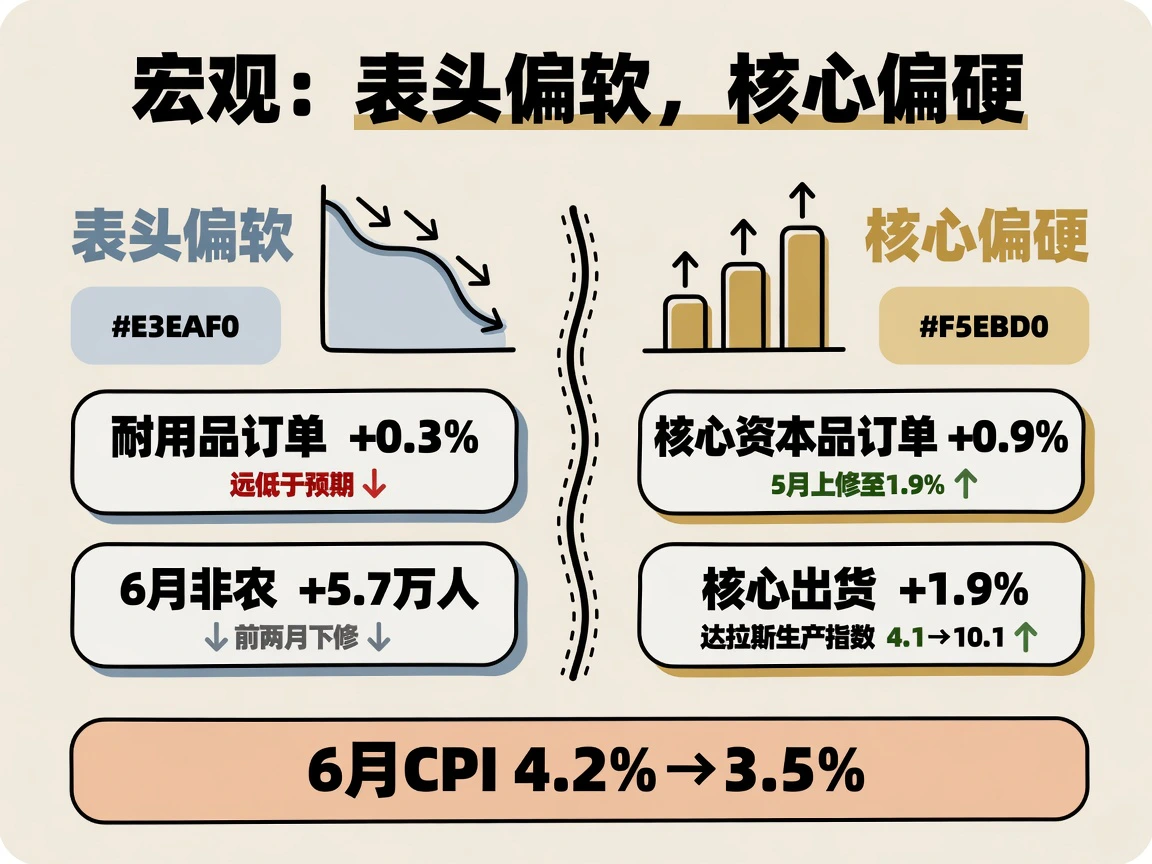
US durable-goods orders rose only 0.3% month on month in June, well below expectations, mainly because of transportation. Underneath, however, nondefense capital-goods orders excluding aircraft rose 0.9%, and May's gain was revised sharply higher to 1.9%. Core capital-goods shipments increased 1.9%. This indicates that the business-equipment spending chain remains intact. AI-related capital expenditure continues to support the growth outlook and is positive for the equipment-investment component of second-quarter GDP. The Dallas Fed manufacturing survey released that day showed a similar pattern: its production index jumped from 4.1 to 10.1 and new orders improved, but wage and price indexes remained well above historical averages. Real activity is still resilient, and cost persistence has not dissipated.
The central policy debate at the Fed still turns on the recent macro mix. June nonfarm payrolls rose by only 57,000, with substantial downward revisions to earlier data, and the improvement in unemployment to 4.2% partly reflected lower labor-force participation. Annual June CPI inflation eased from 4.2% to 3.5%, and core CPI to about 2.6%. Slower employment and retreating inflation provide the necessary data cushion for a July FOMC hold. Yet with core inflation still above the 2% target and energy prices up about 16% year on year, the risk of renewed inflation has not been resolved.
This week's focus is squarely on the July 28–29 FOMC meeting, Warsh's second policy meeting as Fed chair. The decision is due at 2 a.m. on July 30 Beijing time, with no dot plot this time. In mid-July congressional testimony, Warsh explicitly refused to declare victory over inflation, while Governor Waller publicly described policy as being at a crossroads. Given Warsh's preference for less forward guidance, markets can only infer his reaction function from oil prices and inflation compensation. Within a week, the hike probability first rose to 35%–40%, then edged back after oil's plunge. The source identifies the early-Wednesday policy statement as the main concentration of signals: if it acknowledges improving inflation and emphasizes data dependence, the easing at the short end can continue; if it reiterates zero tolerance for renewed inflation, the two-year yield could face upward pressure even with a hold at this meeting.
Commodities: Oil Sheds Its Geopolitical Premium as Gold Pulls in Both Directions
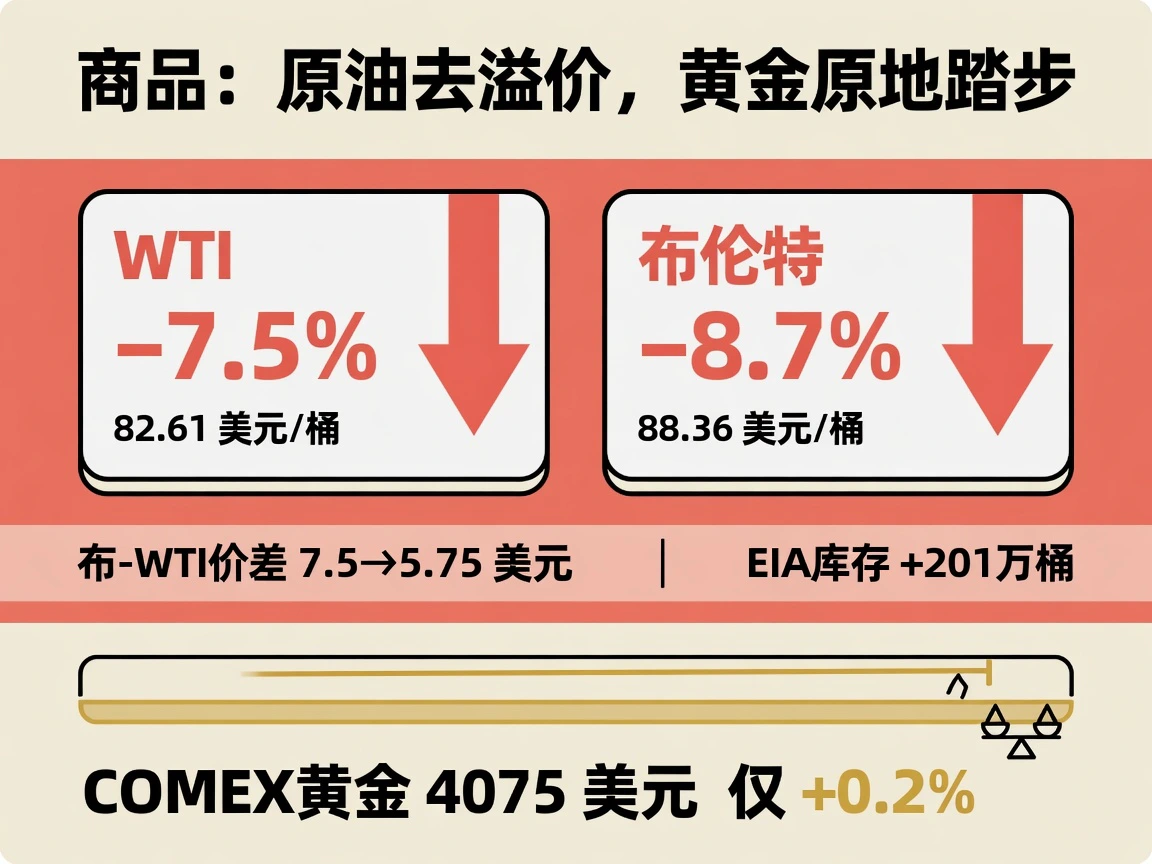
Oil's 7%–9% daily drop is difficult to attribute to inventories or the dollar. The latest EIA weekly report still showed commercial crude stocks building, by 2.01 million barrels in the week ended July 17. The immediate driver was a sharp removal of the geopolitical risk premium: markets quickly shifted their priced scenario from continued closure of the strait and escalating confrontation to a pause in fighting and an opening for negotiations. Micro-level spreads support that interpretation. Brent's premium over WTI narrowed markedly from $7.5 to about $5.75, with the seaborne benchmark falling faster—a clear sign of compression in the premium associated with shipping out through the strait. The CPC Black Sea terminal also resumed loadings after drone disruption was cleared, further easing supply concerns. The forward curve nevertheless remains in backwardation, with near-dated prices above later deliveries. The front end's leading decline suggests that money is mainly smoothing very short-term risk pricing, rather than trading a long-term supply surplus. As long as the ceasefire remains fragile, oil can shed premium while retaining high volatility.
Gold's response was more muted. COMEX gold closed around $4,075 an ounce, up just 0.2% on the day. Oil's intraday decline briefly eased inflation concerns and helped gold test $4,100, but caution ahead of the Fed decision limited the upside. Lower oil works on gold in both directions: a cooler inflation impulse weakens expectations of a hike, while geopolitical relief reduces safe-haven support. Those forces are temporarily offsetting each other, leaving gold within its consolidation range.
Equities: Flat Broad Indexes Conceal Sharp Rotation
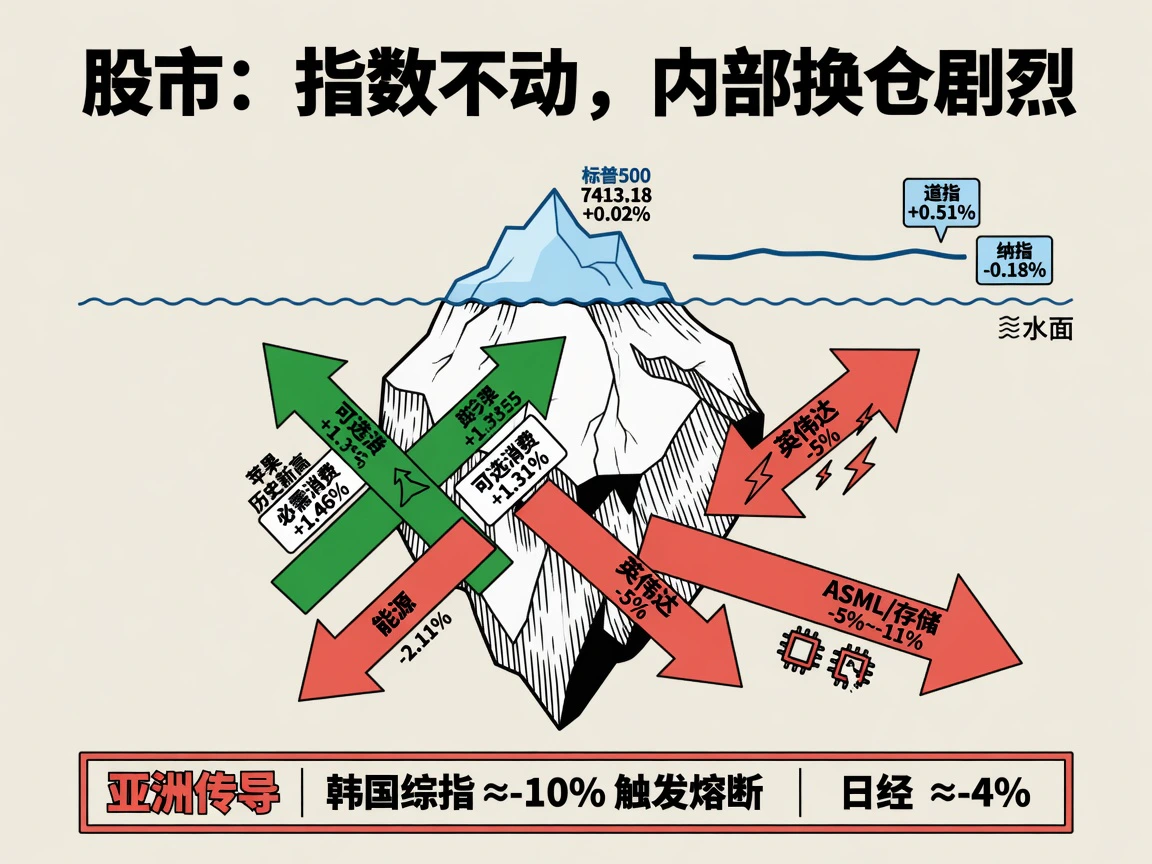
The major US indexes finished narrowly around unchanged: the S&P 500 at 7,413.18, up 0.02%; the Dow up 0.51%; the Nasdaq down 0.18%; and the Russell 2000 up 0.62%. These quiet broad-market readings concealed sharp internal style rotation.
Sector performance diverged clearly. Consumer staples, up 1.46%, consumer discretionary, up 1.31%, communication services, up 1.28%, and financials, up 1.01%, led gains. Energy fell 2.11% with oil. The early oil plunge briefly lifted marketwide risk appetite, but afternoon selling across the semiconductor chain pulled the Nasdaq lower. Nvidia closed down about 5% as markets continued to digest reports that it was providing substantial financing support for customers' data-center projects. Doubts about returns on AI capital expenditure and circular financing intensified again. AMD, memory stocks and ASML fell by between 5% and 11%. ASML also faced reports of mass production of Chinese domestic immersion DUV lithography equipment, a clear challenge to expectations for monopoly-like equipment profits. By contrast, Apple closed at a record high and reclaimed the world's largest market capitalization. Technology positions were rotating from upstream picks-and-shovels providers toward core assets with sticky platforms, application monetization and defensive attributes. The Russell 2000 outperformed the Nasdaq and breadth improved, consistent with rotation from expensive leaders into laggards rather than an indiscriminate selloff.
Asia's semiconductor supply chain amplified the US correction into a liquidity shock. Markets came under broad pressure on Tuesday. South Korea's KOSPI plunged nearly 10% intraday, triggering a circuit breaker, while Samsung Electronics and SK Hynix both posted double-digit declines. Together they account for about 40% of the index, and programmatic stop-loss selling from leveraged ETFs amplified index volatility. This was South Korea's 8th circuit-breaker event of the year. The Nikkei 225 fell about 4%, Taiwan's weighted index about 4%–5%, and the CSI 300 by 2.8%. Hong Kong finished roughly flat to slightly higher, while Australian shares rose 0.6%. Their resilience supports the view that the shock is concentrated in a semiconductor valuation reset, rather than systemic flight from emerging markets. US equity futures remained relatively contained during Asia's circuit-breaker episode. This week's Microsoft, Meta, Apple and Amazon earnings, together with Wednesday's FOMC, will determine the next phase. The old procyclical narrative that higher capital spending benefits equipment stocks may now turn into pressure on cash-flow multiples for the buyers making that spending. That is the central contest in earnings week.
Geopolitics: Ceasefire Odds Rise, but Actual Hormuz Passage Remains Disrupted
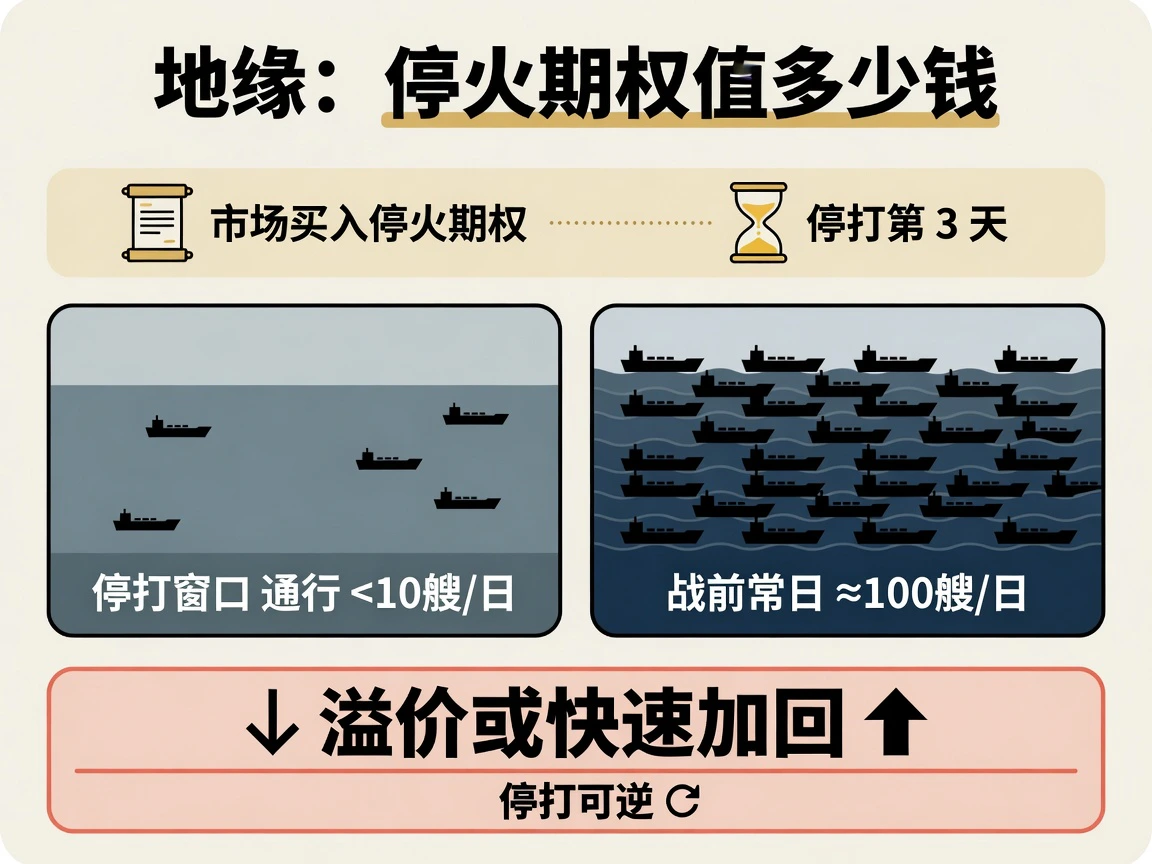
Through the capital-market transmission channel, the US and Iran have entered a third consecutive day of an effective ceasefire window. Trump publicly says the two sides are maintaining good dialogue but retains the threat of renewed strikes if talks fail. Iranian officials deny substantive negotiations and reiterate their effective control of Hormuz. Markets are currently trading premium compression as the probability of negotiations rises. Physical passage, however, is far from restored: fewer than 10 merchant ships were observed transiting Hormuz on Monday morning, a substantial gap from the normal pre-conflict level of around 100 a day. Oil can remove premium ahead of events as expectations improve, but as long as passage rights remain subject to geopolitical and military permission, tail risk can be repriced asymmetrically.
Potential disruptions on the periphery remain. Saudi Arabia reported intercepting drones headed toward its eastern oil facilities, and the Houthi threat to Red Sea routes persists. Oman is leading multilateral mediation, but no legally binding joint text has emerged. Netanyahu is scheduled to visit the United States on July 28 US Eastern time. Trump has already signaled mild differences over Iran's nuclear issue, and the degree of alignment after their meeting will directly affect how long ceasefire expectations can last.
Overall, the temporary geopolitical easing is relieving pressure across assets through the sequence of plunging oil prices, softer inflation expectations and slightly lower interest rates. The subdued response in gold and the VIX shows that energy relief has yet to become a wholesale shift in the global macro regime. There are three key tests this week: the early-Wednesday FOMC statement's assessment of inflation and the neutral rate; Thursday's second-quarter GDP and June core PCE data; and whether actual Hormuz ship traffic catches up with the expectations behind the removal of spot oil's premium.